Inspiration
After participating in intensive hackathon sprints, we realized that dividing the prize pool after a win is notoriously subjective and often leads to awkward team dynamics. Manual splits rarely account for the actual complexity, volume, and impact of each member's contributions. We wanted to build a "meta" solution—a tool that solves a core problem for developers at the very hackathons they are competing in.
What it does
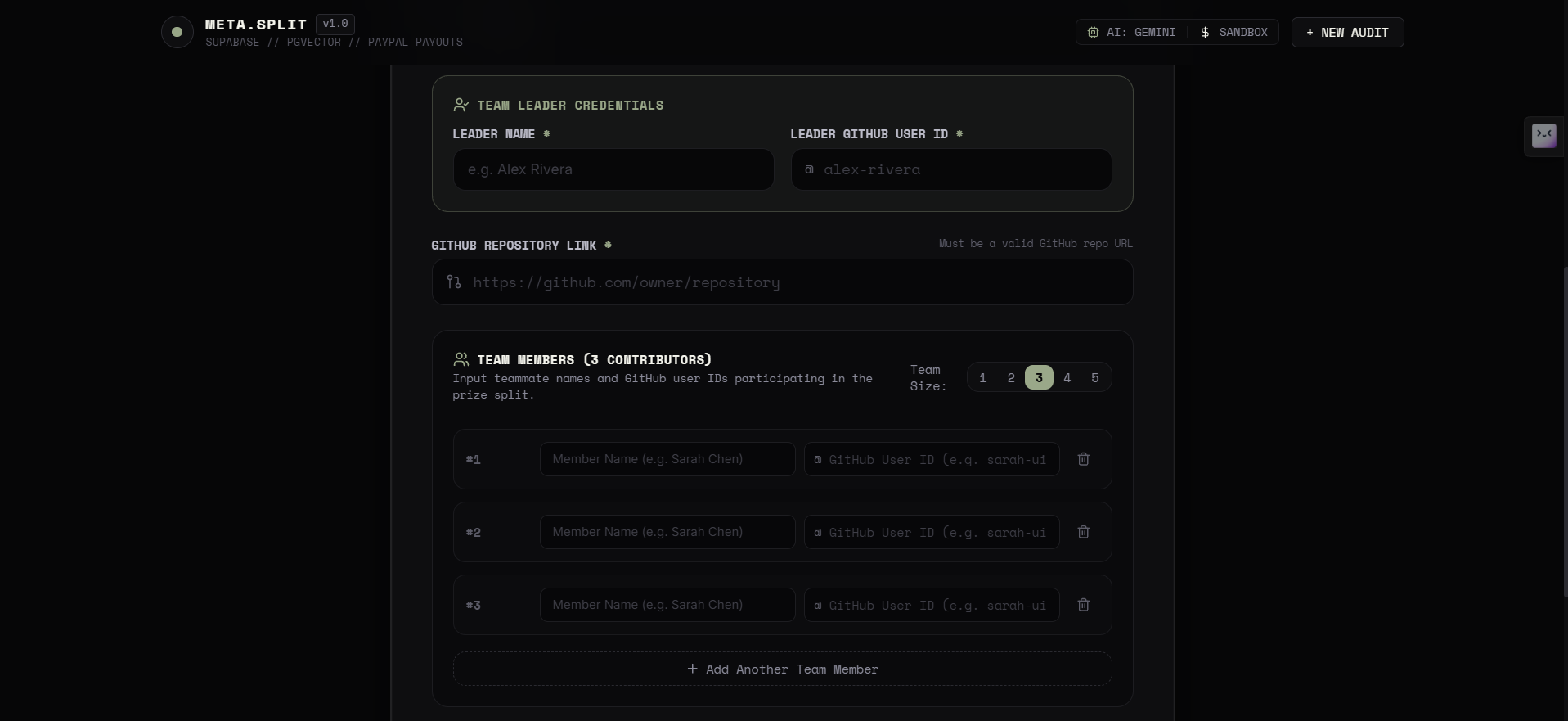
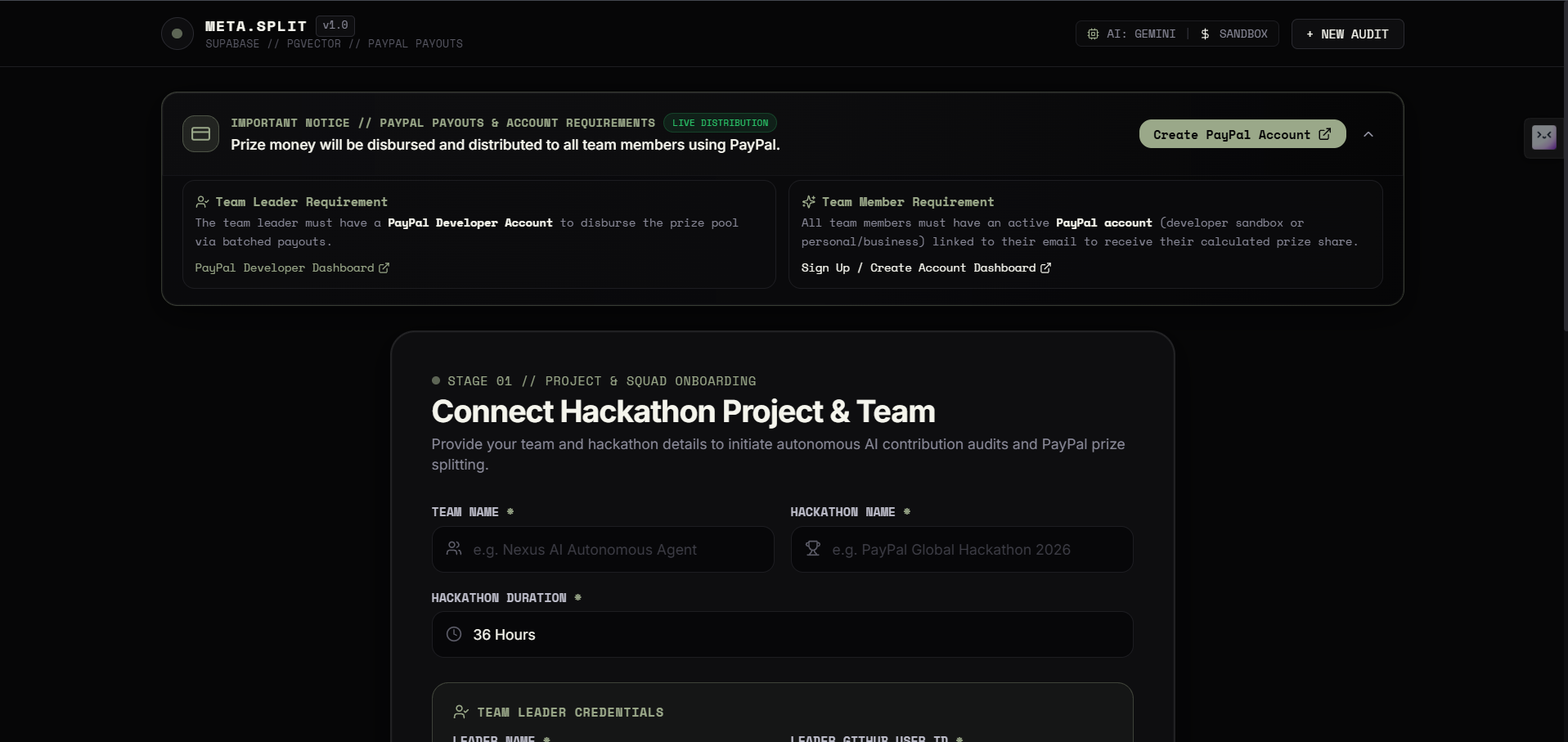
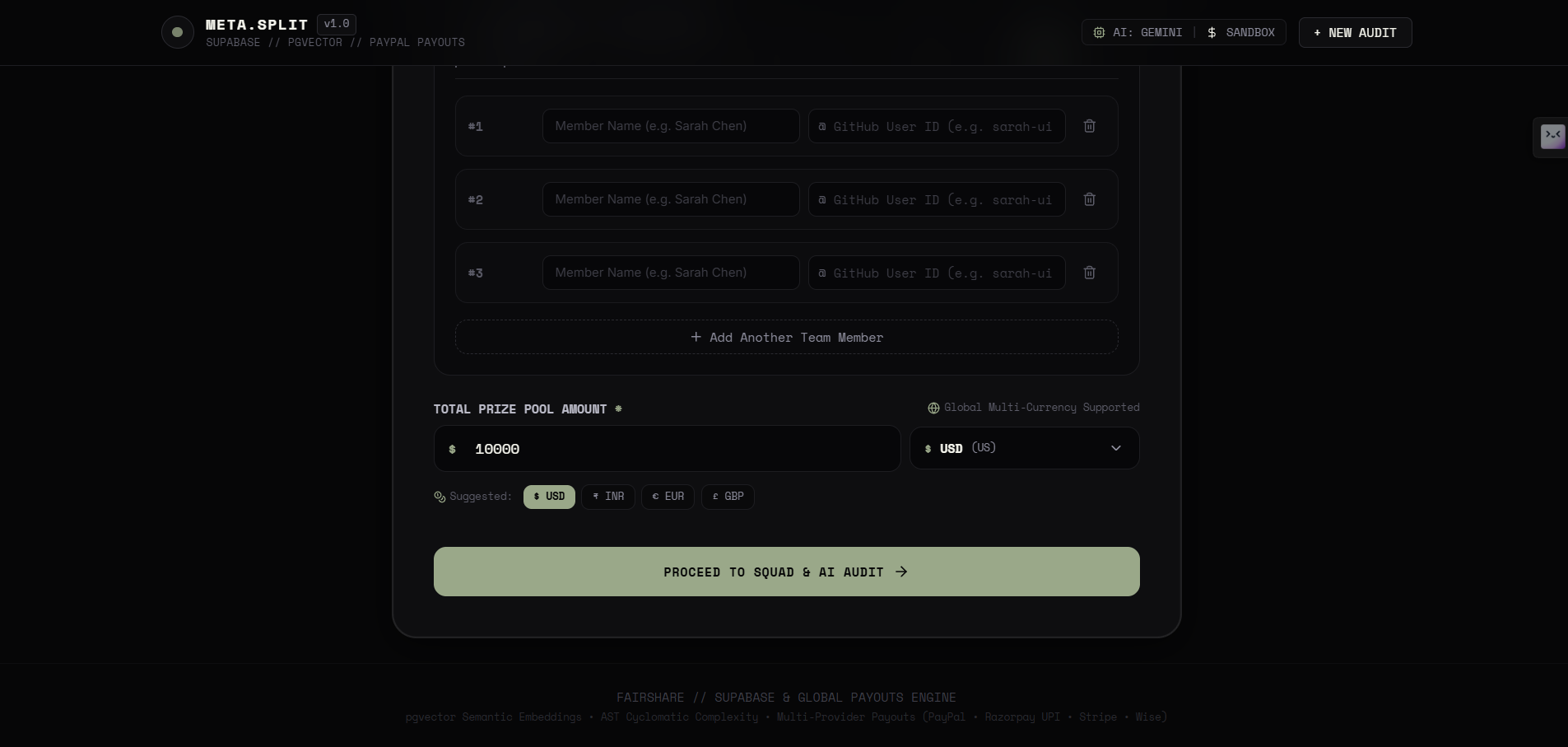
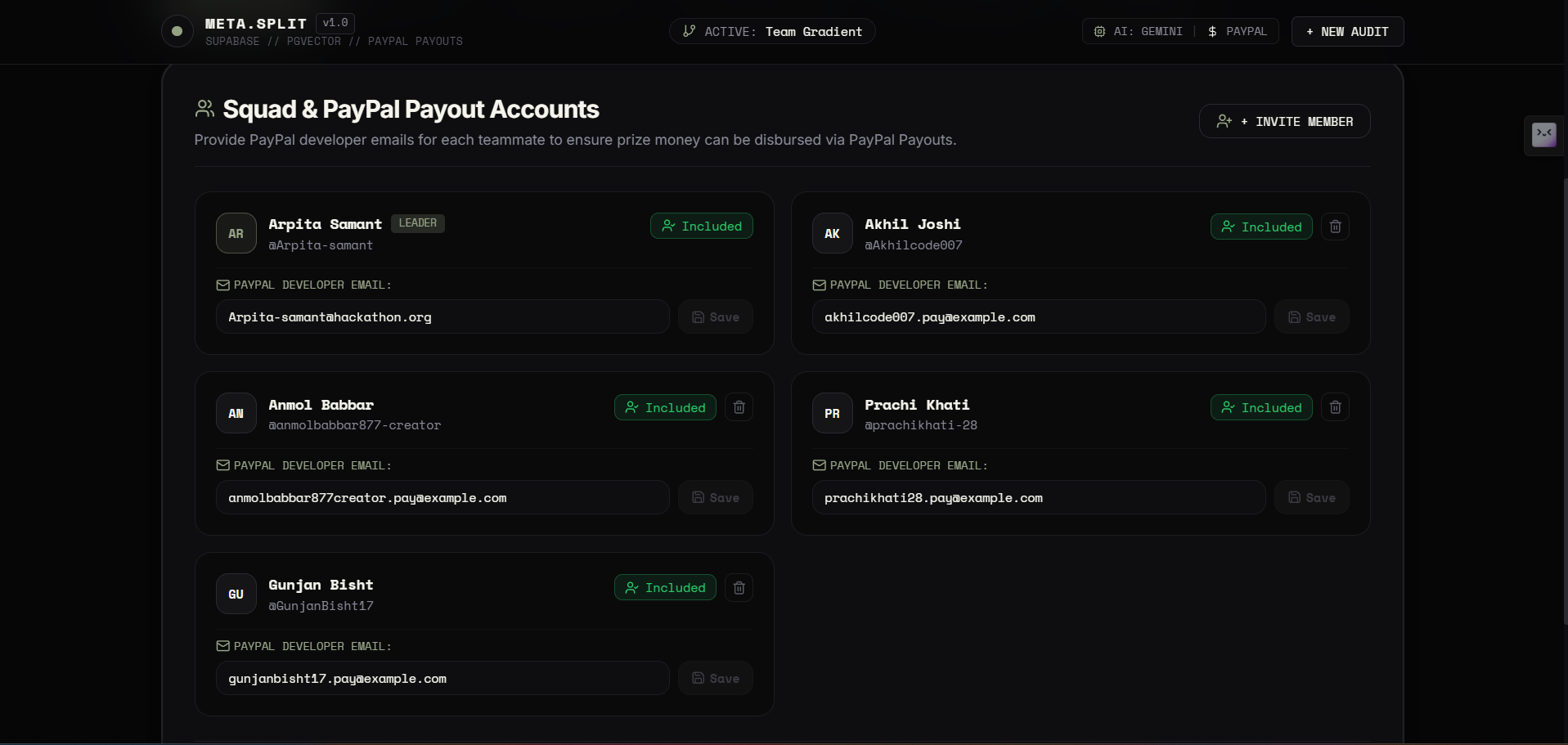
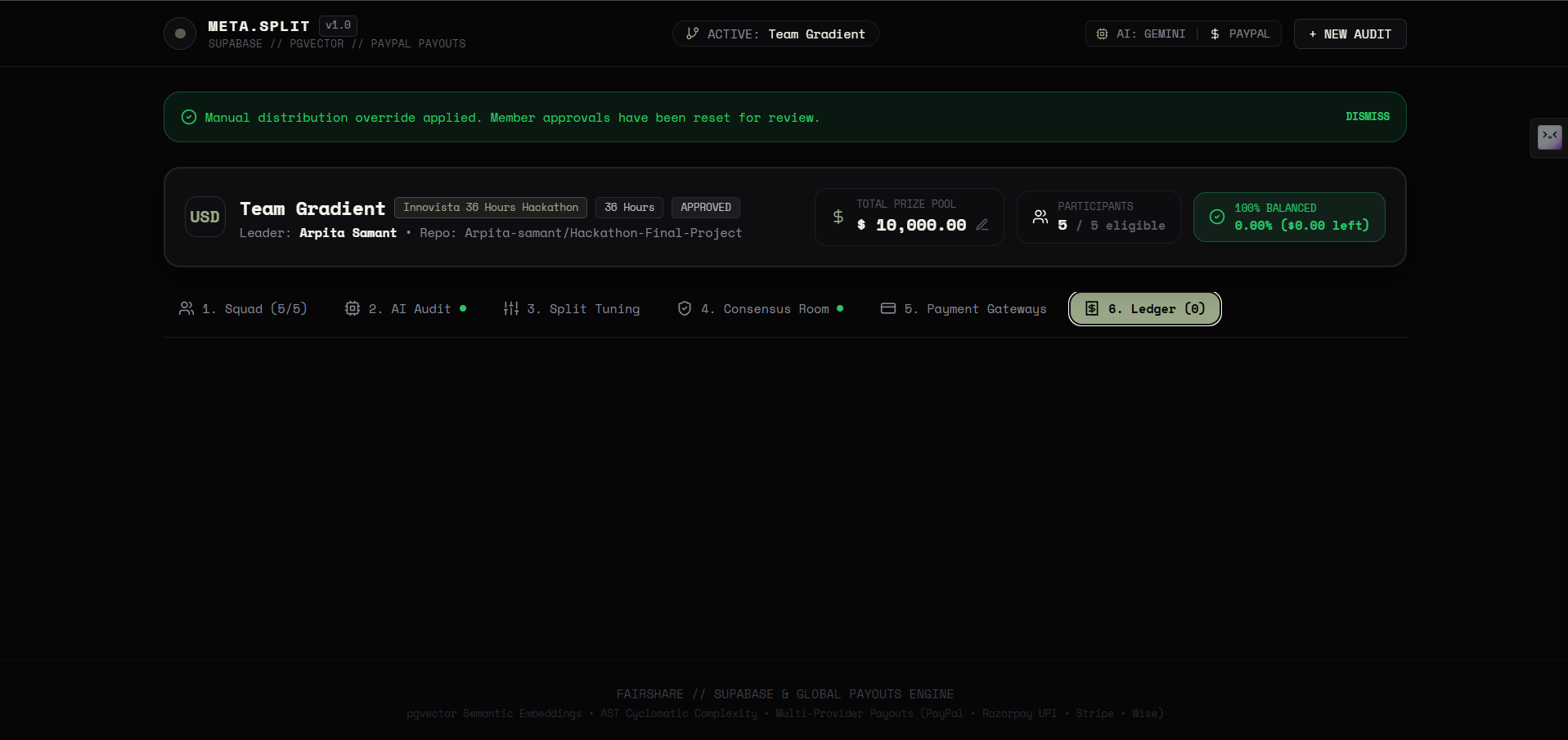
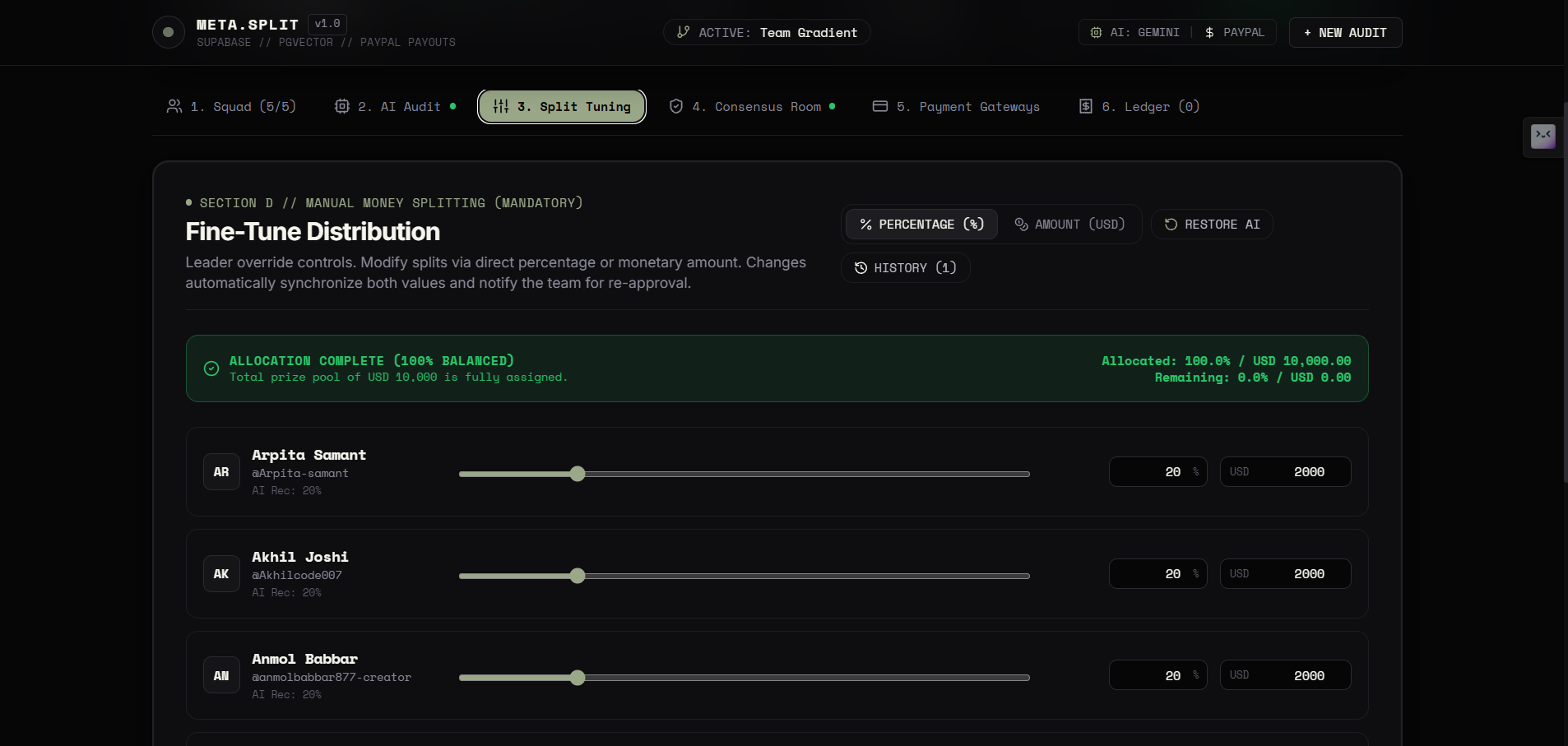
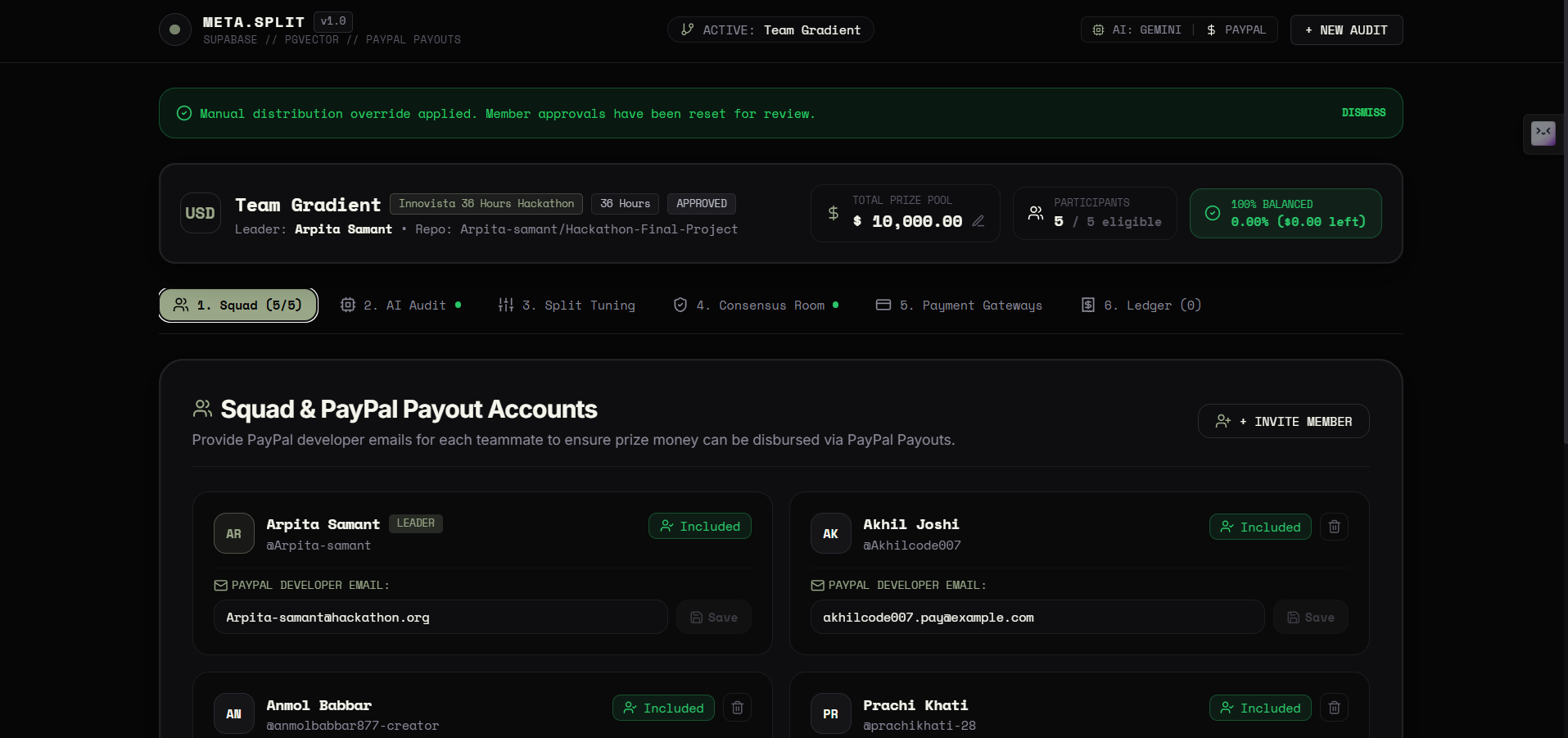
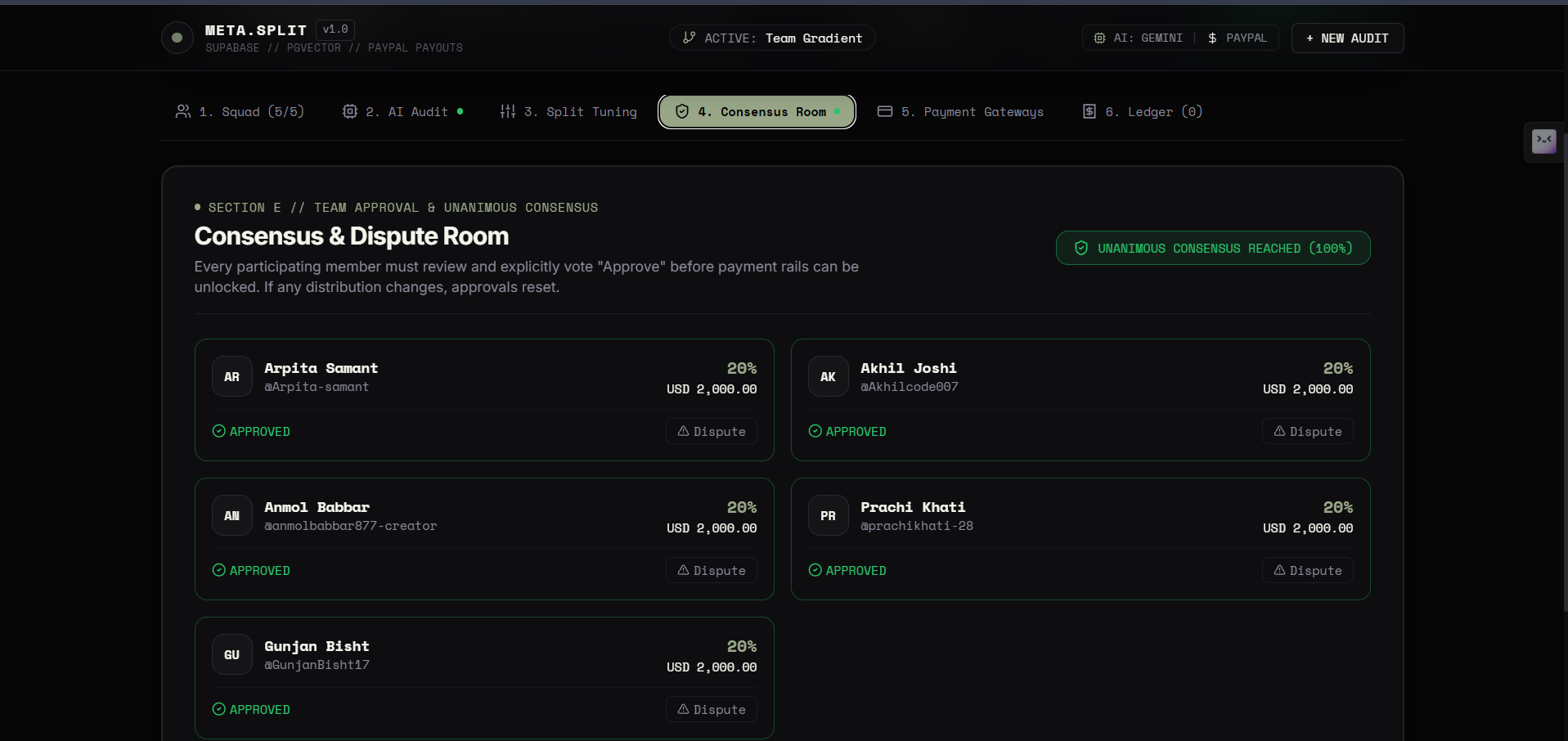
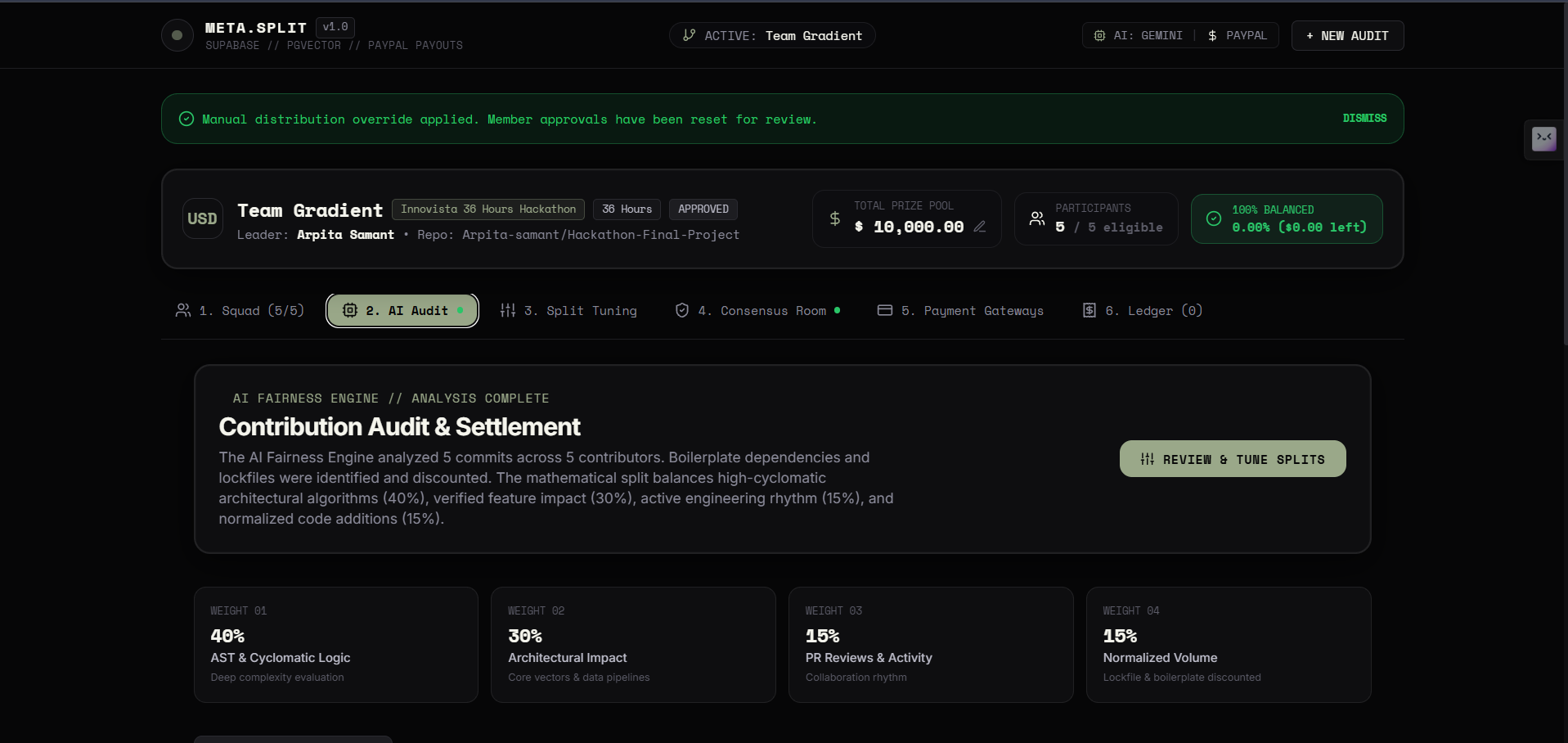
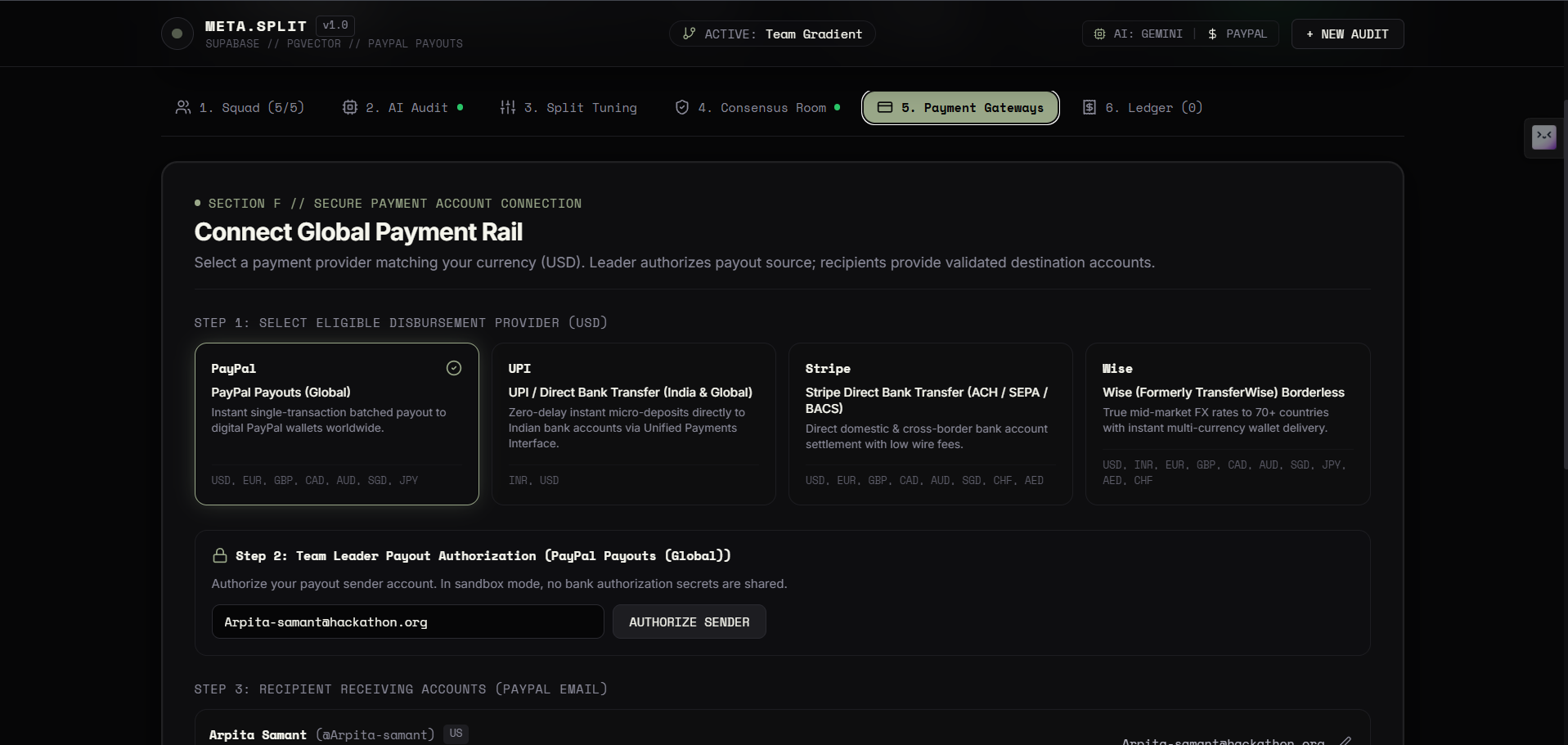
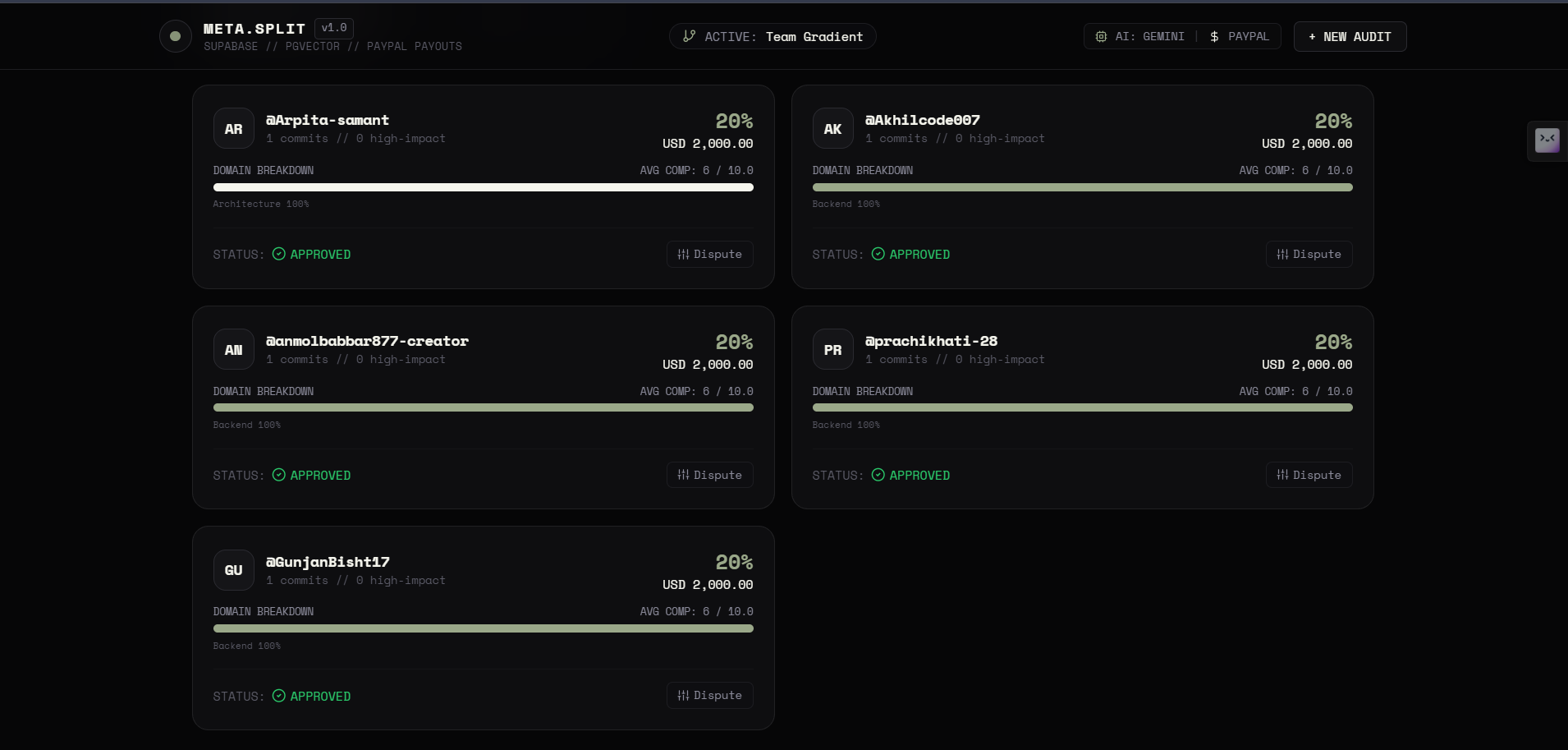
FairShare (The Meta Hackathon Prize Splitter) is an AI-powered code auditing agent that connects directly to a team's GitHub repository. Instead of just counting lines of code—which unfairly rewards bloated boilerplate and penalizes elegant refactoring—it analyzes commit histories, pull requests, and code complexity to mathematically determine each member's exact contribution percentage. It then generates a transparent "Fairness Report" and utilizes the PayPal Payouts API to instantly route the calculated funds directly to contributors' digital wallets in a single batched transaction.
How we built it
We architected the platform with a strict separation of concerns for security and speed:
Frontend: Built with React and Vite, utilizing Tailwind CSS to achieve a stark, Nothing OS-inspired dark mode aesthetic featuring monochromatic metallic tones and liquid glassmorphism data cards.

Backend: Powered by FastAPI (Python) for asynchronous performance, strictly vaulting all financial and LLM API keys away from the client.

Database & Auth: We used Supabase (PostgreSQL) as the central nervous system, handling native GitHub OAuth and utilizing pgvector to store code embeddings for the AI.

APIs: We integrated the GitHub API for repository data, LangChain with an LLM for semantic code analysis, and the PayPal Payouts API to execute the synchronized batch payments.
Challenges we ran into
Feeding raw GitHub diffs directly into an LLM context window quickly became messy and expensive. We had to implement a retrieval-augmented generation (RAG) pipeline using Supabase's pgvector to allow the AI to semantically search the repository and understand the true context of the code. Additionally, securing the financial flow required strict implementation of Supabase Row Level Security (RLS) policies to ensure users could only access their own team's financial data, while the FastAPI backend used a Service Role key to securely write immutable transaction receipts.
Accomplishments that we're proud of
We successfully built an AI engine that accurately weights a complex 10-line algorithmic fix higher than 500 lines of generated UI boilerplate. Successfully executing a live, synchronized multi-wallet payout via the PayPal API directly from a generated AI fairness audit was a major technical milestone.
What we learned
We gained deep, practical experience in managing secure API key vaulting between React clients and Python backends. We also mastered the intricacies of the PayPal Batch Payouts API, specifically navigating the strict data structures required to map dynamic AI-generated percentages to exact currency arrays.
What's next for FairShare
Beyond hackathon prize pools, we plan to expand FairShare to open-source maintainers looking to distribute sponsorships or bounties based on merit, and early-stage startups needing an automated, data-driven way to allocate bounty payouts for specific feature branches.
Built With
- fastapi
- github-api
- langchain
- openai
- paypal
- postgresql
- python
- react
- supabase
- tailwind-css
- vite
