Inspiration
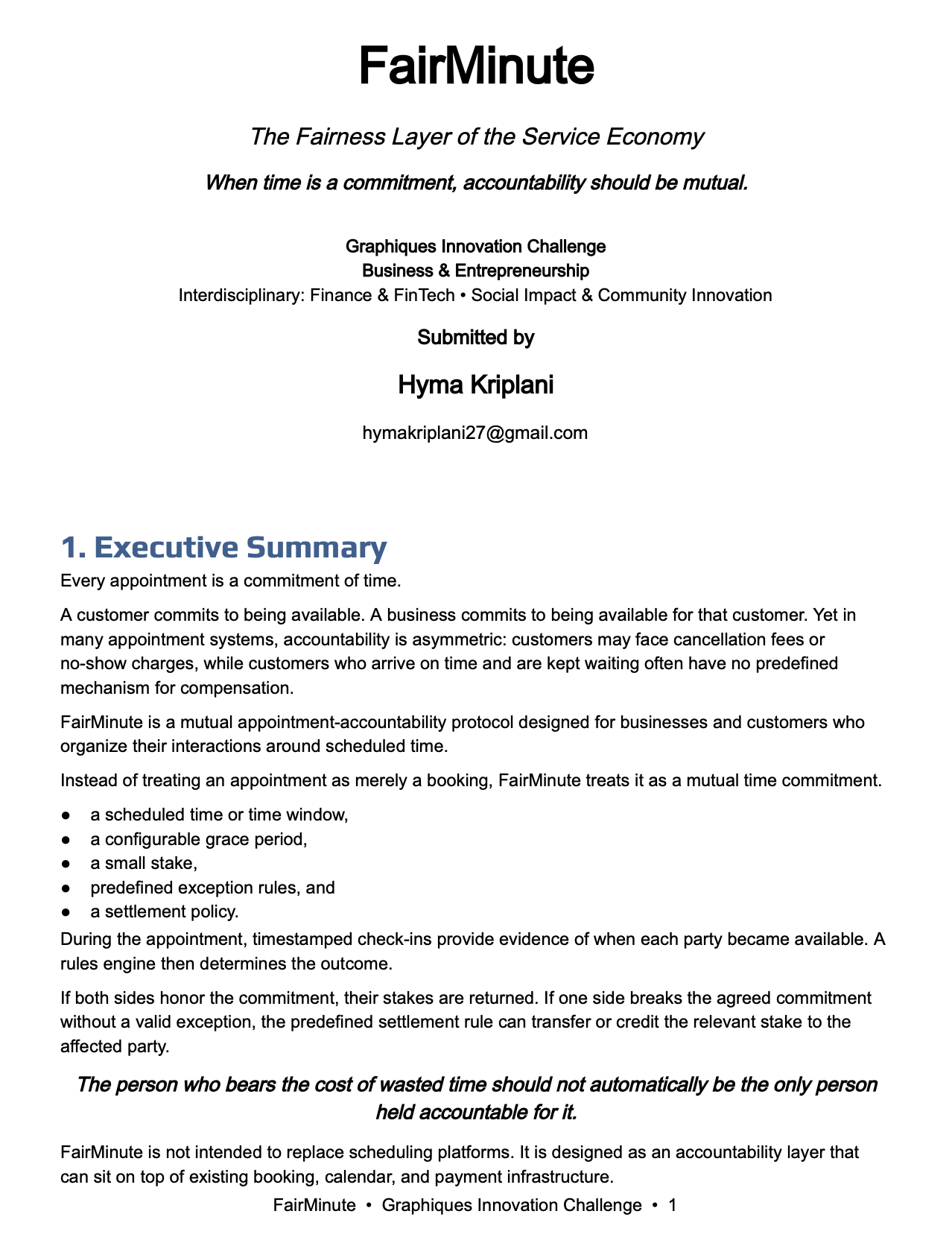
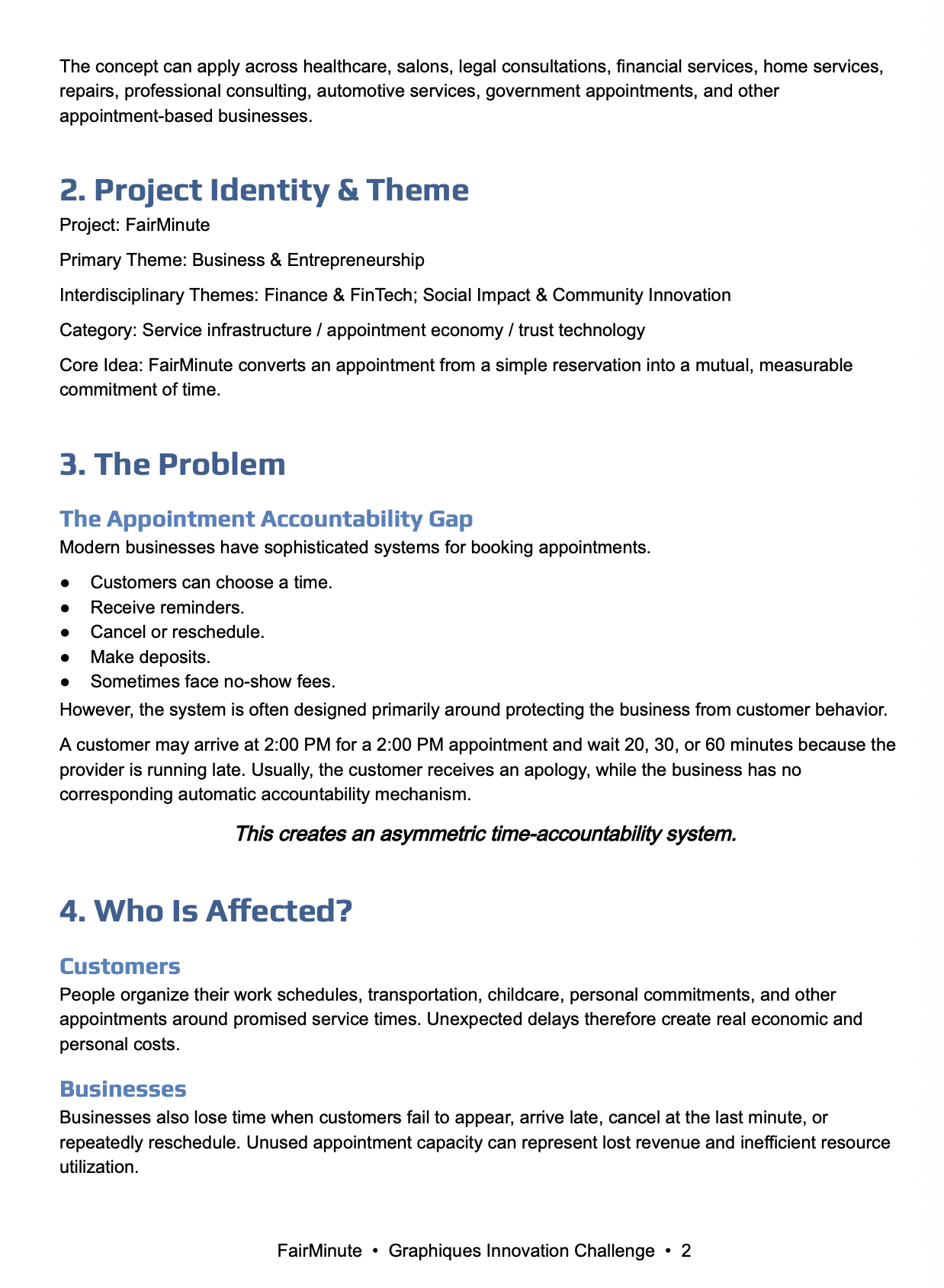
FairMinute started with a simple question: What happens when one person respects an appointment, but the other doesn't? Most appointment systems are designed to protect businesses from customer no-shows and late cancellations. But when a customer arrives on time and the business is significantly late, there is usually no equivalent accountability. That made us rethink the appointment itself. An appointment is not just a booking. It is a mutual commitment of time. We wanted to create a system where accountability works both ways, without turning appointments into a punishment system. That idea became FairMinute.
What it does
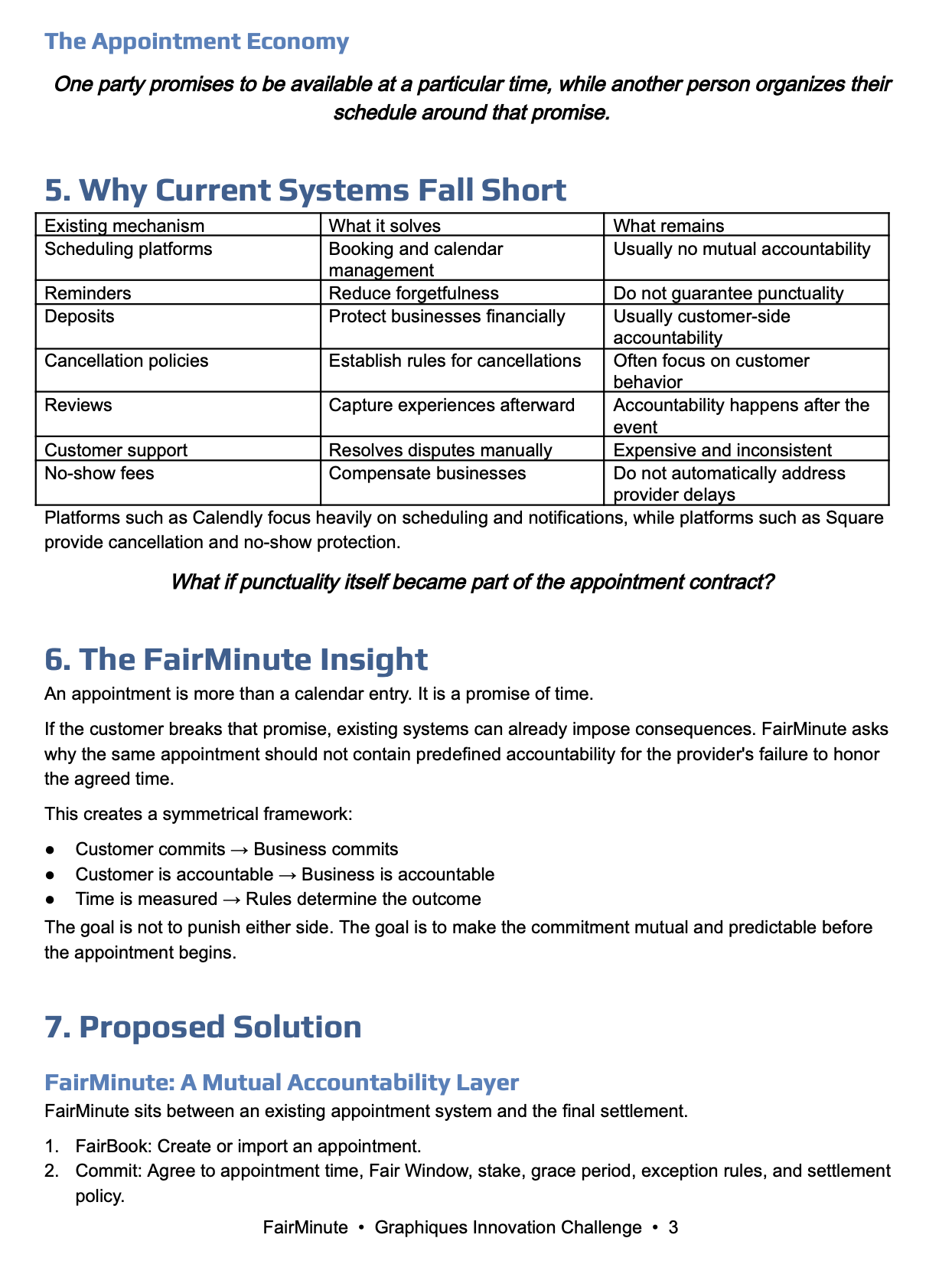
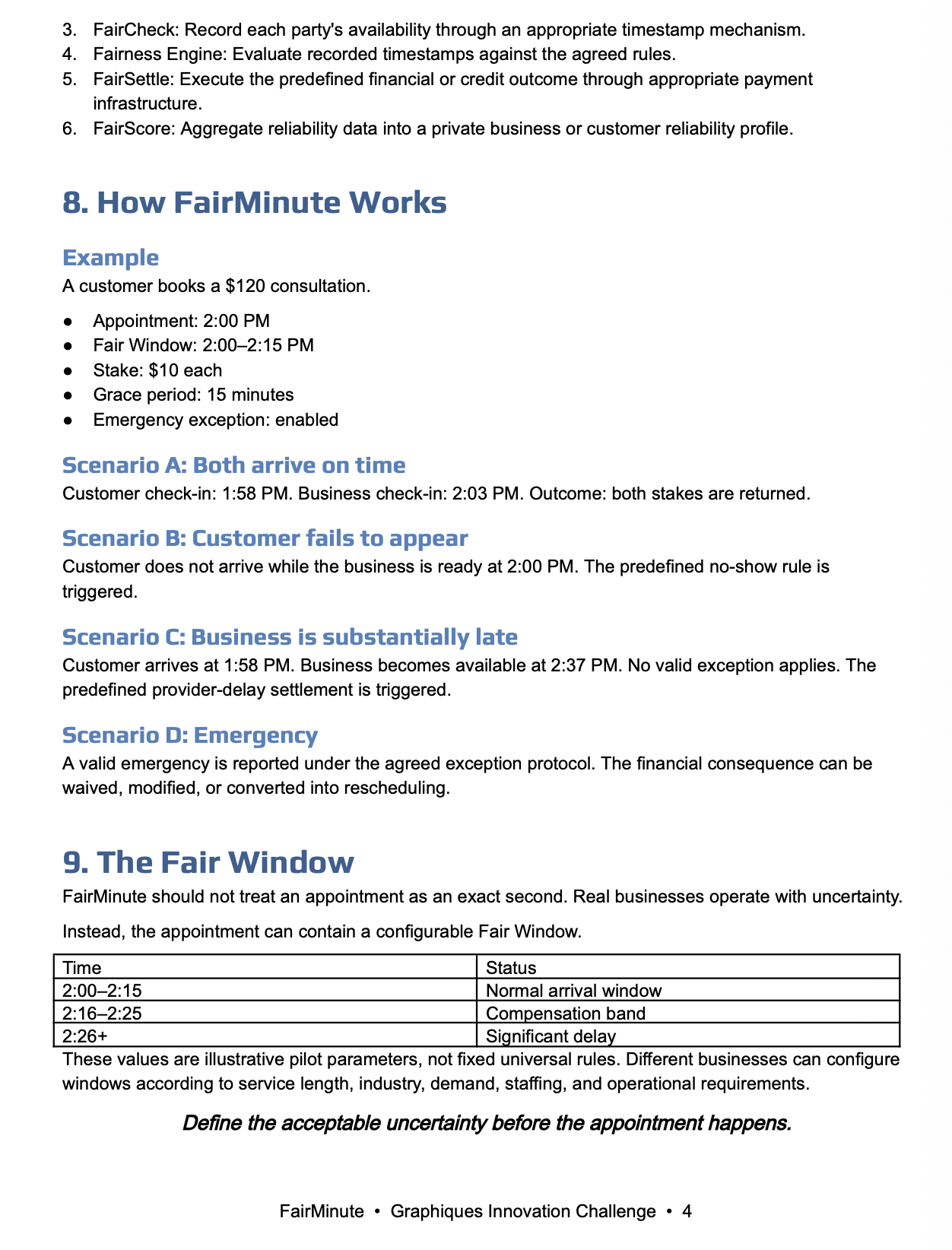
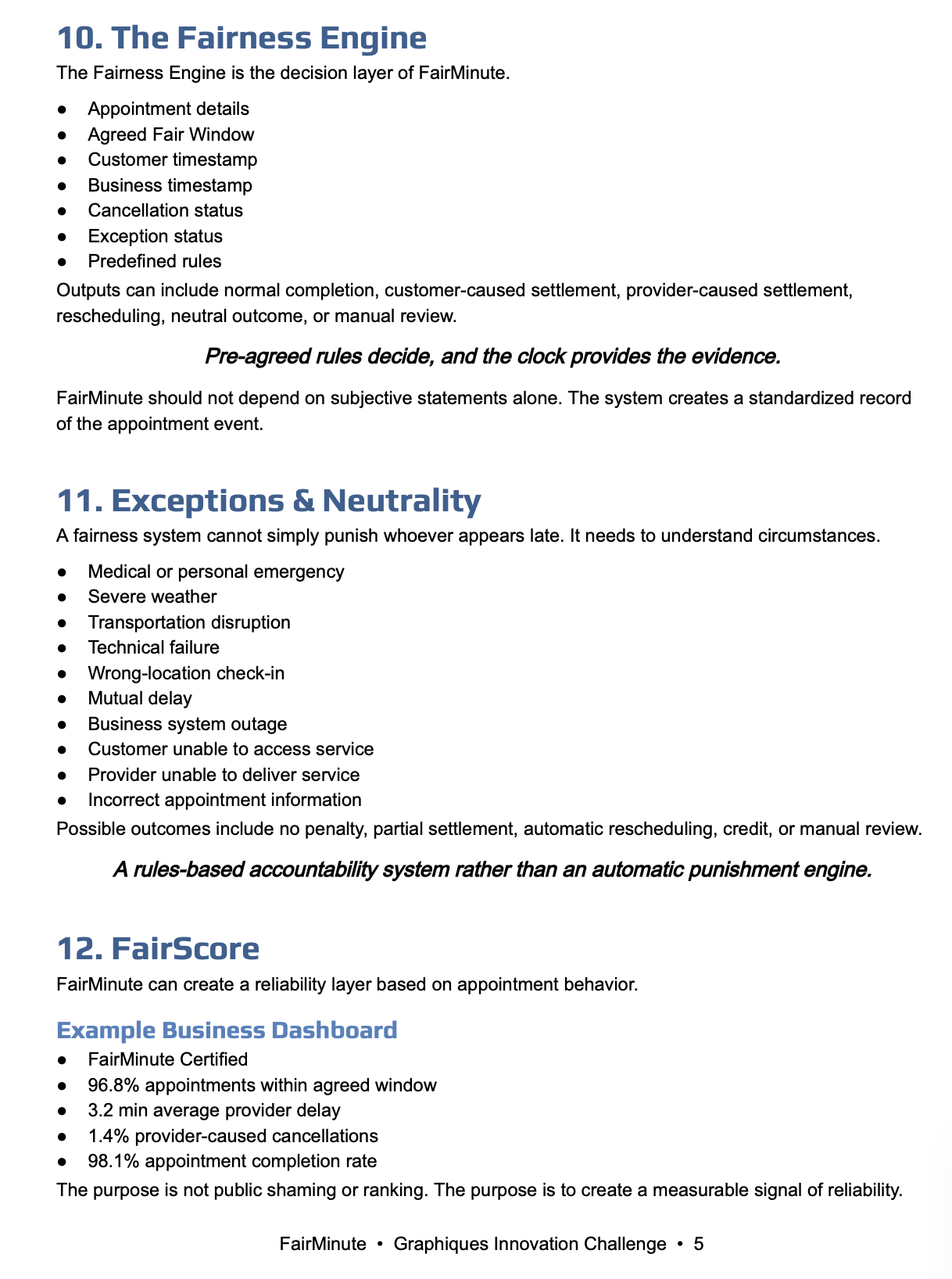
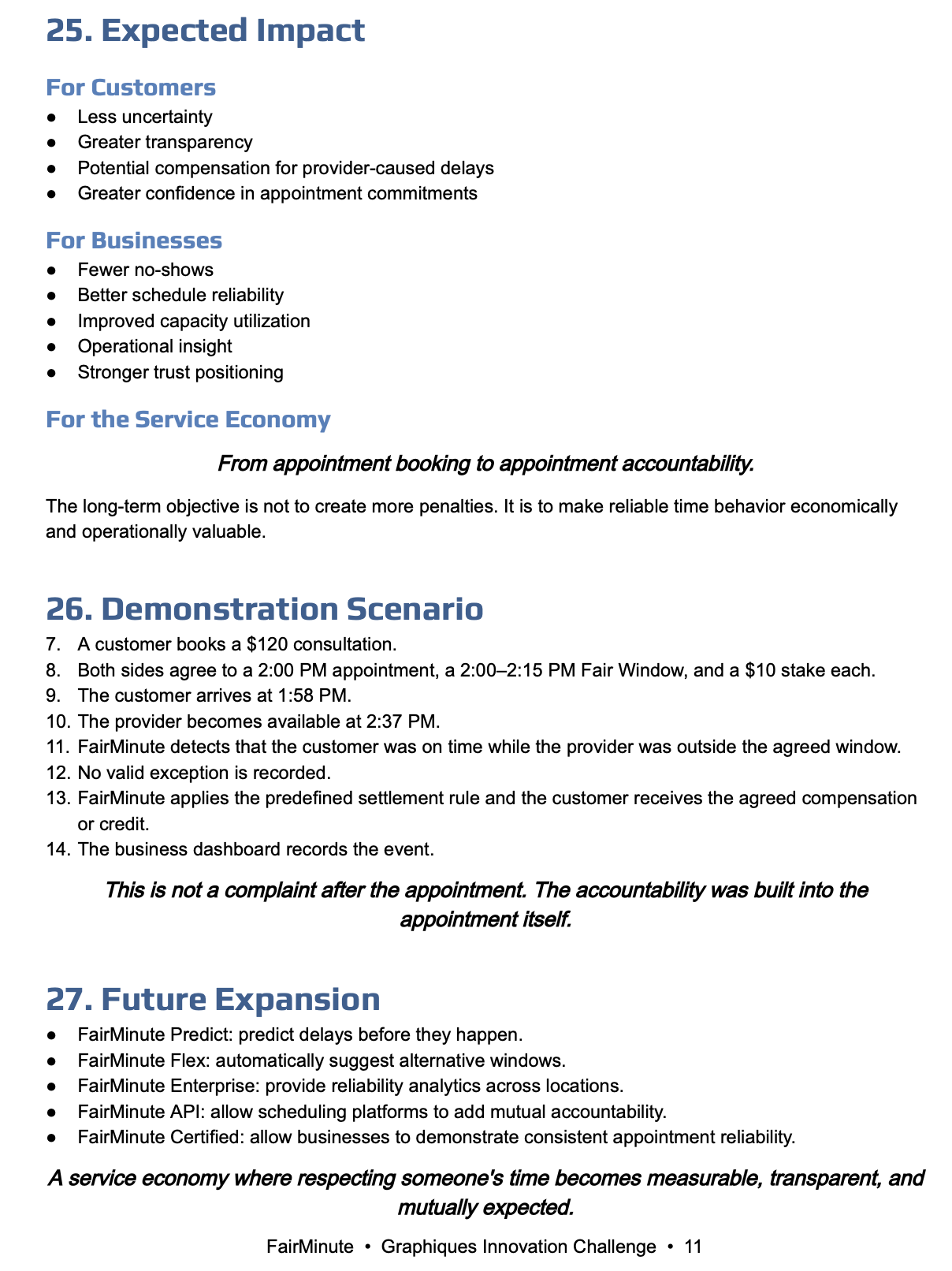
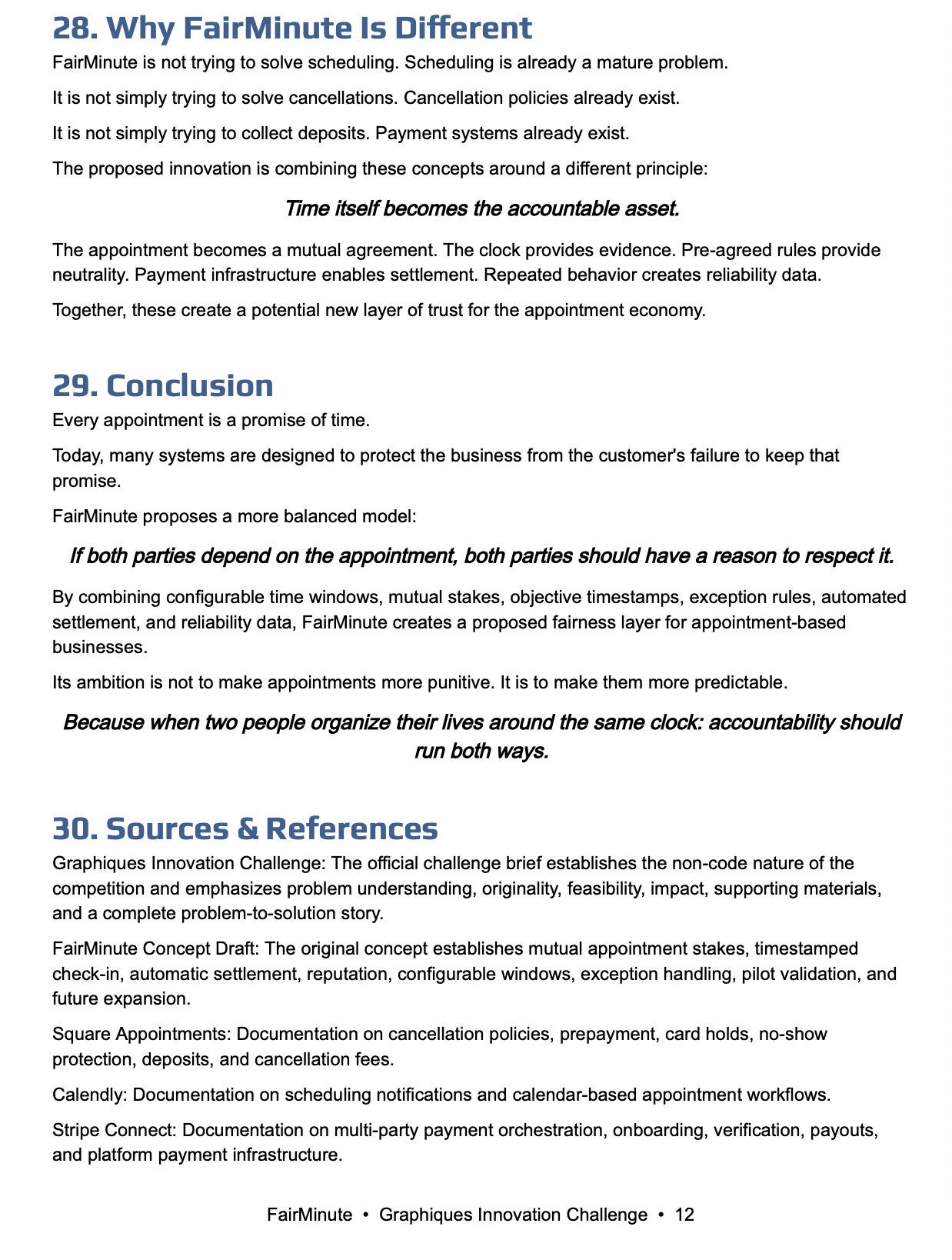
FairMinute is a mutual appointment-accountability layer. Before an appointment, both sides agree to a time window, a small stake, a grace period, and predefined exception rules. During the appointment, timestamps establish when each side became available. FairMinute then applies the agreed rules: If both sides keep the commitment, the stakes are returned. If one side breaks the commitment, the predefined settlement is triggered. If there is a legitimate exception, the appropriate exception rule applies. Repeated appointment behavior can contribute to a reliability profile. FairMinute is designed to work across different appointment-based services rather than being limited to one industry.
How we built it
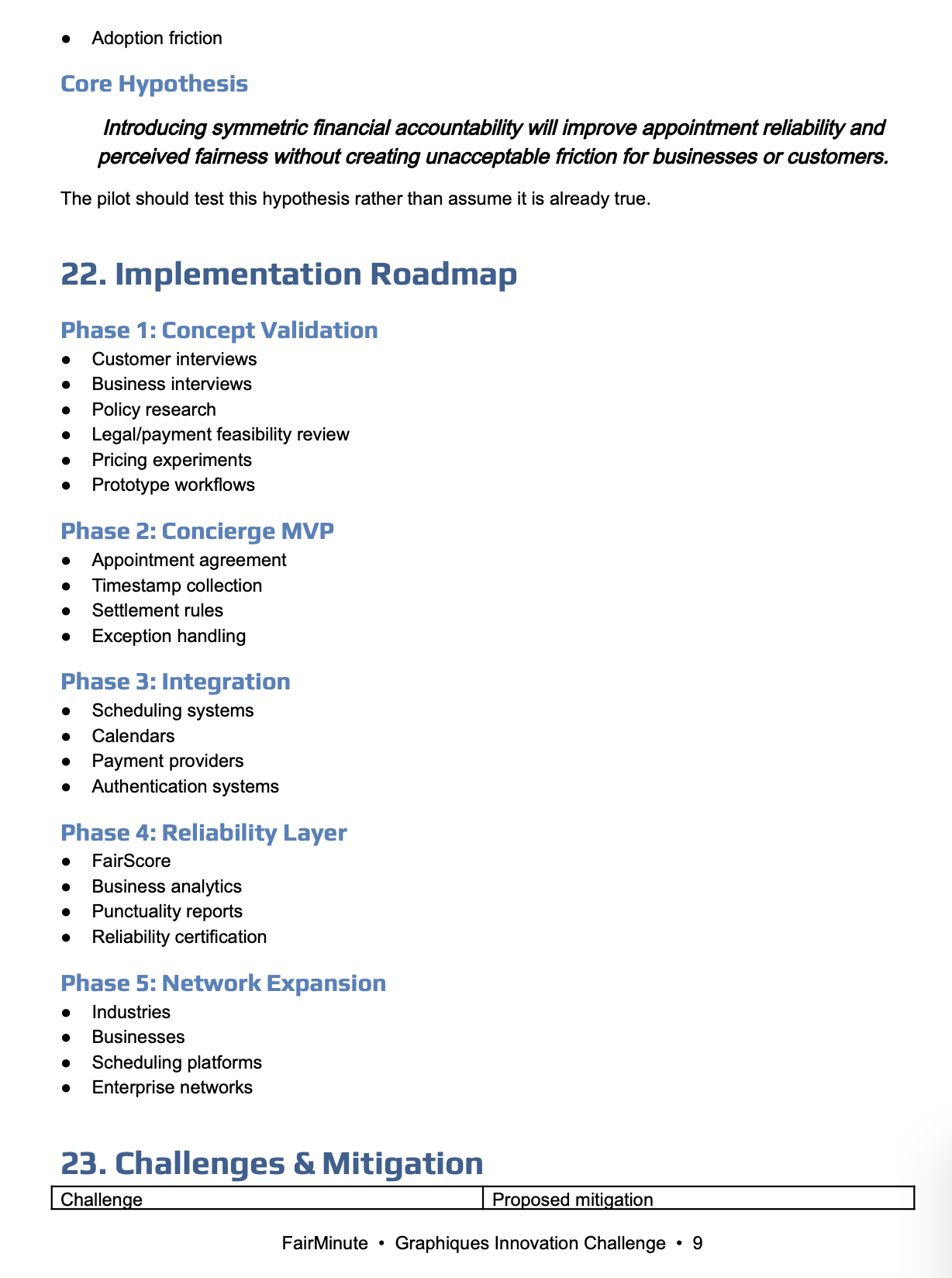
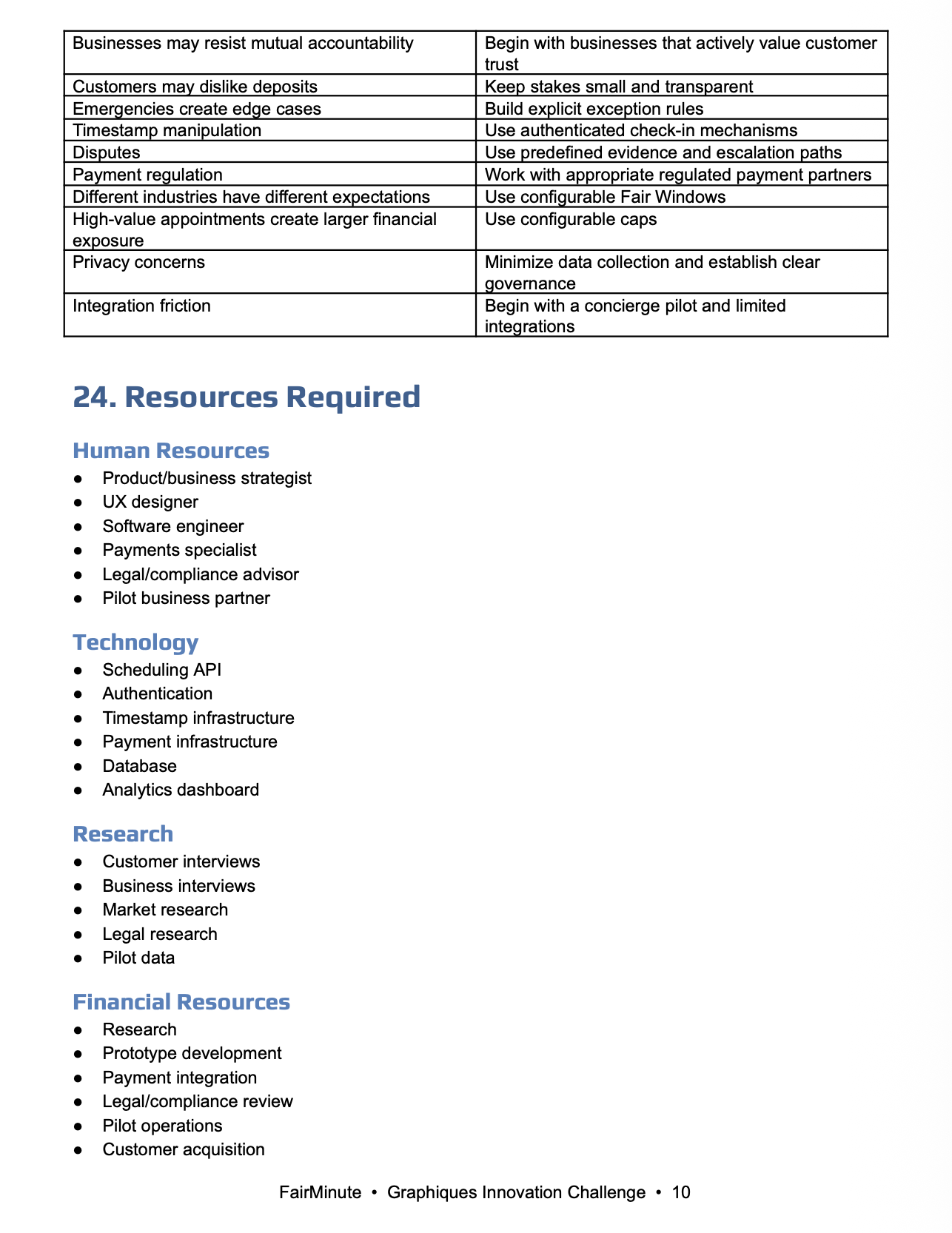
We approached FairMinute as a business and service-design innovation, rather than simply building another scheduling application. We first identified the underlying problem of asymmetric accountability and mapped the different situations that can occur before, during, and after an appointment. We then designed the FairMinute framework around six stages: FairBook → Commit → FairCheck → Fairness Engine → FairSettle → FairScore We developed the concept through process flows, stakeholder analysis, business-model thinking, financial assumptions, exception scenarios, and a proposed pilot. A major part of the design was making the system neutral. Instead of simply deciding who is "right," FairMinute uses pre-agreed rules and timestamped evidence to determine what should happen.
Challenges we ran into
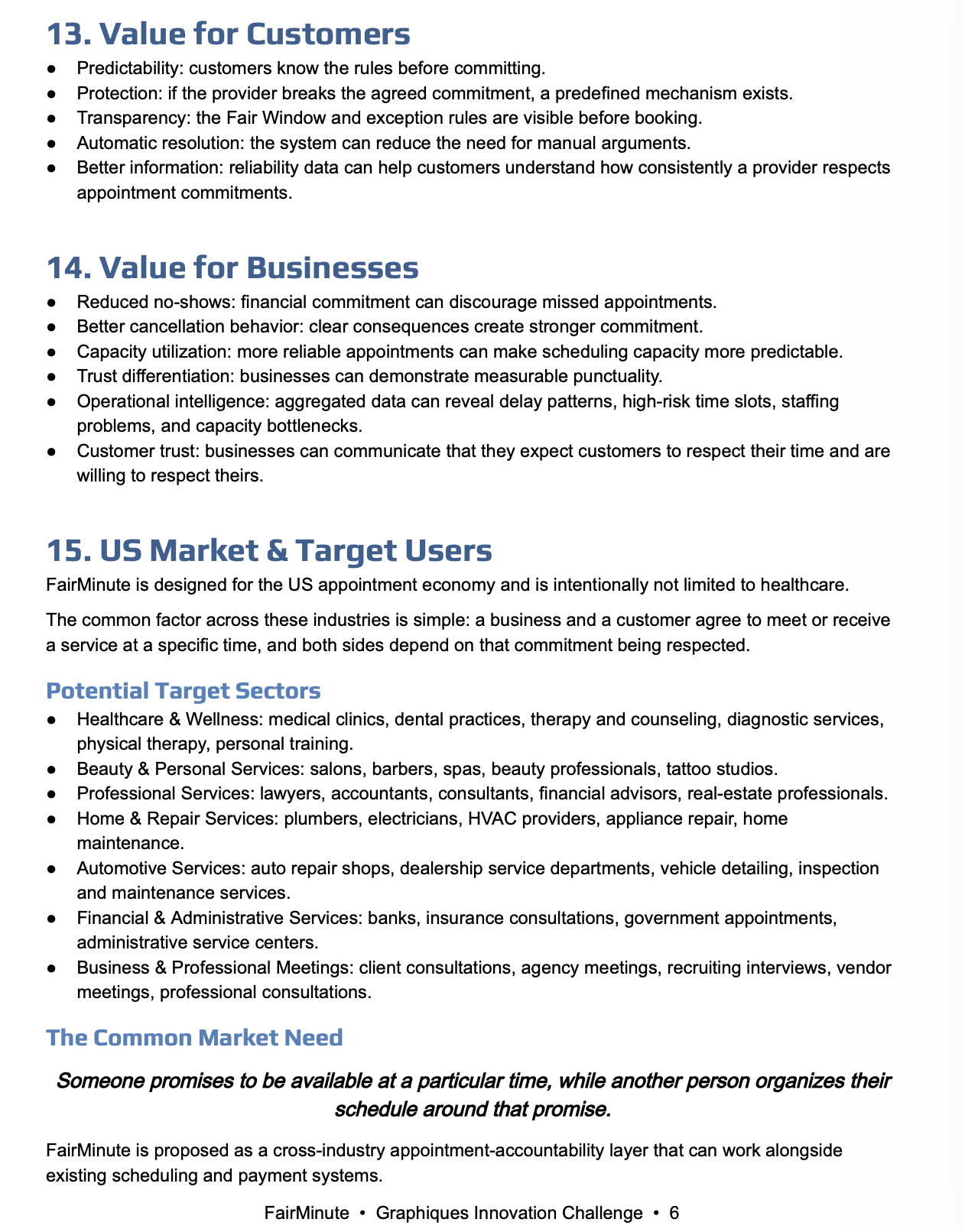
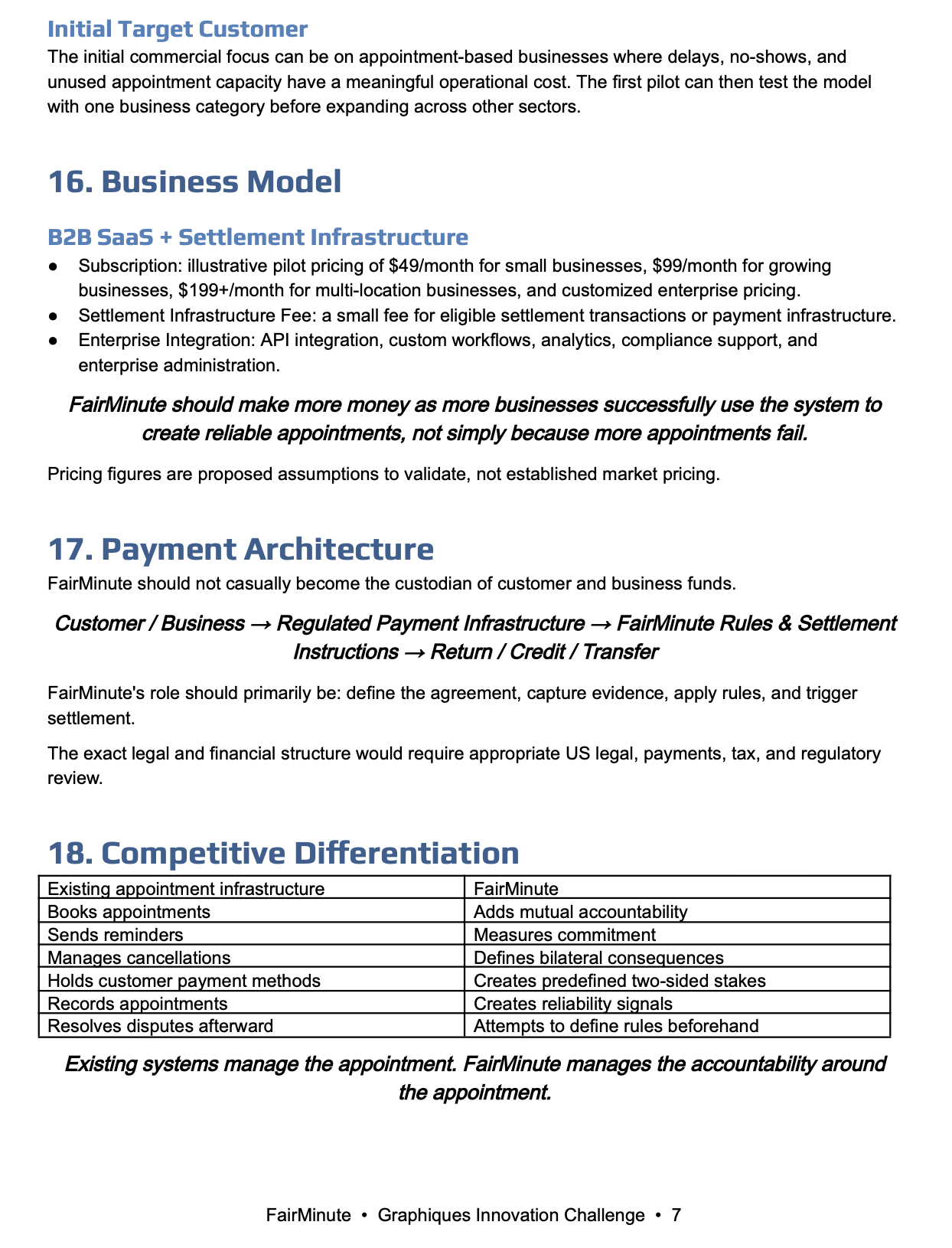
One of our biggest challenges was making the concept genuinely fair rather than simply creating another penalty system. Real appointments are messy. Emergencies happen, technology fails, people arrive at different locations, and sometimes both sides are delayed. We therefore had to think beyond the basic "late = pay" idea and design Fair Windows, grace periods, exception handling, and neutral outcomes. Another challenge was the financial side. We did not want FairMinute to become a system that profits more whenever people fail. This led us toward a B2B subscription and settlement-infrastructure model, where the platform's success is tied to adoption and reliable appointments rather than failures. We also had to consider how payments would work without FairMinute unnecessarily becoming the custodian of everyone's money. This led us to design the concept around appropriate regulated payment infrastructure
Accomplishments that we're proud of
We are proud that FairMinute evolved from a simple idea about waiting time into a broader appointment-accountability protocol. We developed a concept that: addresses both sides of an appointment, works across multiple service industries, incorporates financial accountability without making it punitive, includes objective time verification, handles exceptions, creates a potential reliability signal, and can sit on top of existing scheduling infrastructure. Most importantly, we moved beyond identifying the problem to designing a complete system around it, including the business model, payment structure, pilot strategy, implementation roadmap, and future expansion.
What we learned
We learned that solving a problem is not just about creating a feature. It is about understanding the incentives, behaviors, exceptions, economics, and trust surrounding that problem. We also learned that symmetry can completely change the design of a system. Once we stopped asking, "How do we stop customers from wasting business time?" and started asking, "How do we make both sides accountable for the time they commit?", the concept became much broader. The project also taught us the importance of designing for edge cases early. A system can look perfect in a simple scenario, but its real strength is revealed when something goes wrong.
What's next for FairMinute
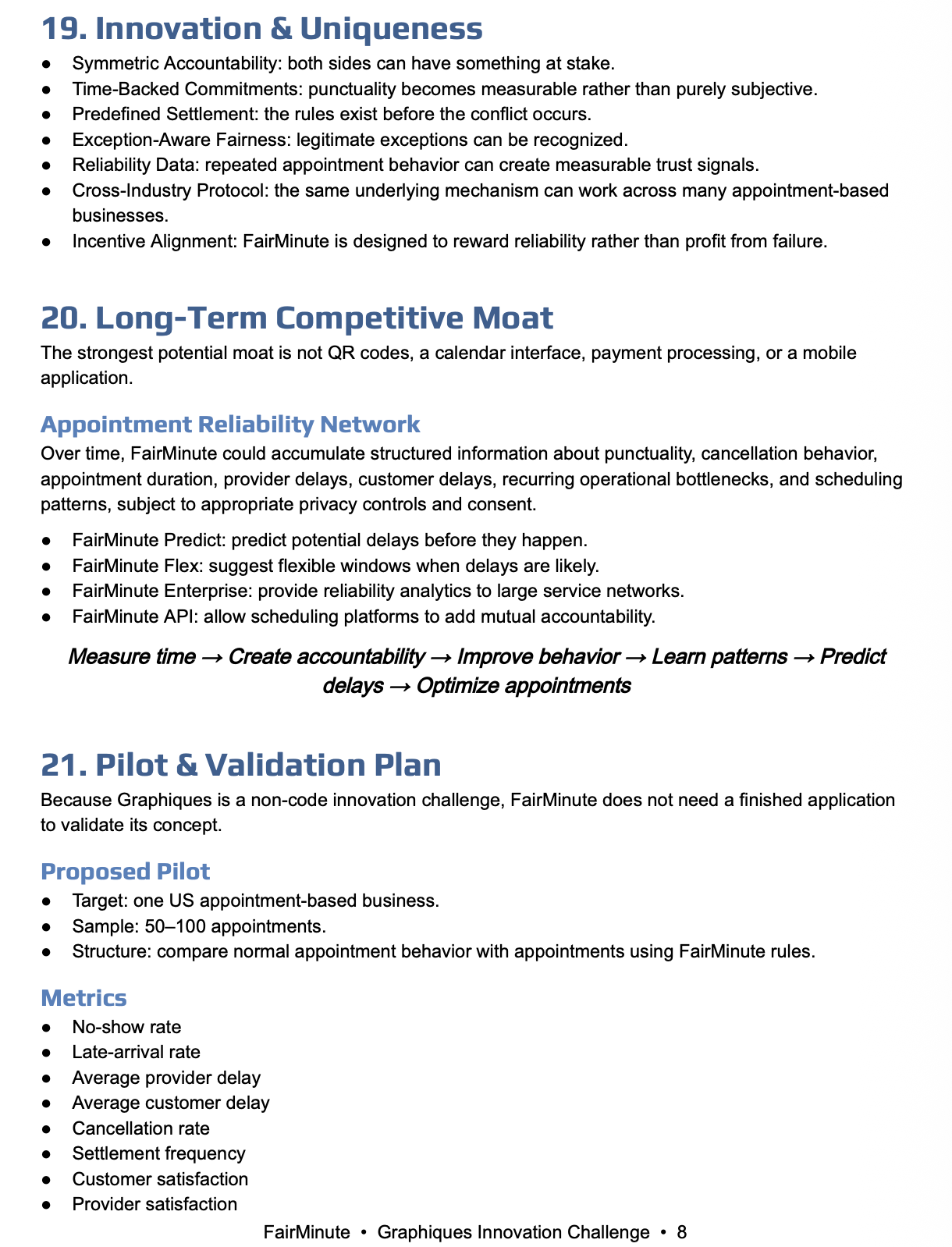
The next step is validation. We want to test FairMinute through a small pilot with real appointment-based businesses and measure: no-show rates, late arrivals, provider delays, cancellation behavior, settlement frequency, customer satisfaction, and business satisfaction. If the model proves effective, FairMinute could expand into a broader Appointment Reliability Network. Future possibilities include FairMinute Predict, which could identify potential delays; FairMinute Flex, which could recommend more reliable appointment windows; and an API layer that allows existing scheduling platforms to integrate mutual accountability. The next step is validation. We want to test FairMinute with real appointment-based businesses and measure whether mutual accountability can reduce no-shows, improve punctuality, and make appointments feel fairer for both sides. We would begin with a small pilot, study the results, improve the rules and exception handling, and then explore integrations with existing scheduling and payment systems.
Built With
- analytics
- canva
- claude
- data
- figma
- forms
- google-docs
- scheduling

Log in or sign up for Devpost to join the conversation.