-
-
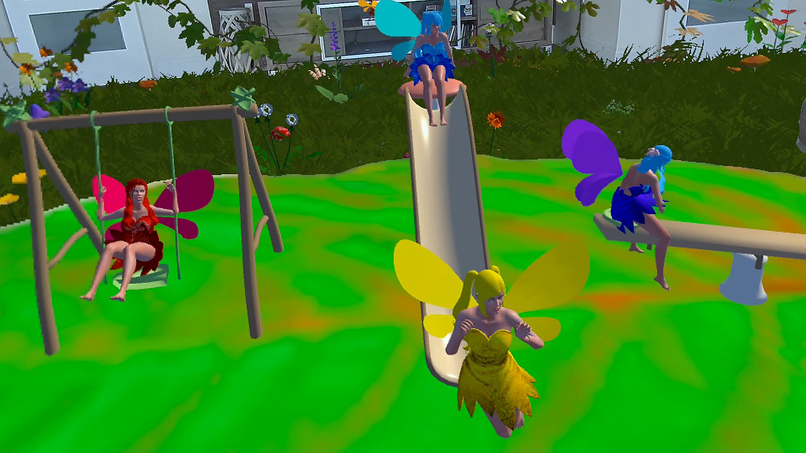
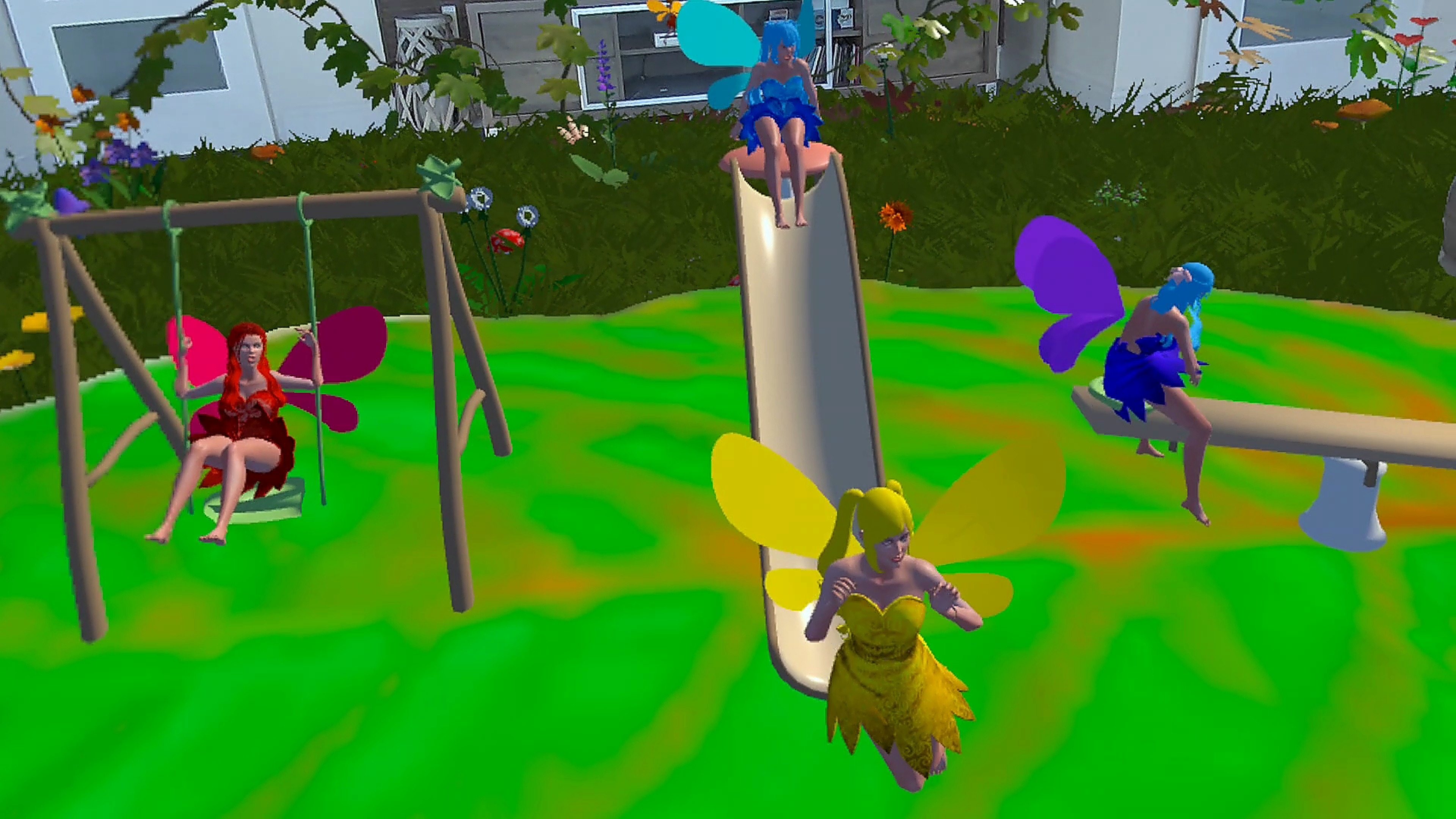
The fairies swing, slide and seesaw from a playground the player builds them.
-
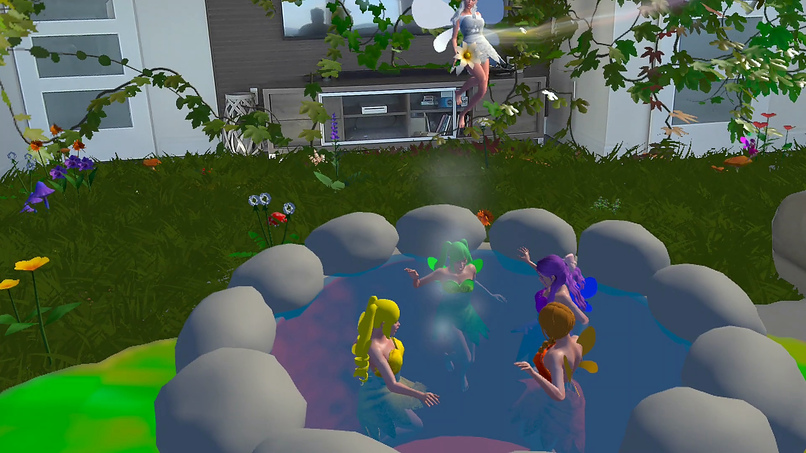
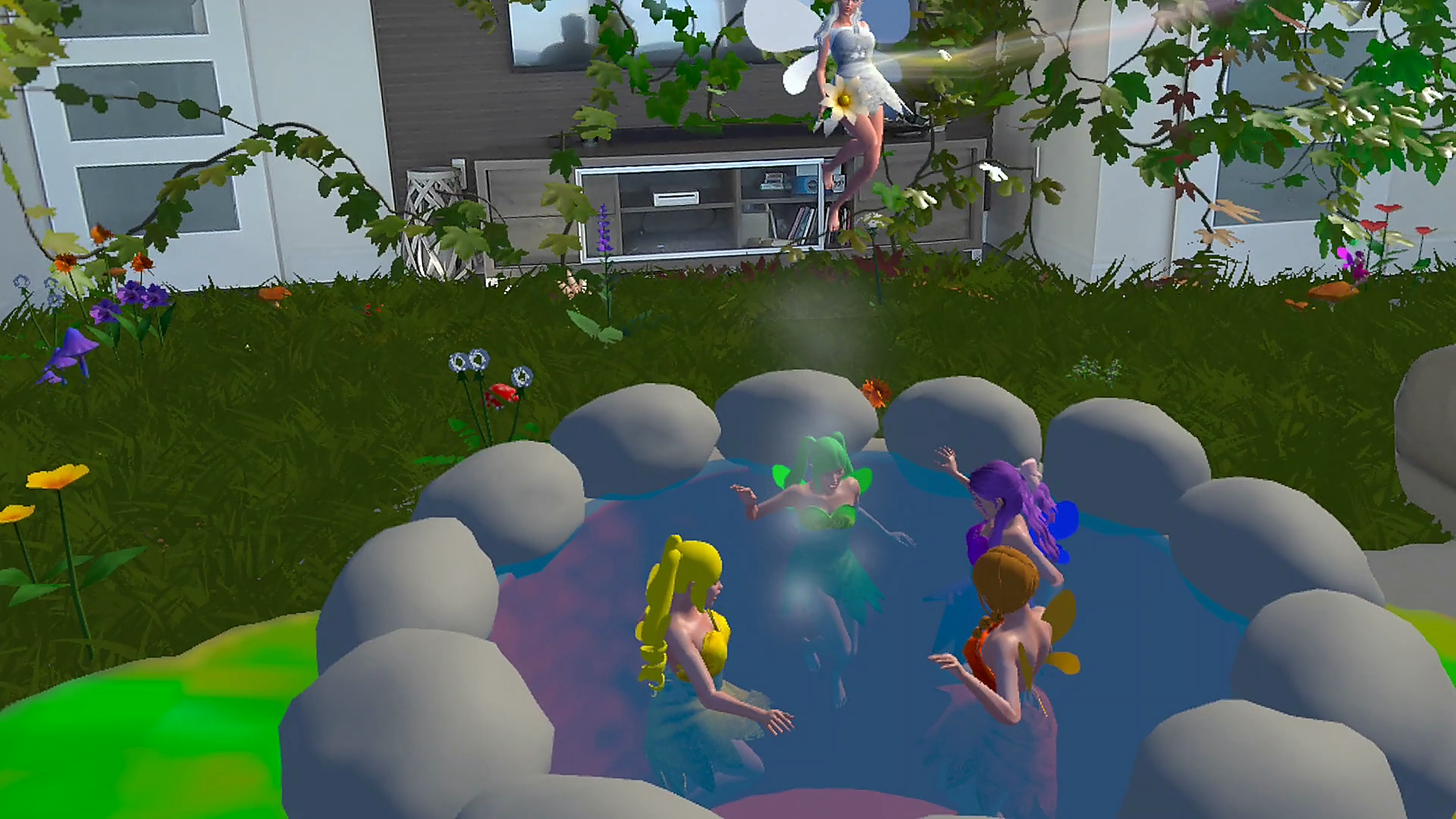
After a long day, the fairies relax in the hot spring the player built them.
-
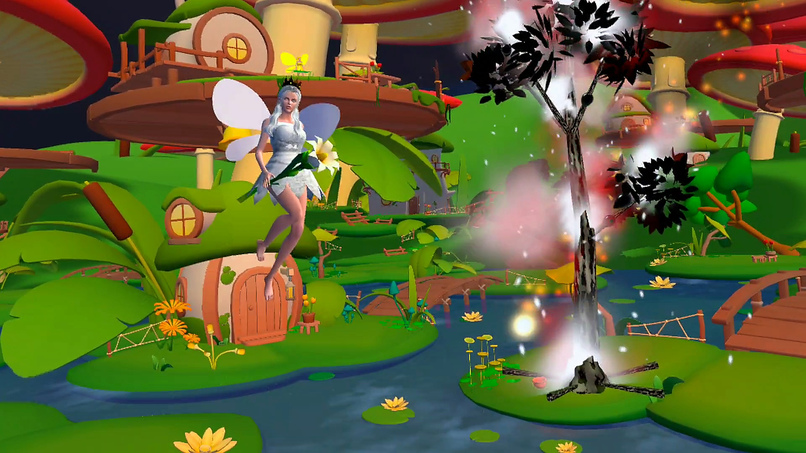
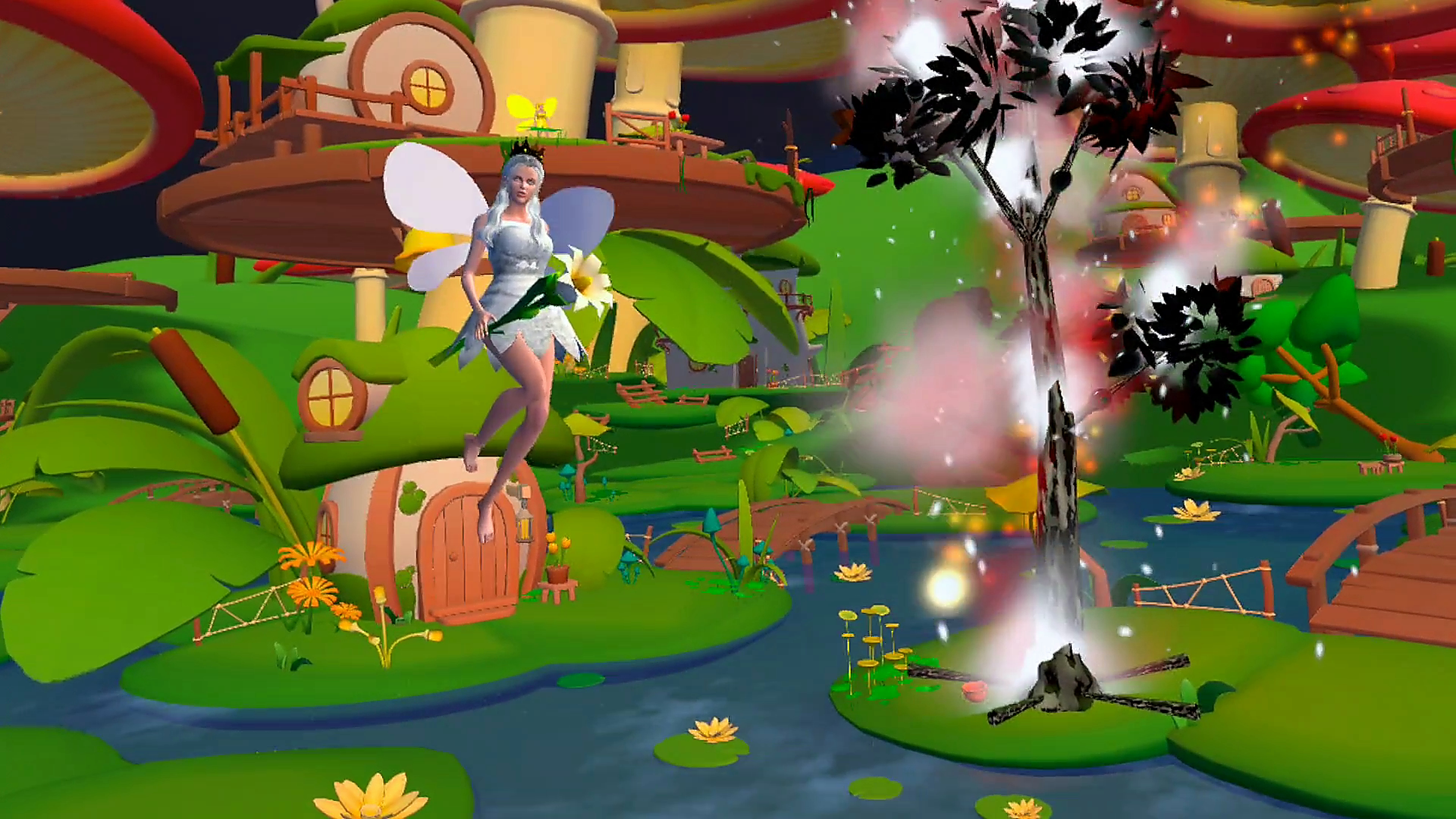
Lumi shows the player how the fairies’ home was destroyed.
-
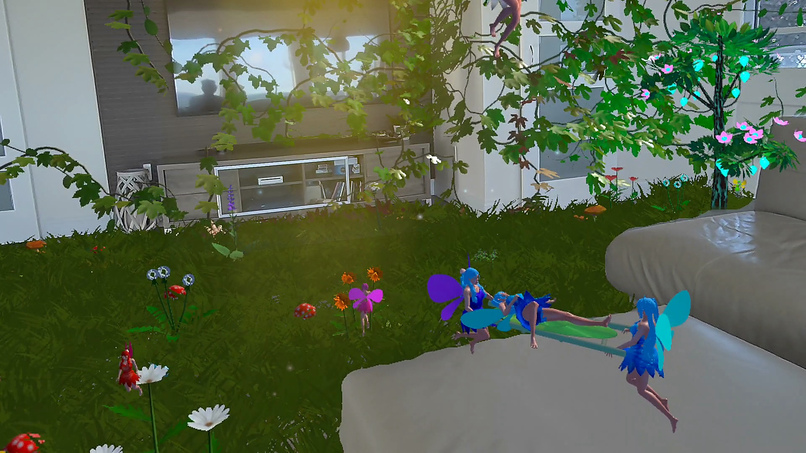
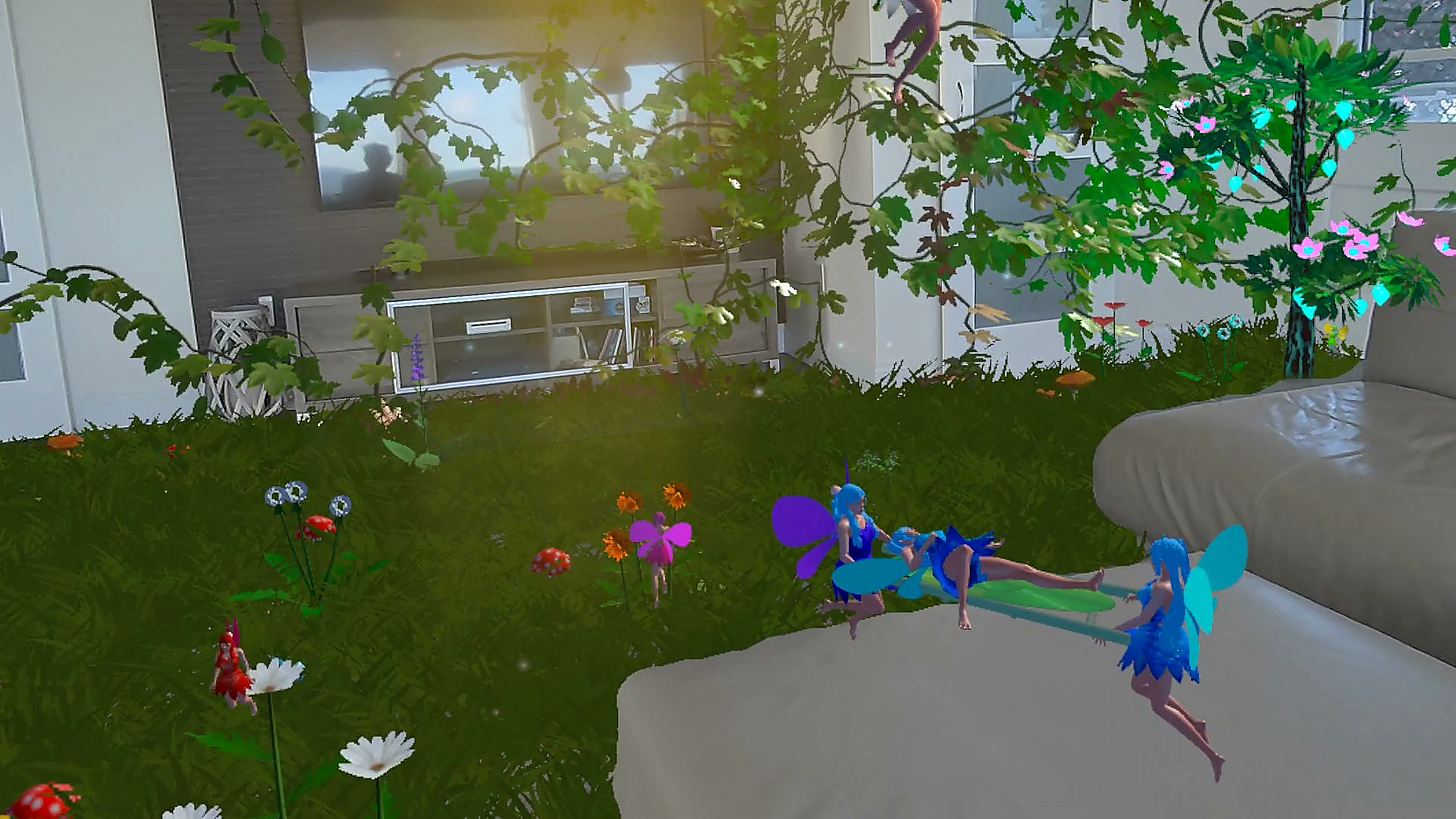
Fairies carry an injured friend across your real room for help.
-
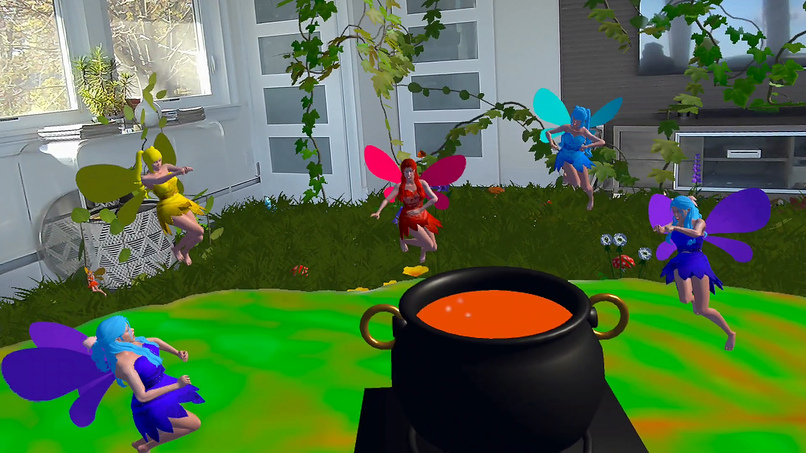
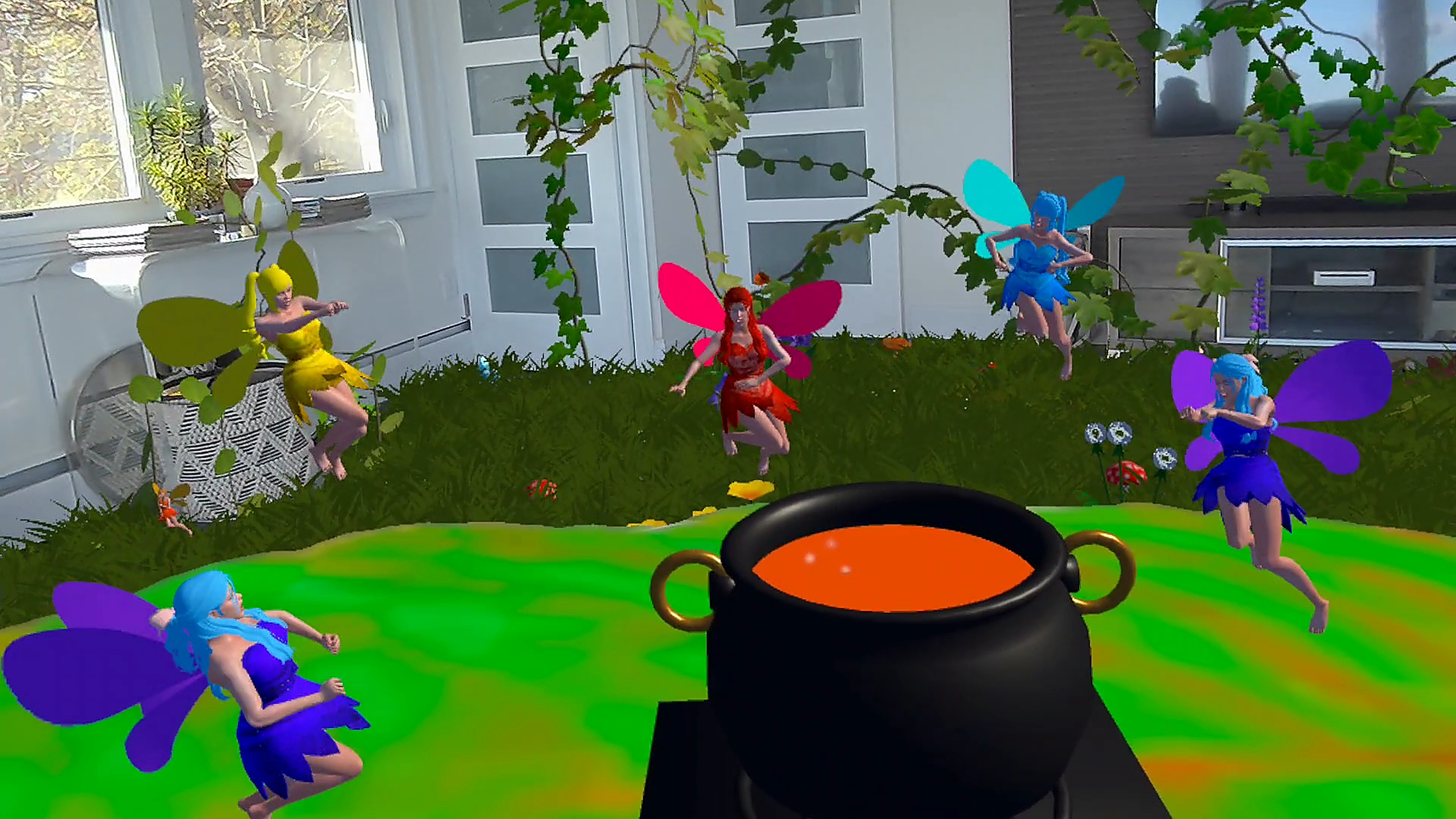
Harvest ingredients and cook soup for the whole colony.
-
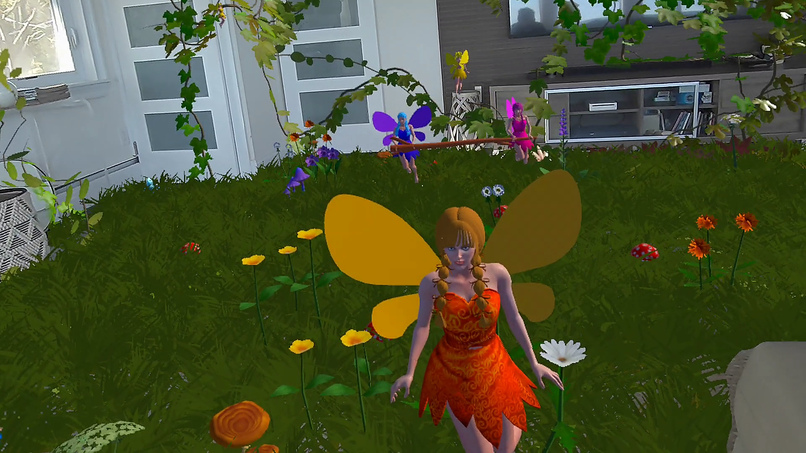
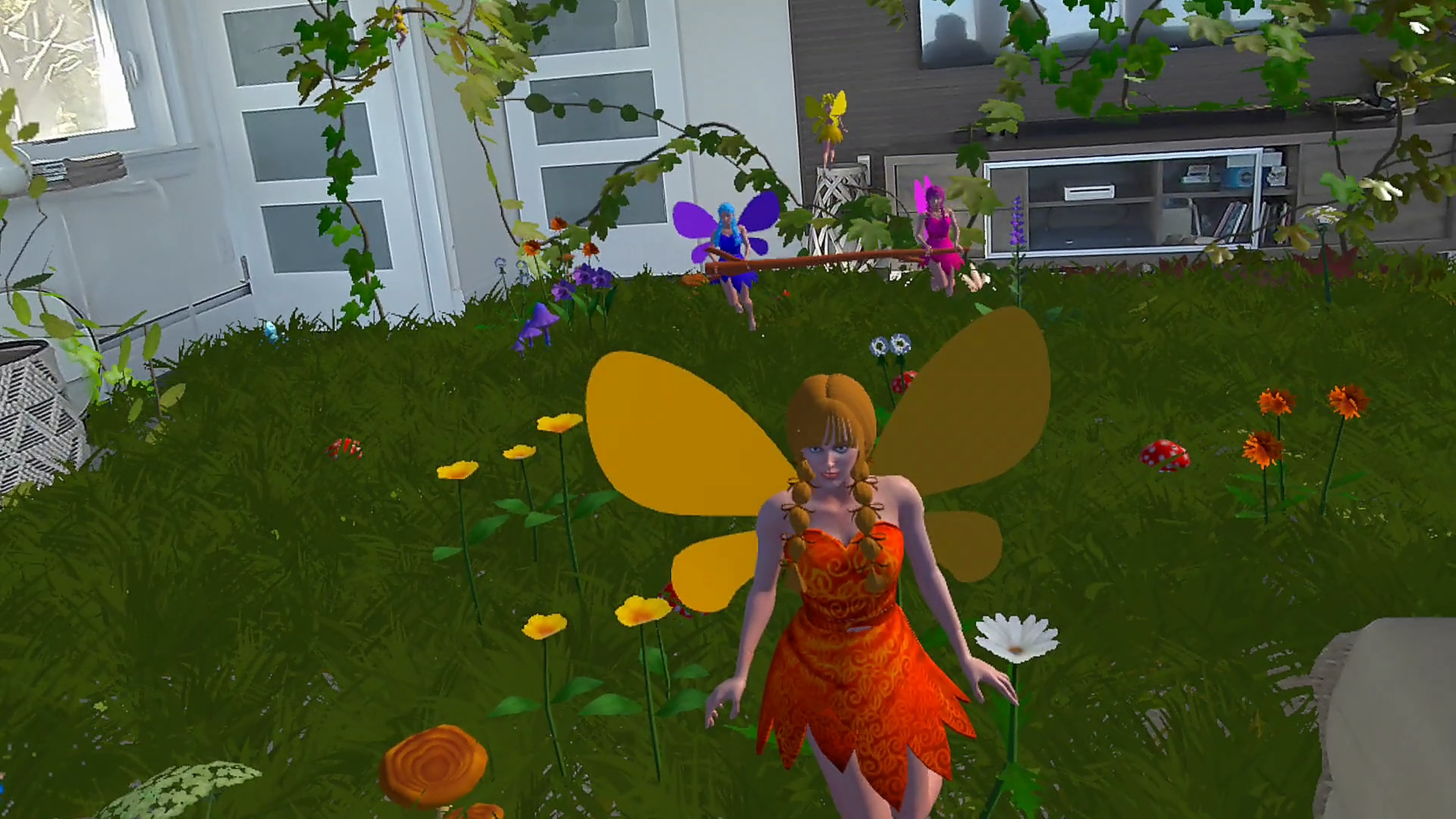
A fairy flies up to say hello while others play limbo behind her.
-
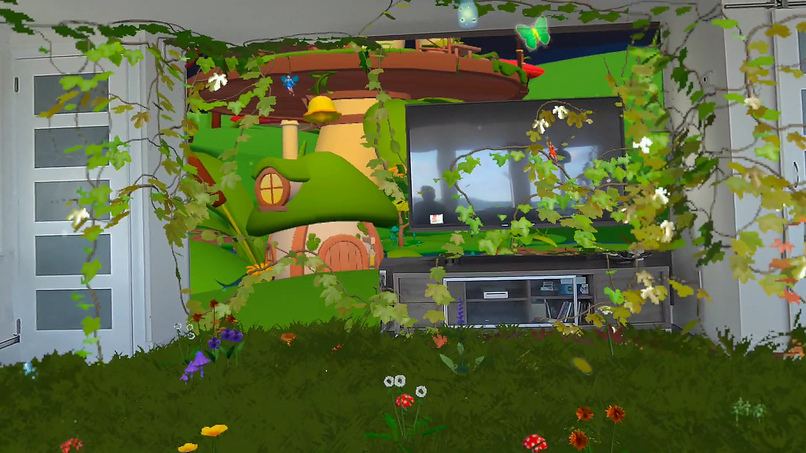
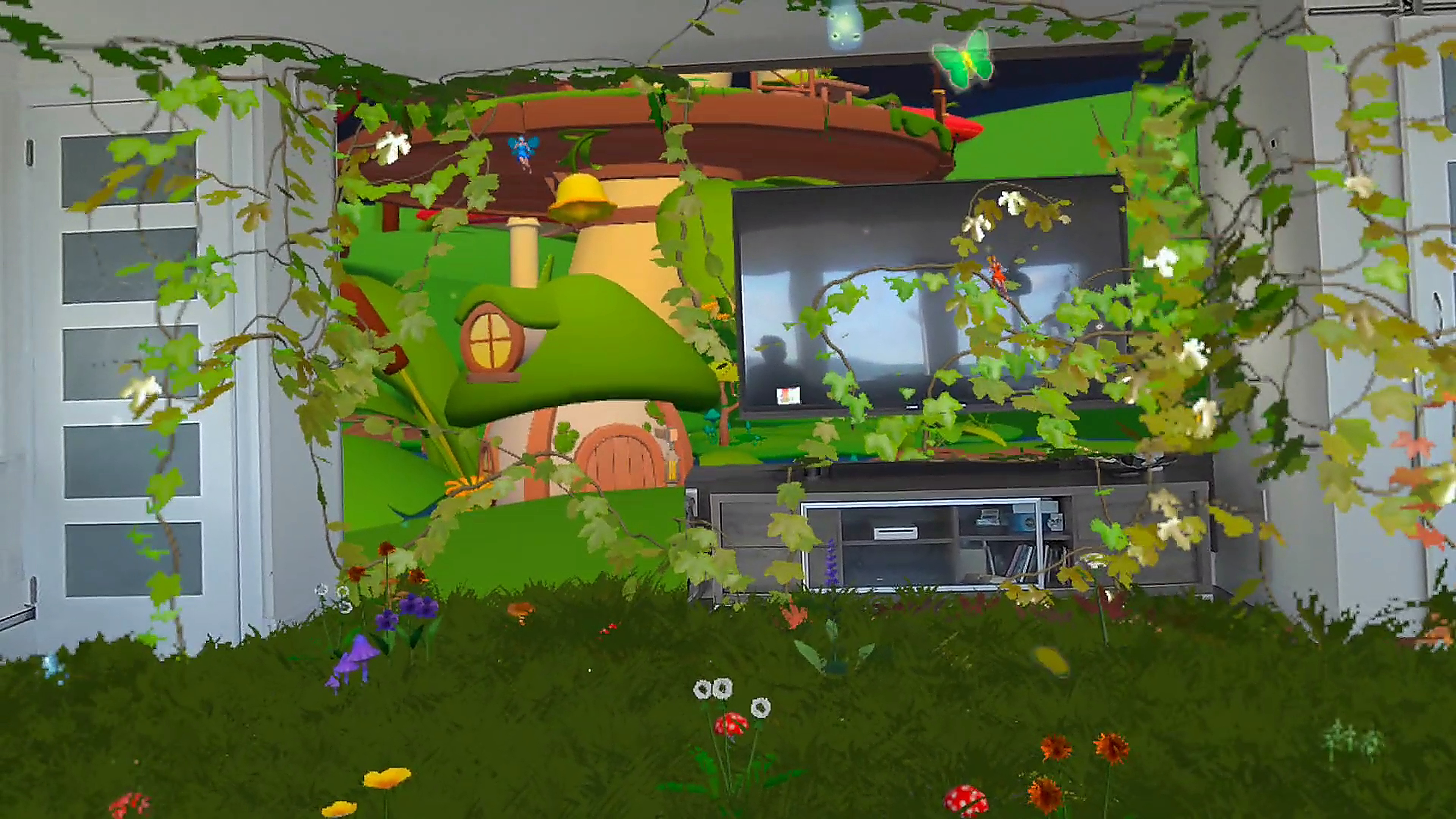
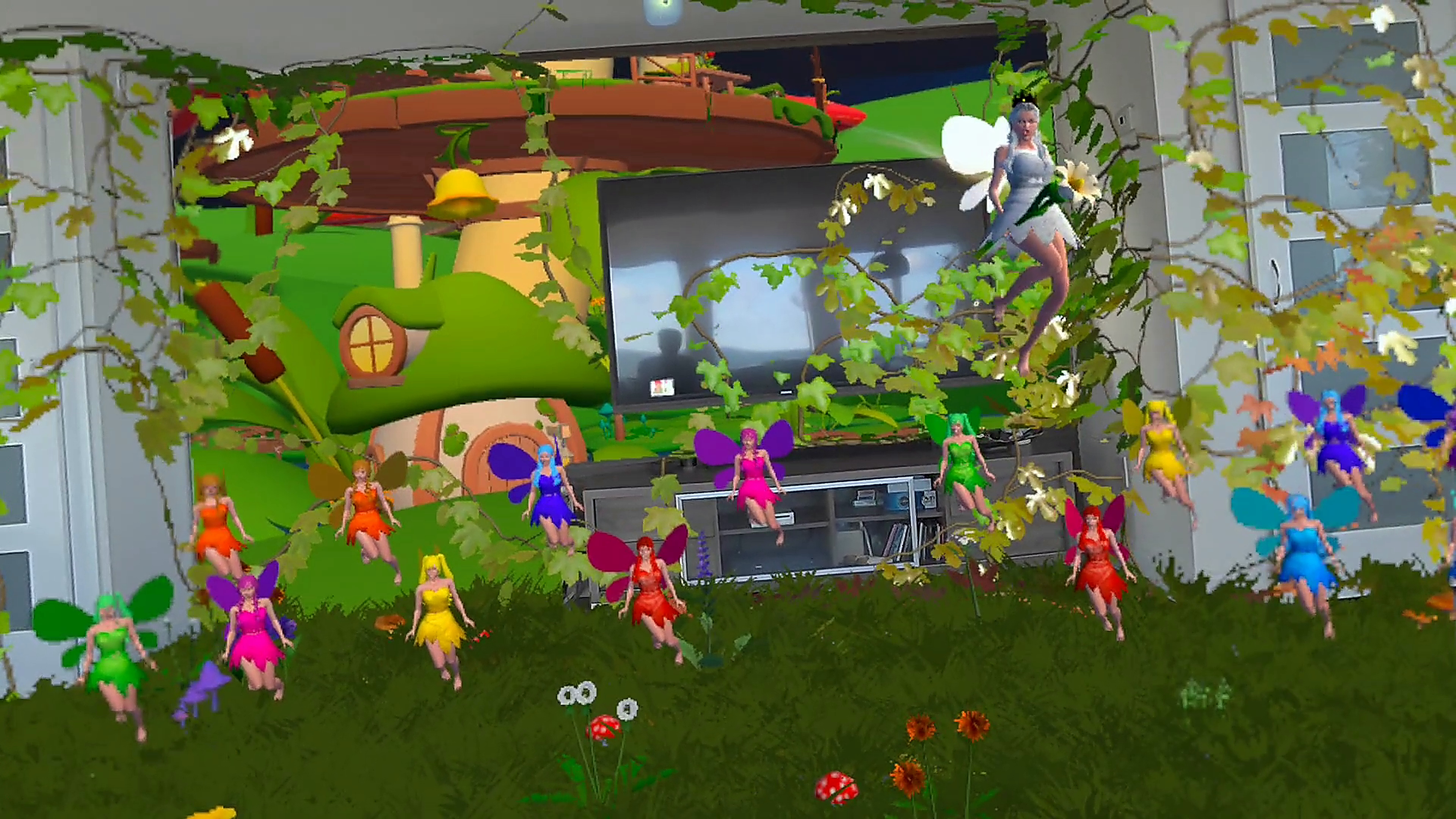
Their village grows right through your living room wall.
-
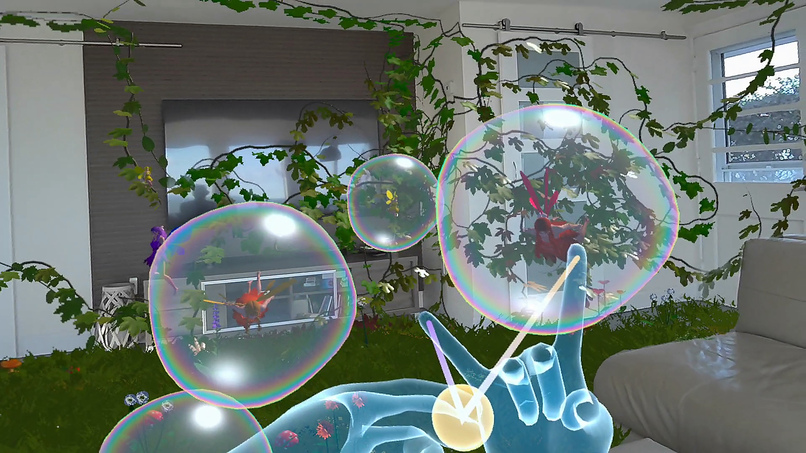
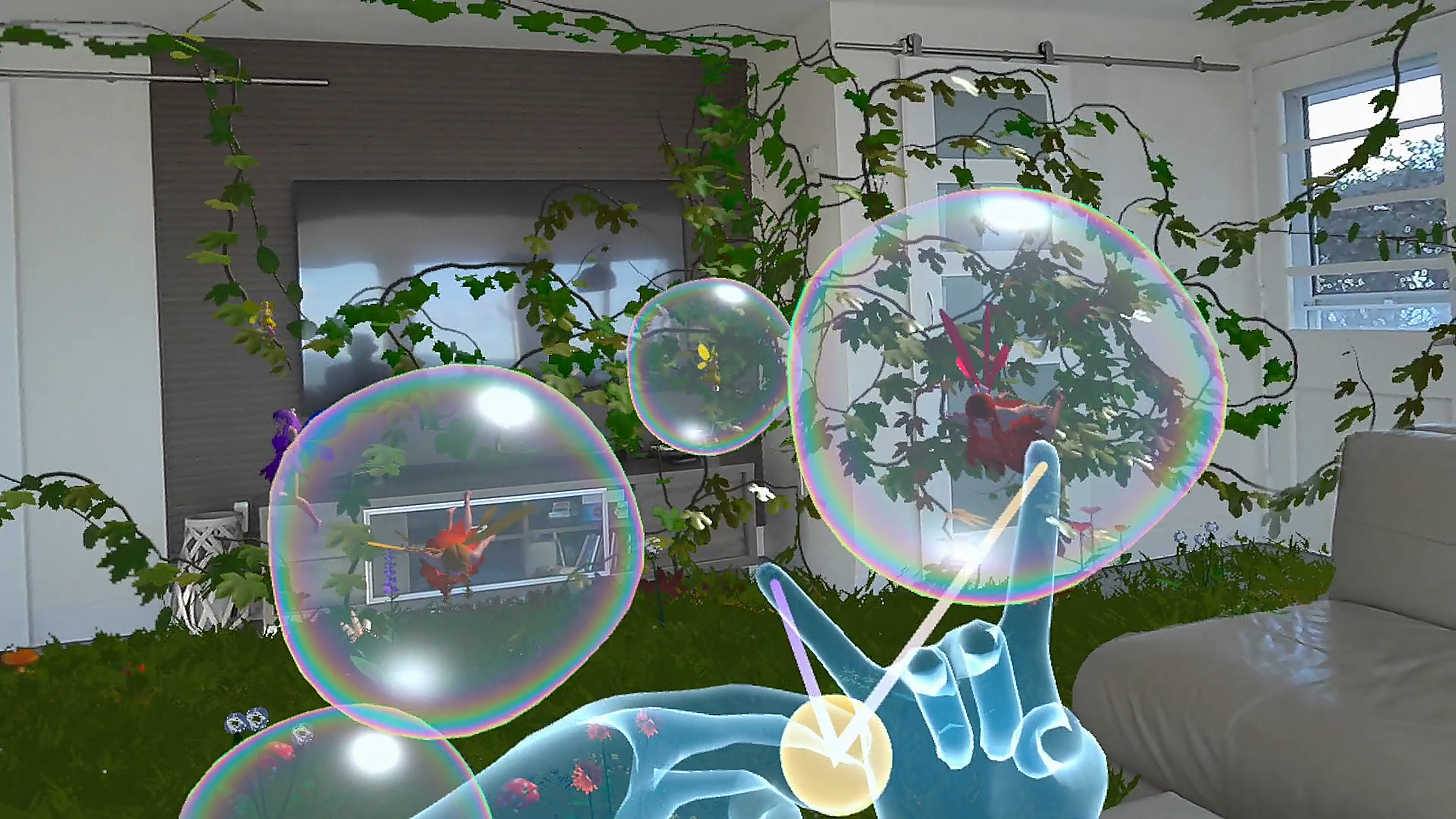
the players magic electric slingshot frees fairies trapped in magic bubbles.
-
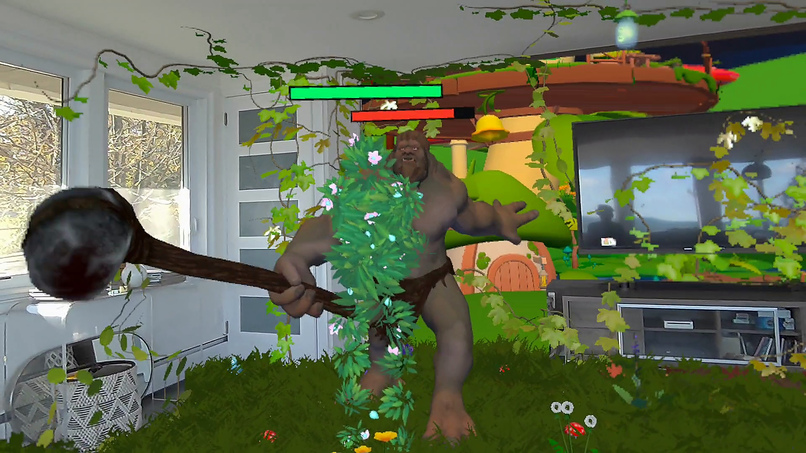
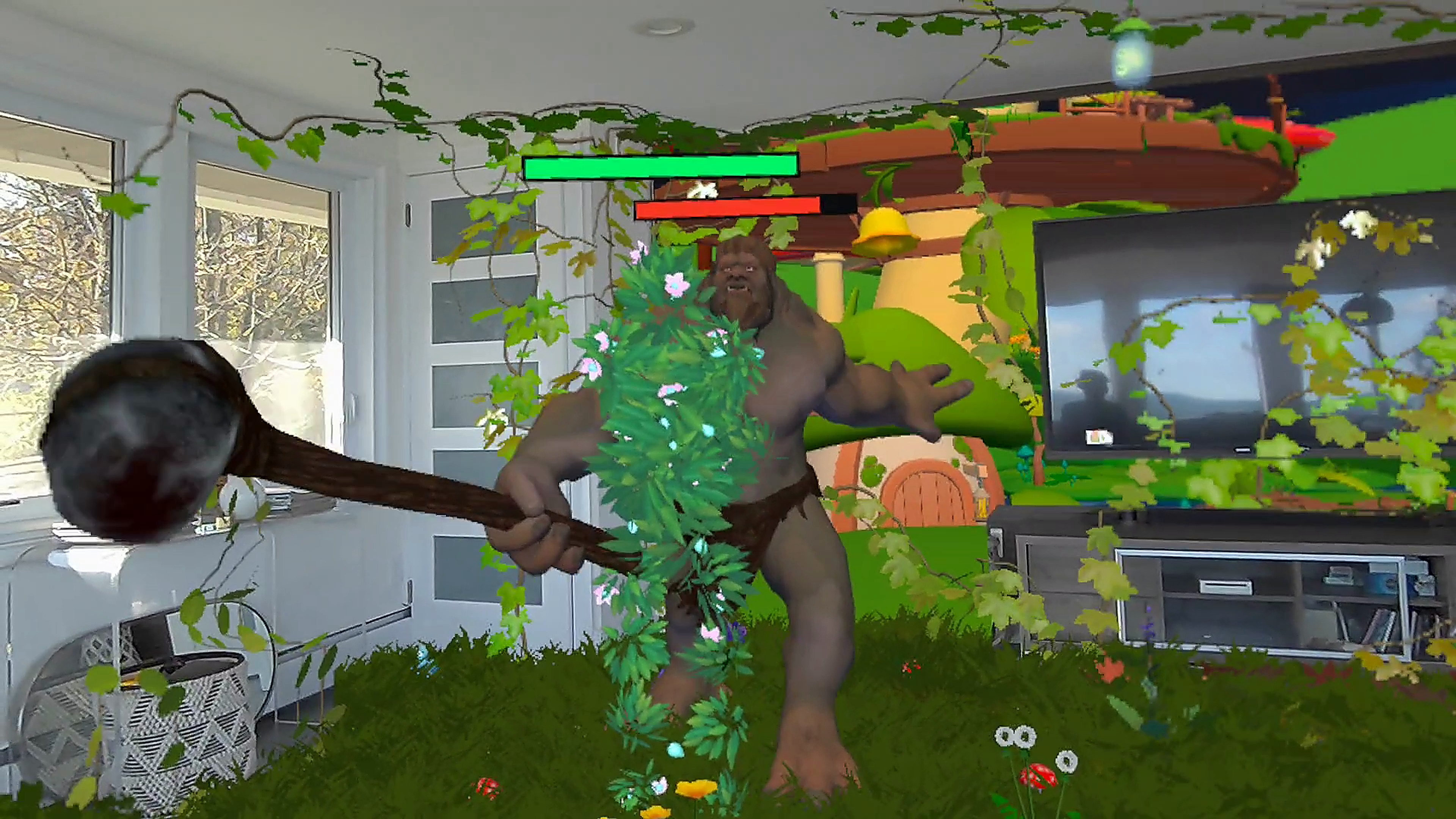
Defend the Heart Tree from the troll in the final battle.
-
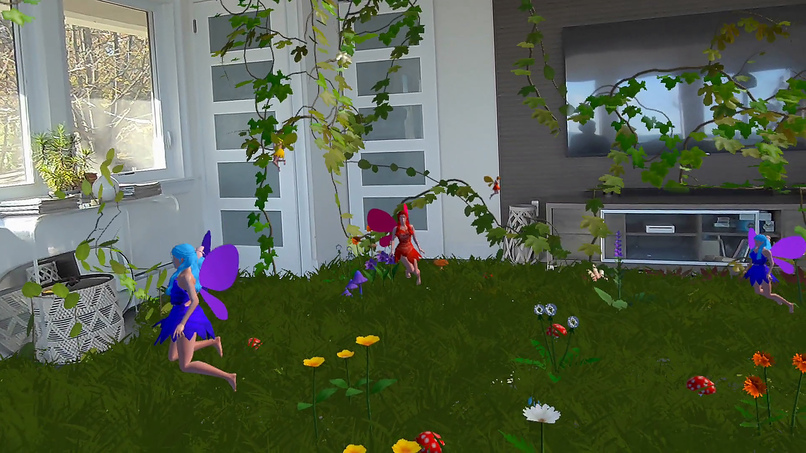
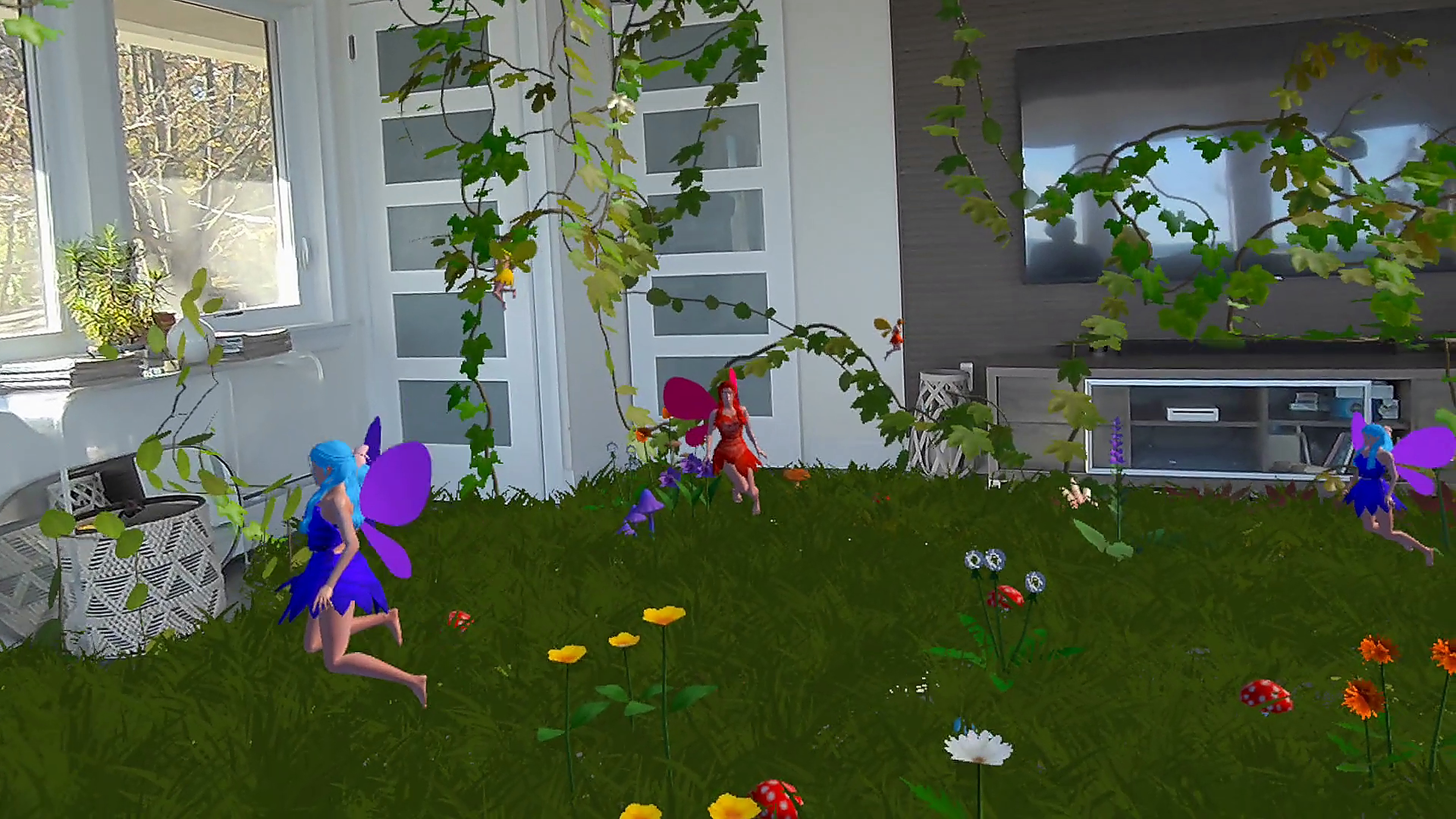
Fairies fly, land and play across your real room.
-
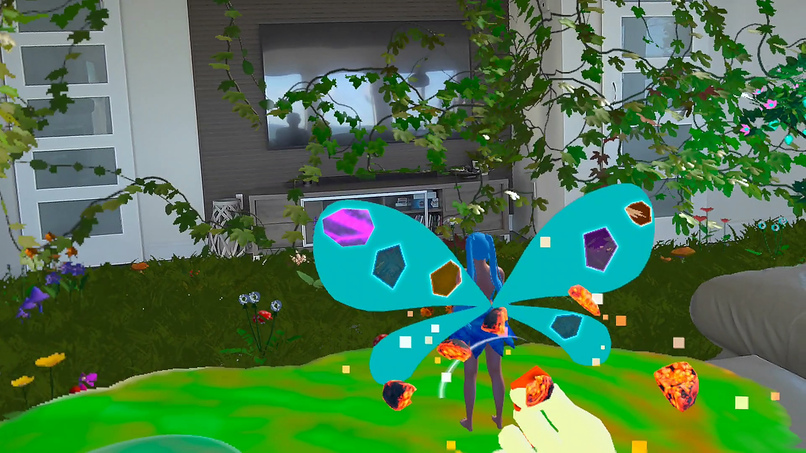
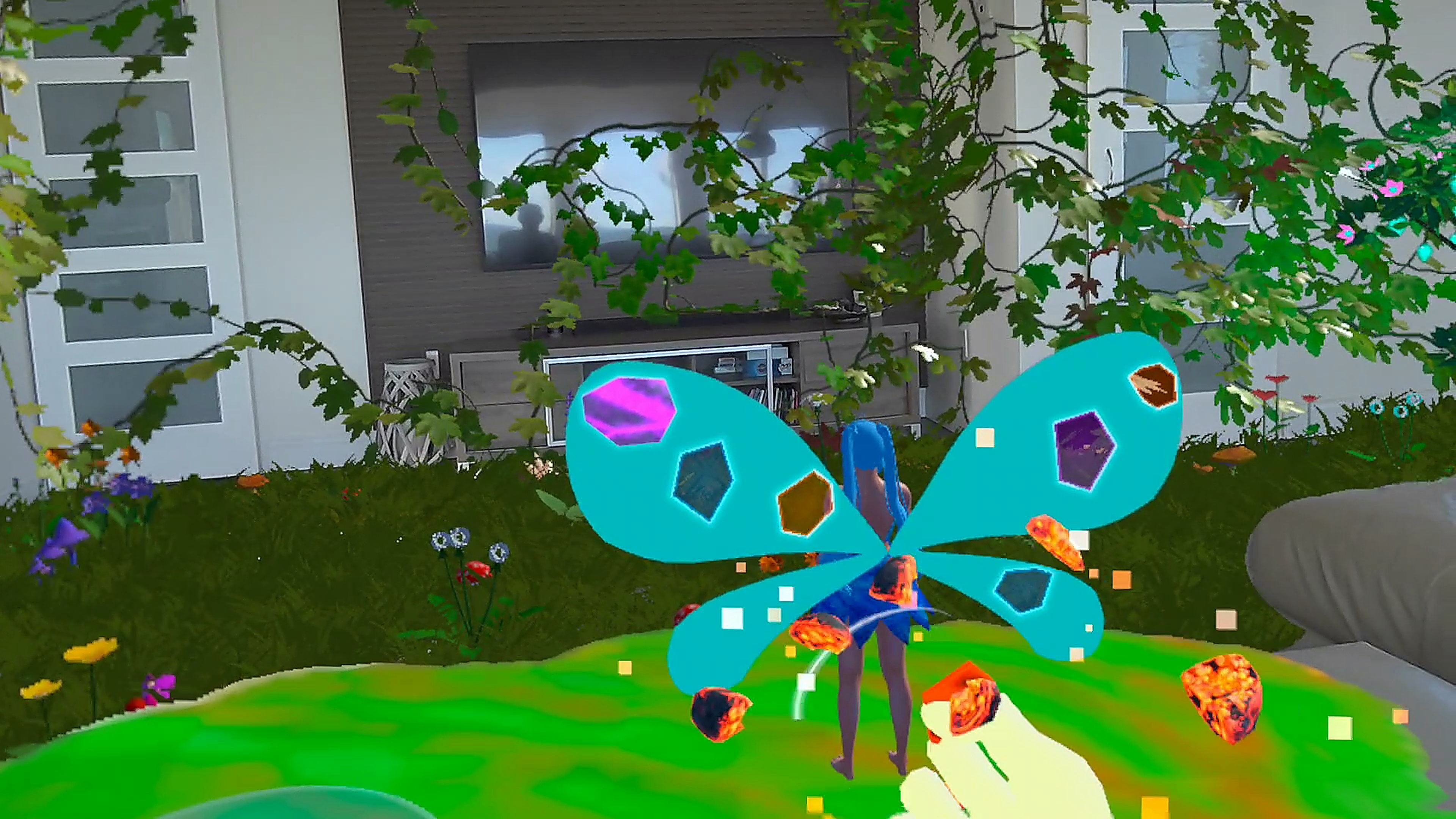
Repair a fairy’s broken wings with your own hands.
-
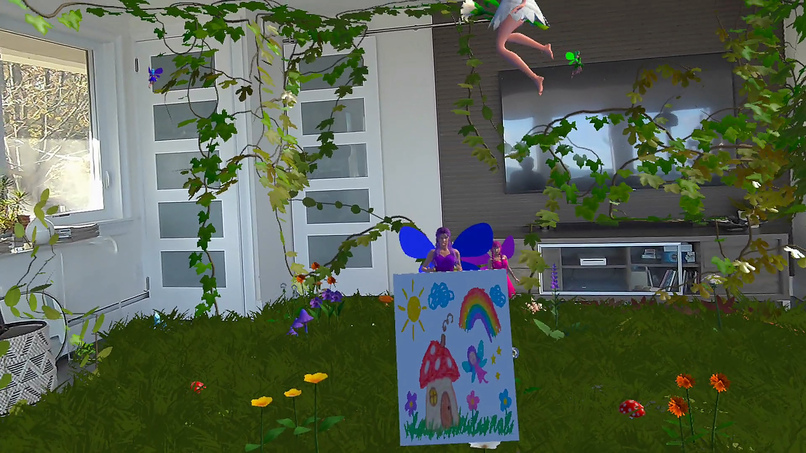
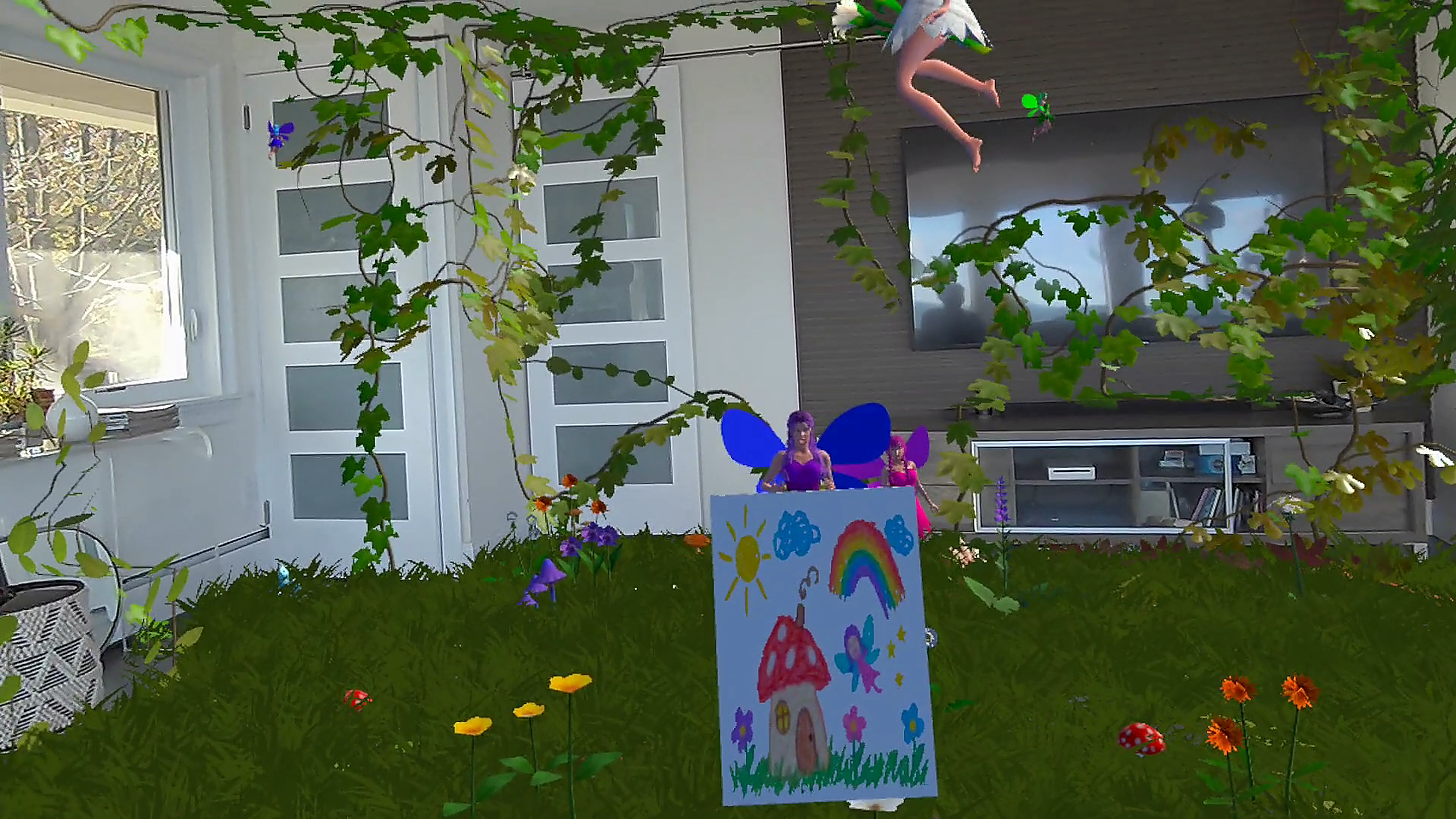
One of the fairies proudly show off a drawing they made for you and want to hang on your wall.
-
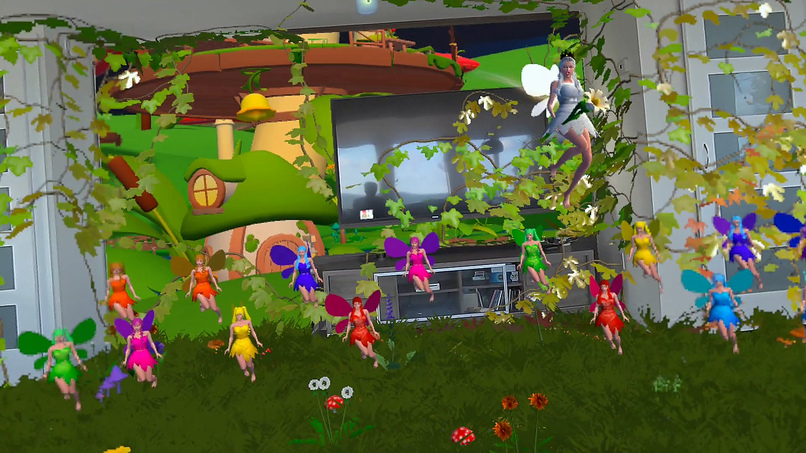
The whole colony gathers with Lumi in your living room.
-
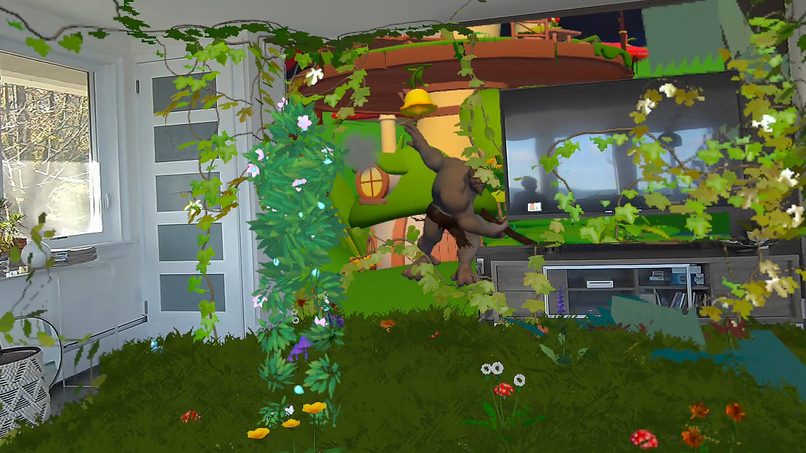
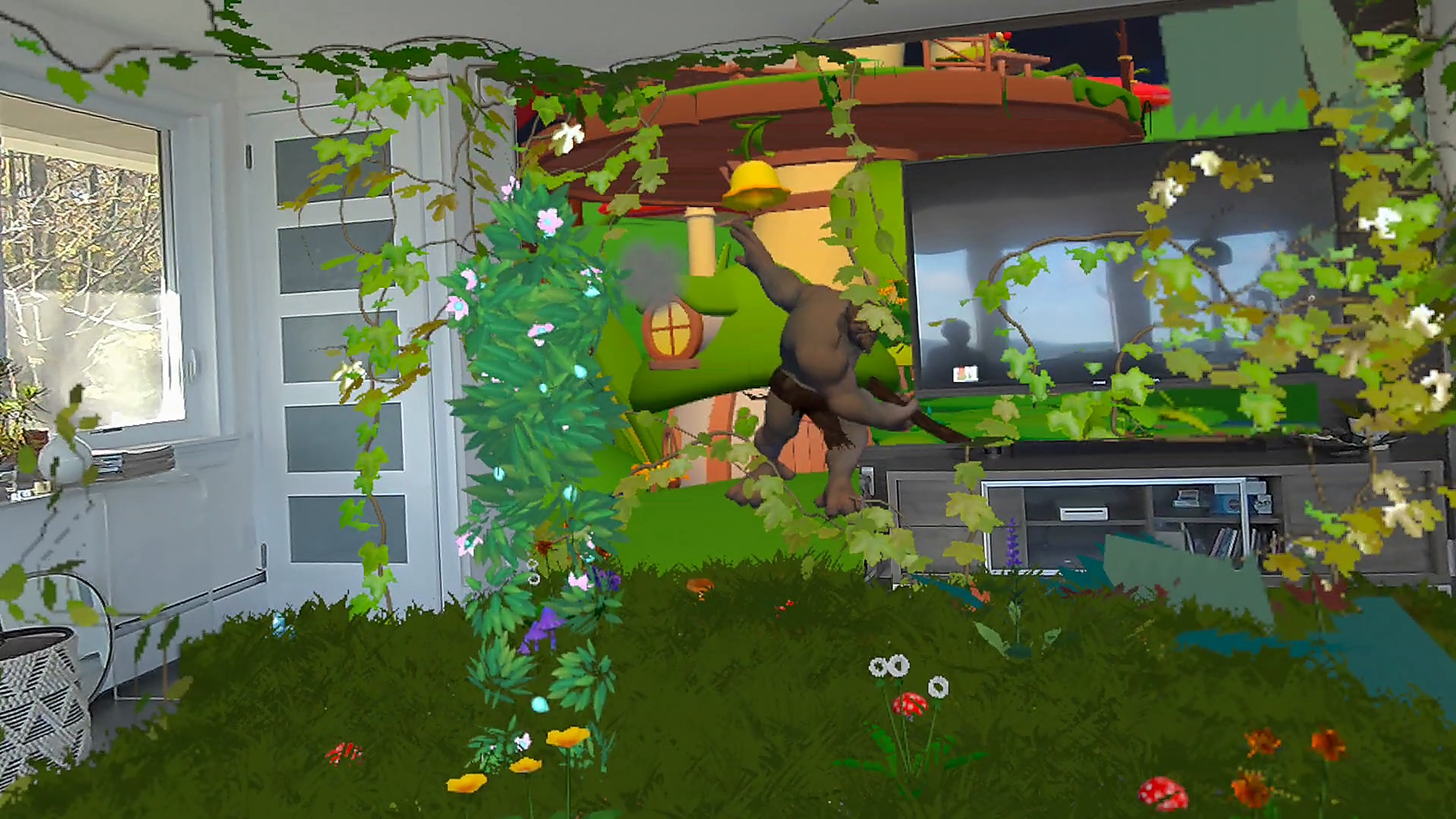
The troll who destroyed their village breaks through your wall.
Inspiration
I started with one rule: this had to be fully hand-tracked, no controllers. I didn't want hand tracking to feel like a bolted-on feature. I wanted something built from the ground up to show what your hands can do. I played Meta's First Hand to get a lot of my inspiration.
I also love mixed reality, and the two ideas fit together naturally. Hand tracking is at its most exciting when your hands can do things that are impossible in real life. So I looked for something that felt truly magical: using your hands in impossible ways while your real space transforms around you.
Fairies came to mind right away. The idea of them actually moving into your real living room felt magical and a little funny at the same time, and that became Fairies Live Here.
What it does
A small colony of fairies, guided by Lumi, arrives through the walls of your room. They build a village on your floor and furniture, grow Ivy, grass, mushrooms and flowers across your real surfaces, and get on with their lives around you.
Missions: harvest and cook food, grow a rain garden, clean up a flood, repair broken wings, and step in when mischievous fairies take their spells too far. Hand Magic: snap, flick, pinch, pull back a slingshot or shape a finger-gun fire spell. Each gesture does something different: summon clouds, make rain, lift water, put out fires. Living Characters: fairies land on your hand and react when you look at them. Between missions they throw birthday parties, play limbo, challenge you to rock-paper-scissors and get into plenty of trouble. Personalities and Relationships: every fairy has its own personality and builds relationships with the other fairies and with you. Every action has a consequence, and how you treat them shapes how they behave toward you and toward each other. The Finale: The troll who destroyed their village rampages through your wall, and you defend the Heart Tree with full-body hand gestures.
The whole experience is hands-first, end to end: no controller is ever needed. Voice is optional. You can answer Lumi out loud, but every answer also works with a gesture, and nothing ever waits on your voice.
How I built it
- Unity 6 (6000.3) with Meta XR SDK v207: Interaction SDK hand tracking, passthrough and the Mixed Reality Utility Kit (MRUK).
- MRUK reads the player's room (walls, floor, ceiling and furniture), so fairies spawn, fly, land and grow plants on real surfaces. If no room has been scanned, a built-in prefab room loads instead, so anyone can play right away.
- Custom gesture detectors for snaps, flicks, finger guns, slingshot pulls, palm landings and two-arm poses, all built on raw hand-joint data.
- Meta Voice SDK (Wit.ai), used only for optional spoken answers to Lumi.
- Eye tracking (where supported) lets fairies react to where you look.
- An idle-event system strings together short fairy stories, so the room stays alive between missions.
Challenges I ran into
- Performance on Quest. The source environment models were huge. Decimating them in Blender cut them to a few percent of their original size: the Lantern Palace went from 840 MB to 17.6 MB. On top of that, prefab prewarming, baked shadows and an overdraw limiter keep the frame rate steady in busy scenes.
- Gestures without false positives. A finger-gun spell that fires every time your index finger points and your thumb bends isn't fun. Tuning thresholds, hold times and cooldowns for each gesture took many rounds of testing in the headset.
- Every room is different. Fairies need safe places to spawn and fly in any room shape, so I wrote room-boundary checks and safe-spawn fallbacks.
- Lumi hearing herself. The microphone sometimes picked up Lumi's own question from the speakers, so the game ignores any transcription made only of her own words.
Accomplishments that I'm proud of
- The game is built around your real room. Everything depends on your actual space, so the fairies feel like they're really there with you, and no two rooms play the same way.
- Every fairy has a unique personality. Each one keeps track of its interests and relationships, with the other fairies and with you. Your actions have real consequences, so every playthrough feels a little different.
What I learned
I had never built a game where everything depends on two things at once: how you treat the fairies and your real room. Learning to do that was the most interesting part of the project.
Every system had to respect the player's real environment, from ivy growing along your walls to firefly lanterns hanging from your ceiling. Mixed reality is strongest when virtual characters respect the real space: landing on your table, hiding behind your couch, reacting to your walls. Working with the player's room scan and furniture became my favorite part of the project, because it lifts the whole experience.
I also learned that designing for hands means designing for forgiveness: big targets, clear feedback and gestures that feel natural before they feel clever.
What's next for Fairies Live Here
- More choice, more consequences. Every mission becomes a choice: say yes or no, and that decision shapes how much the fairies trust you. Lose their trust completely and they fight back, maybe with tiny arrows aimed at you.
- Deeper fairy lives. I want the fairies to feel like The Sims, with far more actions, more detailed daily lives and richer stories between them.
- A game with no end. I want to move toward an open-ended sandbox where you keep expanding, building and growing the fairy civilization instead of reaching a final ending.