-
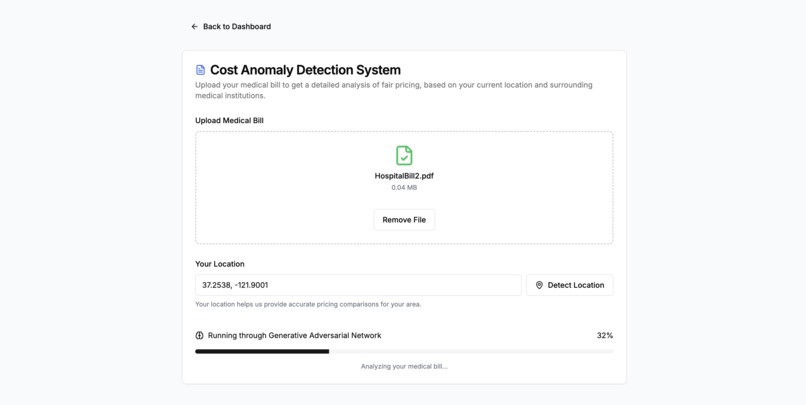
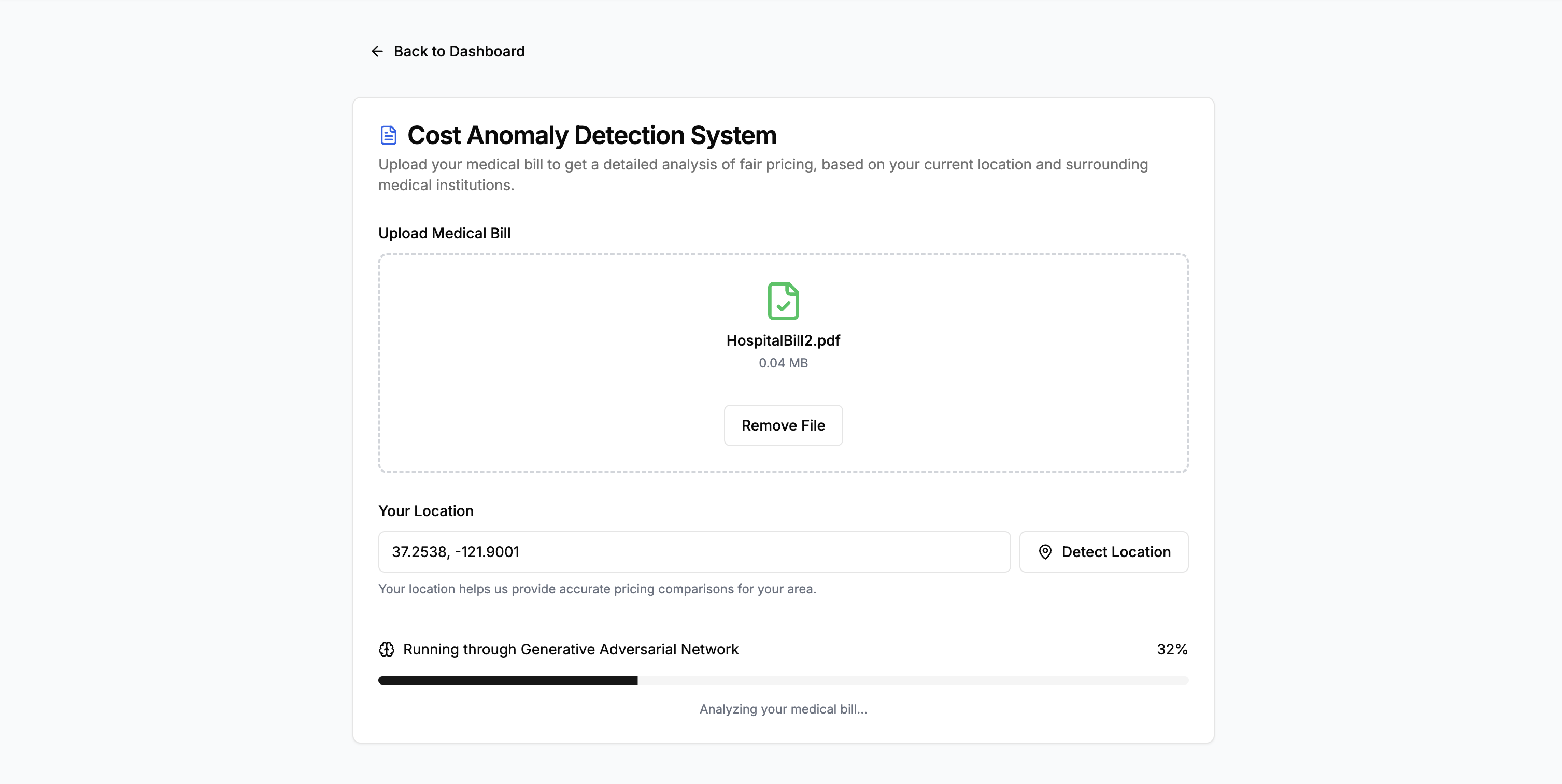
Cost anomaly detection system + comparison of costs with datasets
-
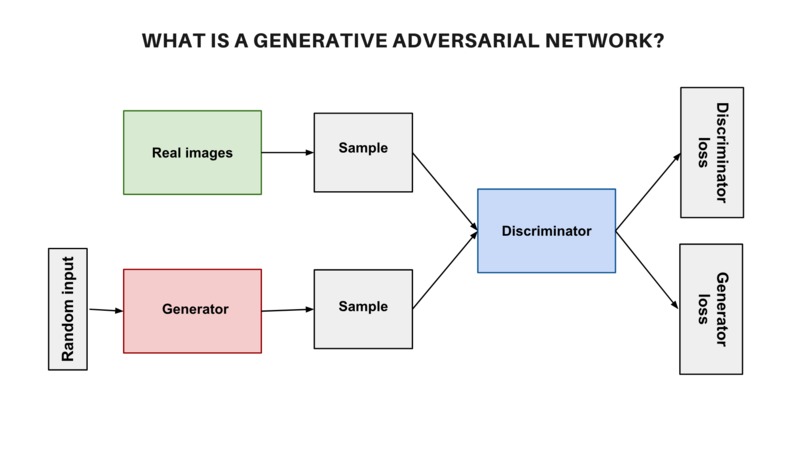
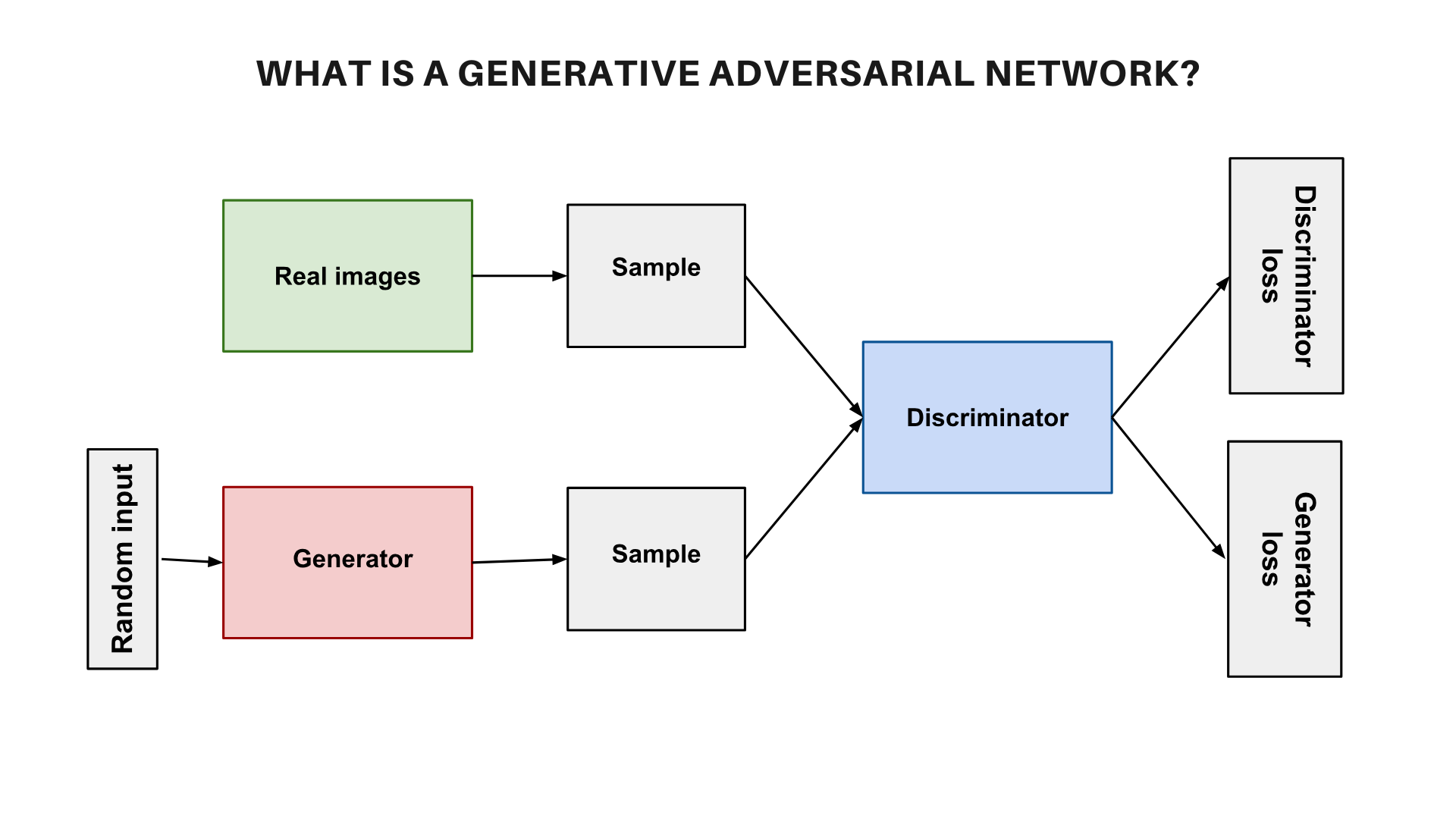
Generative Adversarial Network discriminator function.
-
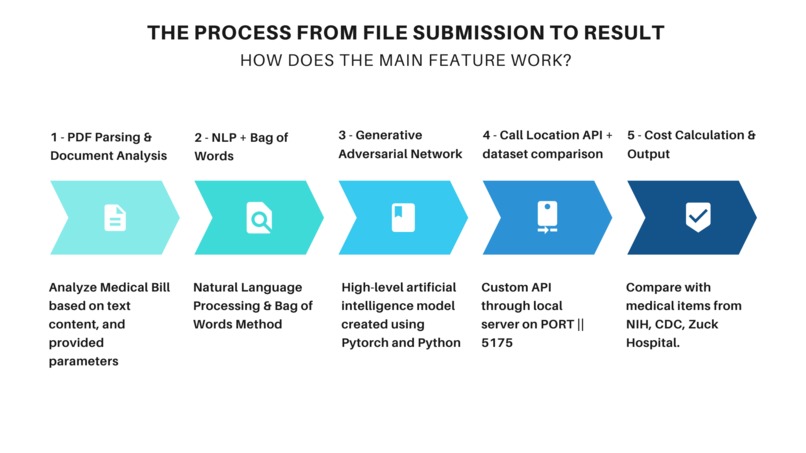
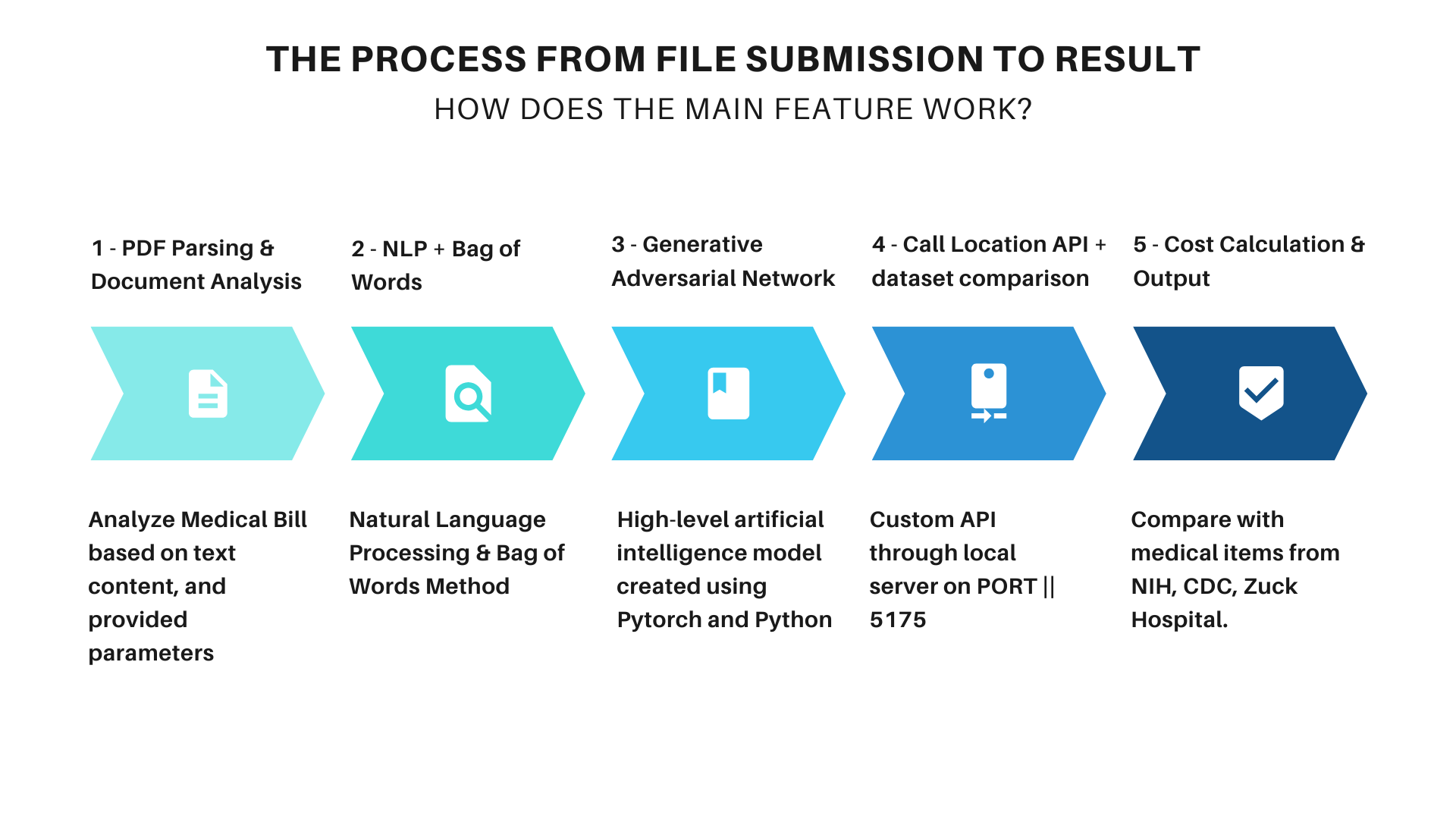
billWise workflow.
-
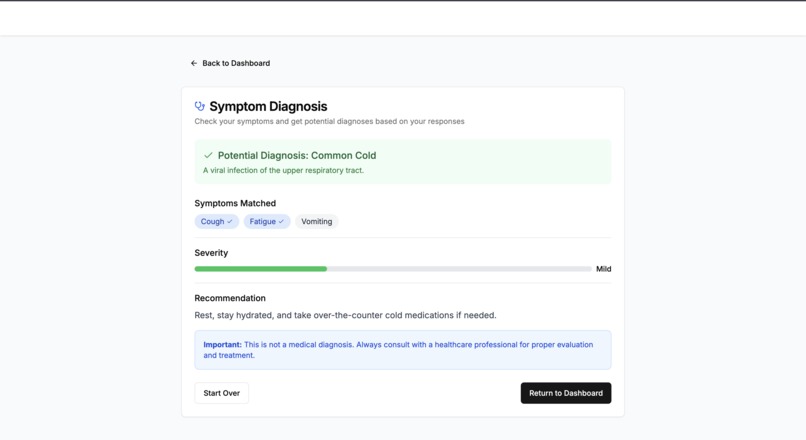
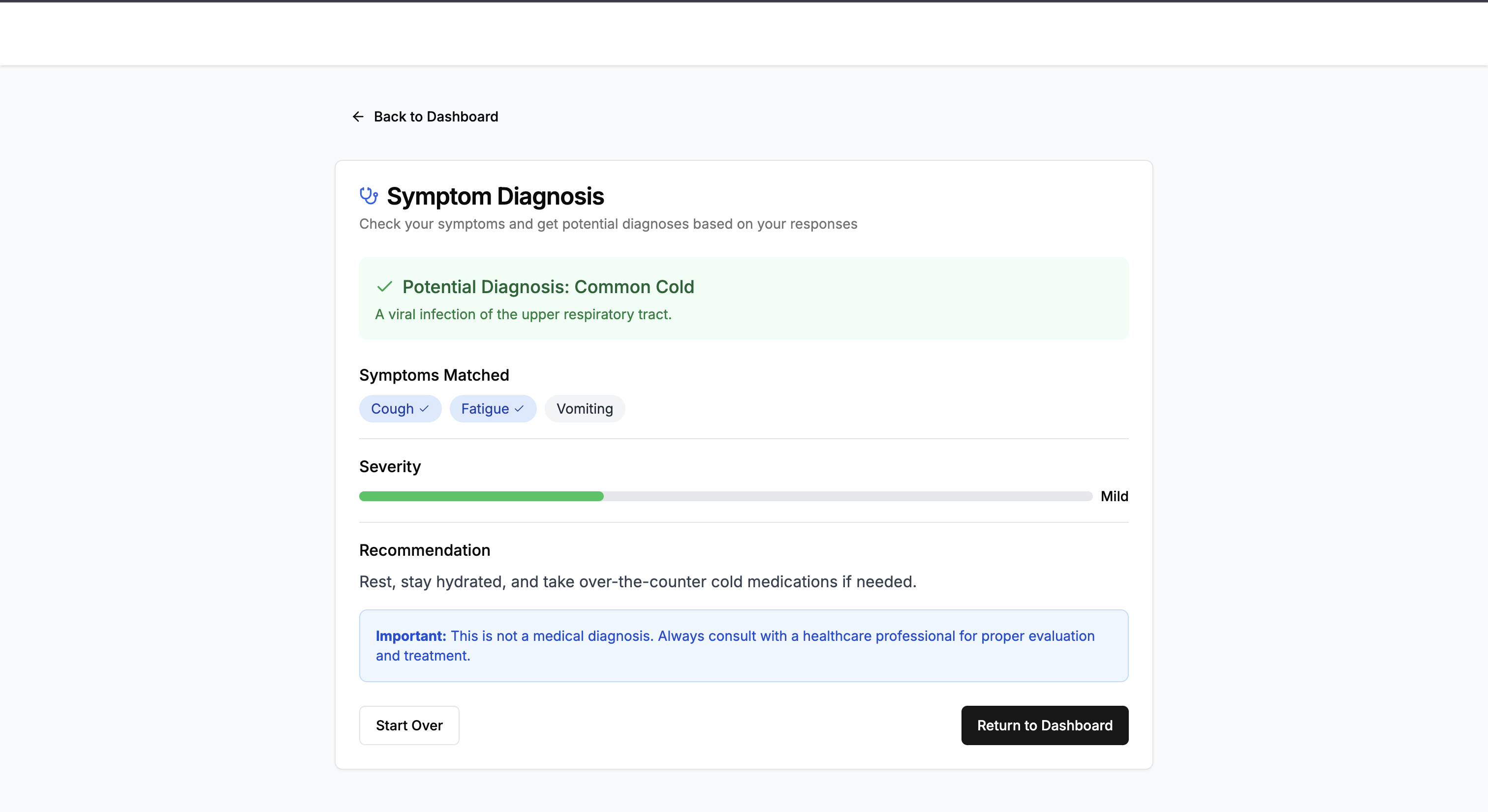
Sophisticated symptom diagnosis feature with RNN.
Inspiration
We’ve seen our families and communities suffer from medical debt, not because they received unnecessary care, but because they had no way to verify or understand what they were being charged for. Most people blindly trust their bills, unaware that hospitals can legally charge up to 10× more than fair market rates. We wanted to change that. With the rise of advanced machine learning, we saw an opportunity to bring transparency and accountability to healthcare billing. That’s how BillWise was born — an AI-powered assistant to help you spot scams, decode confusing charges, and take control of your healthcare costs.
Some statistics/facts:
Hospitals can charge as much as ten times the cost of production for their services (American Bar Association).
Furthermore, anywhere from 30-80% of all hospital bills incorrectly charge patients.
Healthcare spending in the U.S. reached $3.8 trillion in 2019, comprising nearly 18% of the country's GDP (National Health Expenditure Accounts, NHEA).
What it does
Analyze Medical Bills Upload or input your hospital bill, and BillWise will parse the document, extract individual charges, and compare them against a regional cost model trained on publicly available data from the CDC, NIH, and hospitals like Zuckerberg County Medical. It flags overcharges, shows fair prices, and helps users understand where they might be getting scammed.
Diagnose Symptoms with Contextual AI Users can also input symptoms and receive medically grounded, non-exaggerated diagnoses, powered by a custom RNN trained on validated health data. Unlike a Google search, it offers clarity, not panic. It helps users make informed decisions before rushing to expensive ER visits.
BillWise is designed to bring clarity, fairness, and independence to people navigating a complex and often predatory healthcare system.
How we built it
Our tech stack includes:
A custom-trained GAN (Generative Adversarial Network) that estimates fair costs for medical treatments based on location and known billing codes.
A hand-built location API, which matches users to regional pricing data from public healthcare datasets.
A bill parser that extracts line items from text, PDFs, or images, then compares them against GAN-generated estimates.
A Recurrent Neural Network (RNN) for symptom-based diagnosis, trained on symptom-disease pairs with fine-tuned accuracy — built to avoid the anxiety loops common in internet search-based diagnosis.
A secure backend using Node.js + MongoDB with encryption and blockchain-style hashing to ensure that medical data and user credentials are tamper-proof.
Our frontend is built from scratch using React Native, HTML, SCSS, and JavaScript.
We built core AI models, integrated secure infrastructure, and packaged it into a clean, responsive, and meaningful user experience.
HospitalBill1: https://drive.google.com/file/d/1zUVECiRjhFv8atqnlLLmL3lrEWJlKpgx/view?usp=sharing
HospitalBill2: https://drive.google.com/file/d/1AdGTfb2e-y6XS5lXSKvIx1sT-Y9lQKzZ/view?usp=sharing
Please use for testing purposes ^^
Challenges we ran into
Data Overfitting: Early versions of our GAN overfit due to the limited diversity in pricing data. We implemented dropout layers and added synthetic augmentation to stabilize learning.
Inconsistent Bill Formats: Medical bills aren’t standardized, so we had to write a custom NLP parser to extract charges and match them to CPT code equivalents.
Frontend Conflicts: Mixing a React Native backend with static HTML/CSS UI introduced compatibility challenges that required deep integration logic to unify the stack.
Accomplishments that we're proud of
Built a full-stack AI tool that tackles one of the most predatory aspects of modern healthcare
Deployed a custom GAN + RNN in the same system
Created a region-aware medical pricing engine using our own location-matching API
Integrated data integrity protections for real healthcare data in just 24 hours
What we learned
We learned how to combine multiple AI systems — GANs, RNNs, and NLP pipelines — in a single, coherent product. We improved our understanding of healthcare billing codes and explored how location impacts pricing in real-world hospitals. We deepened our skills in backend architecture, database integration, and frontend polish. Most importantly, we learned how to use AI to solve a deeply human problem.
What's next for billWise
Launch as a free app for patients and caregivers
Expand GAN training data with insurance-adjusted pricing
Integrate real-time insurance matching and billing dispute templates
Partner with healthcare nonprofits to help underserved communities
Add voice input and scanning for paper-based bills
Built With
- css3
- gan
- html5
- javascript
- mongodb
- python
- pytorch
- react-native
- rnn
- tensorflow
- vercel

Log in or sign up for Devpost to join the conversation.