-
-
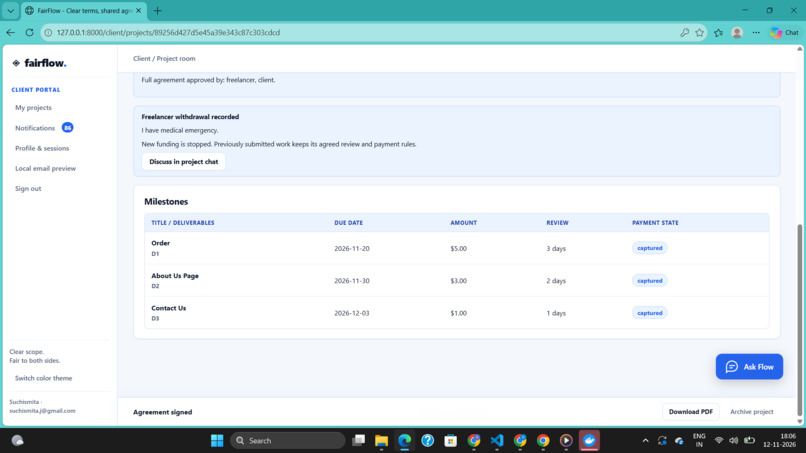
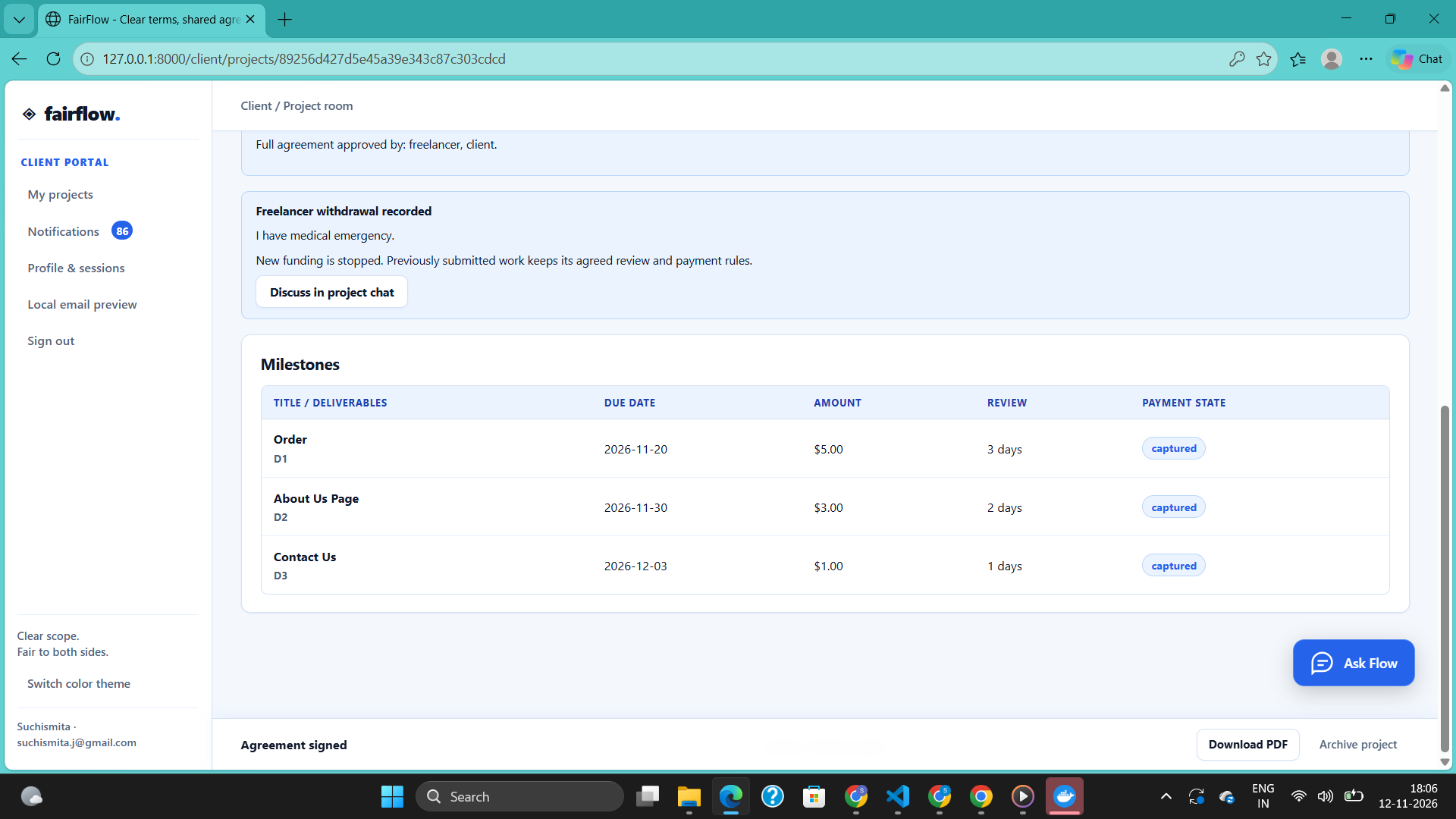
Milestone page briefing about the project
-
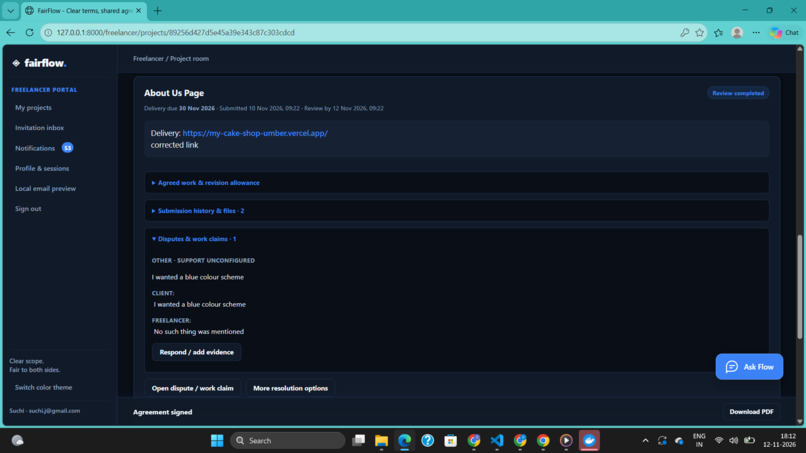
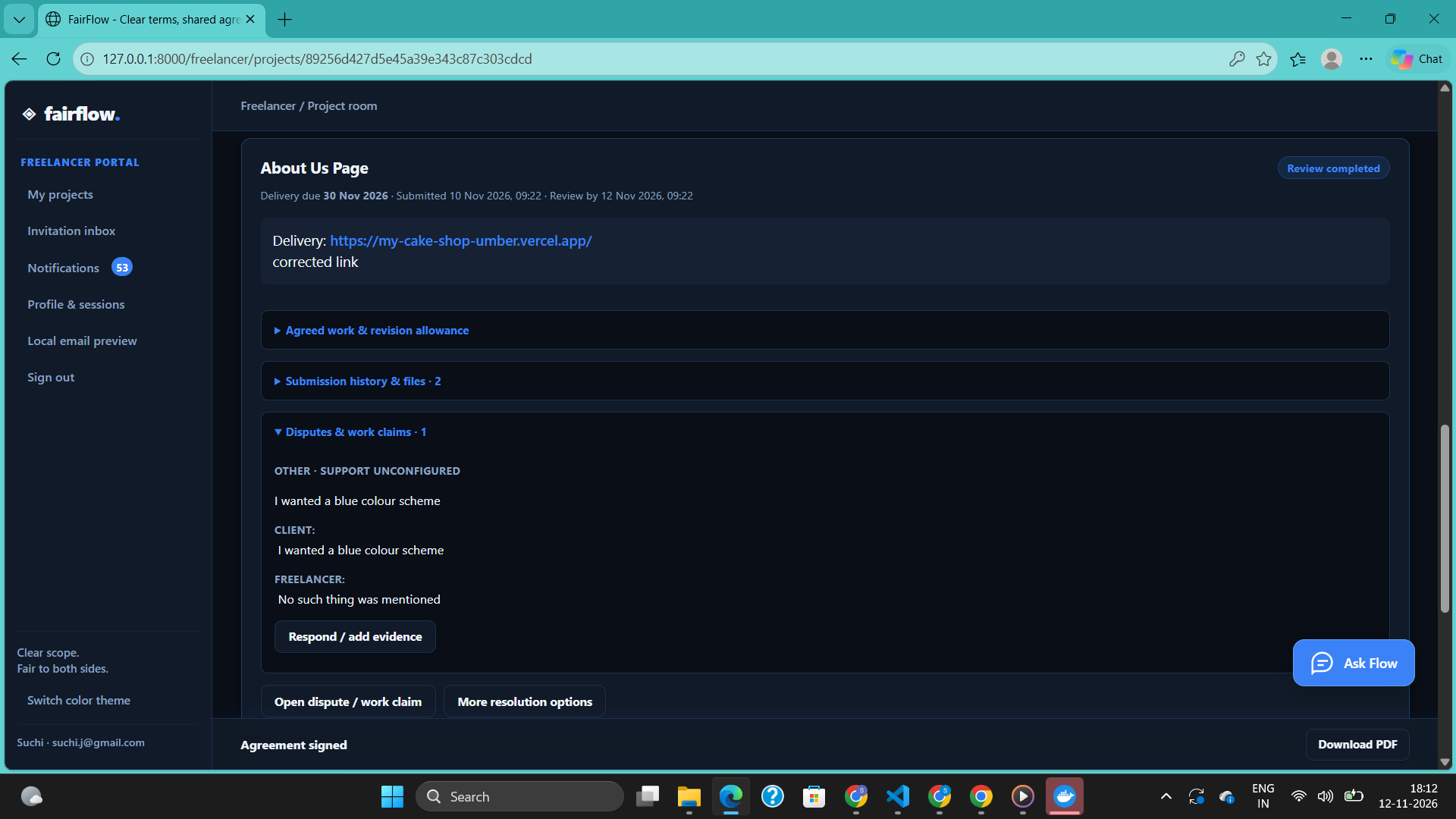
Work tracking page on freelancer side
-
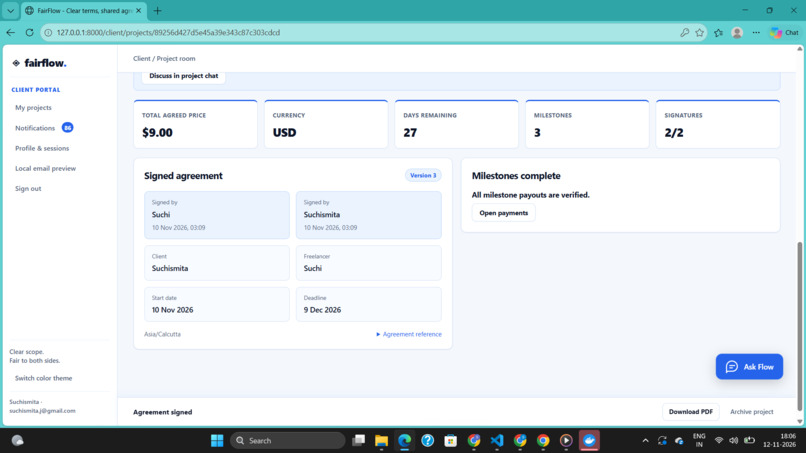
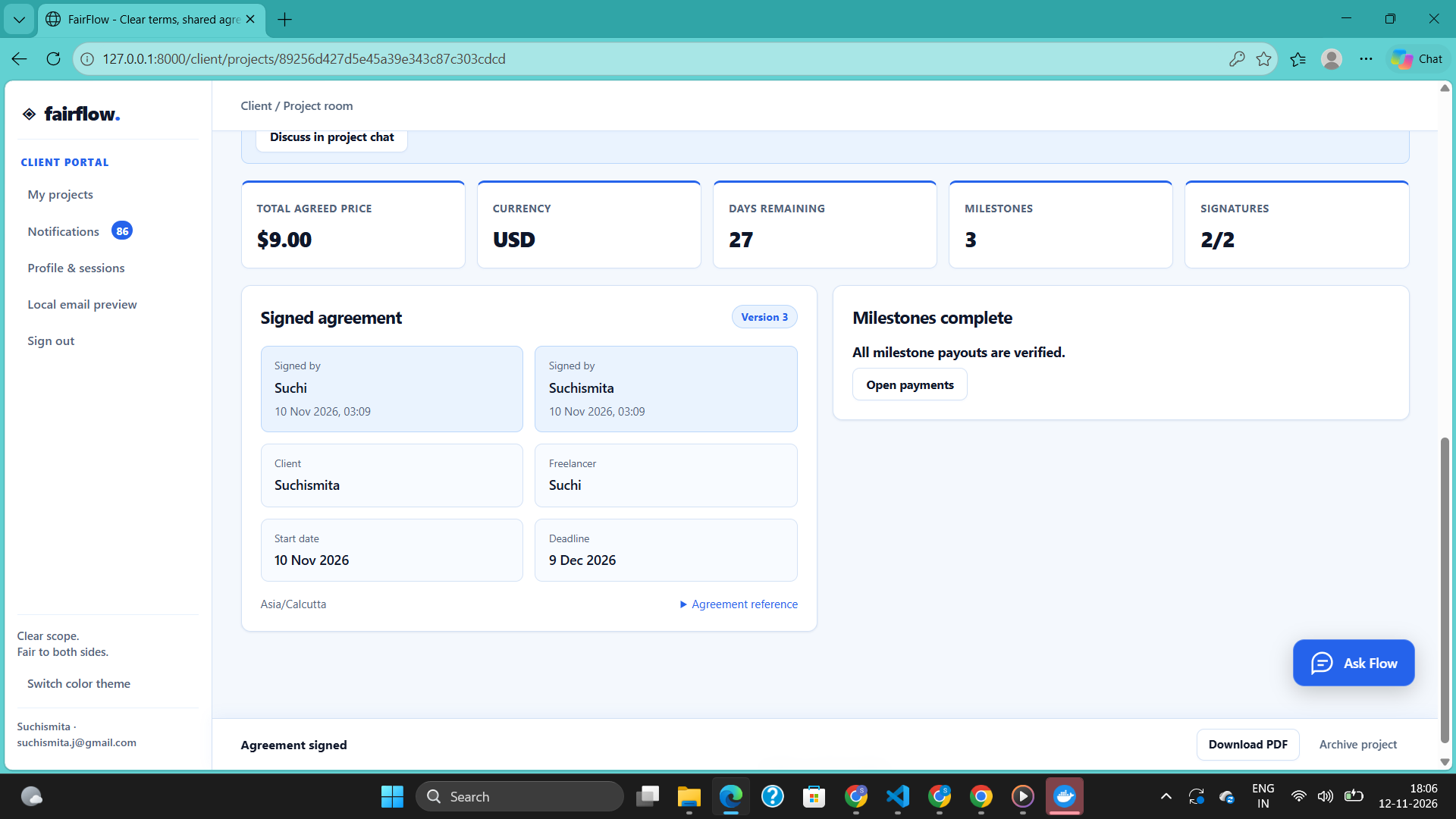
The Dashboard Page showing main details
-
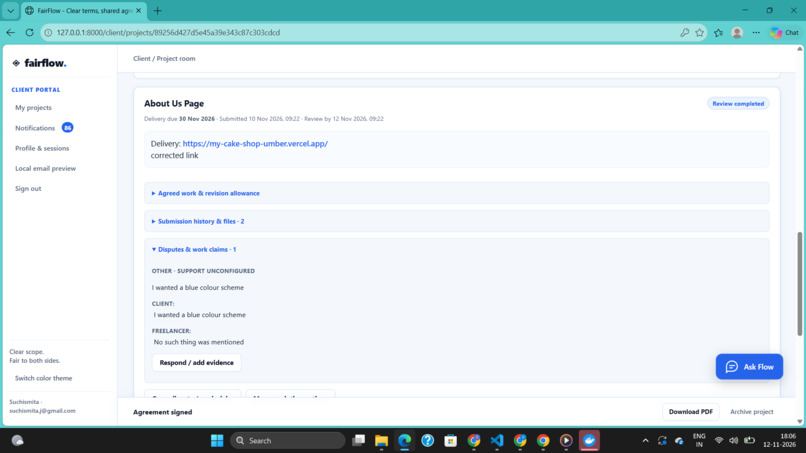
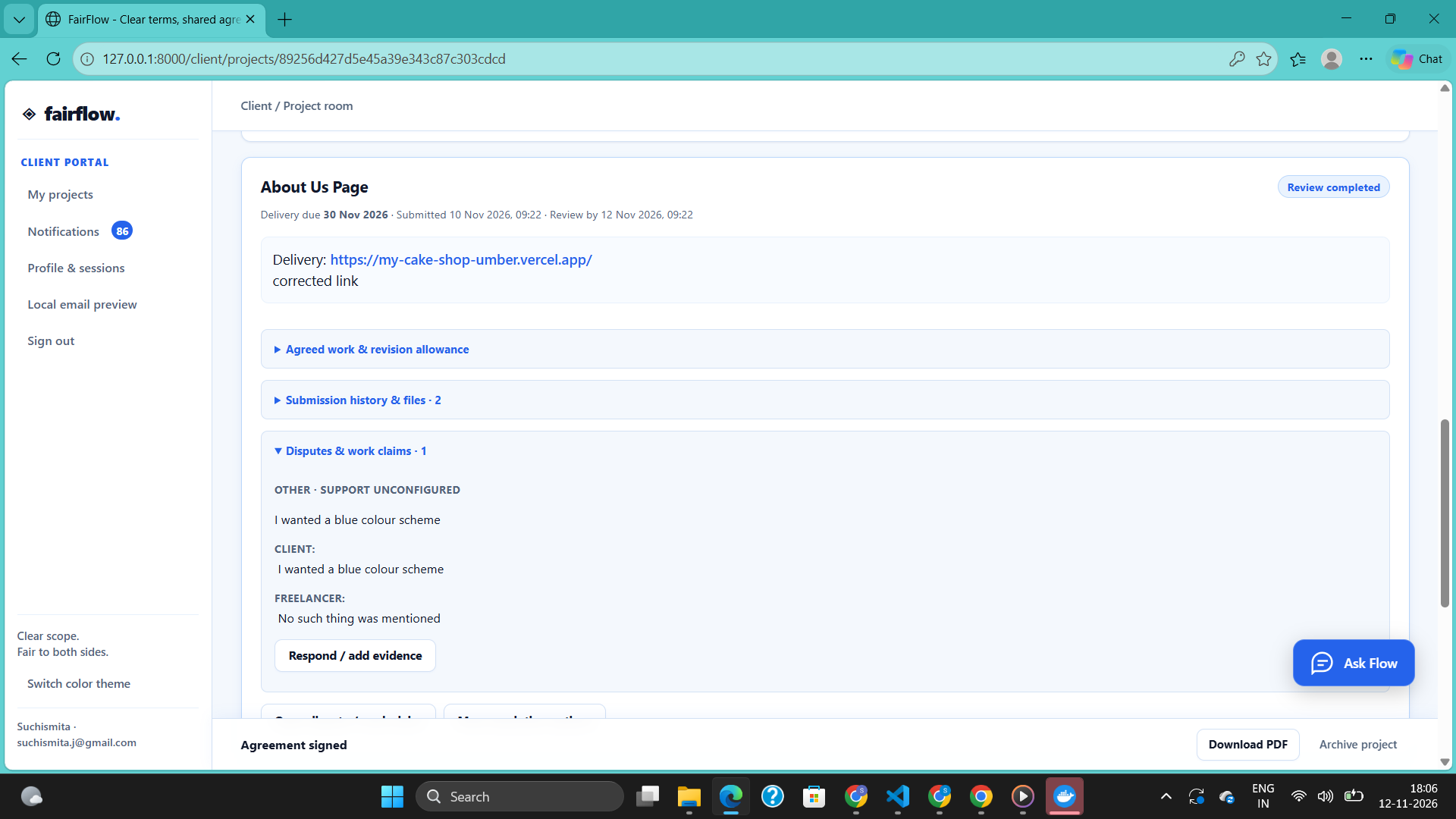
Working tracking page on Client side
-
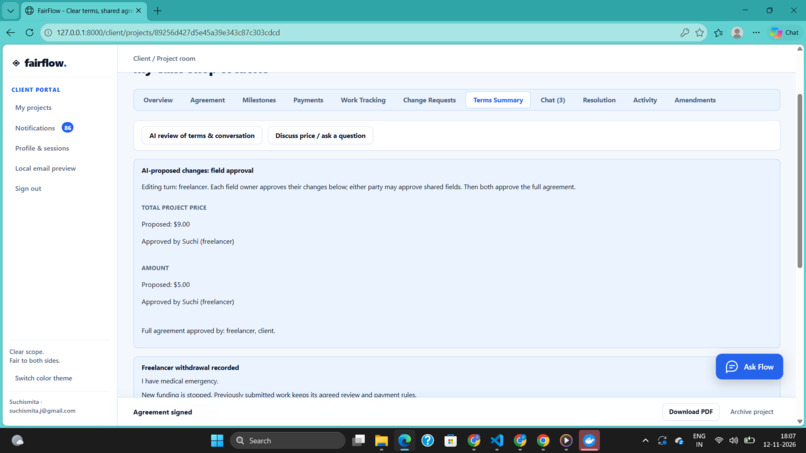
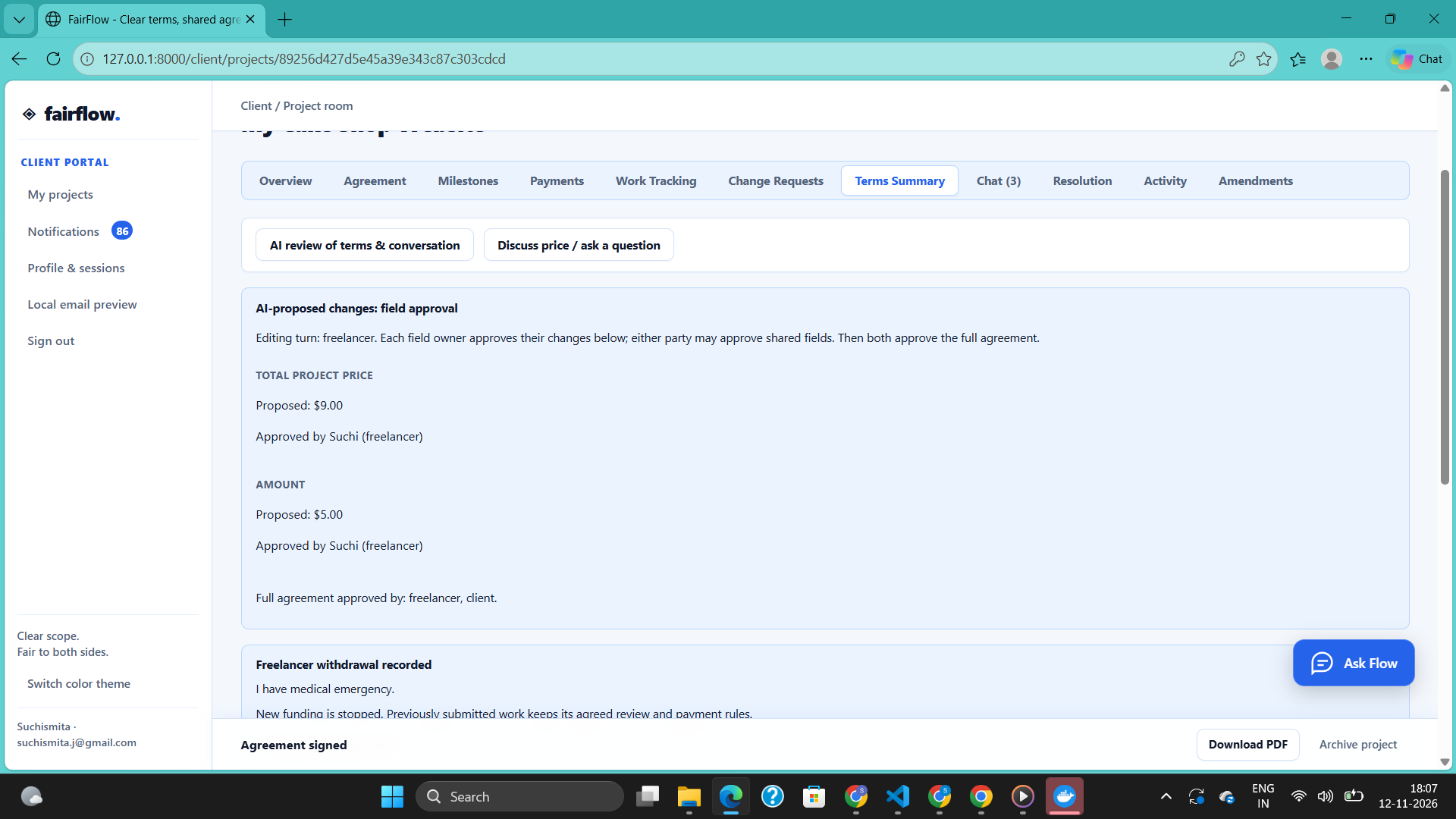
AI made amendments during chat based negotiation
-
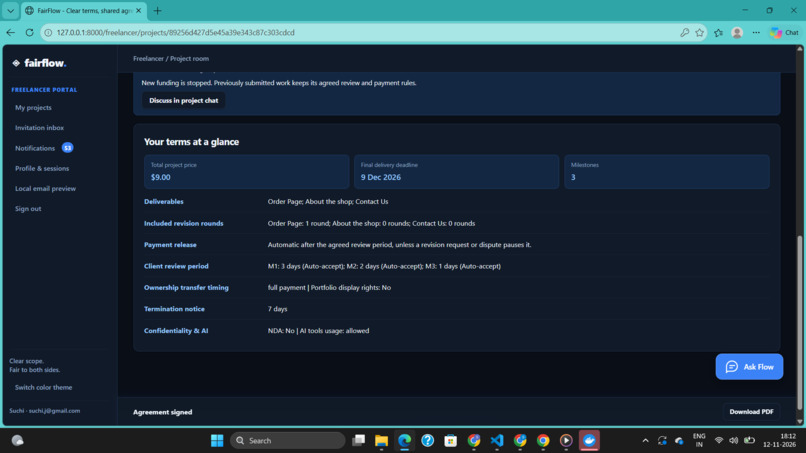
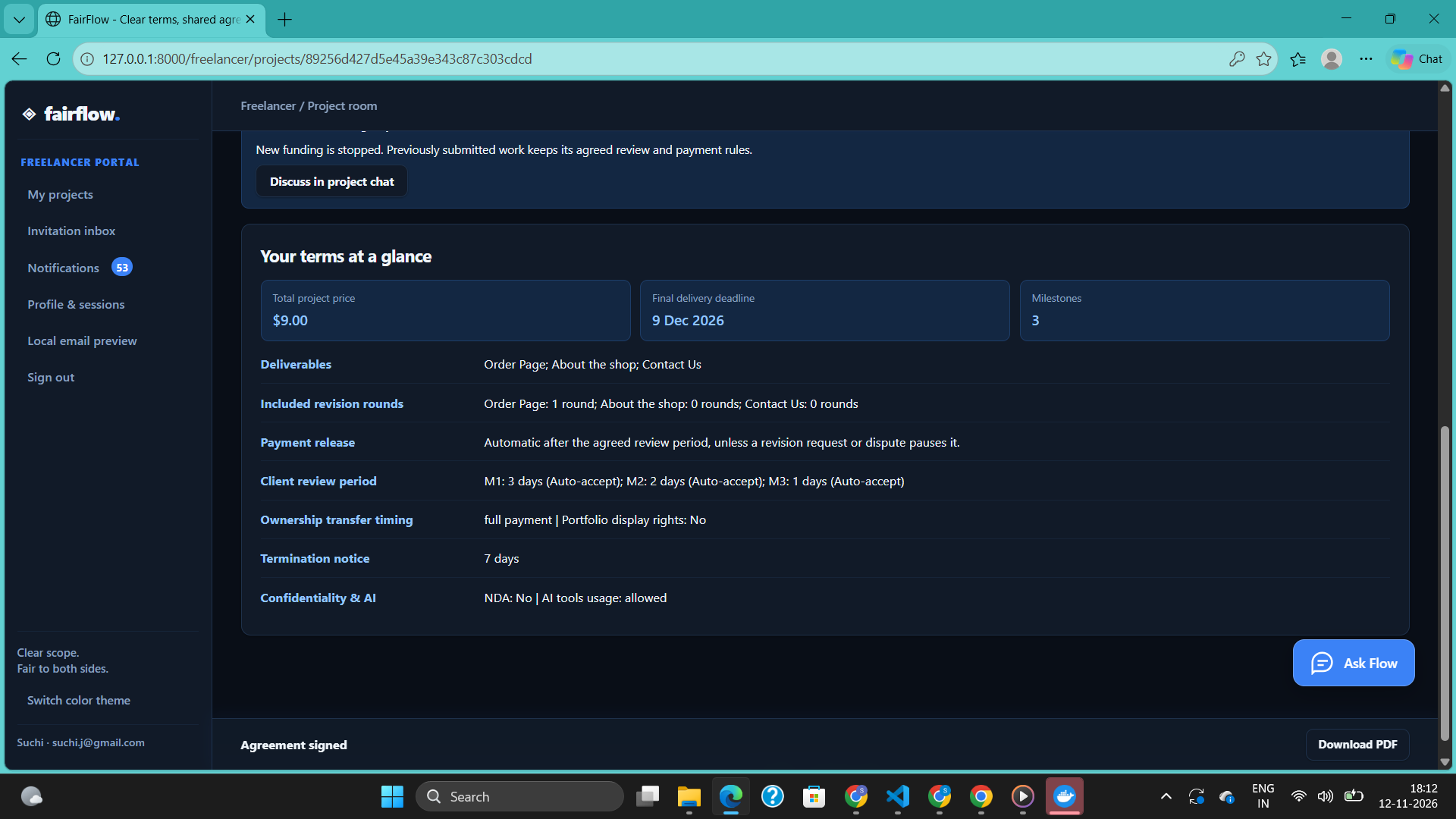
Terms summary page for quick glance
-
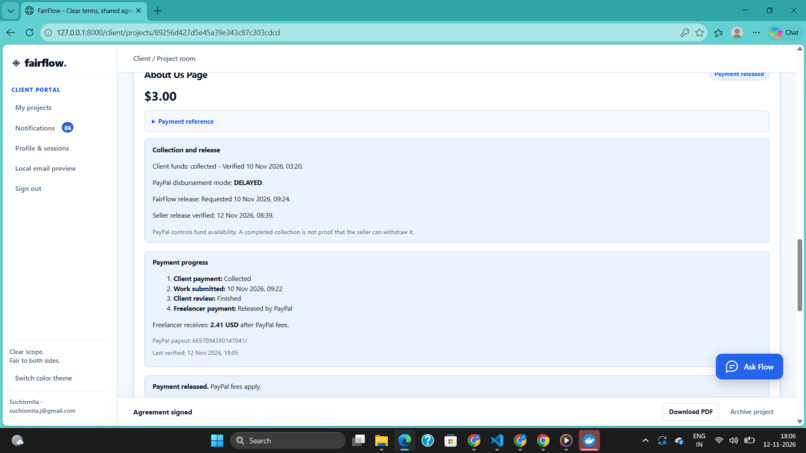
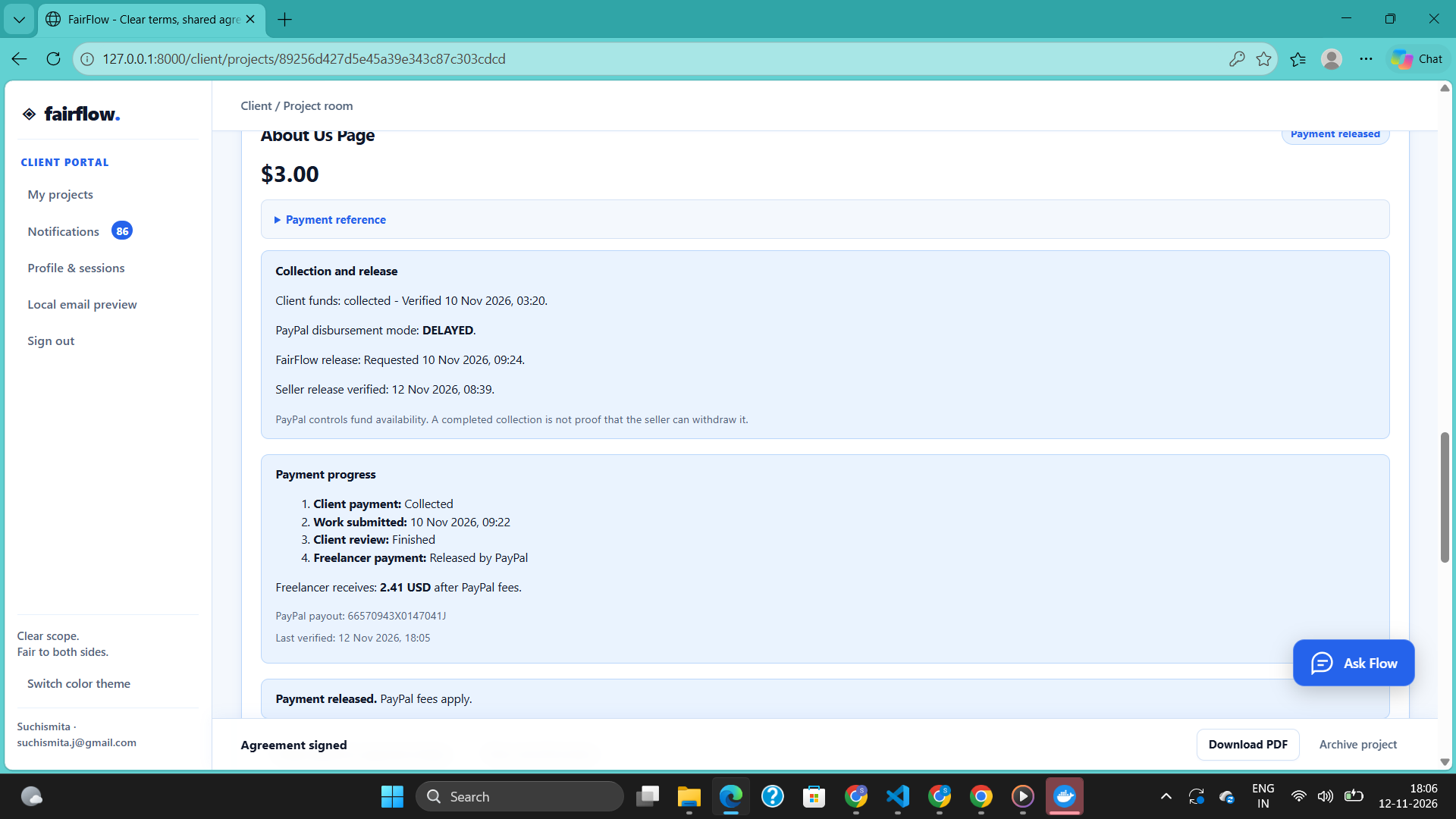
Payment page updating payment status after each step
-
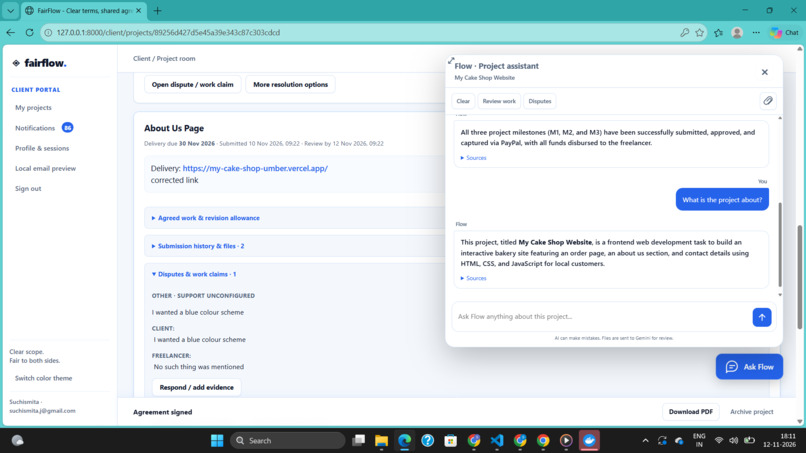
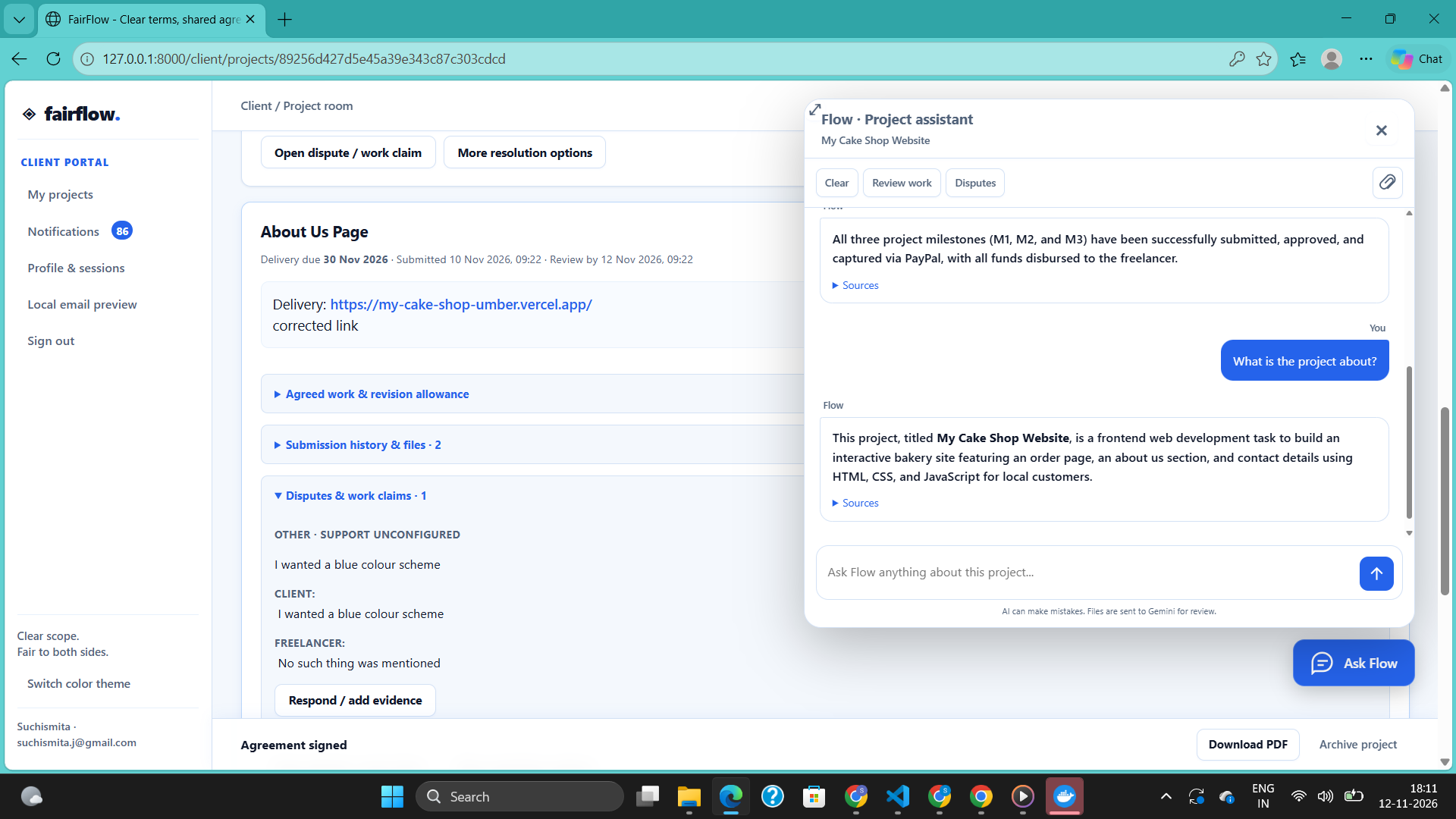
Ask Flow chatbot
Inspiration
Freelance projects often begin with a conversation, but disagreements arise when scope, revisions, deadlines, and payment expectations are left unclear. We built FairFlow to help clients and freelancers establish shared terms and manage changes throughout a project.
What it does
FairFlow gives clients and freelancers separate workspaces for one shared agreement. They can draft terms, negotiate changes, review versions, and sign the agreement before beginning work.
Projects are organized into milestones with deliverables, review periods, and payment terms. An AI assistant helps explain agreements and identify potential scope issues. PayPal Sandbox integration provides a development environment for testing payment workflows.
The public quick demo creates two demo identities and a sample unsigned agreement, allowing judges to explore both sides without registering.
How we built it
We built the backend with Python and FastAPI, with HTML, CSS, and JavaScript for the interface. SQLAlchemy and PostgreSQL support authenticated project data, while Gemini integration supports AI-assisted features. PayPal Sandbox APIs support the payment integration, and the application is deployed through GitHub and Vercel.
The application tracks agreement versions, role permissions, signatures, and payment states so that important actions can be reviewed.
Challenges we ran into
One challenge was keeping both participants aligned on the same agreement version while allowing negotiation and edits.
Another was distinguishing payment approval, collection, and seller receipt. These are separate events, and the application must avoid treating an uncertain provider response as a completed payment.
Deployment also required adapting a locally running application to Vercel's temporary filesystem and serverless execution model.
Accomplishments we're proud of
We brought agreement drafting, negotiation, milestone planning, and separate participant views into one workflow. We also added a quick demo that lets judges explore the project from both perspectives without creating accounts.
What we learned
We learned that a fair workflow depends on explicit consent, clear ownership of actions, and accurate payment states. We also learned how database persistence and background scheduling affect deployment.
Current demo limitations
The public quick demo is a walkthrough and does not process PayPal payments. It currently uses temporary storage, so edits may reset between server instances. Its current configuration uses local fallback rules rather than live Gemini responses.
The repository includes Gemini and PayPal Sandbox integrations, but hosted payment testing requires a shared database and server-side credentials. AI review is advisory and limited to the evidence it can access; it does not guarantee a complete review of an entire project.
What's next for FairFlow
Our next steps are durable hosted storage, hosted Sandbox checkout, reliable scheduled review processing, and broader project-evidence review. We also want to improve settlement flexibility and make the consequences of each payment decision clearer to both participants.
