-
-
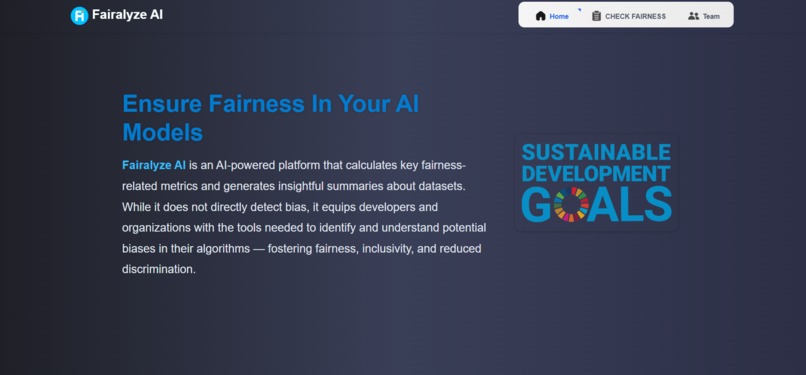
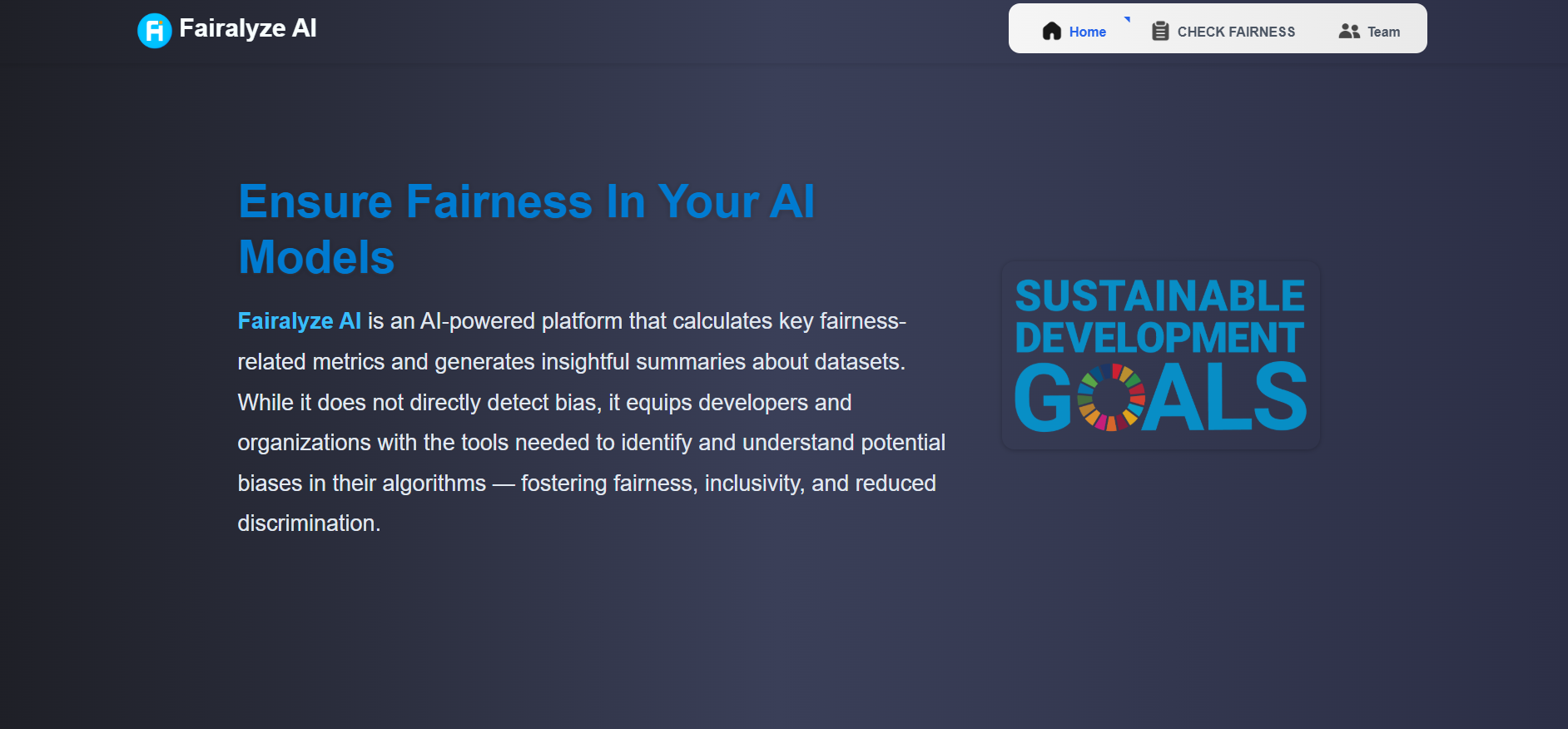
Landing Page
-
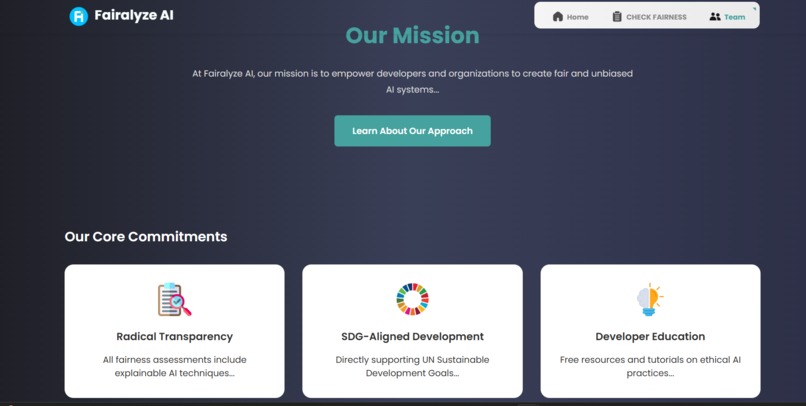
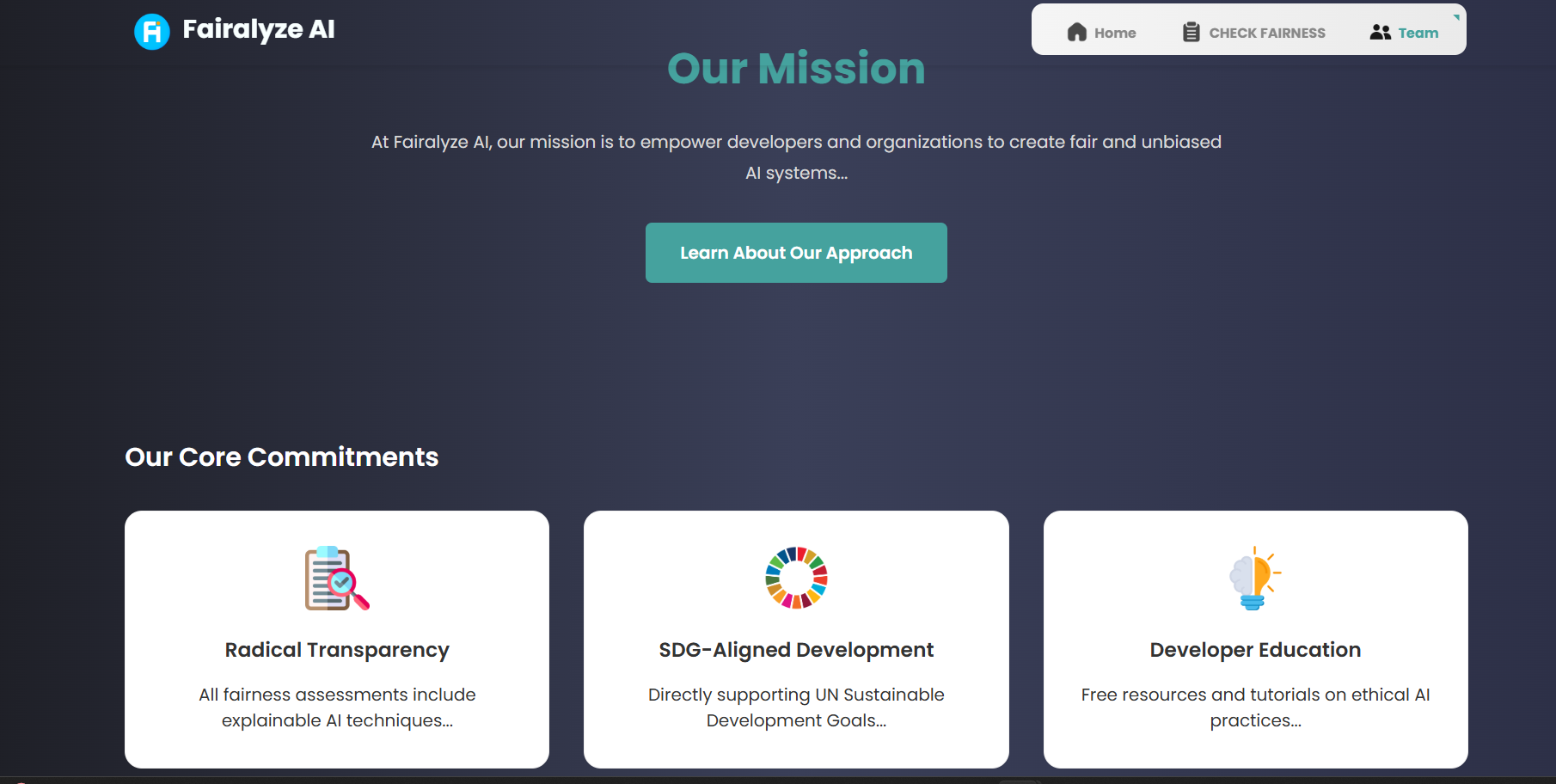
Mission
-
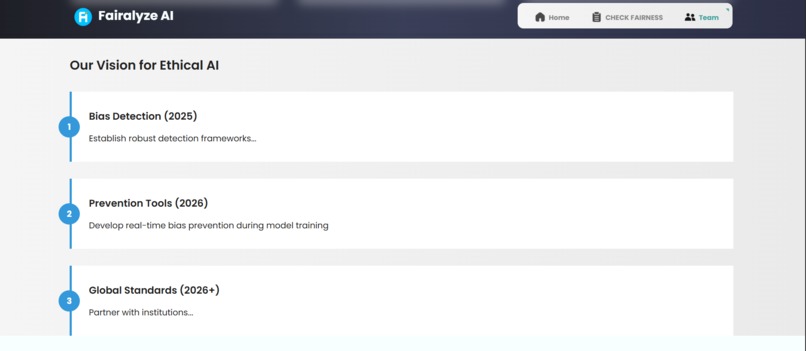
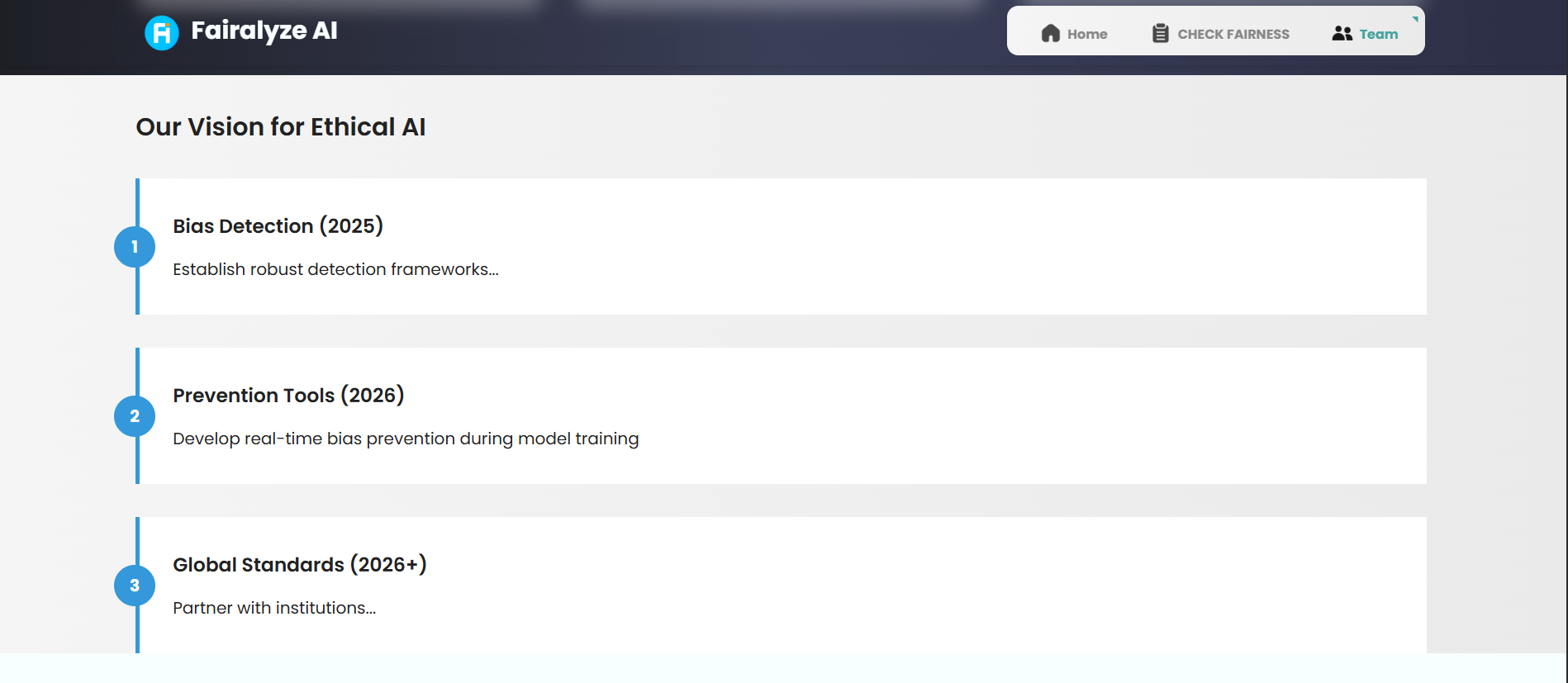
Vision
-
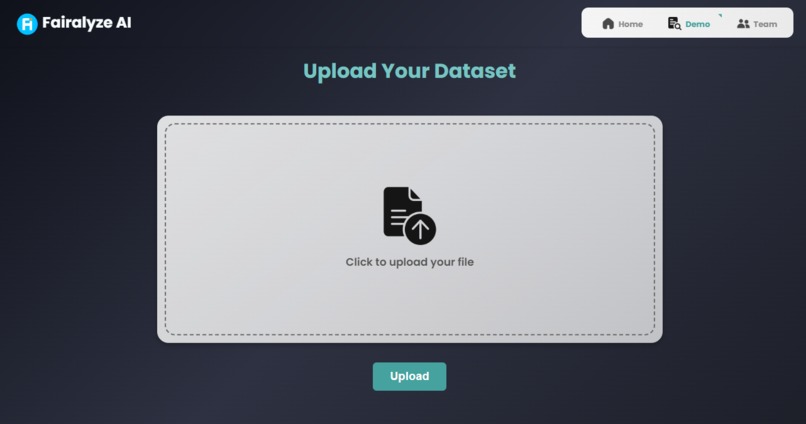
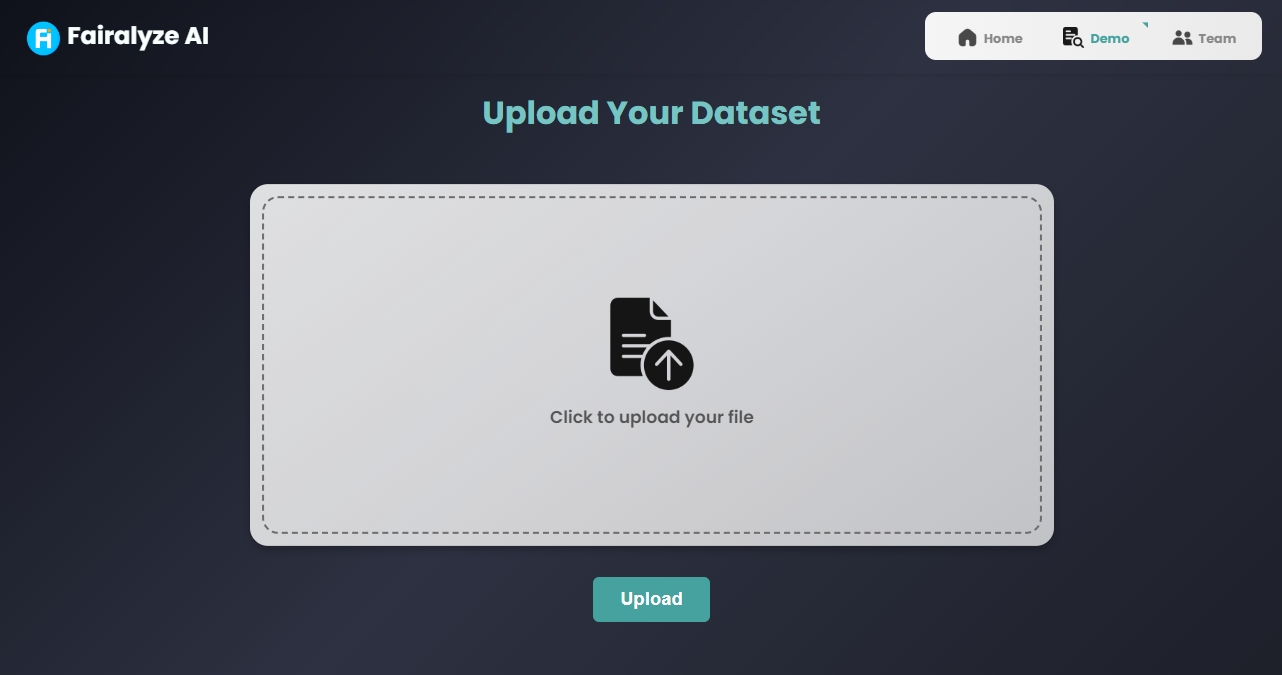
Demo
-
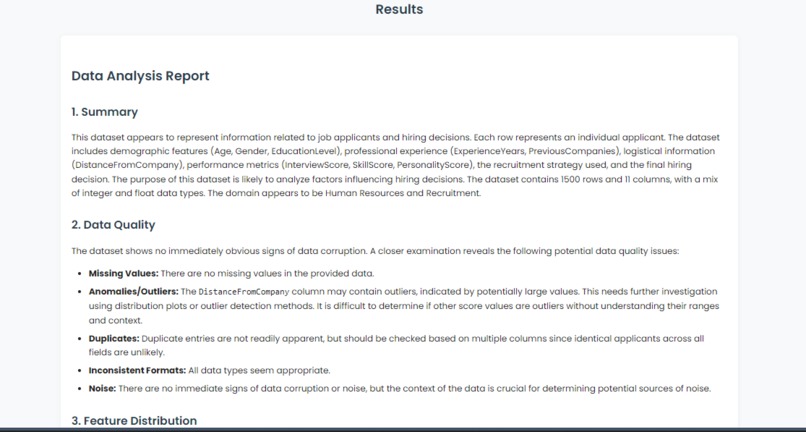
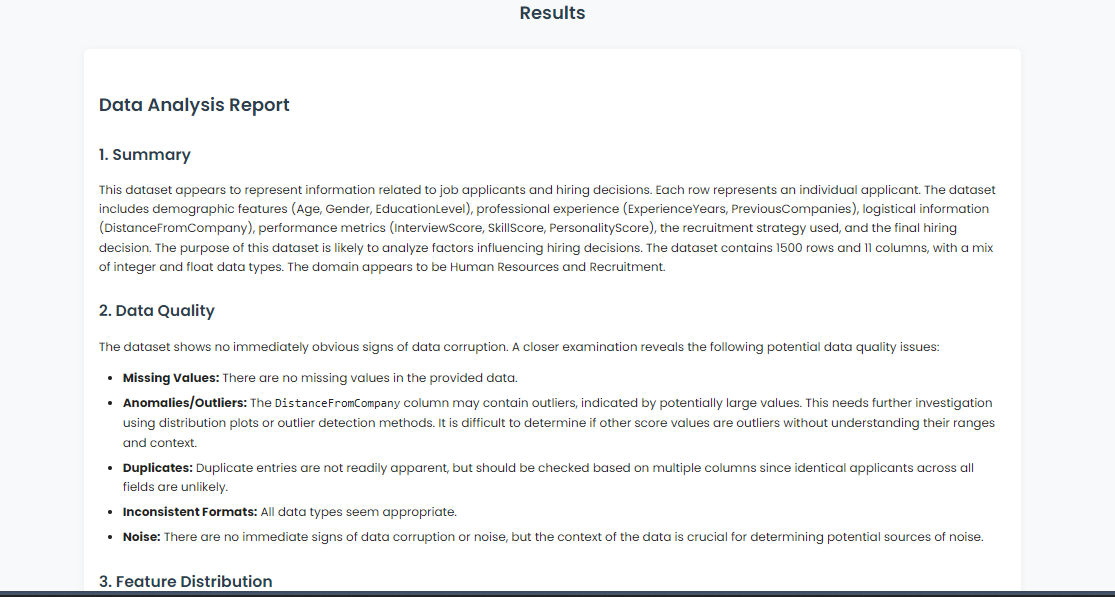
Result
-
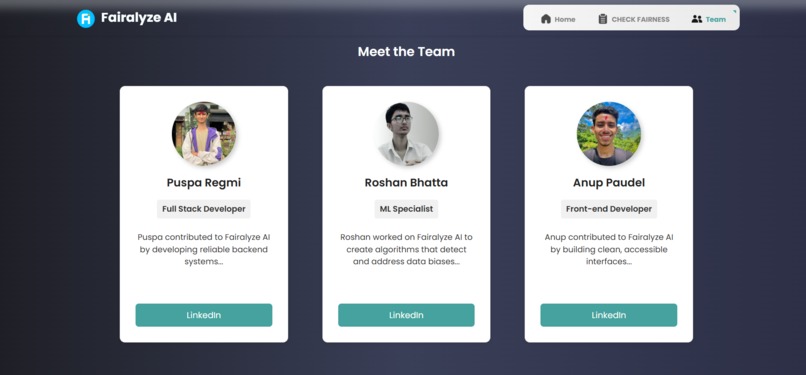
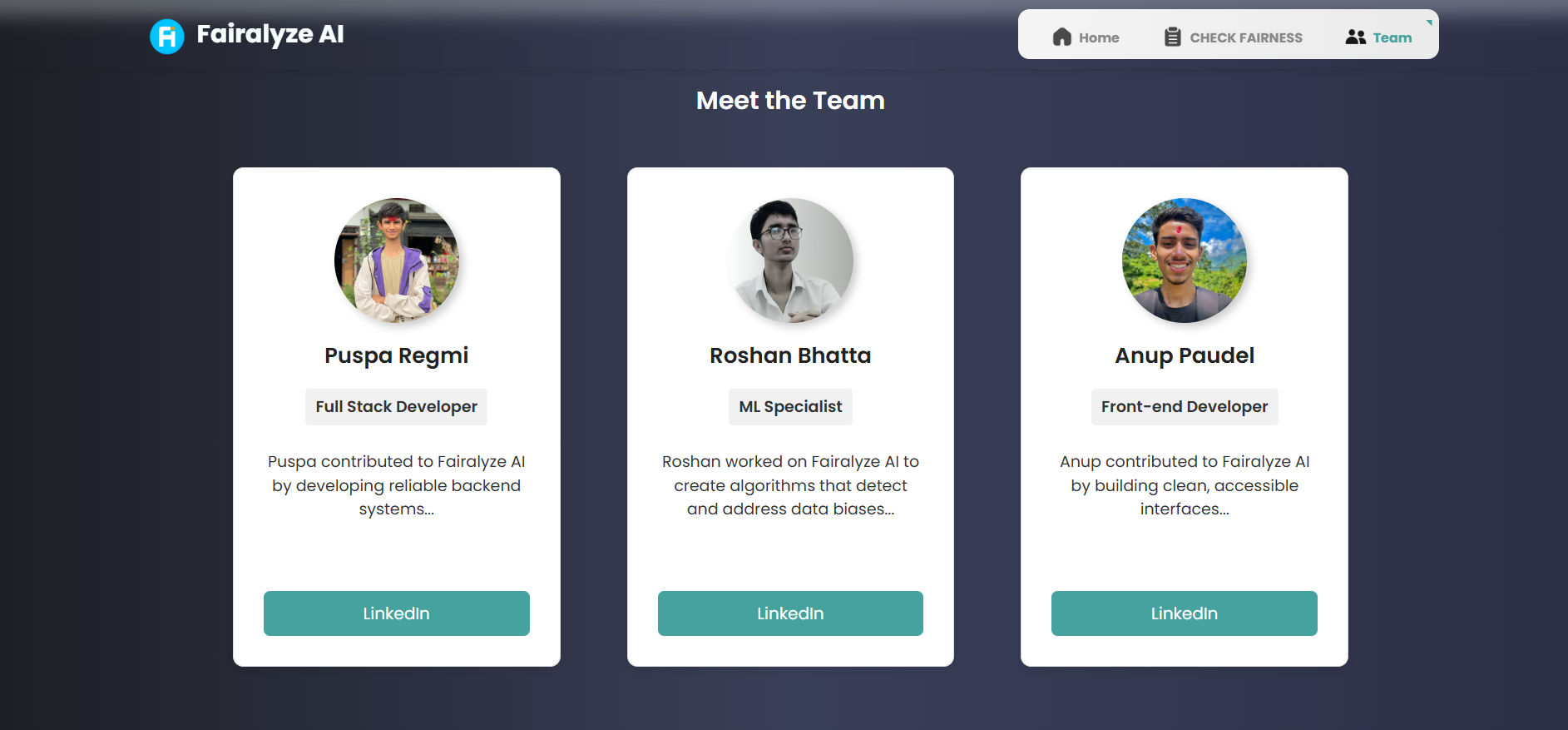
Team
The Inspiration Behind Fairalyze AI
In today’s rapidly advancing world of Artificial Intelligence, we often hear about the incredible potential AI holds to transform industries, from healthcare to finance, education to recruitment. But with this power comes a pressing responsibility. AI systems are only as unbiased as the data they are trained on. And far too often, these systems perpetuate inequalities — from hiring practices that discriminate based on gender, to medical algorithms that overlook underrepresented groups.
It was this very issue that inspired Fairalyze AI — a project designed to confront the hidden biases that creep into datasets, ensuring that the decisions made by AI are fair, ethical, and inclusive. We saw an opportunity to tackle this problem head-on, particularly in relation to UN SDG 5 (Gender Equality) and SDG 10 (Reduced Inequalities), by building a tool that can identify and rectify these biases before they take hold in AI systems.
What We Learned Along the Way
Building Fairalyze AI wasn’t just a technical challenge; it was a learning journey. Along the way, we encountered several important insights:
Bias is subtle but impactful. We learned that biases don’t always show up in obvious ways, like when gender or race are explicitly mentioned in a dataset. Sometimes, the biases are much more subtle, hidden in patterns of missing data or unequal representation.
Fairness isn’t a one-size-fits-all approach. We discovered that fairness is context-dependent. For instance, a model that works fairly for one demographic might be discriminatory to another. We had to build a flexible solution that could account for diverse data characteristics and cultural nuances.
Technology can empower change. Despite the challenges, we saw firsthand how powerful technology can be in driving social change. By empowering engineers, researchers, and decision-makers with tools to identify bias, we can foster a more inclusive digital future.
How We Built Fairalyze AI
The Data Problem
We started by analyzing diverse datasets, ranging from healthcare to hiring data, to understand how sensitive features like gender, race, and age influence the outcomes.
Detecting Bias in Data
Using a Random Forest classifier, we built a model that can identify sensitive features hidden in the data. This is done by evaluating attributes like gender, ethnicity, and more — even when they are not explicitly labeled as such in the dataset.
Fairness Metrics
Once sensitive features were identified, we went a step further by calculating key fairness metrics:
- Disparate Impact: How do certain attributes (e.g., gender, ethnicity) influence the outcome of the model?
- Demographic Parity: Does the model treat different groups equally?
- Statistical Parity Difference: How balanced is the representation of various groups in the decision-making process?
Building Trustworthy Insights
We then integrated a clear, concise report generator that provides both technical insights and actionable recommendations for data teams to adjust their models or datasets.
Challenges We Encountered
The road wasn’t always smooth. Here are some of the toughest hurdles we faced:
Subjectivity in Bias: What one group sees as fair might be different from another. Fairness is subjective, and it took a lot of research and dialogue to determine the most universally applicable fairness metrics.
Unstructured Data: Working with real-world datasets meant we encountered dirty data — missing values, inconsistent formats, and more. It was a struggle to develop an effective preprocessing pipeline that could handle this mess without compromising accuracy.
Model Generalization: We had to make sure that Fairalyze AI could generalize across different kinds of data and domains. This was tricky, but we overcame it by focusing on core, adaptable features that could scale across different sectors and contexts.
Explaining Fairness: Conveying complex fairness metrics to non-technical users was another challenge. We needed to find a way to explain fairness in a simple, digestible format that made sense to everyone involved — from data scientists to stakeholders.
What’s Next for Fairalyze AI
While we’ve made great strides, this is only the beginning for Fairalyze AI:
Interactive Dashboards: We plan to launch an interactive web dashboard where users can upload datasets and receive real-time analysis of fairness metrics.
Support for Custom Fairness Models: Different industries and regions have different requirements for fairness. We plan to build a system that allows users to define and tailor their own fairness metrics, based on local regulations and cultural norms.
Collaborations with NGOs: We are excited about the prospect of working with NGOs to audit datasets that impact vulnerable populations. This can drive global initiatives aimed at eliminating bias in AI and ensuring it benefits everyone, equally.
Education & Advocacy: In the long term, we aim to open-source our project and create educational resources to help more people understand how to detect and mitigate bias in AI. This includes technical guides, case studies, and ethical frameworks.
The Bigger Picture
Fairalyze AI isn’t just about fixing datasets or improving AI models. It’s about using technology to bring about positive social change. In a world where AI decisions shape everything from hiring practices to medical diagnoses, the potential for bias to perpetuate inequality is immense.
By addressing bias in its earliest stages, Fairalyze AI serves as a small but significant step towards a world where technology is fair, just, and accessible for all — no matter their background, gender, or ethnicity.
This project is more than a coding challenge; it’s a commitment to the UN’s SDGs and to fighting for a more inclusive and equal world.


Log in or sign up for Devpost to join the conversation.