-
-
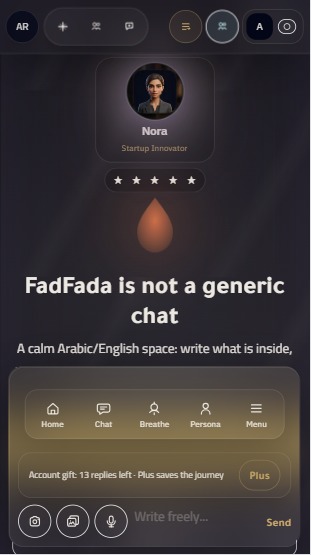
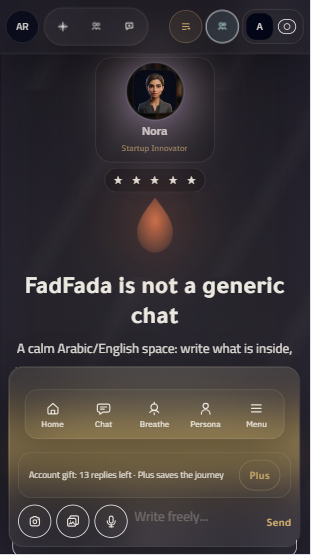
Main AI companion chat with voice, persona, breathing, and quick actions.
-
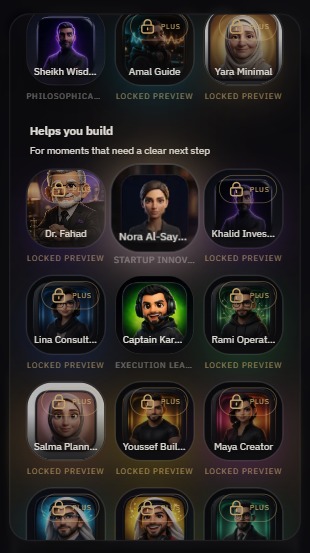
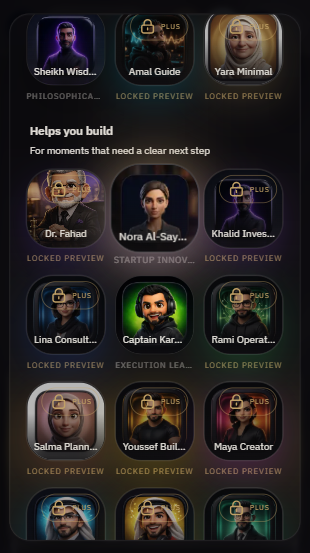
Companion picker showing specialized AI personas.
-
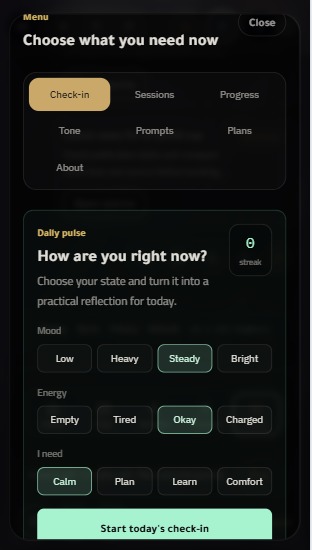
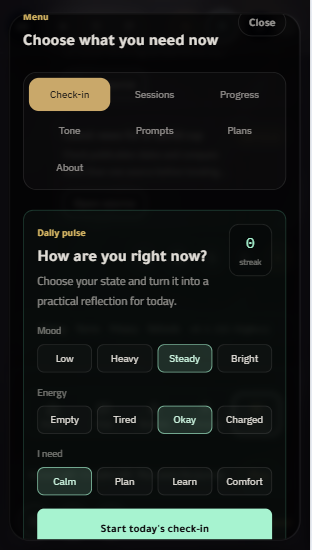
Daily Pulse check-in for mood, energy, and user needs.
-
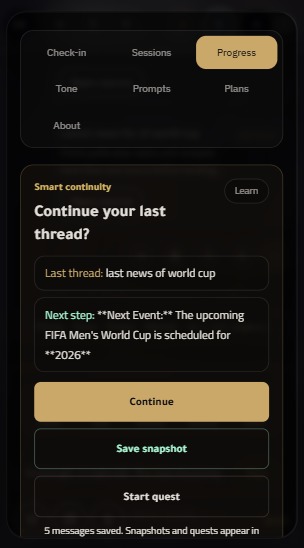
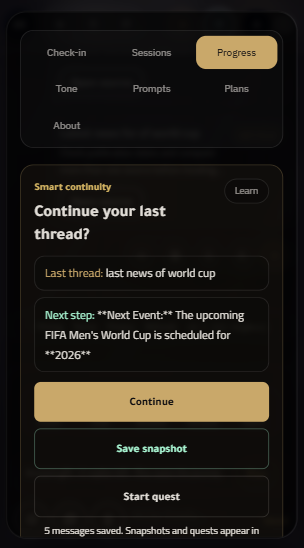
Smart continuity showing saved threads and next steps.
-
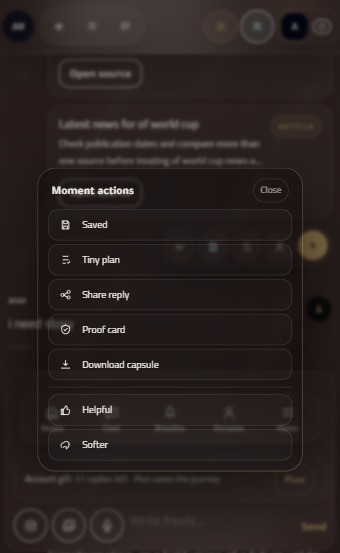
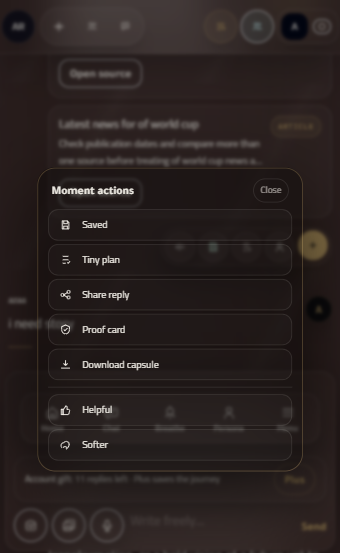
Moment actions turning AI replies into plans, proof cards, and capsules.
-
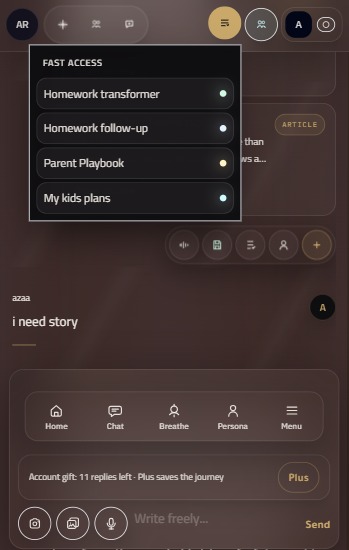
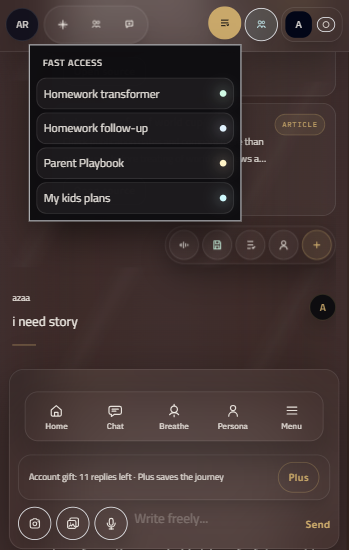
Parent-only fast access tools.
-
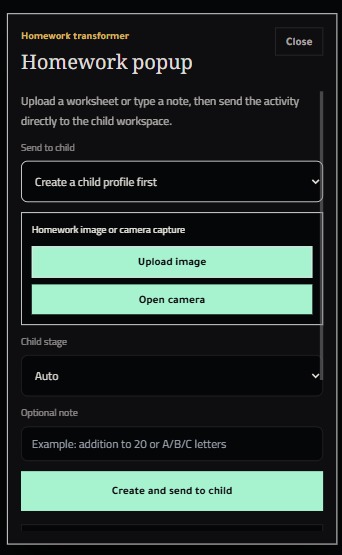
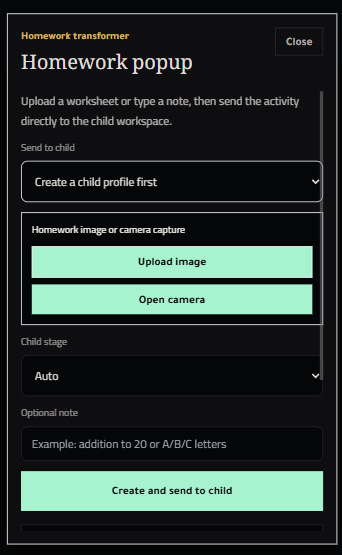
Homework transformer upload flow.
-
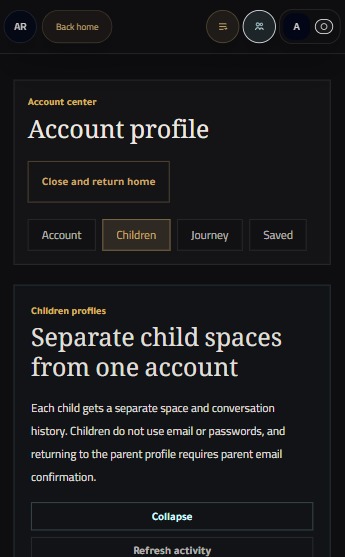
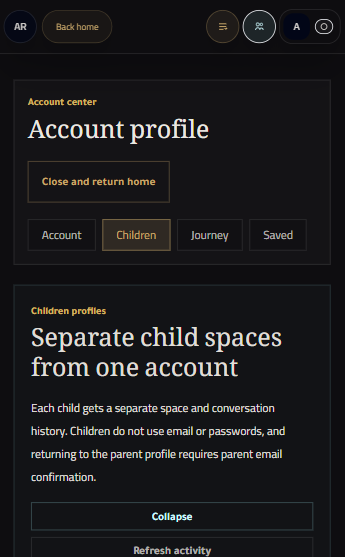
Child profile separation under one parent account.
-
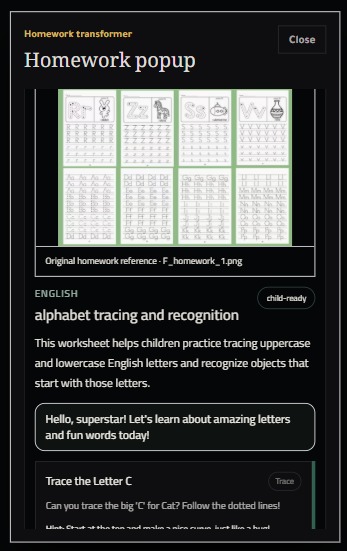
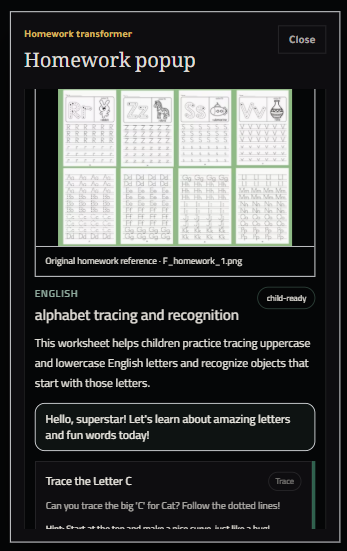
Gemini homework transformation result.
-
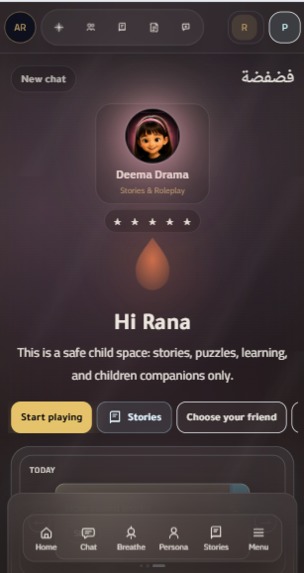
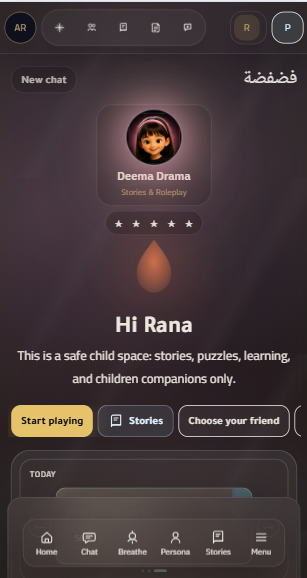
Child workspace home with “Hi Rana.”
-
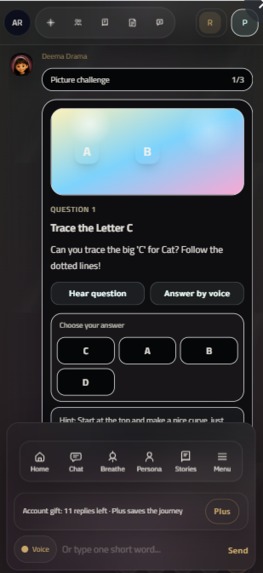
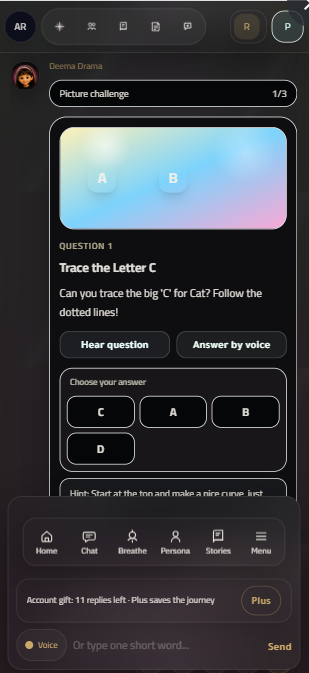
Interactive child homework activity.
-
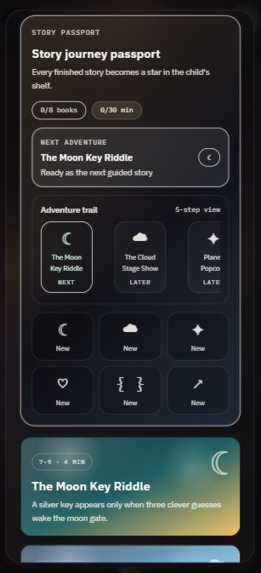
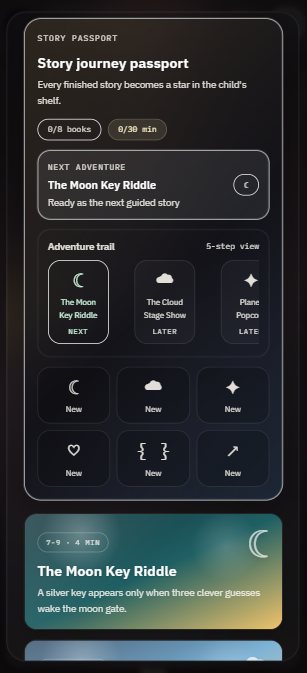
Story journey passport and progress.
-
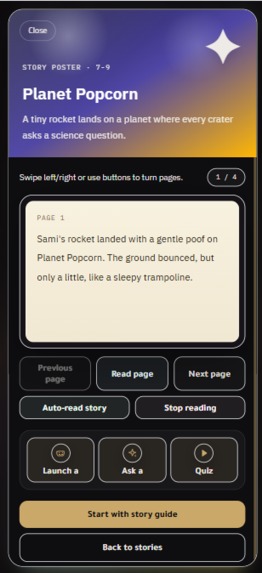
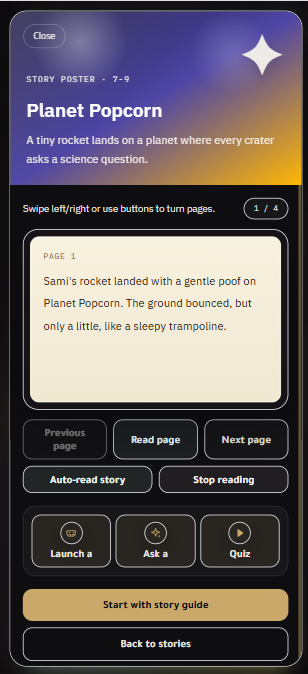
Interactive story reader with quiz and guide options.
-
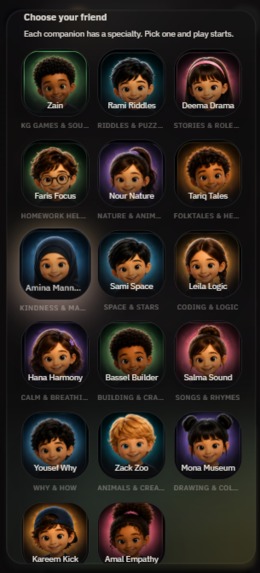
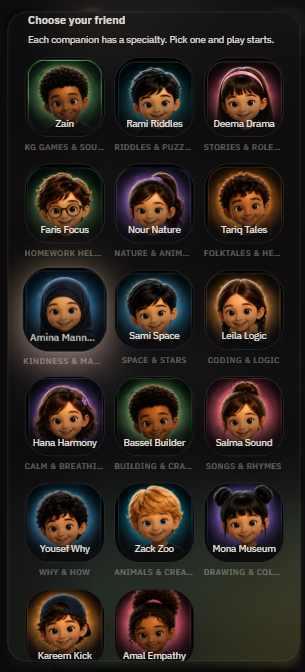
Child-safe companion picker.
-
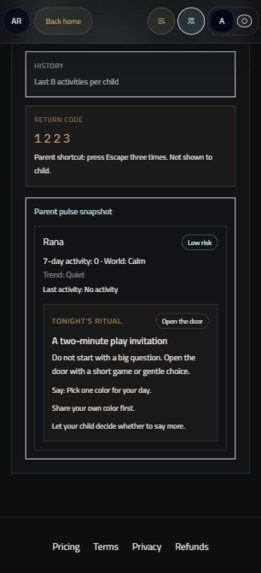
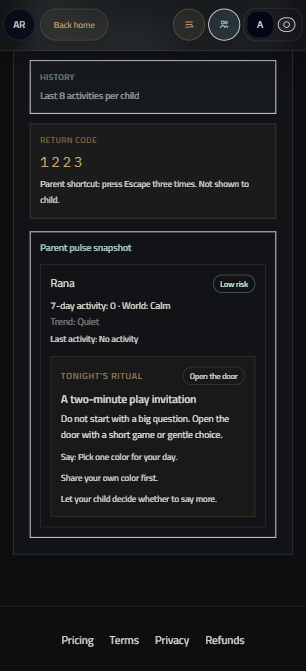
Parent pulse snapshot, return code, and oversight.
Inspiration
FadFada | فضفضة was inspired by a simple human need: everyone needs a safe space to talk, feel understood, and take one small next step.
In Arabic, “فضفضة” means opening up, venting, and letting what is inside come out. Many people carry stress, loneliness, burnout, family pressure, study pressure, or private thoughts they cannot easily share. Parents face another challenge: they want to support their children with learning and emotions, but they need AI tools that are safe, age-aware, and clearly separated from adult accounts.
Most AI products for families are generic chatbots or adult-first productivity tools. They do not respect the difference between a parent space and a child space, and they often ignore Arabic-speaking families altogether. We saw a clear gap: families needed a calmer product that felt more human, more trusted, and more culturally grounded.
FadFada was created as a calm Arabic-first bilingual AI companion for both personal reflection and family support. It gives adults a private space to reflect, while also giving children a safe, separate workspace for stories, homework, learning, drawing, music, and guided conversation.
The goal is not to replace therapy, teachers, or parents. The goal is to create a trusted first space: a place to express, organize, learn, and move forward safely.
What it does
FadFada is an Arabic-first bilingual family AI companion built around reflection, guided learning support, and safer digital routines.
Users can chat in Arabic or English, choose emotional modes and companion personas, receive supportive reflection, save important moments, create proof cards, start small personal challenges, and turn meaningful conversations into useful artifacts.
For families, FadFada adds role-aware parent and child workspaces. Parents can create child profiles, set limits, upload homework images, and transform worksheets into child-ready activities. Children get their own safe space with child-friendly companions, stories, quizzes, voice answers, interactive homework games, drawing, daily moments, and a color piano.
FadFada includes:
- Arabic and English support
- RTL/LTR interface
- Gemini-powered reflection and guided dialogue
- multiple companion personas
- emotional worlds and modes
- saved moments and memory snapshots
- proof cards and tiny plans
- growth challenges
- parent, child, and admin role experiences
- child-safe companion roster
- parent homework transformer
- multimodal worksheet understanding
- structured JSON activity generation
- child-safe stories, quizzes, and guided learning
- child drawing board
- child color piano / music activity
- child daily moments
- parent oversight, activity signals, and return-code control
- admin evidence and operations dashboard
- companion quality ratings
- PWA support for mobile and desktop
FadFada is not therapy, medical care, diagnosis, or emergency support. It is a safe first space for emotional reflection, family learning support, and self-organization.
How we built it
We built FadFada as a responsive Progressive Web App using:
- Next.js
- React
- TypeScript
- Tailwind CSS
- Prisma
- Neon Postgres
- NextAuth
- Gemini / Vertex AI
- Google Cloud Text-to-Speech integration path
- Vercel
- PWA manifest and service worker
- bilingual Arabic/English UI
- RTL/LTR layout support
The app includes user accounts, parent and child workspaces, admin monitoring, chat sessions, profile data, AI reflections, homework transformation, child-safe prompts, safety-aware responses, and evidence collection.
Gemini is used in several ways:
- text reasoning for companion replies
- persona-aware and mode-aware responses
- multimodal understanding for homework images
- structured JSON outputs for child activities
- role-aware prompts for parent and child separation
- child-safe guided learning flows
- parent summaries and activity transformation
A key part of the architecture is workspace identity. Parent and child experiences are separated server-side, not only visually. The app derives the active role from the authenticated session and workspace context, so the AI knows whether it is speaking to a parent or a child.
Challenges we ran into
- Safety vs. usefulness. The hardest part was balancing emotionally supportive AI with clear safety boundaries. We avoided positioning FadFada as a therapist or emergency system. Instead, we focused on calm reflection, careful wording, and guidance toward professional help when needed.
- Arabic-first design. Building for Arabic and English required more than translation. We had to think carefully about tone, layout direction, cultural meaning, typography, and mobile usability.
- Parent/child separation. A family account can contain both parent and child spaces, but the AI must always know who it is speaking to. We solved this with server-side workspace identity, scoped prompts, and role-specific safety rules.
- Completeness across roles. We had to design the app so it felt complete for three different audiences: parent, child, and admin. Each role needed different permissions, interfaces, and AI behavior.
- Product scope management. It was tempting to build a general AI family platform. We narrowed the product to the most important family workflows: reflection, homework support, and safe child interaction.
Accomplishments that we're proud of
- A real family workflow: parent and child experiences are separated, but connected through a shared family system.
- A bilingual product with Arabic-first design, not just translated content.
- Safe child-facing experiences built with age-aware prompts, role separation, and workspace controls.
- Multimodal homework transformation: a parent can upload a worksheet, and the app can turn it into a child-friendly activity.
- A protected environment for children, with return-code control and tighter boundaries around adult tools.
- A product designed around trust, not just conversation.
- A clear product identity: FadFada is not “another chatbot,” it is a family companion for reflection and support.
What we learned
We learned that emotional AI products need trust before features.
Key lessons:
- Arabic-first UX needs cultural care, not only translation.
- Safety boundaries are essential.
- Parent and child AI spaces must be isolated by design.
- Gemini is strongest when it powers real workflows, not only chat.
- Multimodal AI can turn static homework into interactive learning.
- Structured JSON makes AI outputs reliable inside a product.
- Admin evidence matters for real product validation.
- Mobile polish is critical for users and judges.
- A family AI product needs different experiences for parent, child, and admin roles.
- Trust depends on clear boundaries, not only good responses.
Revenue and business model
Current revenue is $0.
FadFada is still in the early product validation stage. Our focus so far has been building a working product, validating the core family workflows, and preparing for real user feedback.
The planned business model is a freemium family subscription:
- free tier for basic reflection and limited child profile access
- paid family plan for multiple child profiles, homework transformation, saved history, reports, and advanced tools
- future school or organization pilots for supervised learning and family support workflows
- optional premium voice, media, and advanced AI features
Our near-term goal is to validate pricing through pilot families, waitlist demand, and paid beta interest.
What's next for FadFada
Next, we want to grow FadFada into a real multilingual emotional reflection and family learning platform.
Planned next steps:
- improve voice and video reflection
- add official cloud speech-to-text and text-to-speech
- expand safety classification
- improve long-term memory controls
- strengthen parent reports and child progress insights
- improve homework follow-up workflows
- add more child-safe learning activities
- collect real user feedback
- launch a paid beta
- validate family subscription pricing
- support more languages and cultures
- explore school and family-support partnerships
The long-term vision is for FadFada to become a trusted AI companion that helps people express themselves, supports families safely, and helps children learn in a protected, age-aware space.
Built With
- ai
- css
- flash
- gemini
- generative
- json
- neon
- next.js
- nextauth
- postgresql
- prisma
- pwa
- react
- recognition
- rtl
- speech
- tailwind
- text-to-speech
- typescript
- vercel
- vertex

Log in or sign up for Devpost to join the conversation.