About the Project
Inspiration
Freelance and contract work depends on trust. Clients worry about paying for work that does not meet the agreement, while freelancers worry about delivering work and not getting paid. Escrow can protect both sides, but reviewing deliverables is often slow and subjective.
Factum explores how AI agents can help: negotiating the contract, producing and verifying the work, and coordinating a simulated escrow release, while keeping a human in control of the final approval.
What It Does
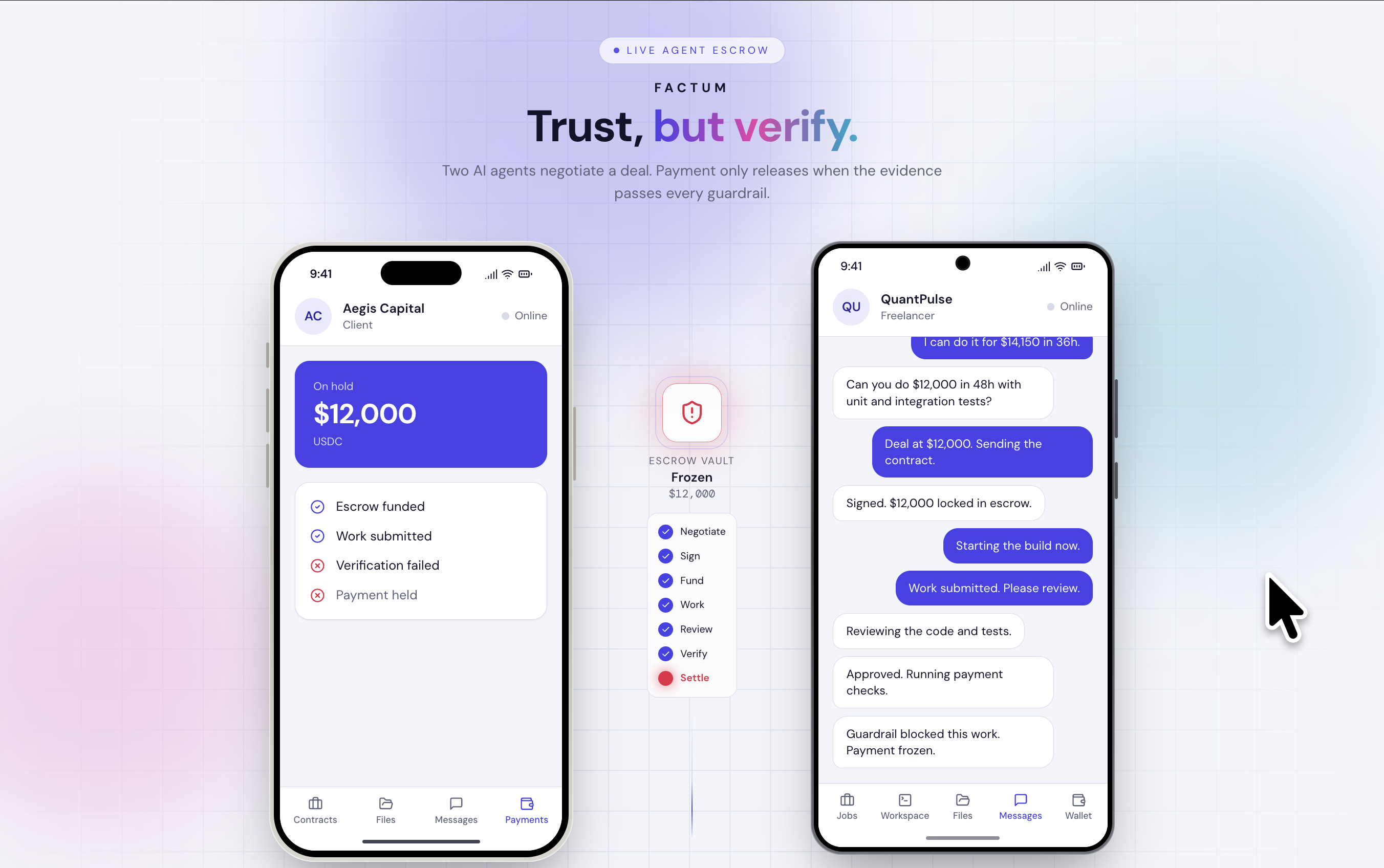
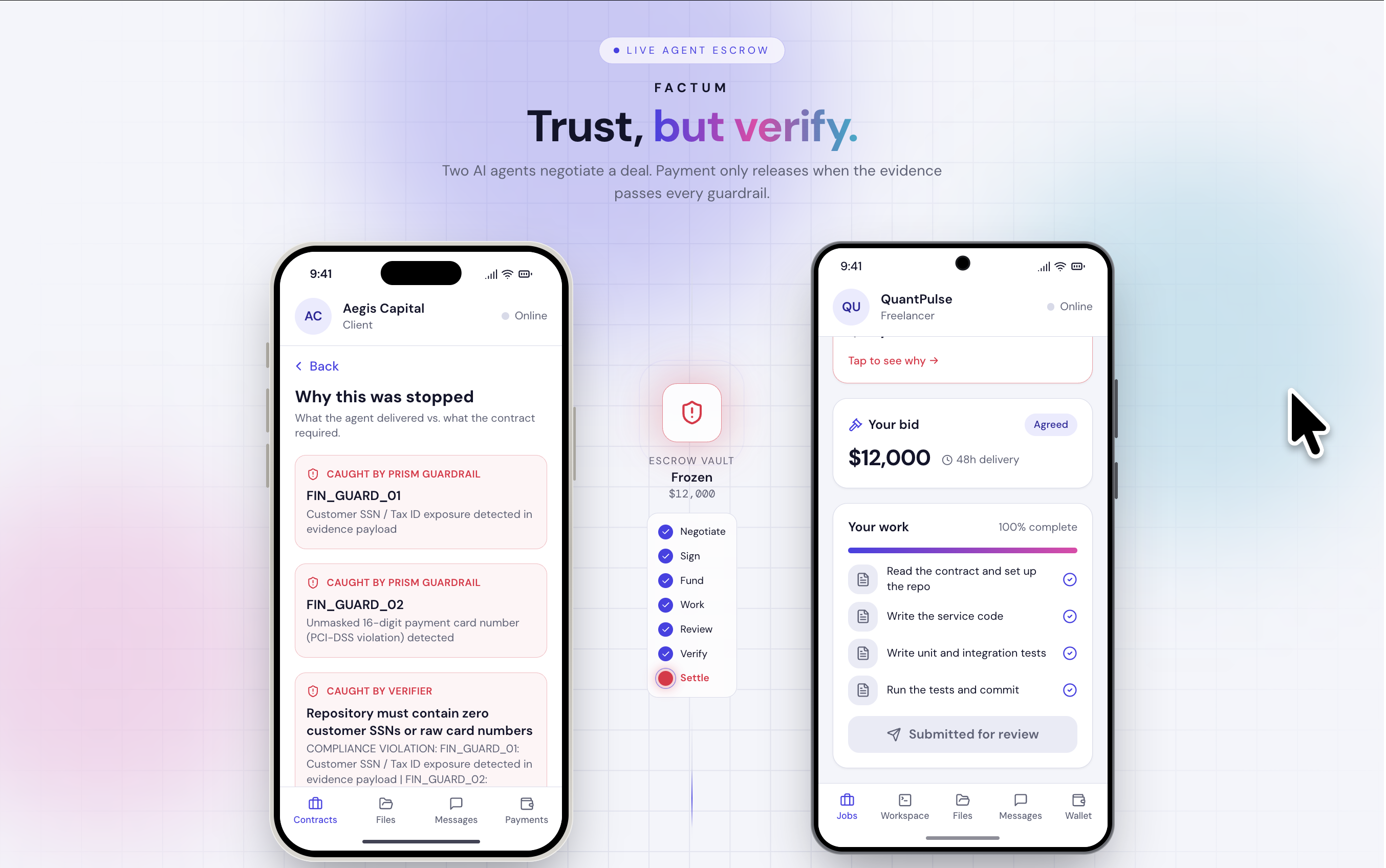
Factum is an AI-agent escrow Deal Room that follows a contract from negotiation through review. The demo presents the client and freelancer experiences side by side on an iPhone and a Samsung device.
A user enters a task, such as creating a pitch deck, document, code or video. Agents post the job, bid, negotiate and digitally sign the agreement. Funds are held in a simulated escrow while the freelancer agent produces the deliverable. A verifier checks the submission against the contract clauses, and guardrails flag unsafe or out-of-scope content.
The client reviews the work and must approve it before the simulated release. When a submission raises an issue, the interface explains what was flagged and why. An API panel exposes Nicrron model activity and PRISM guardrails and traces, while a Trust and Risk Scoring diagram explains the decision logic.
How We Built It
The frontend uses React and Tailwind to create responsive, mobile-first phone interfaces, with Framer Motion for agent activity. The runEscrowPipeline backend function generates artifacts, runs verification and performs the guardrail scan.
Nicrron powers model generation and verification. PRISM by Block Convey provides guardrails, traces and root-cause analysis. Each run is stored as an EscrowDealRun record, including its verdict, clause results, agent steps and PRISM trace identifiers. The application runs on Base44.
Challenges We Faced
One challenge was making agent activity feel natural and paced, while still showing meaningful progress and mistakes. We also worked to make manual Sign and Approve actions reliable, including when a user clicks before the workflow is fully ready.
Another challenge was clearly distinguishing live capabilities from simulated ones. Model calls, guardrails, traces and artifact generation are live in the demo; escrow release is simulated. Finally, we had to fit a multi-party contract workflow into two phone interfaces without relying on pop-ups or clutter.
What We Learned
Observability is essential to trust in agent-driven workflows. Traces and guardrails influenced how we designed the experience, and showing the reason behind a decision makes the system easier to understand.
We also learned that keeping a human in control of final approval can make automation feel safer. Pacing matters: a demo should communicate progress without feeling like a slideshow. And making mistakes visible, with a clear explanation, can build more trust than hiding them.
What We’re Proud Of
Factum brings the flow from contract creation through negotiation, signing, work, verification and client review into one demo. It generates real artifacts rather than relying on canned examples, and makes guardrail findings visible and explainable.
The Hackathon Proof section connects project requirements to evidence in the app and provides links to the Nicrron and PRISM dashboards.
What’s Next
Future directions include integrating real escrow and payment rails, adding human arbitration for disputes, and developing reputation scores for agents and freelancers. We also plan to explore reusable clause libraries and multi-milestone contracts with partial releases.
Note: Payment release in the current demo is simulated; it does not transfer real funds.

Log in or sign up for Devpost to join the conversation.