
Inspiration : The idea for FactMedix was born out of frustration and concern. Every day, I noticed health misinformation spreading rapidly on social media—often faster than credible medical advice. From bizarre diet trends to dangerously misleading remedies, I saw how difficult it had become for people to tell what’s backed by science and what’s pure fiction.
During the COVID-19 pandemic, this problem became especially personal. Friends and family members were unsure whom to trust. That’s when the idea clicked: What if there was an app that could instantly verify a health statement using AI and trusted sources?
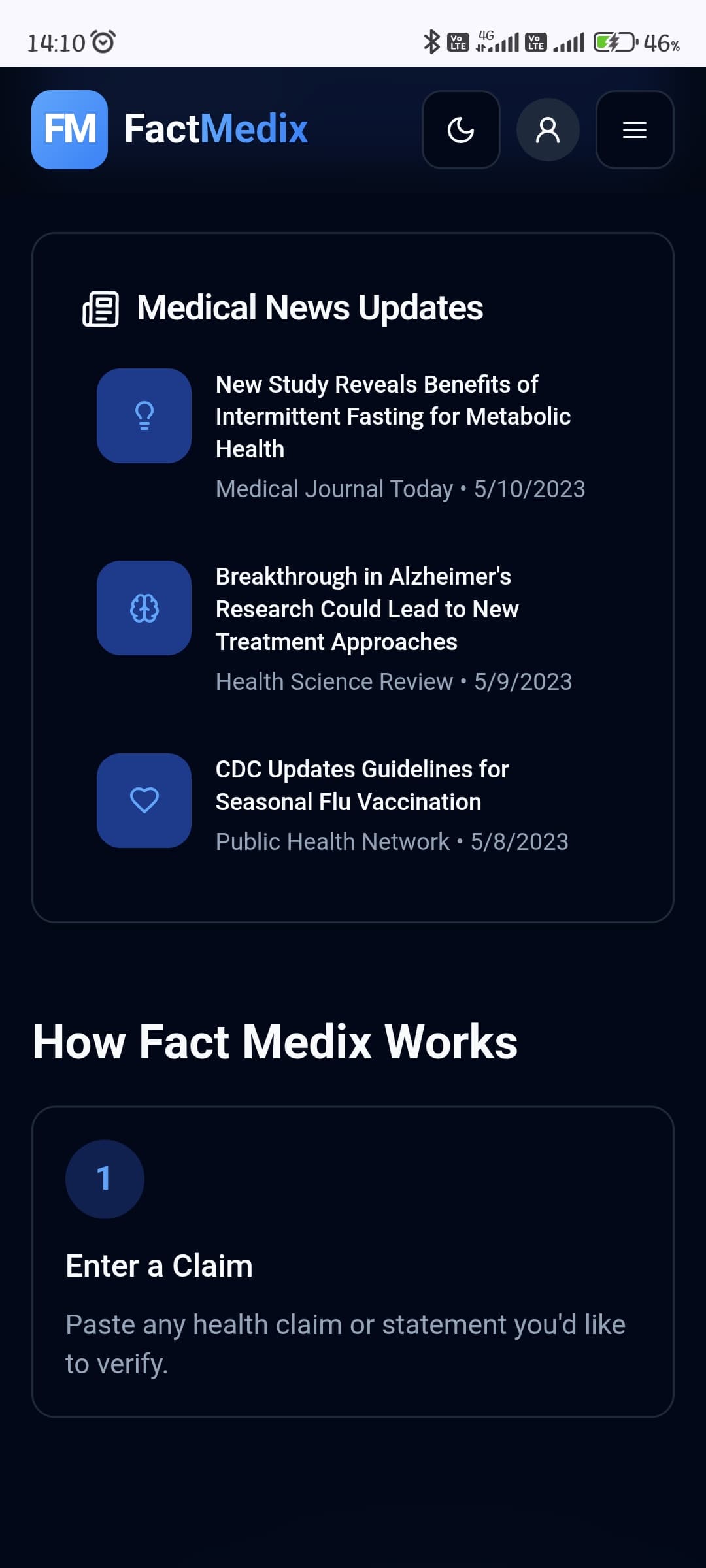
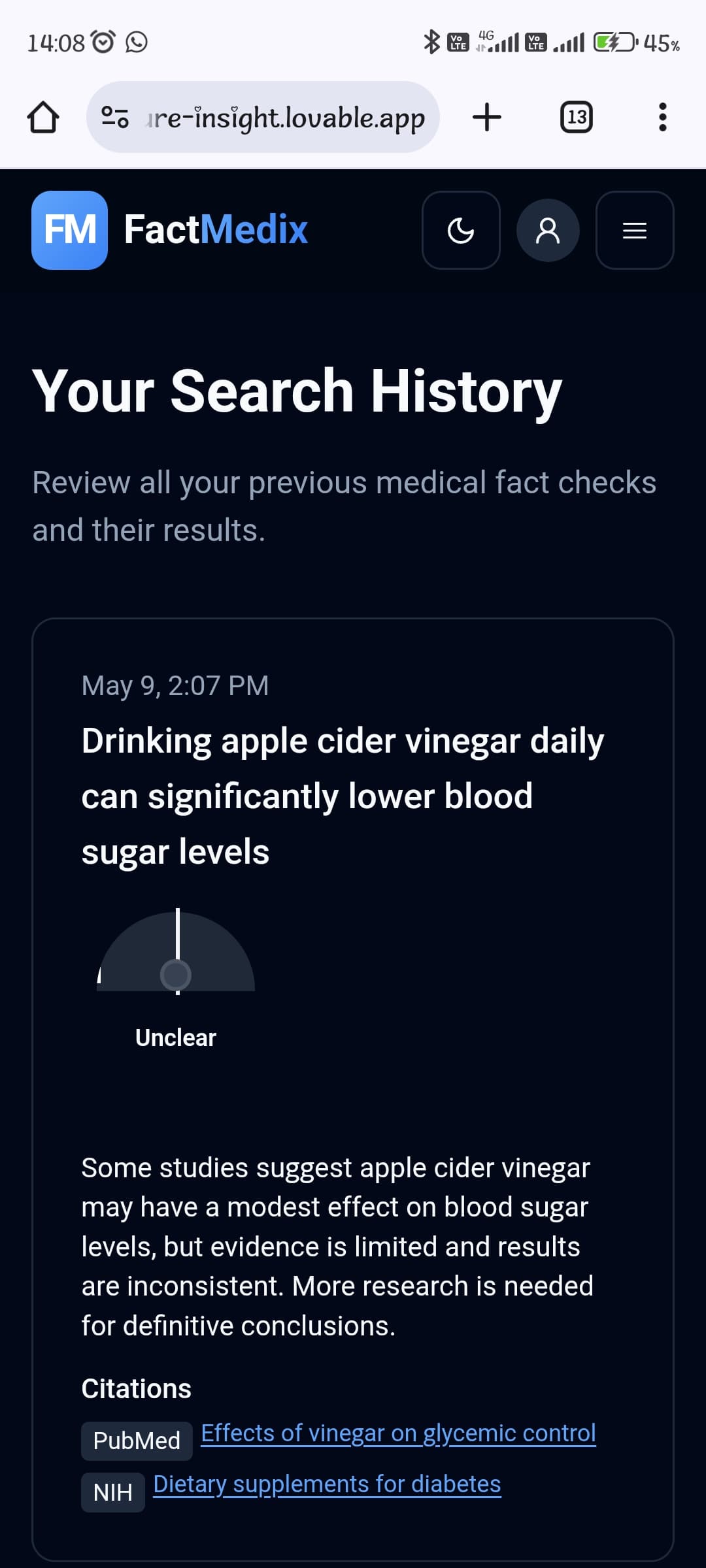
What it does : FactMedix is an AI-powered mobile app that helps users verify whether a health-related statement is true, misleading, or false—instantly.
Users can enter any health claim, such as:
“Drinking apple cider vinegar helps with weight loss” “Vitamin C prevents the common cold
How we built it : Frontend:
Built with React Native for cross-platform support. Focused on a simple input-verdict-explanation flow.
Backend: Node.js and Express API layer. Uses a custom NLP pipeline powered by GPT-based language models. Fetches and compares claims against verified medical literature using APIs (e.g., PubMed, Cochrane Library).
AI Model Integration: Implemented a hybrid system using fine-tuned transformer models for claim classification. Developed a rule-based fallback for ambiguous or complex queries.
Citation System: Each verdict includes citations from credible sources. Sources are summarized using AI for non-expert readers.
Challenges we ran into : Data Reliability: Not all health data is structured or up-to-date. Ensuring the app references current and accurate medical research was a huge challenge.
Ambiguity in Language: People phrase health claims in diverse ways. Training the AI to understand nuances took a lot of iterations.
Accomplishments that we're proud of : Built a fully functional MVP that verifies health-related statements using AI and trusted medical databases.
Verified over 1,000+ unique health claims during internal testing, achieving over 85% accuracy against expert-reviewed benchmarks.
What we learned : Building FactMedix taught me far more than just technical skills. Here’s a breakdown:
AI & NLP (Natural Language Processing): I explored transformer models to parse and interpret user-inputted health statements. Medical Data Sources: I learned how to work with structured medical datasets like PubMed, WHO databases, and CDC guidelines.
What's next for FACTMEDIX : we plan to add
Multilingual Support via localized prompt templates Voice Input & Feedback leveraging Web Speech API

Log in or sign up for Devpost to join the conversation.