Inspiration
Misinformation spreads rapidly through Youtube videos, making it challenging for viewers to distinguish facts from fiction. I attempted to build something to solve this.
What it does
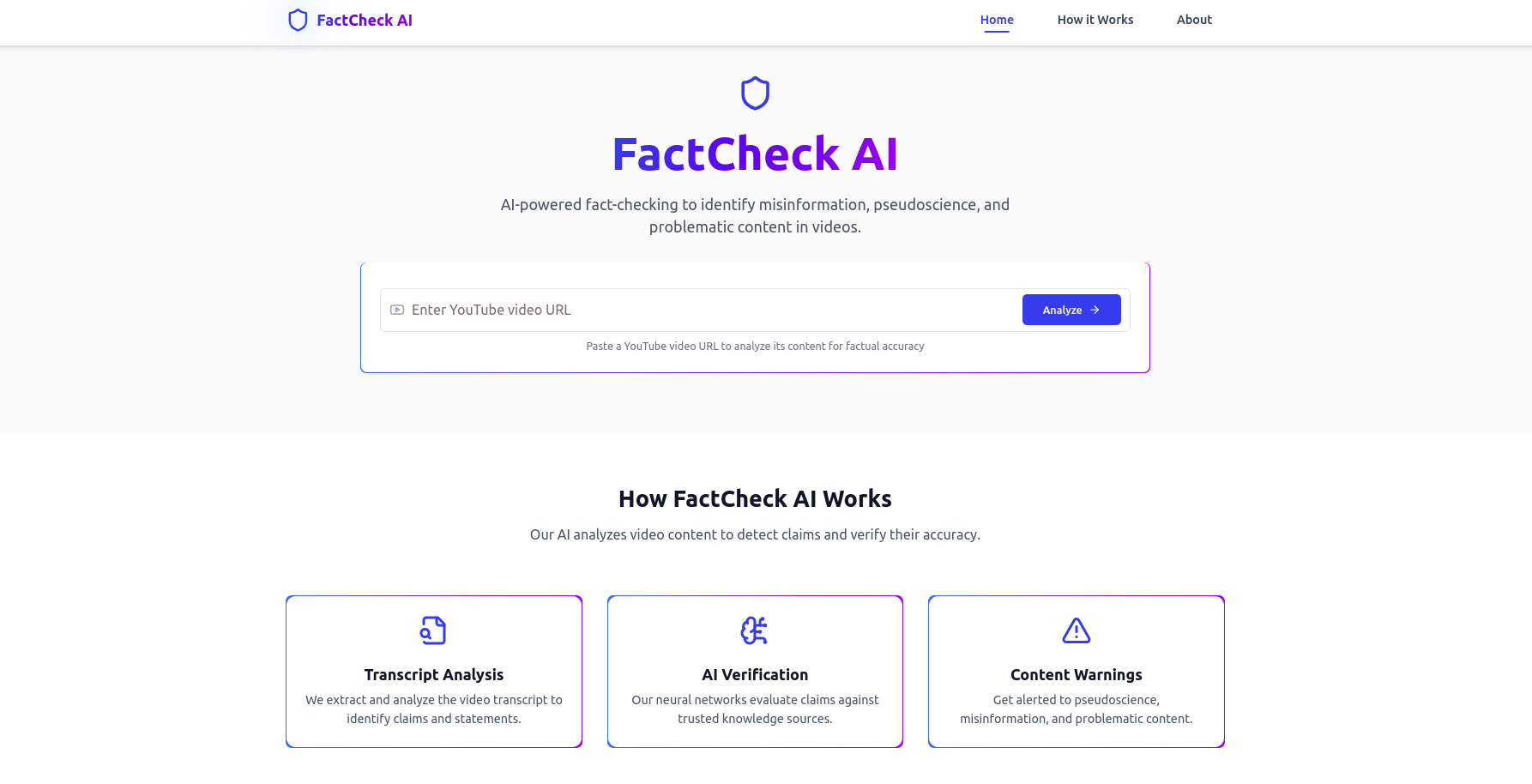
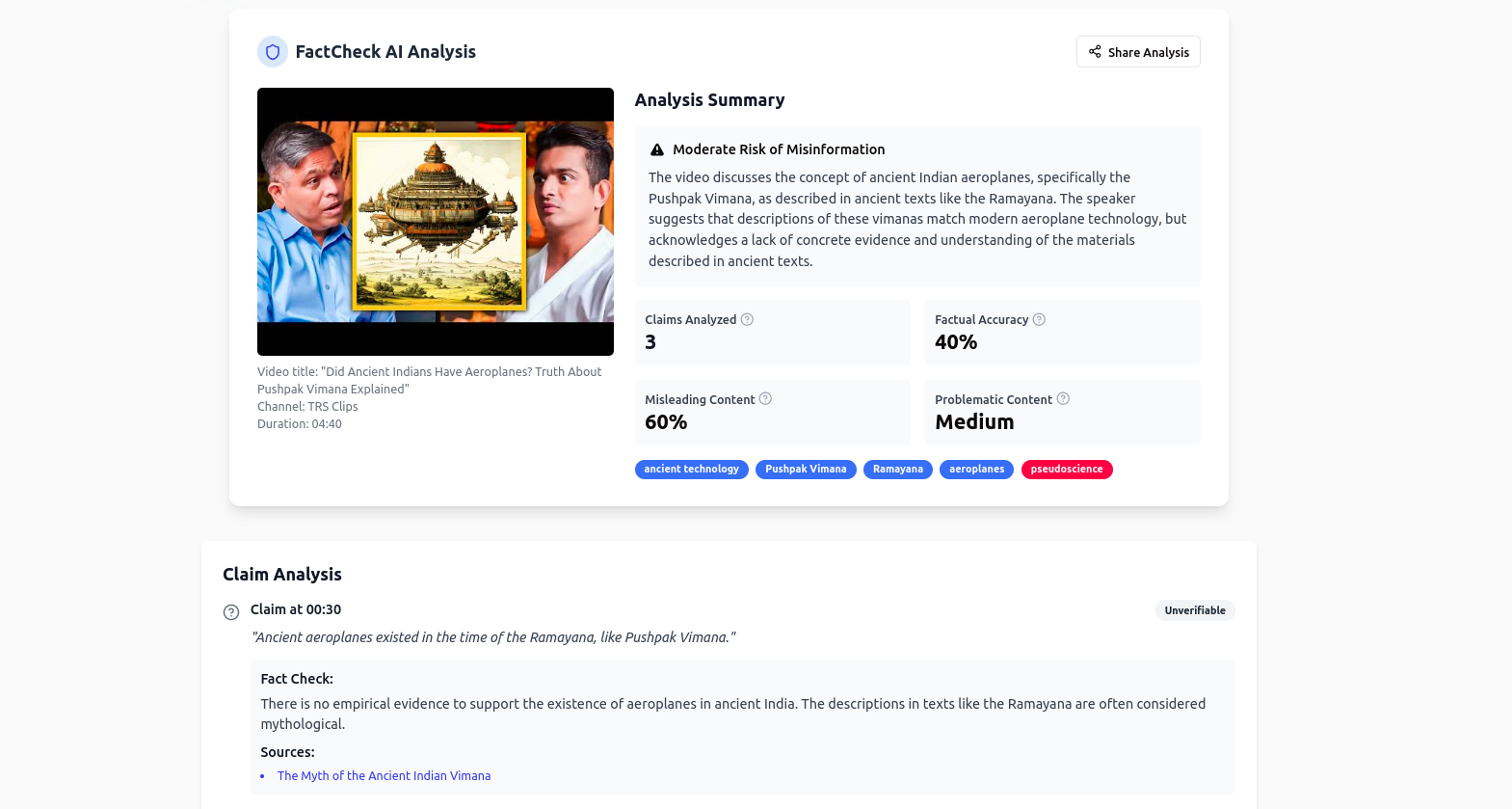
FactCheck AI is a powerful tool that analyzes YouTube videos for misinformation, pseudoscience, and problematic content in real-time. It identifies and verifies claims made in videos, and provides a detailed analysis with evidence-based verdicts for them.
How we built it
In the Node.js server, I used the Youtube Data API to fetch the video details, a PHP script deployed as an API to fetch the transcript, OpenAI's GPT-4o to analyze the transcript for incorrect claims and a report analysis. For the client, I used React, and I used Postgres as the database with Drizzle as the ORM.
Challenges we ran into
Fetching subtitles from an Youtube video reliably on production is the major challenge
Accomplishments that we're proud of
The purpose of this project is to help people navigate the complex online information landscape by highlighting factual inaccuracies, detecting misleading arguments, and providing context for controversial topics. Being able to implement this with the help of AI, is something I'm proud of.
What we learned
What's next for FactCheckAI
- Improving the mechanism to fetch youtube transcripts and using audio analysis if transcripts aren't available
- Adding a multi model/agentic approach to checking claims.
- Extending the usage to Instagram reels and Tiktoks.
Built With
- neon
- node.js
- openai
- postgresql
- react
- vite

Log in or sign up for Devpost to join the conversation.