-
-
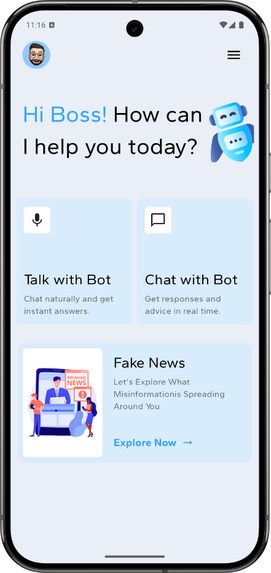
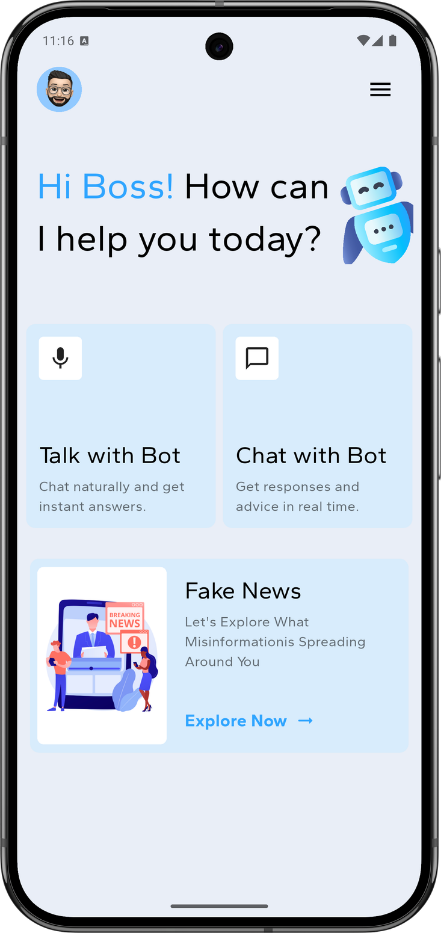
A simple dashboard to chat with the AI, explore misinformation, and start a fact-check.
-
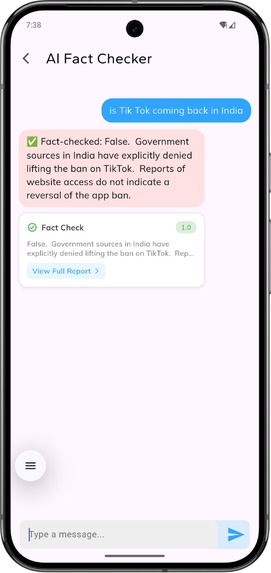
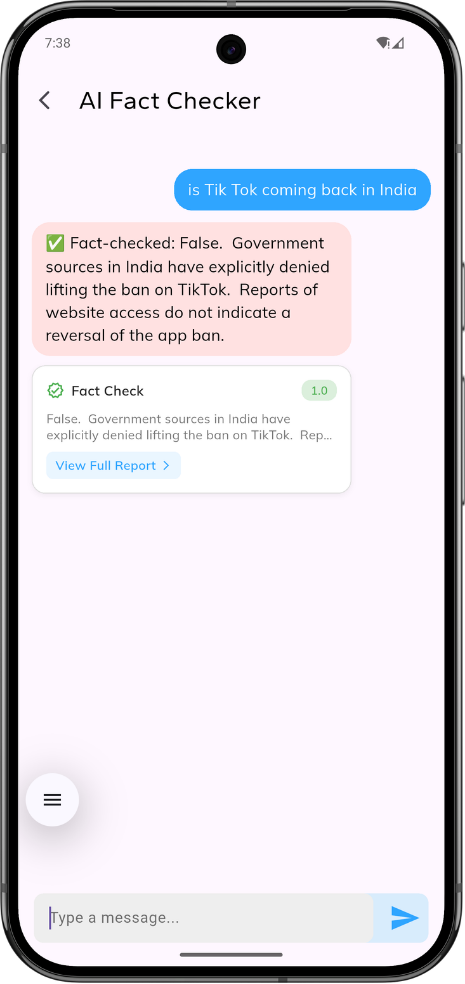
Ask the AI Fact Checker about suspicious claims and receive instant fact-checked responses.
-
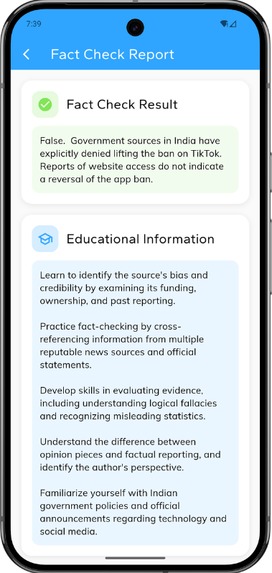
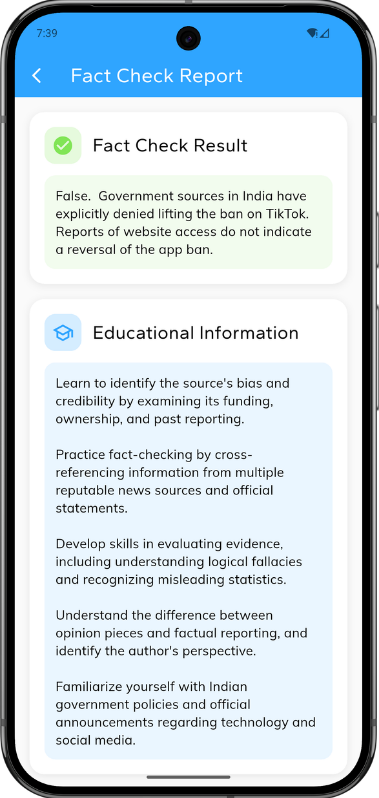
Explore the complete fact-check report with evidence, sources, and educational insights.
-
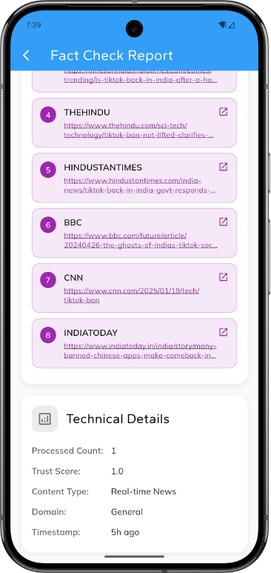
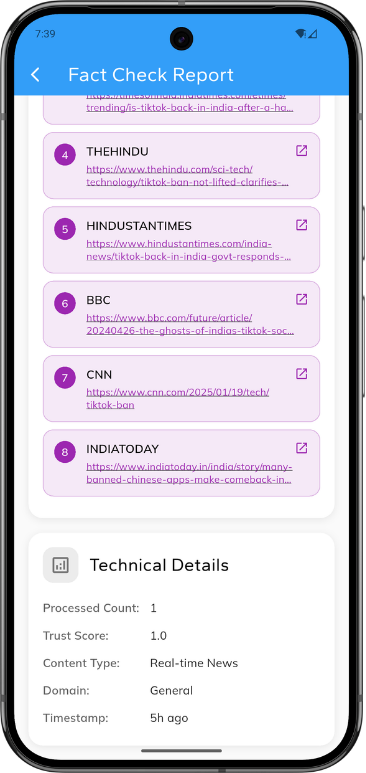
View trusted sources and technical details supporting the fact-checking result.
-
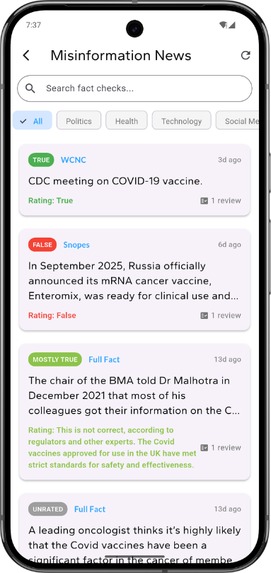
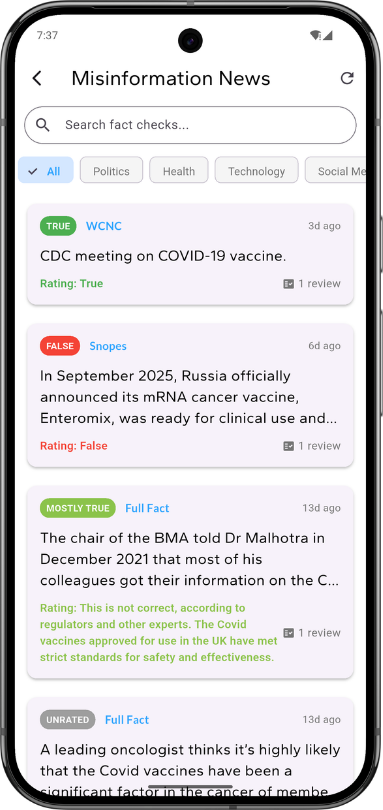
Discover trending and previously verified misinformation across different categories.
Inspiration
Misinformation spreads rapidly through social media, messaging apps, and online news. People often see viral rumors, fake health advice, financial scams, and misleading images but struggle to quickly determine what they can trust.
We wanted to make fact-checking faster, easier, and more understandable for everyday users.
What it does
Fact Checker AI allows users to submit suspicious claims, news, or images and receive a clear True, False, Misleading, or Unverified verdict.
It analyzes text and images, distinguishes between real-time and evergreen claims, cross-checks trusted sources, and provides confidence scores, evidence, red flags, and educational information.
How we built it
We built the frontend using Flutter and the backend using Python Flask and REST APIs.
Google Gemini API handles AI analysis and categorization, while Google Custom Search API helps discover relevant sources. We also use web scraping to extract information for fact verification.
Challenges we ran into
One of our biggest challenges was verifying information from multiple sources while maintaining reliable and understandable results.
Handling real-time information was also challenging because sources can change quickly. We had to design the system to distinguish fresh claims from recurring or evergreen misinformation.
Accomplishments that we're proud of
We built a working end-to-end fact-checking application rather than just a concept.
We are especially proud of combining AI analysis, source verification, credibility scoring, and educational guidance into a single platform.
What we learned
We learned that detecting misinformation is not simply about predicting whether something is true or false. Context, evidence, source reliability, and transparency are equally important.
We also gained practical experience in integrating AI APIs, web search, scraping, backend APIs, and a cross-platform frontend.
What's next for Fact Checker AI
We plan to improve real-time verification, strengthen image and visual misinformation detection, expand trusted-source coverage, and make the system more accurate across different misinformation domains.
Our long-term goal is to turn Fact Checker AI into a tool that not only detects misinformation but also helps people learn how to identify it themselves.

Log in or sign up for Devpost to join the conversation.