-
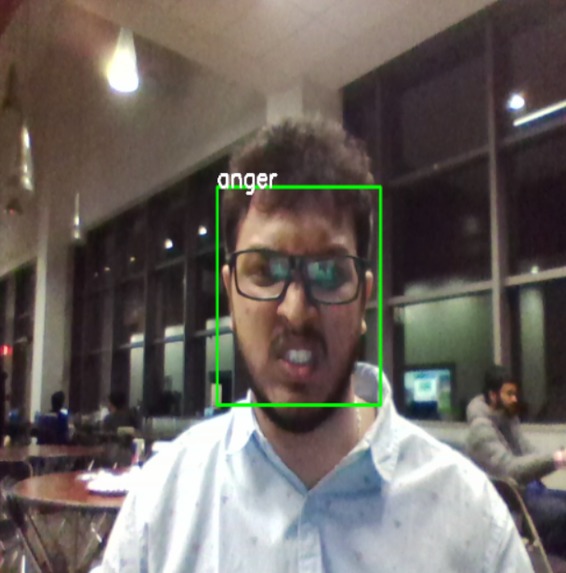
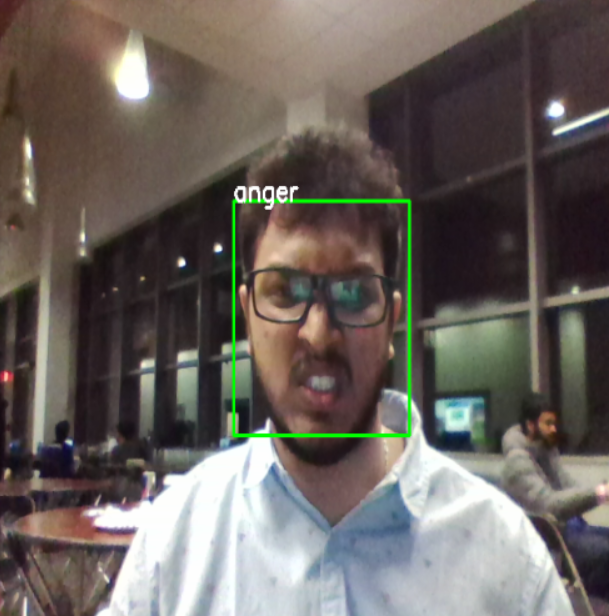
me pissed off because model overfit for the 1005973490573th time
Inspiration
Mental health issues took away a lot from me. From losing my girlfriend to my mom, serious victims everywhere, all because of lack of emotional quotient
What it does
My project uses AI to help recognize human emotions, we packaged the whole thing as a neural stick which works as a plug and play device, so we can plug this device into any existing camera network and we can see the emotions of the people.
How we built it
We built it using Convolution Neural Networks, here we used an image dataset of about 28,000 for train and 7000 for test. We finally created a model and used it on our neural stick which runs opencv , right now we run it on our local system due connectivity issues with the ub secure network and neural stick
Challenges we ran into
- we need to fix the networking issues and be able to properly connect to any network anywhere.
- fighting the training and testing losses and fitting challenges was a big issue for us. we resolved it. 3.successfully enough for it to reach the beta state.
- we had issues with frame rate on opencv
Accomplishments that we're proud of
- able to accurately classify 4 emotions with high confidence.
- able to create the neural network architecture from scratch and fix the issues of fitting.
- able to create a neural stick image.
- able to connect foreign mobile cameras to neural stick.
- LEARNT SO MUCH. ## What we learned
- neural nets are not easy, especially when it comes to 7 classes.
- how to fix issues with activation functions.
- different activation functions.
- understanding opencv and frames.
- learning how to improve fps.
- learning more about nvidia jetson nano.
- using androids as host cameras.
What's next for FACIAL EMOTION RECOGNITION
- make algorithm better.
- integrate special personalized emotion helping functions, like anger management, etc.
- integrate better hardware.
- improve on compatibility over different camera hardware and resolution.
- make it a full product and deploy for real.

Log in or sign up for Devpost to join the conversation.