-
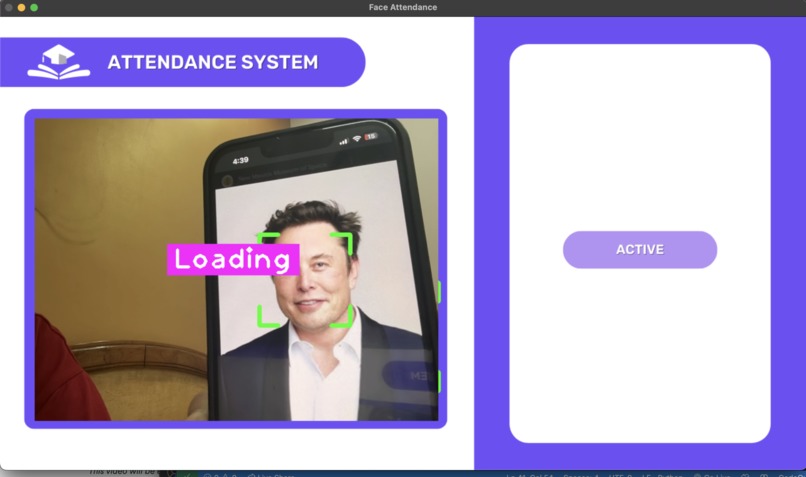
Example of Real Time Attendence Marking
-
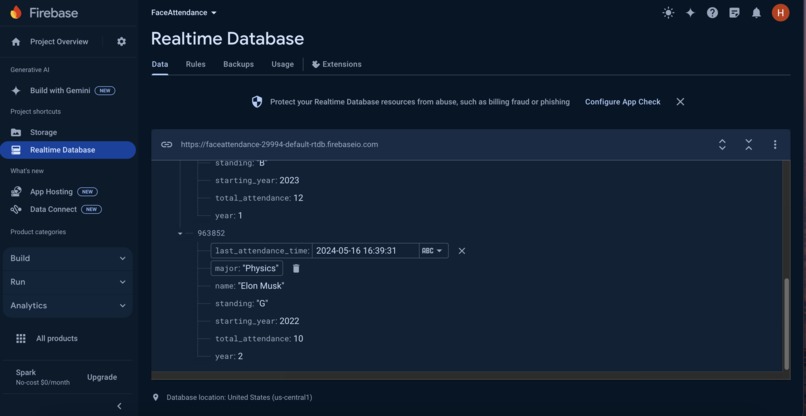
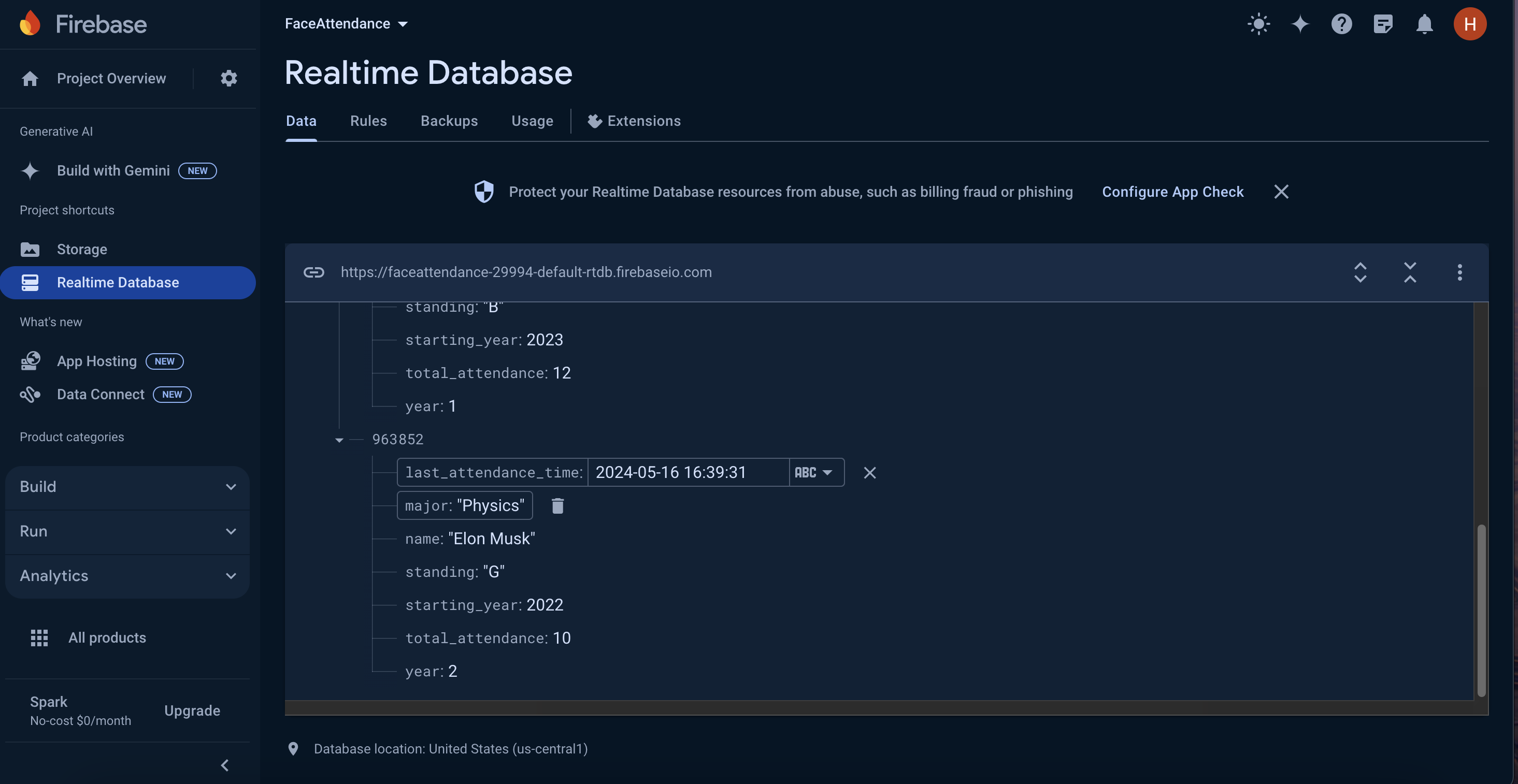
Real Time Database
-
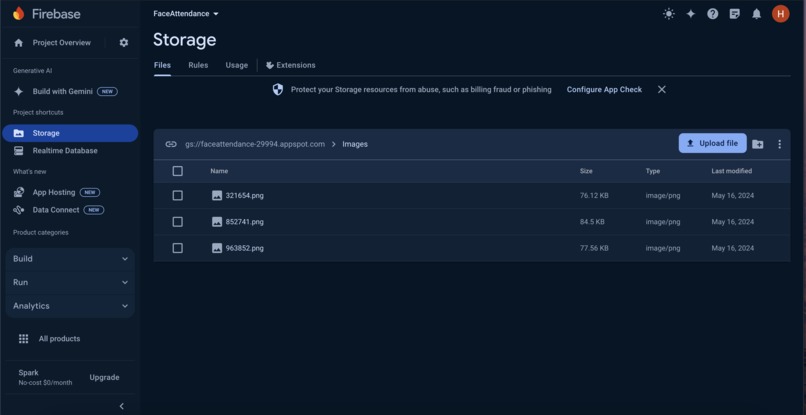
Storage of images

Inspiration
The inspiration behind FaceTime Attendance stems from the need for an efficient and accurate attendance system that leverages modern technology. Traditional attendance methods are prone to errors and time-consuming. We envisioned a solution that seamlessly integrates computer vision and real-time data management to streamline this process, making it quicker, more accurate, and user-friendly.
What it does
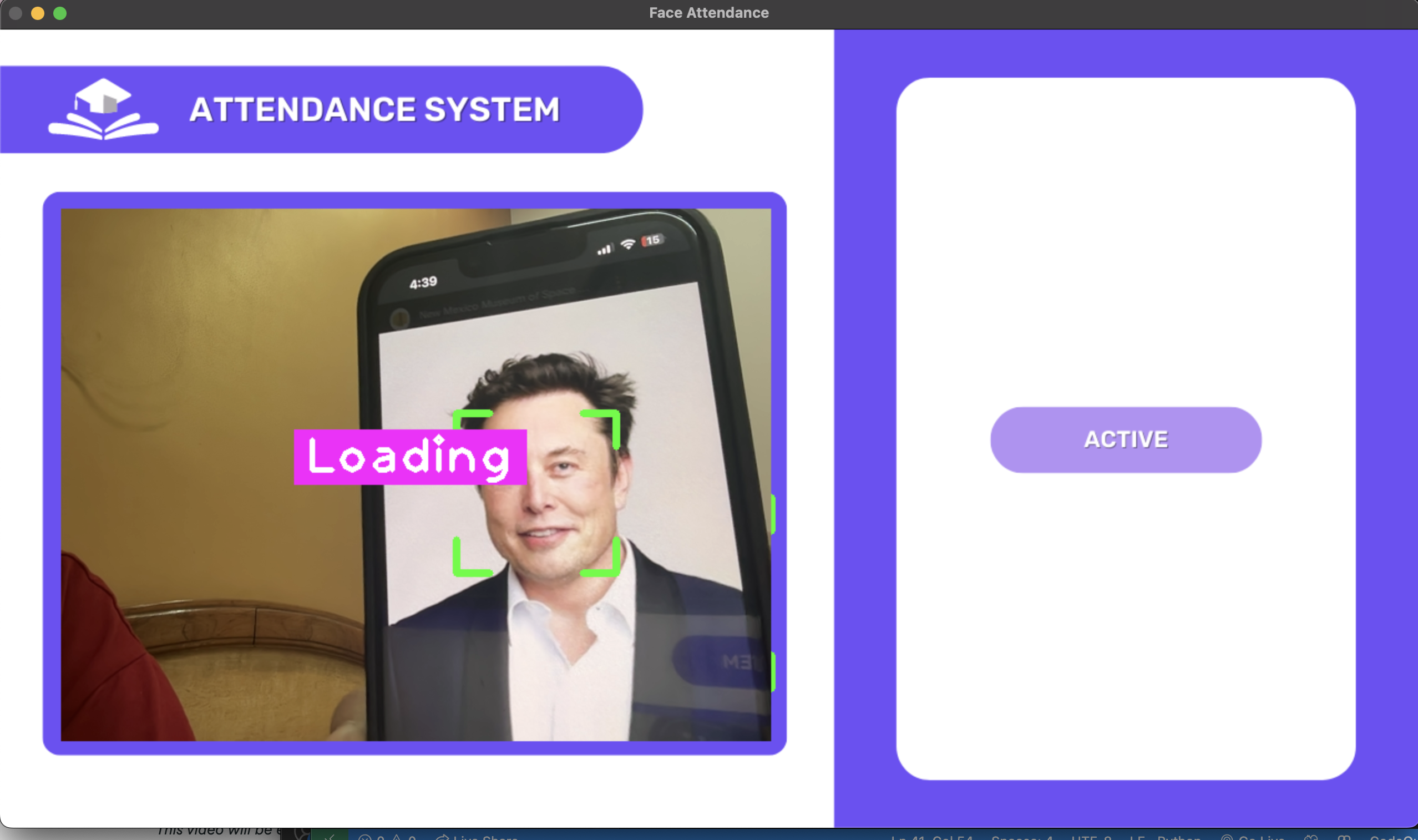
FaceTime Attendance is a sophisticated attendance management system that uses facial recognition technology to mark attendance. The system captures and recognizes faces in real-time through a webcam, matches them against a database of enrolled individuals, and updates their attendance records instantly in a Firebase real-time database. This eliminates the need for manual entry and ensures a higher level of accuracy and security.
How we built it
We built FaceTime Attendance using a combination of OpenCV for image processing, face_recognition library for facial recognition, and Firebase for real-time database management. The project includes a Python-based backend that handles face detection, recognition, and data synchronization with Firebase. We also used cvzone for creating a user-friendly interface and managing the display of captured images and attendance status.
Challenges we ran into
One of the primary challenges was ensuring the accuracy and speed of facial recognition under varying lighting conditions and different angles. Integrating Firebase with the local system for real-time updates also posed some difficulties, particularly in managing data synchronization and handling potential network issues. Ensuring the security and privacy of the facial data was another critical challenge.
Accomplishments that we're proud of
We are proud of achieving a high accuracy rate in facial recognition and successfully integrating real-time database updates with Firebase. The system's ability to process and recognize faces quickly and accurately, even in less-than-ideal conditions, is a significant accomplishment. Additionally, creating an intuitive and user-friendly interface that enhances the overall user experience is another highlight of our project.
What we learned
Throughout the development of FaceTime Attendance, we gained valuable insights into the intricacies of computer vision and the practical applications of machine learning in facial recognition. We also learned about the challenges of real-time data management and the importance of optimizing algorithms for speed and accuracy. Additionally, the project reinforced the importance of thorough testing and user feedback in developing robust and reliable systems.
What's next for FaceTime Attendance
Next, we aim to enhance FaceTime Attendance by incorporating more advanced machine learning models to improve recognition accuracy further. We plan to develop a mobile application to make the system more accessible and convenient. Additionally, we want to explore integrating more features like emotion detection and providing detailed analytics on attendance patterns. Finally, we are considering expanding the system to support larger databases and multi-camera setups for broader applications in larger organizations.

Log in or sign up for Devpost to join the conversation.