-
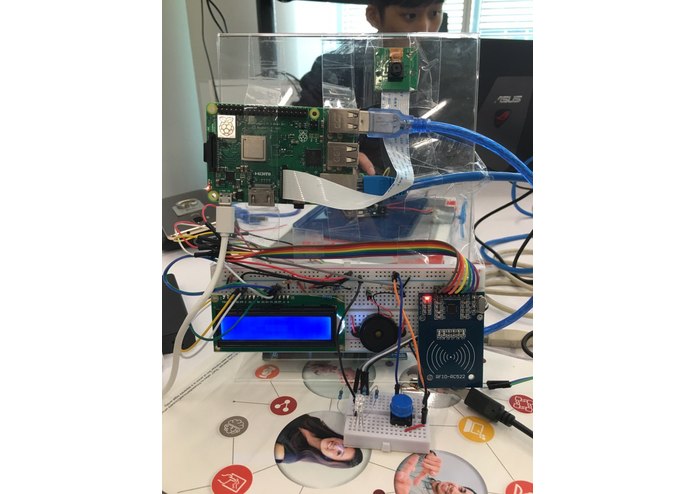
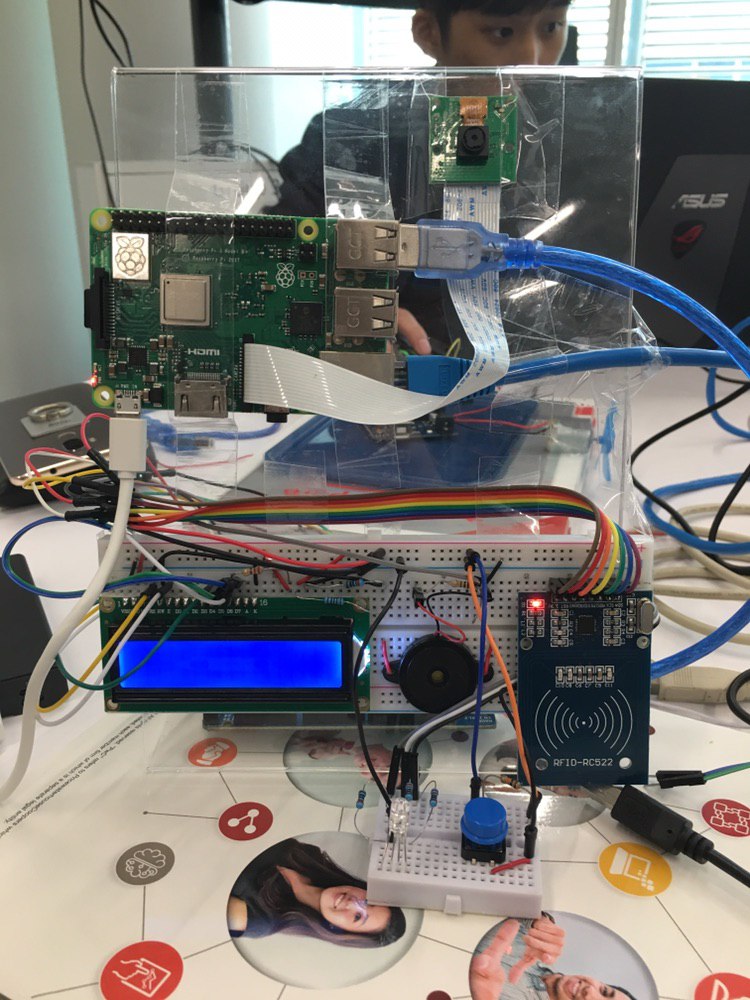
Front
-
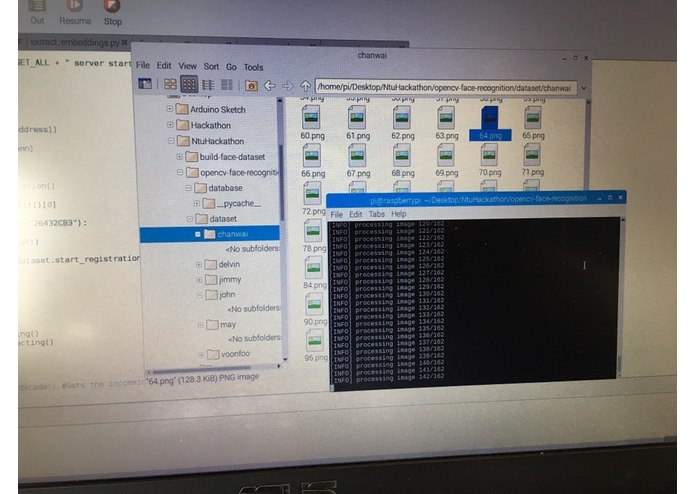
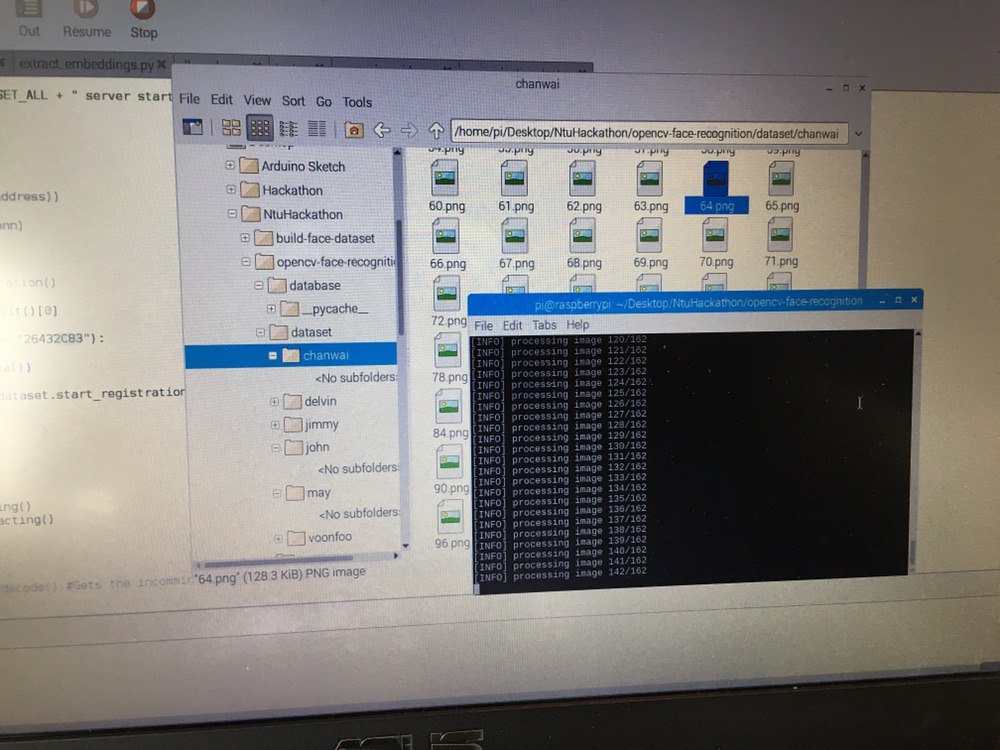
Training Data for Face Recognition
-
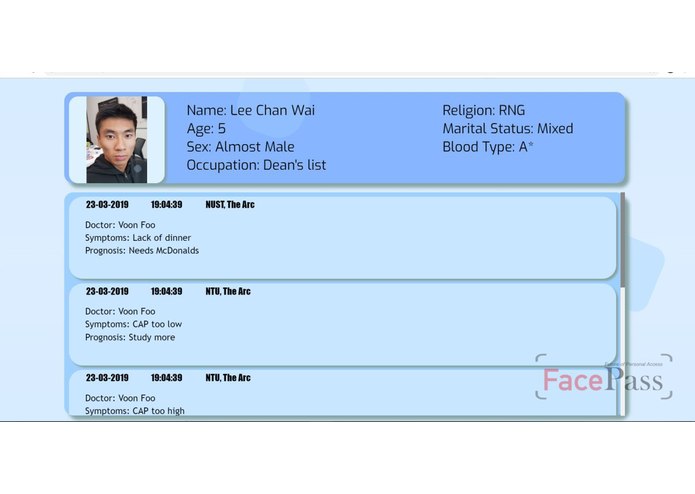
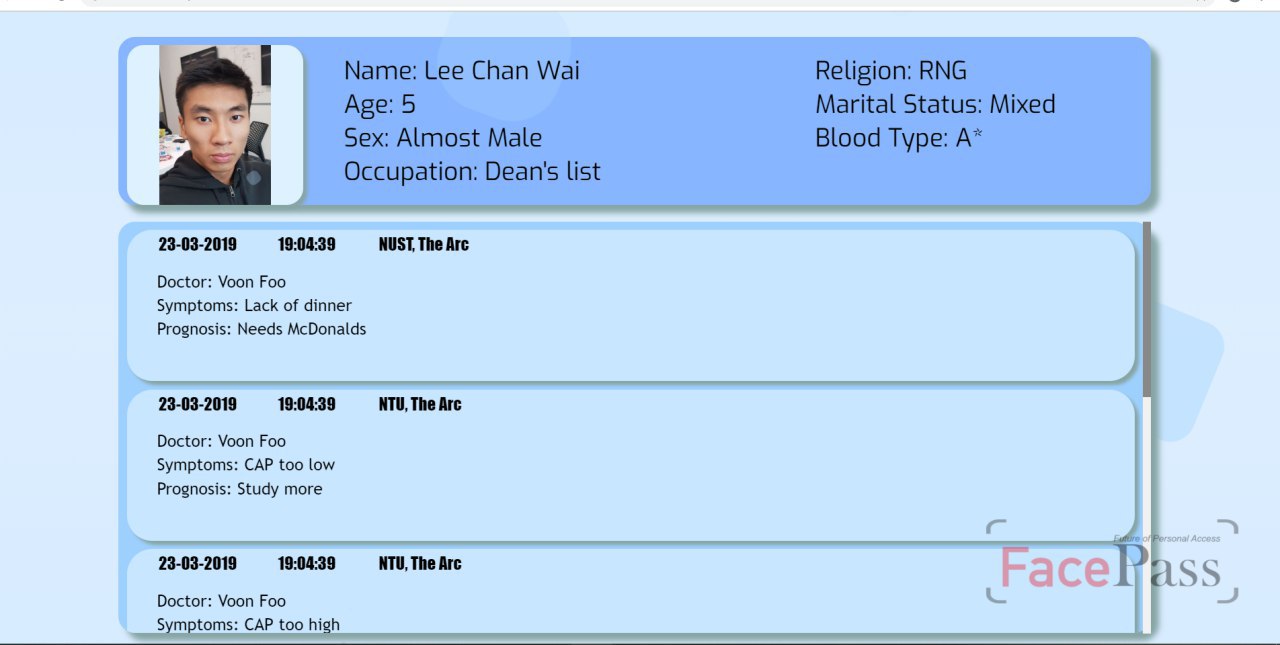
Webpage
-
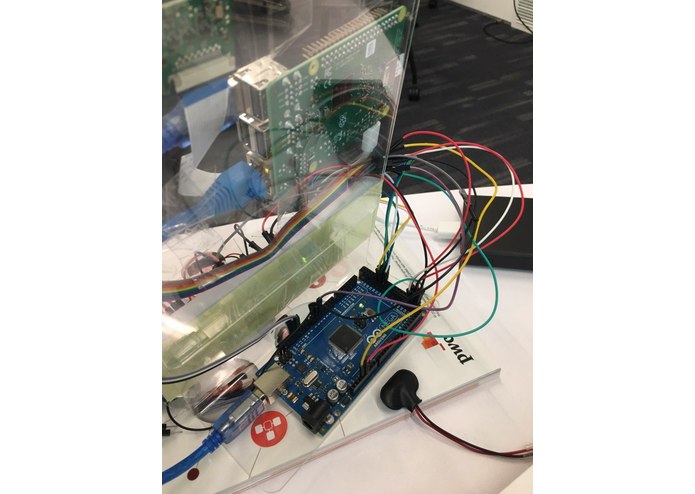
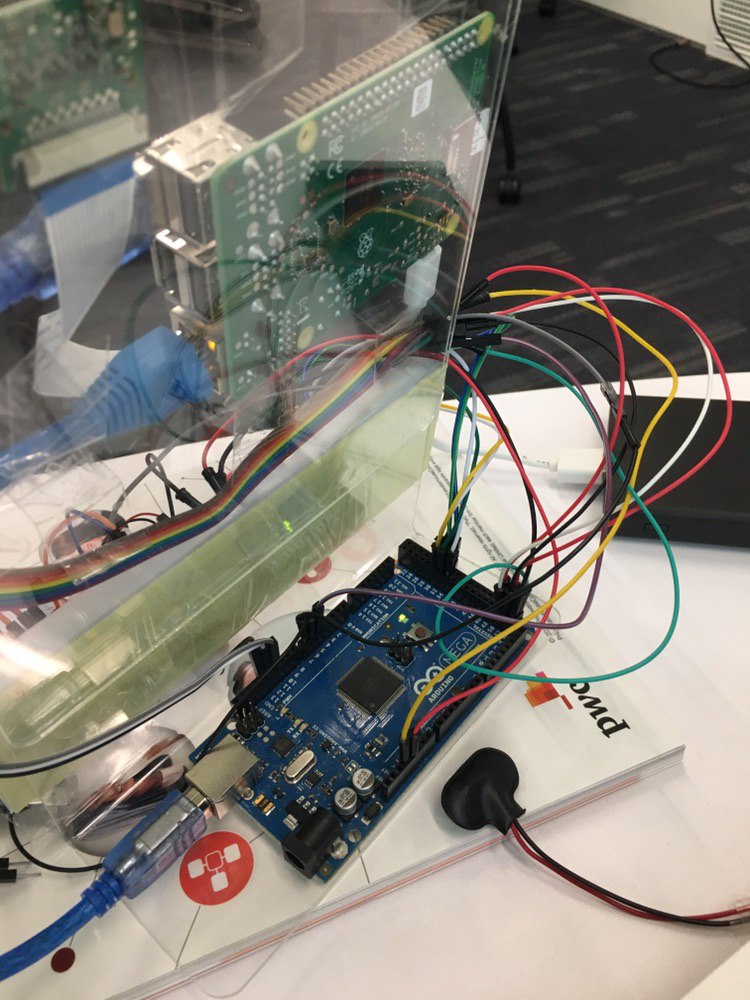
Back (Arduino Mega)
Inspiration
Primarily, what we felt was that, across all the different government and official non-governmental bodies, there was a disjoint in the information dissemination and availability. Examples included the need for insurance verification for every hospital visit, the lack of records being kept between GPs and hospitals, the necessity to still send an MC after getting it at the GP etc. While not seemingly big issues, Singapore is fast-reaching the point where these problems should be and are solvable, to a reasonable measure. There are, of course, current measures in place, in the form of Singpass. However, one thing we felt that was lacking was (especially given the recent advent of smartphones and the proven security and reliability of biometric security) the reliance on the relatively archaic need for a password and the 2-factor authentication (2FA), the process of logging in becomes needlessly complicated. There is also a lack of proper unification, with important information such as one's insurance (particularly in preparation to be given to healthcare providers) present in the account. Thus we felt that marrying biometric securty (particularly facial recognition) as well as an efficient truly one-stop portal for all was the way forward,
What it does
Its primary purpose is to store all of one's data, truly making it a one-stop portal and seeking to further the strengths as well as combat the weaknesses of Singpass. While definitely a step in the right direction, more could be done in full, seamless day-to-day integration and making it a more user-friendly experience.
Our vision of how the new Singpass framework, dubbed Facepass as the working title, would be split into 4 main arms. These arms would be Finance, Healthcare, Citizenship and Education. For the Finance arm, we seek to include important details such as insurance coverage, household income information, CPF contributions, tax return information and the like.
The second arm would be Healthcare. These would include not only major hospital visits, but also GP visits, as well as prescription history. This would be further tied in with the finance arm where additional information such as insurance coverage start/end date, preclusions as well as relevant healthcare/specialist contacts would be included. These would be made available to the relevant healthcare providers and financial parties as and when the occasion arises.
The third arm would be the Citizenship arm. As the name suggests, this would seek to, at least locally, replace the need for one to bring one's IC/passport around and risk it getting misplaced or stolen. This arm would be concerned with the storage of general citizenry data such as DoB, Country of Birth, PR status held, when one served National Service, when the upcoming ICT sessions were etc. This would also include passport renewal dates, visa expiration dates and the like.
The fourth and final arm (for this pilot iteration of Facepass) would be education. This would be a one-stop repository of all one's paper certifications and reduce the need for easily damaged physical paper records and certification. This would allow for longevity and fidelity of records, and ease of access by current and future employers. This would also be the arm were one's schooling medical certificates are logged, and attendance in school would be updated automatically without the need for the student to personally inform the teacher.
How we built it
As a group comprising four mechanical engineers, while we saw the hardware aspect as our stronger suit, we wanted to take this chance to challenge ourselves by delving into hardware and components which we had never explored, on top of brushing up on and learning programming to deliver a product we ultimately would be proud of.
We first decided what it was we needed (and by happy coincidence, over-preapred on the hardware front). Coming into the hackathon, we had no real idea of what exactly we wanted to pursue. While we were ultimately lucky that we had most if not all the things we needed to build this hack, we definitely could have been better prepared.
On the software side, we knew we were on the backfoot in terms of both expertise and experiece. However, we were willing to and took the time to learn the requisite languages (in the form of JS, SQL and CSS/HTML). We sought to create a local host to host our database of biodata, which would then be automatically retrieved upon a successful facial recognition.
On the hardware side of things, we sought to build a 2-factor biometric authentication system to complement and ultimately replace the current password-SMS-OTP system. We built our system around this philosophy as well as with user-friendliness in mind, which was ultimately what we saw as one of the problems.
Challenges we ran into
Surprisingly, our challenges came first in the form of hardware, before naturally (seeing as how we are mechanical enngeering students). we faced a huge problem first learning about the new hardware we had brought but mostly not yet experimented with before, and that wiring the whole system up onto a single MCU was definitely going to be a challenge for us.
Naturally, we did also face challenges on the software front, in terms of discerning what was necessary and then learning all the requisite knowledge we felt was needed for the hack we eventually intended to pursue. We faced problems in troubleshooting in that, we lacked the expertise to deftly handle the bugs we faced, but rather blundered through them.
Accomplishments that we're proud of
We are as yet unsure of the results of the hack, but we are happy so far that we managed to learn and expose ourselves to so many new things in a short (albeit gruelling) 24 hours.
We also feel proud that we never lost sight of why we joined the hack in the first place, which was to challenge and better ourselves, and that regardless of the result, we were chasing the dream not the competition.
What we learned
We learnt that we had still a long way to go, not only as hackers, but as engineers as well. We knew and found out even more so that we had much to learn from everyone. Even as we are typing this, the results and presentations have yet to commence. Yet, from roaming around, the variety of projects and ideas never failed to astound us.
What's next for FacePass
Future extensions are vast in that, more can always be done to ensure a more seamless user experience and a more seamless government service.
Firstly, given the time and budgetary constraints of our hack, we were unable to procure and integrate a fingerprint sensor in conjunction with using facial recognition. This would heighten the security of the system while causing minimal additional effort on the end-user's part.
Next, we would sseek to integrate Facepass with semi-privatised supermarkets such as NTUC, where it would be a cashless system and that items would be added to one's virtual cart and s/he would be billed weekly/monthly. This would serve to quicken the human traffic flow and create a more enjoyable experience for all.
Lastly and definitely not exhautively, we would want to create an app that would allow users to periodically and frequently updtae their facial profiles to ensure a convenient and fast service everytime Facepass would need to be employed.

Log in or sign up for Devpost to join the conversation.