-
-
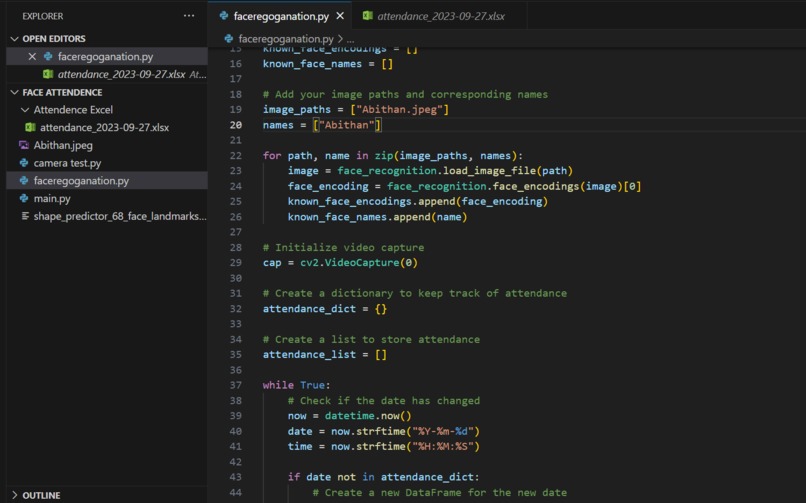
Program
FaceGuard: Automated Attendance Management System
Inspiration
The inspiration for the FaceGuard project came from a need to streamline attendance tracking in various settings, such as schools, offices, and events. Traditional methods often prove to be time-consuming and prone to errors. We aimed to leverage the power of AI and facial recognition technology to create a more efficient and accurate solution.
What it does
FaceGuard is an automated attendance management system that utilizes facial recognition to identify and mark attendance. The system captures live video feed from a camera, detects faces in real-time, and matches them against a database of known individuals. Upon recognition, it records the attendance with the person's name, date, and time stamp.
How we built it
We built FaceGuard using a combination of Python, OpenCV, dlib, and face_recognition libraries. The process involved:
- Face Detection: We used the dlib library to perform real-time face detection in the video feed.
- Facial Landmark Detection: Dlib's shape predictor helped identify facial landmarks.
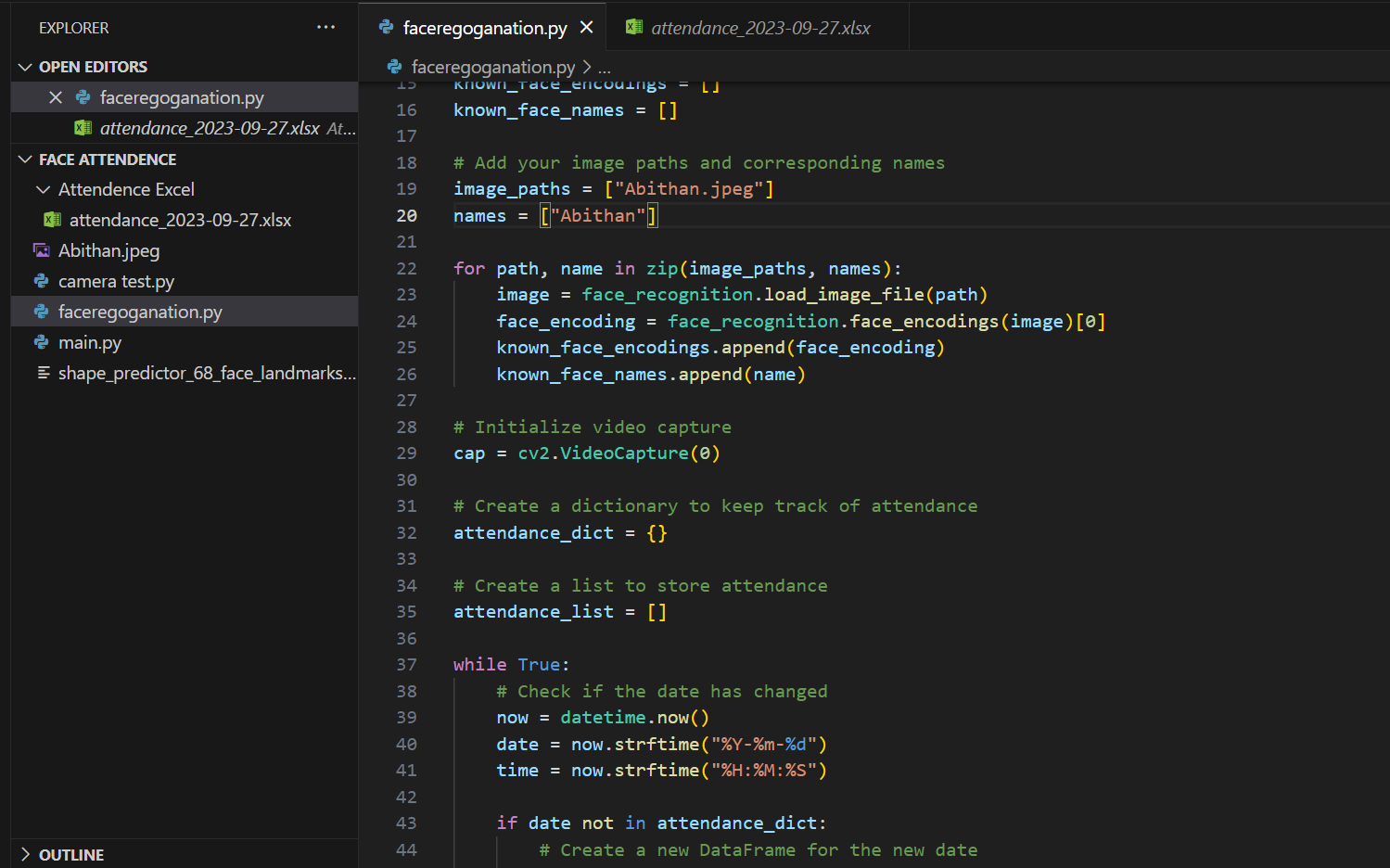
- Face Encoding: We used the face_recognition library to encode face images for comparison.
- Database Setup: Known faces and their corresponding encodings were stored for recognition.
- Real-time Recognition: The system continuously compared live feed faces with known faces.
- Attendance Recording: Upon recognition, attendance was recorded in a DataFrame.
- Excel Export: The attendance data was saved in an Excel sheet.
Challenges we ran into
- Optimizing Recognition Speed: Achieving real-time recognition while ensuring accuracy was a significant challenge. We had to fine-tune parameters and optimize the process.
- Handling Unknown Faces: We had to implement a system to handle unrecognized faces gracefully, marking them as "Unknown" in the attendance.
Accomplishments that we're proud of
- Real-time Recognition: Achieving accurate facial recognition in real-time was a major accomplishment. It enables the system to be highly efficient.
- Dynamic Excel Sheet Creation: The ability to generate a new Excel sheet with the current date for each day's attendance was a crucial feature.
What we learned
- Advanced Facial Recognition Techniques: We gained a deeper understanding of facial recognition algorithms, including encoding and comparison.
- Integration of Libraries: The project required seamless integration of various libraries, enhancing our skills in Python development.
What's next for FaceGuard: Automated Attendance Management System
- UI/UX Enhancement: We plan to develop a user-friendly interface for easier setup and management.
- Multi-Camera Support: Extending the system to support multiple cameras for larger areas or events.
- Integration with Databases: Implementing database integration for more robust user management.
FaceGuard is poised to revolutionize attendance tracking in various domains, making it more accurate, efficient, and hassle-free.


Log in or sign up for Devpost to join the conversation.