-
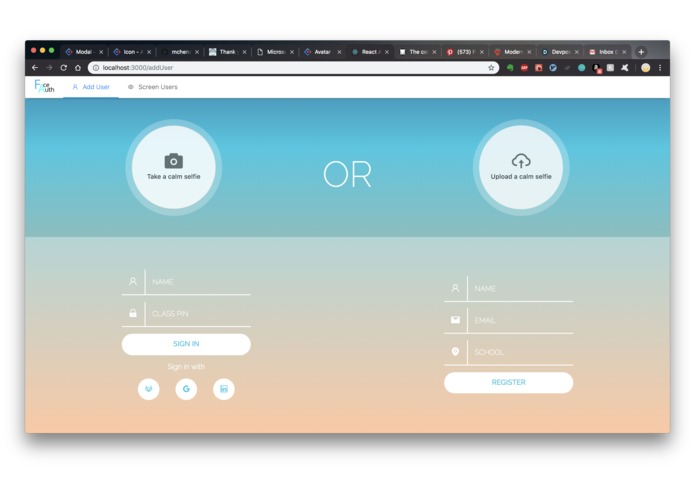
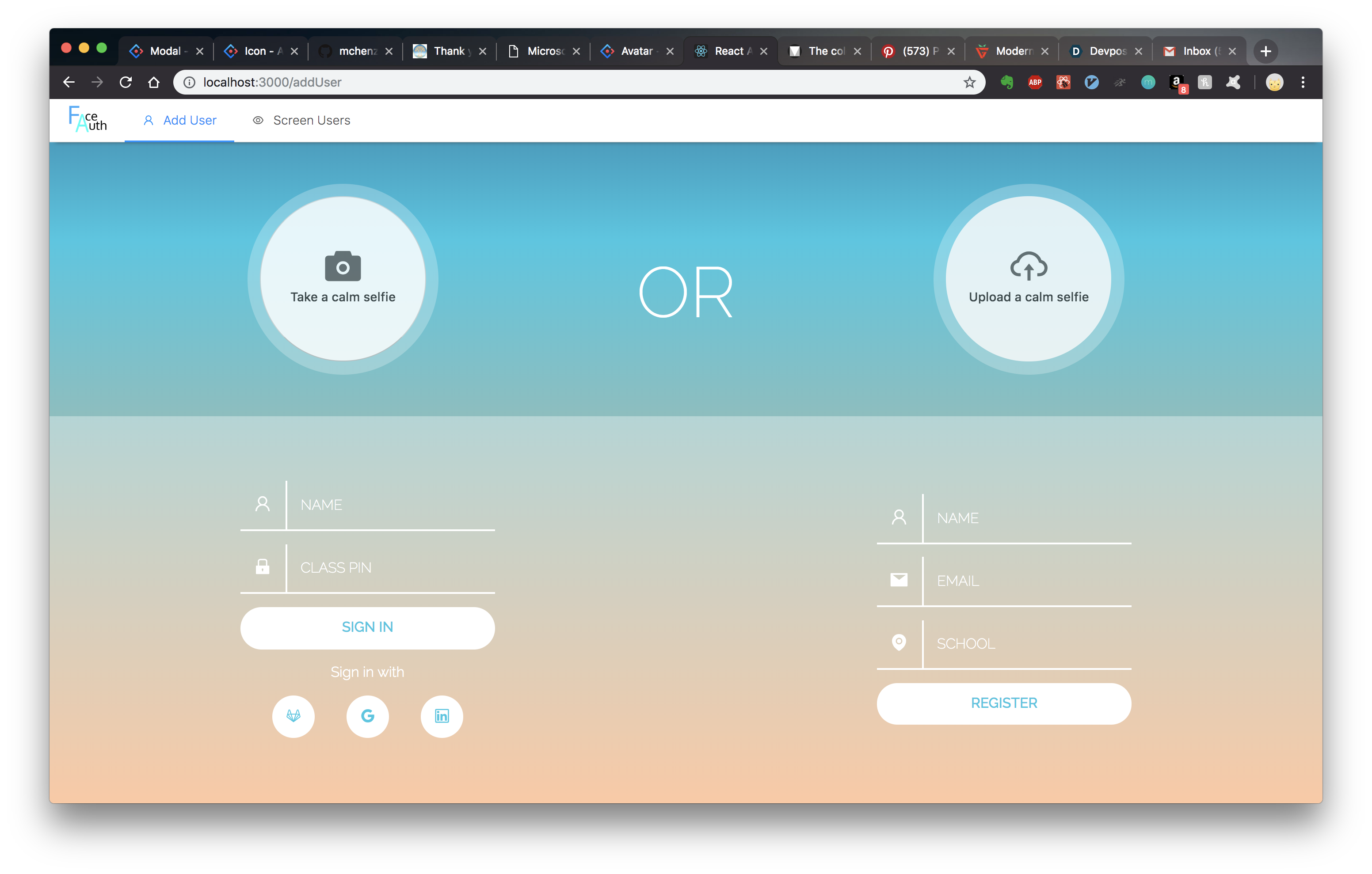
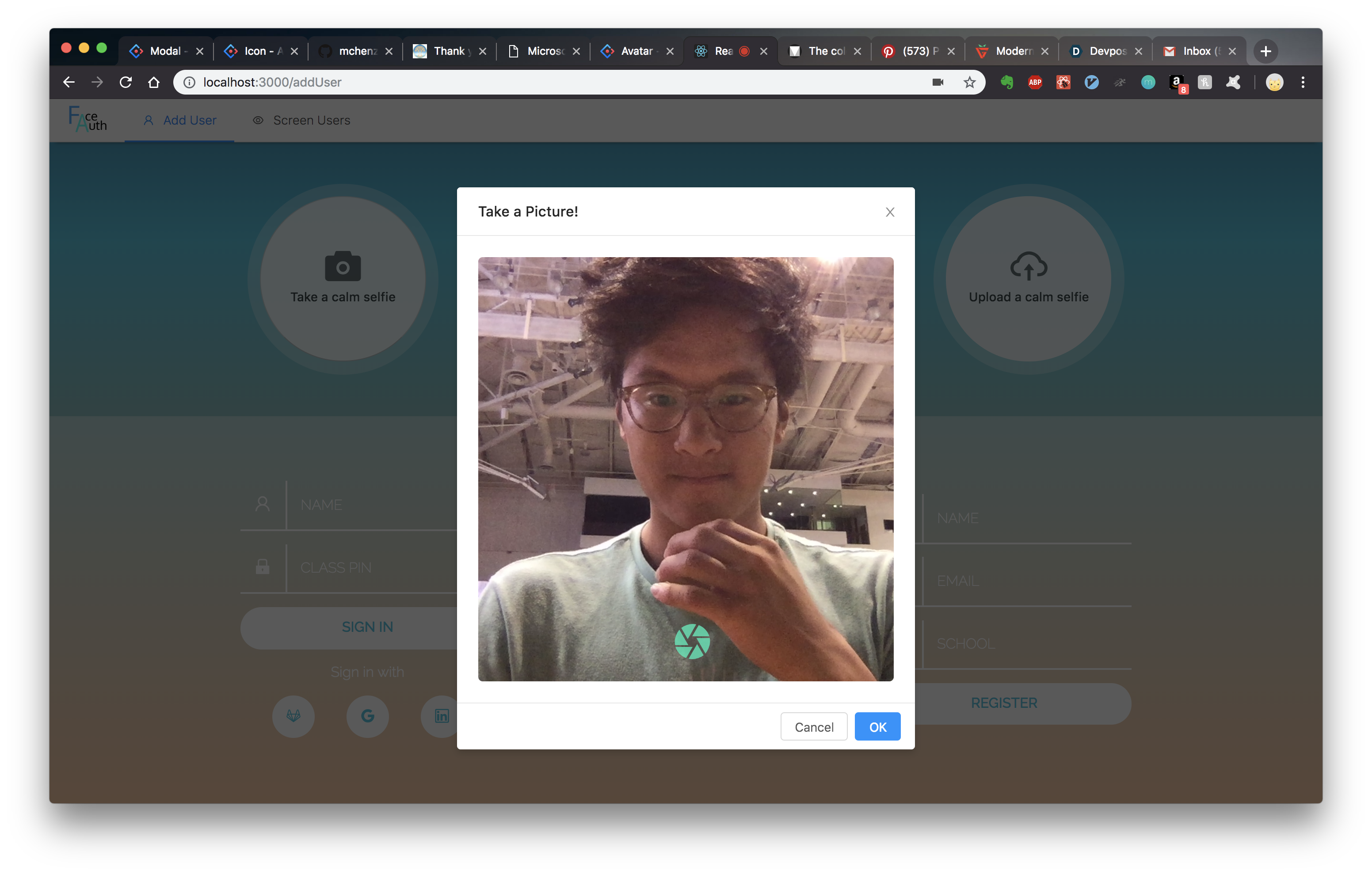
registering new users
-
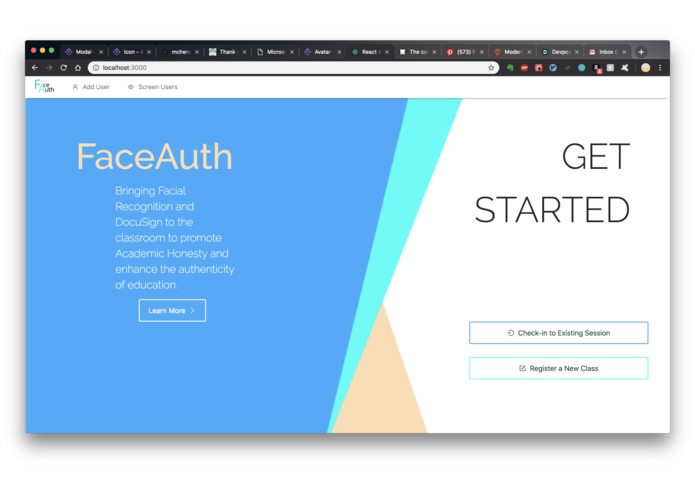
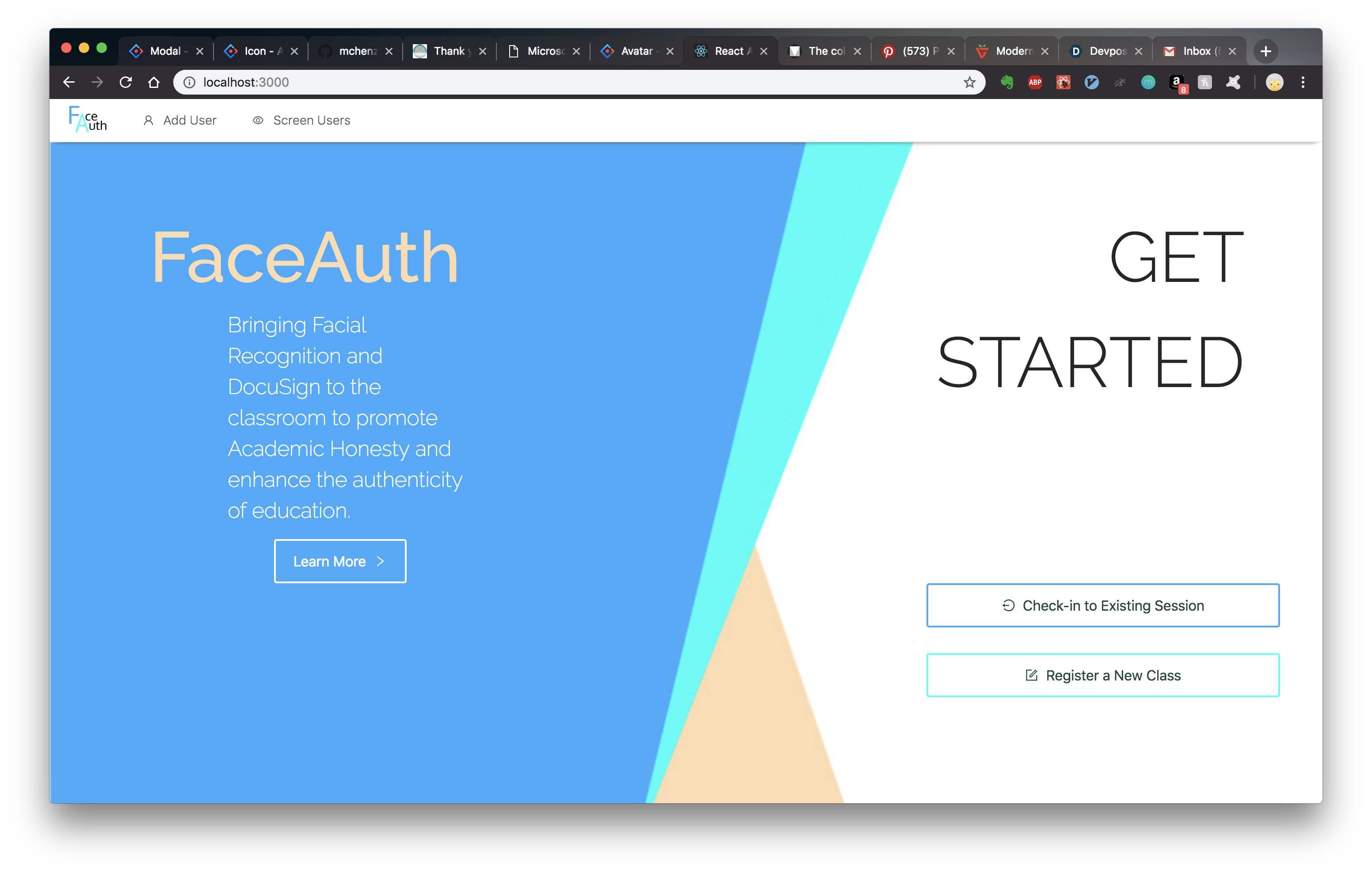
Home screen
-
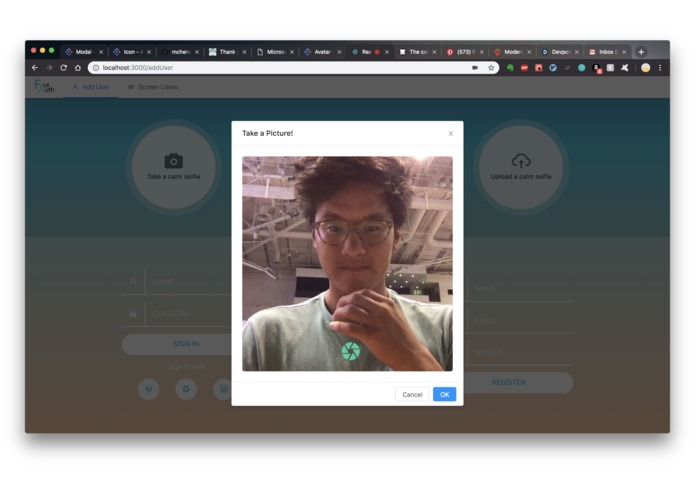
taking a picture of yourself
Inspiration
We wanted to build something that made use of some cool new technologies, i.e. neural nets or facial recognition, while also building something that could do some real good in the world.
What it does
This application allows educators to register classes and keep a tally of who really shows up to exams etc, using reliable facial recognition software that is fast and hassle free. We utilize Docusign's eSignature API to round out our identification process, prompting students to sign an academic integrity agreement at the end of the screening process.
How we built it
We used a flask back-end as the server, which allowed us to run dlib's facial recognition on images sent in from the front-end, which was built using React.js. The server has been deployed via DigitalOcean.
Challenges we ran into
Developing a reliable and fast facial recognition model was definitely a challenge, and there were numerous hiccups trying to set up all of the connections between the two ends of the application. Deploying the server was also difficult, and we discussed numerous solutions before deciding on deploying with DigitalOcean. Of course there were also numerous front-end details that slowed development. As relatively inexperienced developers, we learned how to use group version control software on-the-go.
Accomplishments that we're proud of
Relatively fast and accurate facial recognition module can analyze most faces in ~5 seconds or less. We also prided ourselves on attention to detail, which is evident in our clean, well-designed front-end.
What we learned
Each of our members learned about some new, unfamiliar technologies, i.e. HTML, CSS, React.js, DLib and Python, as well as using version control software (git) and thinking about UI UX design issues.
What's next for FaceAuth
A full deployment of the web application, database development, user registration services, and a mobile version.


Log in or sign up for Devpost to join the conversation.