-
-
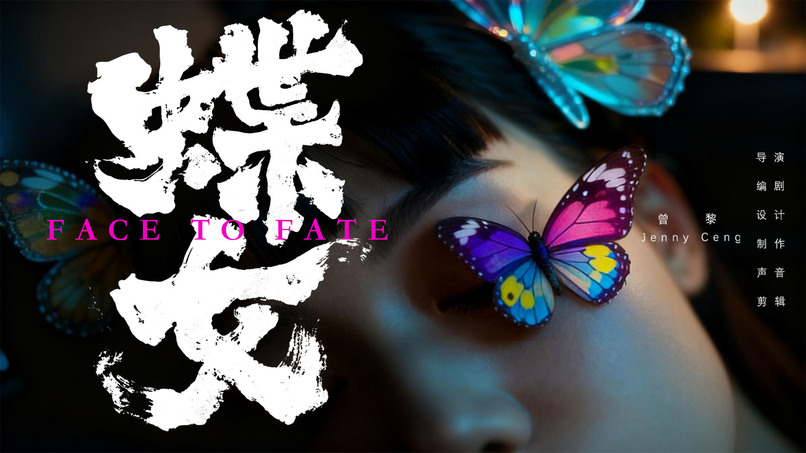
Face to fate
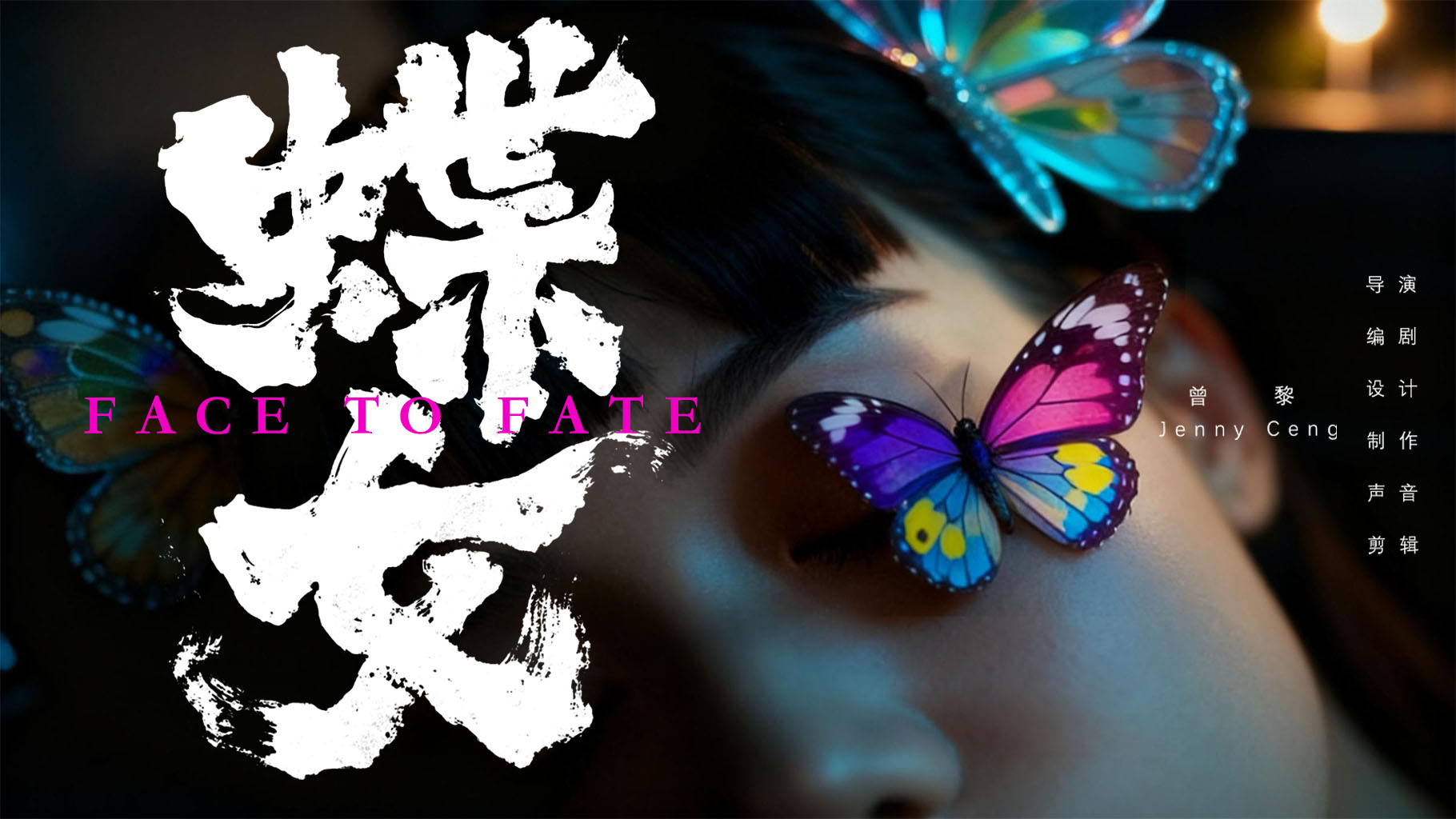
Inspiration
The narrative anchor is derived from the mythological system of the Butterfly Mother legend found in the "Hmong Ancient Songs." Throughout Hmong mythology, there is a sense of mystery and richness, brimming with narrative possibilities that reveal multiple dimensions through which to view the world. Humans habitually gaze upon all things from a self-centered perspective—colors are divided into red, yellow, and blue; races are categorized as black, white, and yellow; continents are split into seven. Classification, contention, and killing seem to form the fabric of human civilization. Yet, how many people know that a cat’s vision is hazy, like a fog, full of uncertainty? That a butterfly can perceive far more than three colors? That in the eyes of birds, the land is a continuous, borderless whole? What we see has never been the entirety of the world.
What it does
In the story, Feifei, a young Hmong woman, becomes a singer at a nightclub to earn money for her grandmother’s medical treatment. However, her grandmother prefers to stay in the village and peacefully accept her fate. After Feifei is unknowingly drugged by her agent, an ancient gene quietly awakens within her. With the power of a sacred tree, she enters the bodies of different animals, not only saving herself from danger but also gaining a new perspective on the world.
How we built it
The entire series was created independently. After finalizing the script, I divided the process into several sections to explain the use of AIGC and the production workflow. 1、Storyboarding: I used drawing tools such as Dreamina AI 、Midjourney、 Lovart AI to create image-based storyboards, producing a smooth visual narrative. For characters, I established precise appearance descriptions to maintain consistency. Scenes and atmospheres were also defined with fixed keywords, ensuring coherence across the storyboard. 2、Video Production: Using tools like Dreamina AI and Kling AI, particularly their first-and-last-frame functions, I generated video sequences. This involved refining the first frame or adjusting elements based on the storyboard. After generation, the videos were edited and sound effects were added using CapCut. 3、Dialogue: I recorded initial dialogue in my own voice to match the intended emotions, then used Keling AI and CapCut to generate lip-sync animations. Finally, voice conversion was handled by Dubbing X. 4、Music: During the rough cut, suitable film scores were selected as temporary tracks. After finalizing the video, Suno was used for music adaptation and optimization. The entire project was composited and finalized in CapCut.
Challenges we ran into
My objective was to infuse the character design with ICH, creating a synthesis of tradition and contemporary innovation. This led to an intricate design for the heroine, which demanded considerable development time. The approach was to train a style LoRA on modern Miao designs, blend it with a modern aesthetics LoRA, and ultimately generate a dedicated character LoRA to ensure visual coherence.
Accomplishments that we're proud of
The intangible cultural heritage elements were integrated with purpose. Rooted in a mythological core, traditional costumes and drums were seamlessly embedded into both the performances and character identities, moving beyond superficial visuals.
What we learned
The quality of the images directly determines the outcome of the generated video. Any missing or inconsistent elements between the first and last frames will lead to failed video generation. Therefore, it is essential to first organize and refine the storyboard panels before proceeding with video creation.
What's next for Face to fate
The vision is to develop a series featuring "Butterfly Woman" as an Eastern superhero, who weaves a modern narrative through timeless traditional principles.
Built With
- capcut.
- dreamina
- kling
- lovart
- midjourney
- suno

Log in or sign up for Devpost to join the conversation.