Real Life Problem: Indoor places, such as restaurants and grocery stores, are legally required to have rules in place for the mandatory use of face masks. So, a real-time face mask detection system can be used to address this issue that will not only maximize efficiency but will also ensure to potentially save lives.
Goal of the project: The goal of a face mask detection system is to create an image recognition system that understands how image classification works, and it should work with great accuracy so that our model can be applied in the real time situations. It will work by recognizing the boundaries of the face and predicting whether or not you are wearing a face mask in real-time.
Software used to make this project: Python, OpenCV, TensorFlow/Keras and DeepLearning
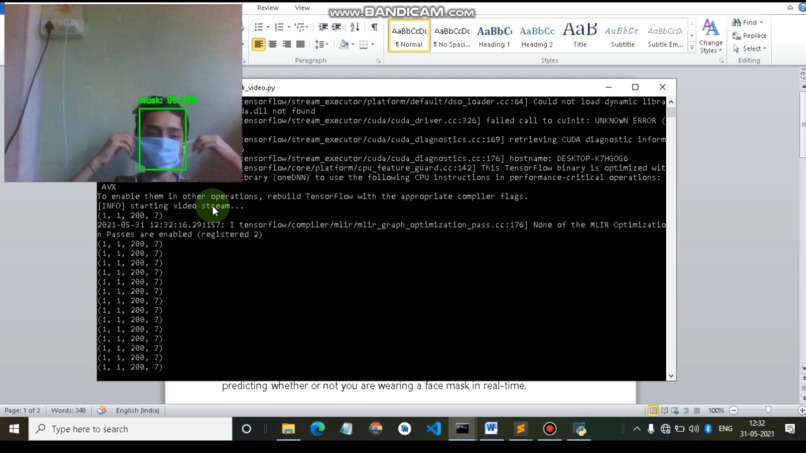
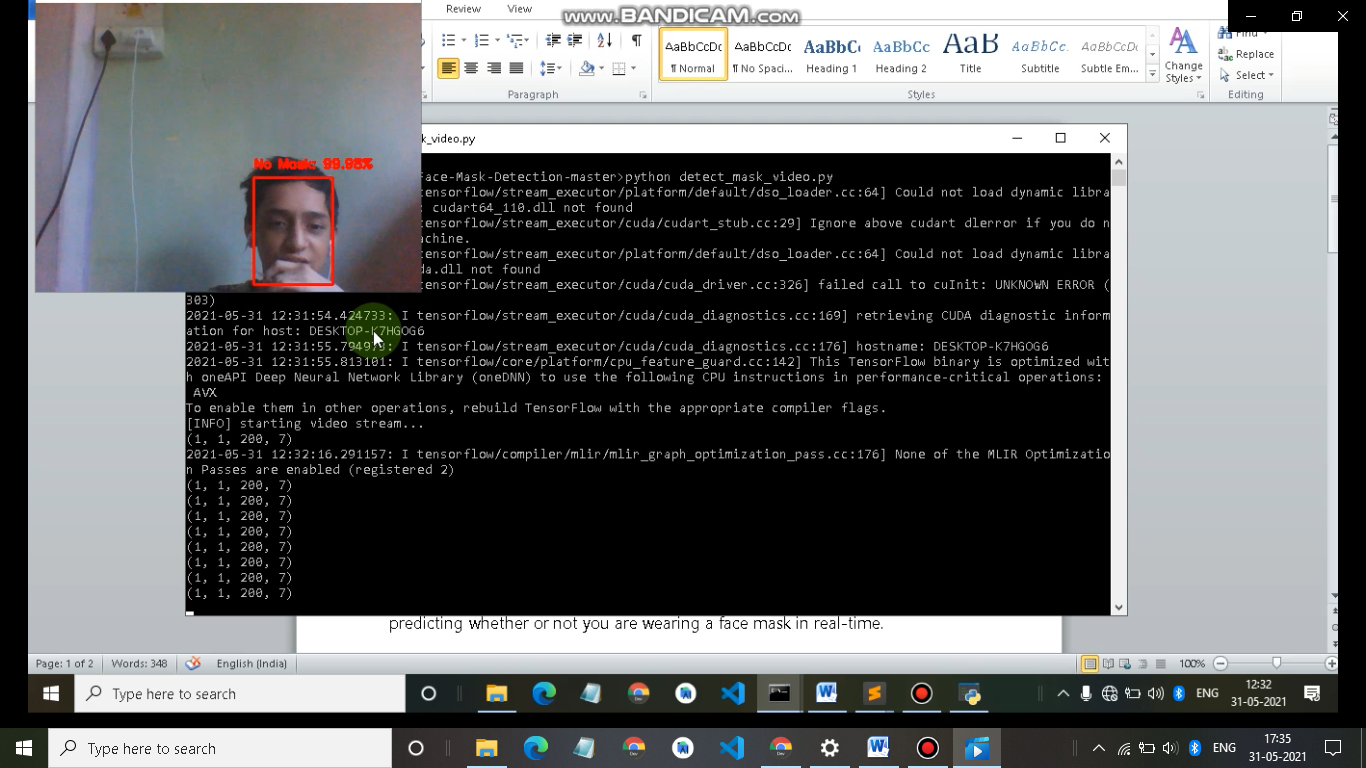
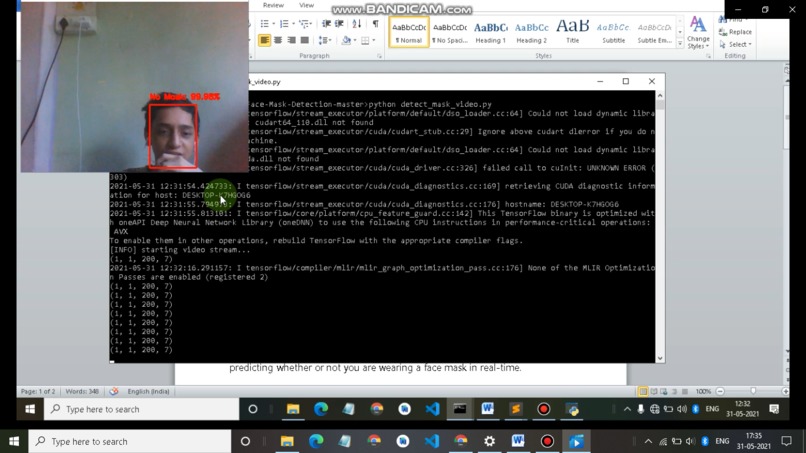
What my project does exactly: My machine learning model will then determine whether a face mask is worn or not in real-time. Based on the performance and accuracy of our model, the result of the binary classifier will be indicated by showing a green rectangle around the section of the face indicating that the person at the camera is wearing a mask, or a red rectangle indicating that the person on camera is not wearing a mask.
Data Set used: I have used total 1915 images with the people wearing mask and 1918 images with the people not wearing mask.
Challenges that I ran into: As I have just the basic knowledge of python so initially it was hard for me to explore these technologies but I have followed the documentation which really helped me a lot to tackle all the problems which I have faced.
Conclusion: In the proposed face mask detection model named SSDMNV2, both the training and development of the image dataset, which was divided into categories of people having masks and people not having masks have been done successfully. The technique of OpenCV deep neural networks used in this model generated fruitful results. Classification of images was done accurately.