-
-
FACE MASK DETECTION
Inspiration
Project Description: Face Mask Detection
The face mask detection project aims to develop a computer vision system capable of automatically detecting whether individuals are wearing face masks or not.
What it does
This technology can be applied in various scenarios, such as public spaces, workplaces, schools, and transportation hubs, to ensure compliance with face mask regulations and promote public health and safety.
The project involves the use of deep learning techniques and image processing algorithms to analyze real-time video streams or static images and determine whether individuals are wearing face masks correctly. The system can be implemented using a combination of hardware and software components.
How we built it
Here is a high-level overview of the project components and their functionalities:
Data Collection: A dataset consisting of images or video samples of people wearing and not wearing face masks is collected. This dataset is labeled to indicate whether each individual is wearing a mask or not.
Preprocessing: The collected data is preprocessed to normalize and enhance the images, removing any noise or irrelevant details that may hinder accurate detection.
Model Training: A deep learning model, such as a convolutional neural network (CNN), is trained on the preprocessed dataset. The model learns to recognize patterns and features associated with face masks and distinguish between masked and unmasked faces.
Model Evaluation: The trained model is evaluated using a separate test dataset to assess its accuracy and performance metrics, such as precision, recall, and F1 score. The model is fine-tuned if necessary to improve its performance.
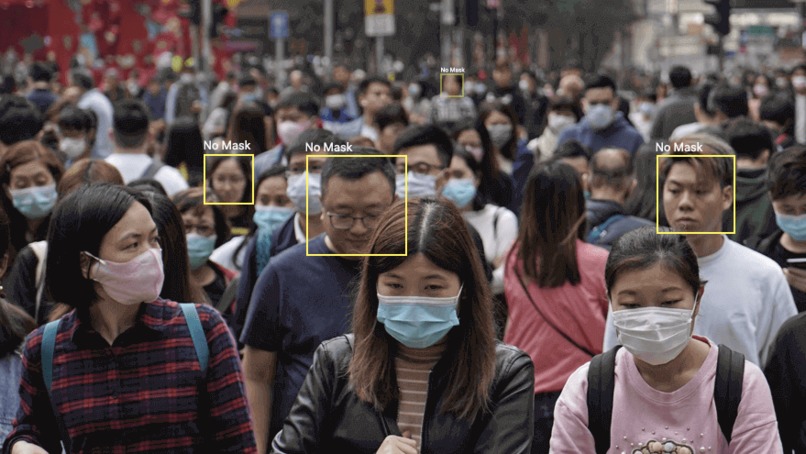
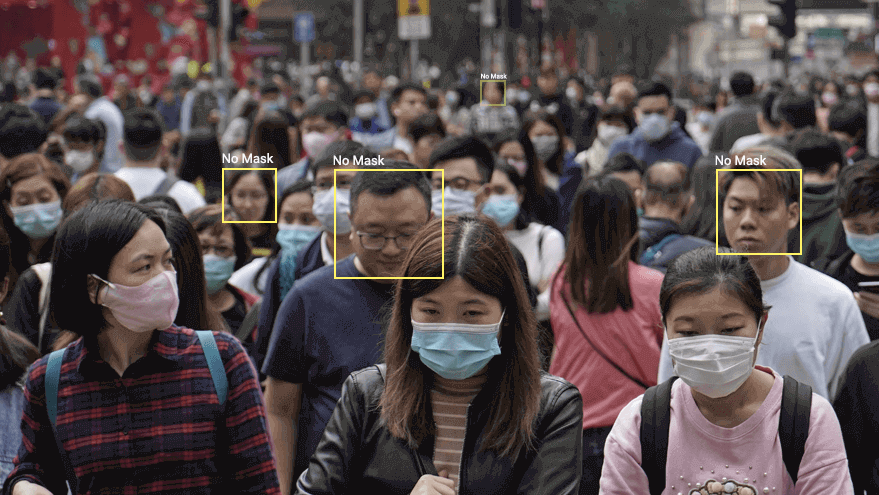
Real-Time Detection: The trained model is deployed to perform real-time face mask detection on live video streams. It analyzes each frame, identifies faces, and classifies them as either wearing a mask or not wearing a mask. The system can display the results visually, such as bounding boxes around detected faces and labels indicating mask-wearing status.
Alert Mechanism: If an individual is detected without a mask in a restricted area or where mask-wearing is required, an alert mechanism can be triggered. This can be in the form of audible alarms, notifications to security personnel, or other appropriate measures.
Integration: The face mask detection system can be integrated with existing security or surveillance systems, access control mechanisms, or public announcement systems to enhance enforcement and monitoring capabilities.
Challenges we ran into
In sufficent of technologies
Accomplishments that we're proud of
The Project Had Run Sucessfully without Error
What we learned
It is important to note that face mask detection systems are not foolproof and should be used as a supportive tool rather than a standalone solution. Human supervision and intervention are still necessary to ensure accuracy and address any false positives or false negatives that may occur.

Log in or sign up for Devpost to join the conversation.