I'm late to this project, so that's why I just put a playlist, I will put it on 18 or 19 or 20 th Nov, probably will do in 18 Nov
Check the links in the description to see the trailer
Inspiration & Problem Solved
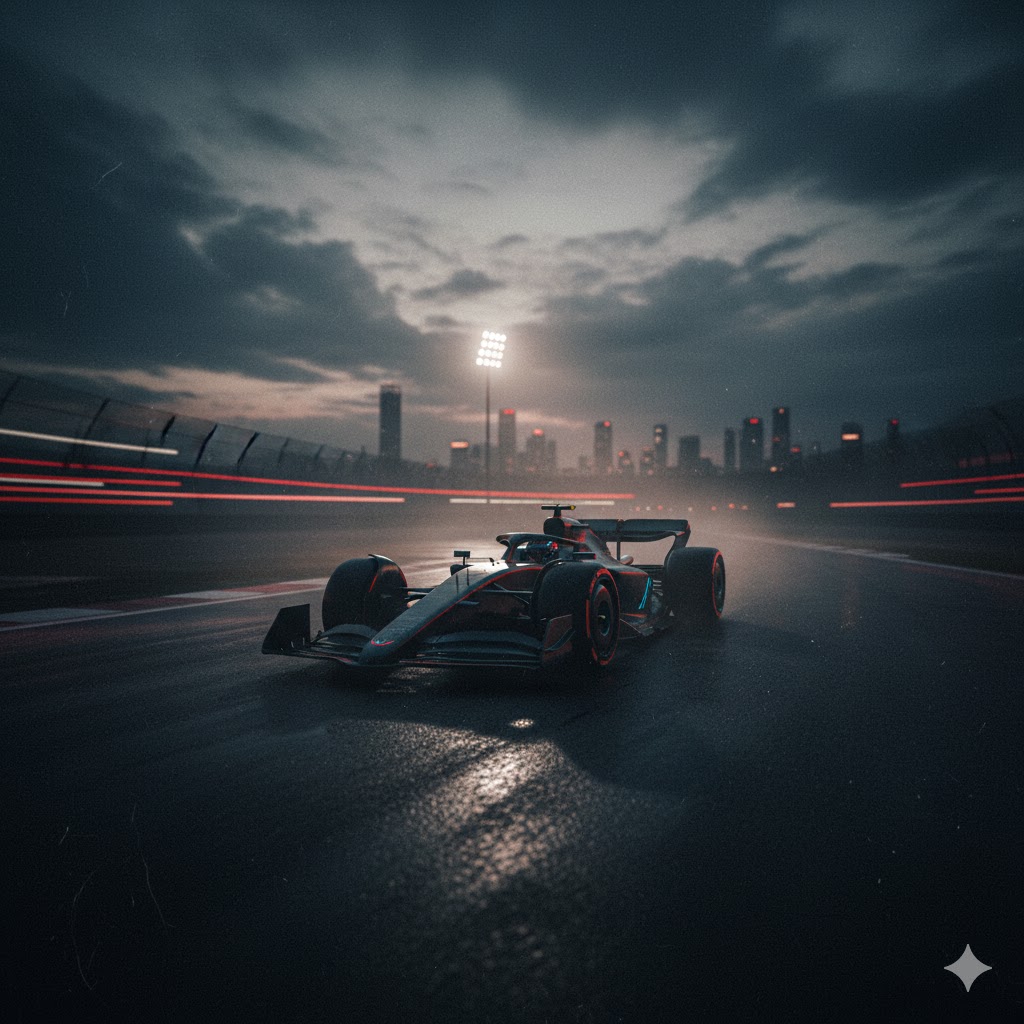
The Vision: Create a visually stunning, high-impact Formula 1 promotional trailer that captures the sport's dramatic intensity, speed, and technical rivalry, suitable for a global cinematic audience.
The Problem Addressed (Cost & Time): Traditional high-quality video production, especially one involving high-speed racing and complex visual effects (VFX), is prohibitively expensive and time-consuming. We aimed to prove that generative AI can be a robust, rapid, and cost-effective alternative for producing professional, narrative-driven content.
Narrative Focus: Our trailer focuses on the core dichotomy of F1: the thrilling action on the track (The Explosion) versus the precise strategy in the pit lane (The Strategy).
🛠️ How We Built It Script and Storyboard: We started with a detailed script, meticulously mapping out every visual event, camera angle, and audio cue to specific time segments (e.g., the transition from 0:25 to 0:30, the pit stop sequence).
Prompt Engineering Pipeline: Each segment of the script was translated into an AI Generation Prompt designed to control five key visual elements:
Subject: (e.g., F1 car, driver's POV, pit crew).
Action/Motion: (e.g., "rapid-fire sequence," "car cornering," "smoke, tires spinning").
Camera: (e.g., "Close-up," "Dynamic shift," "POV").
Lighting/Mood: (e.g., "dramatic lighting," "low-light at night," "moody").
Style: (e.g., "cinematic 4K," "high fidelity").
AI Generation & Iteration: We used generative AI models to create the visual assets. Key sequences (like the "START LIGHTS OUT" launch and the "PIT STOP SEQUENCE") were generated based on these controlled prompts.
Assembly & Audio Mastering: The final generated video clips were assembled, timed precisely, and overlaid with professional sound design, including dramatic music tracks (like "Adini" mentioned in the original script) and voiceovers for a cohesive trailer experience.
🏆 Accomplishments & Differentiators Cinematic Quality: Achieved a high-resolution, visually consistent aesthetic across all generated clips, rivaling the production quality of professional sports marketing.
Complex Motion Generation: Successfully generated highly difficult visual concepts, such as high-speed motion, smoke effects, and rapid sequential cuts, which often challenge current AI video models.
Narrative Success: Created a finished product that tells a compelling story, using the generated footage to build tension that peaks and resolves, perfectly fitting the definition of an effective cinematic trailer.
🚧 Challenges We Ran Into Visual Consistency: Maintaining the same F1 car model, livery, and track environment across dozens of individual generated clips required extensive refinement of the initial prompts.
Controlling Camera Movement: Directly dictating specific camera movements (e.g., precise "slowly pan across," "dynamic shift") required multiple generation attempts to achieve the desired cinematic flow.
Time-to-Text Mapping: Precisely matching the generated video length to the detailed script timestamps (e.g., a two-second clip for 0:30-0:32) was an iterative process that required minute adjustments.
🧠 What We Learned Prompt Precision is Key: Learned that success hinges on breaking down complex scenes into component elements (subject, action, camera, light) for the AI, rather than using single, broad descriptions.
The Value of Post-Production: The quality of the final trailer relies heavily on the final editing, timing, and professional audio layering—AI generates the visuals, but human artistry brings the final story to life.
Future Workflow: Established a powerful, efficient workflow for content creation where a scriptwriter/storyboard artist can directly translate ideas into high-fidelity visuals using prompt engineering.
⏭️ What's Next for F1 Trailer Data Integration: Explore methods to integrate real-time F1 race data (e.g., track position, weather conditions) to automatically influence the visual generation, creating dynamic, timely trailers for social media.
Style Transfer Testing: Generate the same trailer script using different artistic styles (e.g., hyper-realistic vs. graphic novel) to see which resonates best with F1 fans.
Interactive Generation: Develop a platform where a user can select a driver or a rivalry, and the AI automatically generates a personalized trailer focusing on that theme.
Built With
- veo2.1
- veo3.1

Log in or sign up for Devpost to join the conversation.