Inspiration
I have always found Formula 1 fascinating, not just because of the speed and competition, but also because of the strategy and data-driven decisions behind every race.
Every pit stop, tyre change, lap time, and driver decision can influence the outcome of a race. This made me curious about how data analytics could help understand these decisions and uncover insights that are not immediately visible during a race.
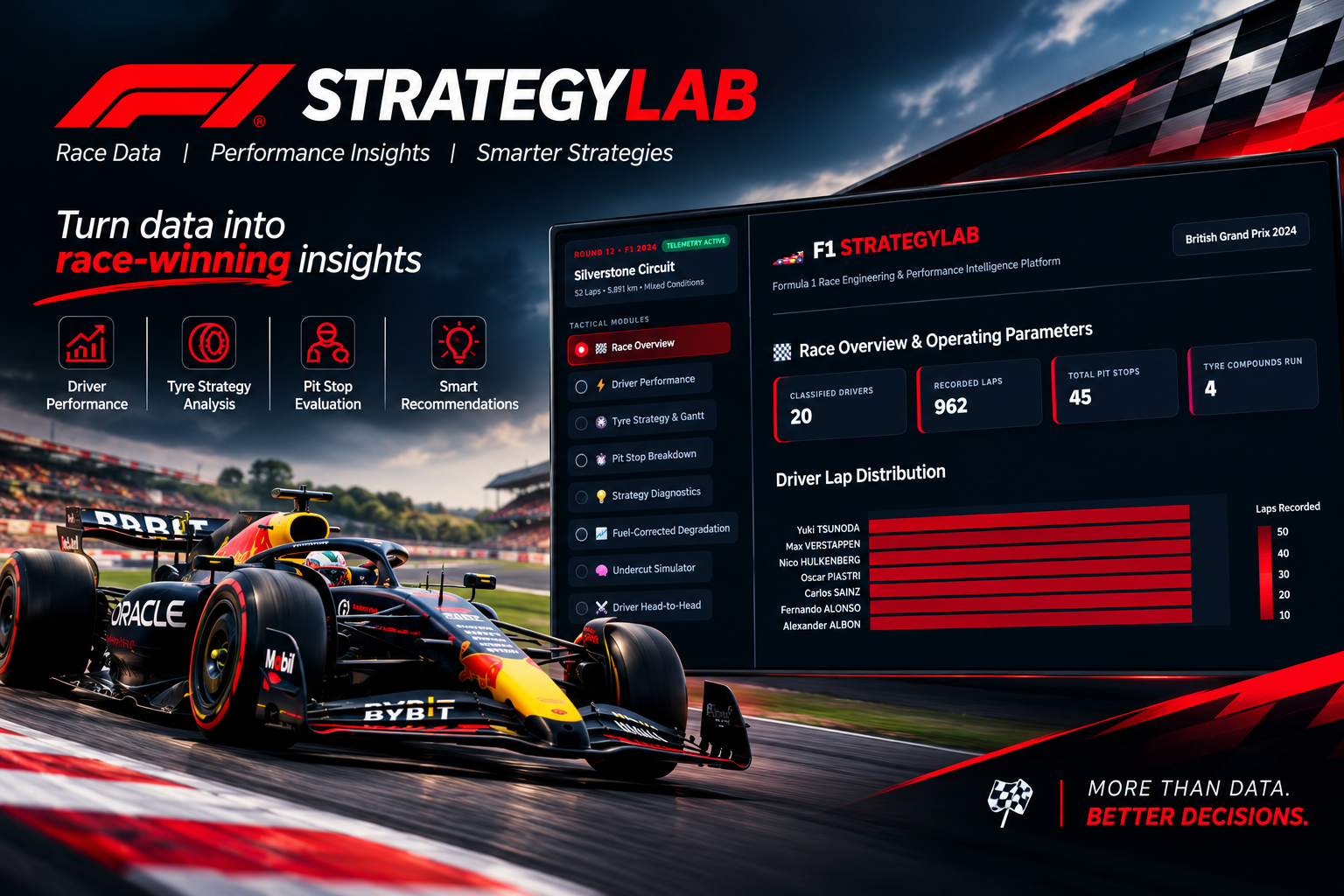
That curiosity inspired me to build F1 StrategyLab, an interactive platform that explores Formula 1 race data and transforms it into meaningful performance insights.
What I Built
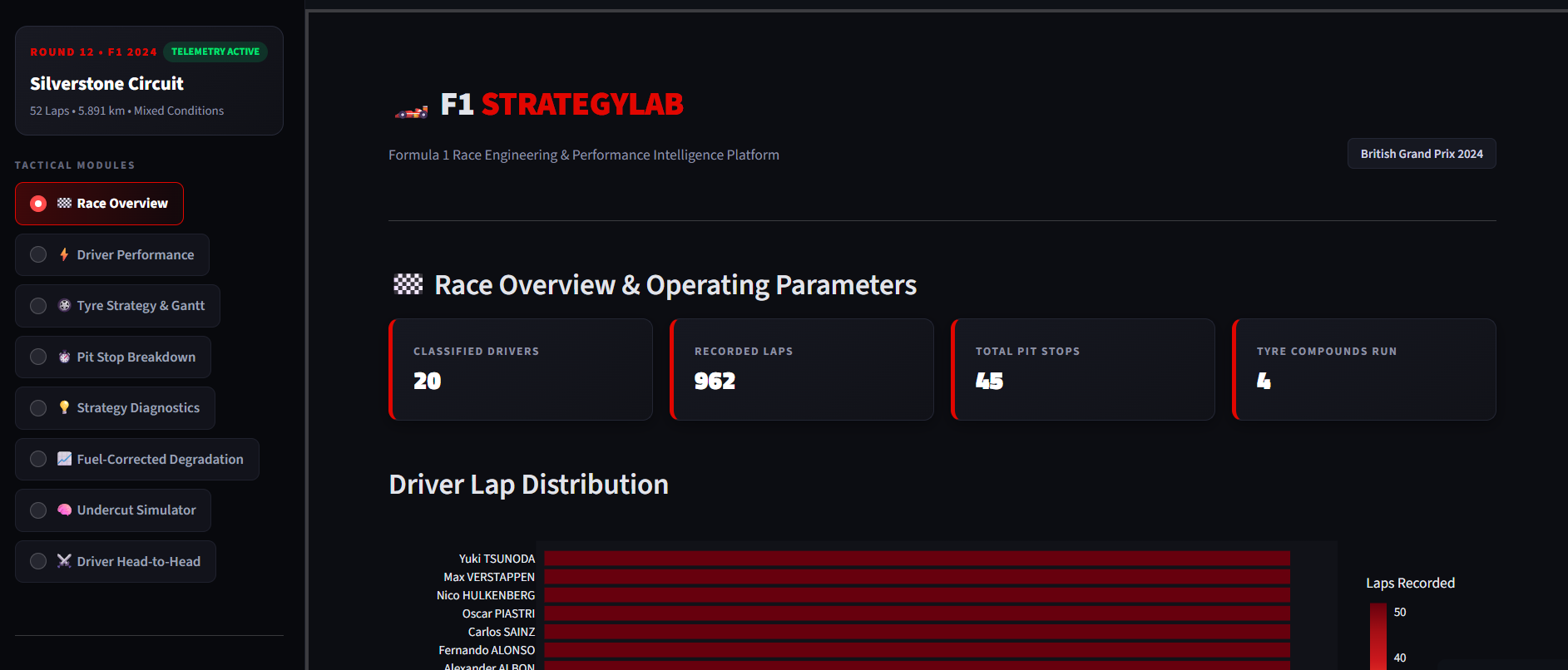
F1 StrategyLab is a Formula 1 Race Strategy and Performance Intelligence Dashboard, developed using the 2024 British Grand Prix at Silverstone Circuit as its case study.
The platform includes:
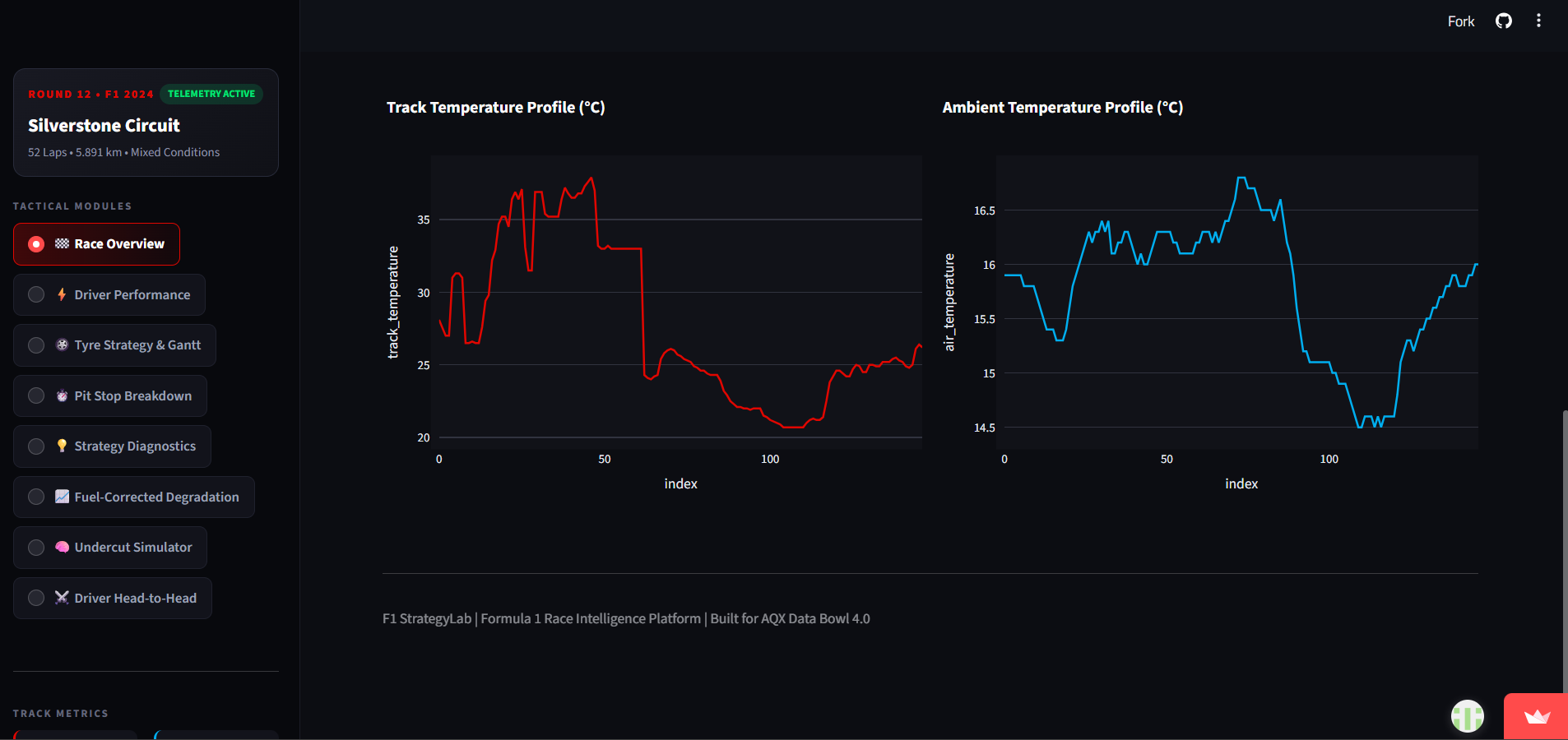
- Race Overview: Key race statistics, driver participation, lap distribution, and weather conditions.
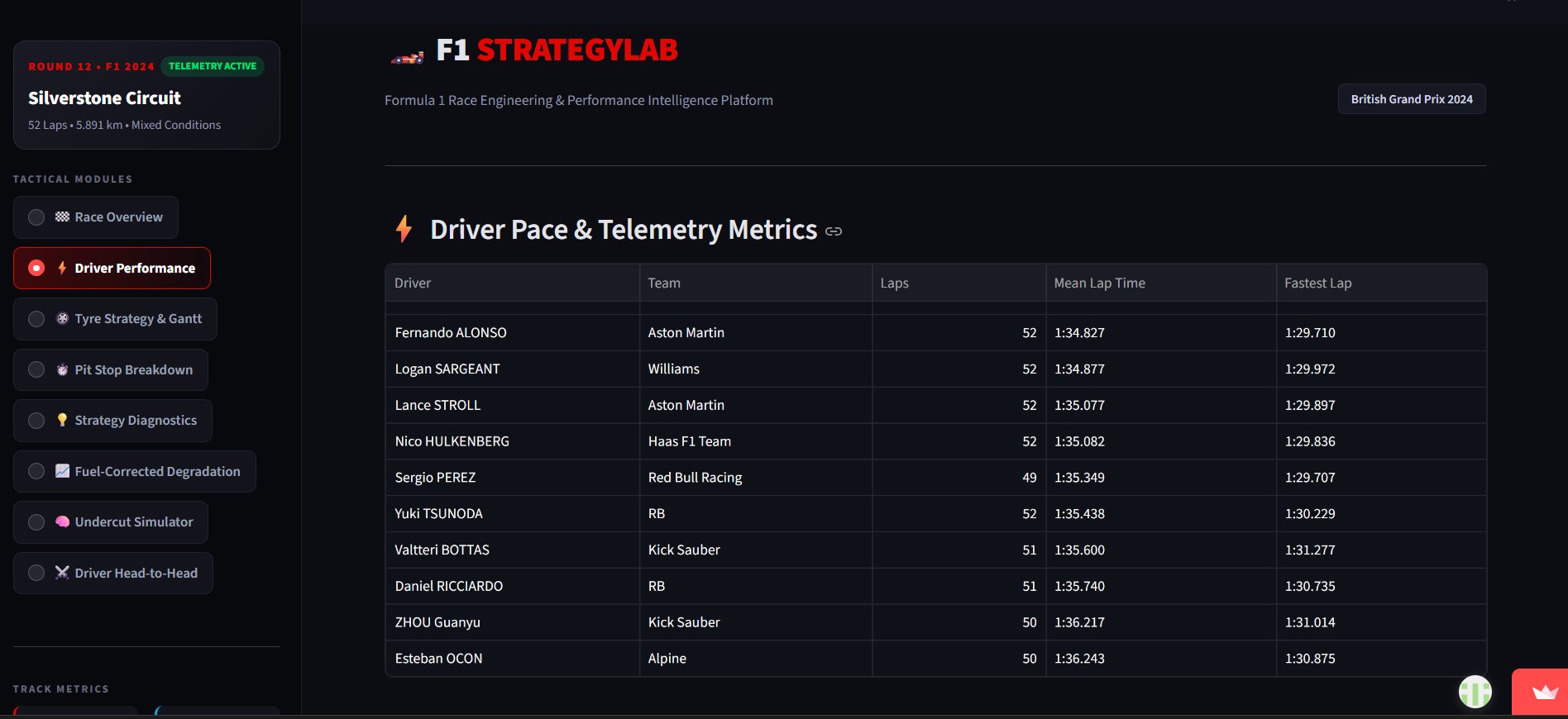
- Driver Performance: Analysis of average lap times, fastest laps, and driver performance.
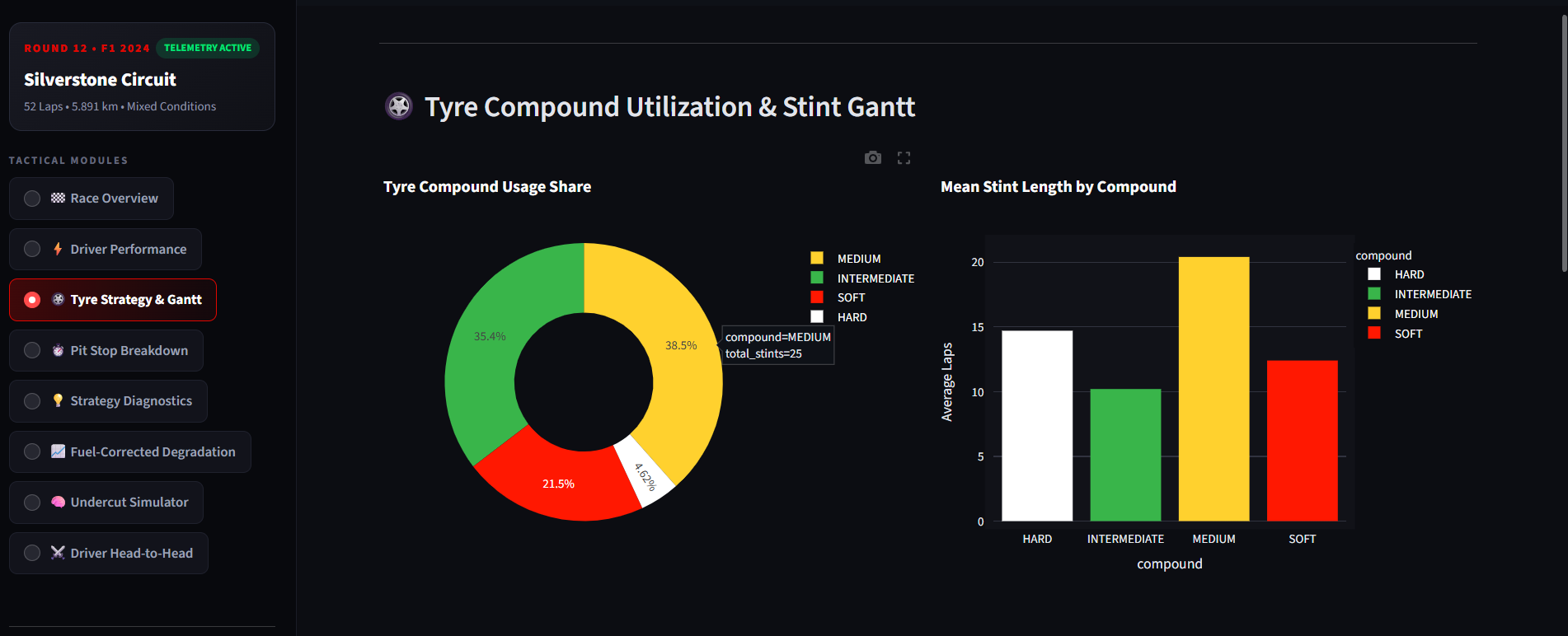
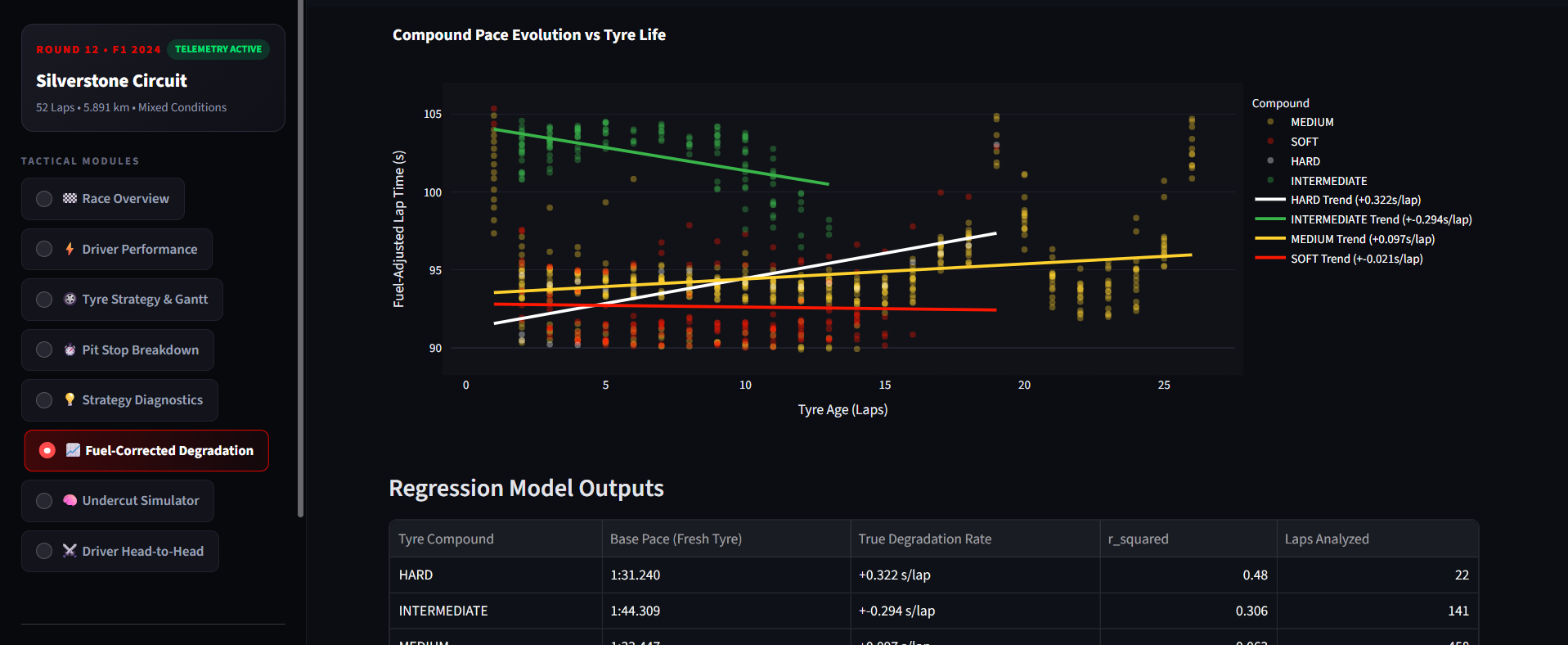
- Tyre Strategy: Tyre compound usage, stint analysis, and tyre degradation patterns.
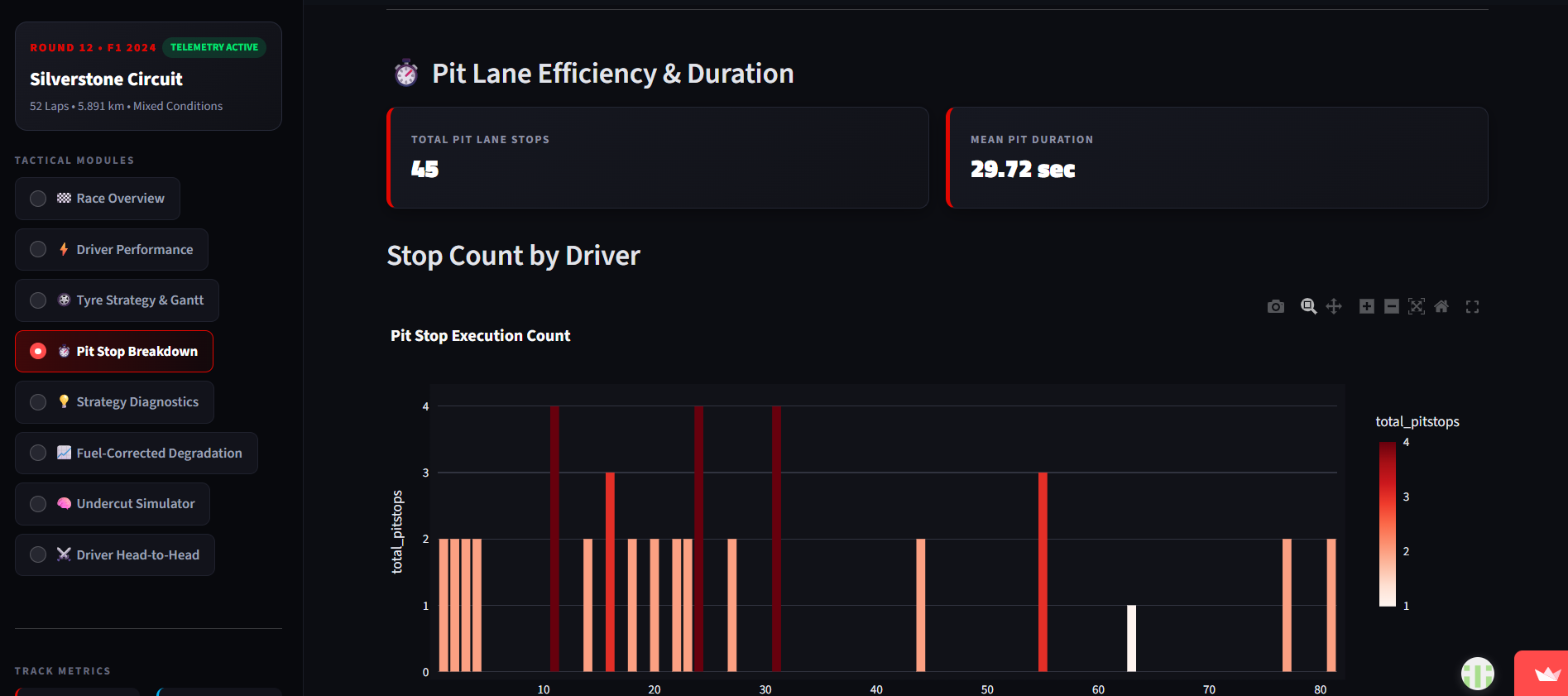
- Pit Stop Analysis: Driver-wise pit-stop statistics and timing comparisons.
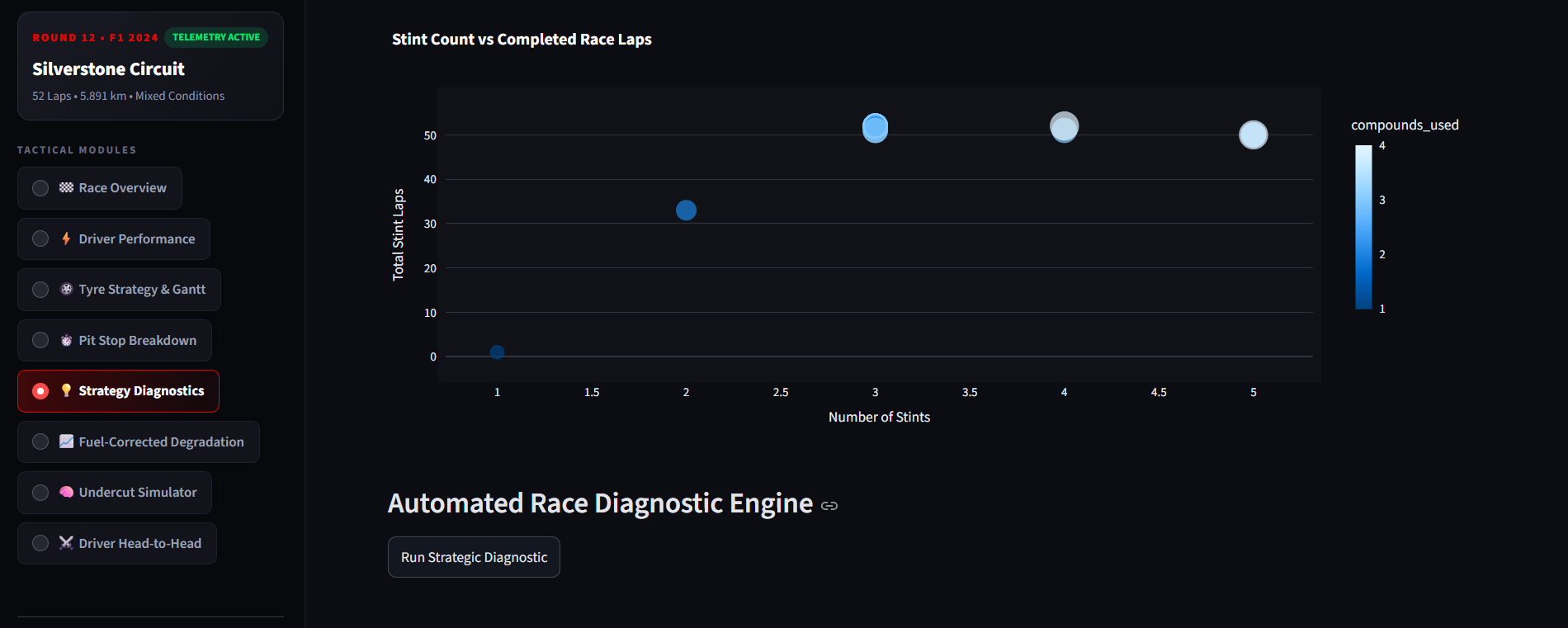
- Strategy Diagnostics: Comparison of different driver strategies and race performance.
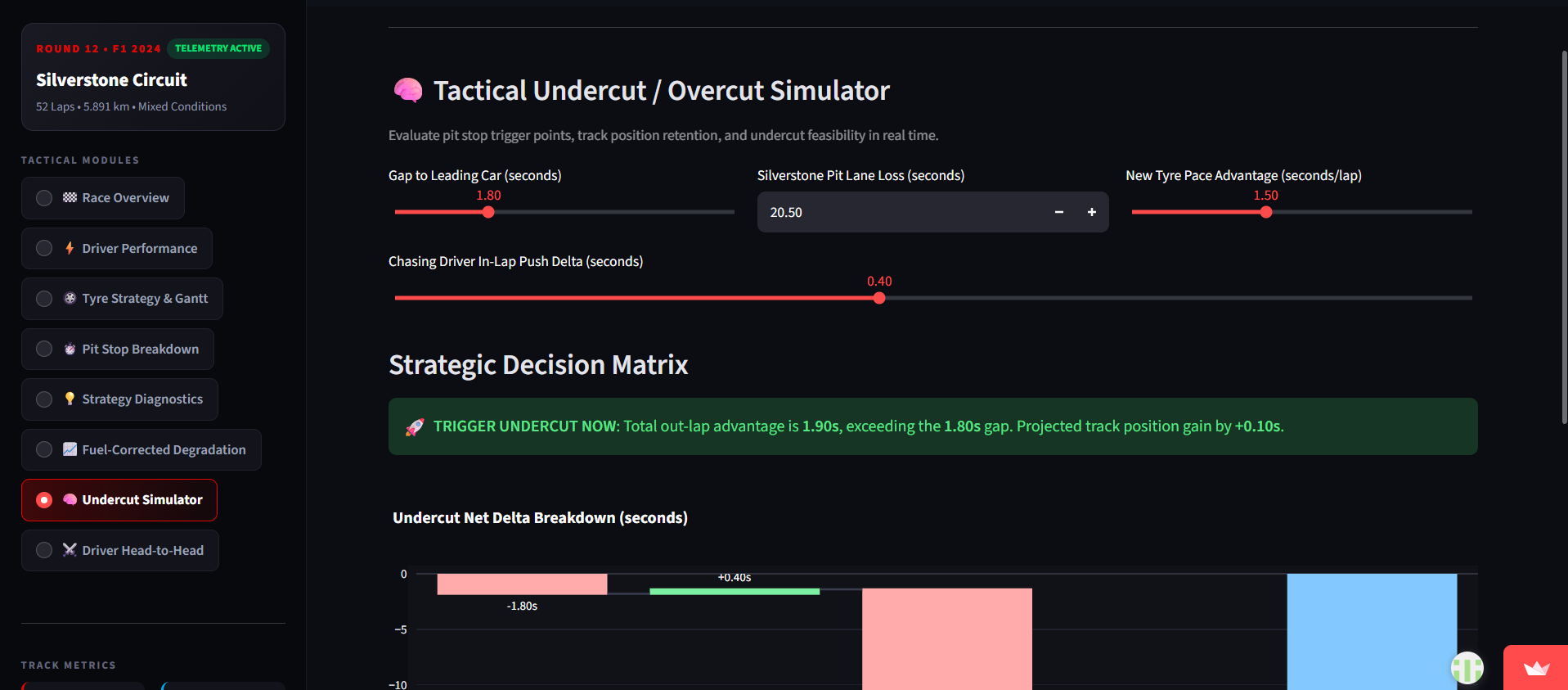
- Advanced Analytics: Fuel-corrected degradation analysis and undercut simulation.
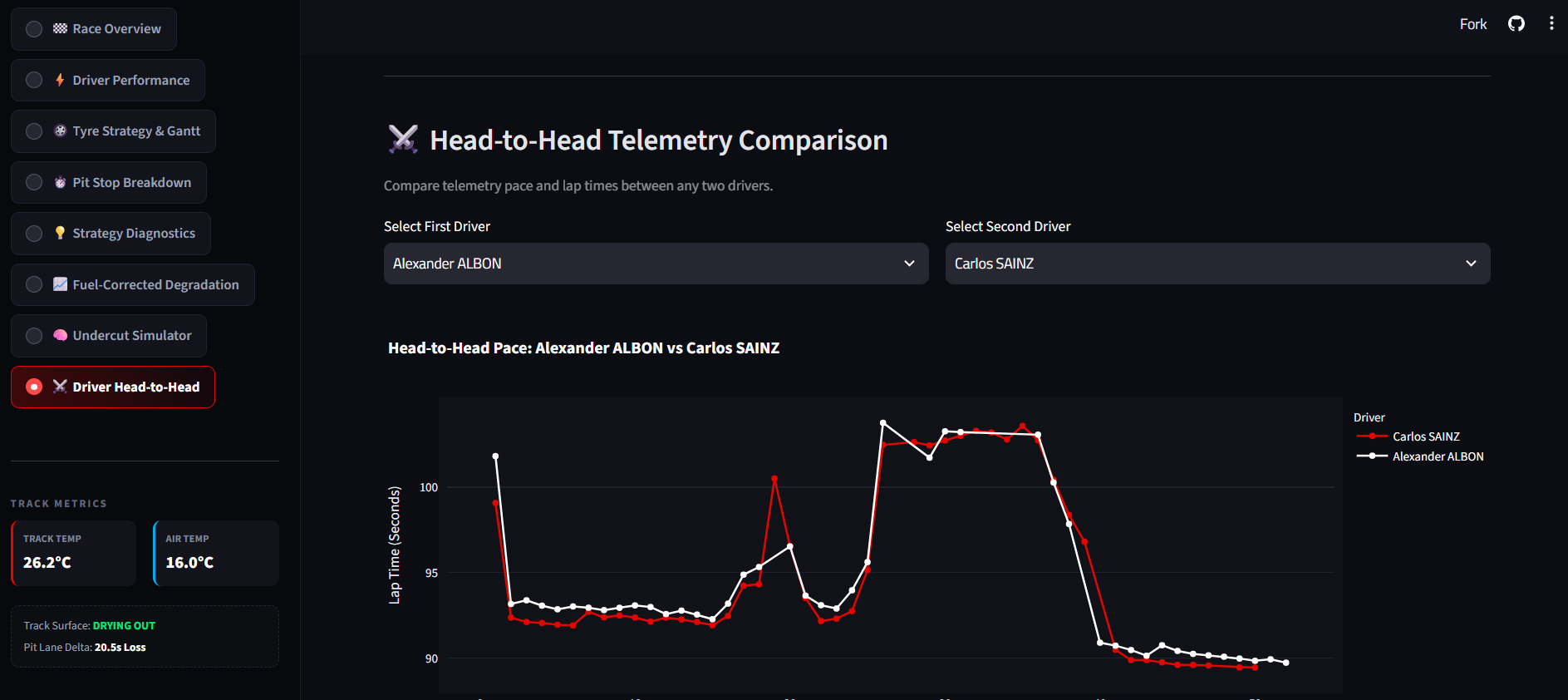
- Driver Head-to-Head: Interactive comparison of two drivers based on lap-time performance.
- Strategy Recommendations: Automated insights derived from the available race data.
How I Built It
I developed the project using Python as the core programming language.
I started by exploring the OpenF1 API to collect historical race information, including lap timings, tyre stints, pit stops, driver details, and weather conditions.
I used Pandas and NumPy to clean, process, and analyze the datasets. Plotly helped me create interactive visualizations, while Streamlit was used to build the dashboard and organize the different analytical modules.
I structured the project into separate Python modules for data extraction, analysis, and strategy recommendations to keep the implementation organized and maintainable.
Finally, I uploaded the project to GitHub and deployed the application using Streamlit Community Cloud.
Challenges I Faced
One of the biggest challenges was finding a suitable source for historical Formula 1 data. My initial approach involved exploring FastF1, but I encountered authentication requirements. I eventually switched to the OpenF1 API, which allowed me to access the required historical data without an API key.
Another challenge was working with multiple datasets and connecting lap timings with tyre stints and pit-stop records. Understanding how these datasets relate to each other was essential for producing meaningful analysis.
Building tyre degradation analysis and generating strategy insights also required careful data processing to avoid misleading conclusions.
Deployment was another learning experience, particularly managing GitHub repositories, resolving Git errors, and configuring the Streamlit application for public access.
What I Learned
This project helped me gain practical experience in several areas:
- Working with APIs to collect real-world sports data.
- Data cleaning, transformation, and exploratory data analysis using Pandas.
- Creating interactive visualizations using Plotly.
- Developing analytical dashboards with Streamlit.
- Organizing Python projects using modular programming.
- Understanding tyre strategies, pit-stop performance, and driver comparisons through data.
- Using Git and GitHub for version control.
- Deploying Python applications using Streamlit Community Cloud.
Most importantly, I learned how to take an idea, work through technical challenges, and turn it into a functional, publicly accessible application.
What's Next?
I would like to expand F1 StrategyLab to support multiple Formula 1 seasons and Grand Prix events, introduce predictive tyre degradation models, and explore more advanced race strategy simulations.
My goal is to make the platform more comprehensive and useful for exploring the relationship between race performance, data, and strategic decision-making.
F1 StrategyLab is my attempt to bring data analytics closer to the world of motorsports — because in Formula 1, every second and every decision matters.
Project Links
- Live Application: https://f1-strategylab.streamlit.app/
- GitHub Repository: https://github.com/muthumalar2301-lily/F1-StrategyLab


Log in or sign up for Devpost to join the conversation.