-
-
-
-
-
-
-
-
-
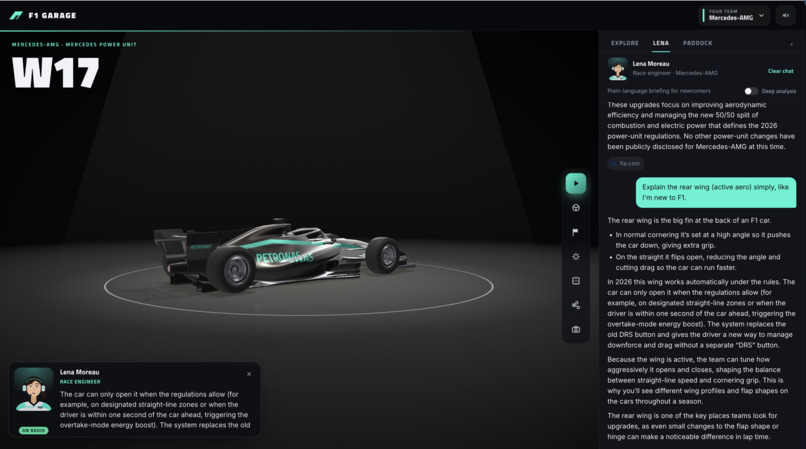
Chat with Lena
Inspiration
I'm a huge Formula 1 fan (and a Ferrari fan), and the sport gets more technical every year. The 2026 regulations are the biggest change in a generation: nearly half the power is electric, the wings change shape on the straights, Overtake mode replaces DRS, and energy has to be managed every lap. Even commentators and drivers say the new cars are hard to follow. For fans without an engineering background, it can feel impossible. I wanted any fan to be able to open up a 2026 car, ask questions without feeling silly, and finally understand what they're watching.
What it does
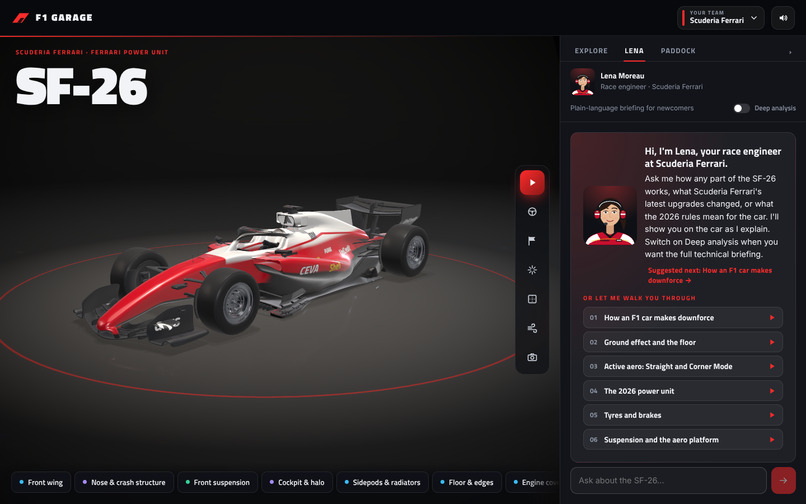
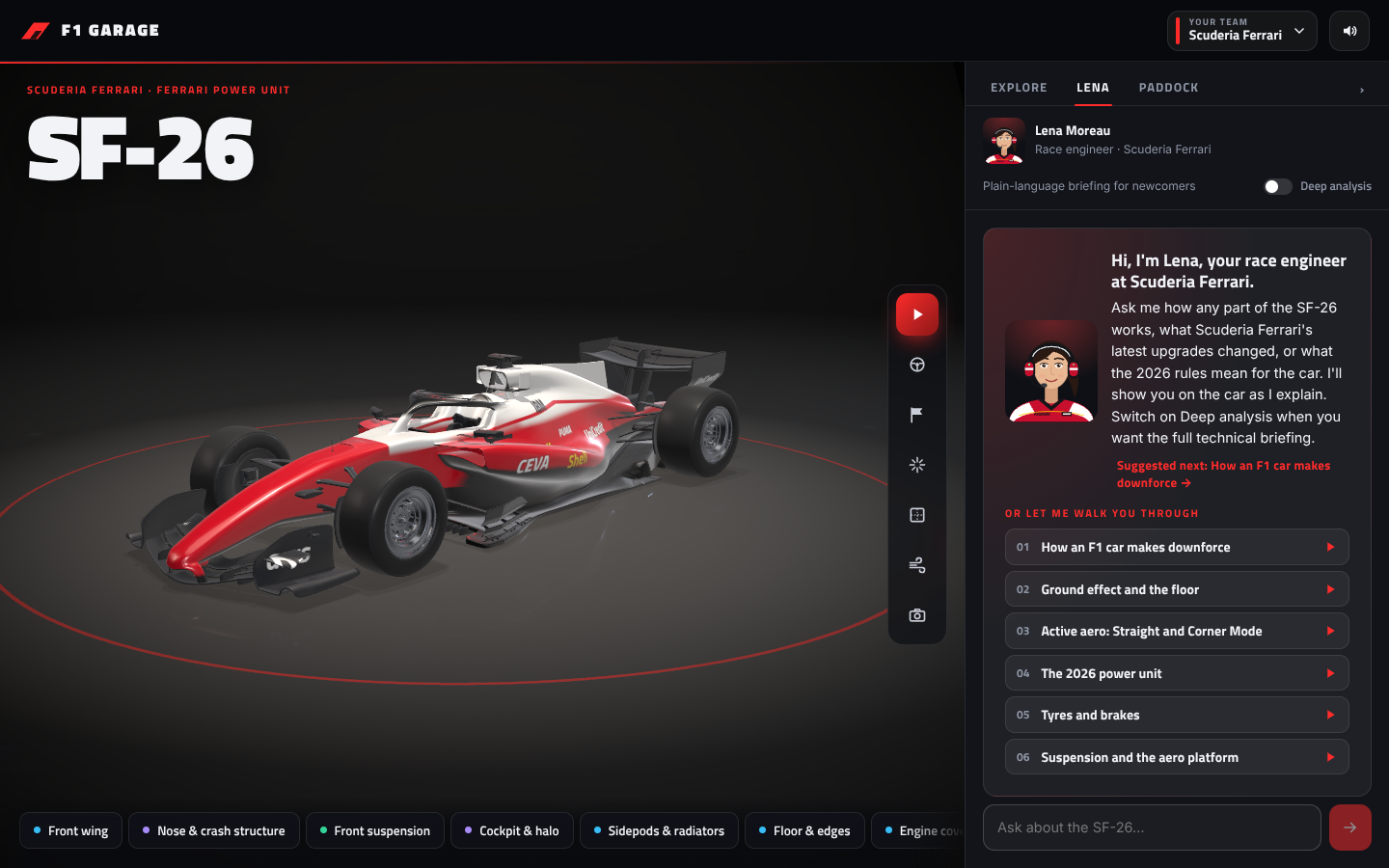
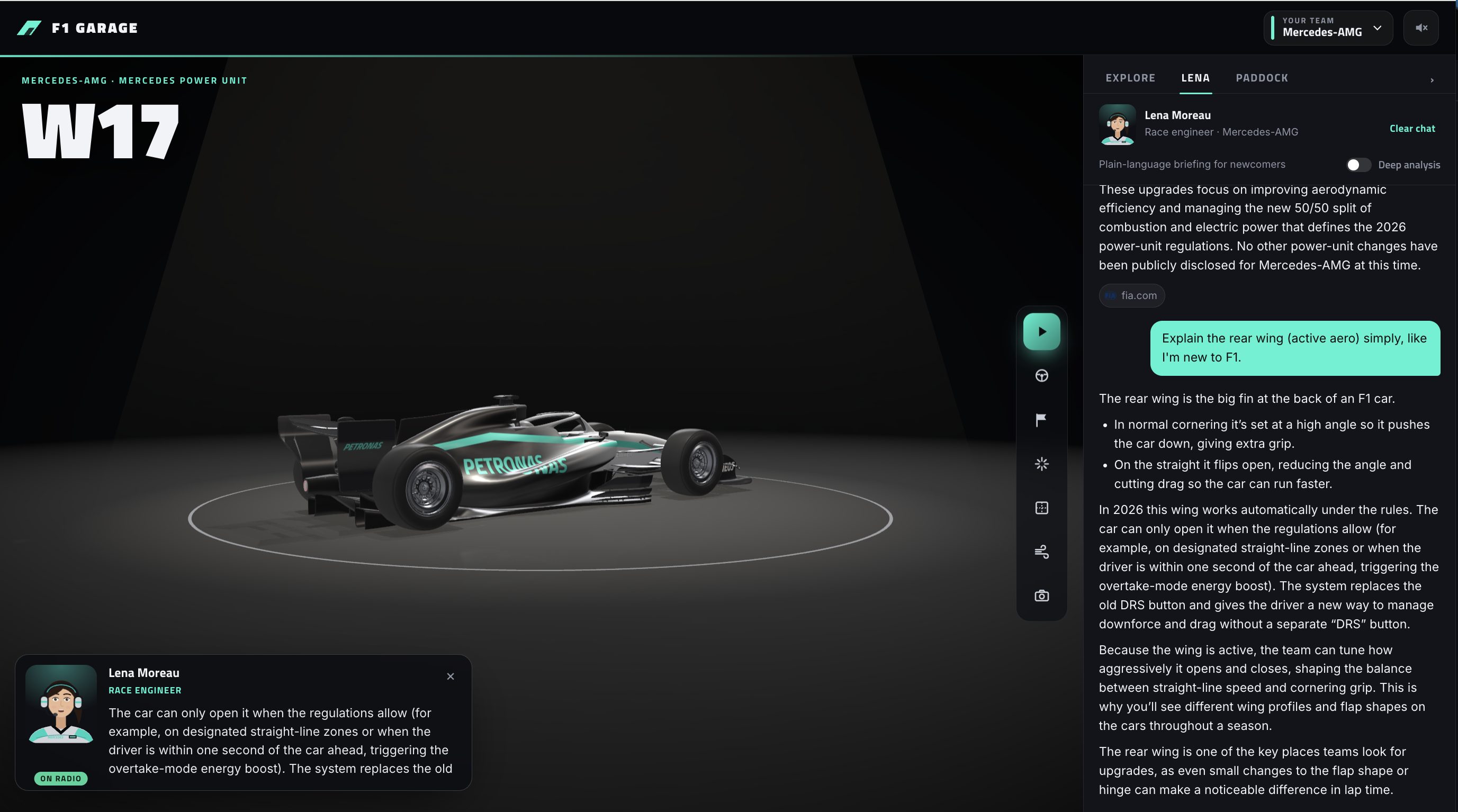
- Lena, an AI race engineer. Ask in plain words: "What did Ferrari bring to Miami?" Lena picks her own tools (FIA rules, team-declared upgrades, live timing, standings, news), answers with sources, and drives the 3D car while she explains: she pulls parts off, highlights them with numbered labels, and switches to X-ray or airflow views. Fan or Engineer depth, a Deep analysis mode with visible reasoning, six guided lessons, and a natural voice with captions.
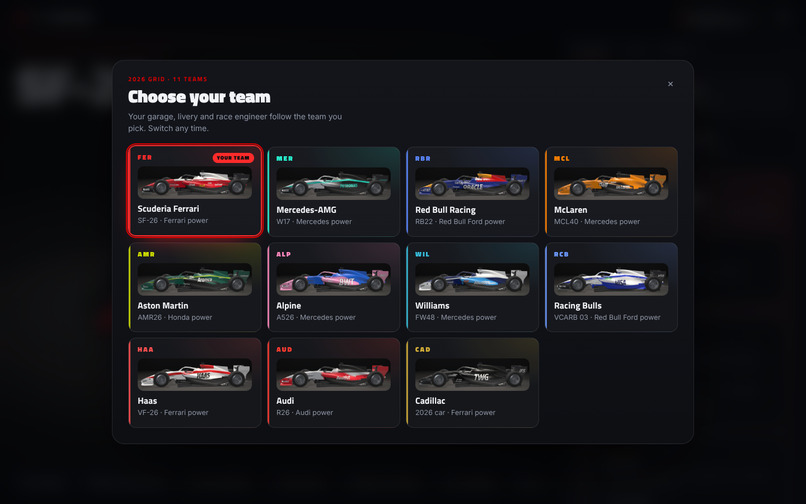
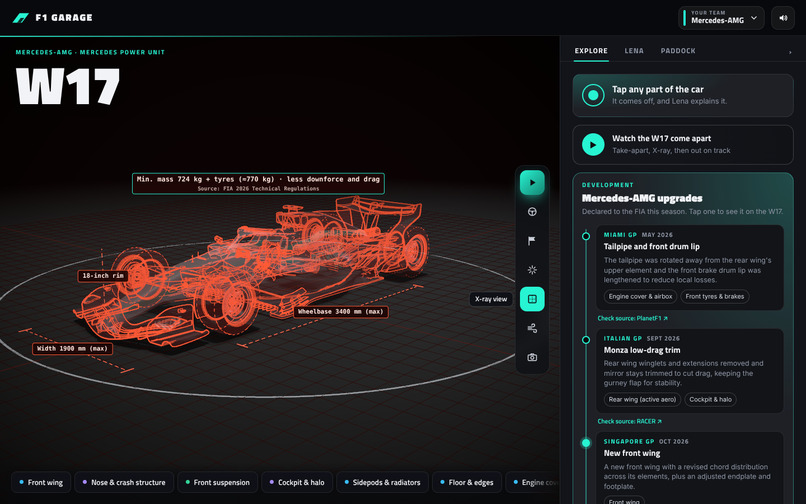
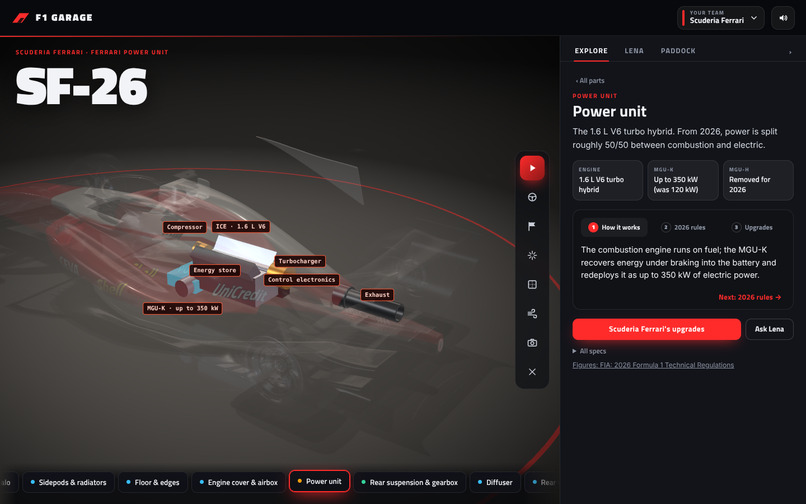
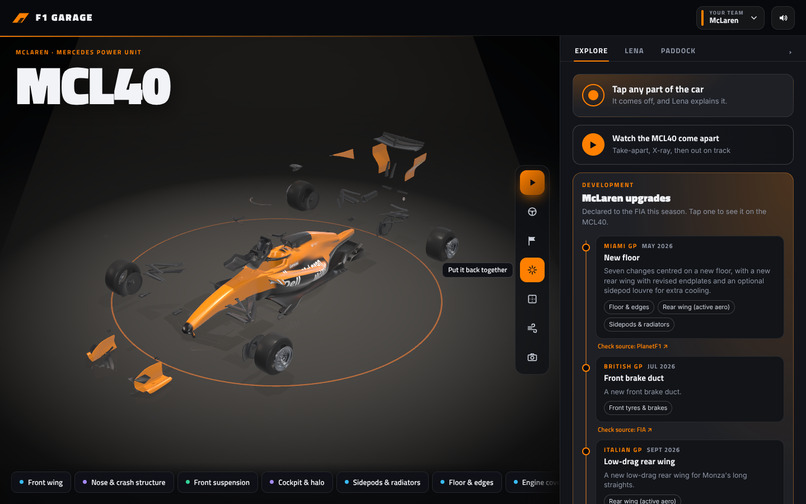
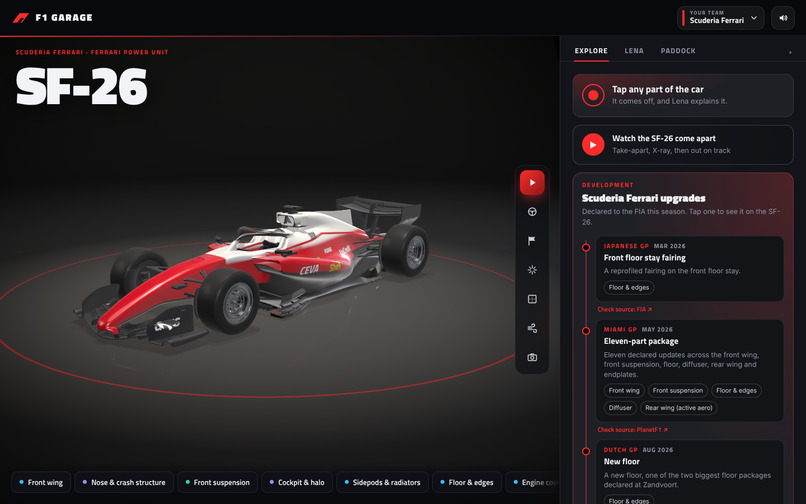
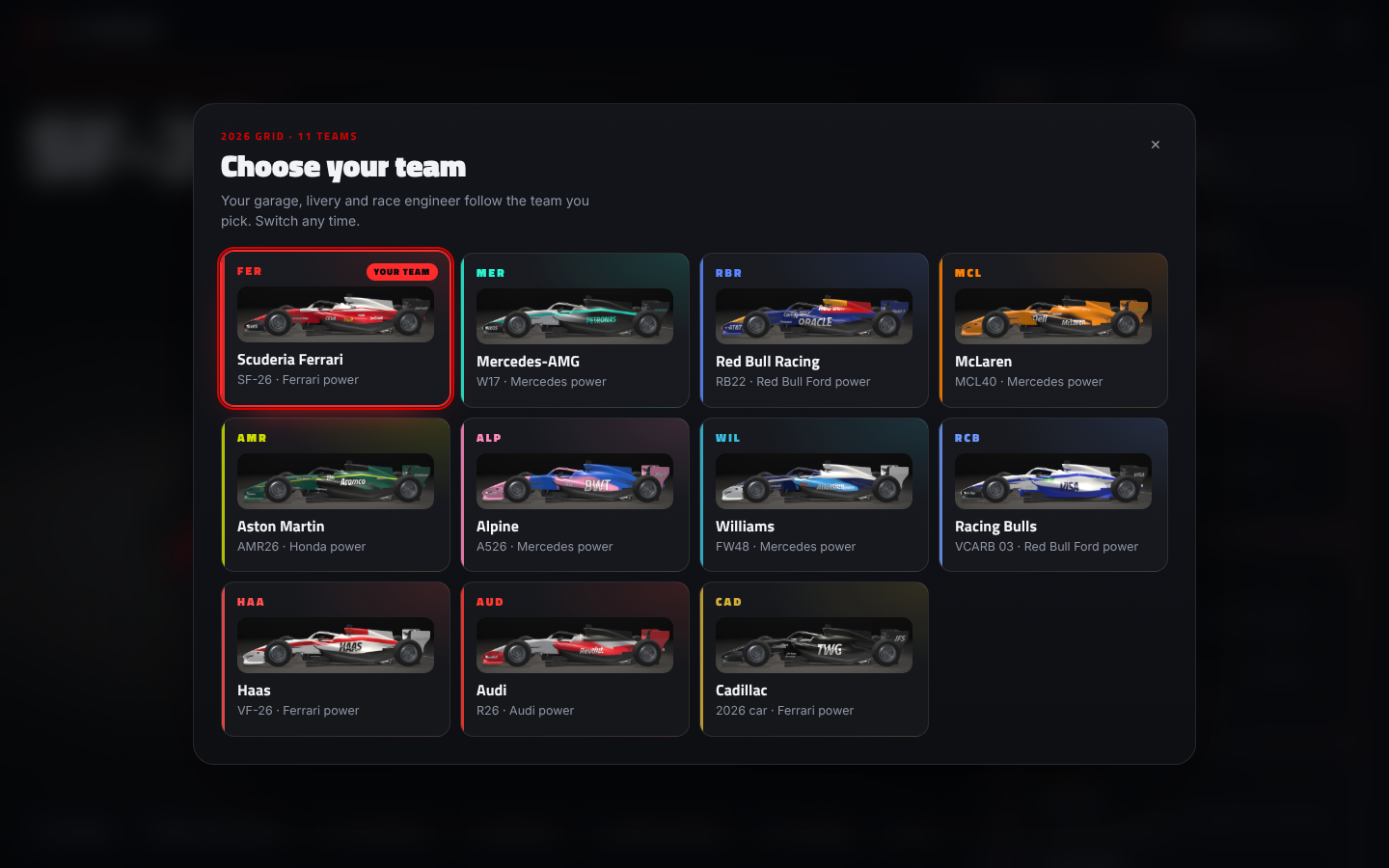
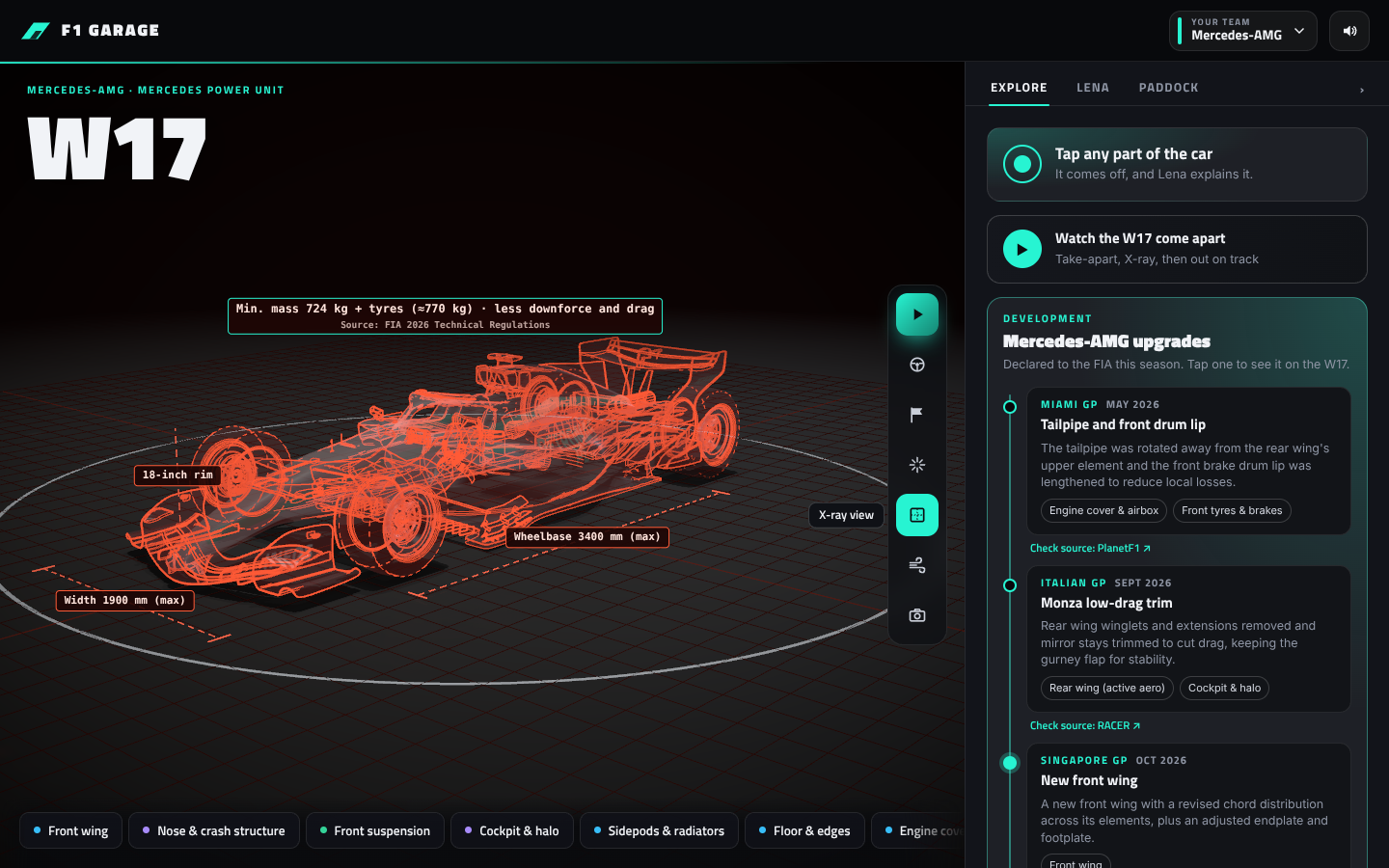
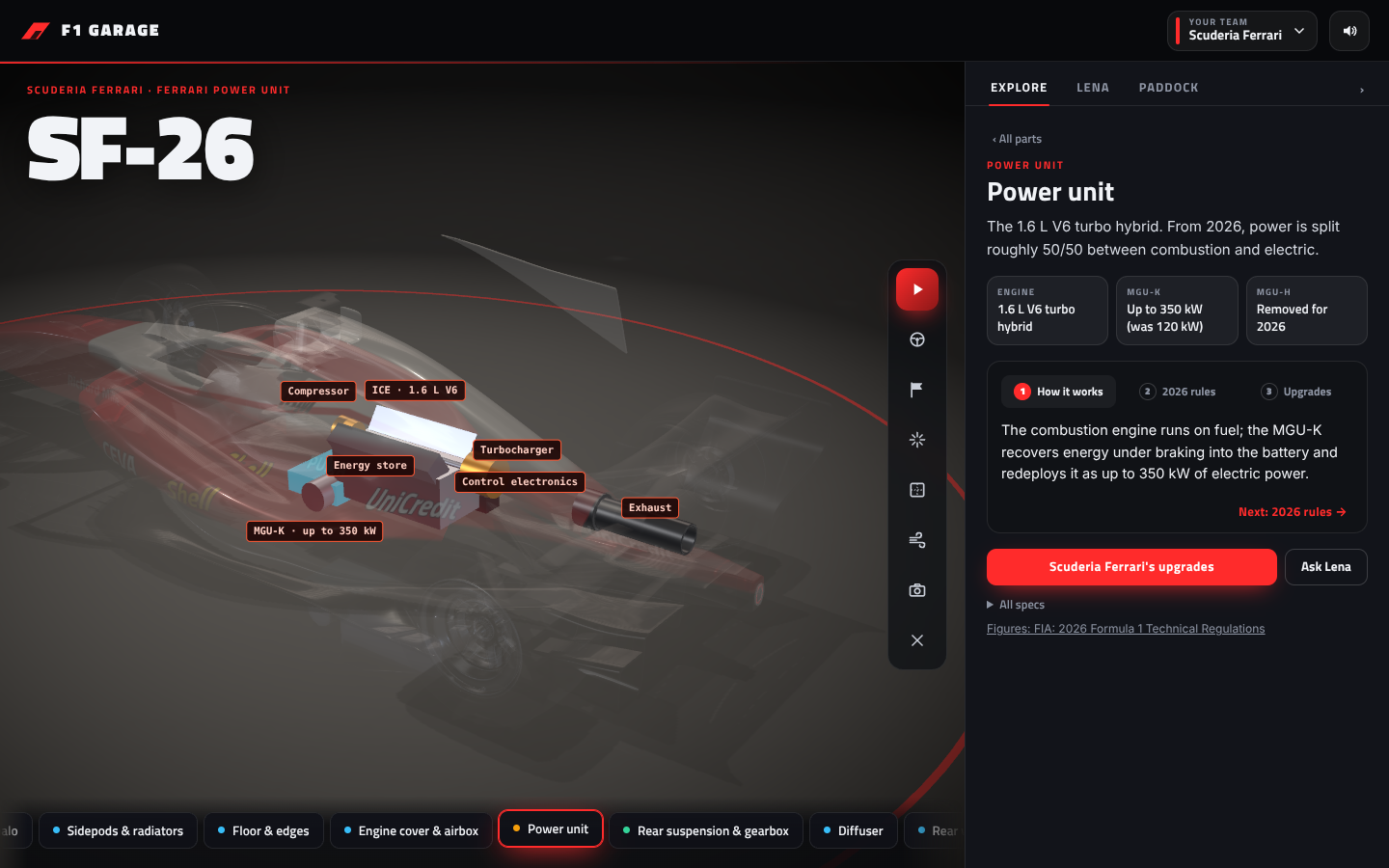
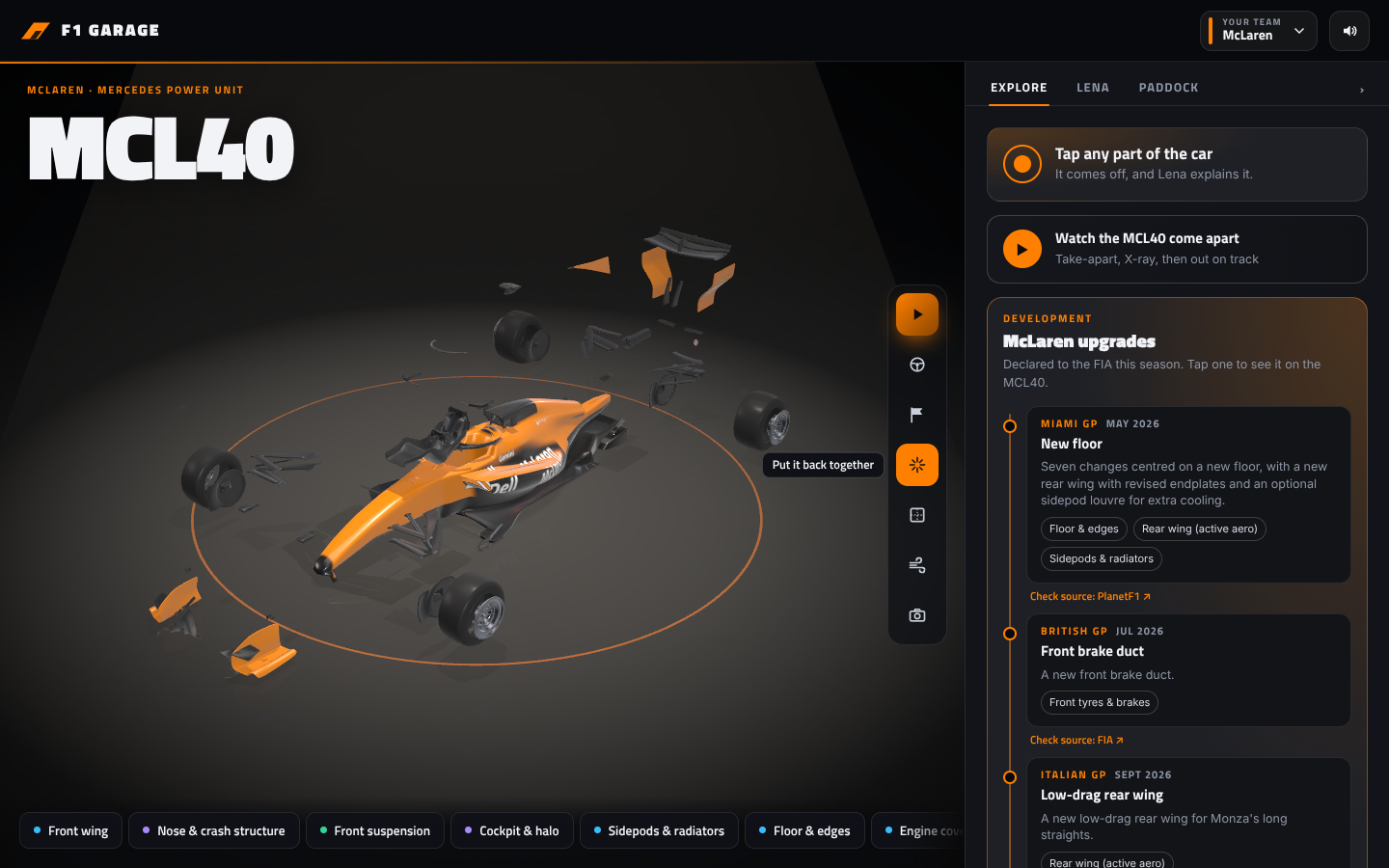
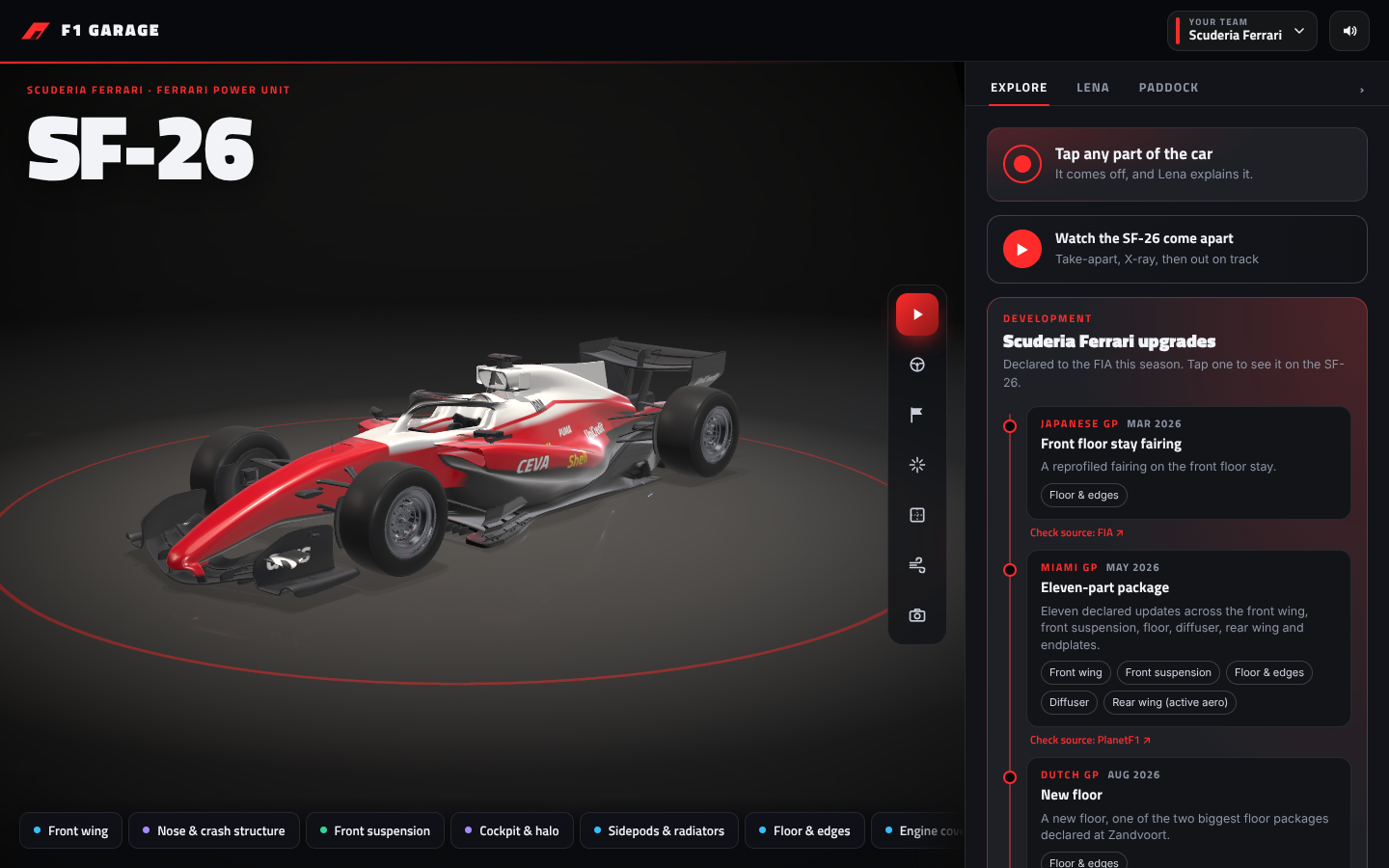
- A 3D garage. All 11 teams of the 2026 grid, each in its 2026 livery. Take any part off, explode the whole car, look inside with a power-unit cutaway, X-ray view with FIA dimensions, and airflow streamlines.
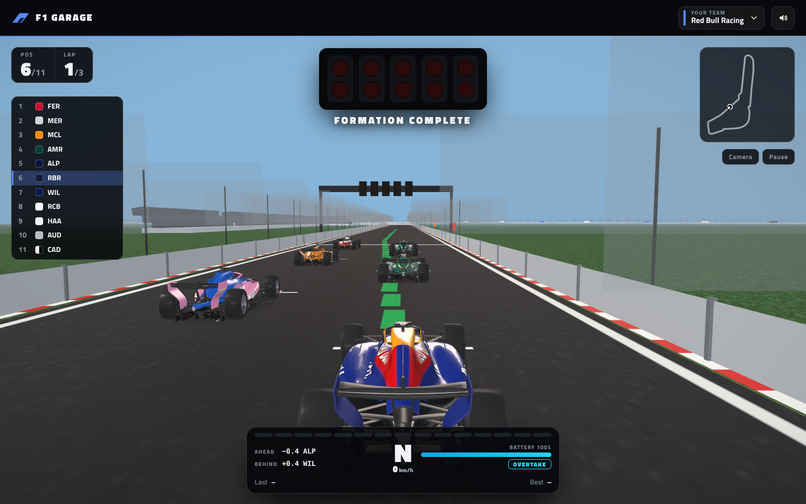
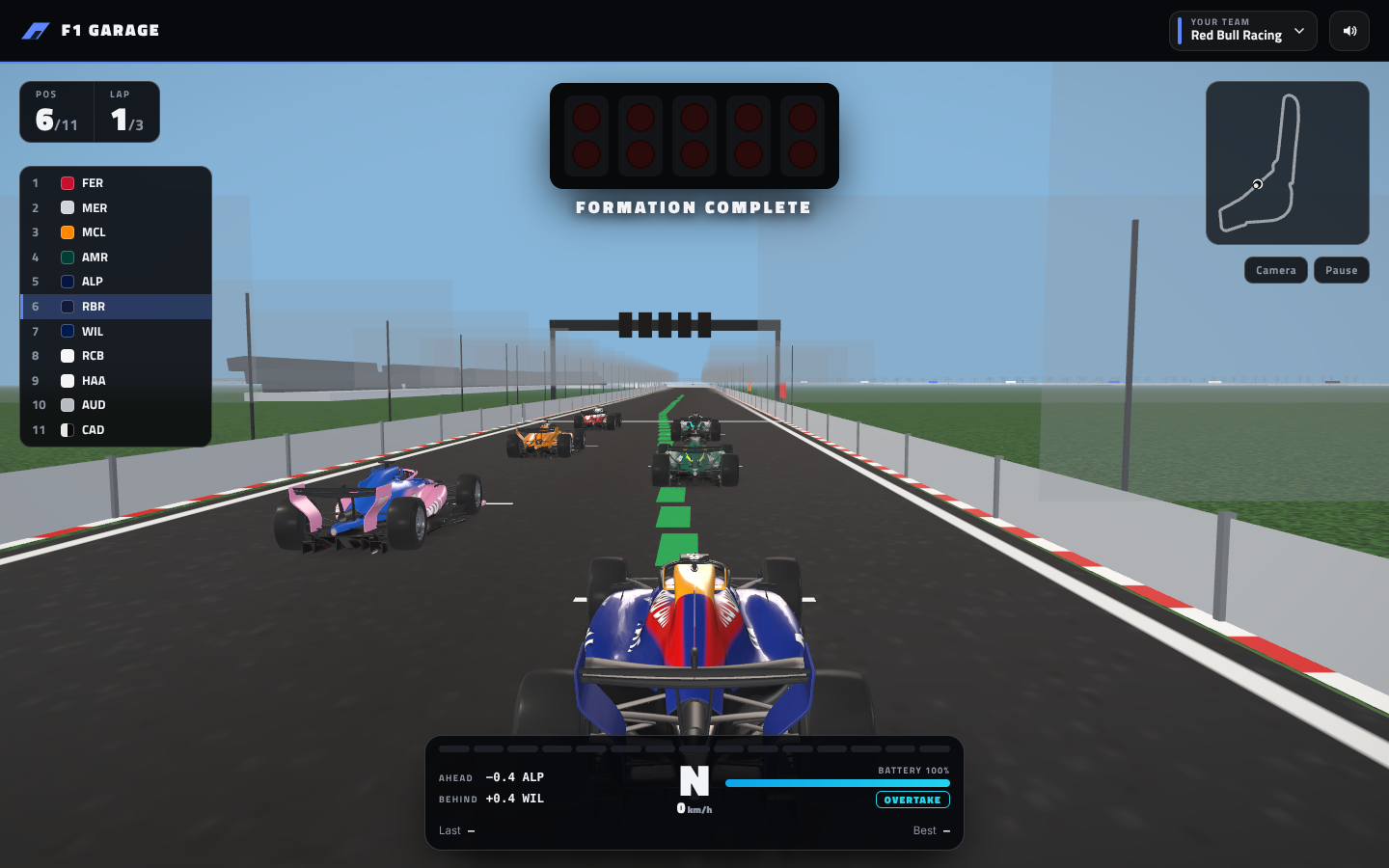
- The fun part. A narrated Showcase, a guided lap that shows active aero and energy deployment, and a full race weekend at Monza with lights, a timing tower, Overtake mode, and Lena on the radio.
Every figure comes from a real source (FIA regulations, team declarations, F1 media), and the app shows where.
How we built it
- NVIDIA Nemotron (default
nvidia/NVIDIA-Nemotron-3-Nano-30B-A3B) is the brain of Lena: one tool-using agent that plans, calls tools in parallel, controls the 3D car and explains at the user's level. Deep analysis uses Nemotron's reasoning mode (enable_thinking). - Nebius Token Factory serves Nemotron through its OpenAI-compatible API, so the standard
openaiSDK worked by changing only the base URL: streaming, tool calling and parallel tool calls out of the box, no GPUs or inference servers to manage, and switching models is a single environment variable. - Next.js, React Three Fiber and three.js for the app and the 3D garage; a licensed 2026 F1 car model, split into parts and painted per team with a custom shader; Tavily for sourced news; Jolpica-F1 and OpenF1 for standings and live timing.
Challenges we ran into
- I first tried to generate the car with NVIDIA PartPacker (image to 3D, already split into parts), but its public demo was failing with a ZeroGPU error, so I switched to a licensed model and built the take-apart logic around its pieces.
- The model has no engine inside, so the power unit is a labelled schematic shown under see-through bodywork.
- Keeping everything factual: every upgrade and regulation figure in the app is sourced, and Lena cites her sources.
- Handling differences between model deployments (thinking-mode support, two reasoning formats) so the agent works with any Nemotron.
Accomplishments that we're proud of
- An AI engineer that doesn't just answer, but shows you on the car.
- All 11 teams' 2026 cars, explorable, explodable, and raceable in the browser.
- A project that makes 2026 F1 understandable for non-technical fans.
What we learned
- How to build a reliable tool-using agent on Nemotron: clear tool schemas, parallel calls, and limits on steps and timeouts.
- How much an OpenAI-compatible hosted endpoint (Token Factory) speeds up a hackathon.
- A lot about the 2026 regulations.
What's next
- Larger Nemotrons (Super, Ultra) for deeper explanations.
- NVIDIA Audio2Face for Lena's facial animation.
- Team-specific car shapes, and search over the FIA regulation PDFs.
- I actually did post-training for llama31-3B with FIA regulations documents in order to make Lena answer FIA-related questions more efficiently https://huggingface.co/AmiraBou/f1-regs-llama31-8b-gguf
Built With
- nebius-token-factory
- next.js
- nvidia-nemotron
- openai-sdk
- react
- react-three-fiber
- tavily
- three.js
- typescript
