-
-
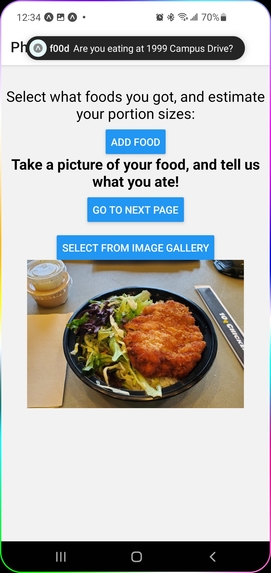
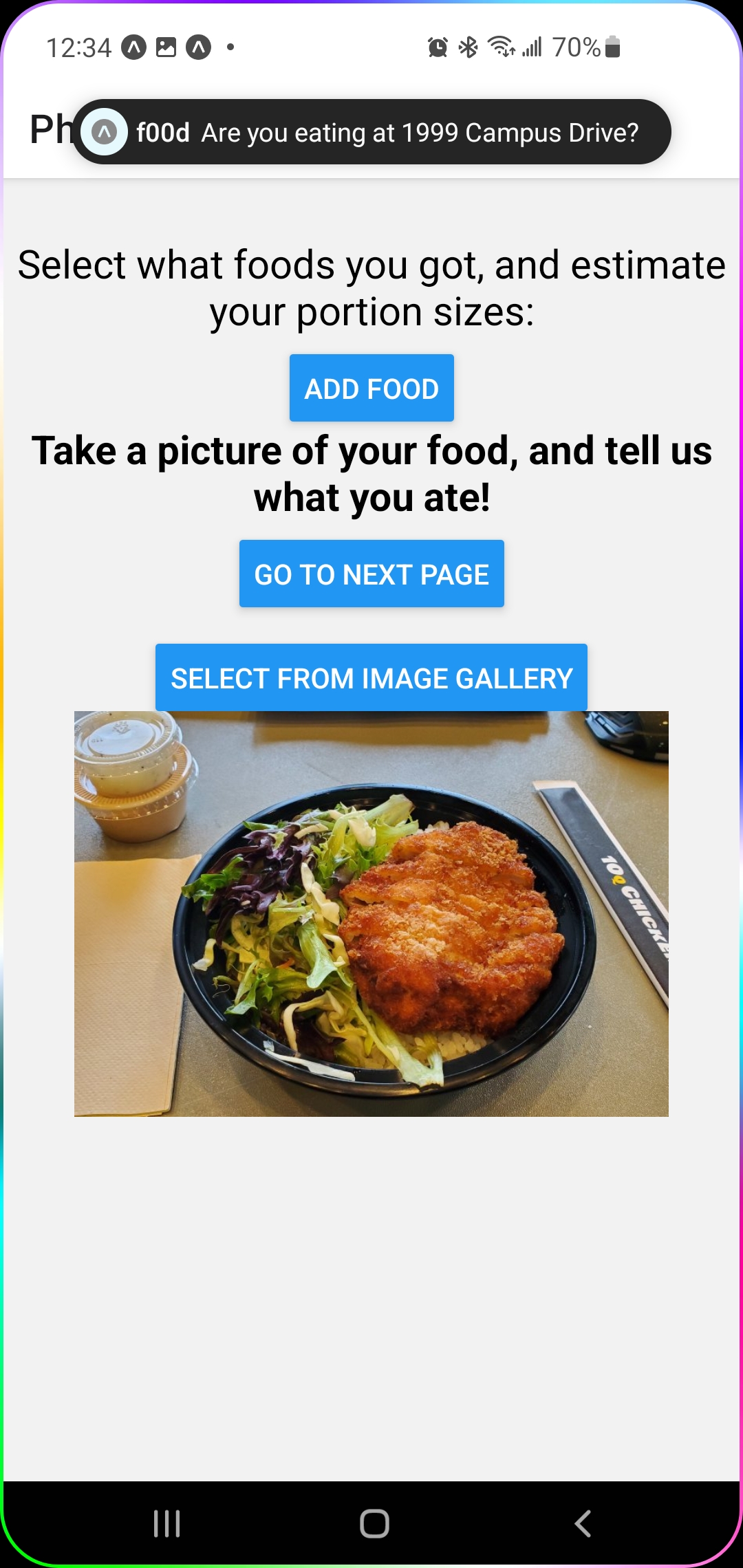
If the user enters a dining hall and opens the app, the app detects the dining hall, and the user will get a notification to log their food.
-
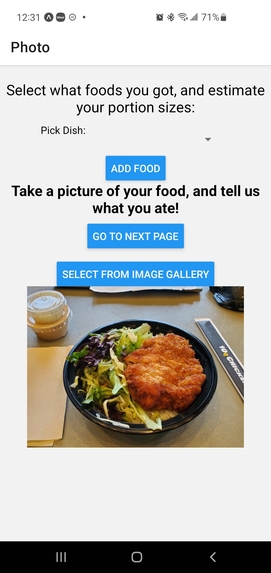
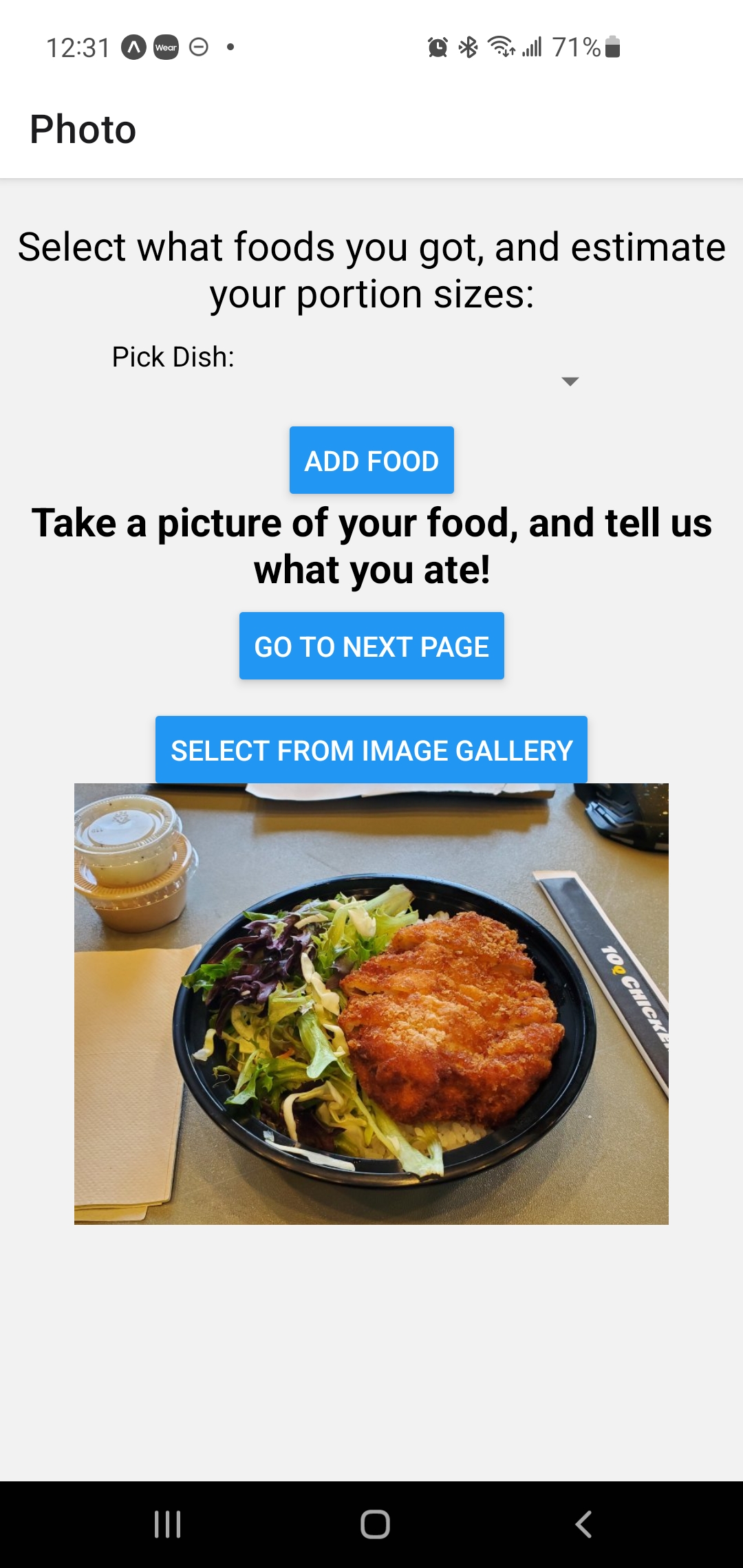
Users can upload a picture of their food, and select the foods they got from dining halls
-
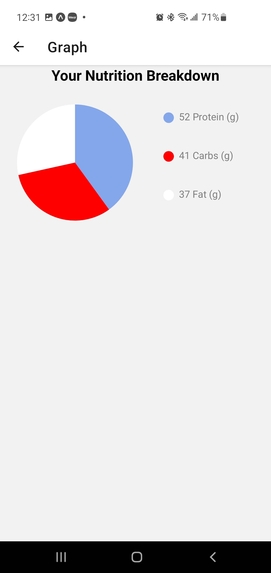
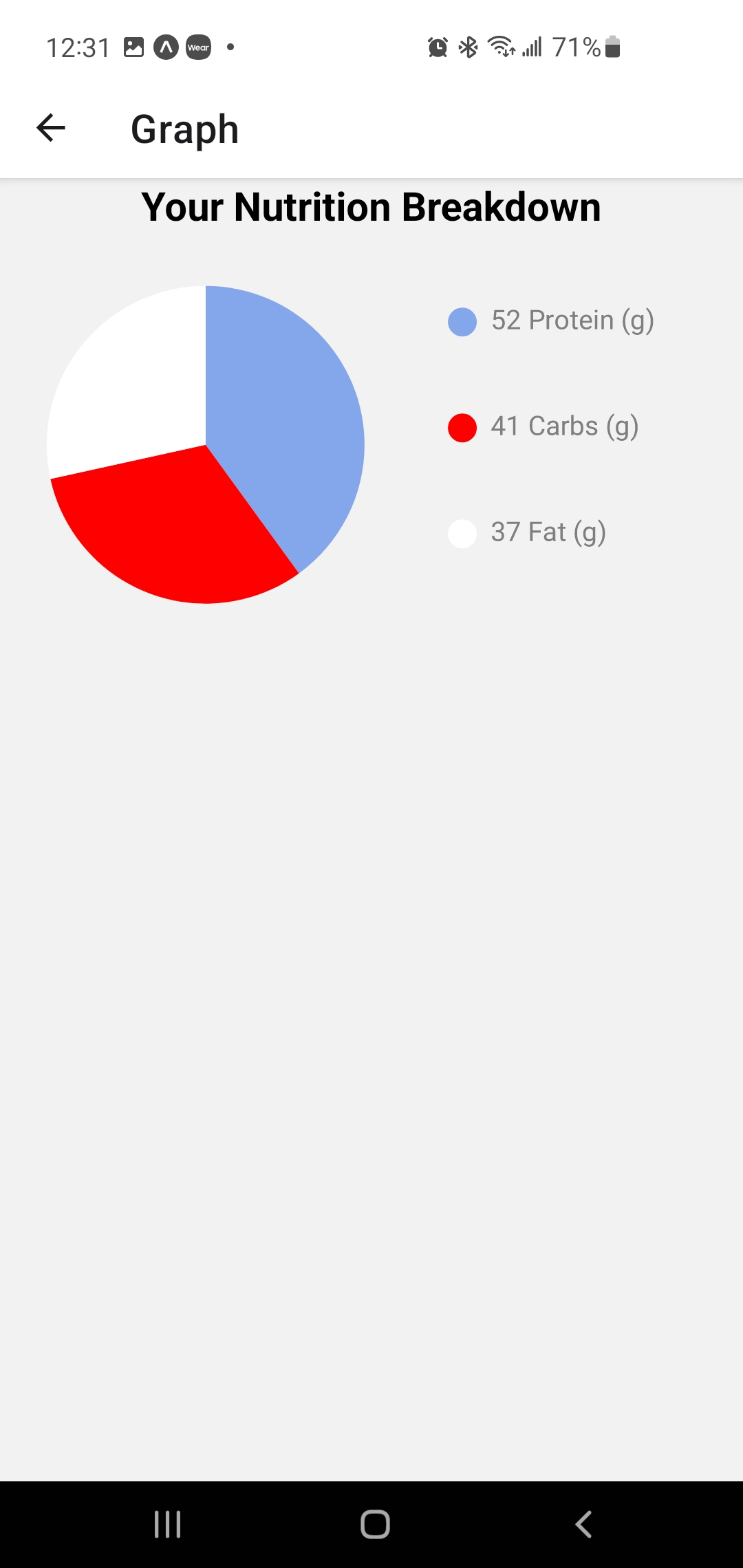
Users will get a breakdown of the nutrients for the meal they entered.
Inspiration
It is often difficult to figure out the specific nutrient content of the food we are eating, since the portion sizes of food for each student can vary wildly. To make it easier to gauge the nutrient content, we decided to create this app, f00d.
What it does
When the user enters a dining hall, the app sends a push notification via mobile to the user, to log the food that they will eat. The app will take into account the user's portion size, and then display a nutrient breakdown of their meal with a graph.
How we built it
We were able to scrape the menu with Python (Selenium and Pandas) for a specific day and dining hall from DineOnCampus, the school's online menu. Through scraping, we were able to extract the API calls that DineOnCampus uses to display their menu. Our app is call able to these API endpoints to obtain the menu data. We then display our which is able to run on mobile and web as we used React Native.
Challenges we ran into
Compatibility issues between web and mobile.
Accomplishments that we're proud of
The ability to call and extract data from API endpoints by scraping network calls. Adding pictures, tracking location and sending notifications.
What we learned
Good organization saves time and streamlines projects.
What's next for f00d
Adding more features such as a connecting students together and sharing their meals.

Log in or sign up for Devpost to join the conversation.