-
-
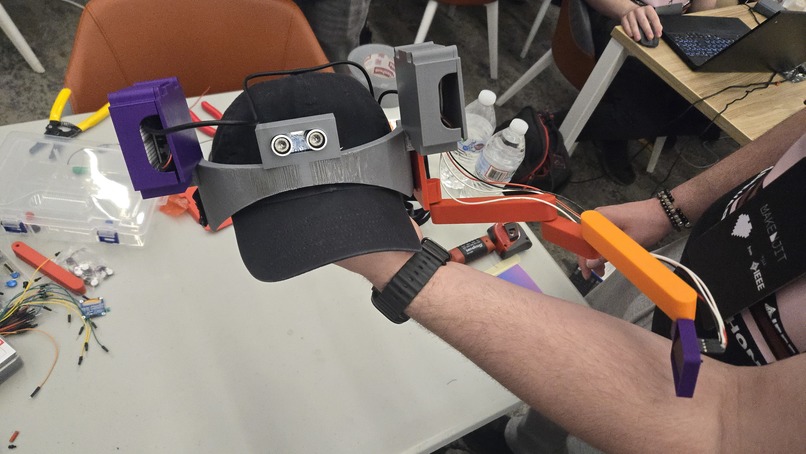
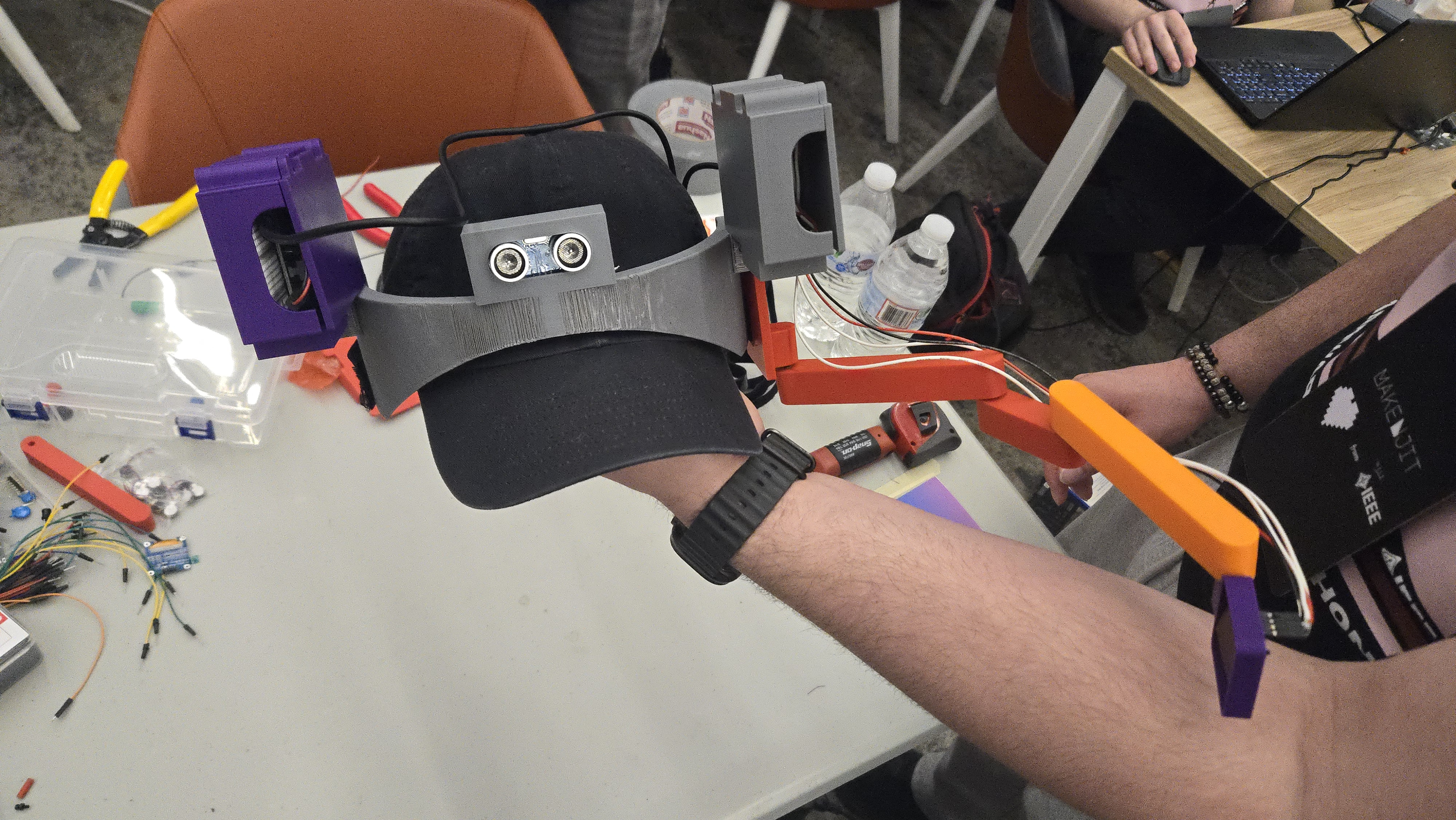
F.I.R.E . Front view
-
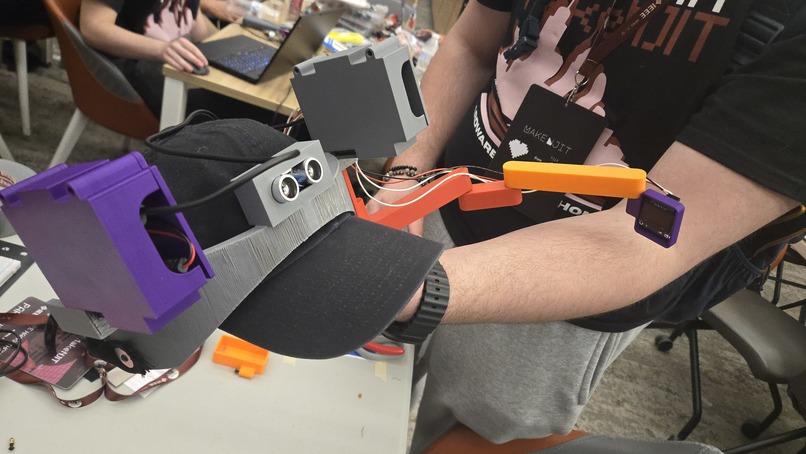
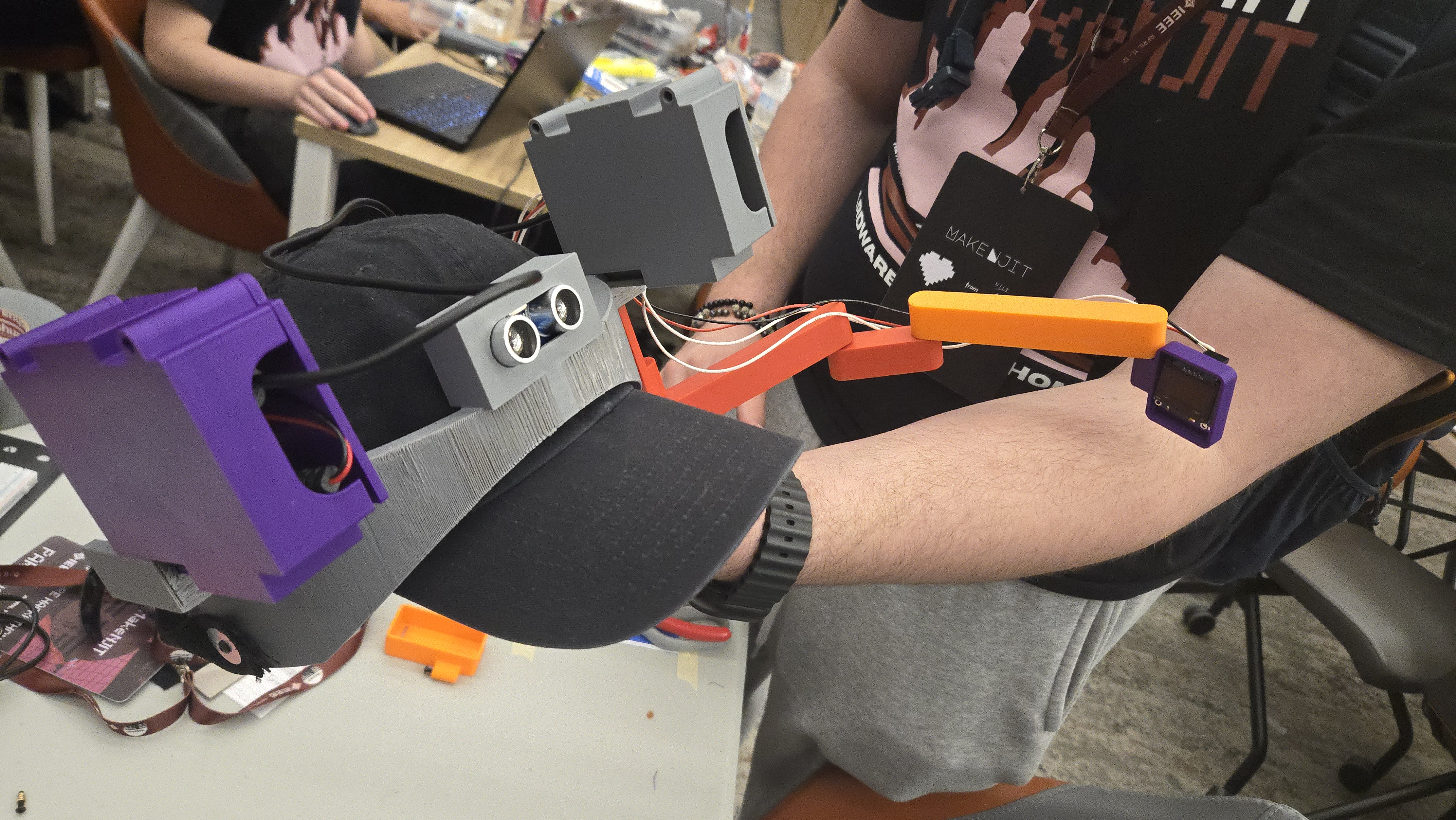
F.I.R.E. R Side view
-
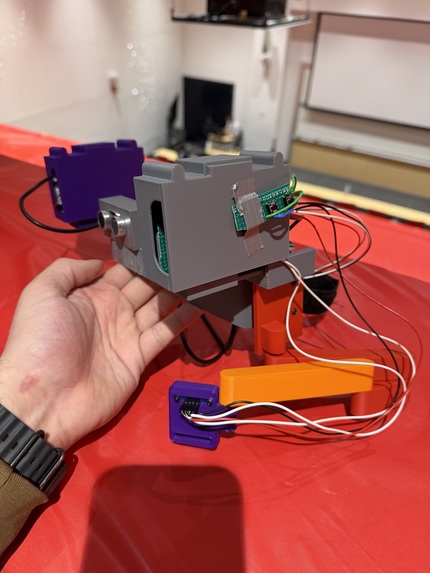
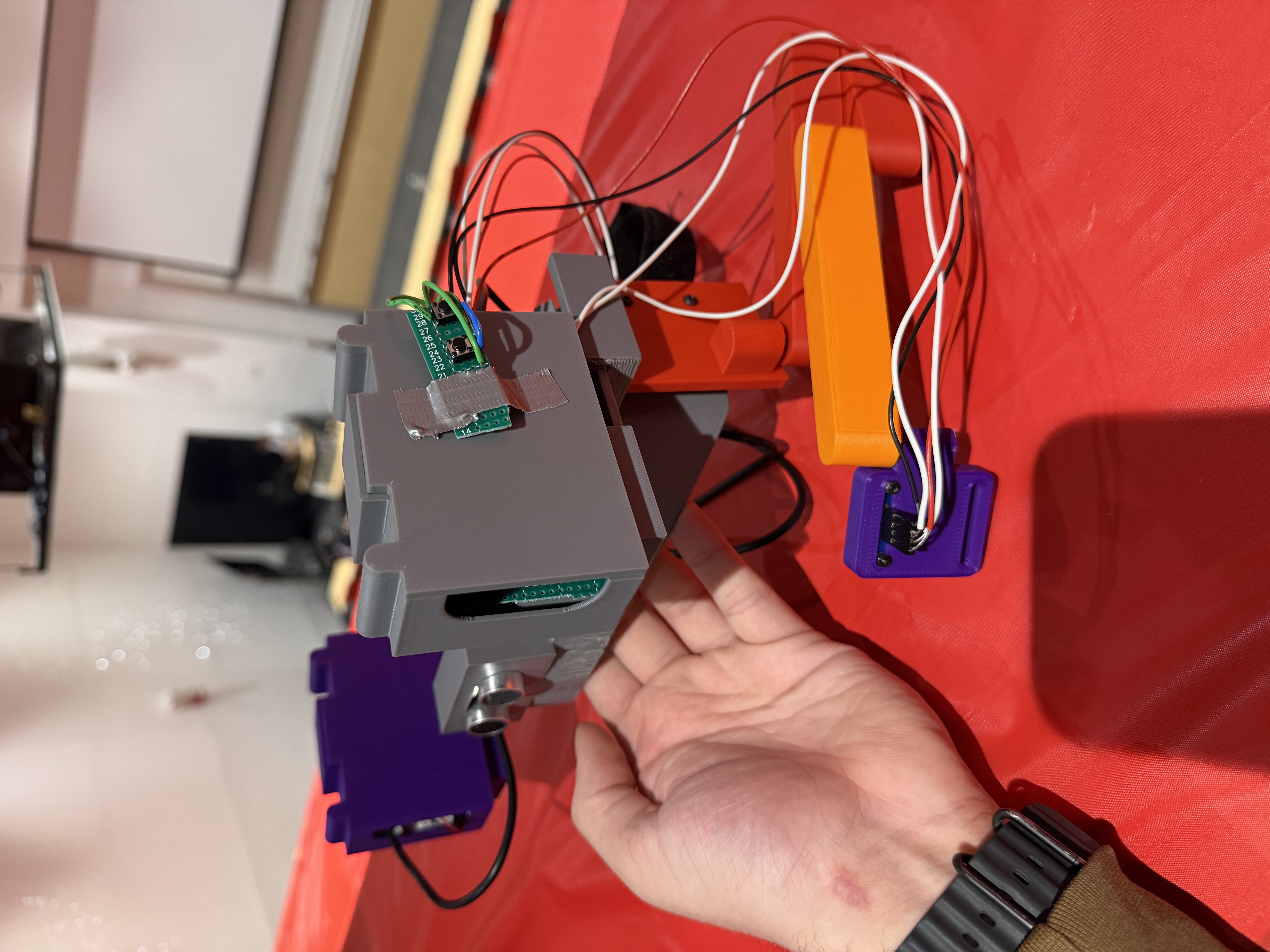
F.I.R.E. L side view
-
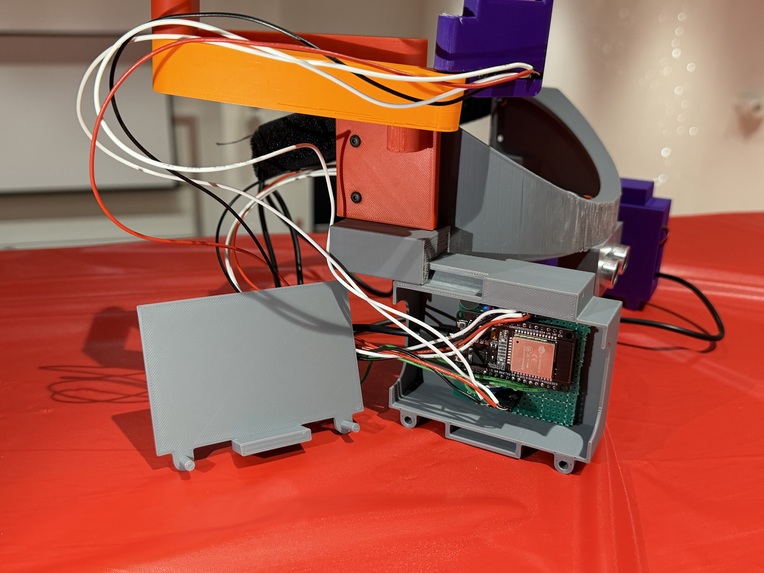
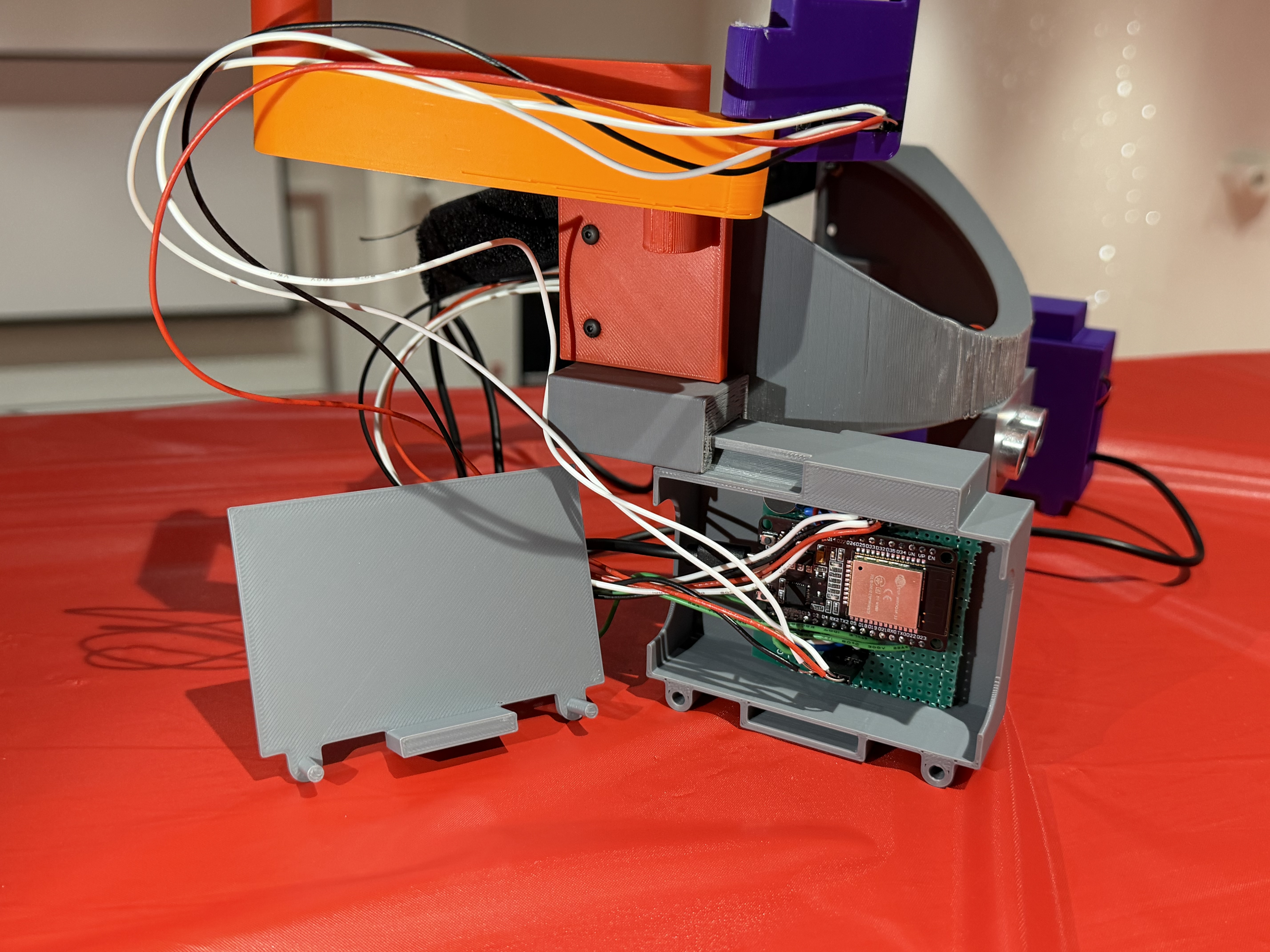
Circuit and attachment
-
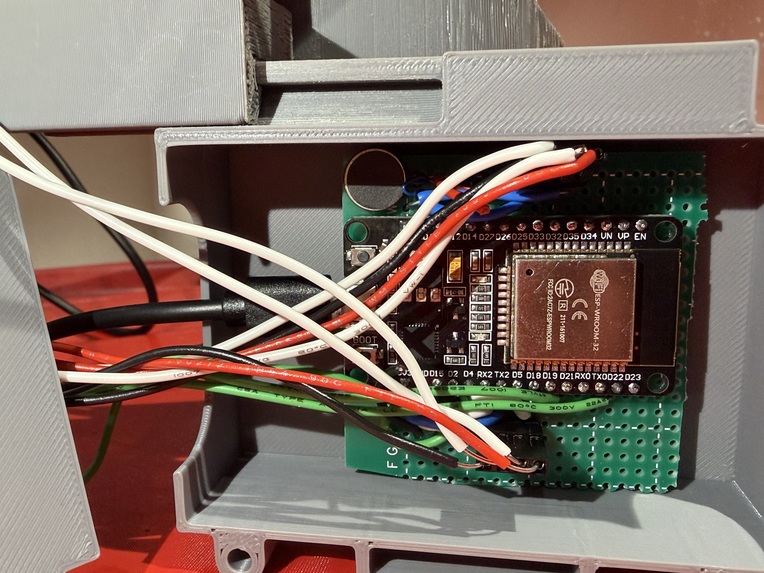
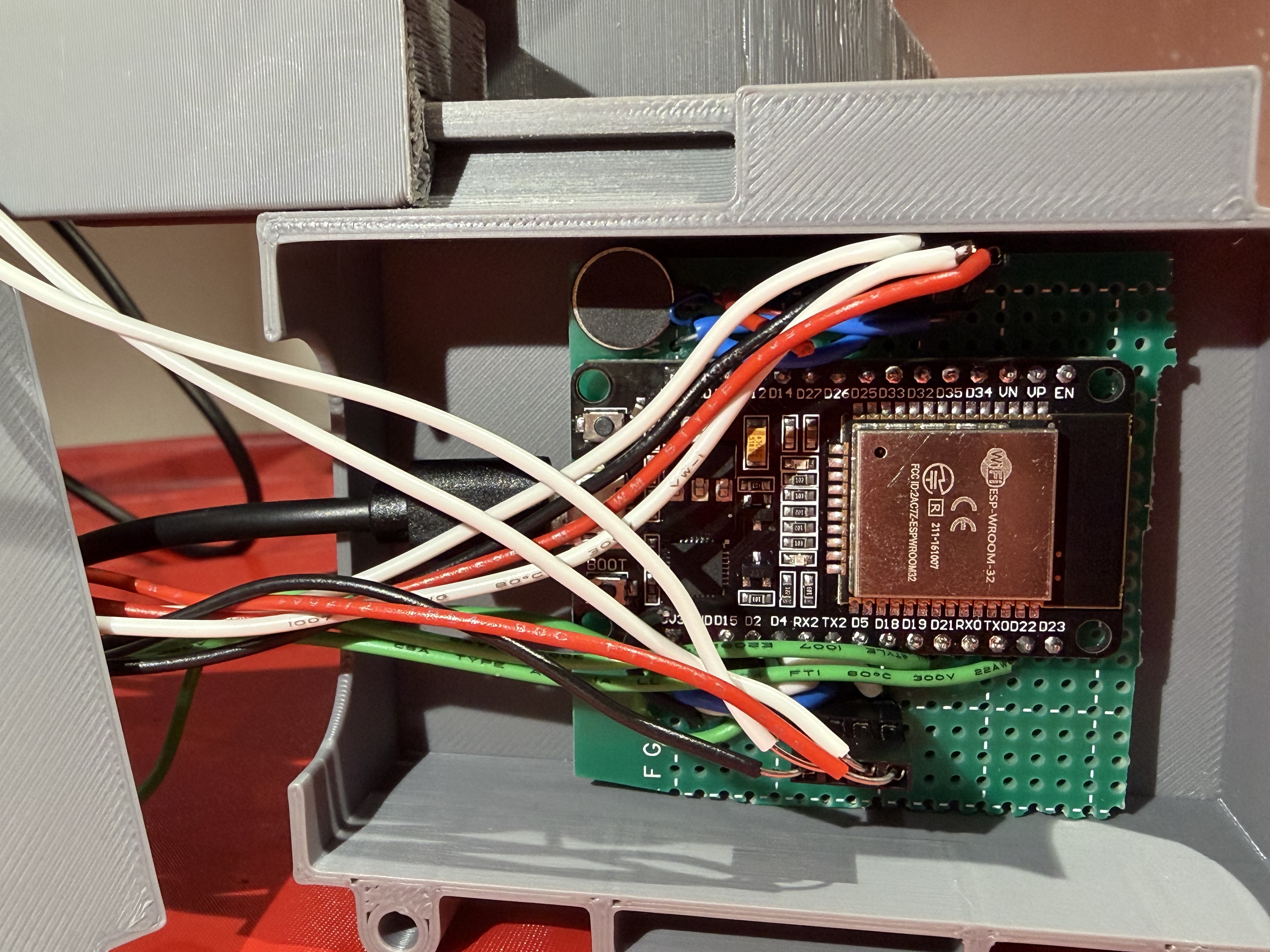
Circuit close-up(temp. sensor and haptic motor)
Inspiration
We were inspired to develop the F.I.R.E. (Field-Integrated Rescue Enhancement) device after research into common occurrences after natural disasters. The one major similarity between the aftermath of several natural disasters was fire caused by electrical damage among other factors. When rescuers go to save people they need to be kept safe.
What it does
Our ultrasonic sensor and haptic motor alert the rescuer when something is in front of them in a low visibility situation, the temperature sensor shows the rescuer if their environment is too hot, and the display with our communication buttons allow communication between the rescuer and people that could help.
How we built it
The physical prototype was almost entirely created using a 3D printer. The CAD models were created using fusion 360, and then sent to be sliced on the Prusa slicer. It was then printed on the Prusa CORE One printers. Straps were then added in the back for adjustability, and screwed into the 3D printed model. The arm on the side of the model was connected using heat inserts and screws, and the circuit was soldered onto a perf board. On the software side, the wificommunicator works through clients (the esp) connecting hotspot from a laptop (or any host), the webpage connection was done using python and built using python's socket and websocket for constant updates. How we built it software/sensors: We implemented several sensors for our project, using a polling loop to constantly read from the sensors and communicate with the remote server. Temperature is read using an analog temperature sensor and displayed on the OLED. An ultrasonic sensor detects nearby obstacles, and vibrates the haptic motor when the distance is 70 cm or less, with increasing intensity as distance decreases. We also had two buttons which send unique messages to the remote server.
Challenges we ran into
The biggest challenge to overcome during this year’s hackathon was the serial communication between the ESP32 and anything else. First we tried to use bluetooth to connect ESP32 to ESP32, which was eventually scrapped. We then switched to WiFi communication which worked better, but still had its problems.
Accomplishments that we're proud of
We are proud of our communication system integration. Using WiFi to send messages back and forth between rescuers not only makes the rescuers safer, but maybe even the people they are saving because help can get there more quickly.
What we learned
We practiced utilizing the WiFi capability from the esp32, we learned WiFi communication works between the a host webserver and the esp32 board. We also learned how to work more efficiently and communicate in a team setting. We also had finetuned our CAD design skill and learned an array of useful sensors.
What's next for F.I.R.E.
Multiple ultrasonic sensors pointed in slightly different directions could improve obstacle detection. An air quality sensor can help to prevent other injuries due to breathing in harmful fumes.


Log in or sign up for Devpost to join the conversation.