-
-
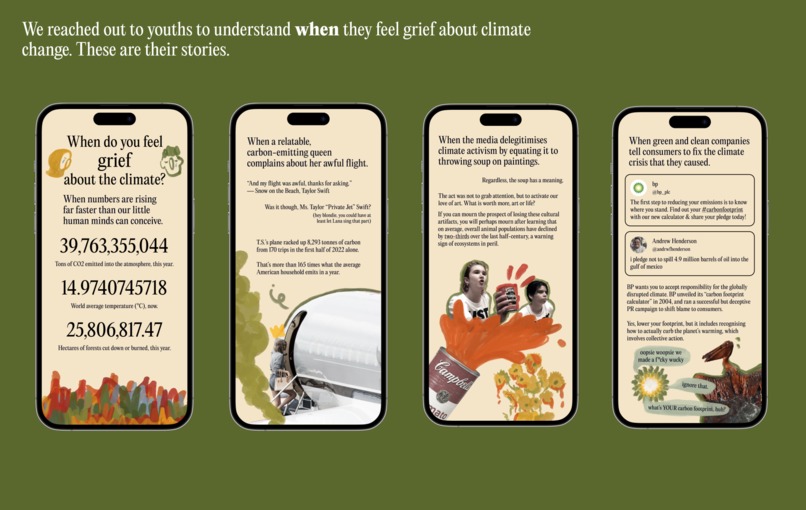
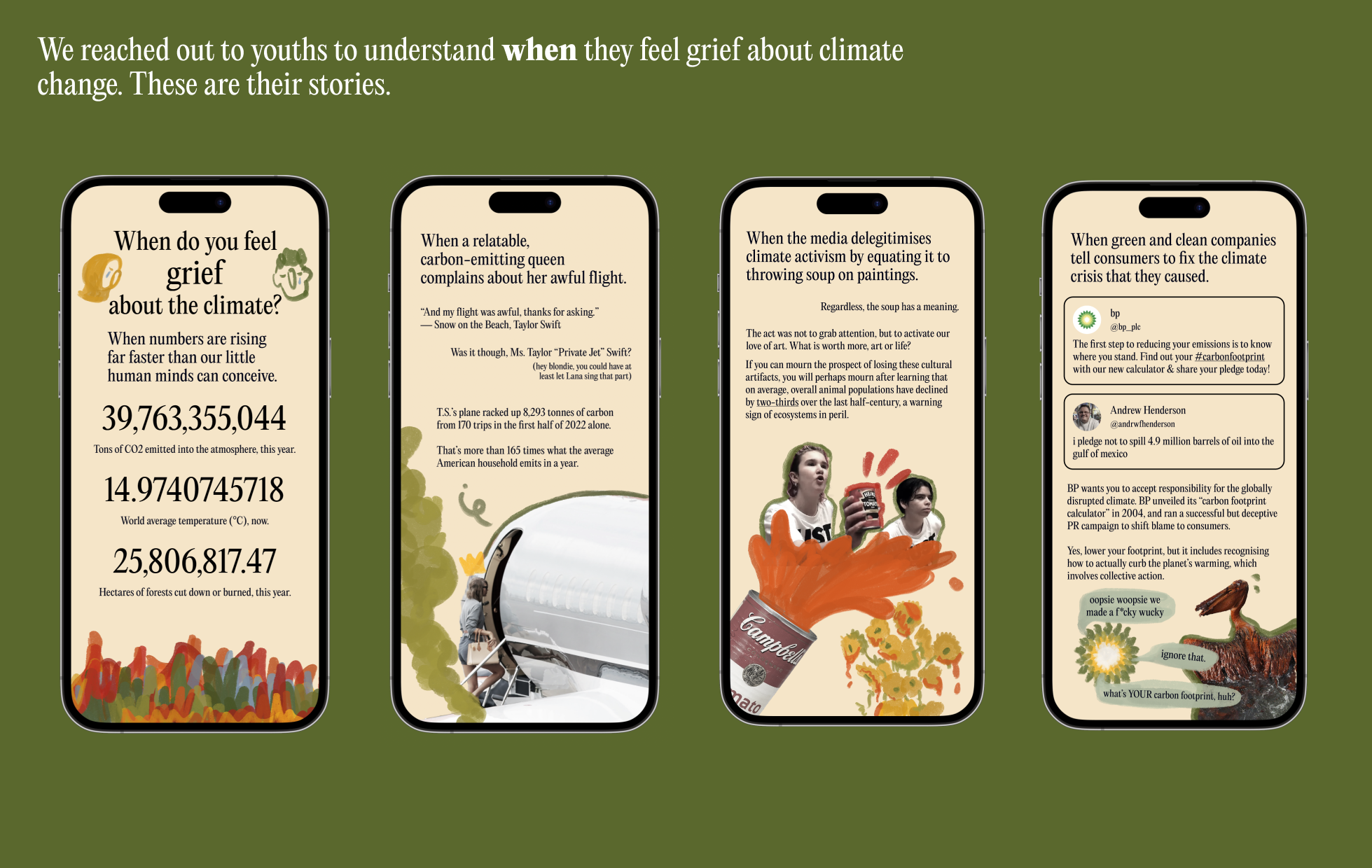
We reached out to youths to understand when they feel grief about climate change. These are their stories.
-
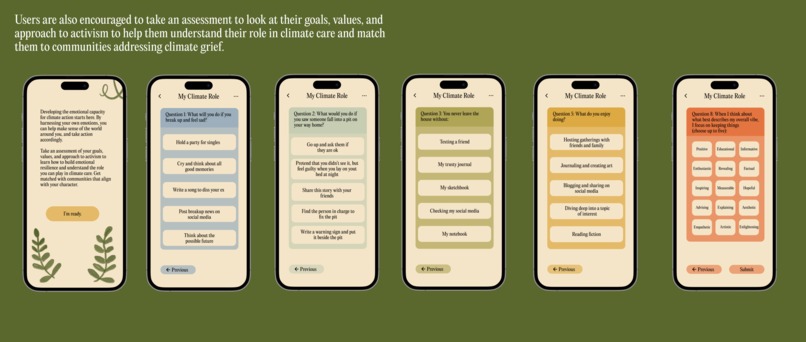
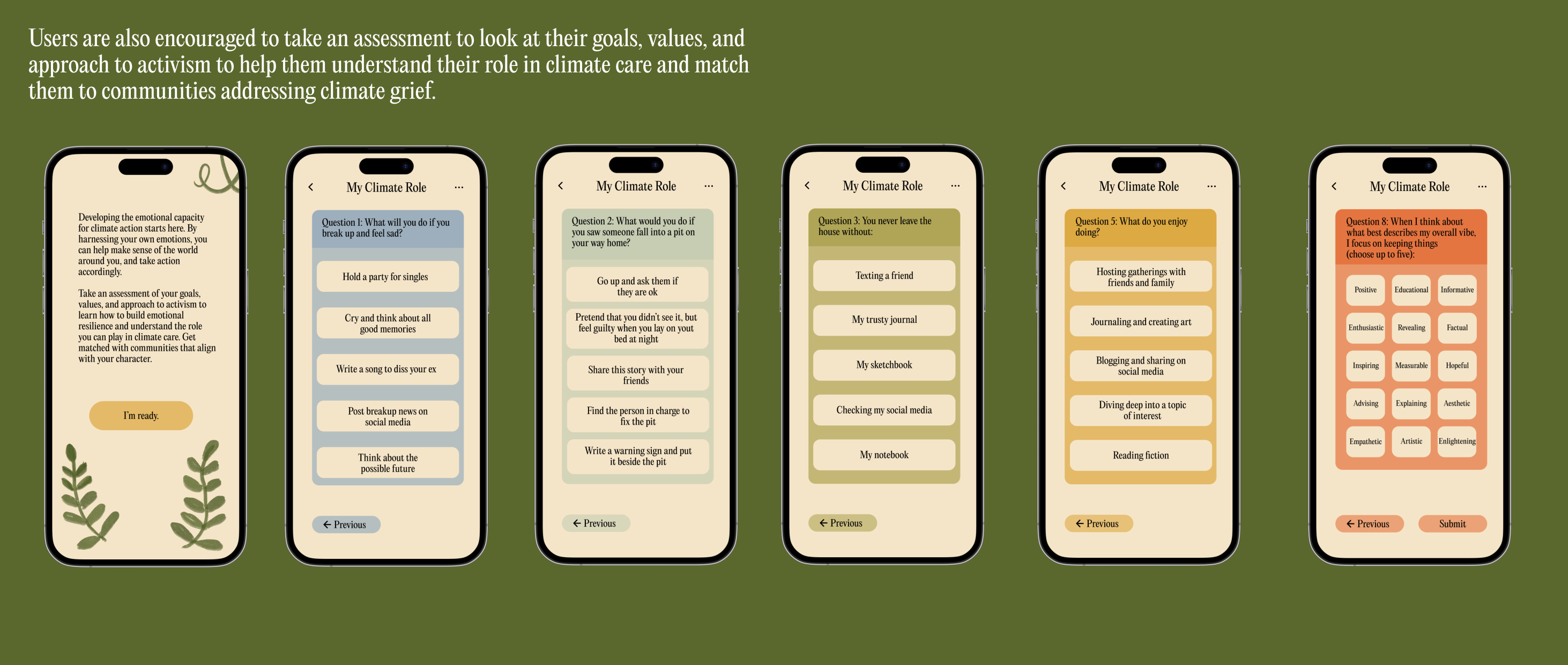
The climate role assessment matches users to communities that align with their character.
-
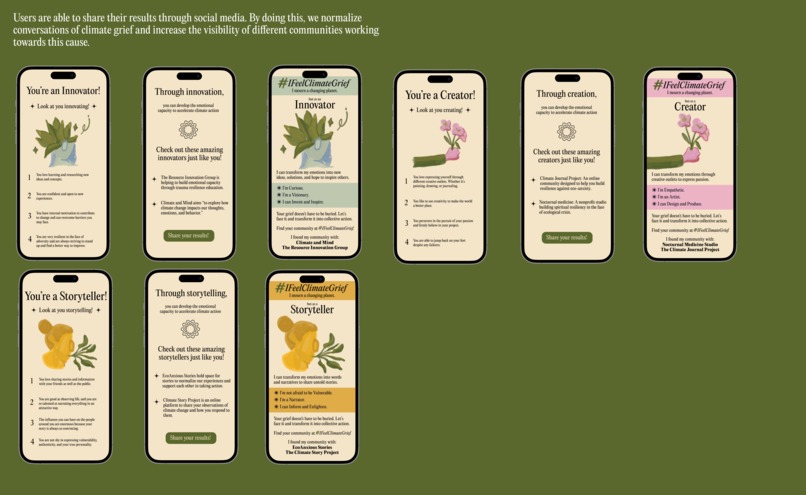
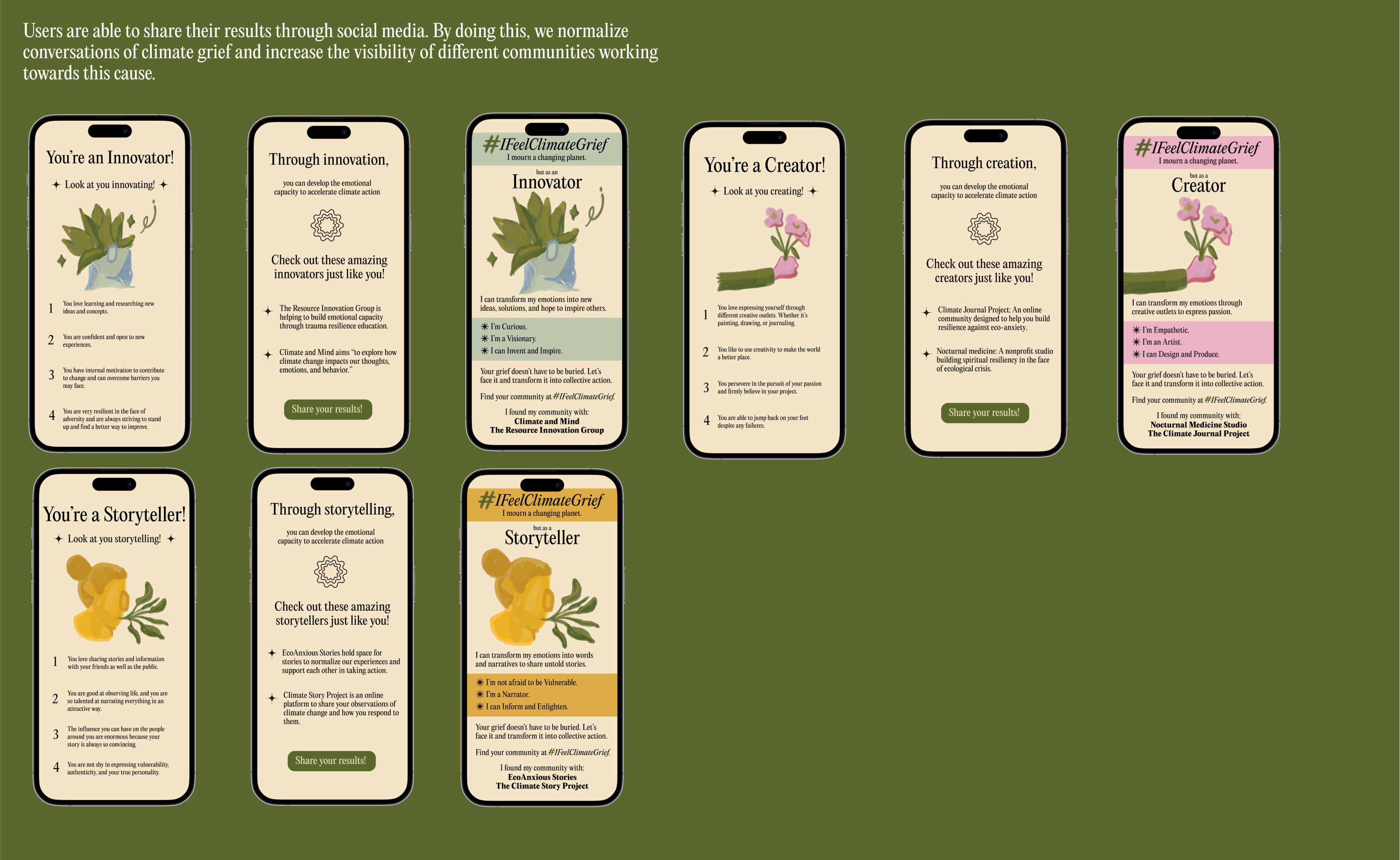
Shareable results to normalize conversations of climate grief and increase the visibility of different communities working for this cause.
-
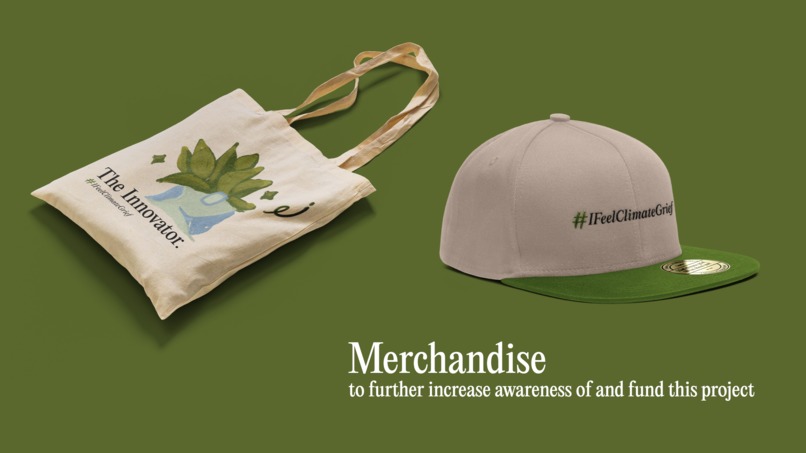
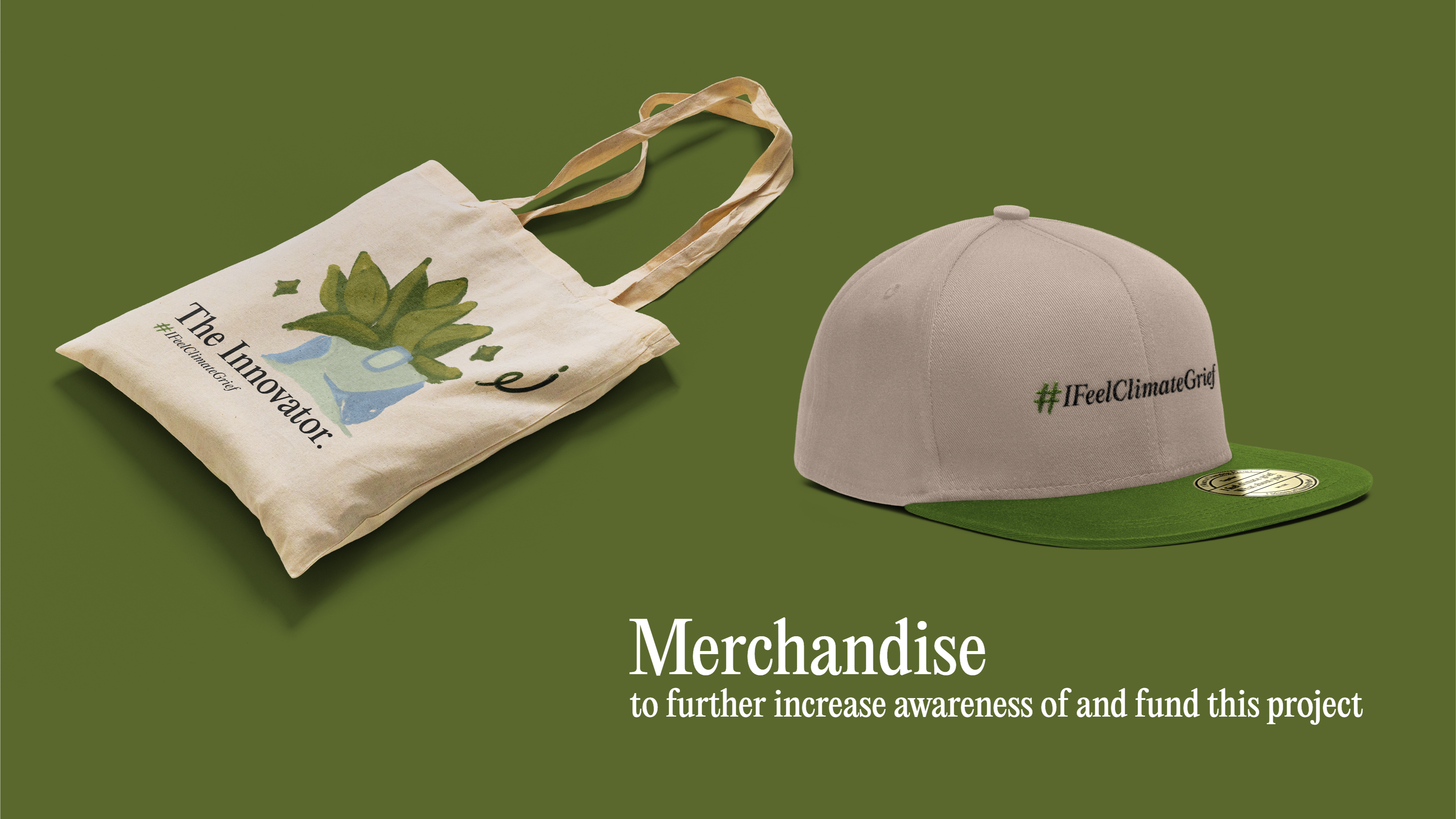
Merchandise to further increase awareness of and fund this project
Inspiration
Our team is made up of 4 multidisciplinary students that are passionate about the intersection of climate action and mental health. We are inspired by each other's strengths in different areas in computer science, psychology, film and media, and engineering to come together and create social change. We were also inspired by our mentor Roselle Maluto for her guidance and passion during the project. As fellow climate activists, our emotional capacity was impacted by climate grief. Therefore, we created #IFeelClimateGrief to inspire others and normalize climate grief conversations.
What it does
According to a study conducted by the University of Bath on 10,000 youth, they found that 59% are extremely worried about the impacts of climate change, 75% think the future is frightening, and 83% think they failed to take care of the planet.
The #IFeelClimateGrief platform shares stories and experiences of when people feel climate grief in relatable ways to normalize these emotions. We connect people suffering from the emotional strain of climate change and climate discussion to personalized communities and resources. These connections will empower people to increase their emotional capacity, process their emotions, and transform them into actionable, collective movements.
We reached out to youths to understand when they feel grief about climate change, and we include all of these stories on our website. By viewing these stories, users can explore youths' emotions from their perspective and join us in normalizing the emotions surrounding climate grief.
Users are invited and encouraged to send us their own their own stories to build a repository of stories.
Users are also encouraged to take an assessment to look at their goals, values, and approach to activism to help them understand their role in climate care and match them to communities addressing climate grief.
Some of these communities include:
The Journal Project: An online community designed to help you build resilience against eco-anxiety
The Climate Story Project: an online platform for people to share their observations of climate change and how they respond to it.
At the end of the quiz, users are able to share their results through social media. By doing this, we normalize conversations of climate grief and increase the visibility of different communities working towards this cause.
In efforts to further increase awareness of and fund this project, #Ifeelclimategrief merchandise will be sold.
How we built it
The website was designed and prototyped using Figma and the quiz was created through Qualtrics.
Challenges we ran into
As half of us were first time hackers, we had challenges with the prompt and coming up with practical solutions. While researching, we had to take breaks as we were heavily impacted by the subject matter. Additionally, we struggled to create the content for the assessment of climate roles part as this involved matching resources to specific personality groups.
Accomplishments that we're proud of
We are proud to have completed this hackathon and successfully developed a solution for addressing climate grief, especially since this is our first time collaborating together! We are proud of the story that we've developed and UX principles and research we incorporated into our design.
What we learned
We found within ourselves inspiration that it's not too late and change is possible. If we continue in our climate action journey, the world can be in a better place. Through the development of our solution, we learned how to use the qualatrics software to develop a quiz and hone our UX and UI skills.
What's next for #IFeelClimateGrief
Our next steps involve working with mental health experts on improving the resources for the quiz, completing usability testing the prototype to understand if the goal of the website is achieved, building the website after usability testing is complete, distributing the domain and encourage sharing on social media, and obtain longterm financing by partnering with climate organizations or accepting donations on the site.
To assess further impact, we will partner with communities to understand their needs and acquire retention data to see which users are continuing to contribute to these communities so that we can improve the effectiveness of our matching system.
Some challenges we've considered include ensuring the site reaches the target audience and building a financial model to ensure we have enough funds to keep the website operational.
About our team!
We are a team of 4 multidisciplinary students from the University of Toronto that are passionate about climate change. Karishma Savani has a background in psychology and is interested in the impact of the climate crisis on mental health. Her passion for the mental health of youth helped to drive this project to fruition! Runjie (Melody) Dai has a background in film and media, and is passionate about creating impactful documentaries about nature. She played an integral role in putting together a captivating video for our submission! Rebecca Hsiung has a background in sustainable energy engineering and has always been interested in sustainable innovations for climate action. She is passionate about incorporating sustainable practices in her daily life such as upcycling her old clothes! Her background helped to guide the design thinking process. Finally, Yanch Ong has a background in computer science and design, and passionate about the role of tech in sustainability. With his hackathon experience, we were all able to learn and persevere through the challenge.
Built With
- figma
- qualitrics


Log in or sign up for Devpost to join the conversation.