-
-
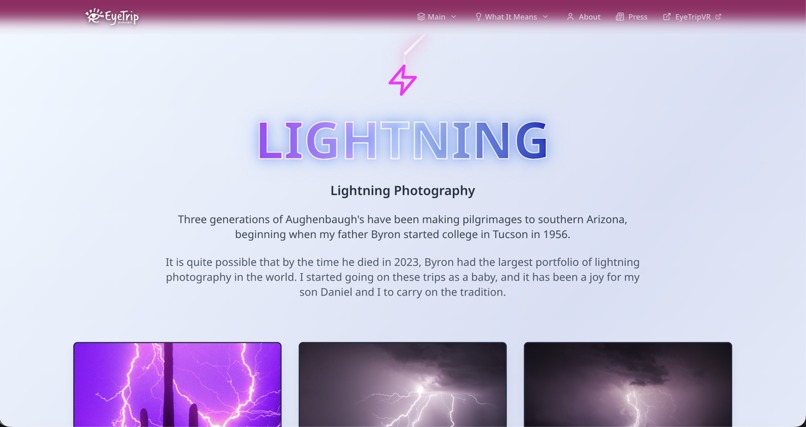
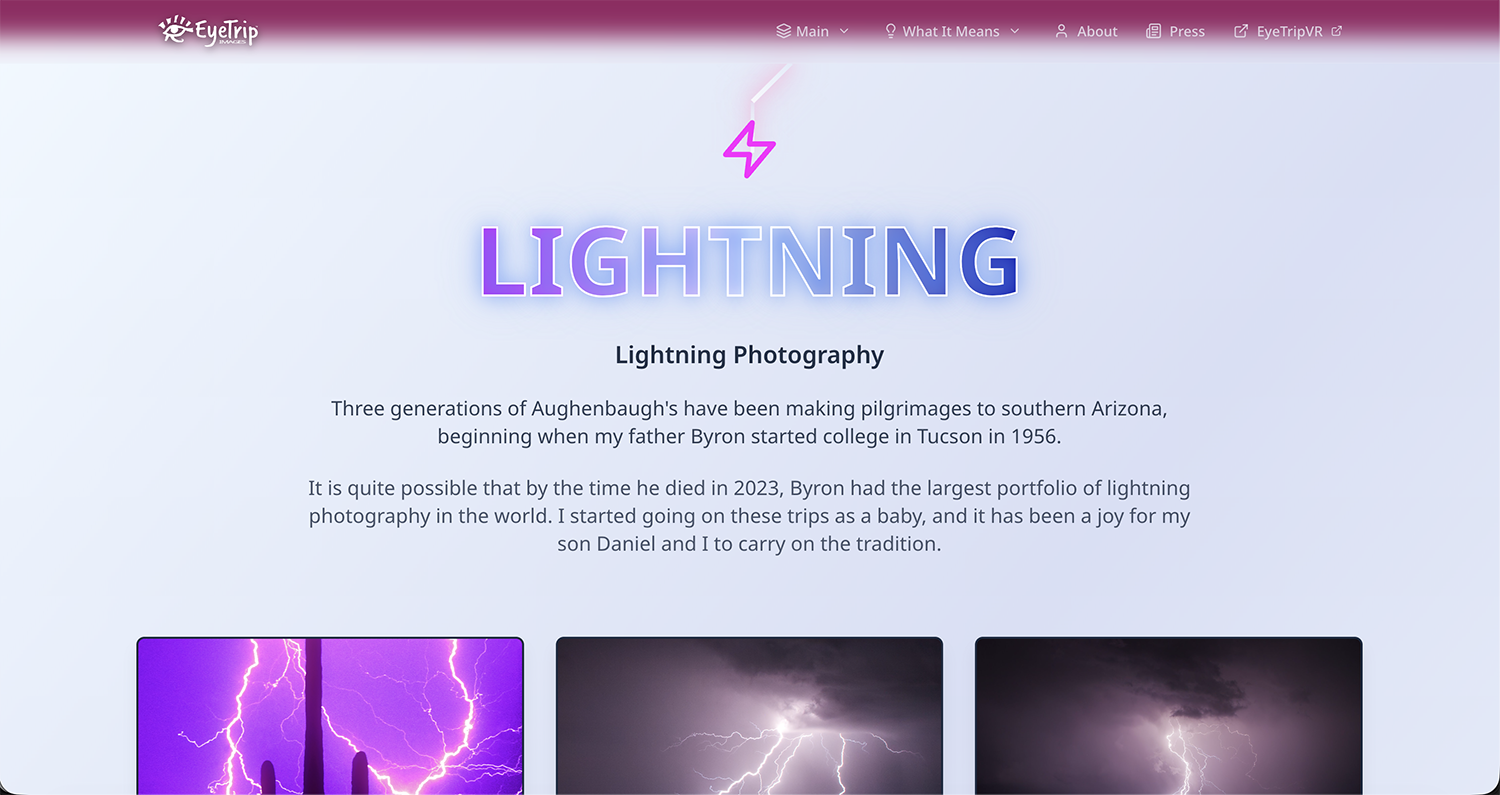
EyeTripImages Lightning Section
-
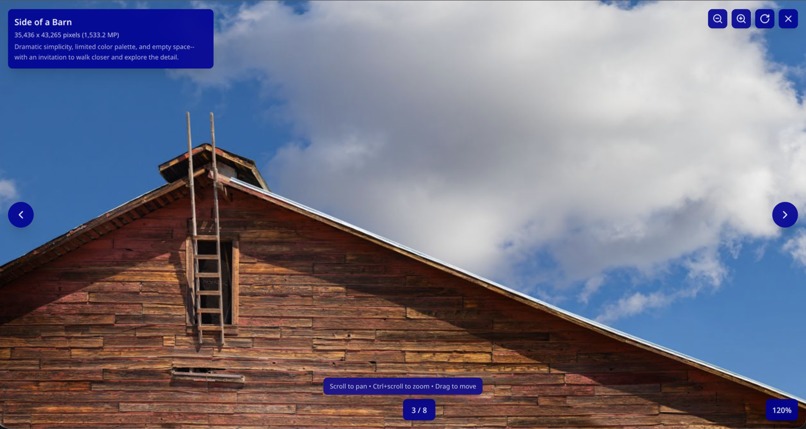
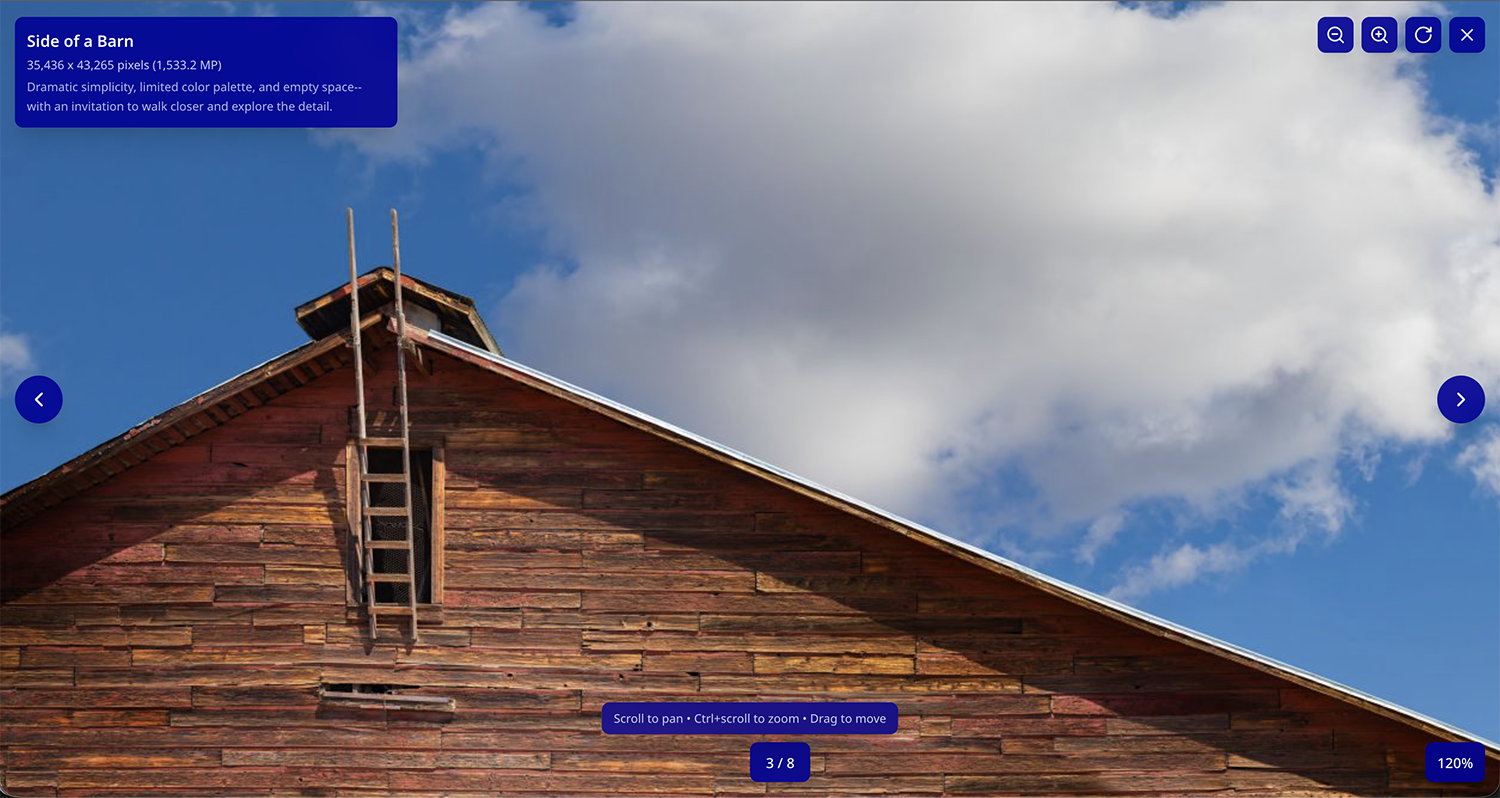
EyeTripImages Image LightBox
-
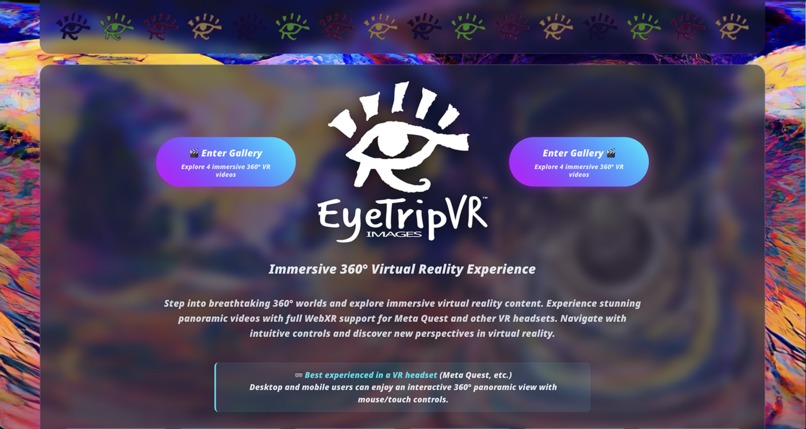
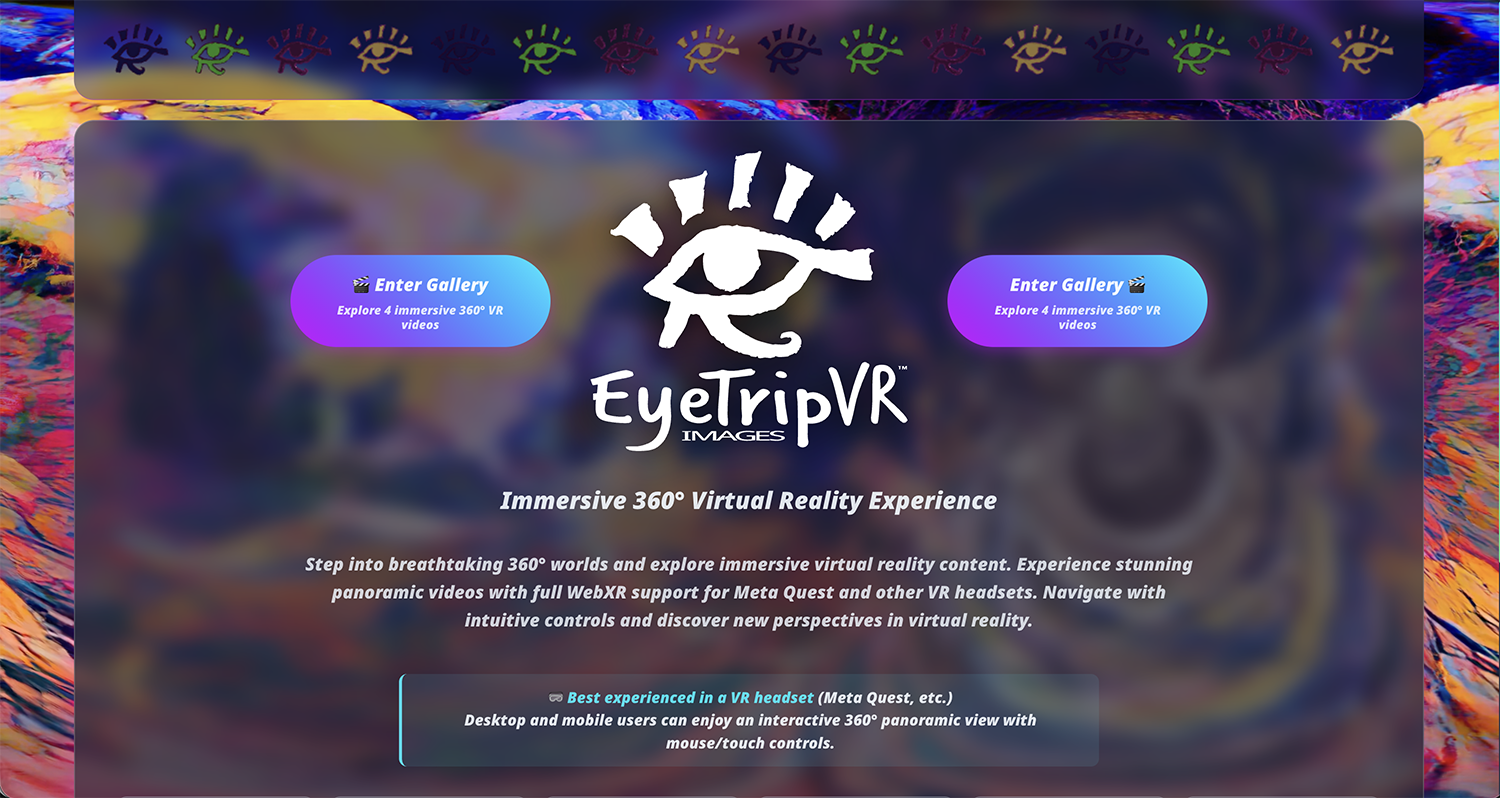
EyeTripVR Homepage
-
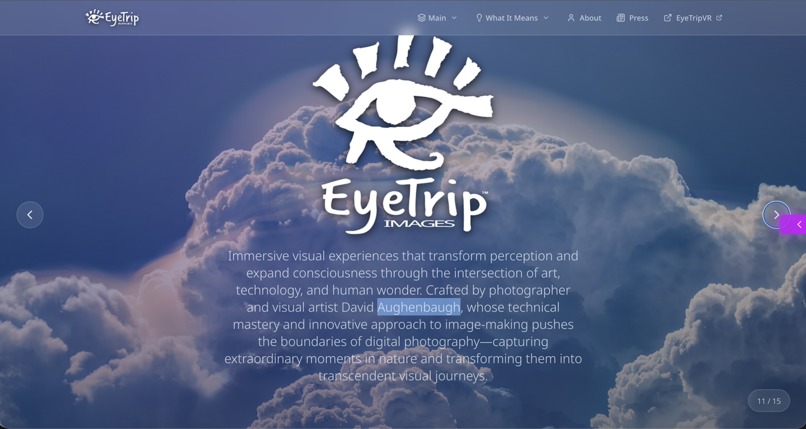
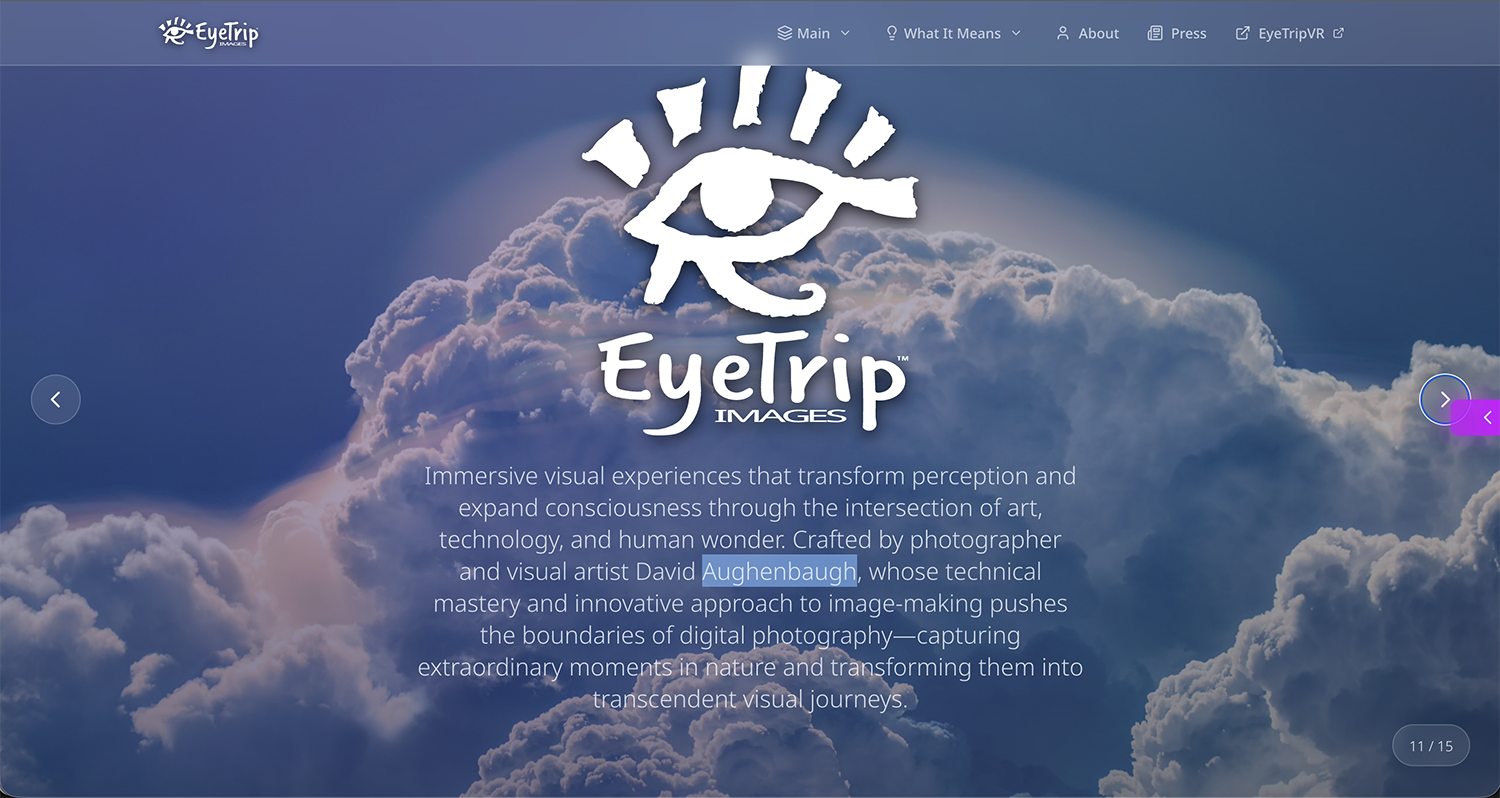
EyeTripImages Homepage
-
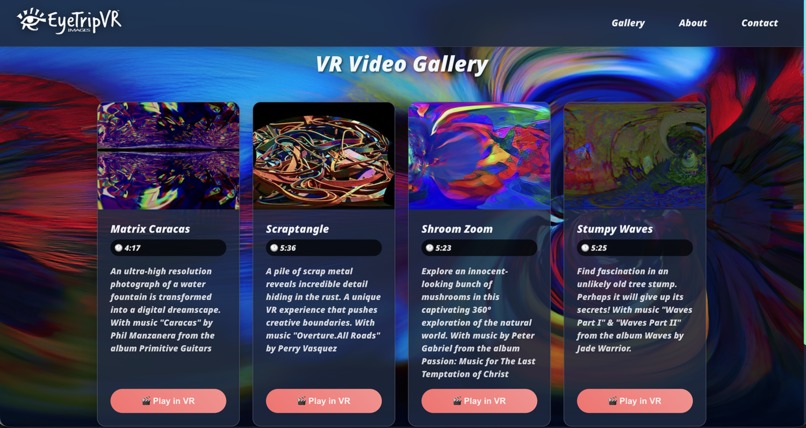
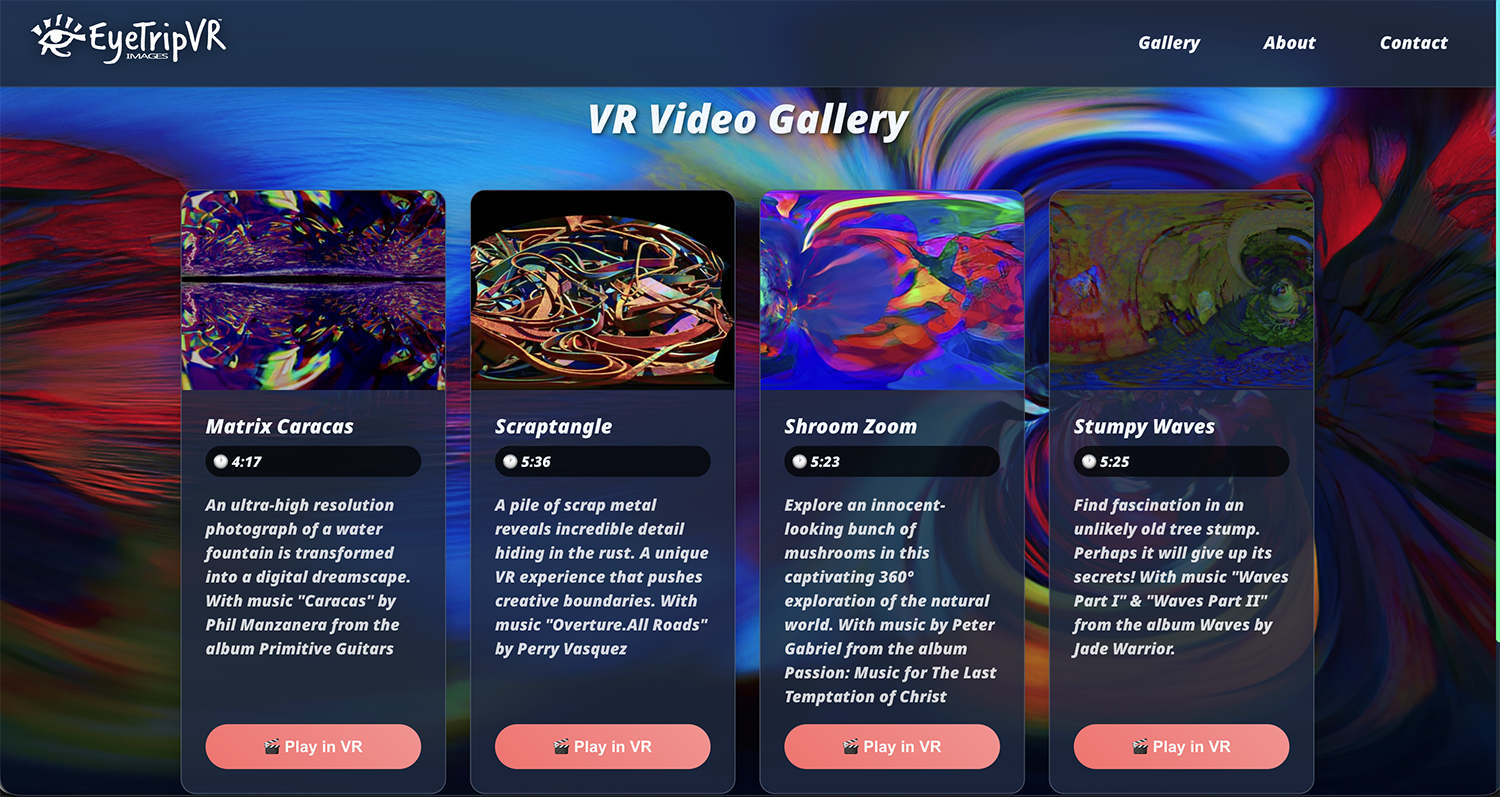
EyeTripVR Gallery
-
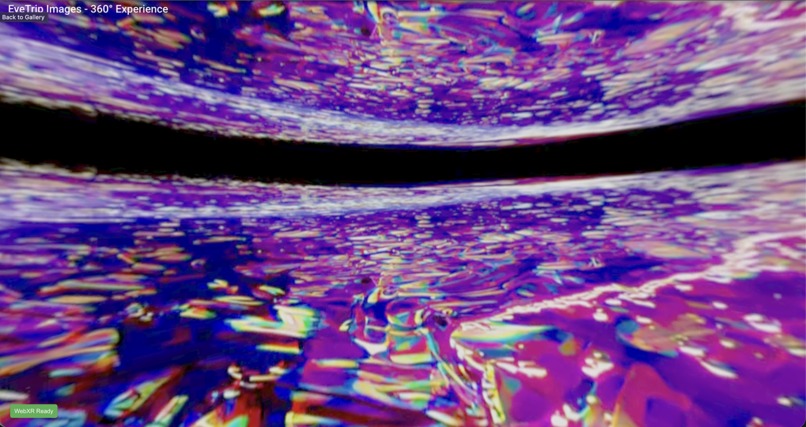
Matrix Caracas
-
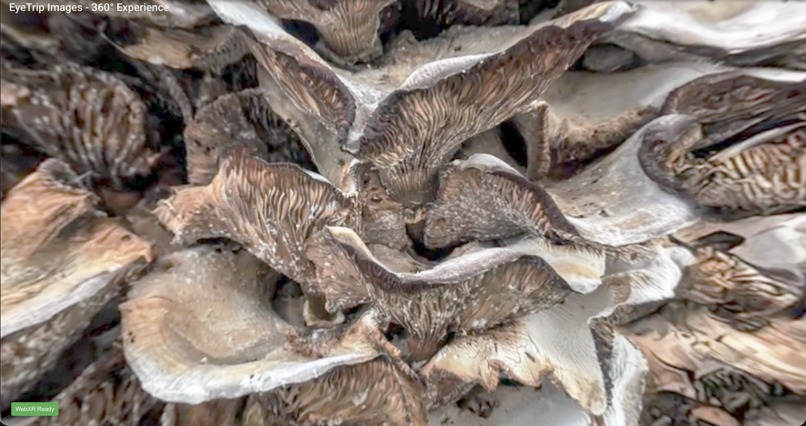
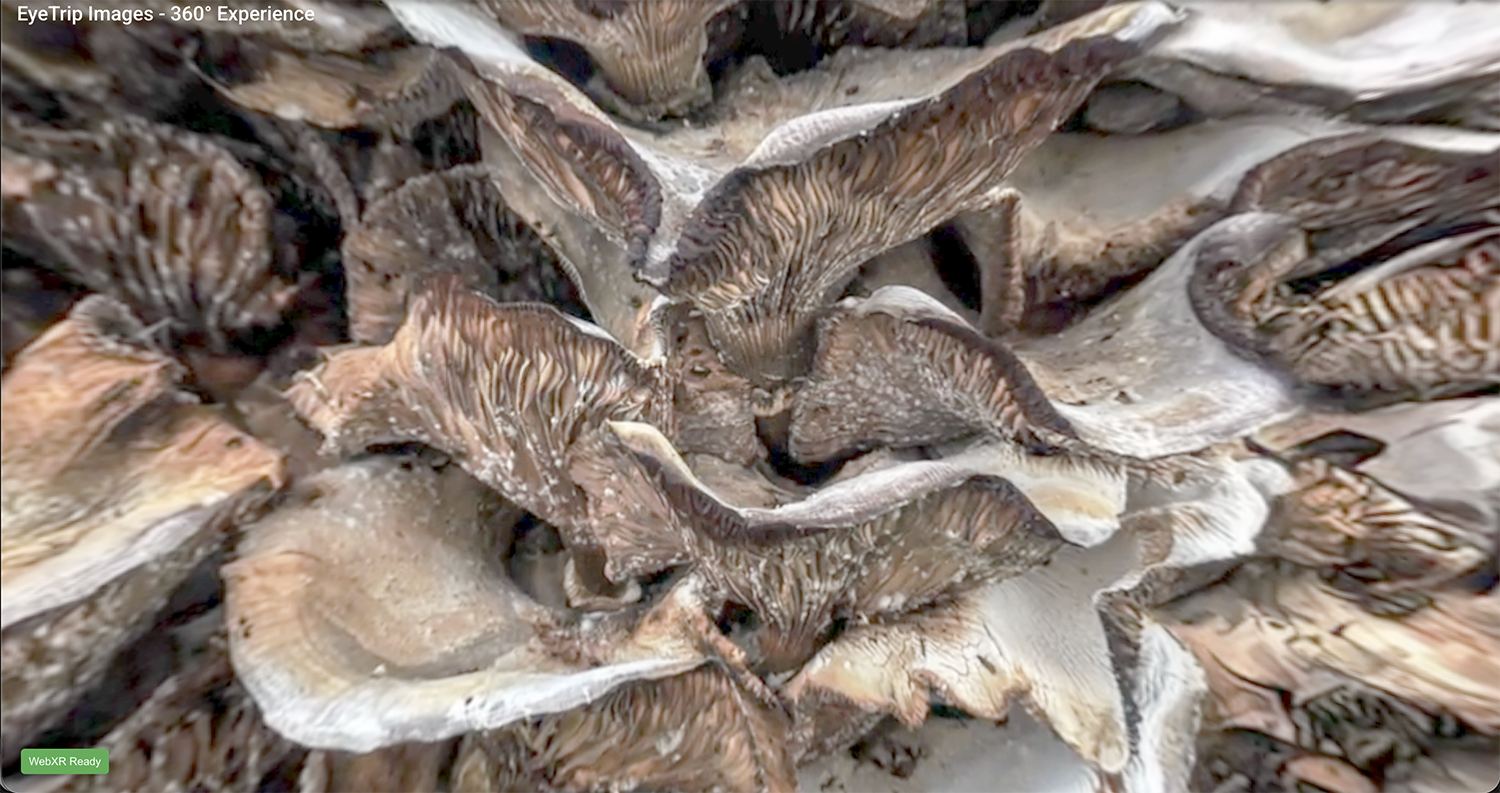
Shroom Zoom
-
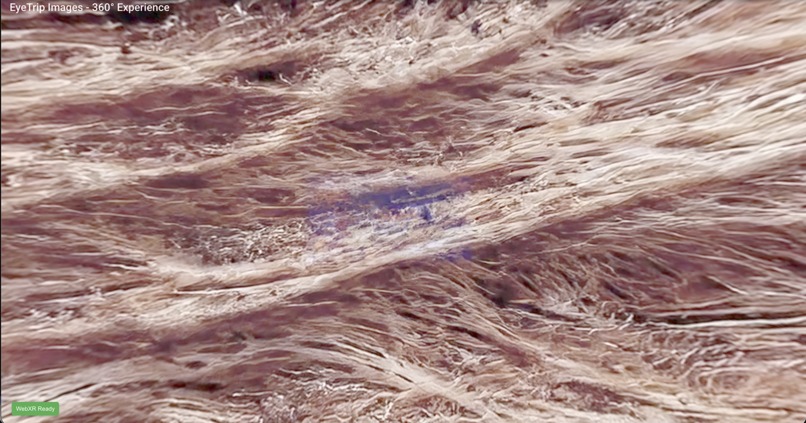
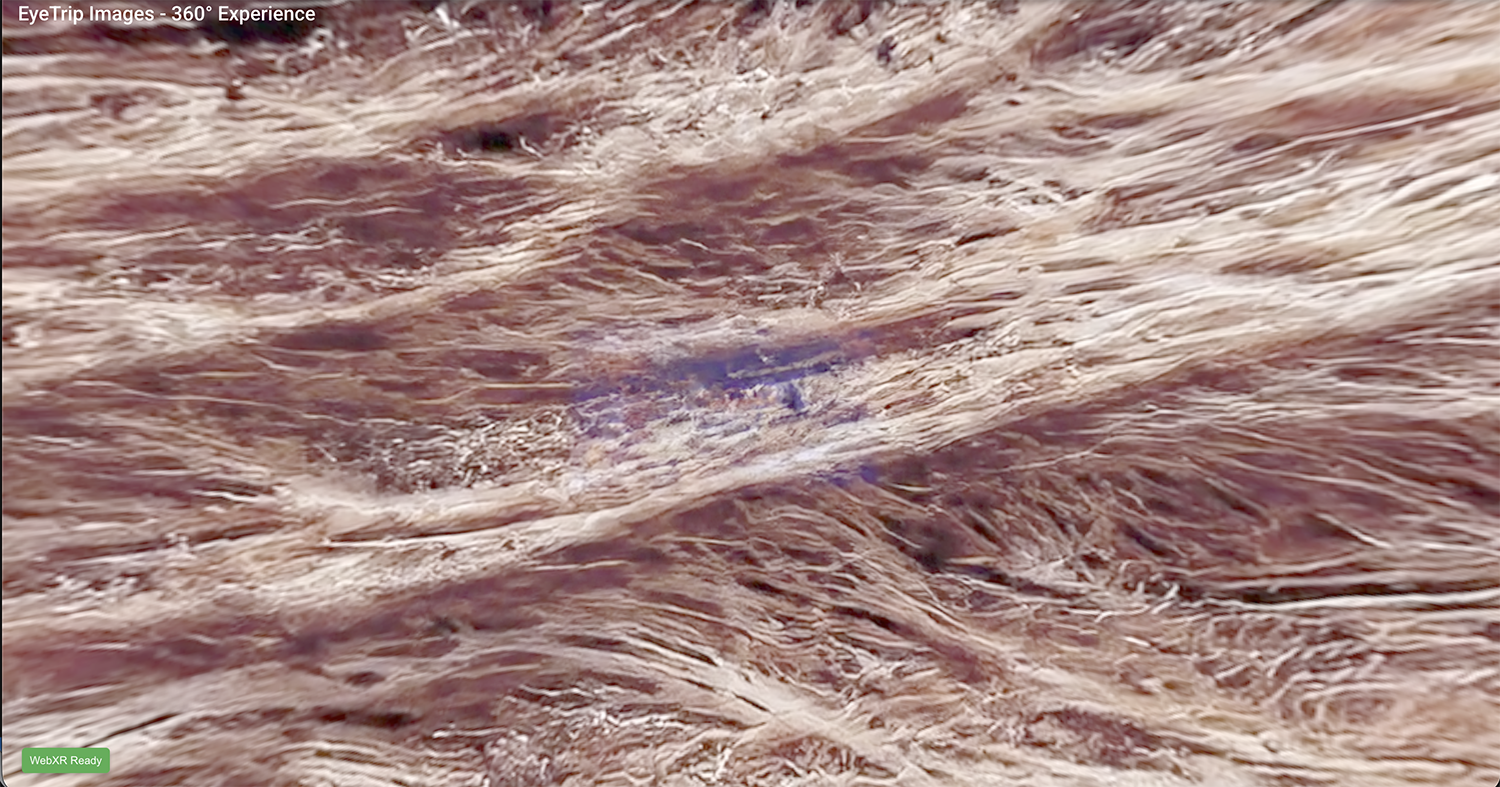
Stumpy Wave
-
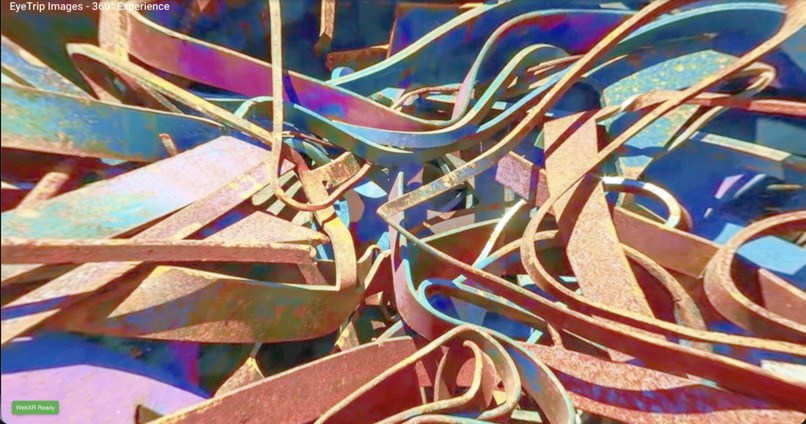
Scraptangle
-
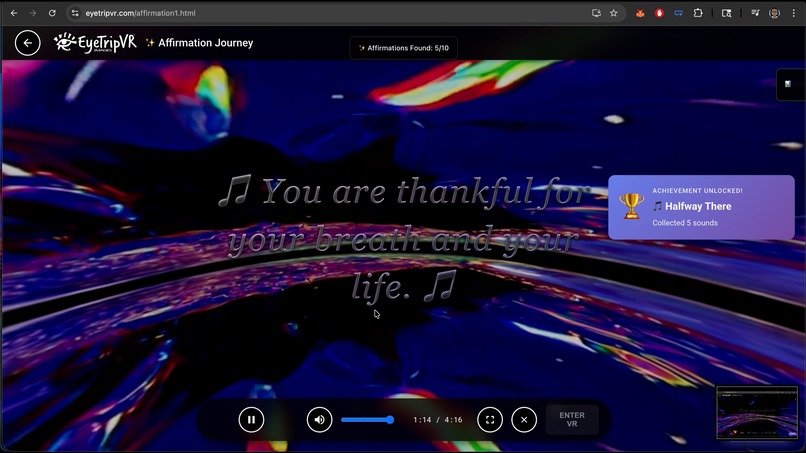
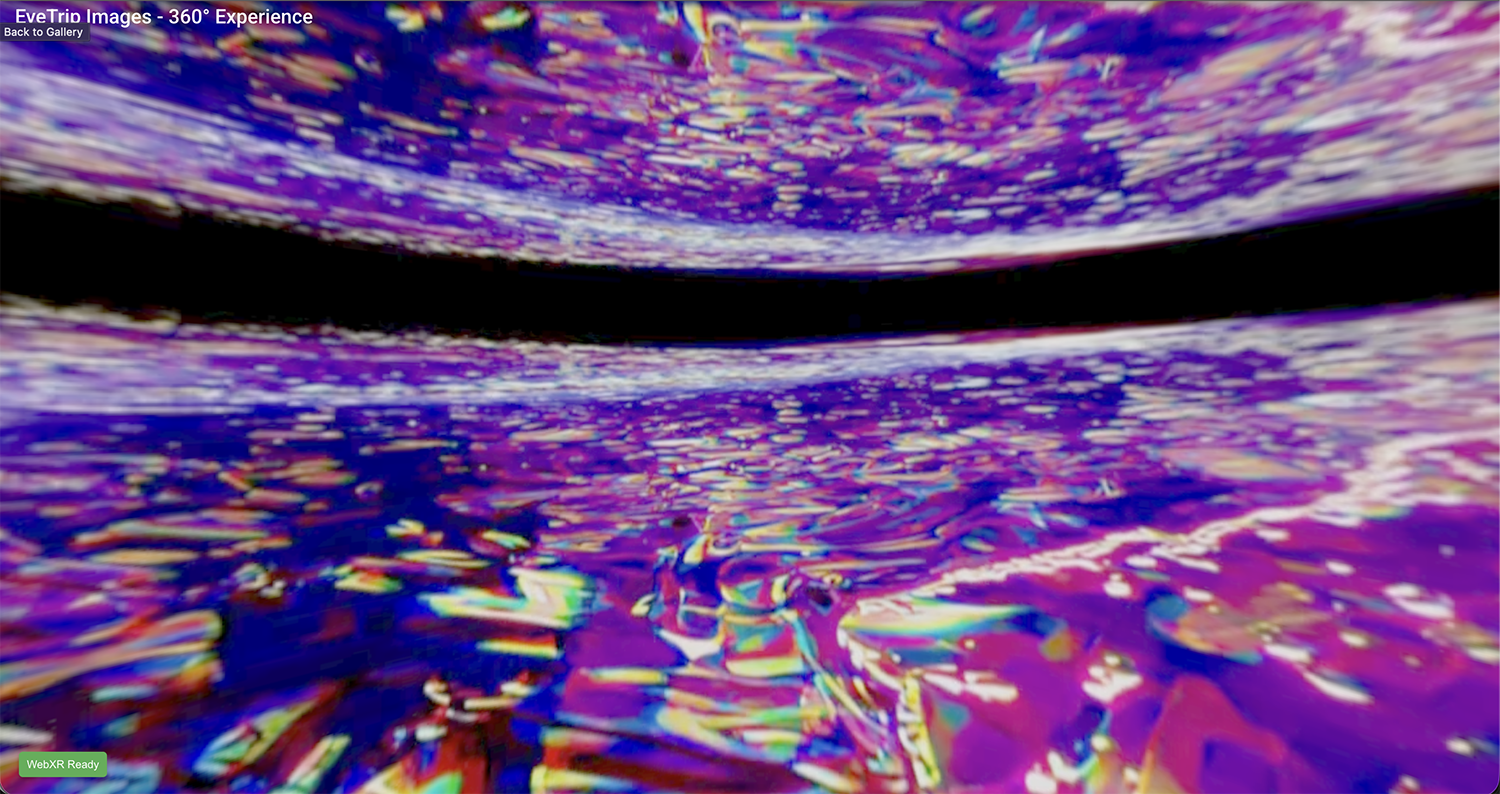
Matrix Caracas Immersive 360
-
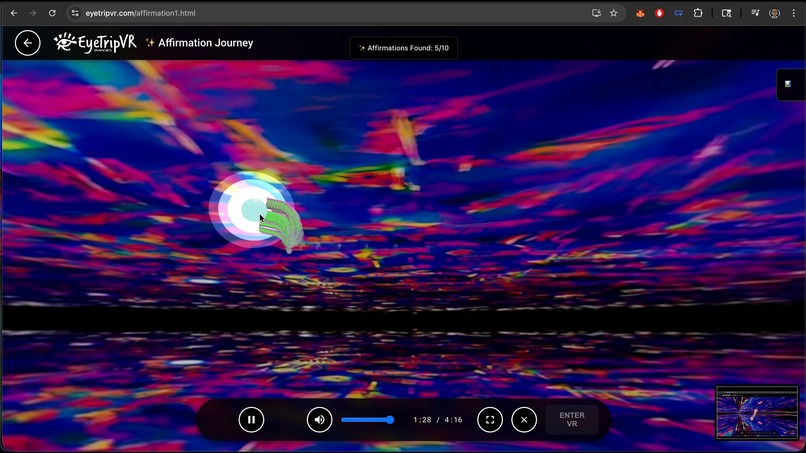
Matrix Caracas Immersive 360
-
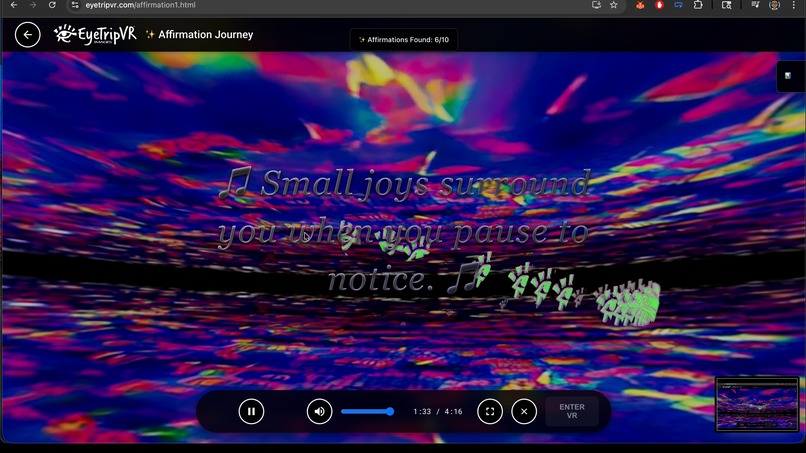
Matrix Caracas Immersive 360
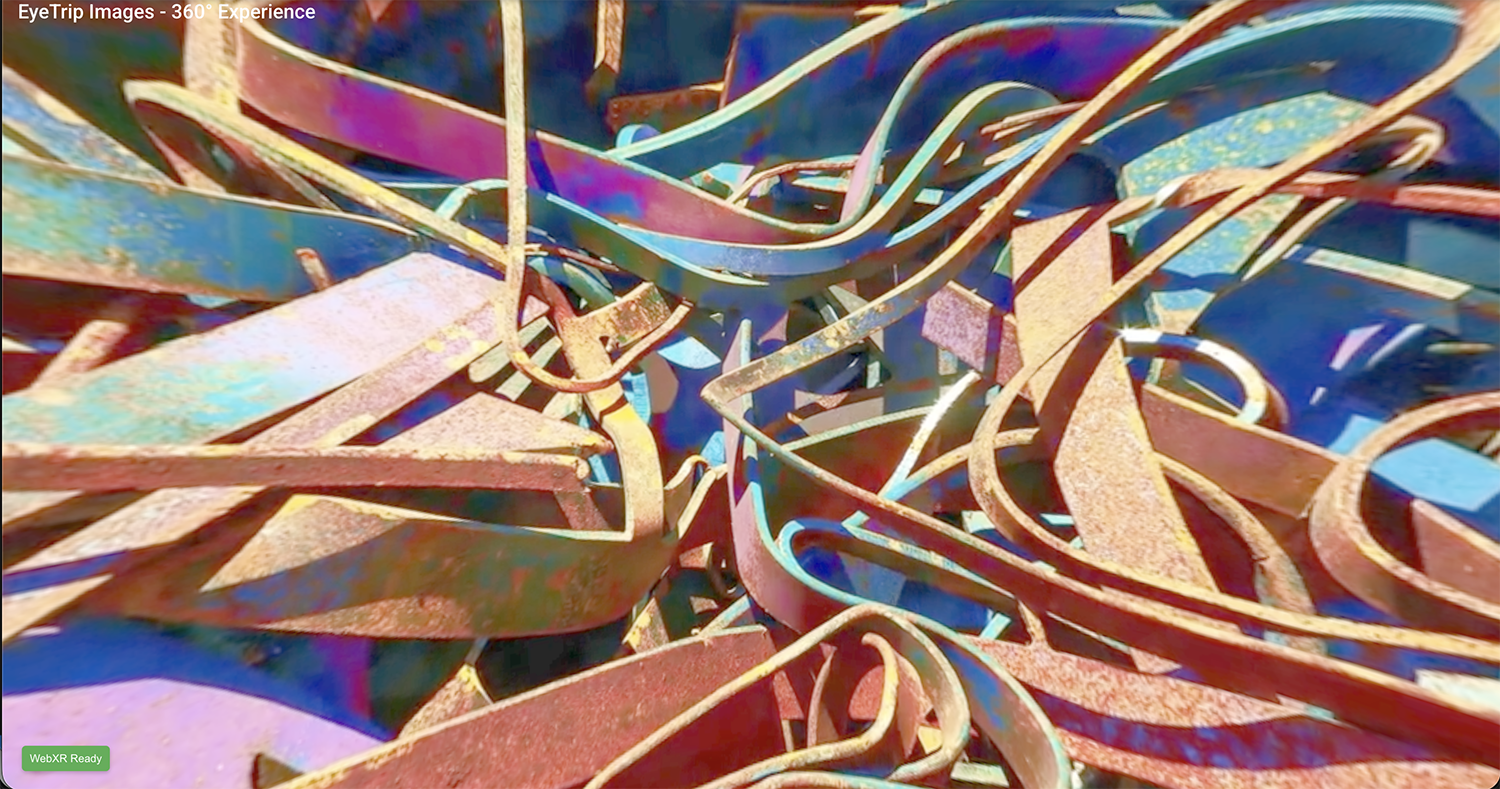
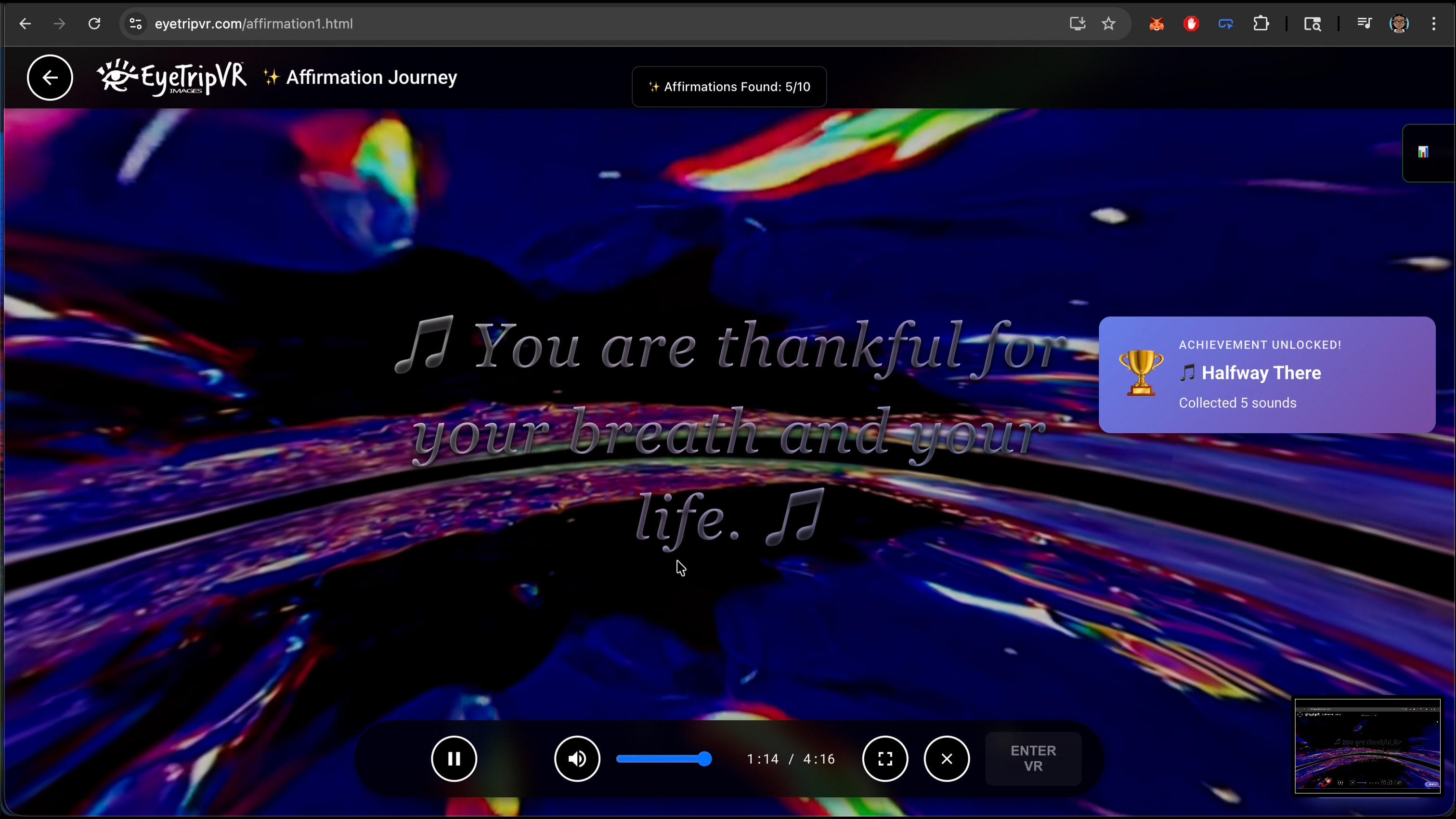
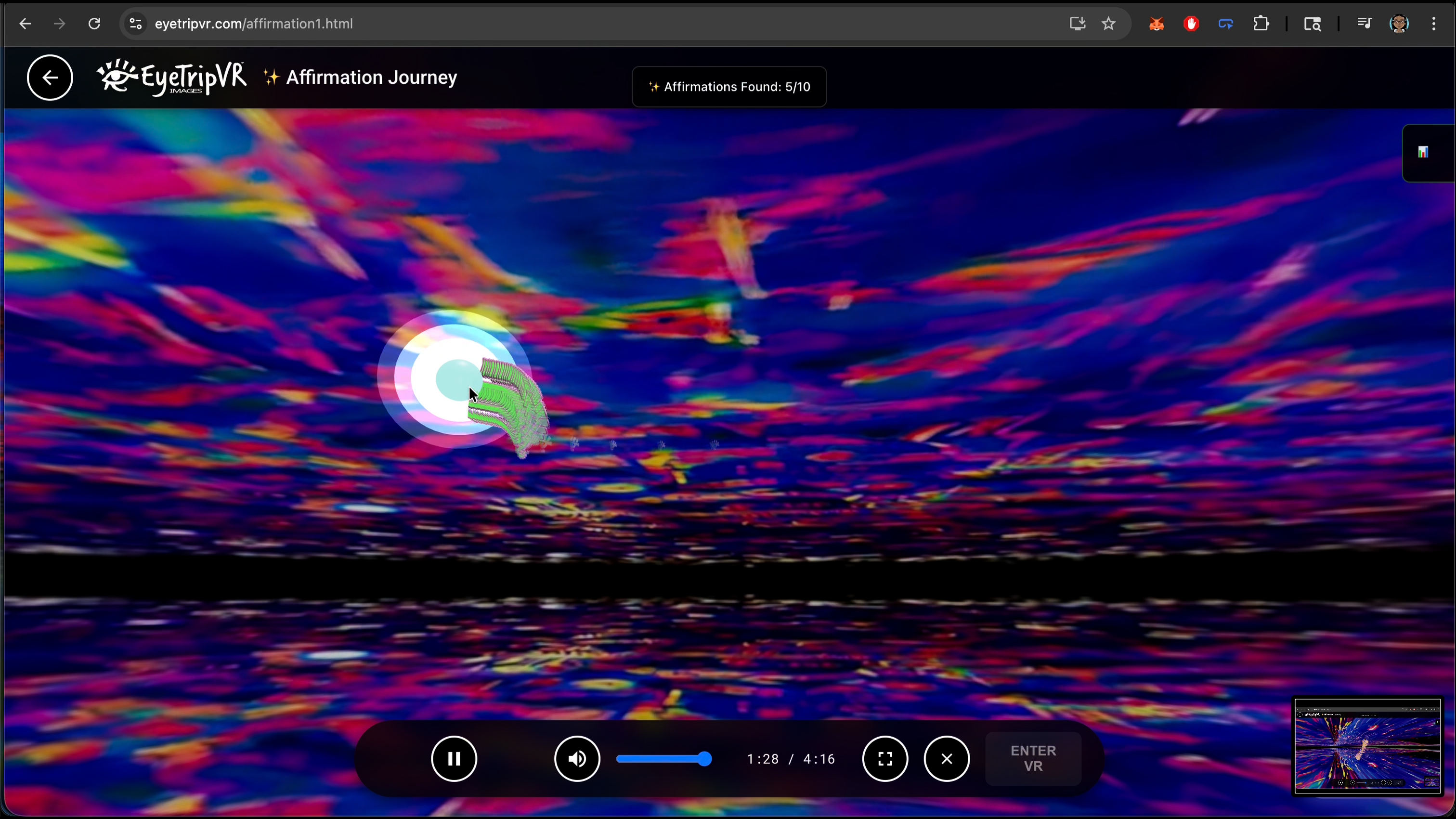
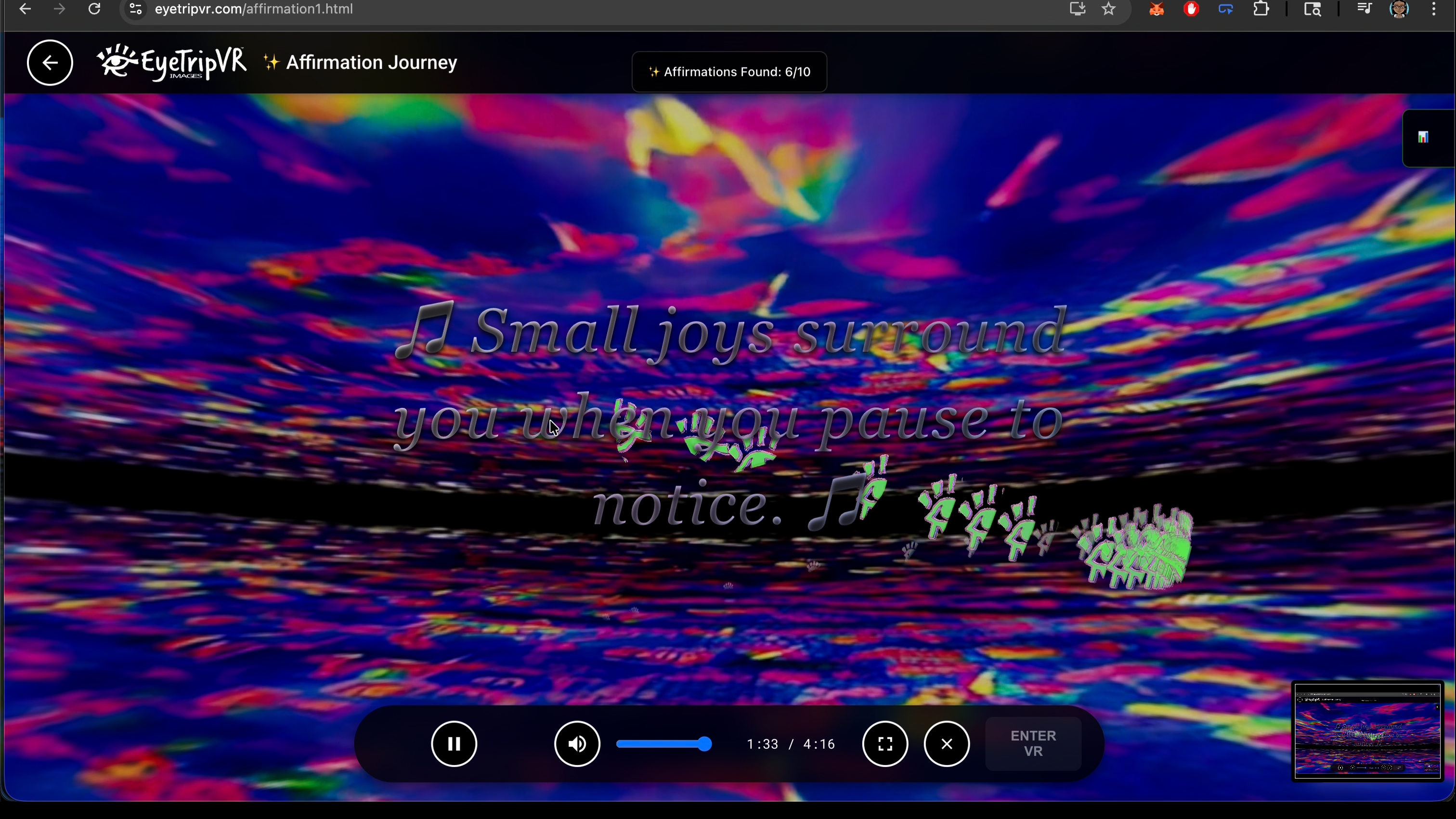
The Artist: A "Digital Hypnotist"
Eyetrip is the culmination of a multi-decade exploration by artist and photographer David Aughenbaugh. His work exists at a unique intersection of three distinct fields:
- Visual Art: A multi-generational photographer whose portfolio ranges from traditional nature photography to massive, abstract digital creations. (See his work at eyetripimages.com)
- Technical VFX: A career as a visual effects artist in the film industry, giving him the technical mastery to manipulate digital images.
- Consciousness: A certified hypnotherapist fascinated by neuroaesthetics—the scientific study of how art, beauty, and contemplation physically change our brains.
Check out his collab with Peter Gabriel - Road to Joy with visuals by David Aughenbaugh (Road to Joy - EyeTrip)
The Main Inspiration: The "Super Zoom"
The inspiration for this project comes from a single question: What if you could fly inside a photograph?
David's 2D work, showcased on his portfolio, is built on a technical process of creating massive gigapixel-scale images. From there, he developed a "super zoom" technique, allowing him to progressively zoom deeper and deeper into his digital art. This process reveals infinite, fractal-like worlds hidden within the original image.
This "super zoom" is designed to be a hypnotic experience, creating a flow state that quiets the active, thinking mind and allows the viewer's subconscious to engage with the art.

The Project: From 2D Zoom to 3D Immersion
Watching this "super zoom" on a 2D screen was compelling, but it wasn't truly immersive.

Eyetrip VR is the answer. We took David's core concept and technical art process and engineered it into a fully immersive WebXR experience.
Instead of passively watching a video of a zoom, this project puts the user inside the art. Using a Meta Quest headset, you are now flying through these abstract, consciousness-expanding worlds, able to look around in 360° as the experience unfolds. It is the literal realization of the "Eyetrip" concept—a journey for the mind, built on a foundation of technology and art.
🌌 EyeTripVR - Immersive WebXR Meditation Experience
Fly inside gigapixel artworks and discover hidden affirmations in stunning 360° virtual reality
🚀 TRY IT LIVE 🥽
🎯 Quick Start for Judges
🥽 VR Mode (Recommended - Meta Quest)
- Open eyetripvr.com directly in your Meta Quest Browser (no app download needed!)
- Click any experience in the gallery
- Click the "Enter VR" button (bottom right of screen)
- Look around - glowing orbs appear throughout the video
- Point controller + pull trigger to discover audio hotspots with spatial sound
- Press A button (or squeeze grip) to open the menu
🖥️ Desktop/Mobile Mode
- Click + drag to explore the 360° space
- Click glowing orbs to unlock spatial audio affirmations
- Find all 10 hidden sounds for completion
💡 Pro Tip: Each discovery triggers spatial audio with haptic feedback in VR mode!
Project Inspiration
Eyetrip is the culmination of a multi-decade exploration by artist and photographer David Aughenbaugh. His work exists at a unique intersection of three distinct fields:
- Visual Art: A multi-generational photographer whose portfolio (eyetripimages.com) ranges from traditional nature photography to massive, abstract digital creations.
- Technical VFX: A career as a visual effects artist in the film industry, giving him the technical mastery to manipulate digital images.
- Consciousness: A certified hypnotherapist fascinated by neuroaesthetics—the scientific study of how art and beauty physically change our brains.
The core inspiration came from a technical process David developed: the "super zoom." By creating gigapixel-scale images, he could progressively zoom deeper and deeper, revealing infinite, fractal-like worlds hidden within the original art. This process is designed to be hypnotic, inducing a flow state that quiets the active mind.
Watching this on a 2D screen was compelling, but it wasn't truly immersive. Eyetrip VR was born from the question: "What if you could fly inside the photograph?"

What it does
Eyetrip VR is an experimental, browser-based WebXR experience built for VR headsets like the Meta Quest, but playable on desktop and mobile devices. It directly translates the 2D "super zoom" art of David Aughenbaugh into a fully immersive 360° journey.
Users don't just watch art; they are placed inside it, flying through abstract, consciousness-expanding worlds. The experience is a fusion of art and technology, designed to be a "digital hypnotic," using visual stimuli to guide the user into a state of wonder and expanded perception.
The platform (eyetripvr.com) functions as a seamless portal: a user on a headset clicks a link, and they are immediately inside the 3D gallery and player, with no app or download required.
NEW – AI-Guided Affirmation Journey: Desktop and mobile visitors can launch a personalized “Mindful Affirmation” session. A three-question survey selects one of four immersive videos and feeds ElevenLabs to generate 10 bespoke voice affirmations. Those affirmations are hidden as glowing orbs inside the 360° world, encouraging exploration.
Elegant Progress & Achievement System: A fully skinned loader, discovery HUD, and achievement queue keep the user informed without breaking immersion. Every affirmation discovered plays a custom animation and chime, and collectors unlock milestone badges plus a completion summary.
Downloadable Audio Keepsake: When the journey ends, participants receive a one-click MP3 export of their full affirmation set—ideal for replay outside the headset or sharing with friends.

How we built it
The GitHub Repos for the project: EyeTripVR (eyetrip-360-webxr), EyeTripImages (eyetripimages.)
We built Eyetrip as a high-performance web application, leveraging a modern stack to deliver a stable 90+ FPS experience in the browser.
- Core Framework: Next.js was used for the static front-end portal, providing a fast, lightweight entry point.
- WebXR Engine: The core 3D/VR experience is built with A-Frame, an entity-component framework that sits on top of Three.js. This allowed us to rapidly build a cross-platform VR scene that works directly in the browser.
- UI/UX: The entire UI (gallery, modals, controls) is built inside the A-Frame scene, meaning it functions as a 3D-aware interface rather than a flat HTML overlay. This is crucial for maintaining immersion.
- Content: The 360° assets are custom-rendered videos derived from David's original gigapixel art.
- Hosting: The application is hosted on DigitalOcean, providing the low-latency, high-bandwidth infrastructure needed to stream 360° video for a smooth, stutter-free VR experience.
- AI Audio Pipeline: We integrated ElevenLabs’ streaming API, a custom caching layer, and precise timecode mapping to blend AI narration seamlessly with the interactive experience.
- Adaptive Performance Layer: Safari-specific particle throttling, glow simplification, and audio-context guards keep frame rates smooth across browsers without sacrificing visuals.

Challenges we ran into
VR Performance is Non-Negotiable. Our biggest challenge was performance. In VR, dropping below 90 FPS instantly makes a user sick. We spent countless hours optimizing 360° video assets, managing texture memory, and fine-tuning the render loop in A-Frame to ensure a rock-solid, comfortable experience.
Bridging 2D Art to 3D Space. Translating David's 2D "super zoom" (which is a 2D pan/zoom) into a truly immersive 360° experience was a major creative and technical hurdle. We had to develop a new rendering pipeline to convert these flat, gigapixel images into spherical video maps that felt alive and encompassing.
The Seamless UI. Designing a UI that works for both desktop users (mouse) and VR users (gaze/controller) at the same time was complex. Our solution was the integrated 3D-aware UI that lives within the A-Frame scene, allowing users to navigate without ever "leaving" the immersion.
NEW – Precision Audio Timing. Splitting a single AI-generated narration into 10 hotspots required millisecond-perfect timing. We engineered buffered segment controls and reusable audio contexts so each affirmation starts and ends cleanly—even on Safari.
NEW – Cross-Browser Stability. Safari required bespoke handling for particles, hotspots, and audio activation. We introduced per-browser rendering budgets, responsive throttling, and defensive audio locks to keep the experience consistent everywhere.
Accomplishments that we're proud of
It's Truly Immersive. We successfully translated the feeling of David's hypnotic art into a genuine 3D experience. When you're in the headset, you feel a real sense of motion and scale.
Zero-Friction WebXR. We are incredibly proud that this is a browser-based experience. There's no app to download, no store to go through. You just click a link on the Meta Quest, and you're in. This accessibility is key to our mission.
The Artist-Developer Pipeline. We created a strong workflow between the artist (David) and the developer. This allows us to take a new piece of art from his studio and turn it into a new VR experience rapidly.
NEW – Personalized Mindful Journey. The AI-driven affirmation mode delivers narrative that reacts to each visitor’s mood, chosen focus, and energy—making every play-through unique.
NEW – Unified Visual Language. From survey to loader to in-world notifications, we shipped a cohesive EyeTrip aesthetic: glassmorphism cards, floating serif titles, synchronized sound cues, and ethereal hotspot design.
NEW – Exportable Keepsakes. Guests can leave with a personalized MP3 of their affirmations, tying the digital hypnotic back to daily mindfulness practice.

What we learned
- We learned that in WebXR, optimization isn't a feature; it's the entire product. Without a stable 90 FPS, you have nothing.
- We learned that UI/UX in VR is a new frontier. What works on a 2D screen (like a simple link) feels cheap and breaks immersion in VR. Every UI element must be built natively in 3D.
- We confirmed our core hypothesis: Immersive technology is the perfect medium for neuroaesthetics. Using VR to guide a user's state of consciousness is incredibly powerful.
- NEW – AI voiceovers need handcrafted pacing, buffering, and UX to feel magical rather than mechanical.
- NEW – Browser quirks (Safari audio, pointer particles, autoplay policies) can derail immersion unless you build adaptive guardrails from the start.

What's next for EyeTripImages and EyeTripVR
This is the foundation for a much larger platform. Our next steps are to build a sustainable business around this art.
- Commercialization: We are actively expanding
EyetripImages.comwith a full e-commerce marketplace to sell prints and digital licenses, as well as a blog to share the science behind the art. - Expanding the VR Universe:
EyetripVRwill grow from a gallery into a platform for paid, interactive experiences. We are developing new worlds that users can not only fly through but interact with. - LBE and Competitions: We built this to be shown. We are actively seeking to partner with Location-Based Entertainment (LBE) venues and to showcase Eyetrip in competitions (like this one!) to push the boundaries of experimental art.
- NEW – Ritualized Sessions: We plan to add timed breathing cues, haptic controller signals, and synchronized light/sound playlists to deepen the hypnotic journey.
- NEW – Community Vault: Upcoming releases will let users archive their favorite affirmations, swap themes, and unlock limited-edition visual/audio mixes from future EyeTrip collaborations.


Log in or sign up for Devpost to join the conversation.