-
-
EyeSpy Tagline
-
Problem Statement
-
Solution
-
Final Designs
Inspiration
We were inspired by VoiceOver, the built-in screenreader on iOS. It inspired us to learn more about how visually impaired people interact with the world. And we were then inspired to create an app that used primarily vocal and haptic feedback to direct the user.
What it does
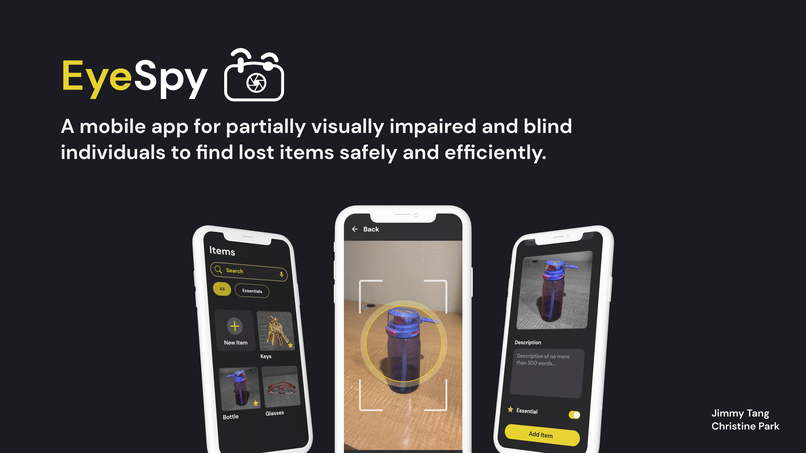
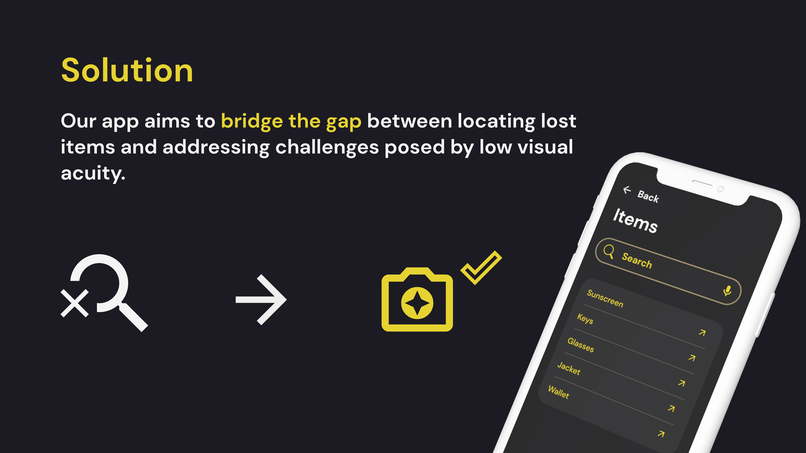
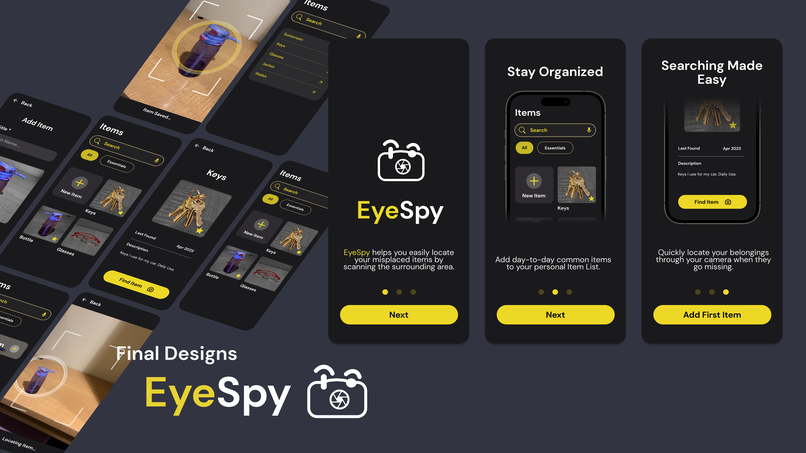
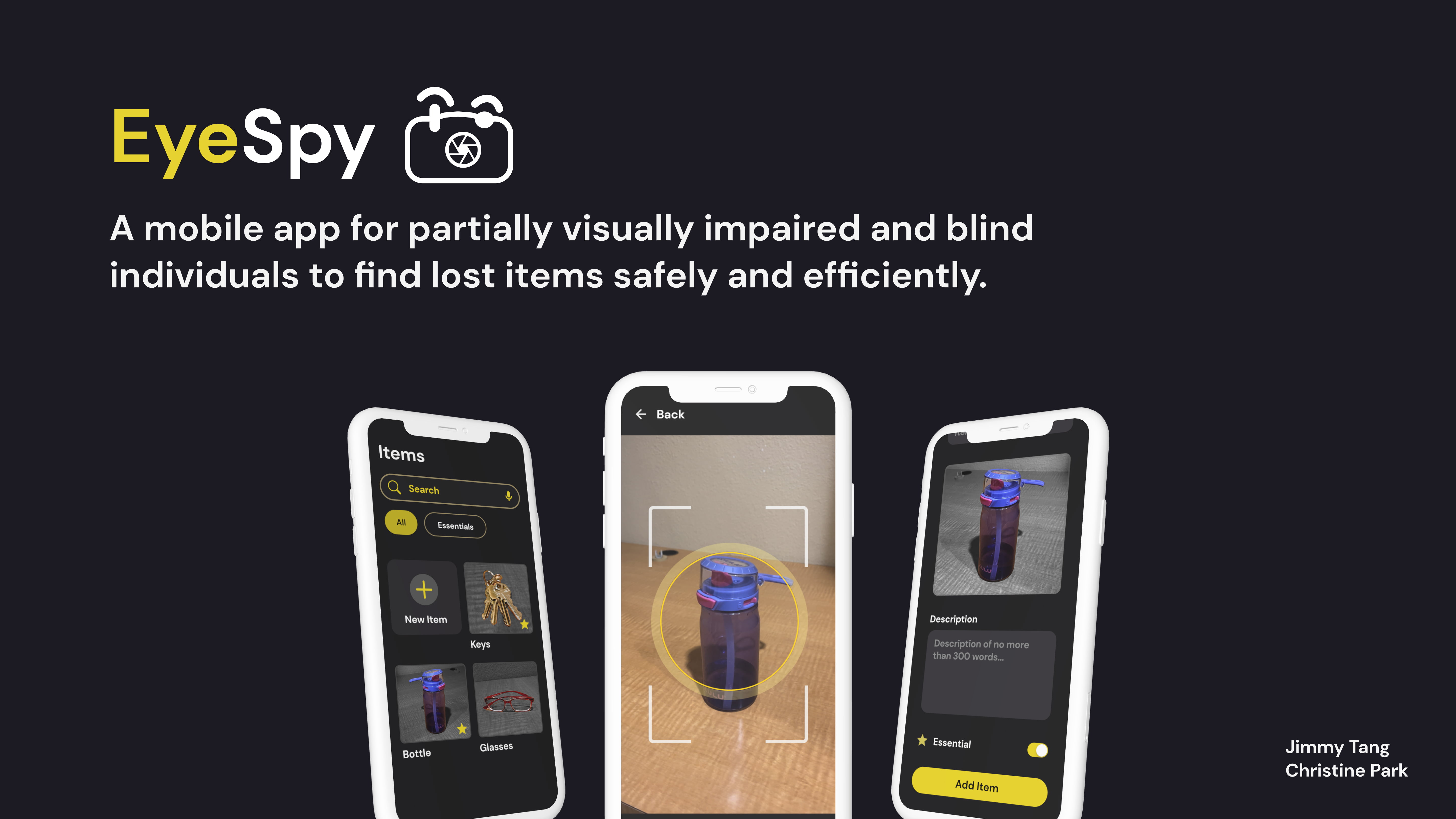
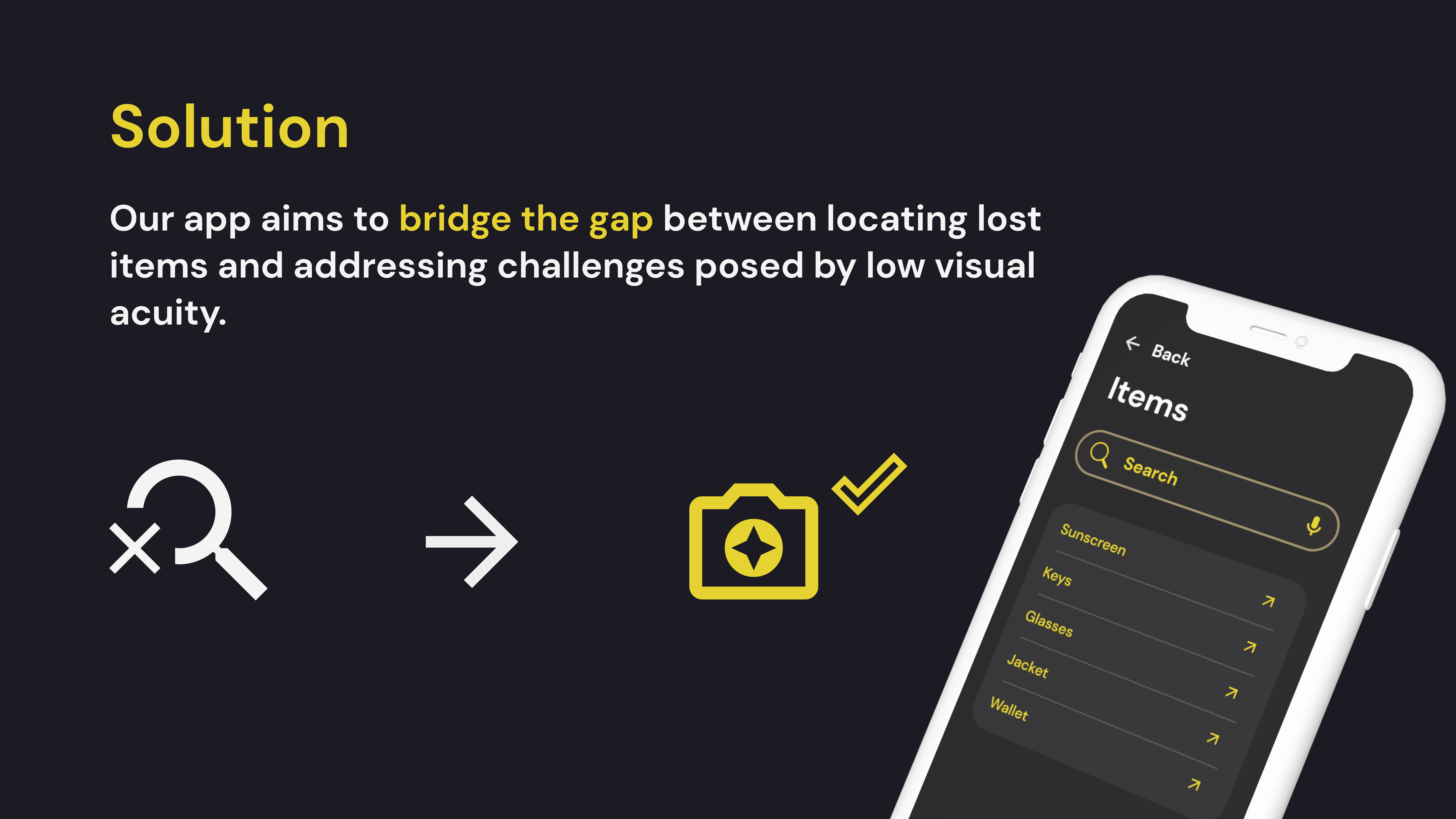
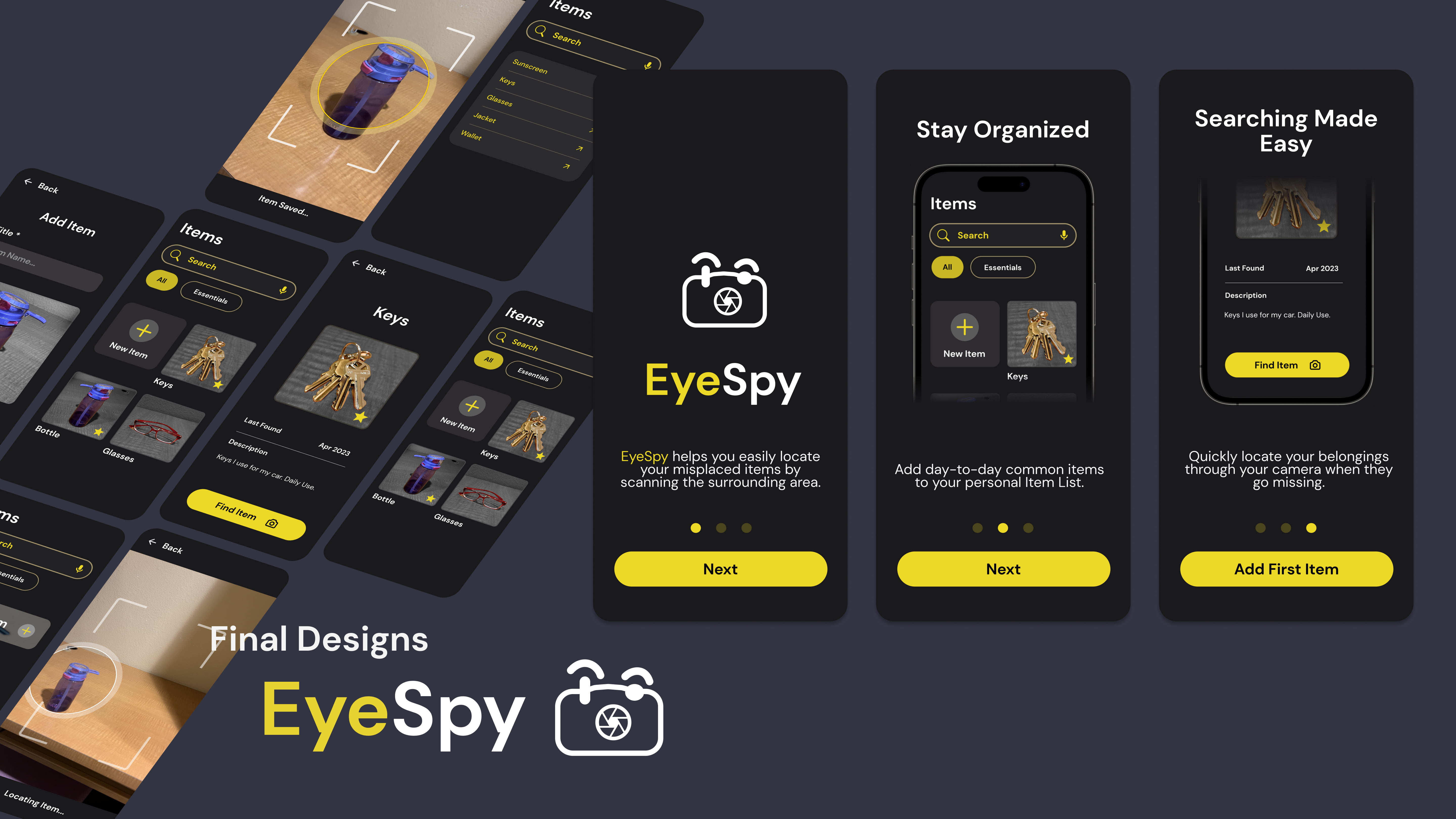
EyeSpy is a mobile app for partially visually impaired and blind individuals to find lost items safely and efficiently. It has an Items Inventory system for users to track their commonly lost items. And the visual information about the item is used by Scanner Camera Feature to search for the lost item later on.
How we built it
We designed this prototype using Figma and Adobe After Effects.
Challenges we ran into
While designing, we ran into many UI design challenges of how to design when visual design isn't even accessible. Design choices often involved using the Screenreader vocal capabilities to help guide the user instead of visual hierarchy. A major consideration we had was designing for partially visually impaired and completely blind individuals as the two audiences have different ways of approaching mobile use.
Accomplishments that we're proud of
Overall, we are very proud of our EyeSpy app and how far our initial idea has come along. We are also very proud of joining our first ever hackathon.
What we learned
We learned to plan ahead better and provide ample time for idea-building. Thinking of a good app idea and research into the field took most of our first day in the hackathon, and next time we would have a better idea of how to manage our time.
What's next for EyeSpy
EyeSpy has incredible potential to be an even more helpful app to a wider audience. We hope to test it on partially blind and fully blind individuals to ascertain its working capabilities.
Built With
- figma


Log in or sign up for Devpost to join the conversation.