Inspiration
Twenty Thousand Leagues Under the Sea was one of the first “serious” books my dad gave me as a child. I loved the promise of underwater adventures, but the book itself felt overwhelming. The language stood between me and the story.
Years later, through a love of audiobooks, I still encounter versions of that same barrier. An unfamiliar word, a complicated idea, or a moment of distraction can leave you disconnected from what you’re reading.
EyeJack Books grew from a question: how can we make stories easier more accessible, understand and stay connected to?
We wanted to bring together the familiarity of a book, the convenience of narration, the clarity of imagery and the freedom to ask questions. An experience that preserves the original work while giving people more ways to engage with it.
What it does
EyeJack Books elevates the stories you love with immersion, interactivity and intelligence.
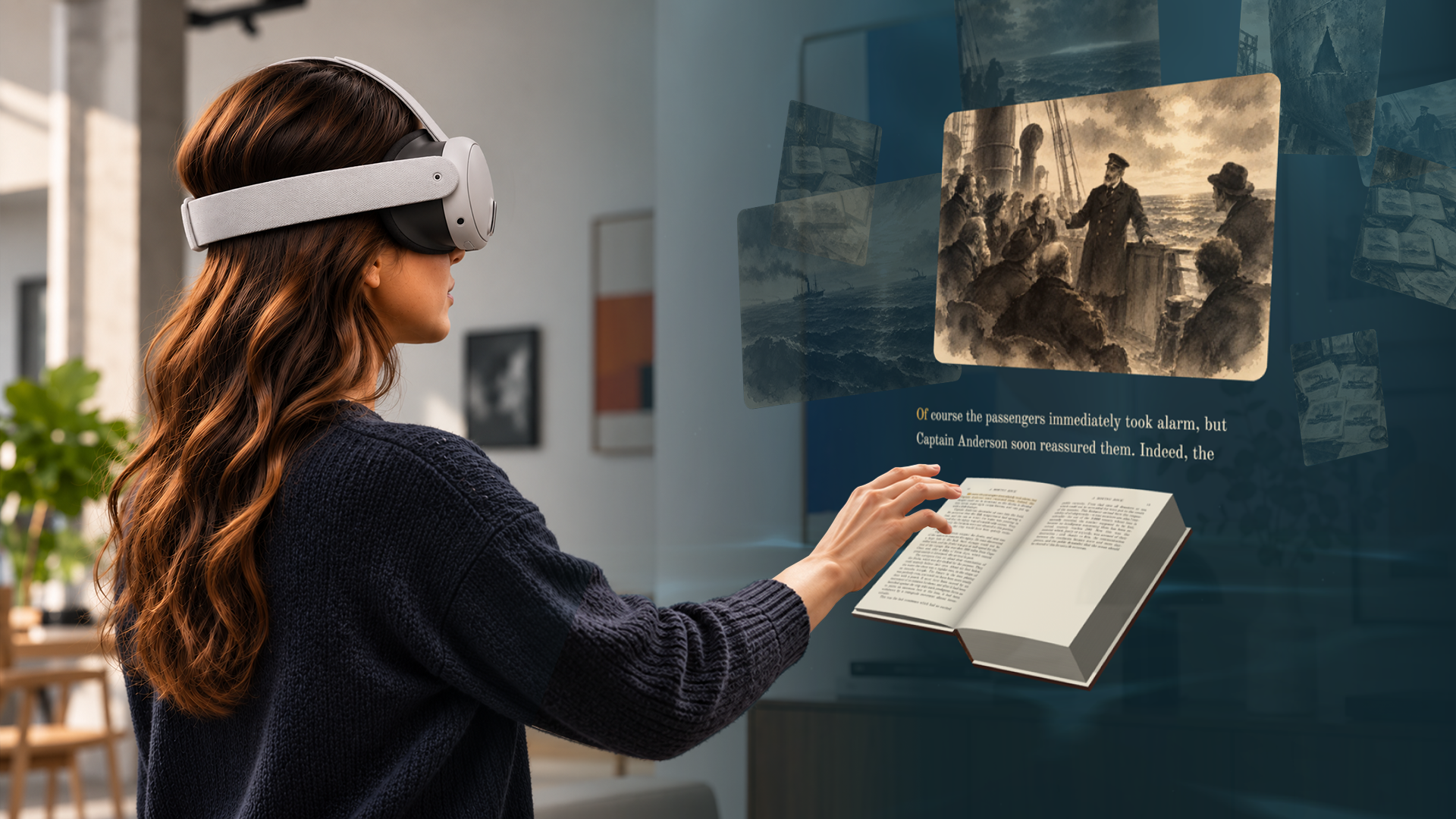
Our first title, Twenty Thousand Leagues Under the Sea, begins with a digital twin of an early edition, built around the public-domain scan of the book. The original book is the foundation. Narration, illustrations and interaction extend that foundation while keeping the source material at the centre.
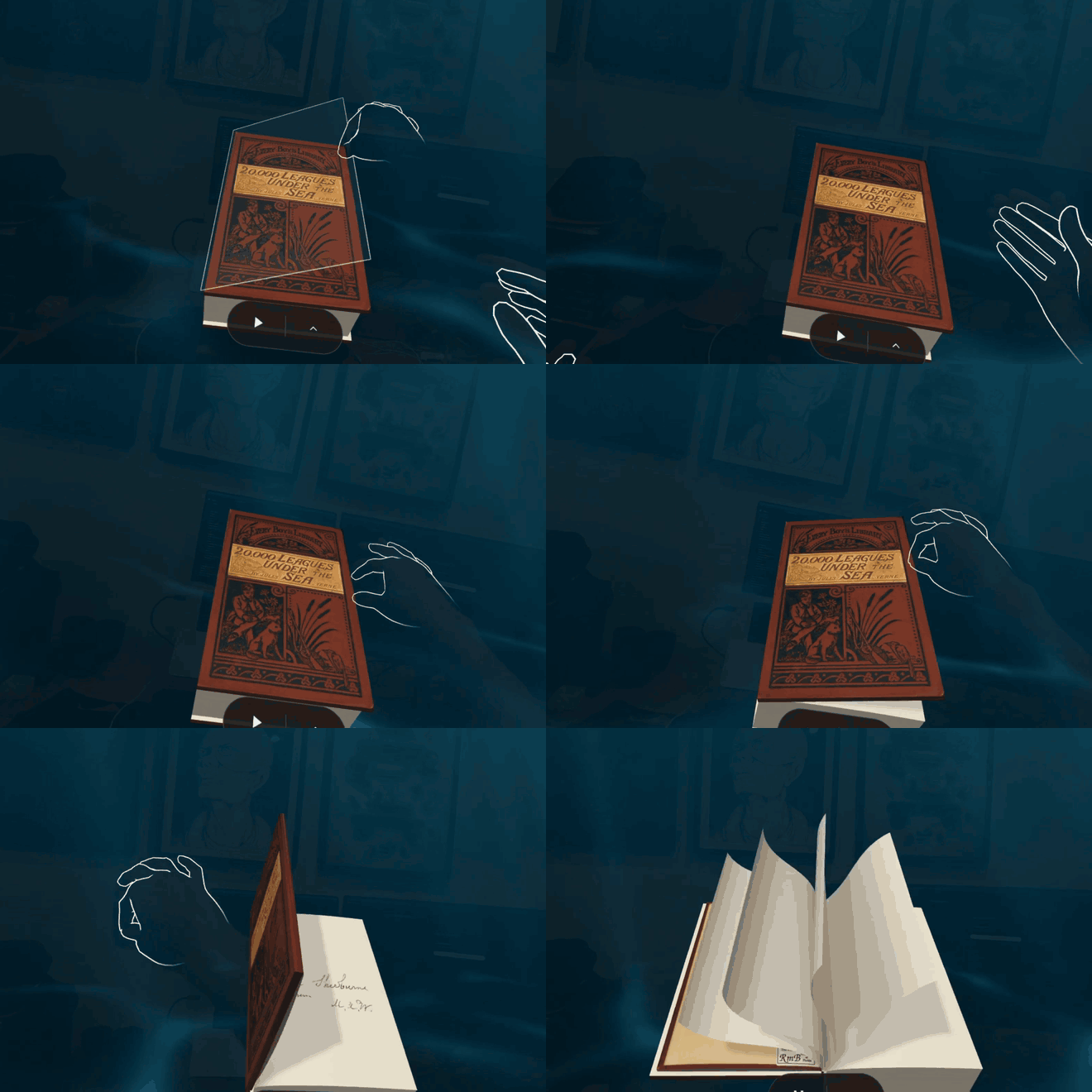
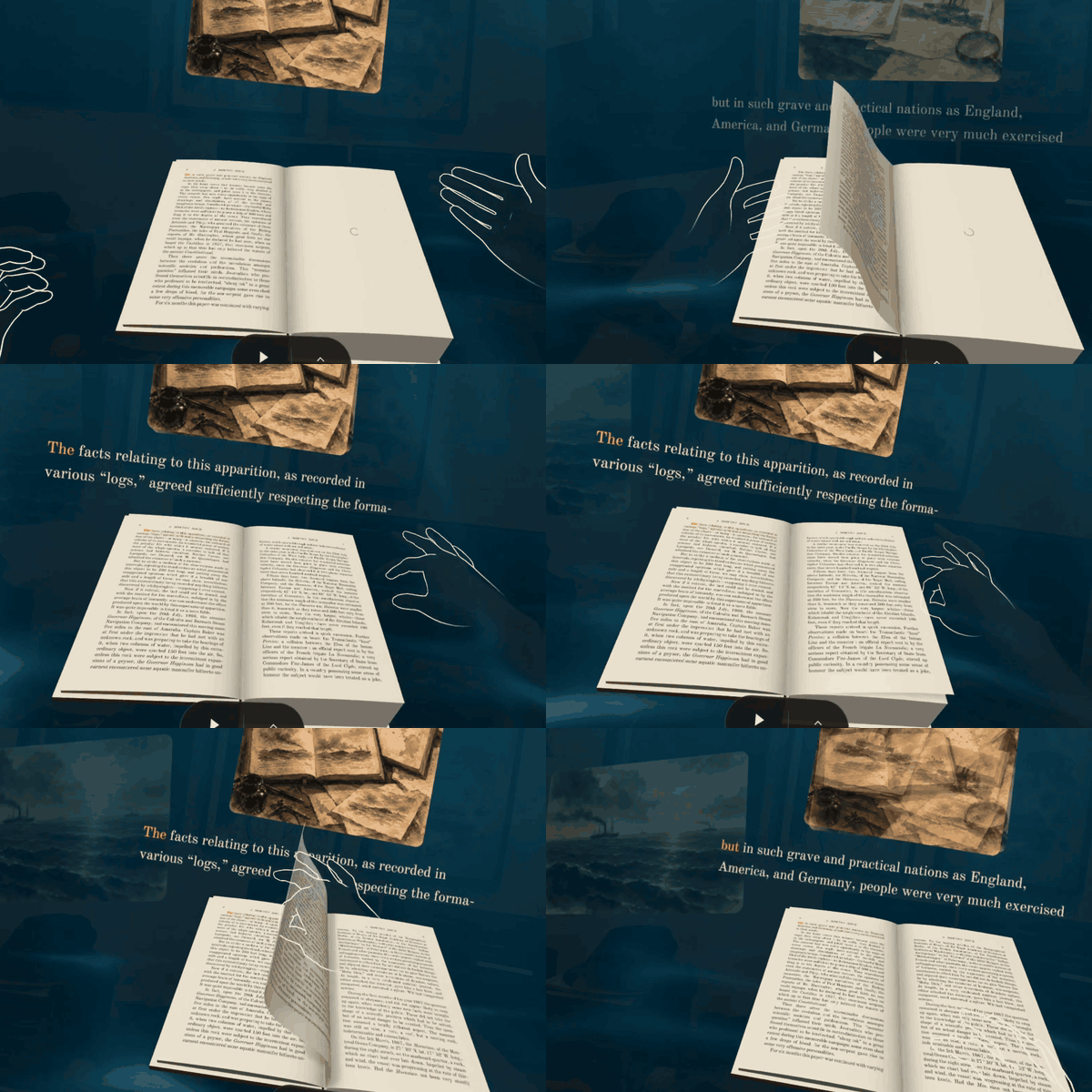
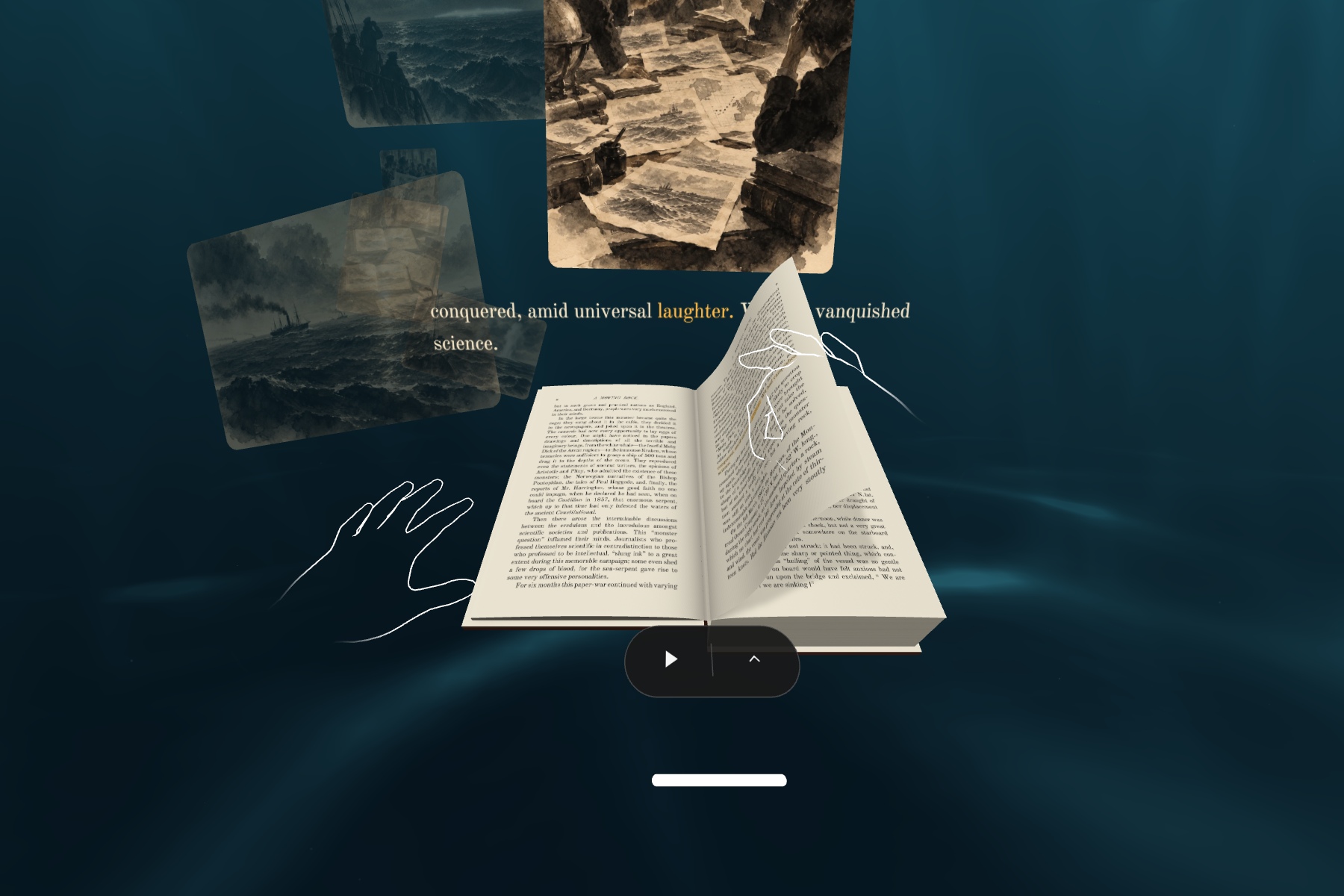
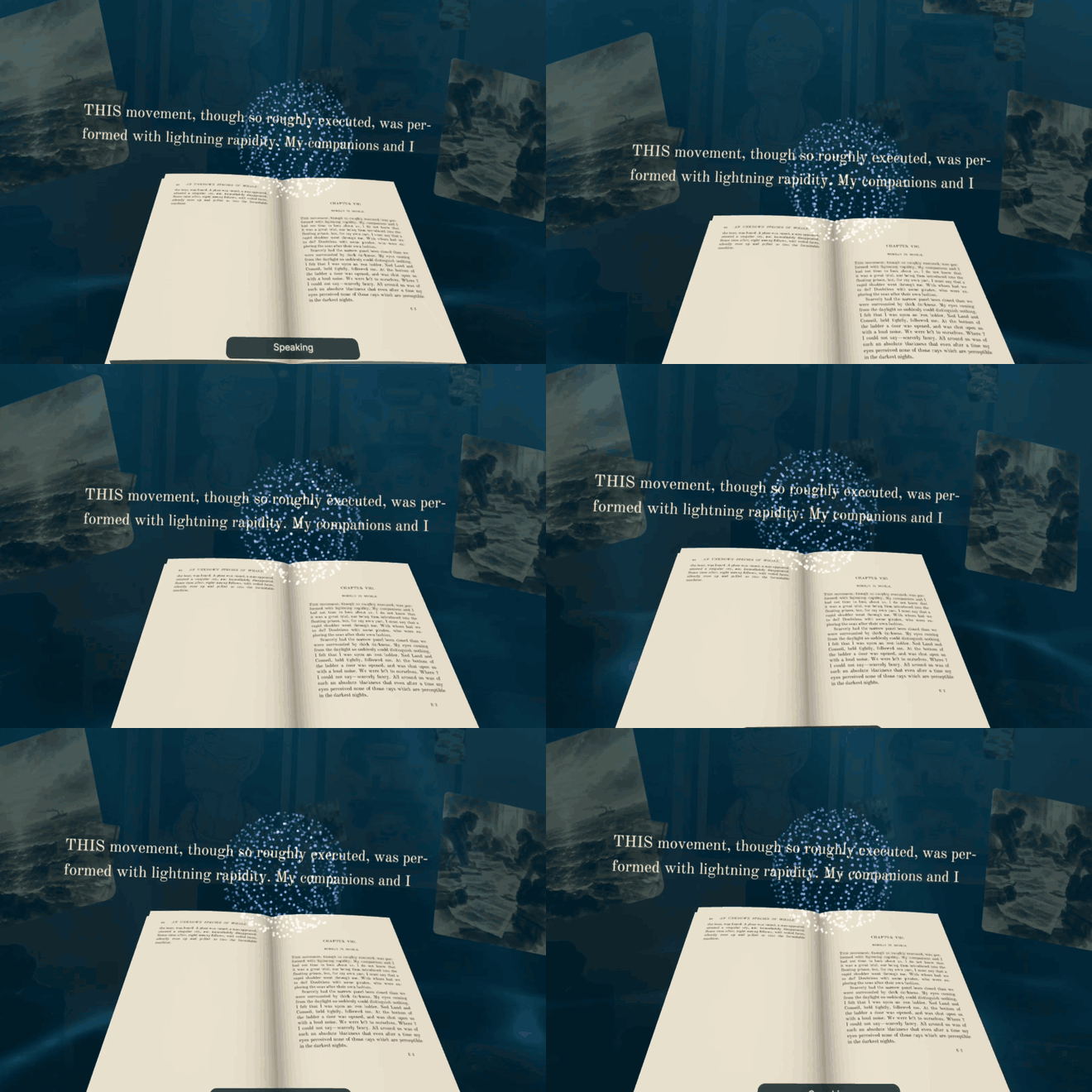
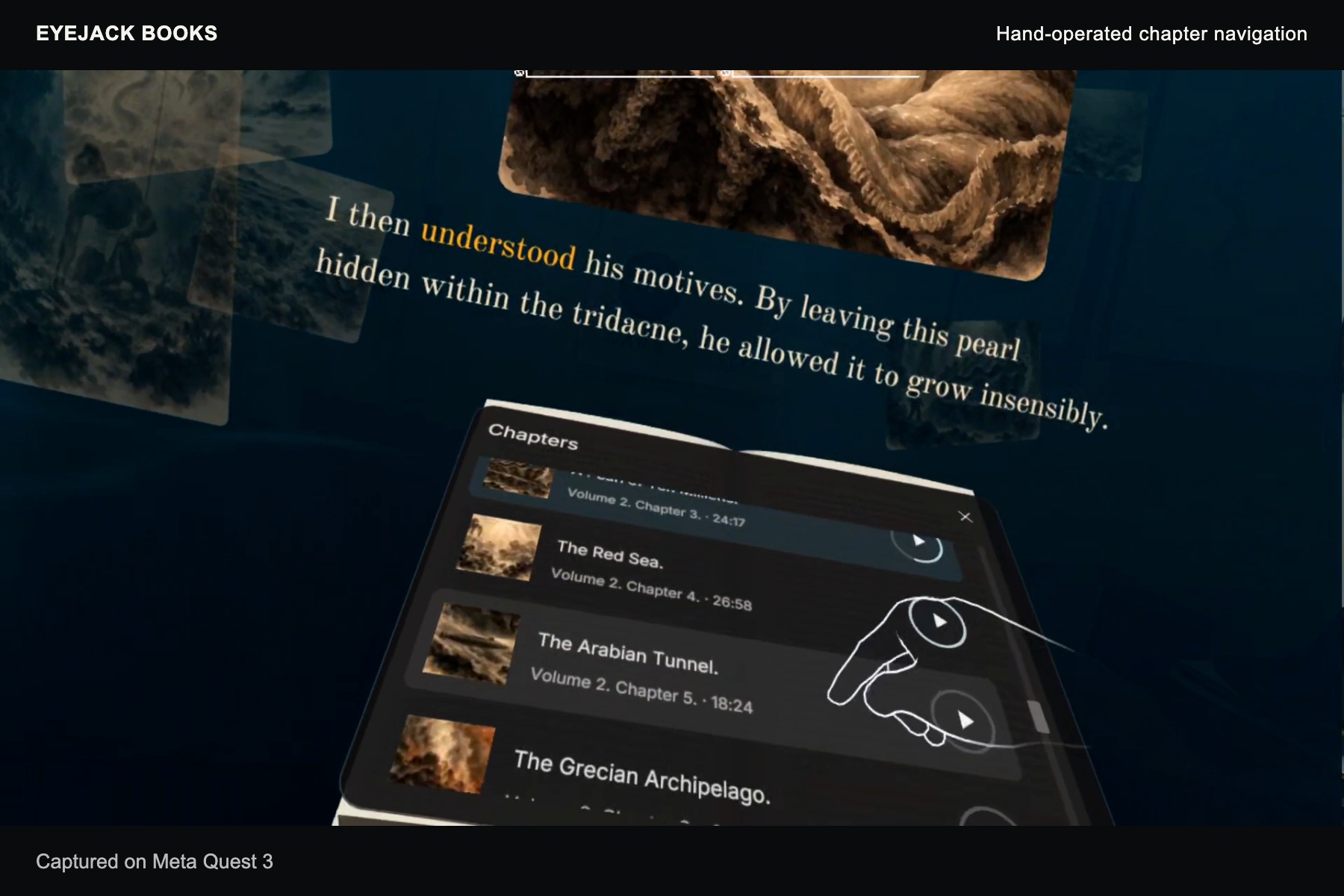
In XR, readers use their hands to pick up the book and turn its pages. Narration follows the text with synchronised word highlighting, while larger, karaoke-style captions offer another way to read along. Illustrations unfold around the reader, helping bring passages and ideas into view.
Readers can also have a spoken conversation about the story. They can ask about unfamiliar vocabulary, unpack a concept or explore an idea in their own words, their own language and at their own pace.
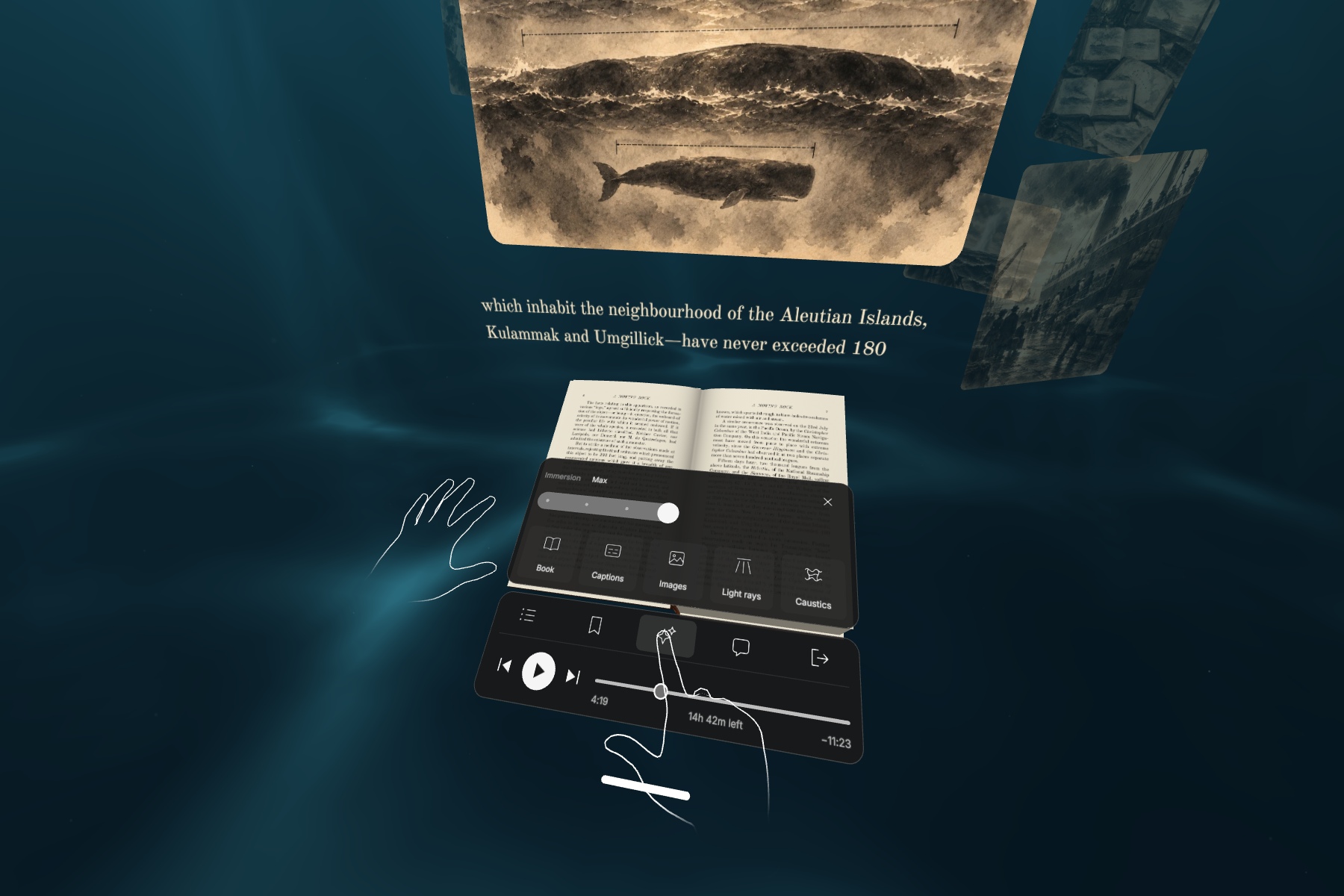
An adjustable immersion control lets readers choose how much surrounds them: a book alone, captions and illustrations, or a fuller atmospheric environment. The experience also works on desktop and mobile, extending access beyond a headset.
How we built it
We built the experience for the browser using WebXR, with Meta’s Immersive Web Emulator supporting development and testing.
A major part of the work was creating an AI-assisted publishing pipeline. Starting with historical scans, we organised and interpreted the source material, prepared narration and timing data, and developed illustrations connected to passages throughout the book. Verification is built into the process so generated material can be checked against the source and reviewed for quality and consistency.
We combined those assets with a spatial book interface, hand interactions, synchronised narration, word highlighting and captions. Custom shaders provide atmospheric environments, while the immersion controls let readers adjust how those layers appear.
Voice narration and conversational capabilities use ElevenLabs. The surrounding platform handles accounts, book access and reading progress, connecting the website to the experience.
Challenges we ran into
The hardest questions were often design questions: what feels natural and what needs explaining?
Hand interactions needed to feel approachable to people who might be using XR for the first time. Onboarding had to show people what to do without overwhelming them. We also needed to balance imagery, captions, narration and atmosphere so they supported the story without competing for attention.
That required repeated cycles of building, trying the experience and refining it. During testing, we were also listening to and discovering the book ourselves. Experiencing the content helped us notice problems that were difficult to see from the code alone.
Consistency was another challenge. AI-assisted production can accelerate a project, but illustrations can drift in style and generated material can contain errors. Establishing clear verification and review processes became as important as generation itself.
Accomplishments that we're proud of
We’re proud of creating an experience that feels approachable despite the complexity underneath it. Sharing it with people throughout development helped us refine the onboarding and interactions, particularly for readers unfamiliar with headsets or hand tracking.
We’re also proud of the publishing pipeline behind the first title. It gives us a repeatable foundation for producing future books more efficiently while preserving room for editorial judgment and visual craft.
Our aim is to use AI to increase what a small team can accomplish, with verification and human review remaining central to the work.
Most of all, we’re proud that the original book remains central. A story that once felt difficult to enter has become something we can hold, listen to, explore and discuss.
What we learned
We learned that more immersion is not always better. Sometimes readers want atmosphere and imagery; sometimes they simply want the book in front of them. Giving people control over that balance became a central design principle.
We also learned how much work sits behind an interaction that feels simple. Small details in timing, movement, feedback and onboarding make a substantial difference, especially in XR.
Working with AI reinforced the importance of clear constraints and verification. The quality of the process depends on how well we define the source, review the output and catch inconsistencies.
Above all, we learned to design by experiencing the book ourselves. Reading and listening throughout development kept the story at the centre of our decisions.
What's next for EyeJack Books
Twenty Thousand Leagues Under the Sea is our first release. Next, we’re expanding the catalogue with more public-domain classics and original titles.
We’ll continue refining the interactions, onboarding and conversational experience as more people use the platform. The pipeline developed for this first book gives us a foundation for bringing future titles to readers more efficiently.
We’re also exploring mini-games and unexpected interactive moments that use the story as a launchpad for playful discovery, giving readers opportunities to step beyond the page and explore.
Our ambition is to create a new way to enjoy books: one that honours the original work and opens more ways into its world.
Built With
- amazon-web-services
- babylon.js
- elevenlabs
- iwsdk
- javascript
- meta-quest-3
- next.js
- playwright
- preact
- react
- stripe
- three.js
- typescript
- vite
- webxr


