-
-
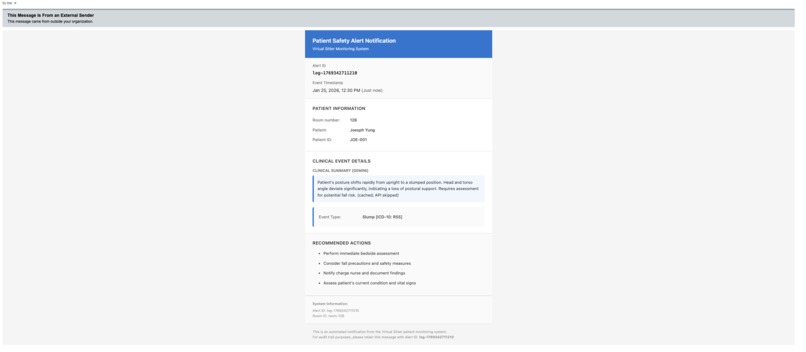
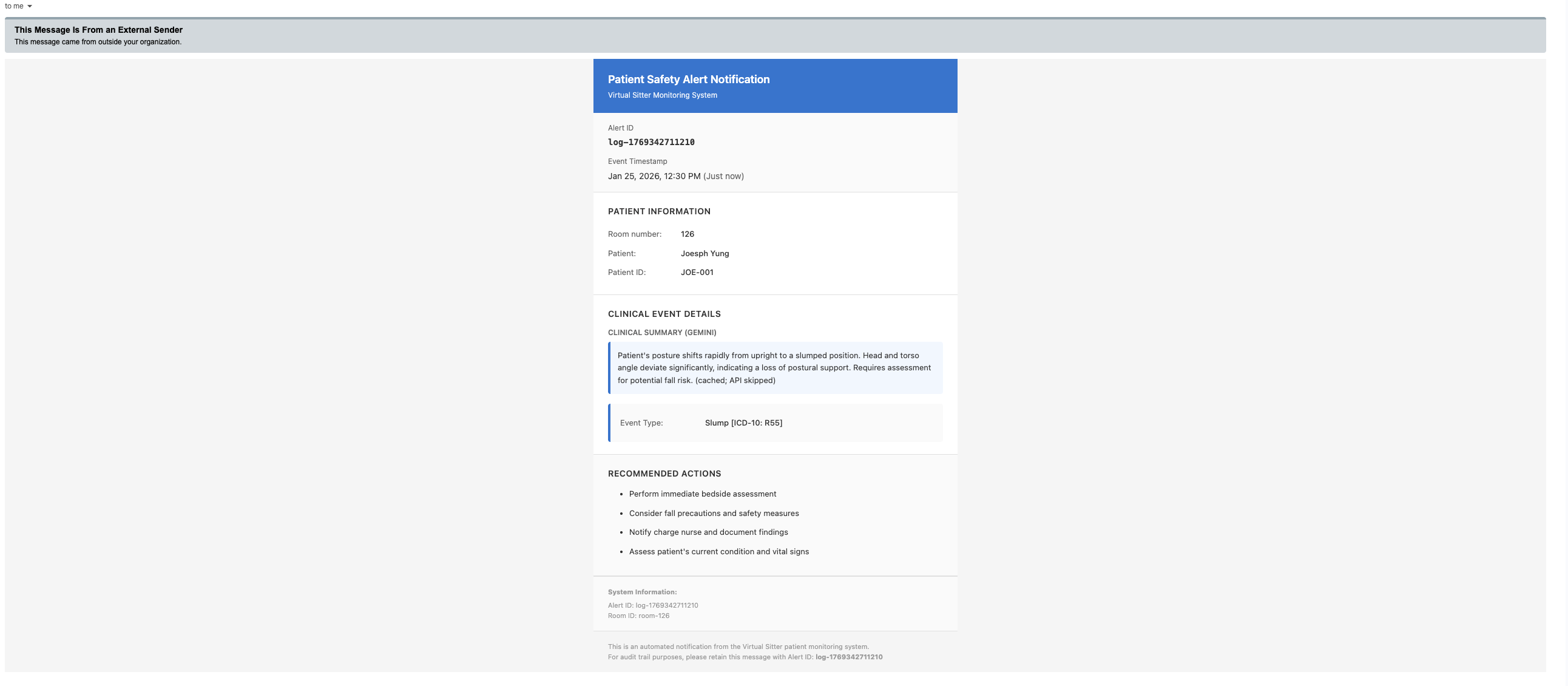
Patient Safety Alert Notification into the email inbox of observer
-
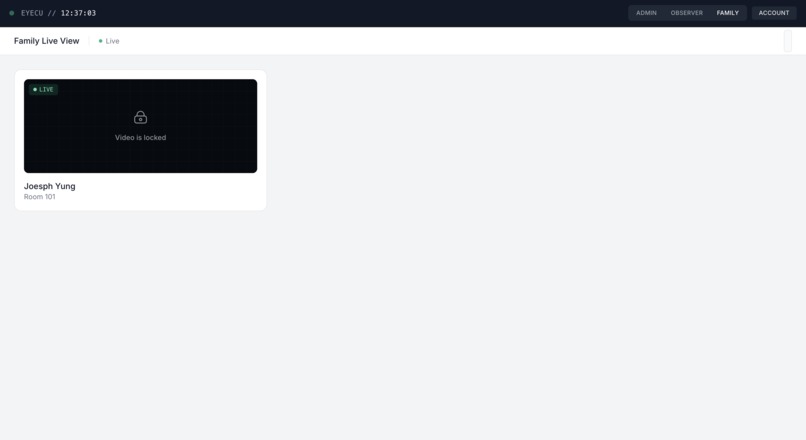
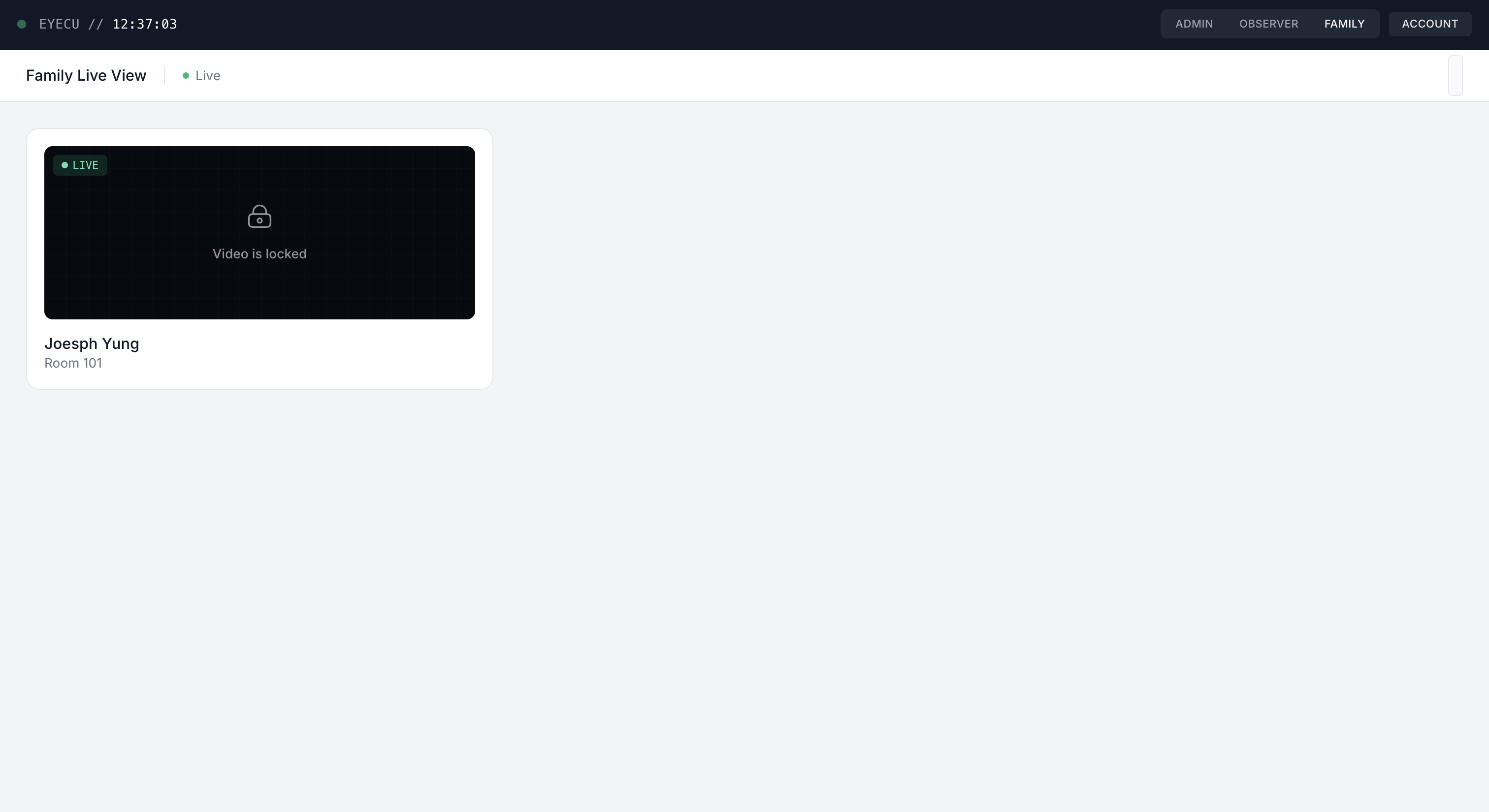
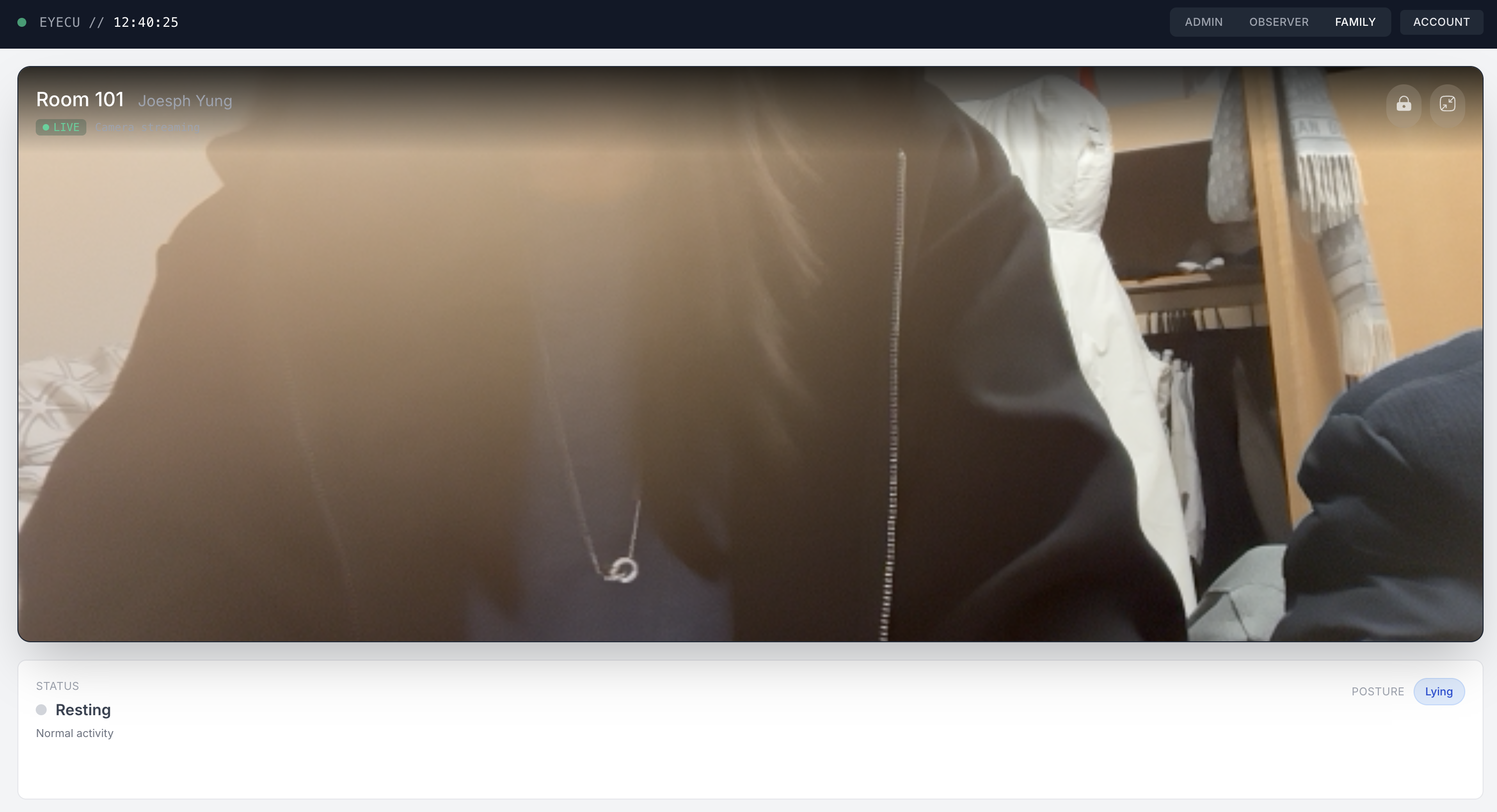
family portal (video locked for privacy initially)
-
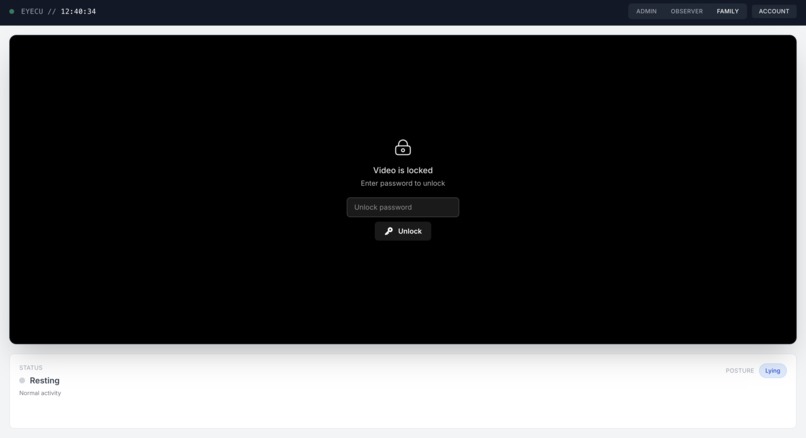
family portal (video locked for privacy initially)
-
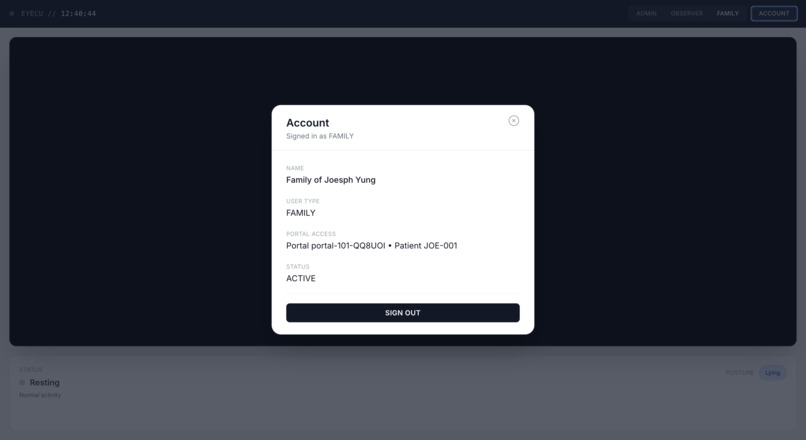
My Account
-
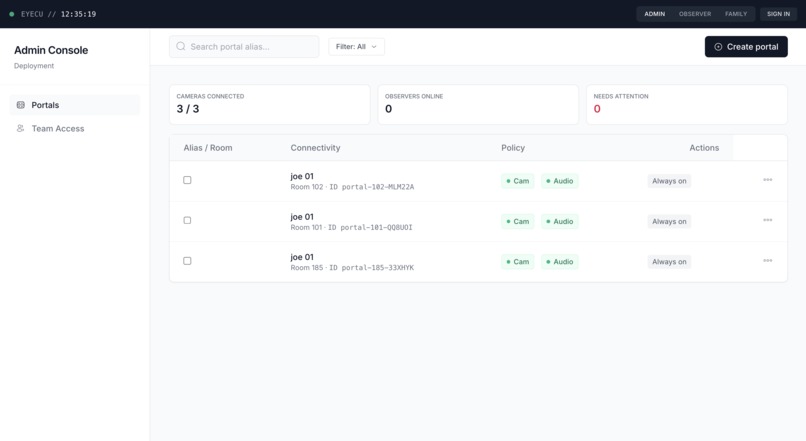
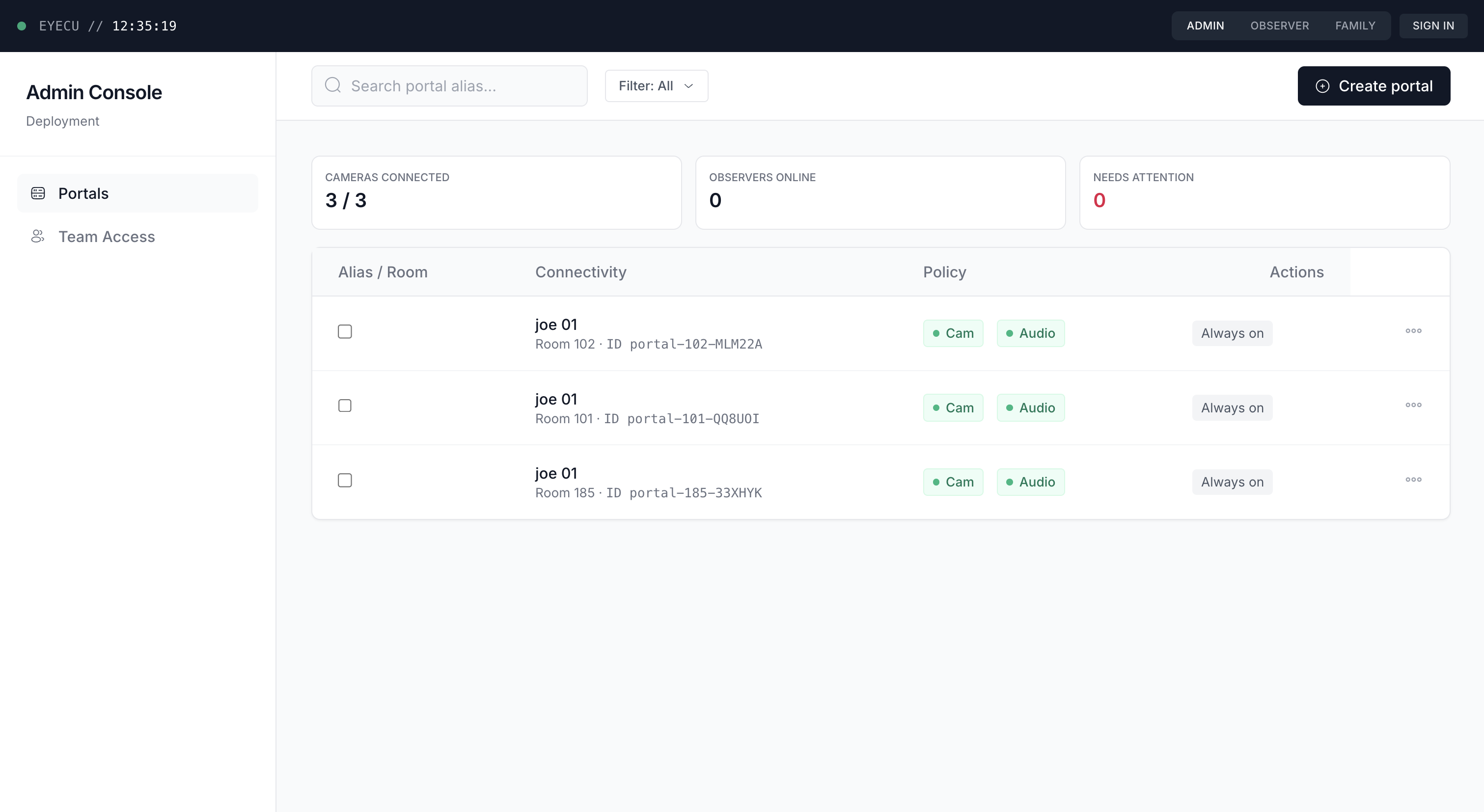
admin portal
-
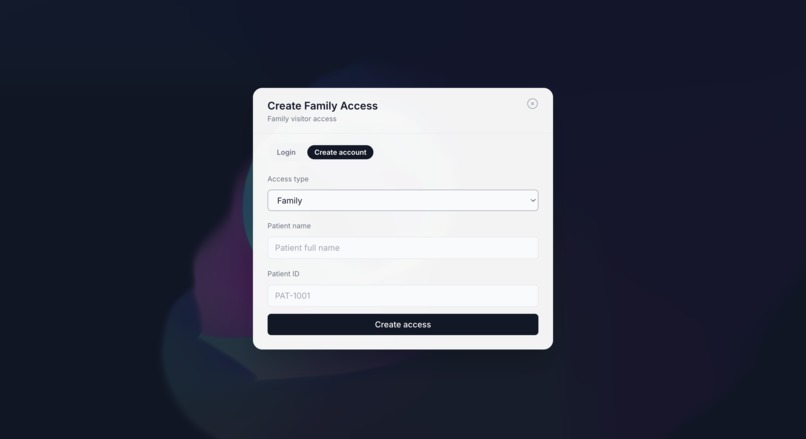
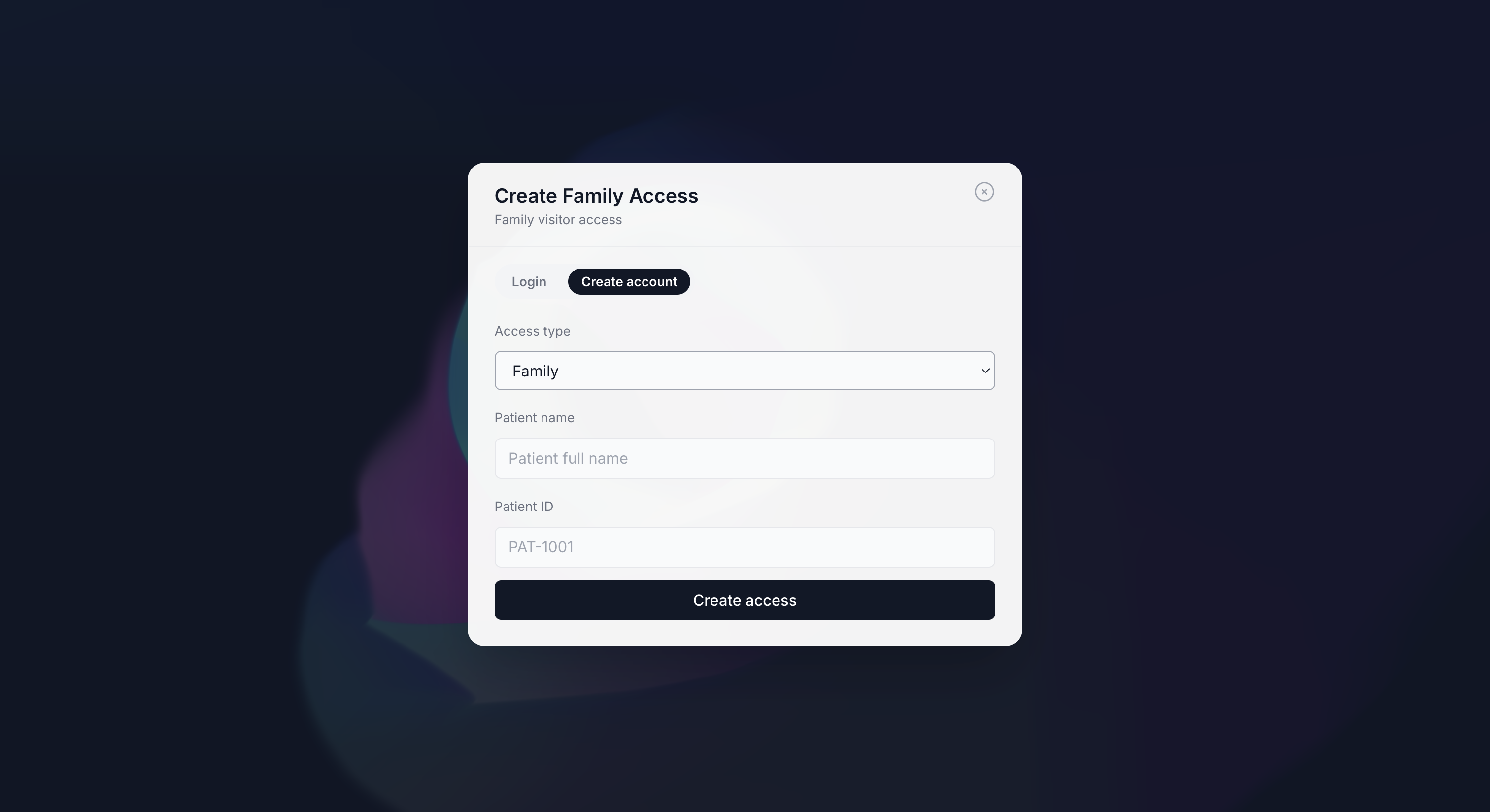
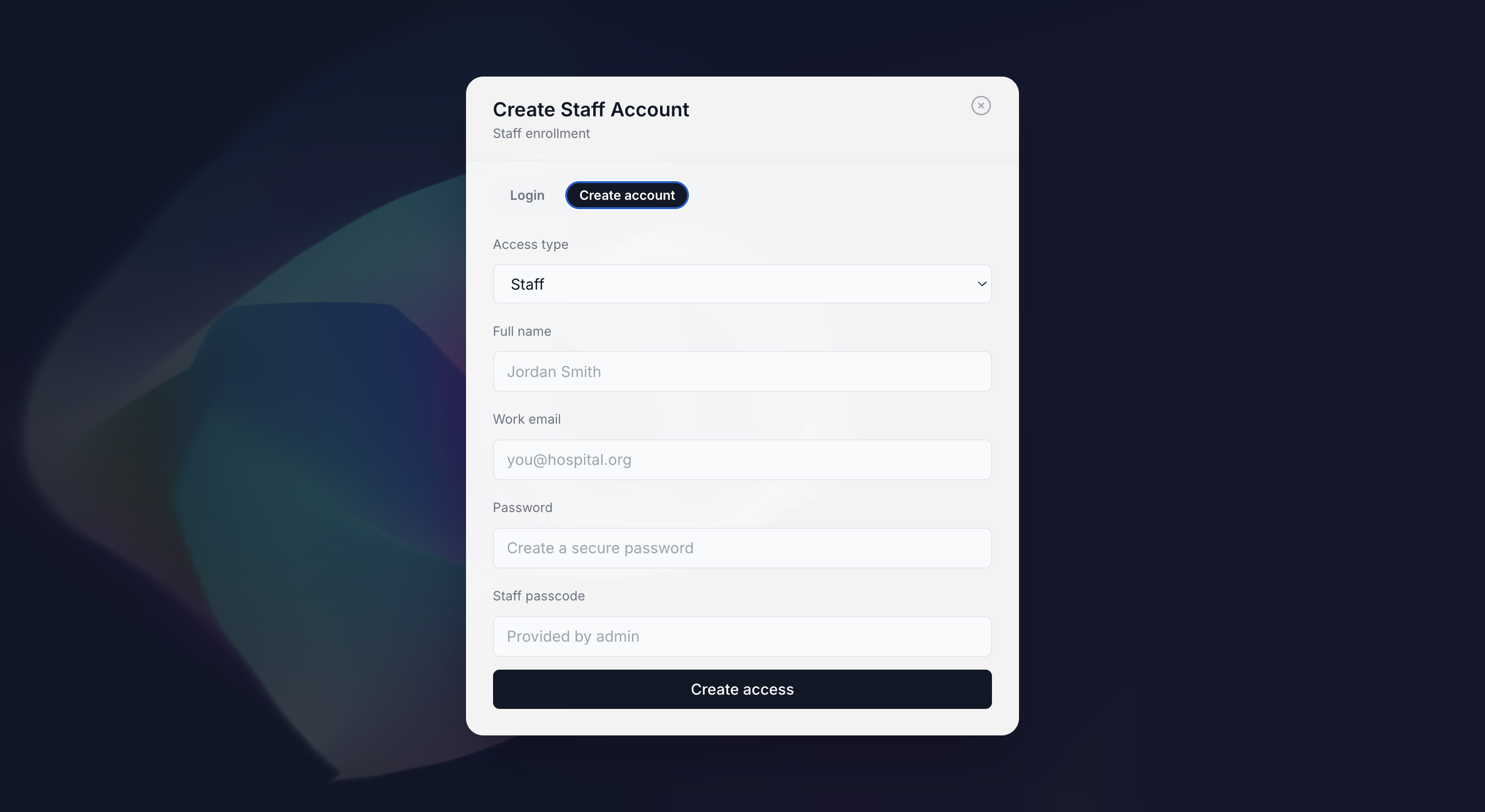
create family account
-
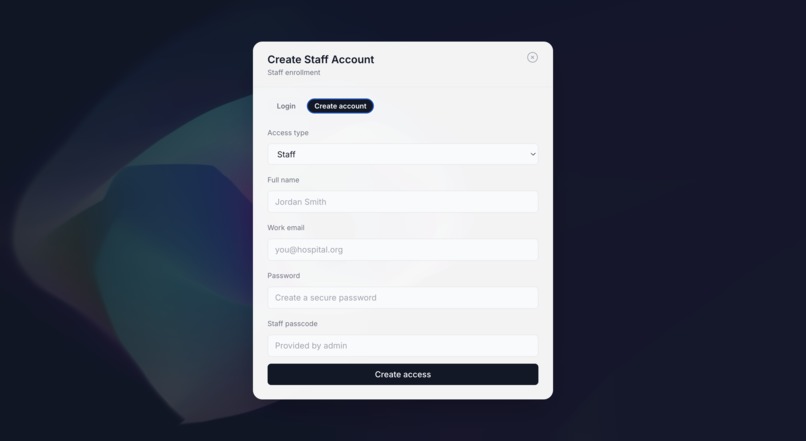
create staff account
-
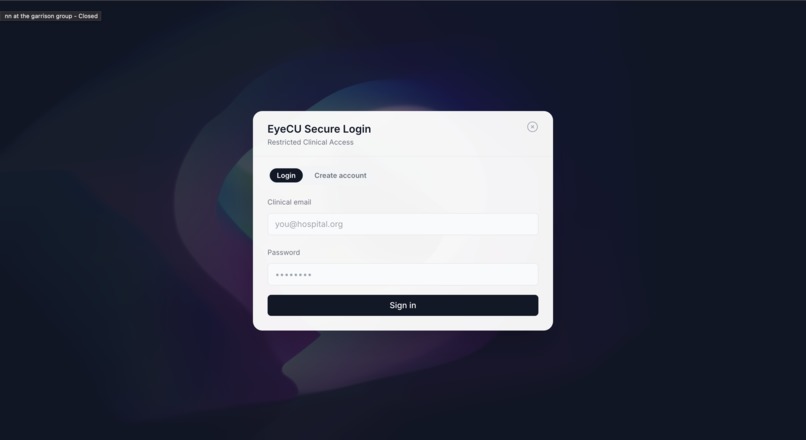
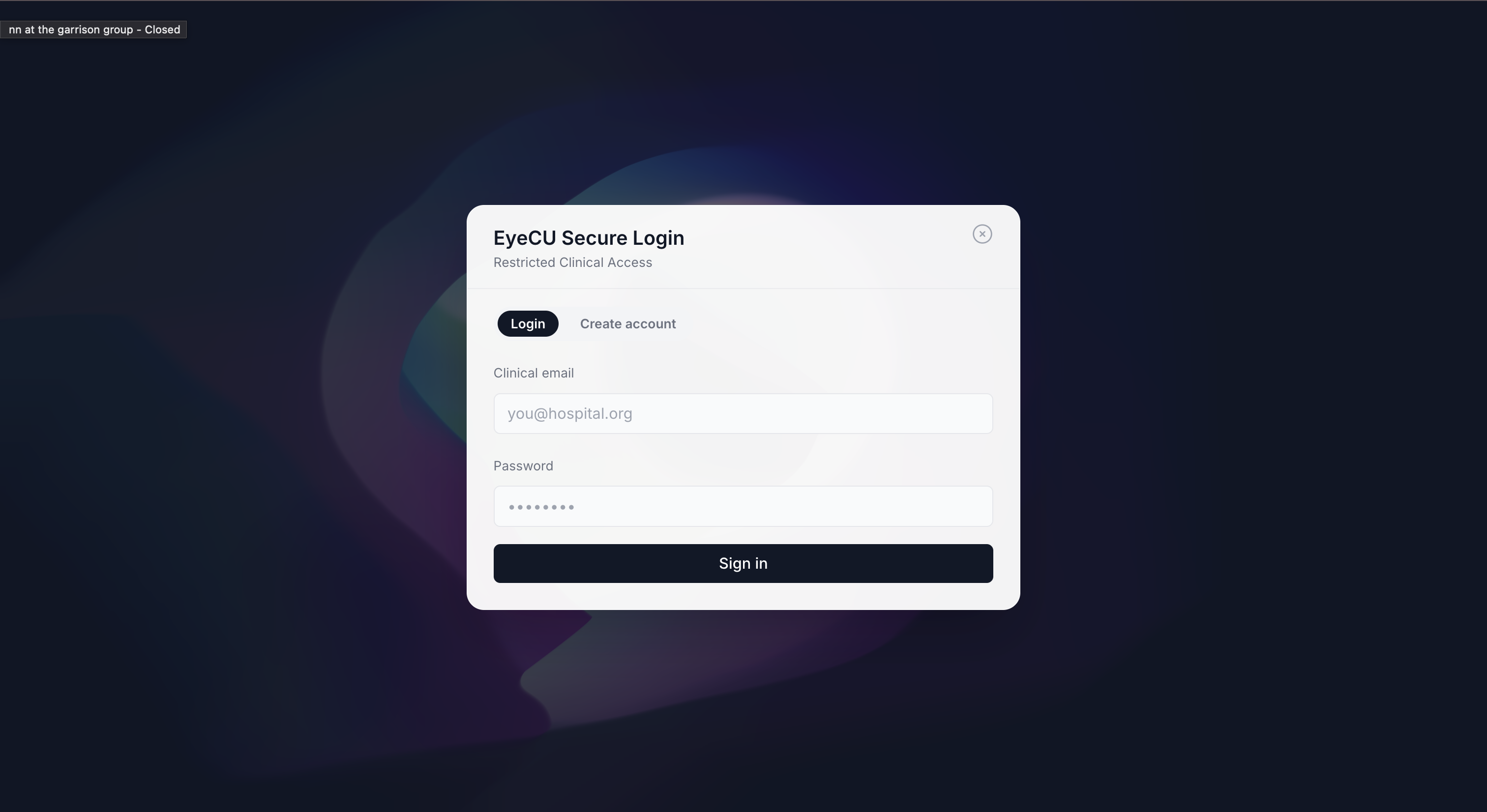
login
-
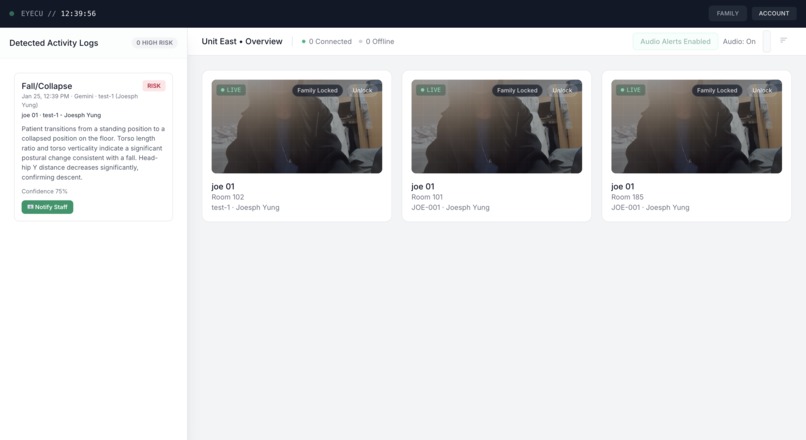
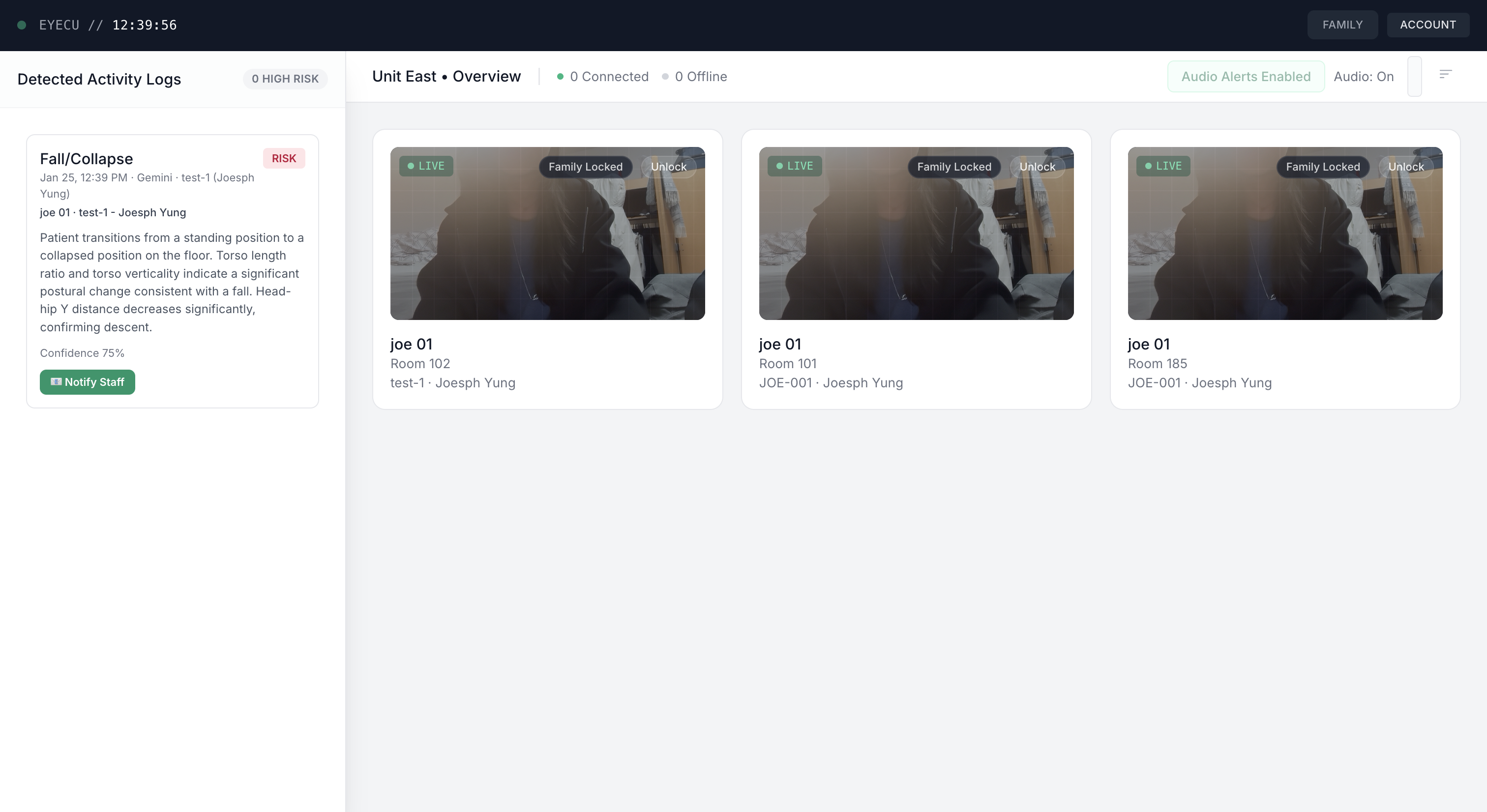
observer multiple patient portal
-
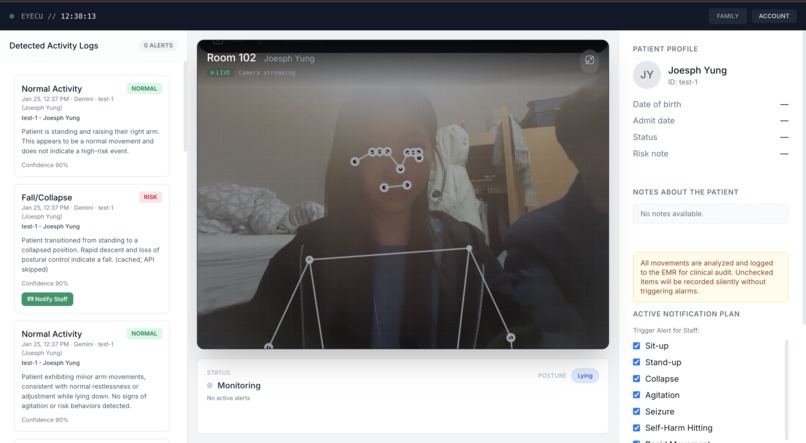
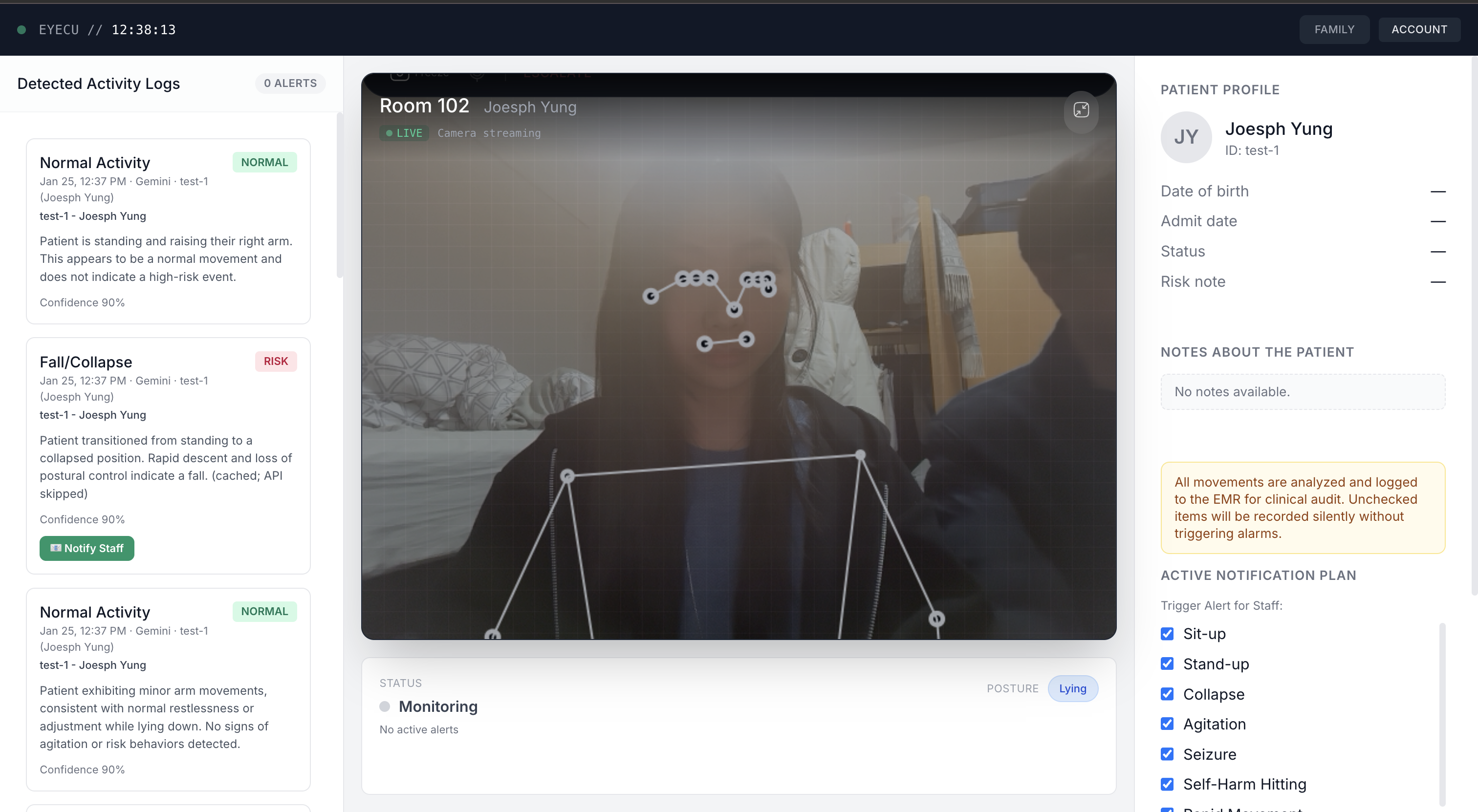
zoomed in, focused on one patient portal
-
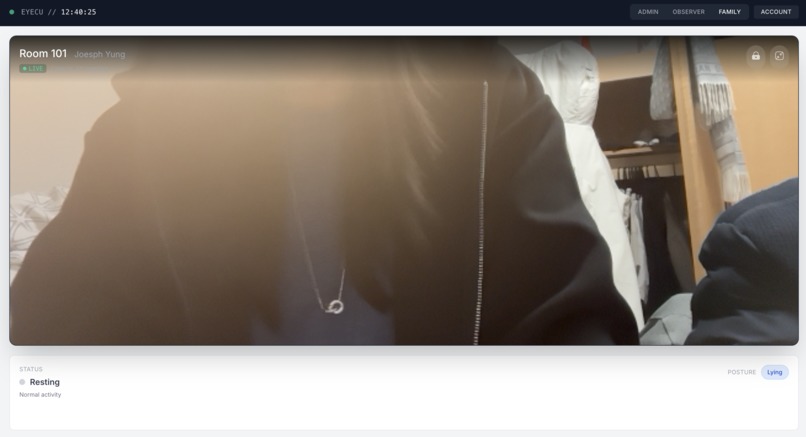
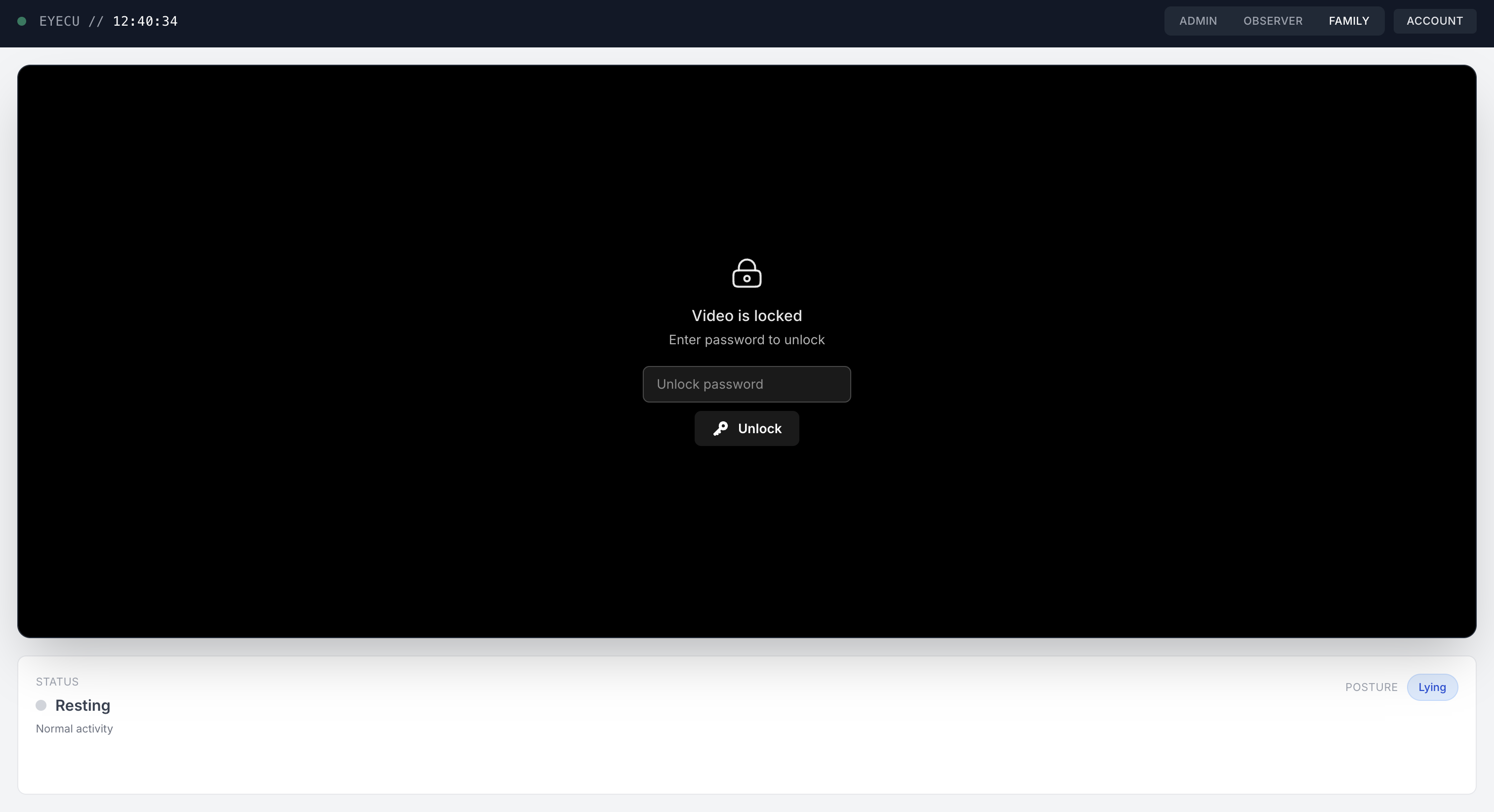
family portal (video unlocked for privacy initially)

Inspiration
Hospital falls and unattended patient movement remain among the most preventable causes of injury, liability, and staff burnout in clinical settings. At the same time, hospitals face critical nursing staff shortages, forcing overworked clinicians to monitor more patients with fewer resources. Traditional video monitoring systems depend on constant human attention or basic motion alerts, making them noisy, expensive, and ineffective at scale.
What it does
EyeCU is a real-time patient safety monitoring platform that uses computer vision and AI to continuously analyze patient behavior and detect high-risk events such as bed exits, prolonged standing, and fall-risk postures. Rather than flooding staff with constant motion alerts, EyeCU surfaces only clinically relevant, high-severity events, allowing nurses and care teams to focus attention where it is most urgently needed.
The platform provides a live clinical dashboard with real-time video monitoring, patient and room-level context, and instant updates through WebSockets. When a high-risk event is detected, EyeCU automatically notifies staff so intervention can occur immediately. All events are logged and compiled into EHR/EMR-ready PDF reports, enabling seamless clinical documentation, auditing, and continuity of care.
EyeCU also includes a secure family portal that allows approved family members to remotely view the patient only when permission is granted. Families can request access to patient video, with all requests routed through clinical staff for approval, ensuring privacy, control, and trust.
Through role-based access for administrators, staff, and family members, EyeCU delivers a privacy-aware, clinically aligned system that improves patient safety, reduces staff burden, and enhances transparency without replacing human care.
How we built it
We built EyeCU as a low-latency, event-driven system. MediaPipe extracts real-time pose data from video streams, which is analyzed by Google Gemini to classify behaviors and risk levels. High-risk events are filtered, delivered via WebSockets, stored for audit, and exported as EHR-ready reports through a full-stack React and Express application.
Challenges we ran into
We had to balance detection sensitivity with alert fatigue, maintain real-time performance under continuous video inference, synchronize live updates across multiple dashboards, and design a secure role-based system without duplicating logic.
Accomplishments that we're proud of
We delivered a clinically meaningful alert system beyond basic motion detection, achieved real-time performance with a multi-stage AI pipeline, built a full-stack platform with deployment automation, and designed workflows aligned with real hospital operations.
What we learned
We learned how critical alert precision is in healthcare, how to architect low-latency AI systems, and how thoughtful role-based access and permissions directly impact usability and trust in clinical environments.
What's next for EyeCU
Next, we plan to optimize on-device inference, integrate with EHR systems, expand the behavior taxonomy, add predictive fall-risk modeling, and scale across multiple rooms and hospital units.
Built With
- auth
- express-5
- git
- github
- google-gemini-1.5-/-2.5-flash
- jwt-authentication
- mediapipe-pose-landmarker
- node.js
- nodemailer
- pdfkit
- pm2
- storage)
- supabase-(postgresql
- tailwind-css
- typescript
- vite
- vultr
- webhook
- webhooks
- websockets



Log in or sign up for Devpost to join the conversation.