-
-
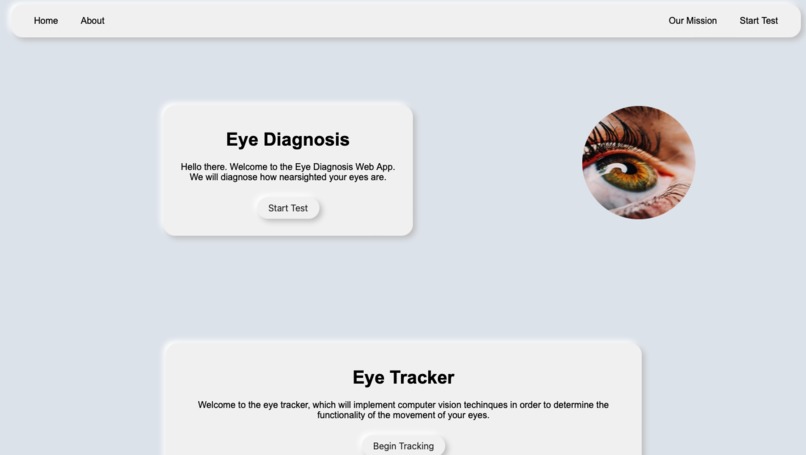
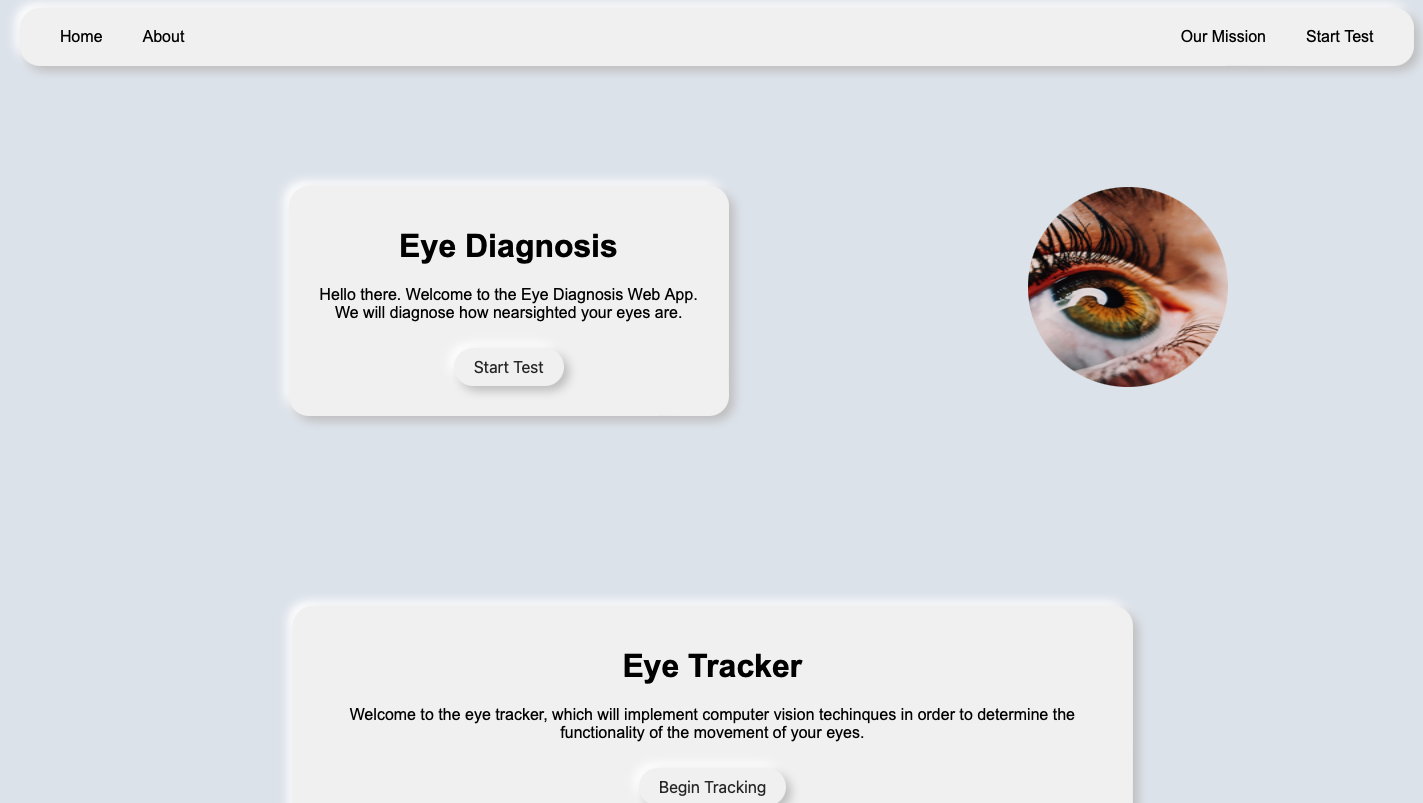
homepage
-
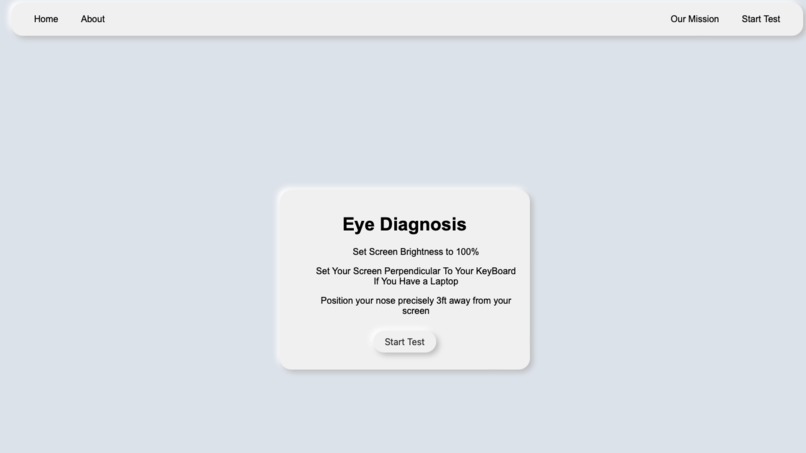
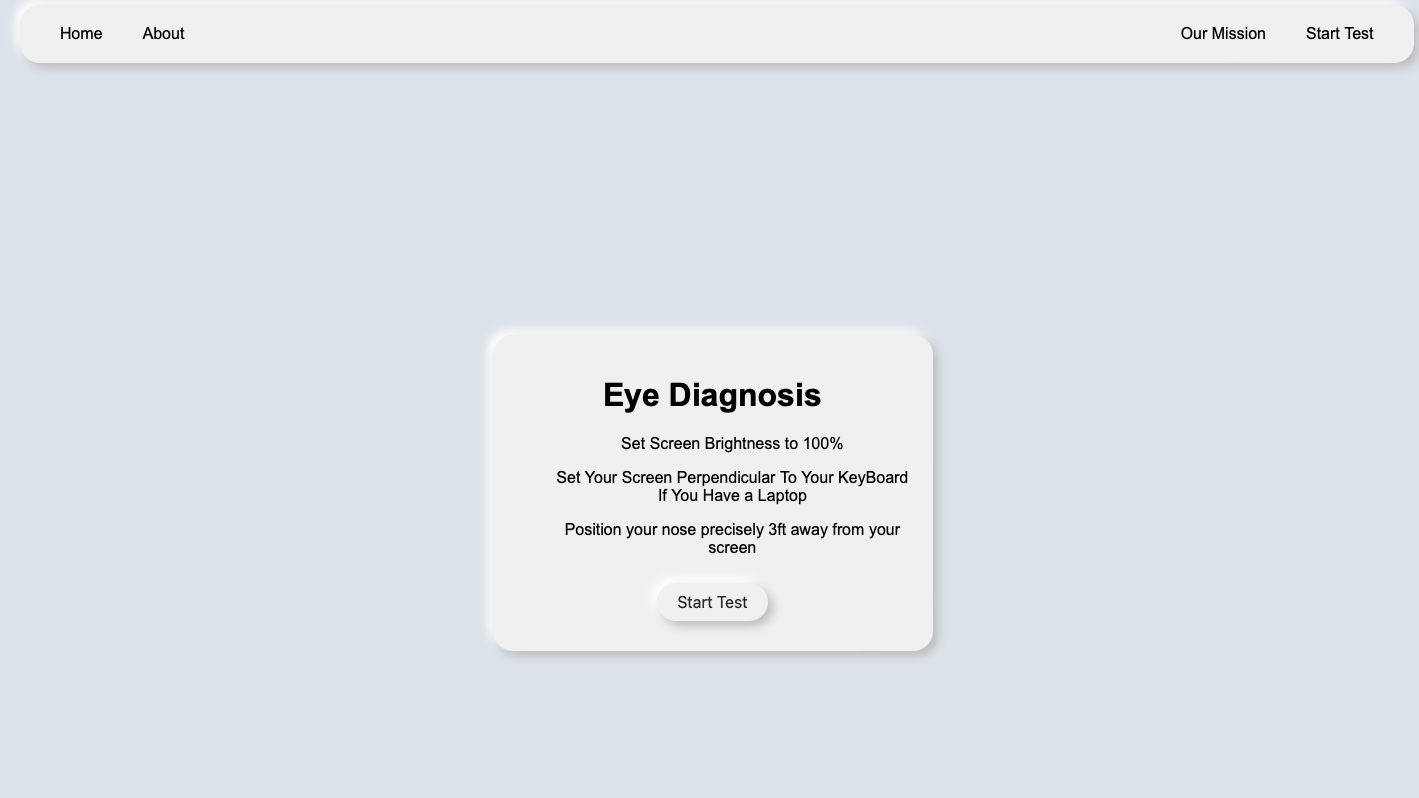
page before test begins, ensures all items are uploaded
-
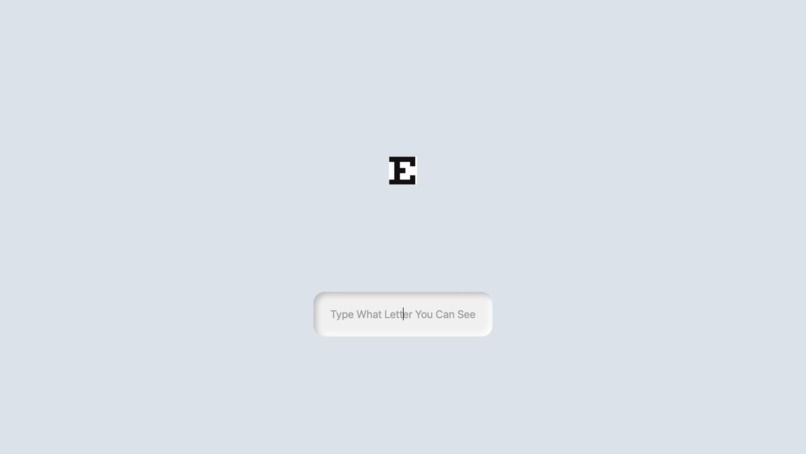
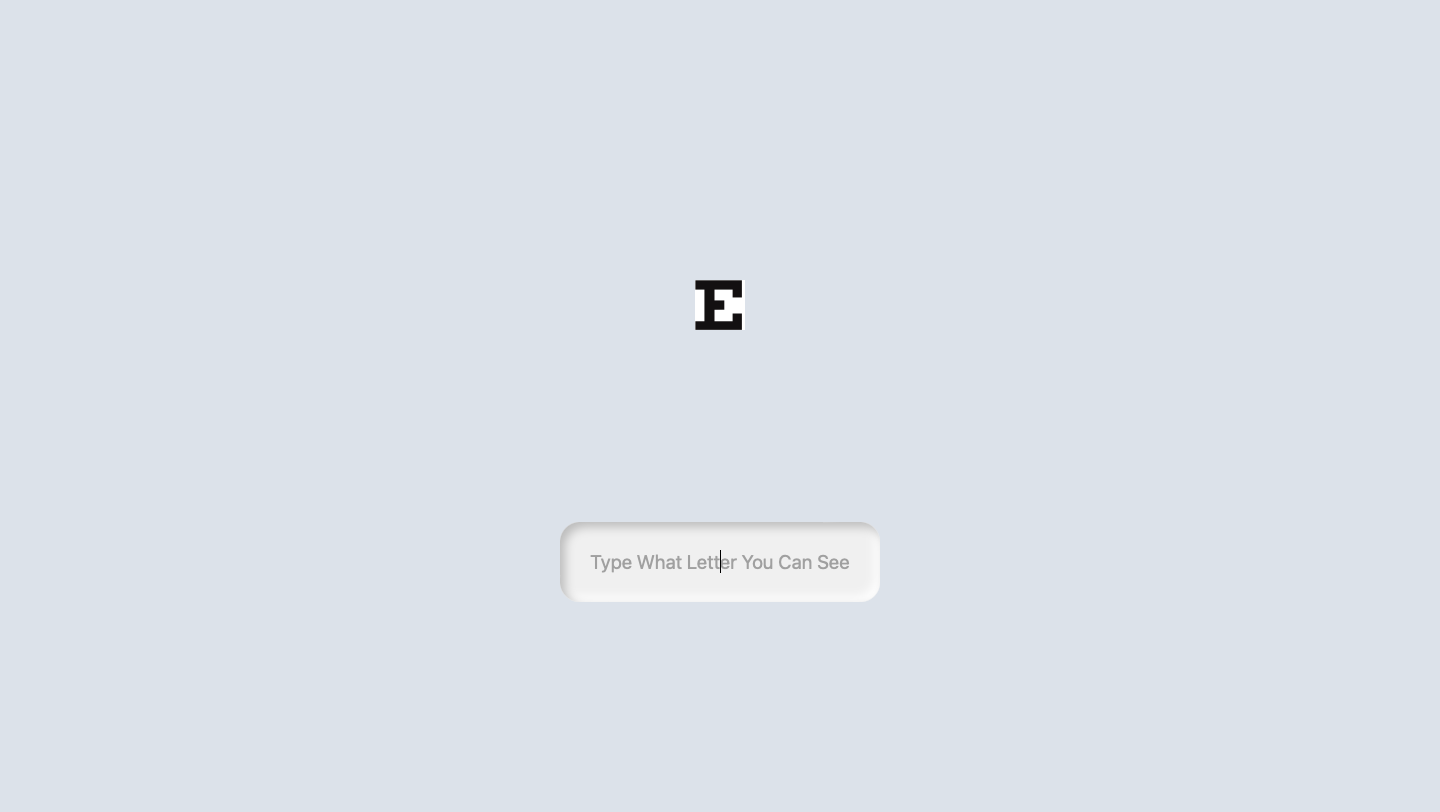
how the visual acuity test looks like
-
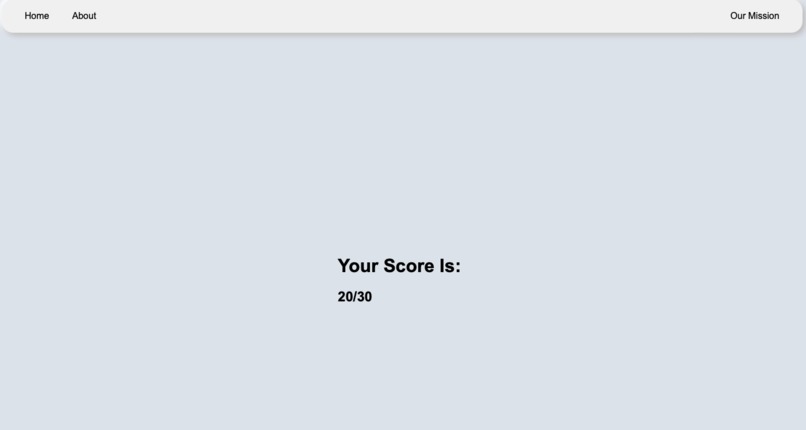
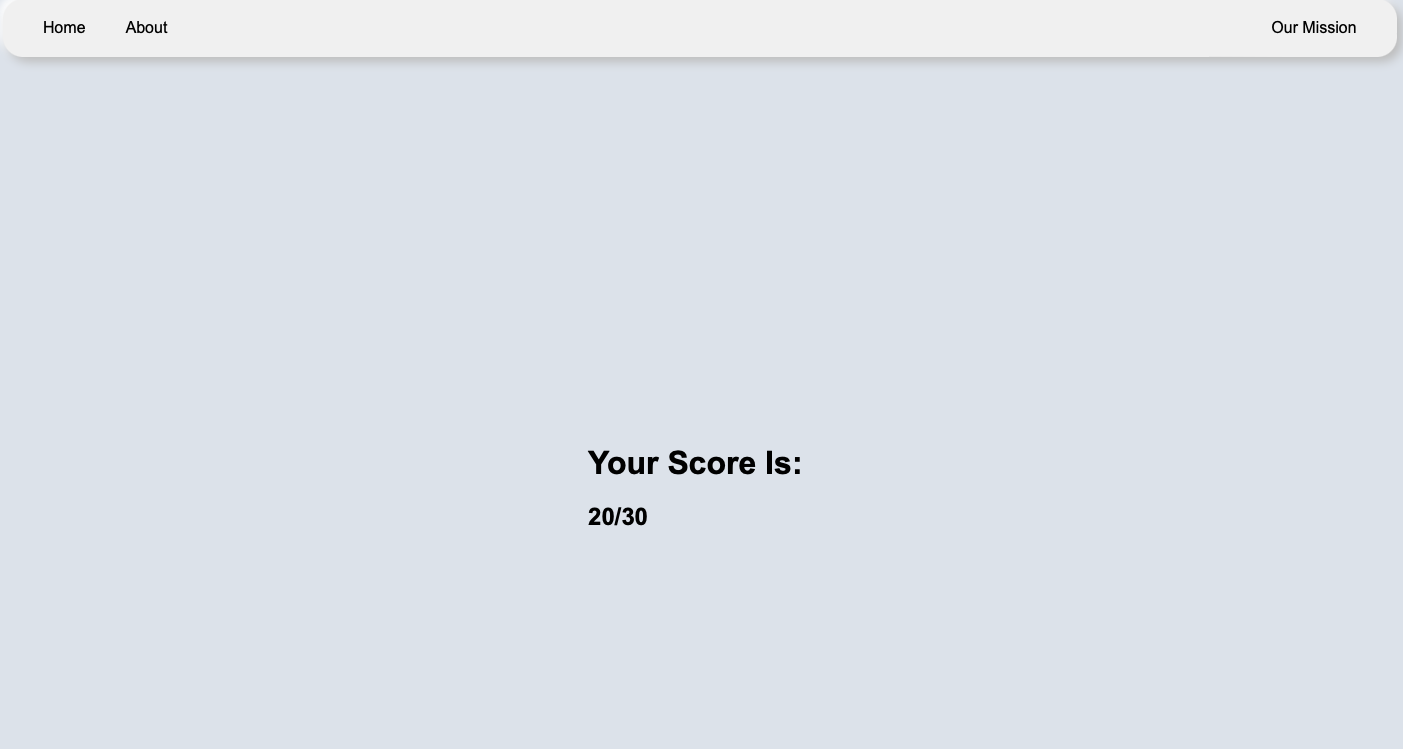
vision test accuracy at the end of the test
-
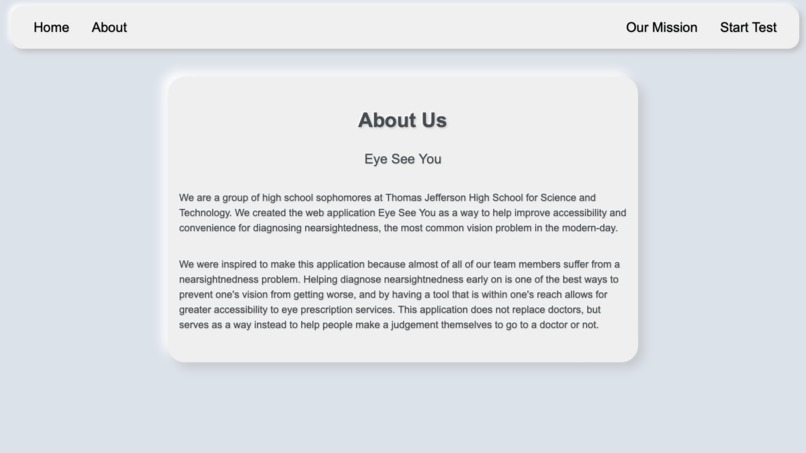
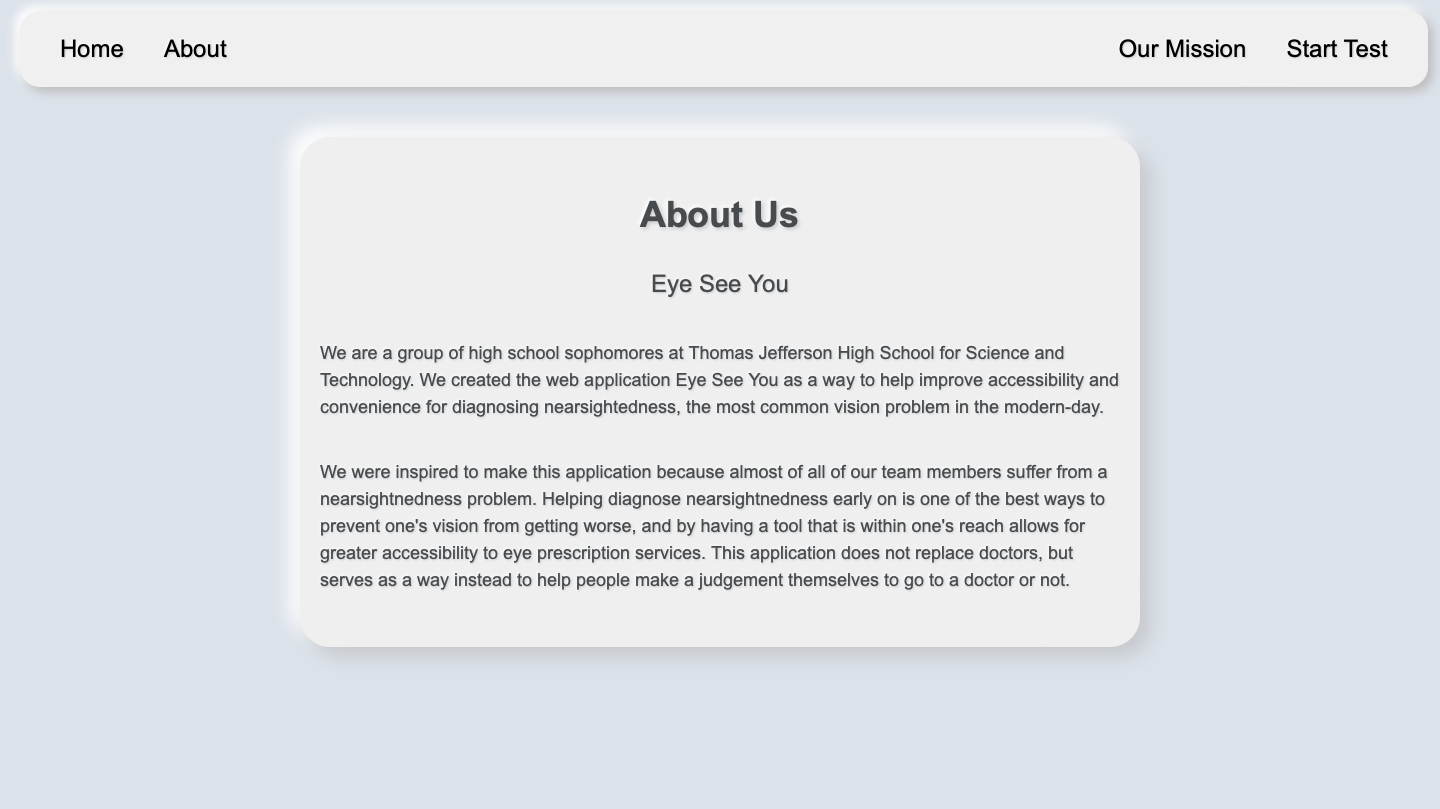
about us page
-
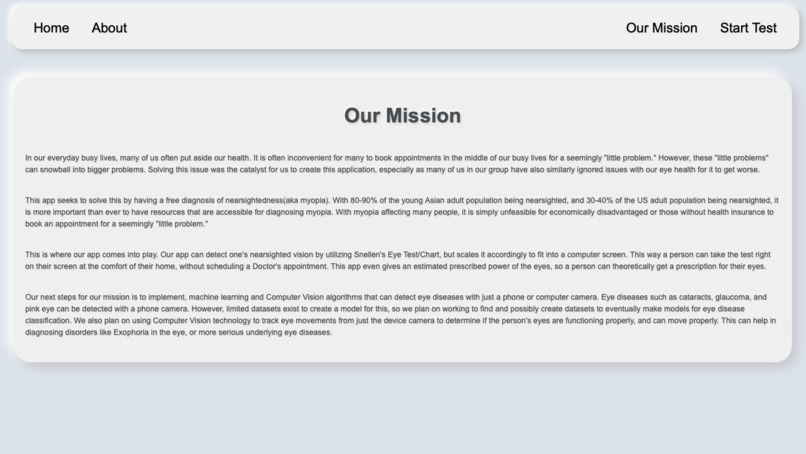
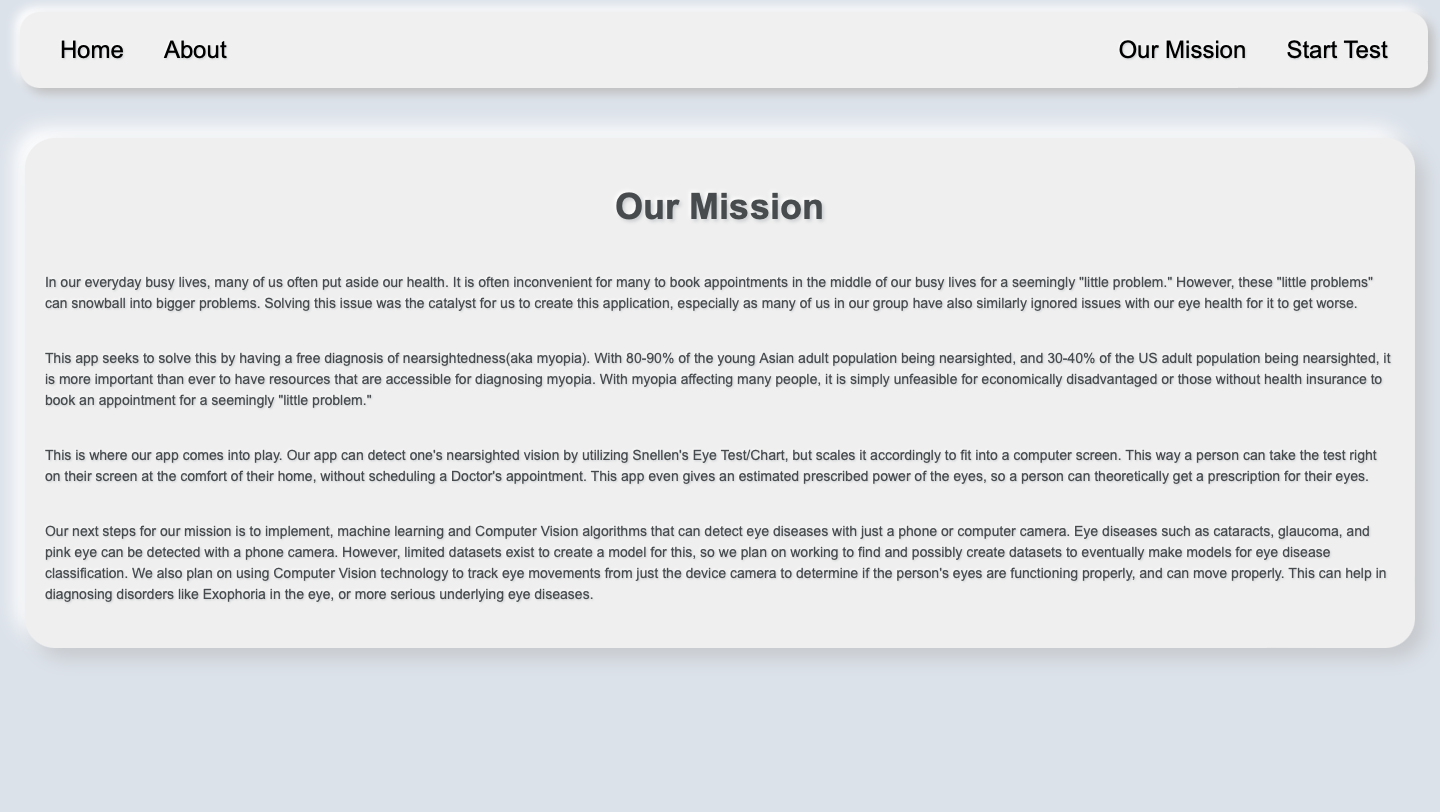
our mission page
Inspiration
In our everyday busy lives, many of us often put aside our health. It is often inconvenient for many to book appointments in the middle of our busy lives for a seemingly "little problem." However, these "little problems" can snowball into bigger problems. Solving this issue was the catalyst for us to create this application, especially as many of us in our group have also similarly ignored issues with our eye health for it to get worse. This app seeks to solve this by having a free diagnosis of nearsightedness(aka myopia). With 80-90% of the young Asian adult population being nearsighted, and 30-40% of the US adult population being nearsighted, it is more important than ever to have resources that are accessible for diagnosing myopia. With myopia affecting many people, it is simply unfeasible for economically disadvantaged or those without health insurance to book an appointment for a seemingly "little problem."
What it does
Our app can detect one's nearsighted vision by utilizing Snellen's Eye Test/Chart, but scales it accordingly to fit into a computer screen. This way a person can take the test right on their screen at the comfort of their home, without scheduling a Doctor's appointment. This app even gives an estimated prescribed power of the eyes, so a person can theoretically get a prescription for their eyes.
How we built it
We used HTML, CSS, JavaScript and Python to make the website. We used HTML to make the frame of the website and CSS to style it to our needs. We used Python through the flask library to send images and sizes for the HTML files to render. We also utilized many complex methods that utilized the special properties of each.
Challenges we ran into
A challenge we particularly faced in this project was integrating Flask along with HTML to send data from the front to back end, and vice versa. In addition, one of our primary obstacles was developing a way to continually update the questionnaire page through flask, with updated questions and image sizes. To address this problem, we chose to use a recursive method on Python that rendered the same questionnaire template on Flask but passed differnet pieces of data as arguments to the HTML front end portion.
Accomplishments that we're proud of
We are very proud of our webpage design as it looks very modern. We are also proud of our finished product because it can help determine how good someone's vision is, without the need of a physician. Even though this is not a substitute for a trip to the eye doctor, we were able to overcome many challenges in order to finish this project.
What we learned
We all learned how to code in Flask, CSS, JavaScript, and HTML. Given that we all had no experience in web development, we are proud that we learned both the frontend and backend for web development in this hackathon. Not to mention, we learned how to collaborate better and work together as a team. We learned to divide tasks according to our strengths, but to also piece together the parts we worked together at the end
What's next for Eye See You
Our next steps for our mission is to implement, machine learning and Computer Vision algorithms that can detect eye diseases with just a phone or computer camera. Eye diseases such as cataracts, glaucoma, and pink eye can be detected with a phone camera. However, limited datasets exist to create a model for this, so we plan on working to find and possibly create datasets to eventually make models for eye disease classification. We also plan on using Computer Vision technology to track eye movements from just the device camera to determine if the person's eyes are functioning properly, and can move properly. This can help in diagnosing disorders like Exophoria in the eye, or more serious underlying eye diseases.

Log in or sign up for Devpost to join the conversation.