-
-
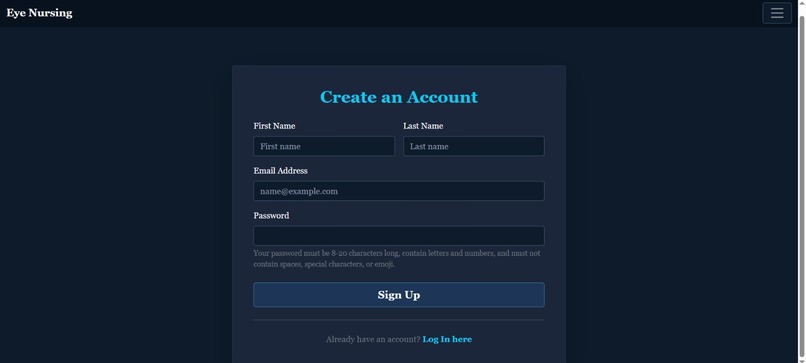
Sign up
-
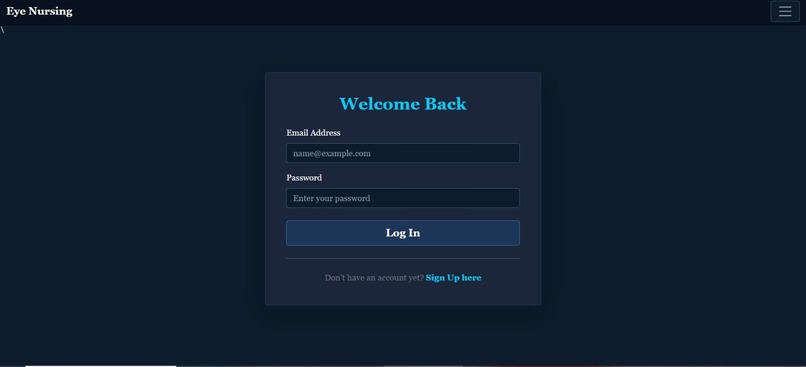
Log In
-
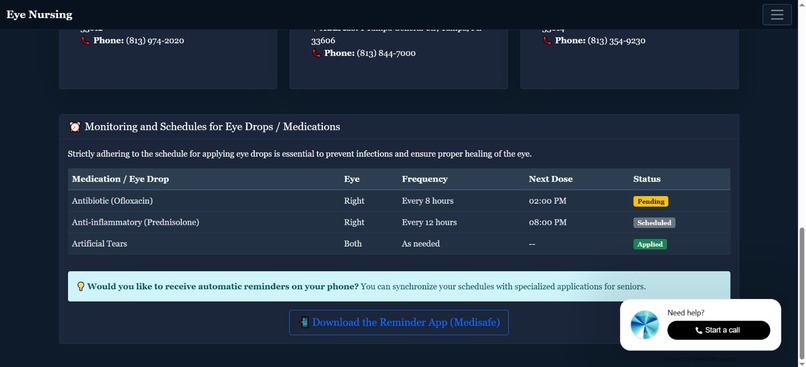
home page pt.3
-
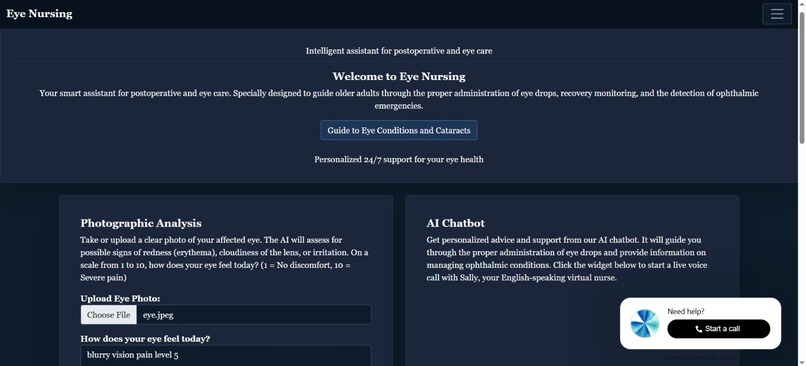
home page pt.1
-
home page pt.2
-
eye health centers in Tampa
-
analysis informative
-
maps
-
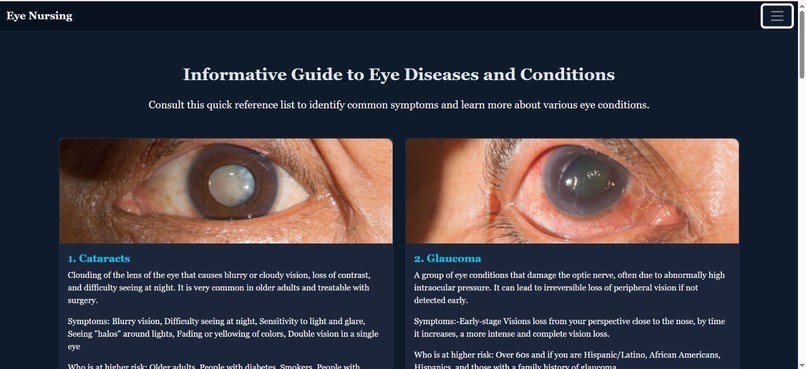
analysis informative
-
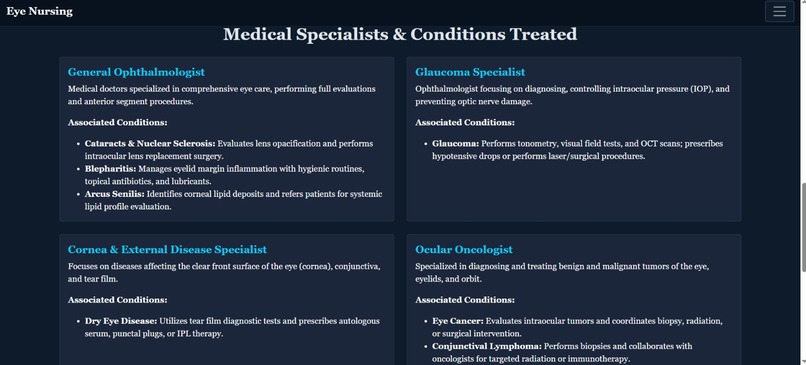
Medical specialists conditions treated
Inspiration
What inspired us to create Eye Nursing were our personal experiences with eye health issues—both our own and those of people close to us. One of our team members had to undergo eye surgery following an accident, and the recovery process was fraught with uncertainty. Questions constantly arose about how the eye was healing, whether a particular sensation or symptom was cause for concern, and how to properly manage postoperative care.
Another turning point came when a family member suffered from severe anxiety due to an eye condition. After a medical examination, it turned out to be completely harmless, but reaching that conclusion caused considerable stress for the entire family.
What it does
We created Eye Nursing to address precisely this problem: to help people facing eye complications manage their medical care smoothly, reduce unnecessary medical stress, and provide clear guidance throughout their recovery.
How we built it
First, we brainstormed the core problem we wanted to solve and agreed that addressing health challenges would have a significant impact. We were intrigued by post-recovery monitoring—specifically, the analysis of inflammation and infections—which led us to focus on eye care, since the eyes reveal a great deal about a person’s overall health and even offer a direct window into neurological well-being. After researching and comparing various common eye conditions, we decided to create an intuitive, interactive web platform tailored to older adults. To ensure full accessibility, we incorporated a voice chat feature that allows for effortless interaction.
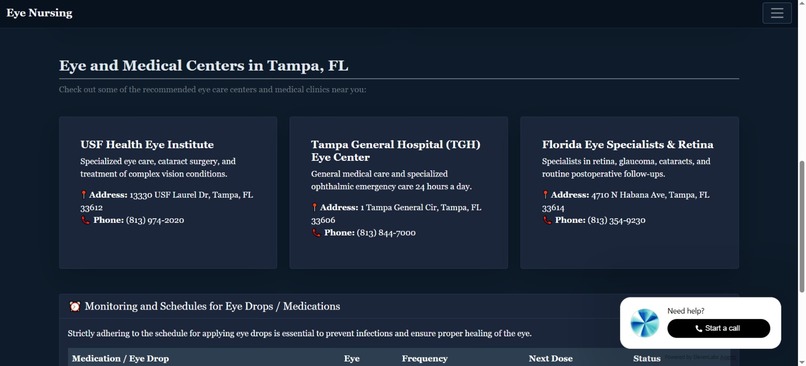
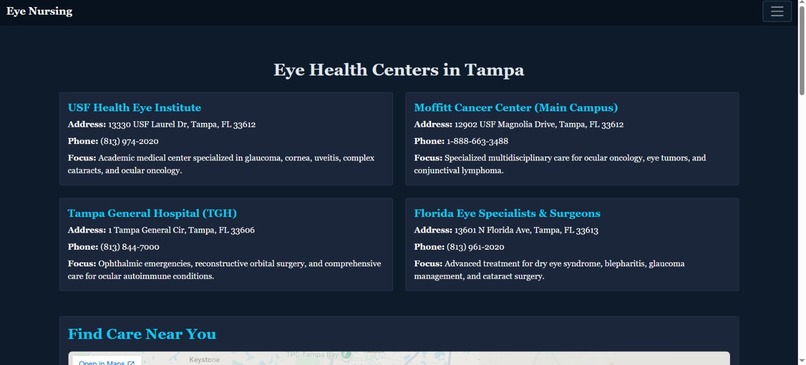
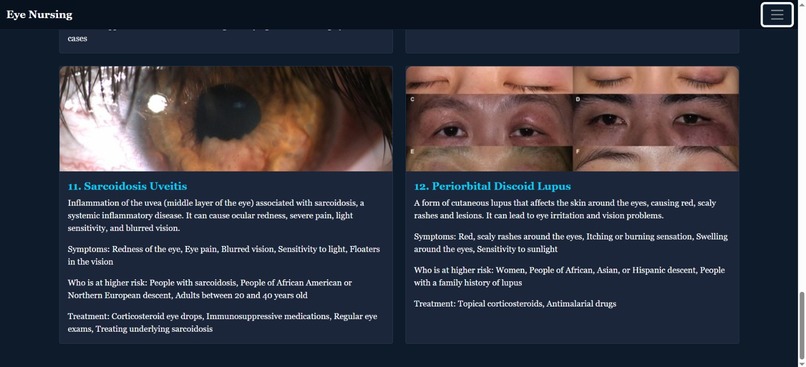
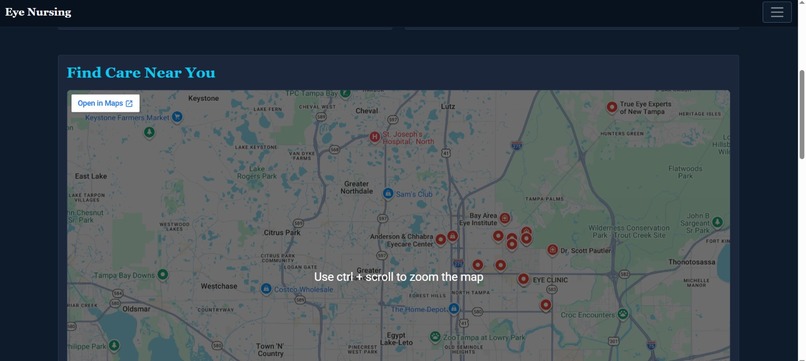
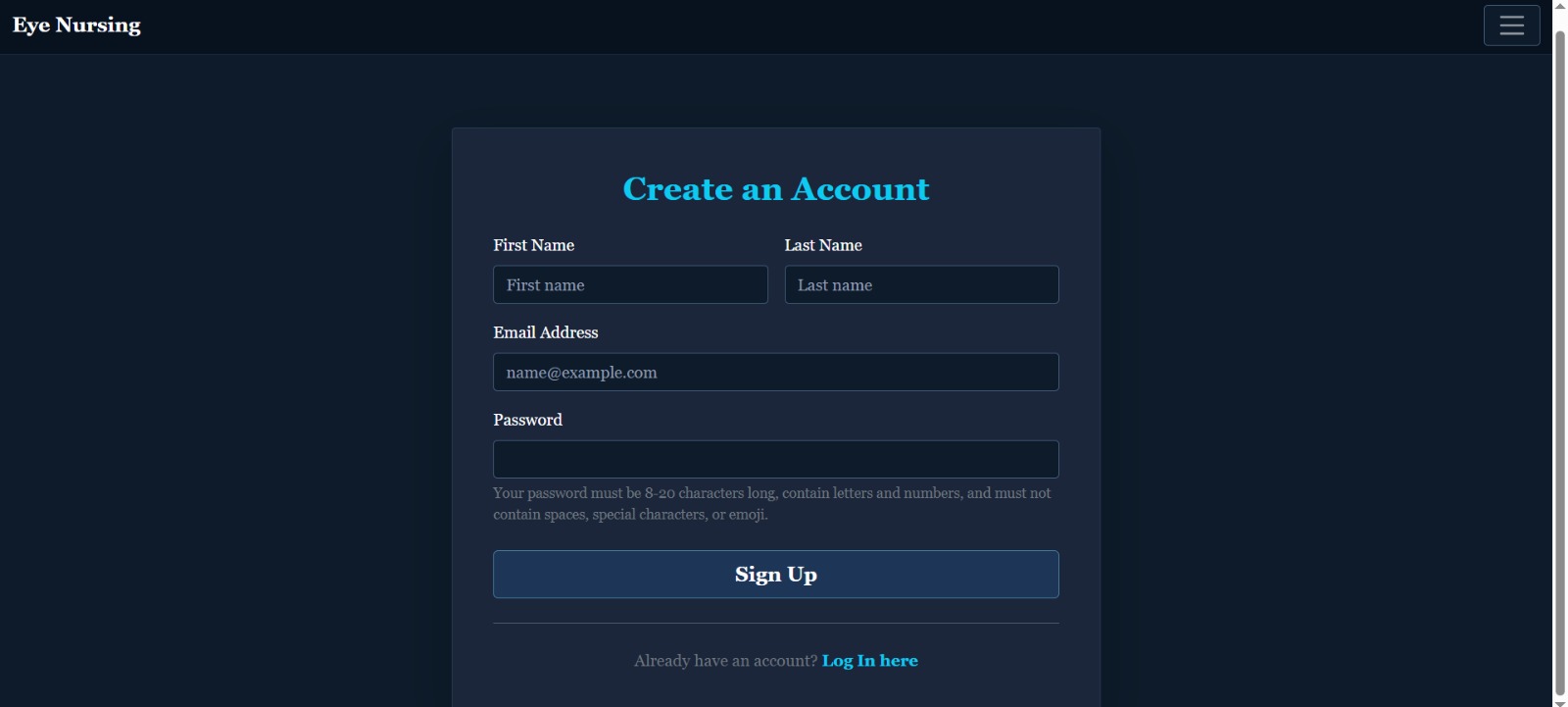
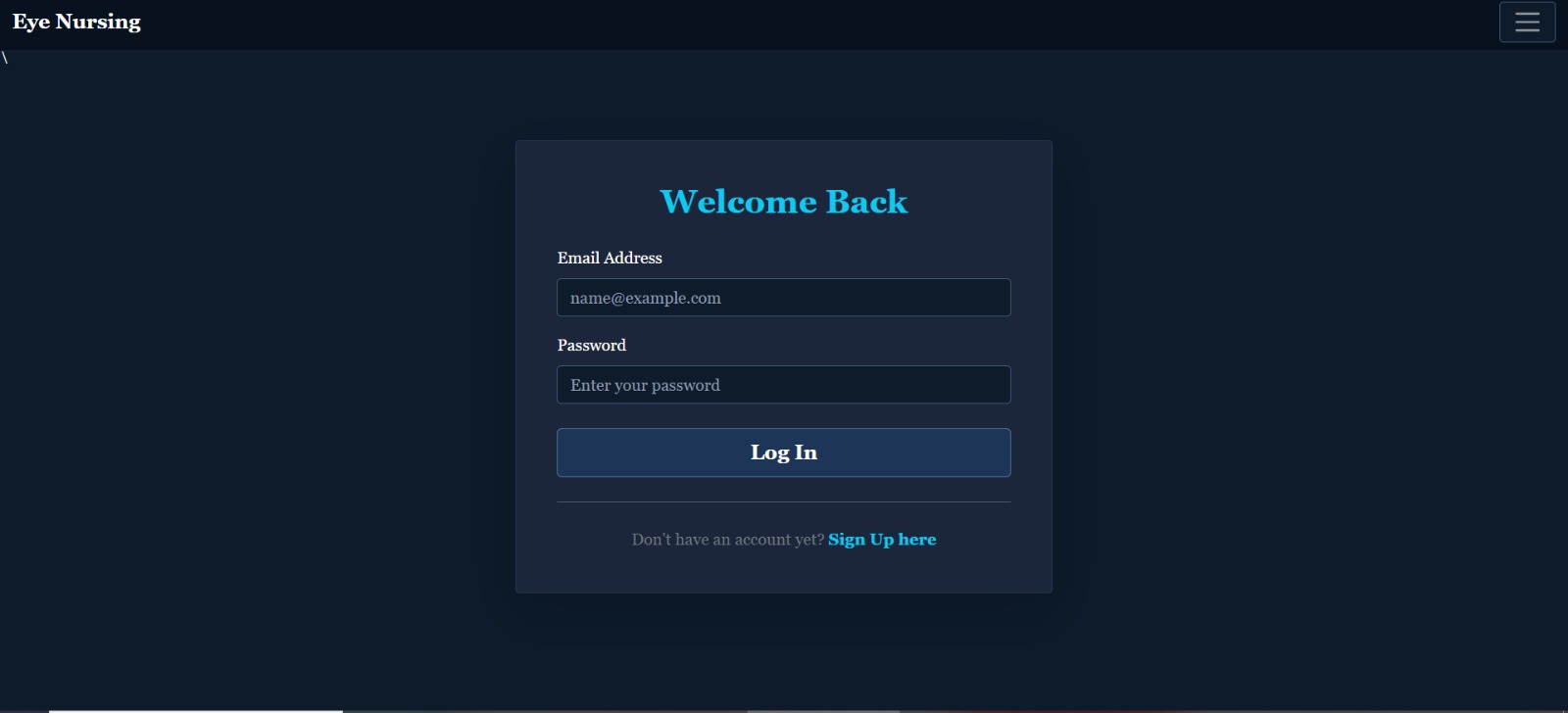
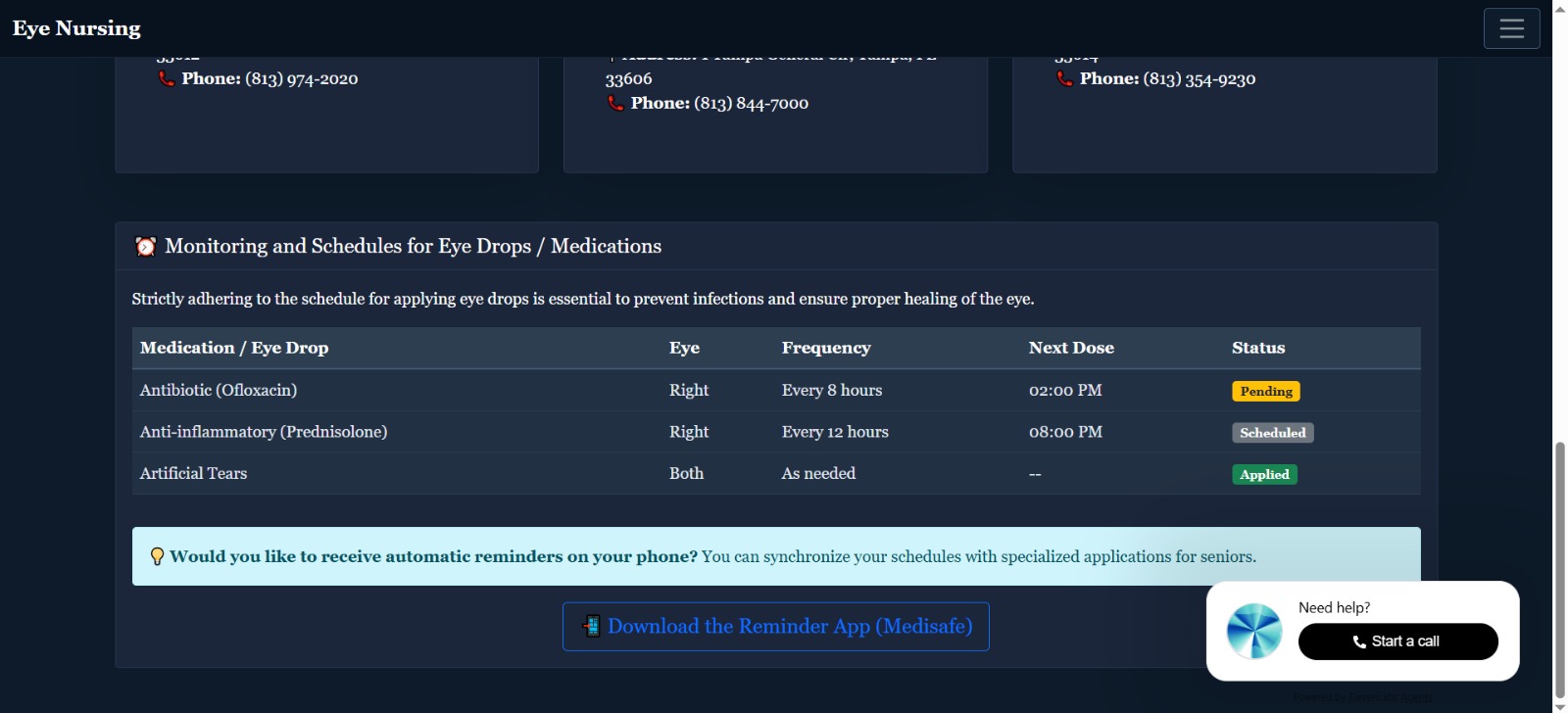
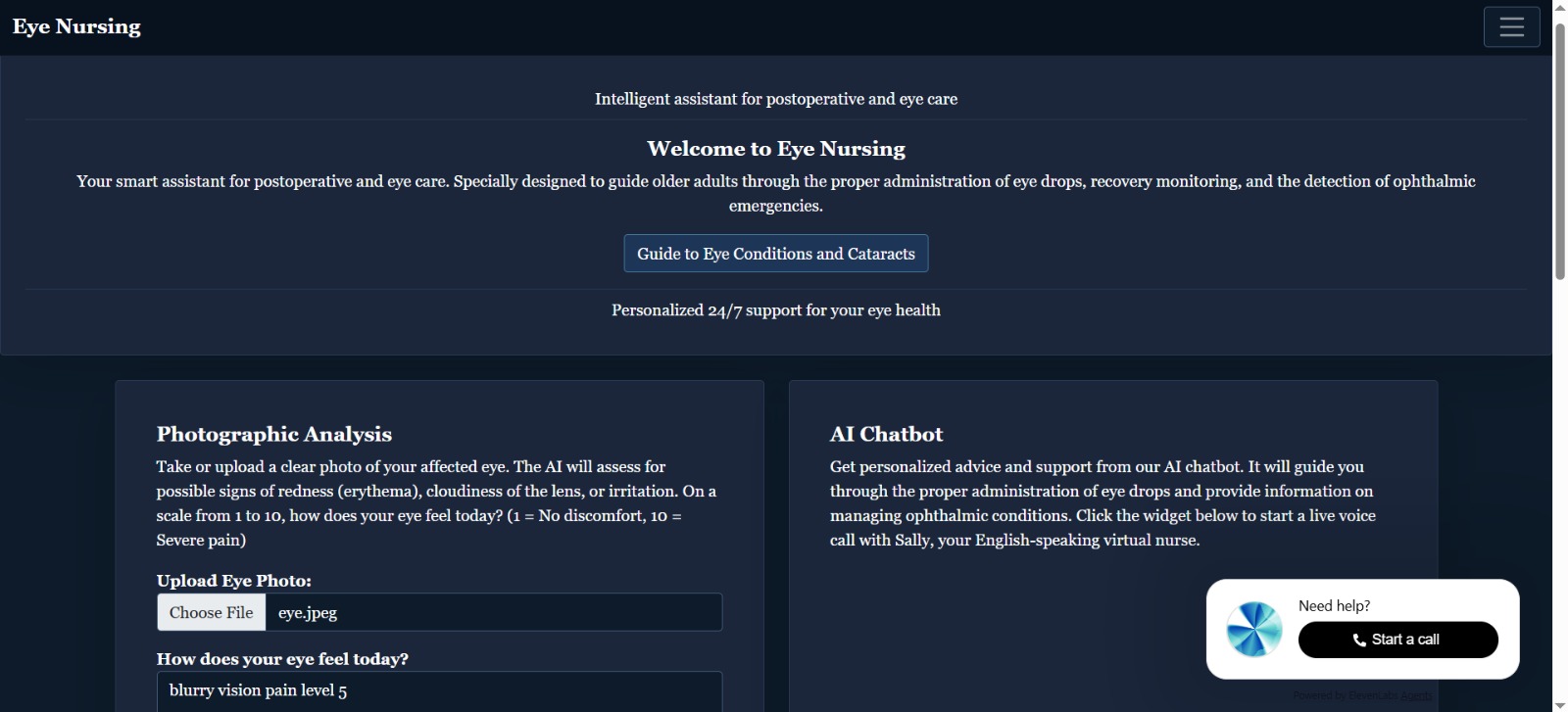
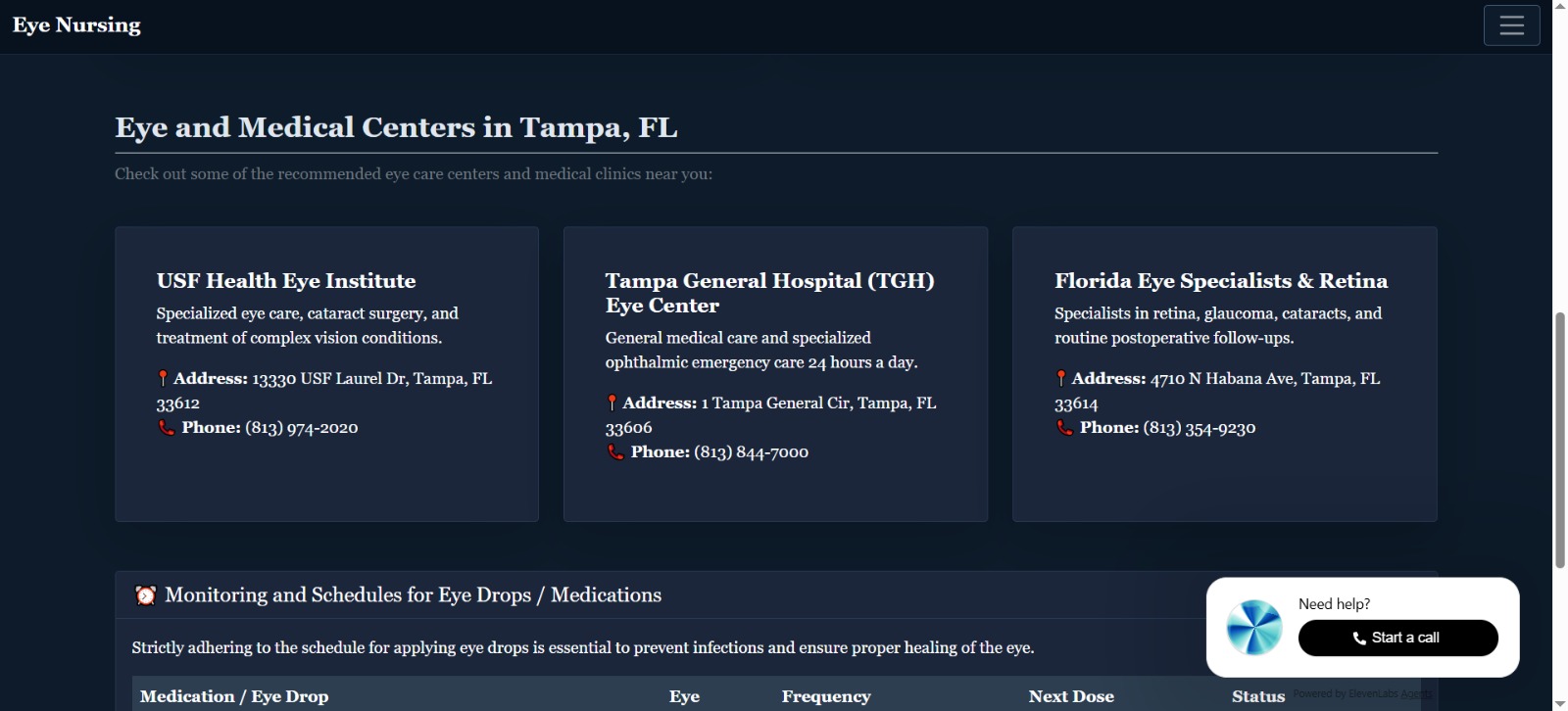
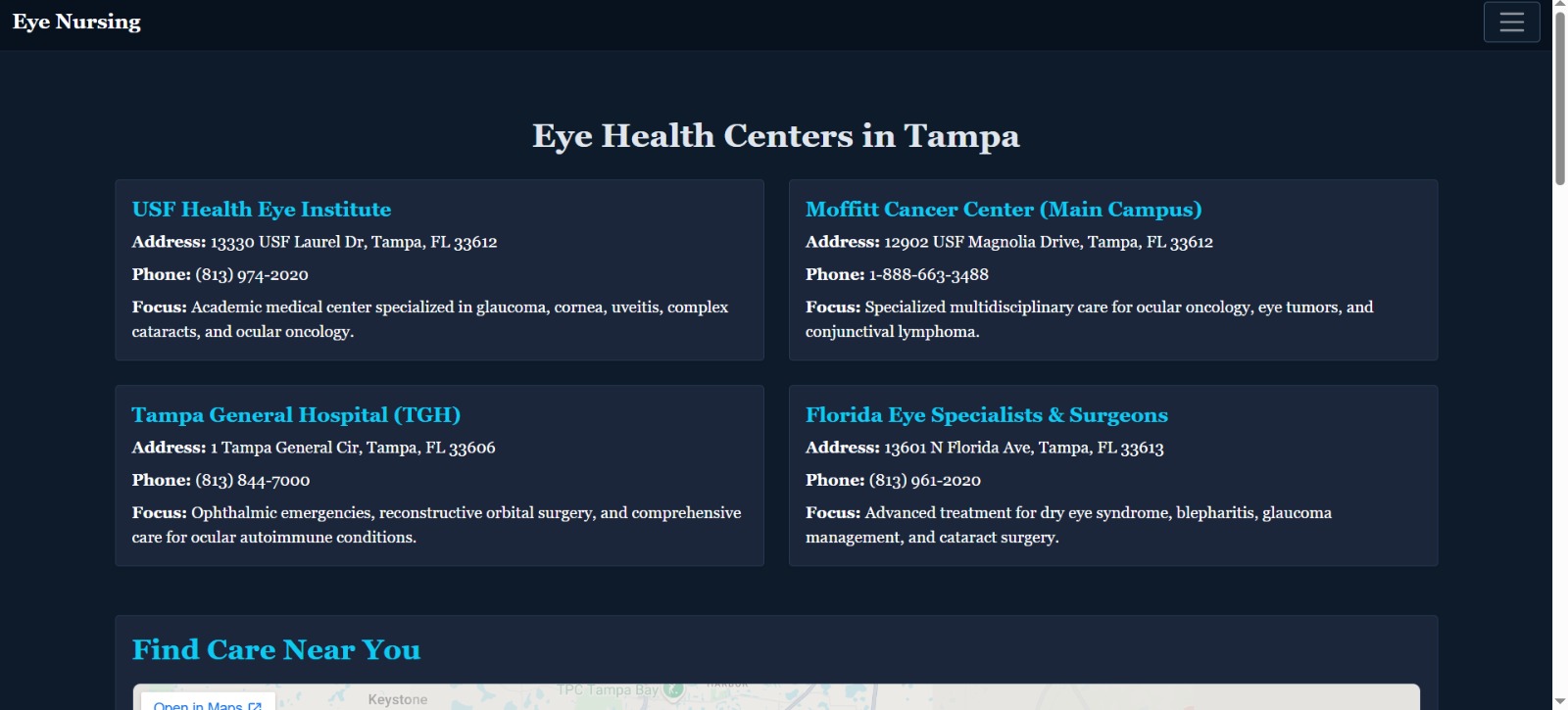
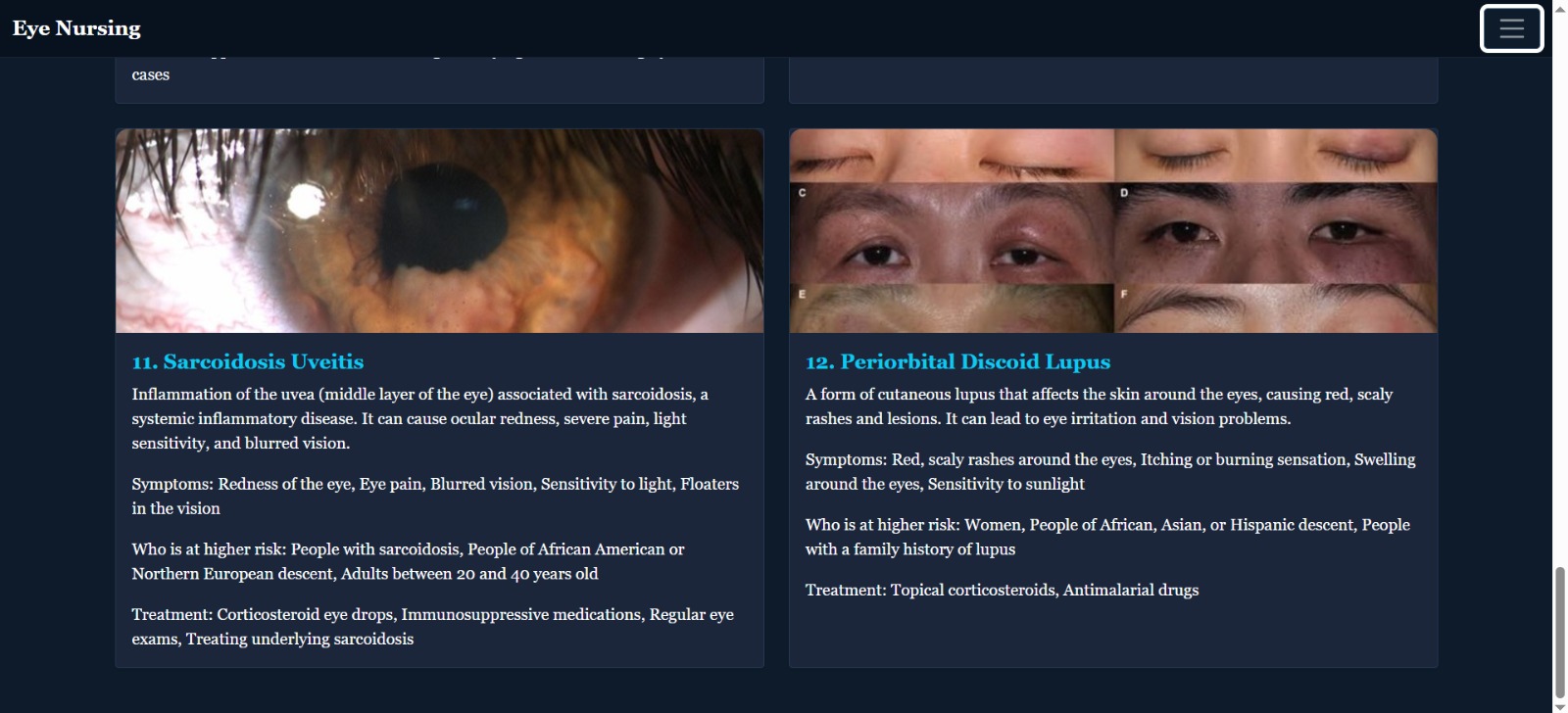
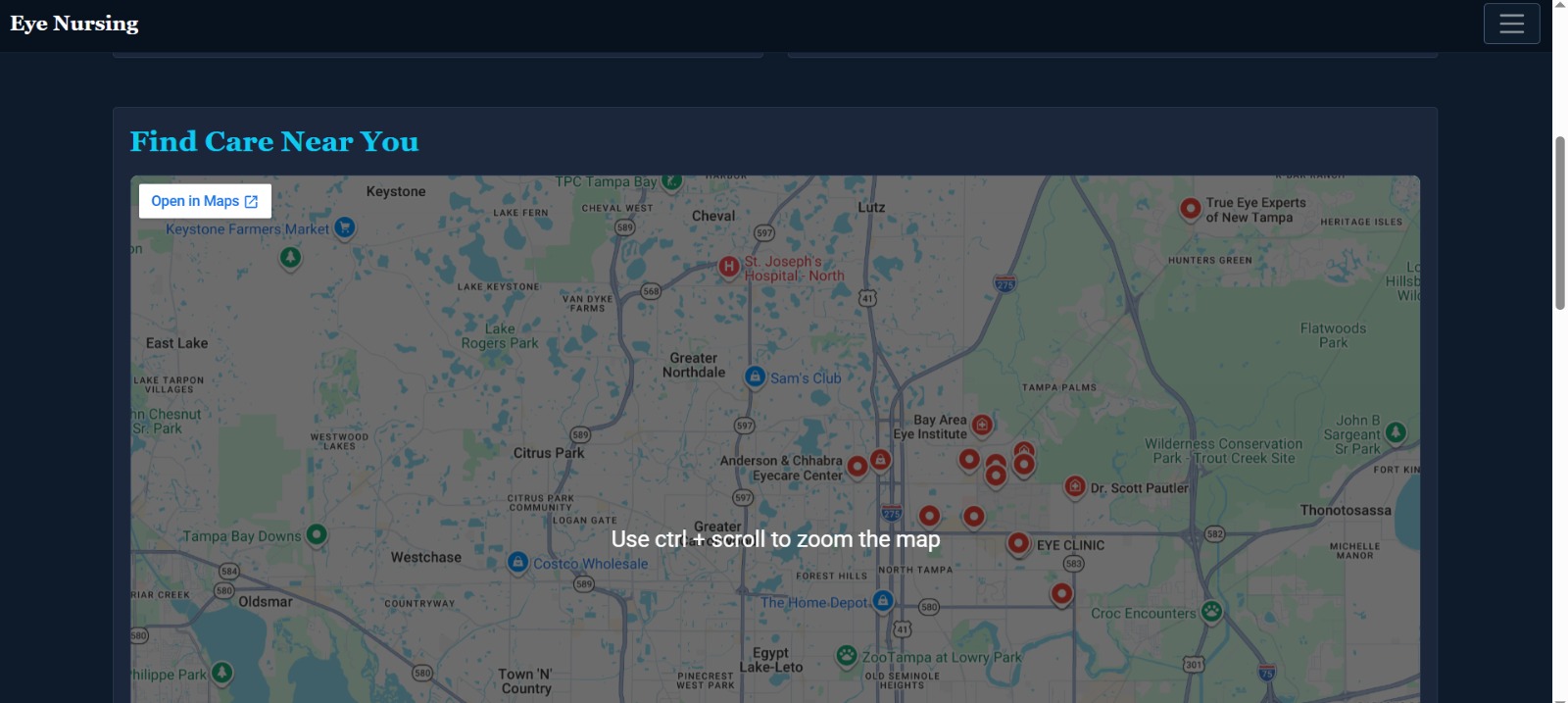
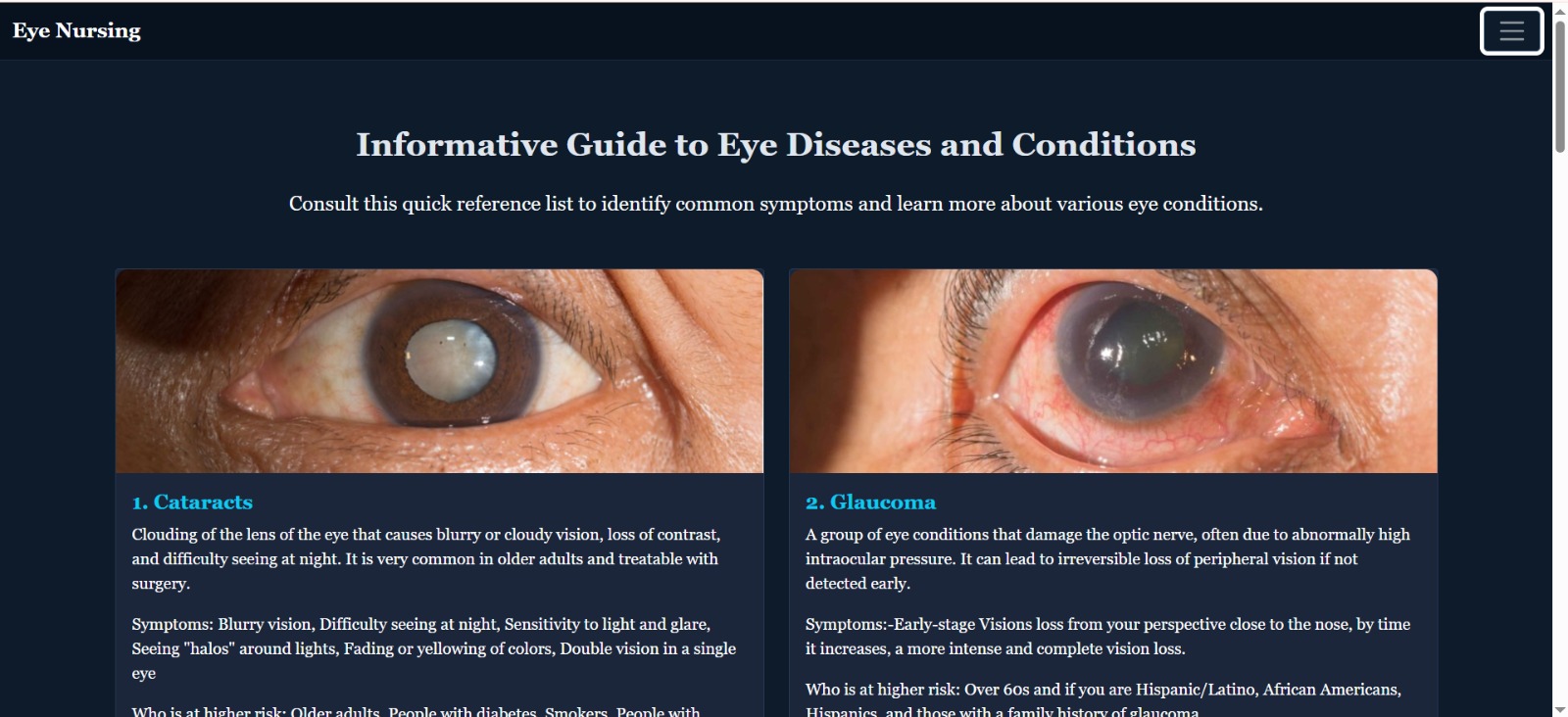
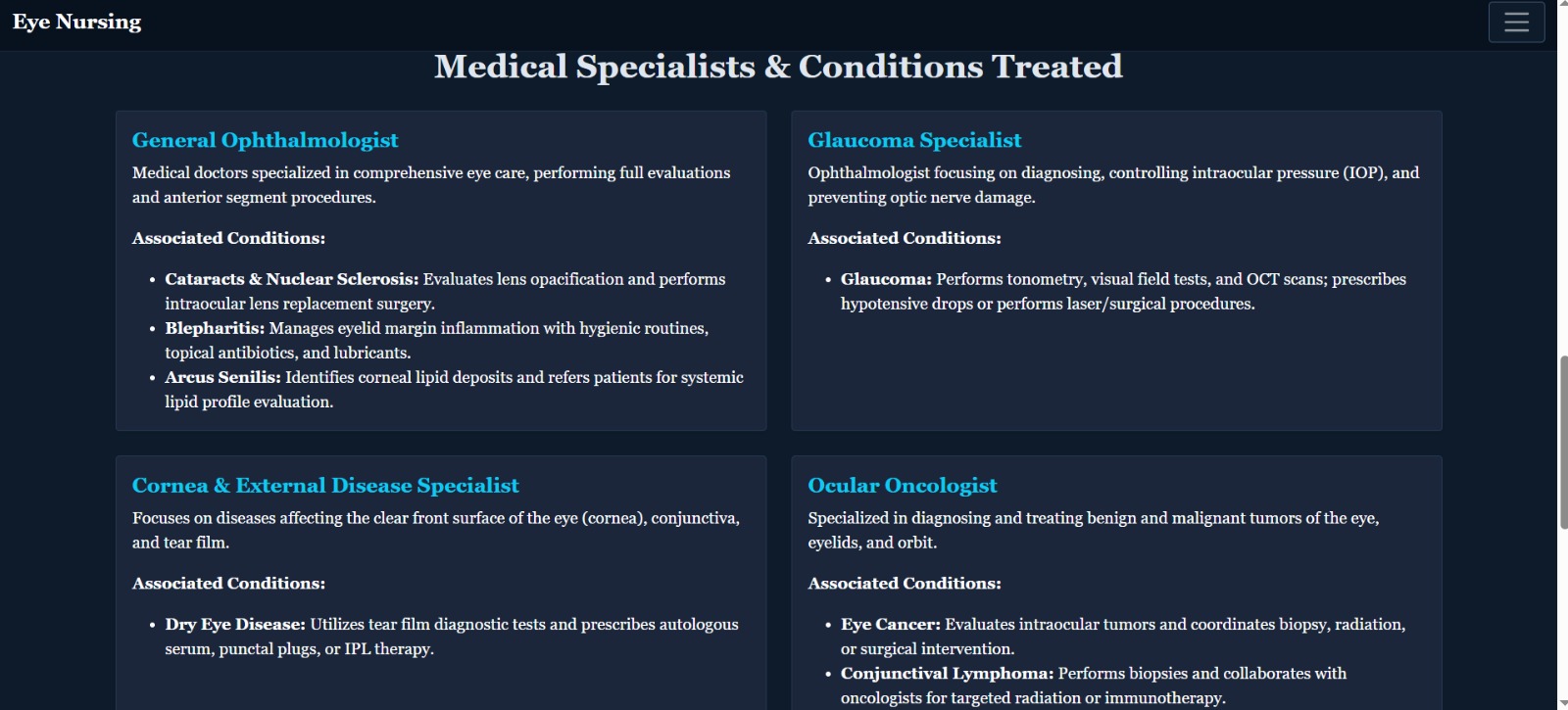
From there, we designed a simple user interface that includes: a control panel on the home page that presents our mission, along with interactive cards for uploading images of the eyes, describing symptoms, and initiating voice interactions; a section for tracking and scheduling eye drops; an informational guide that breaks down the most common eye conditions; and a page dedicated to medical centers with interactive Google Maps and detailed descriptions of specialists, all complemented by seamless login and registration portals. Once the user interface design was fully established, we focused on backend development, integrating ElevenLabs for conversational voice interactions and the Gemini API for intelligent symptom analysis.
Challenges we ran into
One of our primary challenges was deciding whether to focus on older adults or a broader audience, which we resolved through research showing eye conditions affect people of all ages. Designing an accessible UI/UX also presented a major hurdle, as the interface needed high contrast and simple layouts to accommodate users currently experiencing vision difficulties. Finally, we faced technical integration challenges: we had to quickly learn back-end development to connect our Bootstrap/HTML front end with ElevenLabs and the Gemini API, enabling the platform to process voice calls, evaluate symptom severity, and guide users toward routine care or emergency help. It was our first time using elevenlabs and apis.
Accomplishments that we're proud of
Our platform consists of a website integrated with a mobile application that analyzes user-uploaded eye symptoms. Powered by an AI assistant trained on a medical database, the system identifies potential eye conditions, evaluates the severity of the situation, and recommends the best course of action—whether through guided self-care or by connecting the user with the nearest specialist.
Additionally, the app features customized treatment reminders and automated appointment scheduling with the patient's clinic to ensure seamless post-surgery follow-ups and recovery tracking.
What we learned
During this project, our team gained valuable technical and medical knowledge while pushing our creative limits. One of our team members participated in their very first hackathon, learning HTML fundamentals from scratch and leading the detailed research on ocular symptoms and conditions. Technically, we stepped out of our comfort zone by integrating ElevenLabs to power our "Call the AI Nurse" voice functionality, implementing the Gemini API for the first time to handle intelligent health triage, and mastering custom CSS alongside the Bootstrap 5 framework to build a modern, high-contrast UI. Beyond the code, we deepened our understanding of eye anatomy and symptom identification. We learned how to distinguish post-operative recovery signals from non-critical anomalies to guide patients.
What's next for Eye Nursing
In the future, Eye Nursing aims to launch a mobile app for iOS and Android to manage medication schedules with automatic reminders, while developing its computer vision technology into an advanced diagnostic assistant for doctors and the broader medical industry.

Log in or sign up for Devpost to join the conversation.