
Inspiration
collaborat.AR was inspired by other's experiences as well as our own experiences and the challenges people have faced these past two years in the era of endless zoom meetings and remote work. We hope that with collaborat.AR, many of these challenges faced in the workplace, whether it be lack of engagement, community, collaboration or concerns about security, will be resolved and alleviated. Our end goal is to strive for an enjoyable and productive remote working environment, while forming community and positive relationships in the process.
Market User Research
In terms of engagement, Forbes found that remote work is attributed to a 2-fold decrease in productivity and engagement when compared to working in-person. In addition, a Harvard study discovered that two-thirds of workers aren’t engaged when remote, and over a third never get any face-time with their team.
In terms of data privacy and security, statistics show that 41% of employees accessed confidential company information through unsecured and personal applications, which could lead to a major breach of sensitive information.
Remote work is also correlated to a lack of community and culture in the workplace, with 40% of employees feeling that they struggled with being so disconnected from their co-workers.
Product Vision
To combat the challenges faced by Claire and Chris, and in response to the case study, we have come up with a product called collaborat.AR, a pair of glasses/goggles that leverage augmented reality to foster a sense of community in the metaverse.
Solution/What it Does
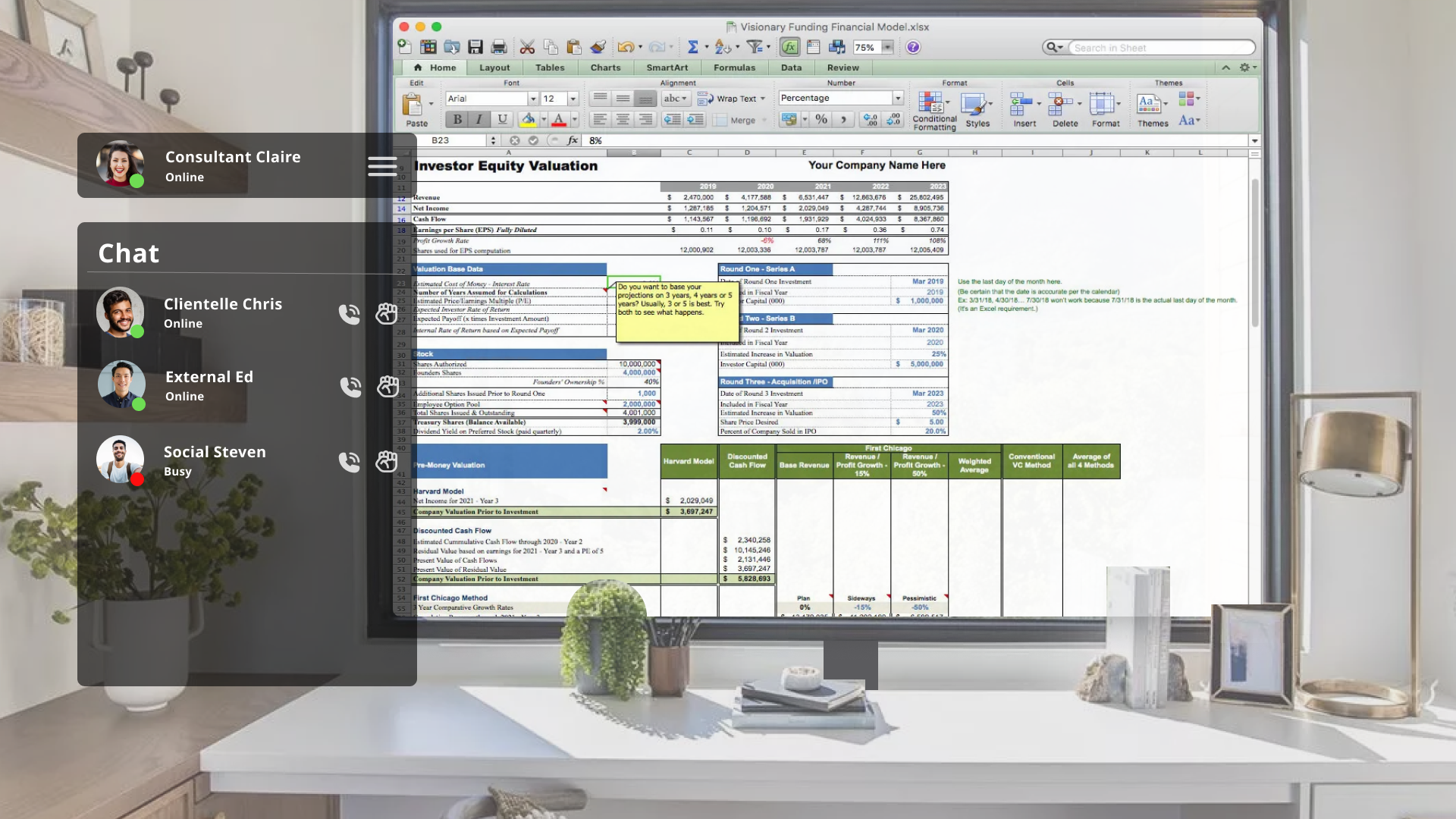
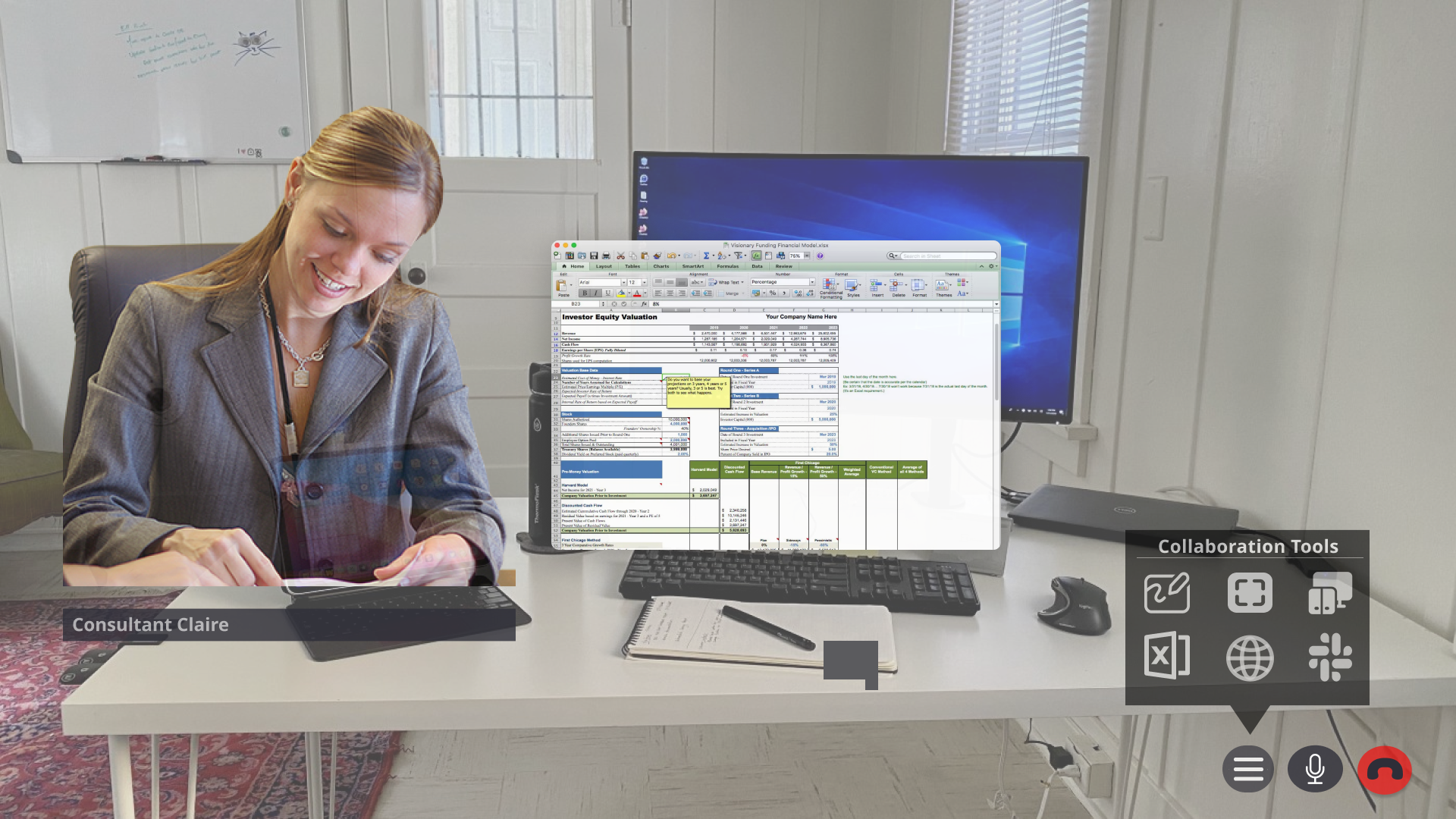
Users will be able to enter the Metaverse by wearing the device/glasses. Use cases include meetings with clients, working on ideas collaboratively, going for a quick chat with a colleague, or grabbing lunch together virtually. With these on, users will be able to work together and communicate more effectively with fellow colleagues and clients. In addition, in collaborat.AR, there are 3 main features to help combat the challenges we are faced with: Augmented Reality Meetings, Collaboration Tools and the Knock Knock Feature.
Key Product Features
For the Augmented Reality Meetings, Users are able to enter or create their own meeting rooms and conduct meetings through the Metaverse.
For Collaboration Tools, Users are able to work on tools collaboratively in an easy-to-use manner using touchscreen through the Metaverse. Clients and the EY Team are able to work interactively together, whether it be on Excel, Powerpoint or Whiteboarding ideas.
For the Knock Knock feature, users can “knock” on each other’s doors to pop in and check in on them, ask quick questions or just chat, recreating the in person experience of trust and bonding with others and keeping it casual without having to set up and schedule an entire meeting.
Desired Customer Outcome
With collaborat.AR, remote workers can be engaged in their work, collaborate with others, ensure data security, and have social interactions with their work friends. Users are now able to be fully engaged when working with Excel and whiteboarding solutions together. Since data is in the metaverse, software can be implemented to encrypt data to stop screenshots and other forms of leakage. Data can also be tokenized to validate its authenticity. “Knock-knock” also allows for friendly and informal discussions to take place and also lets coworkers hang out, grab a virtual coffee, or just chat with other coworkers. This feature is essential in re-creating the casual conversation that an in-person environment has.
What's next for the product
Going forward, we want to incorporate as many new features in the technology as we can. In the longer term, we can adapt this technology to newer types of AR glasses that are lighter and easier to wear. This will increase accessibility to the product.
To implement this solution, small beta tests should be run within select EY case teams and clients. Following these tests and subsequent iterations, larger rollouts can begin.
We also hope to utilize the blockchain and implement web 3.0 features in the product to increase security by encrypting and validating data when sharing within the Metaverse.
How we built it
We built our prototype using Figma and the associated plug-in tools. For our presentation, we used Canva.
Challenges we ran into
There was learning curve when using Figma for prototyping, since none of us had ever used it before and we had to learn how to use it in a short amount of time.
Accomplishments that we're proud of/What we learned
We are proud of learning and getting used to using Figma for prototyping in such a short amount of time, as well as learning and putting together our presentation in under 24 hours. In addition, we learned more about the field of Product Management, what this career entails and more about the exciting and vast Metaverse. Lastly, we really enjoyed working together on this project and built meaningful friendships and connections through it.
Built With
- canva
- figma

Log in or sign up for Devpost to join the conversation.