
Inspiration
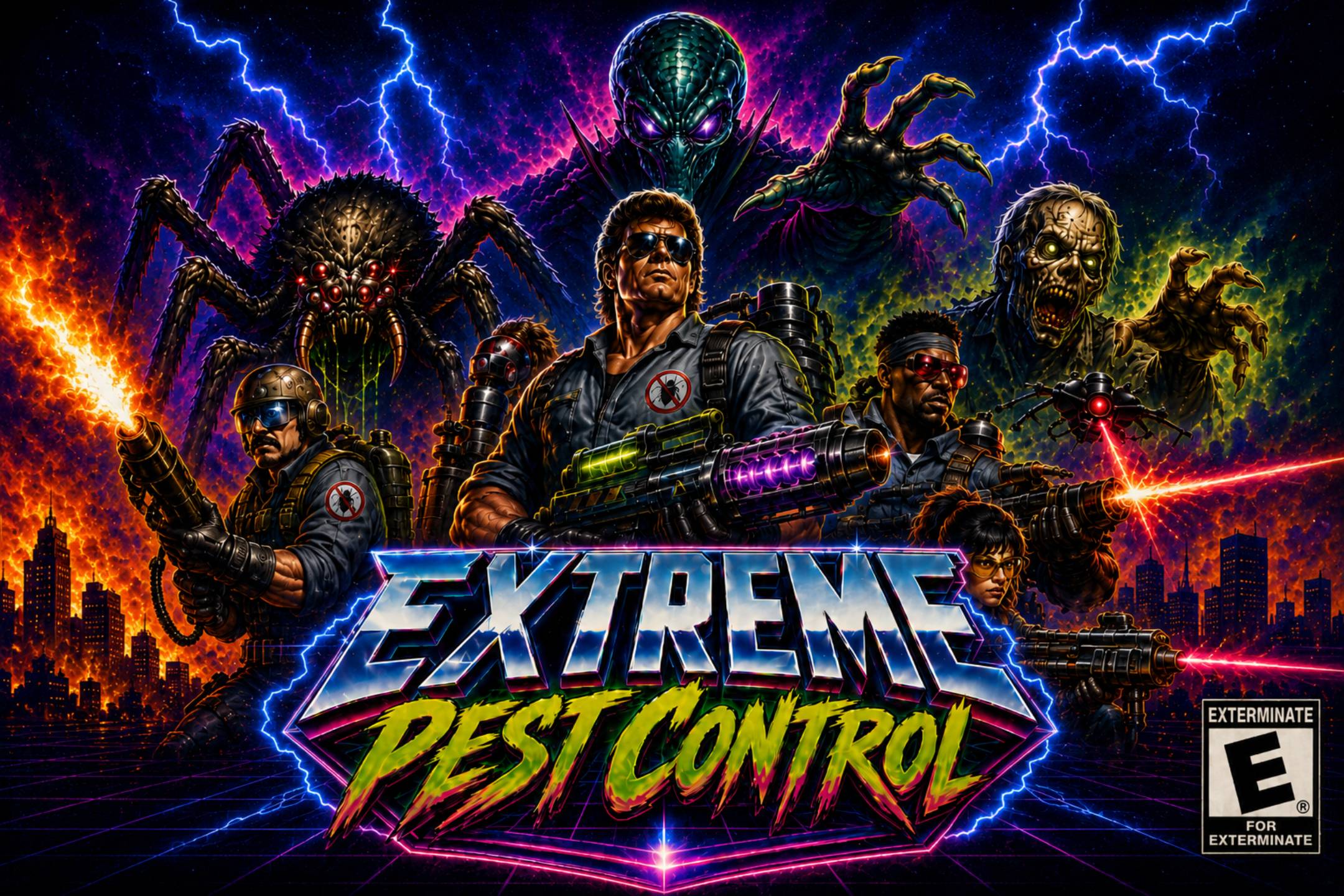
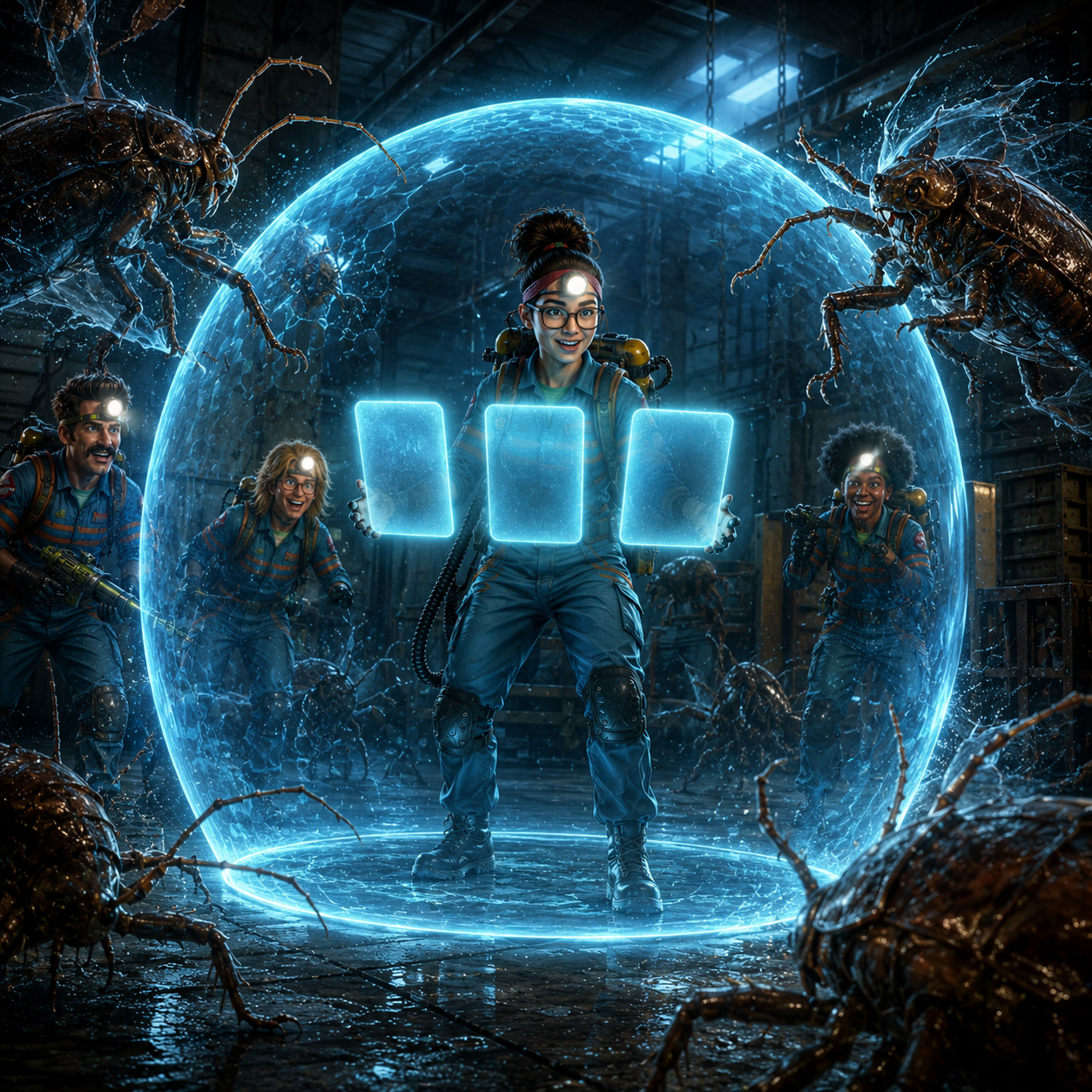
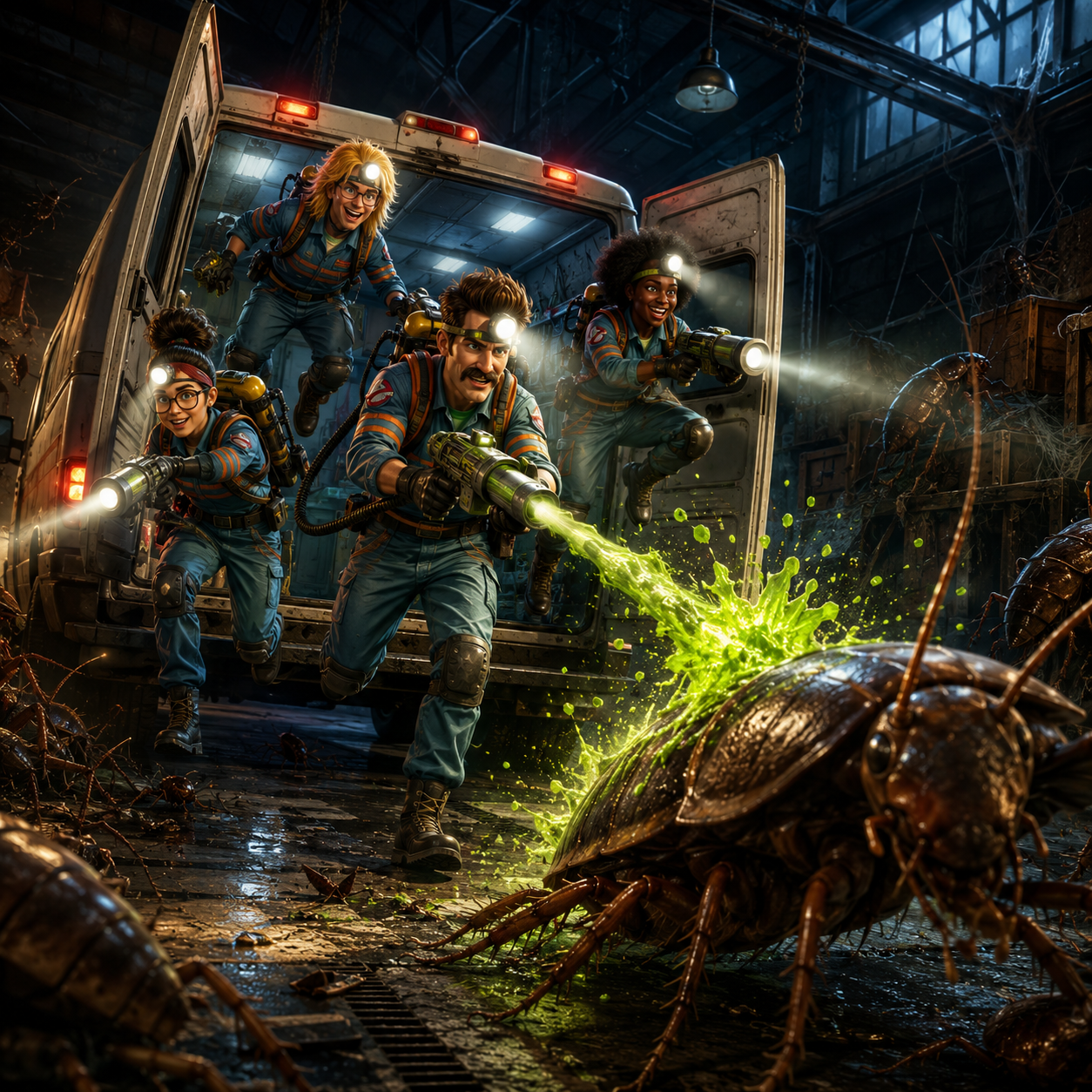
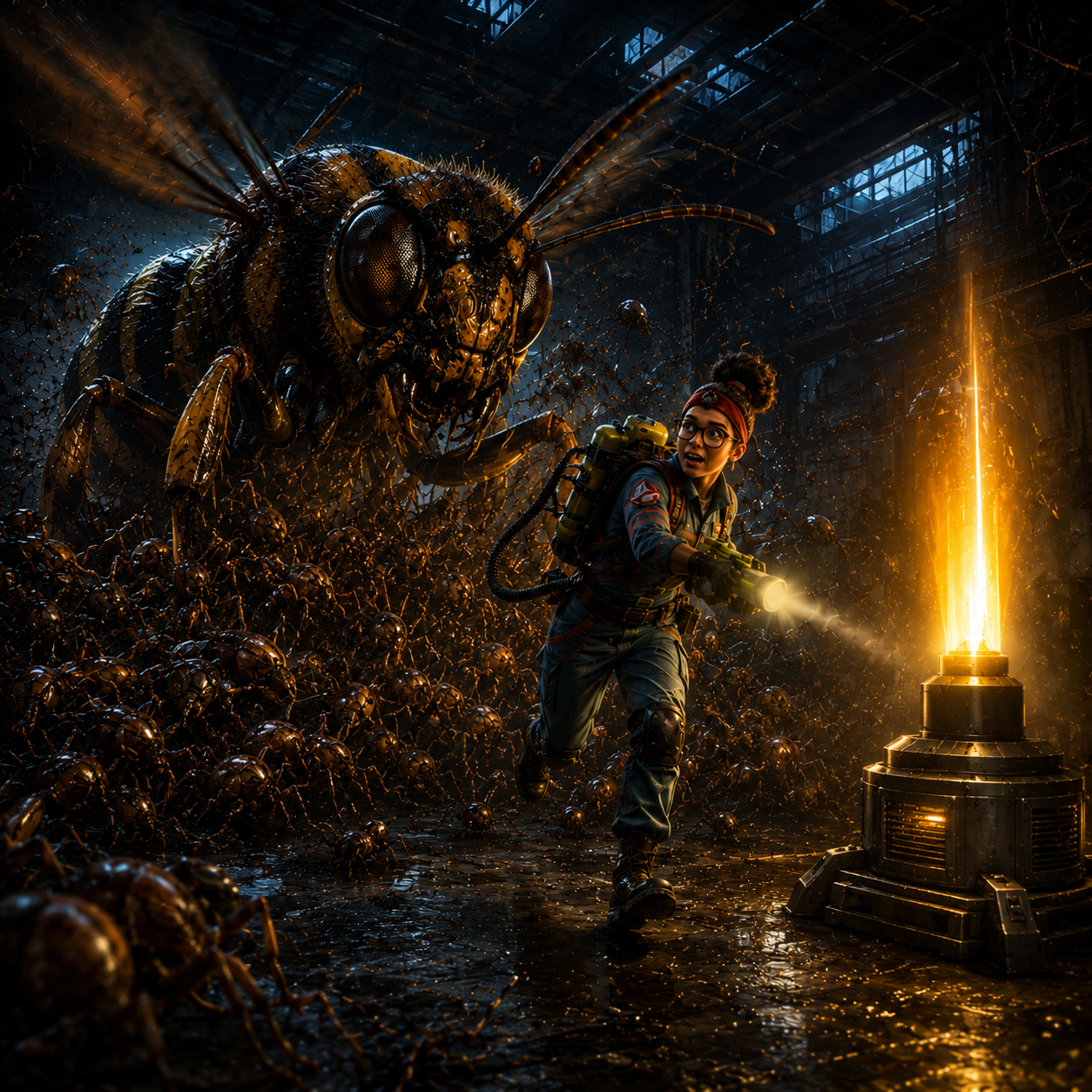
I grew up on co-op shooters and got hooked on the bullet-heaven wave of Vampire Survivors, Megabonk, and Brotato. The one thing those games can't do is play with friends, and they leave the best part of co-op on the table: builds that work together. On a social-native platform like Meta Horizon, the obvious move was to make builds interlock across players, so a crew becomes more than four people fighting in parallel. The comedy came from one question: who takes the jobs nobody else will? My answer was a disreputable extreme pest control company, equal parts Ghostbusters crew and Earth Defense Force, exterminating bugs, zombies, and aliens for a paycheck.
What it does
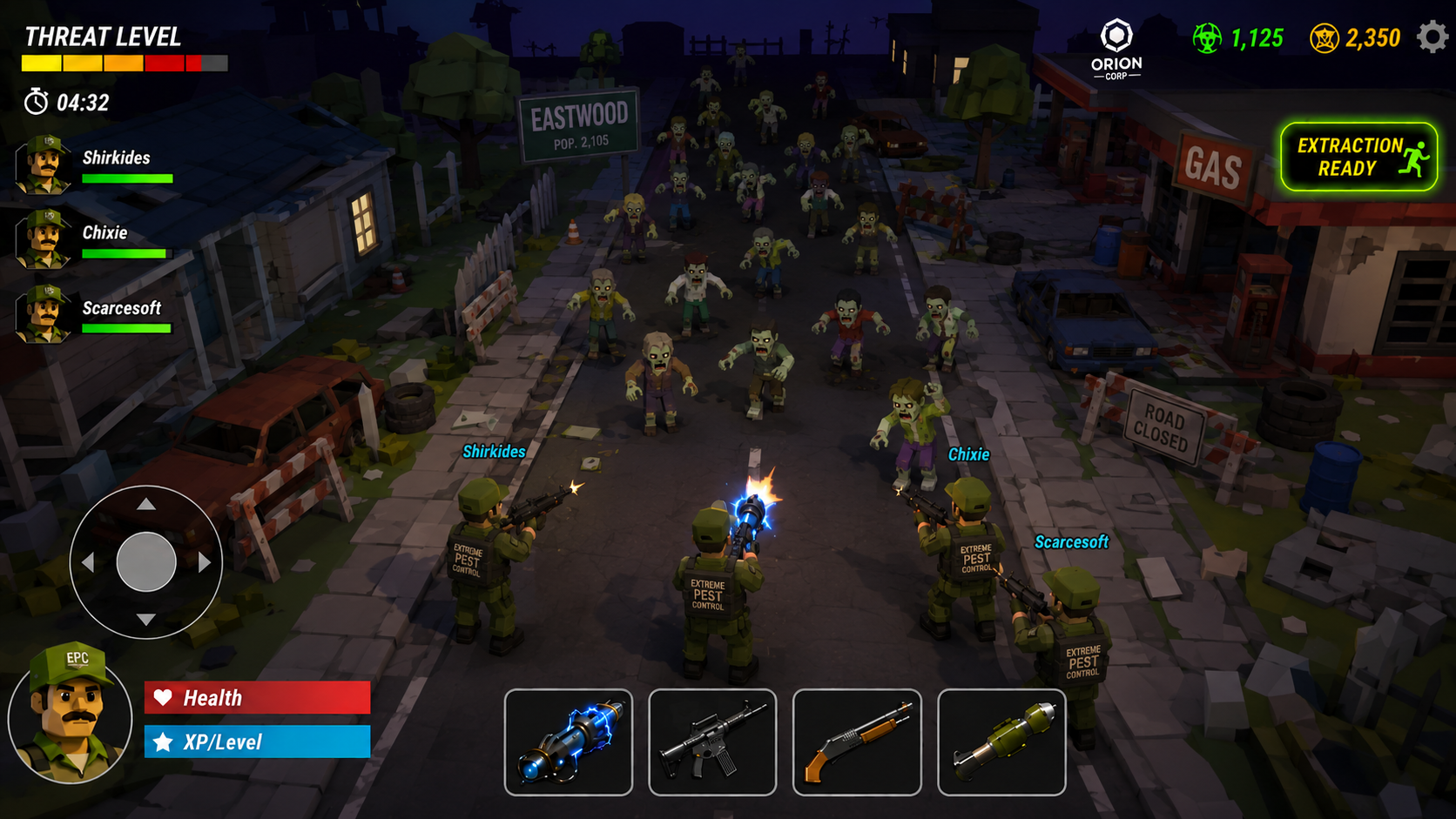
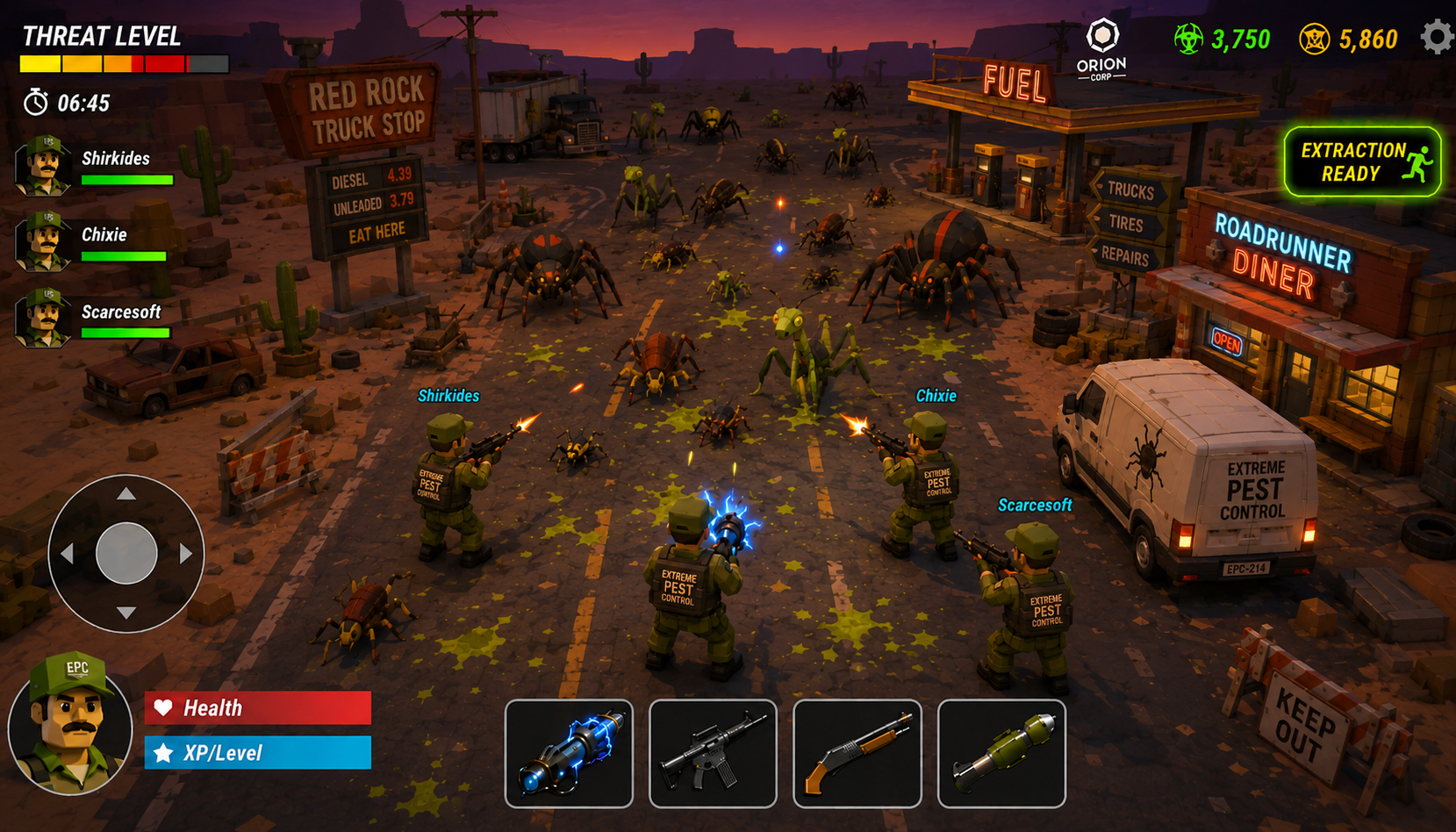
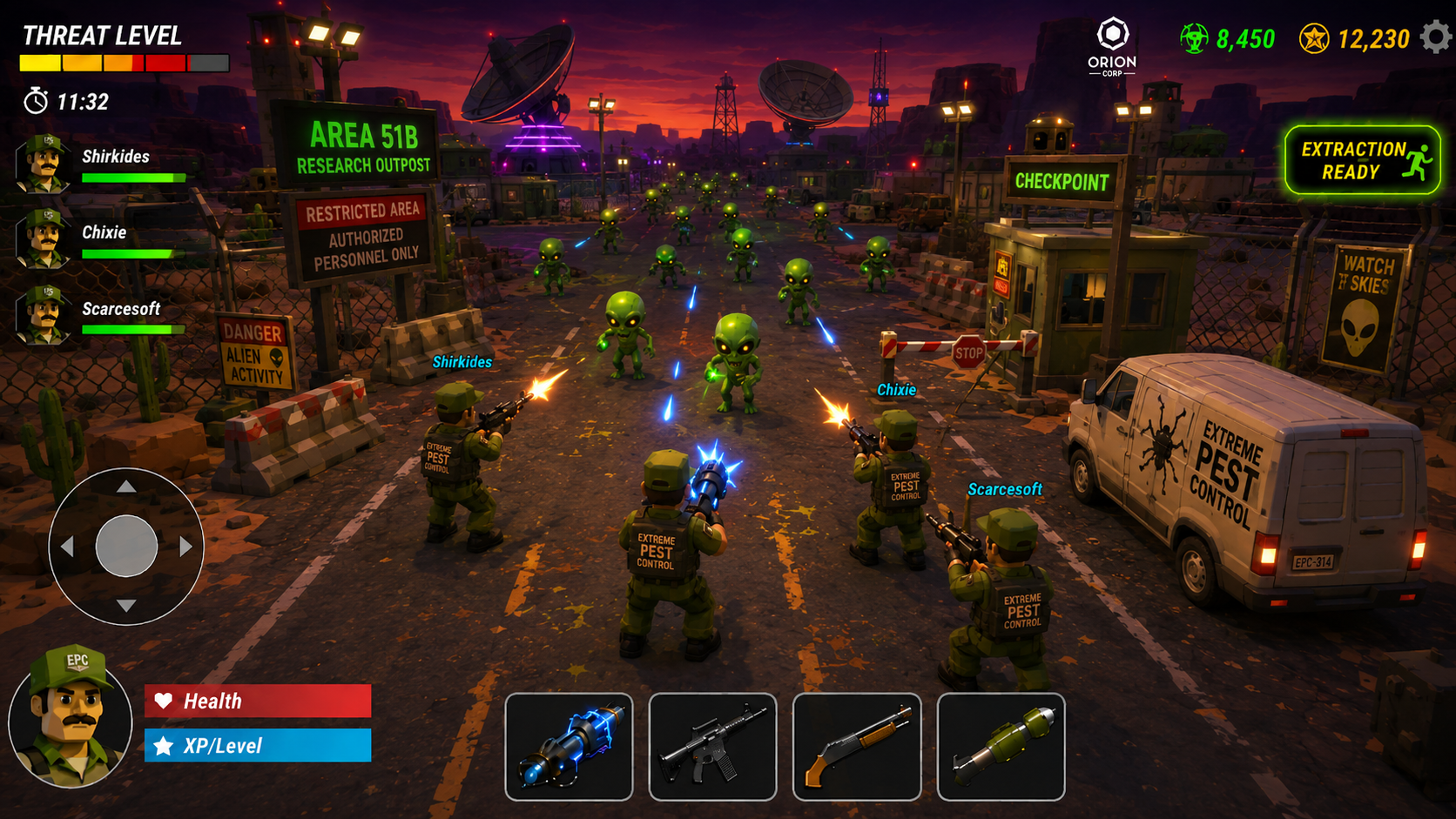
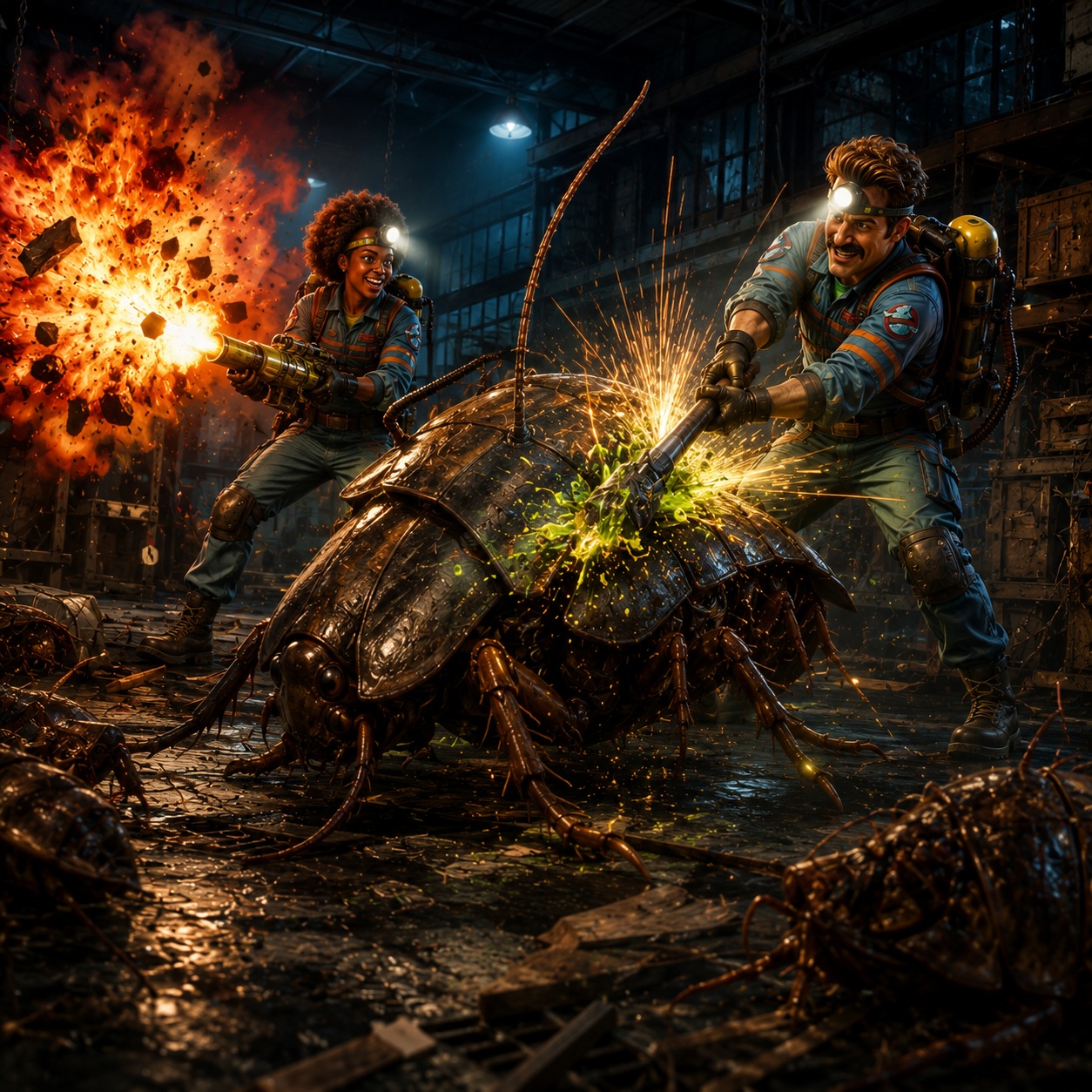
Extreme Pest Control is a co-op horde-survival auto-shooter for mobile, designed as a Tower Defense & Strategy game. A crew of up to four exterminators drops into an infestation, their gear auto-fires, and they survive an endlessly escalating swarm by moving, placing deployable defenses, and building loadouts that lock together.
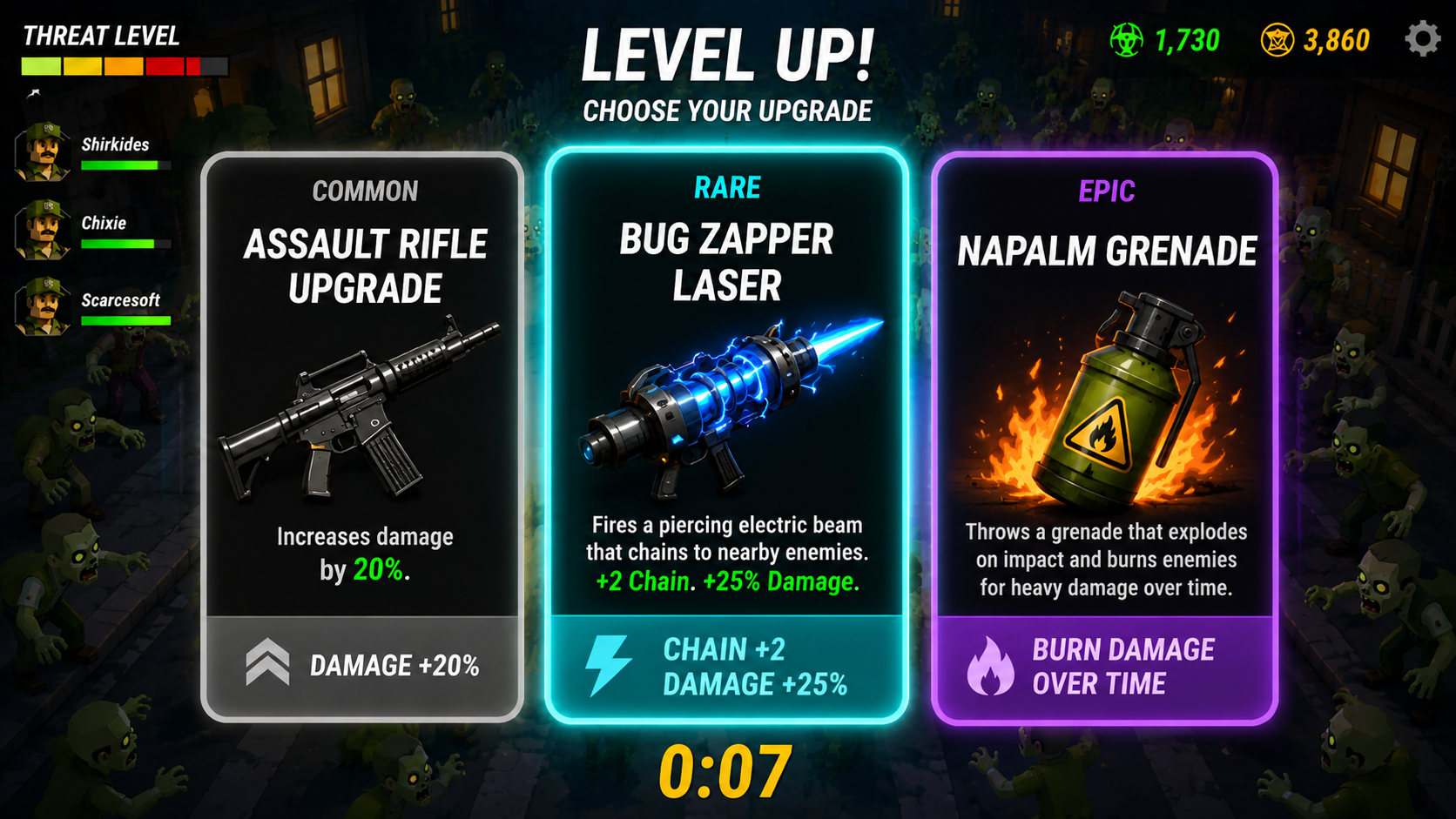
The signature mechanic is cross-player synergy. One player's weapon sets up another's payoff: stagger then execute, mark then focus-fire, herd then clear. A coordinated crew pulls off combos no solo player can reach, and that gap is the point of the game. Five specialties split the genre's classic jobs of damage, area control, crowd control, and support, and deployable turrets, traps, and sentries hold the lines a swarm pours from. Controls stay one-thumb simple: you move and the gear auto-fires, with an optional tap to focus the whole crew's fire onto a boss or a marked elite.
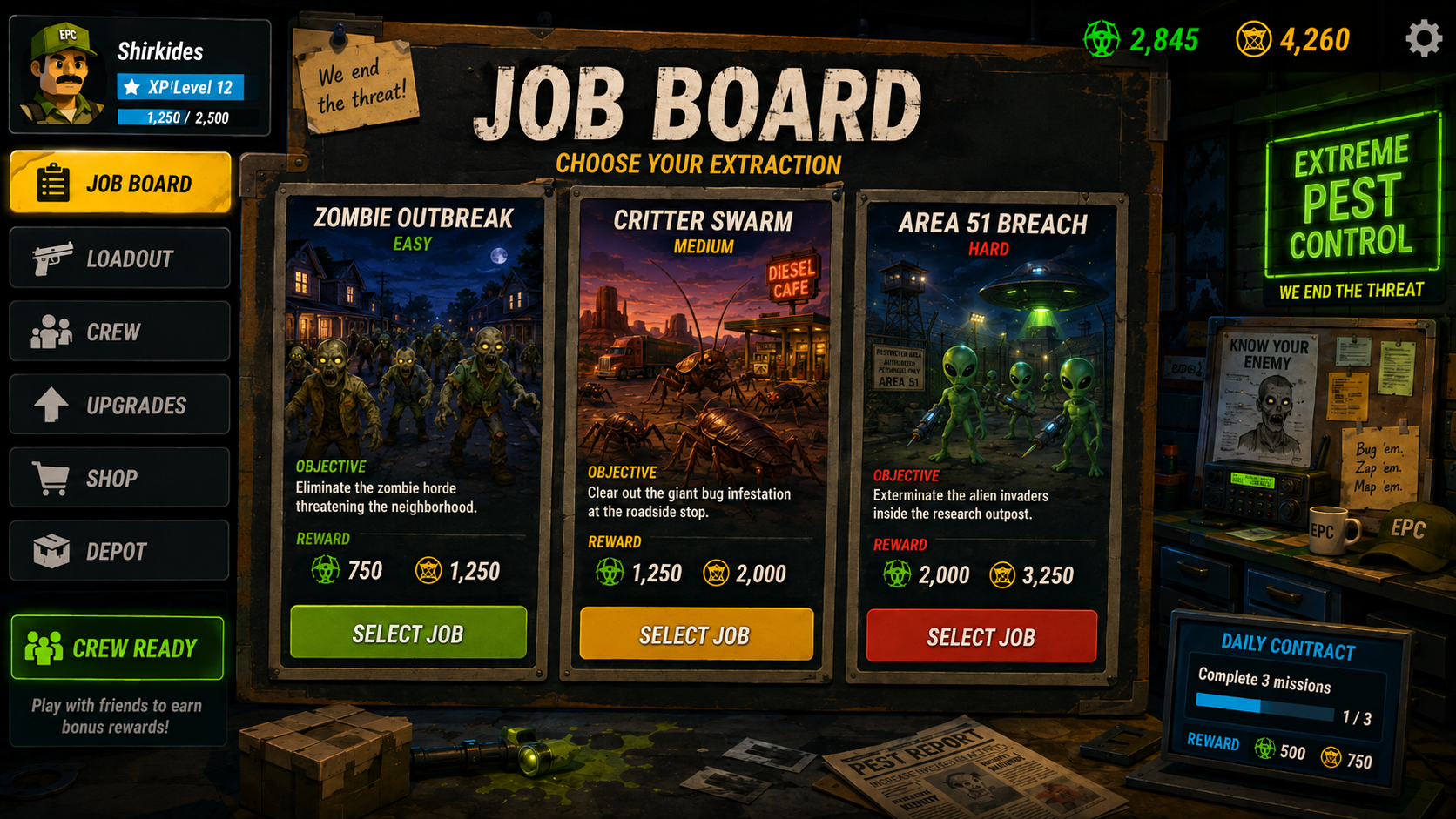
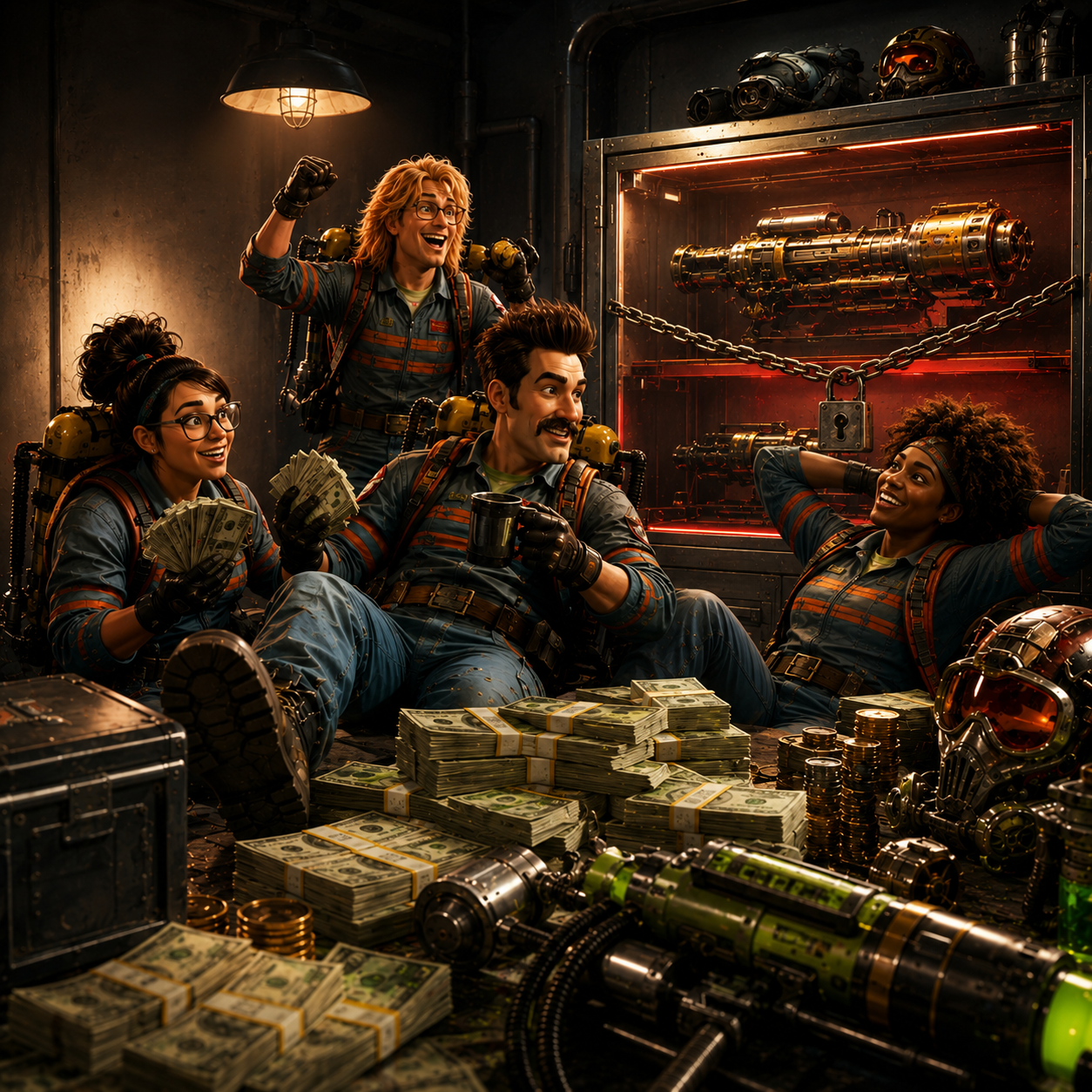
Every run is a push-your-luck gamble: extract for a safe payday or push deeper for a bigger one. Death is non-punishing, so you keep your pay either way, then spend it at HQ to unlock weapons, classes, and tougher contracts. It plays solo too, with one exterminator building both halves of a combo into their own four weapons.
How we built it
This is a pre-production design package: four artifacts that together describe a buildable game, a Game Design Document, a Player Journey Map, a Visual Concept Package, and a Production Plan. I worked from a single design bible so all four would describe the same game, then derived each artifact from it to keep them coherent. I used AI image generation for the concept art, key art, and gameplay frames, and wrote and designed everything around them. A small HTML-to-PDF pipeline gives the documents one shared visual identity, rendering the in-game art, custom UI mockups, and infographics into clean, consistent PDFs.
Challenges we ran into
- Making synergy physical, with no chemistry system. I landed on set-up and pay-off tags carried on enemies (staggered, marked) that any teammate's weapon can read and consume.
- Fitting an auto-shooter into Tower Defense & Strategy. I leaned into deployable placement, positioning as defense, distinct unit roles, escalating waves, and a buy-and-upgrade economy.
- Keeping death non-punishing without killing the stakes. I split the economy so you always keep your Credits, and made extraction a bonus to chase rather than a loss to dread.
- Solo play without an AI companion. Universal weapons let one player build both the set-up and the pay-off, so synergy still exists when you play alone.
- Coherence. Keeping four separate artifacts consistent enough to read as a single game.
Accomplishments that we're proud of
- A genuinely original hook for the genre: builds that defend each other across players, which a single-player survivor game structurally cannot do.
- A system map where every piece feeds the next: weapons into synergy, synergy into depth, depth into Credits, Credits into permanent power.
- A non-punishing loop that still feels tense, because the gamble is about how much more you can win, not how much you can lose.
- A tight, coherent package: the same game told four ways, with a real tension curve and emotional arc in the Player Journey Map.
What we learned
- Designing for a social platform changes the core mechanic, not only the netcode. The interesting question was what builds do for each other, not how to sync four clients.
- The Player Journey Map is a sharp design lens. Mapping the first fifteen minutes moment to moment exposed pacing gaps the systems docs hid.
- Honest scoping is a feature in itself. Separating the must-build MVP from the v2 wishlist made the whole plan more convincing.
What's next for Extreme Pest Control
- Build the MVP per the Production Plan. Phases 1 to 3 prove the one unproven bet, that builds combining across players is fun, before any content is stacked on top.
- Scale the proven loop: the three infestations at launch, then more families (rats, killer plants, demons), more classes (a tank, a deployables engineer, a summoner), and literal weapon fusion across players.
- Longer term: boss and raid contracts, competitive extraction between two crews, a deeper HQ management layer, and seasonal outbreak events.
Because every pest is a reskin of one shared archetype set, the premise has no ceiling. Any horror creature, from vampires and kaiju to killer robots, slots in as a new infestation with a single signature trait, so the game can be built on endlessly.
Built With
- chatgpt
- claude
- photoshop
- vscode


Log in or sign up for Devpost to join the conversation.