-
-
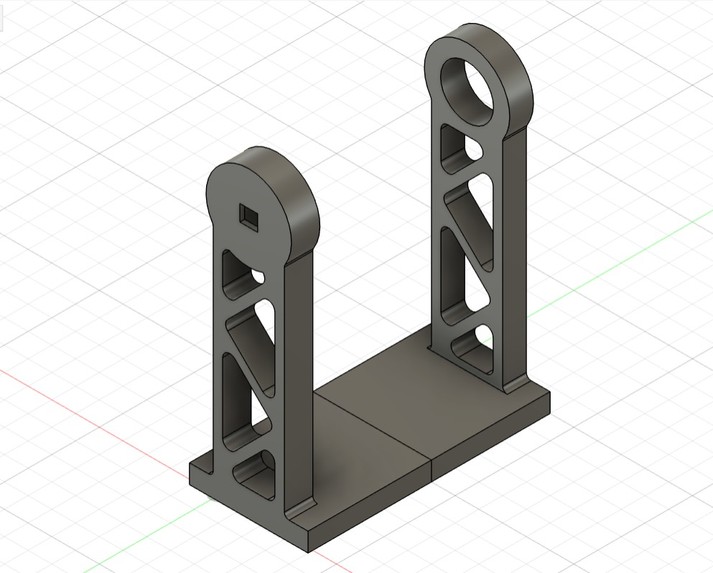
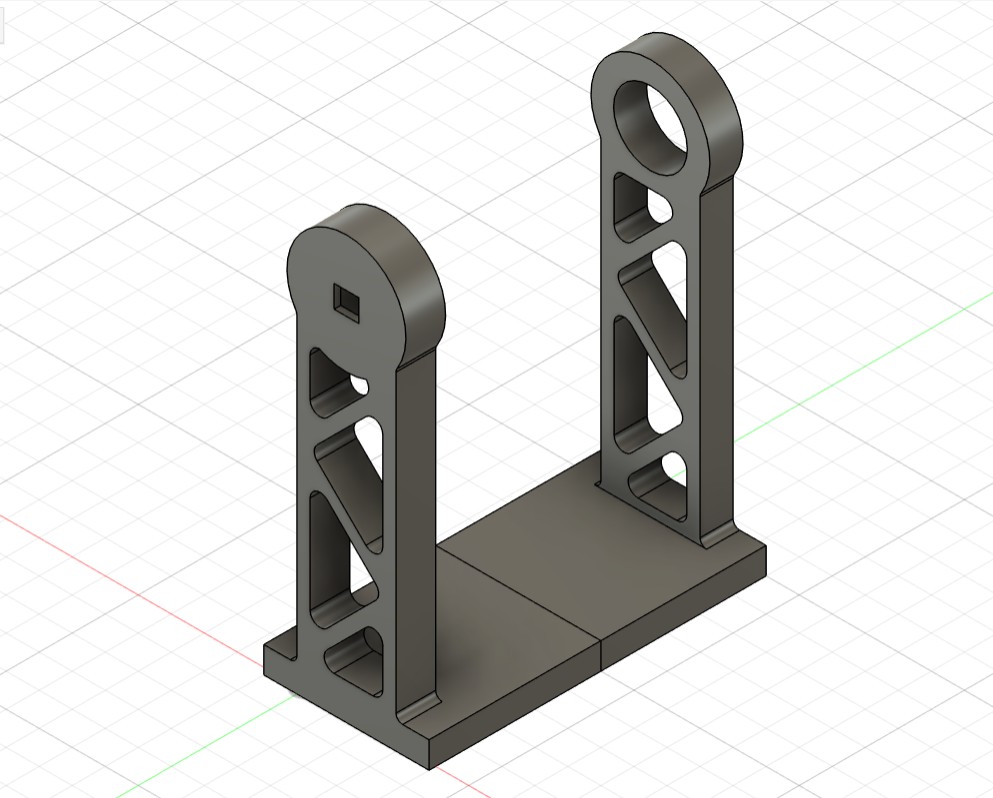
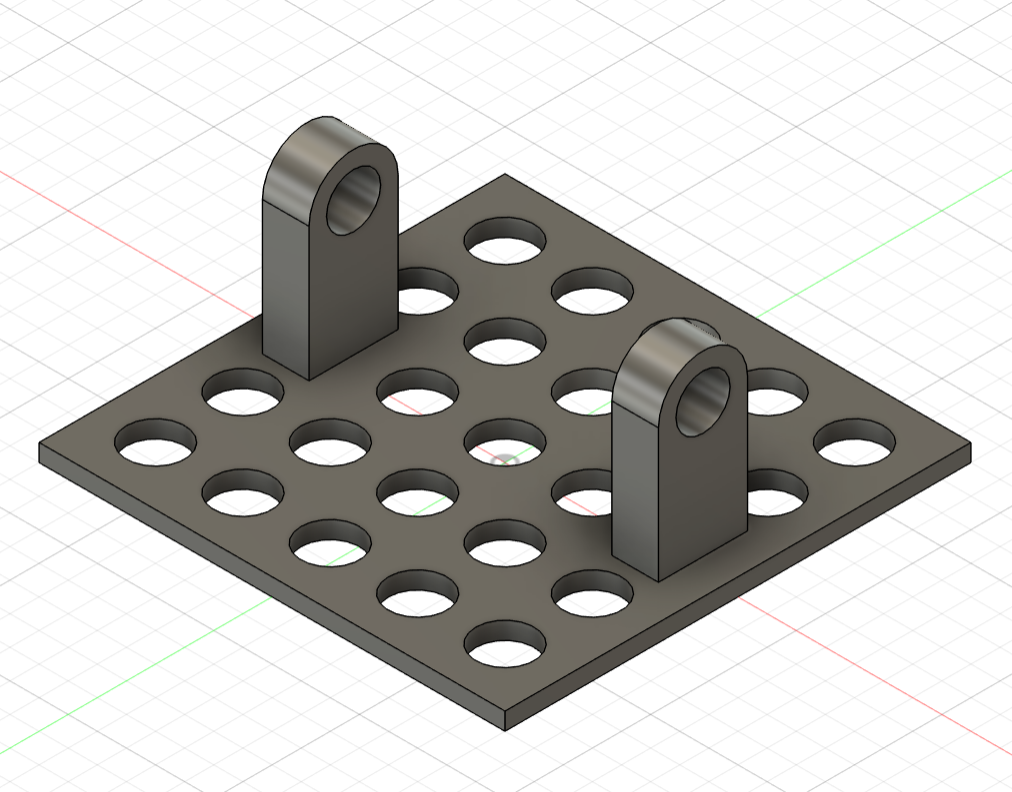
Final CAD design for the solar panel base
-
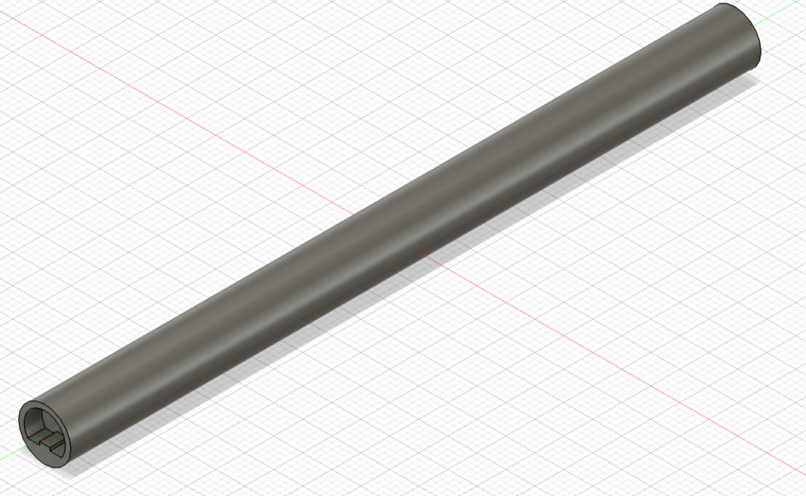
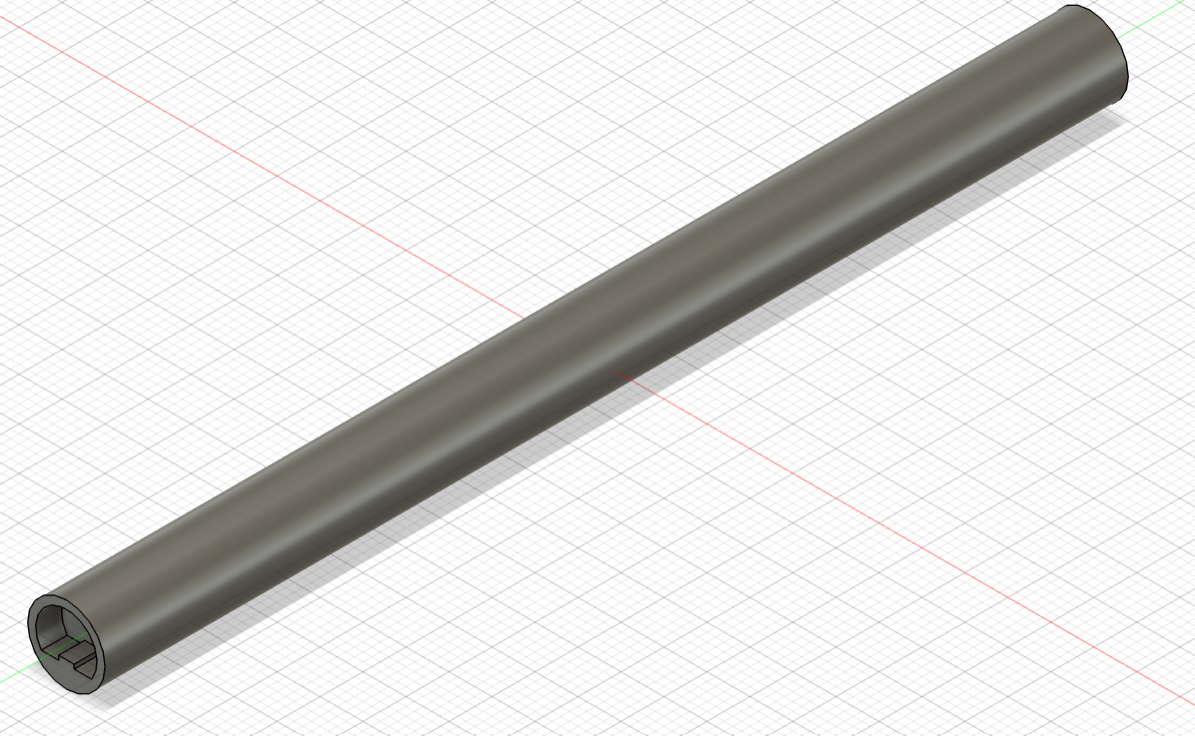
Final CAD design for the shaft of the solar panel
-
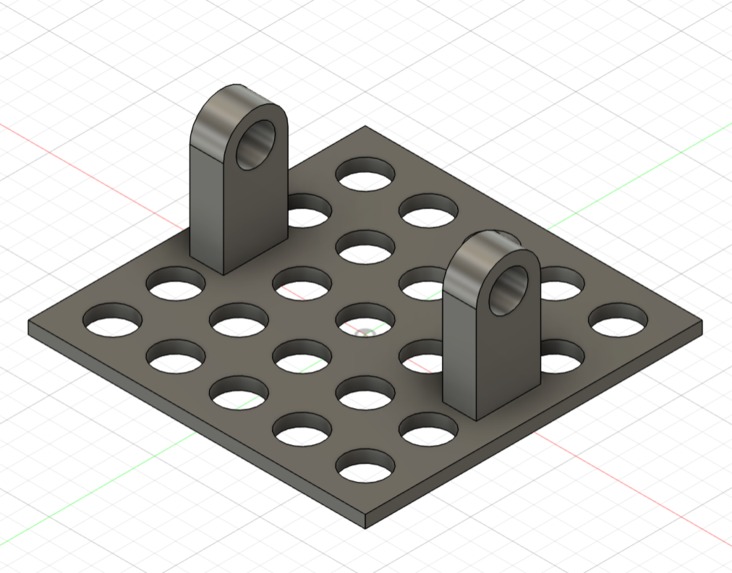
Final CAD design for the solar panel anchor
-
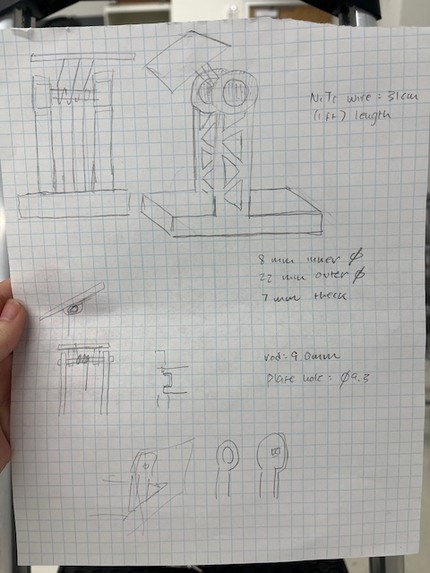
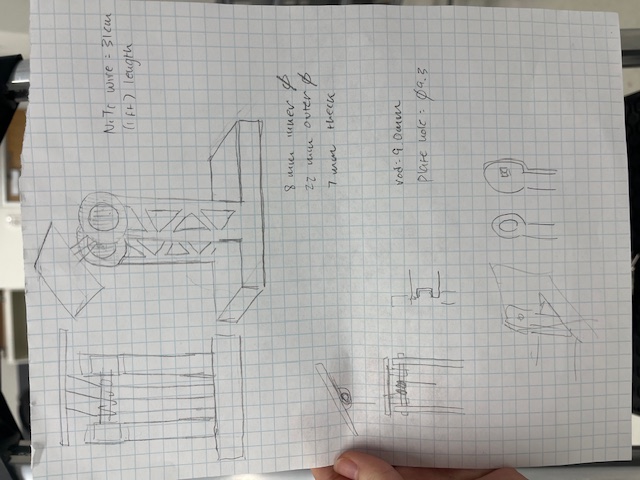
Initial Ideation Sketches
-
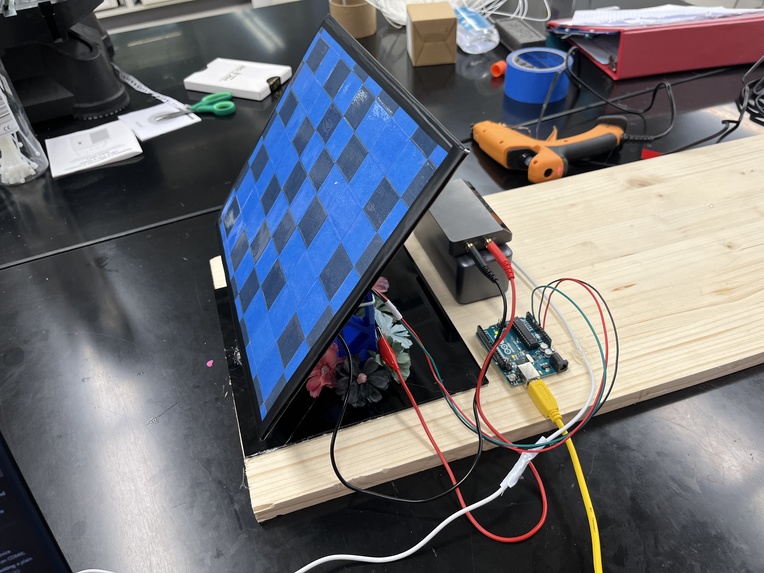
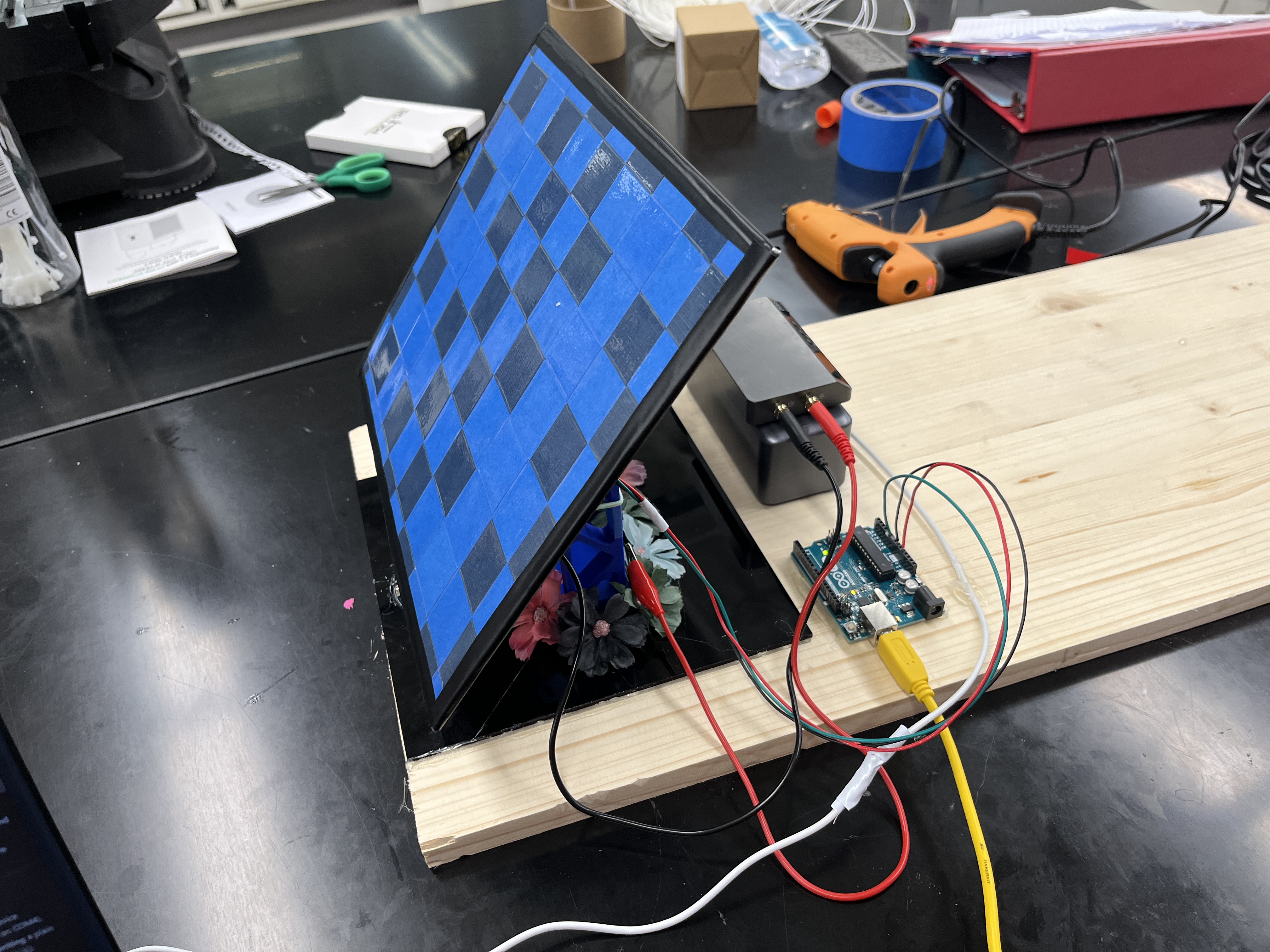
Final Product
-
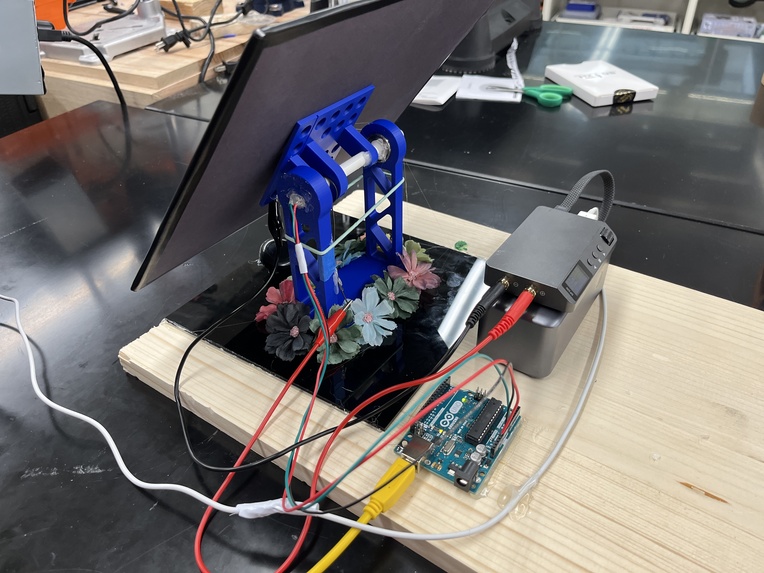
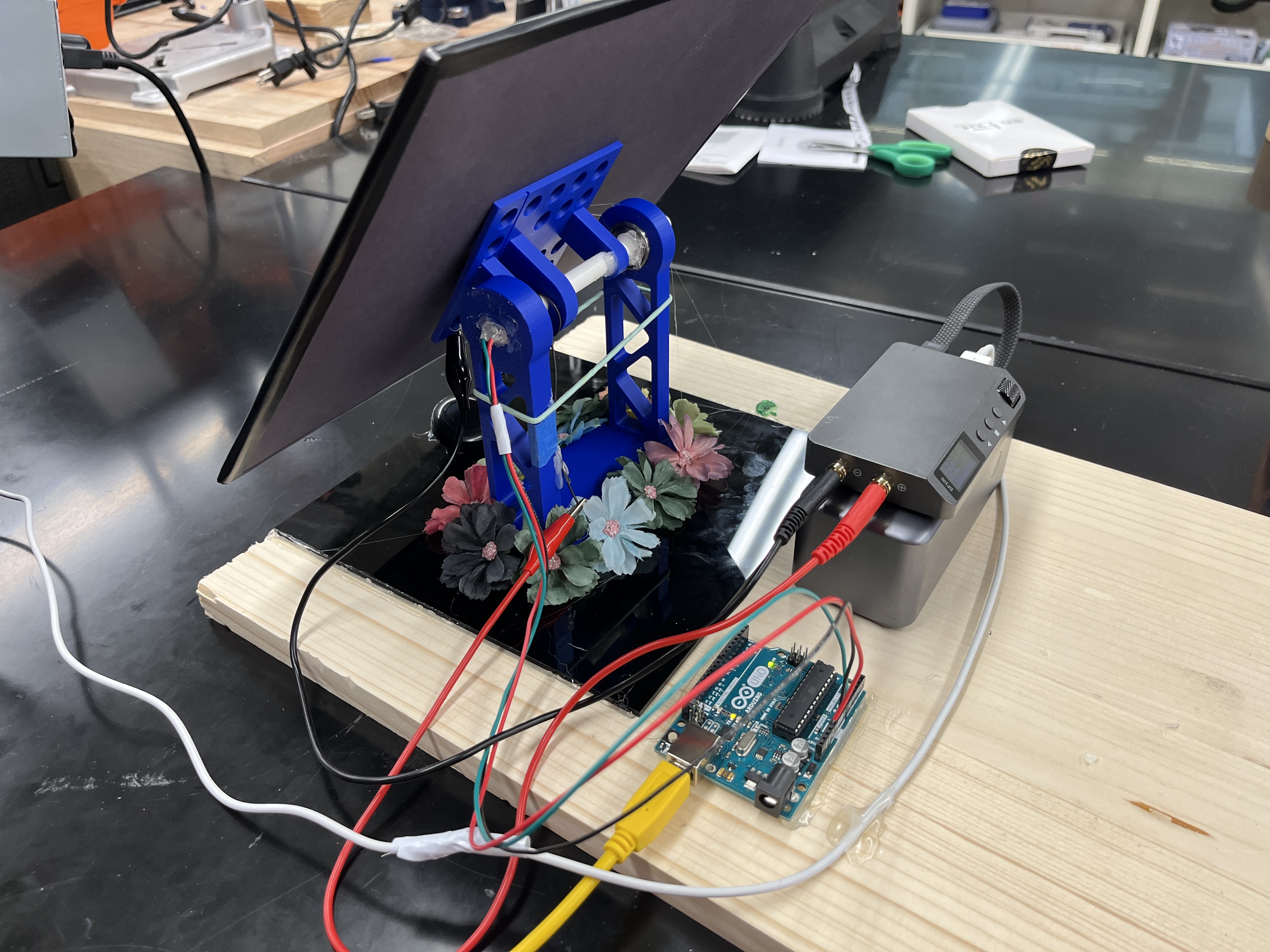
Final Product Electronics
The Martian is a book about a botanist astronaut stuck on Mars who was able to sustain himself there for 18 months. It describes explicitly how the solar panels are fixed because of the extra cost of an additional heavy and complicated tilting mechanism. Fixed solar panels are very inefficient compared to tracking solar panels, where a 45-degree misalignment can lead to a 30% power loss and a 60-degree misalignment can lead to over 50% power loss. These extremes happen during mornings or evenings, when tracking solar panels are able to recover that loss in power.
With our project, we hoped to be able to build a more cost-effective and lower maintenance alternative to motor-based tracking systems, where the lack of expensive motors and the added maintenance of additional moving parts lets us shine. We believe our project will not only benefit solar farms on Earth, but will also be able to aid in the building of solar farms in future space exploration, where a lightweight, low-maintenance option is desired.
We wanted to create this project with Shape Memory Alloys, which is the perfect, cheaper alternative for motors to tilt solar panels. A shape memory alloy is a metal that can be bent or deformed but returns to its original shape when heated due to a reversible change in its internal crystal structure. The Shape memory alloy is in the form of a wire, which is coiled within the 3d printed structure. When a current is run through the coil, it heats up, providing a force that changes the angle of the solar panel. A return force is provided by a spring, which pulls the solar panel back when no current is run through.
The tilt of the solar panel is measured by a potentiometer connected to the shaft of the tilting mechanism, which feeds into a Python program running a PID loop program to provide precise angle control. The program directly controls a constant-current power supply, which dynamically adjusts the current going through the wire to control its temperature. We used Wolfram Alpha technologies to dynamically track the location of the sun and calculate optimal tilt angles for any given time and location. Although other packages exist to do this, Wolfram Alpha gives us the additional advantage of being able to be easily implemented on other planets, such as Mars, where Wolfram Alpha already has the ability to find the angle there.


Log in or sign up for Devpost to join the conversation.