
Inspiration
Expresso was inspired by a simple problem: Notes. While meant to further education, the laborious task of taking notes not only slows down the pace of education, but often distracts from the subject at hand.High School and College students have to take reams of notes every week, with workloads that stack quickly, especially in fast-paced classes where the professors speak faster than the average student can process. As a result, notes are often messy or sparse, neither of which are beneficial to education.
Apps such as Evernote and Google Keep seek only to bring note taking to the cloud, and the limits of both of these note-taking softwares, among other dictation and transcription softwares, prevents students from fully taking advantage of the technology around them to remedy this situation.
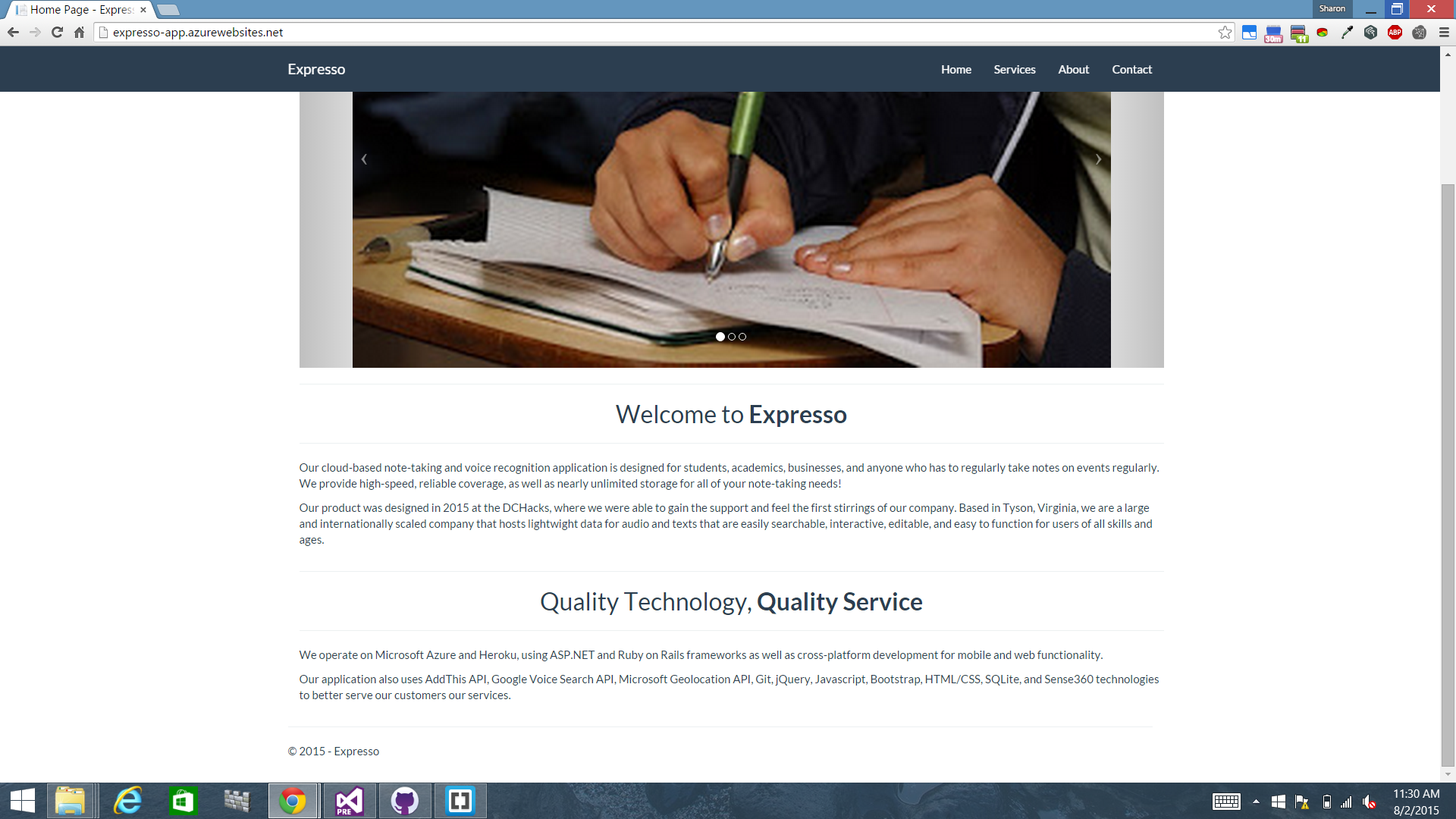
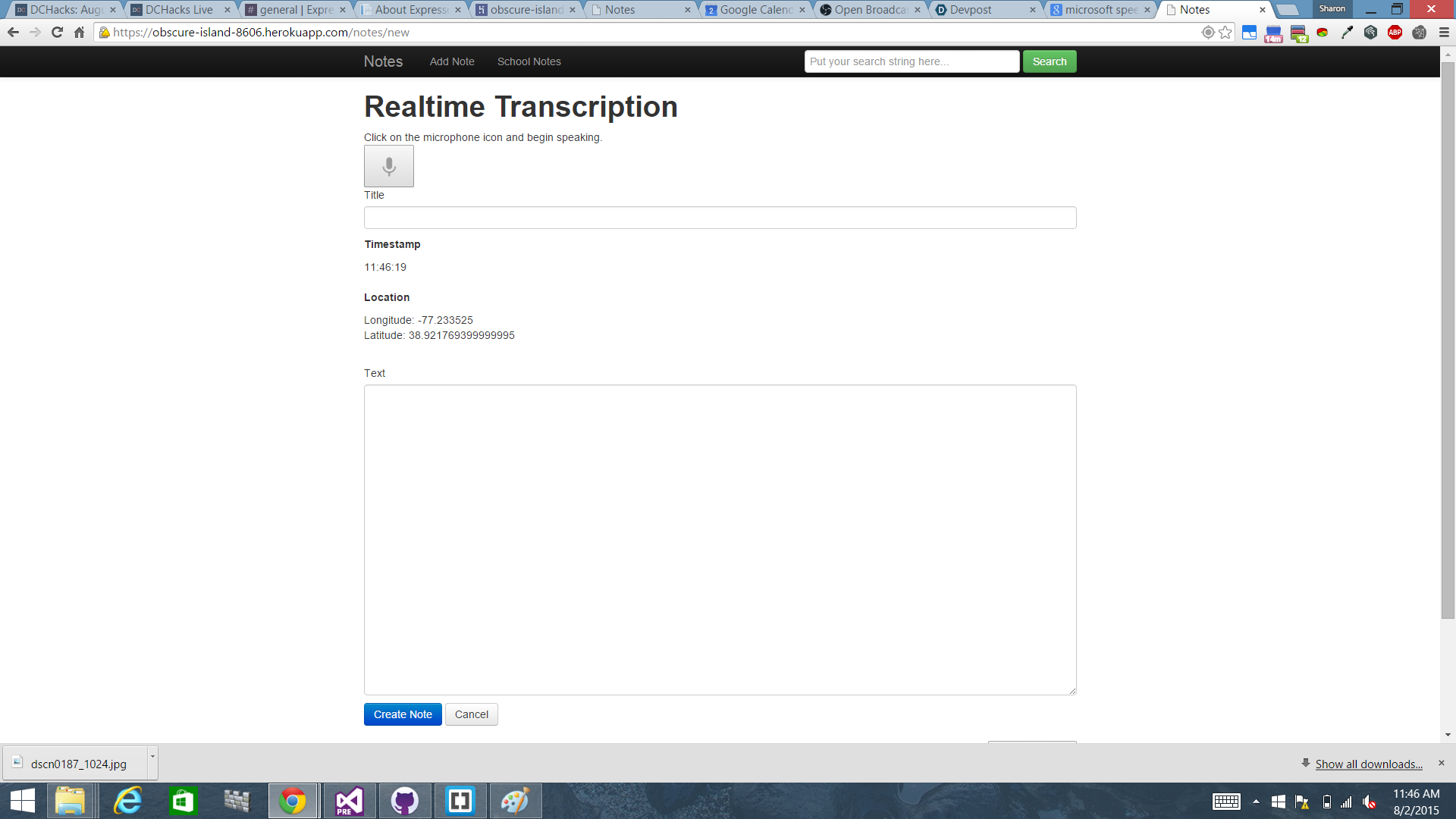
Enter Expresso, a modern take on note taking. Expresso disrupts the educational software industry by providing a high-quality voice-to-text transcription coupled with powerful text and grammar analysis, search, and revision services. From searches to timestamps to geotagging where notes are taken, students will be able to take their education to a higher level with this service.
How It Works
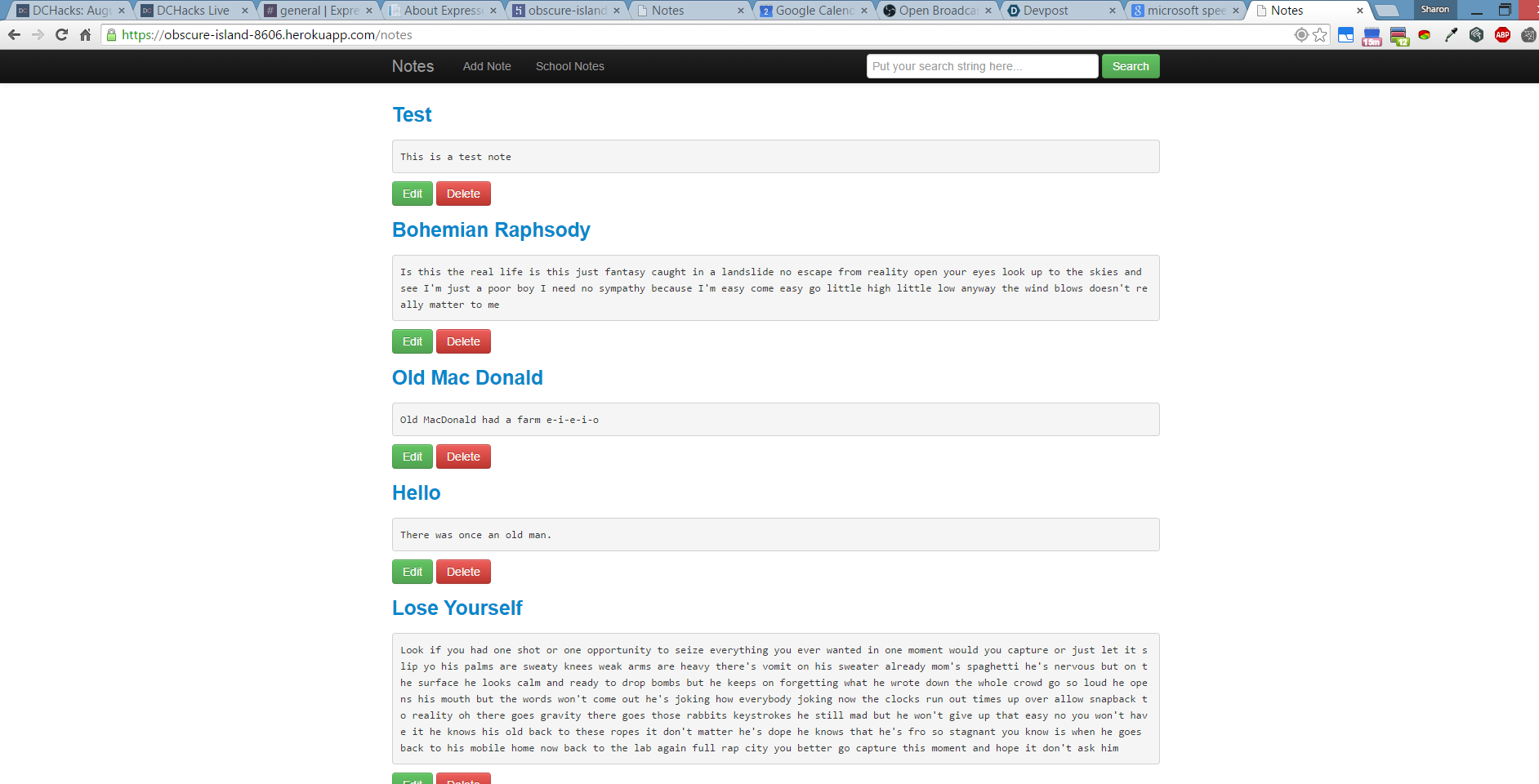
Expresso runs on two frameworks - ASP.NET and Ruby on Rails. The .NET side of the program controls the business interface, along with the backend for the mailing service and the various APIs involved in actively marketing the product (such as the AddThis API). The Rails portion acts as the back-end for the note-taking service, hosting the search engine, cloud-based storage for text, voice recognition requests, WinJS Time and Geolocation APIs, and text-to-email services.
Both portions of the service are hosted on the cloud, over Microsoft Azure and Heroku, respectively.
Challenges We Ran Into
We had difficulty learning to use Azure and WinJS, especially due to the lack of documentation on these services. In addition, finding and utilizing a viable speech to text engine to run on a web interface environment was incredibly difficult with software being either too weak, incompatible with our services, or locked away behind a paywall.
In addition, having to come up with a way to host audio was difficult, due to the size of the audio, as well as having to timestamp each word with a particular point in the audio files. As a result, we were unable to fulfill this portion in the time allotted, although we did make progress in timestamping of the entries, as well as recording .wav files and storing them over the cloud despite their interfaces not being ready for release..
Finally, although we were all given Dreamspark accounts, we found out that Azure was unable to recognize that it was linked to our Microsoft accounts, giving us no access to deploying straight from Visual Studio unless we manually deployed the code. We also found it difficult to debug when we had to deploy code straight from Github due to our inability to view what specifically caused our code to break.
Accomplishments That We Are Proud Of
We were proud of being able to use APIs despite the lack of documentation for those unfamiliar with the services; however, hours of reading source code allowed us to eventually unravel the various APIs and frameworks, along with finally setting up our website host on Azure.
We were also able to finish our MVP ahead of time, leaving us time to deploy the Window View Android application portion of our services, although the voice recognition for certain mobile devices remains an issue at times. Nevertheless, we were excited to find out that Android phones were able to support our web applications as mobile applications, fulfilling out initial goal of creating an easy way to take hands-free notes in stressful situations.
What We Learned
Apart from the various amounts of technologies we had to learn in order to complete our project, we learned how to climb back after derailing from our initial workflow. For instance, the issue with documentation - despite our goal to utilize Microsoft development tools - prevented us from completing our project as consistently and efficiently as we initially hoped. In addition, we were unable to complete as many of our goals as we had hoped, but overall, the hackathon had been a great experience for all of us, and we were very proud of having been able to create a product that anyone will be able to use in the future.
What's Next For Expresso
We're definitely looking to bring this app to the market. Although our idea can still expand quite a bit, we are confident that with enough time and attention, Expresso can really become a competent competitor to large note-taking services such as Evernote and Google Keep. The transcription service, search engine capabilities, realtime raw data storage, and use of cloud-based servers are only a few of the number of features that will allow us to elevate our app far above what other companies have yet achieved.
We are also looking to turn our app into a business, and we are certainly grateful to DCHacks for allowing us to develop our idea as far as we have. We're excited to have all of the other hackers joining us in the journey to provide better communication tools in the future, and we'll definitely continue to host the service on their respective sites until they move to a more permanent domain and server (in the near future.)
Built With
- addthis-api
- asp.net
- azure
- bootstrap
- css3
- github
- google-speech-api
- heroku
- html5
- javascript
- jquery
- microsoft-speech-platform-sdk
- ruby-on-rails
- visual-c#
- visual-studio
- windows-geolocation-api
- windows-time-function-api
- winjs

Log in or sign up for Devpost to join the conversation.