Inspiration
During the hackathon, we realized that while AI has made design creation faster, reviewing and improving designs still takes significant human effort. Teams often spend time fixing layout issues, improving readability, and ensuring designs meet professional or enterprise standards. We wondered why Adobe Express couldn’t assist not just in creating designs, but also in understanding and reviewing them. This thought inspired us to build ExpressIQ , an intelligent assistant that looks at a design the way an experienced designer would and helps improve it before issues are noticed by others.
What it does
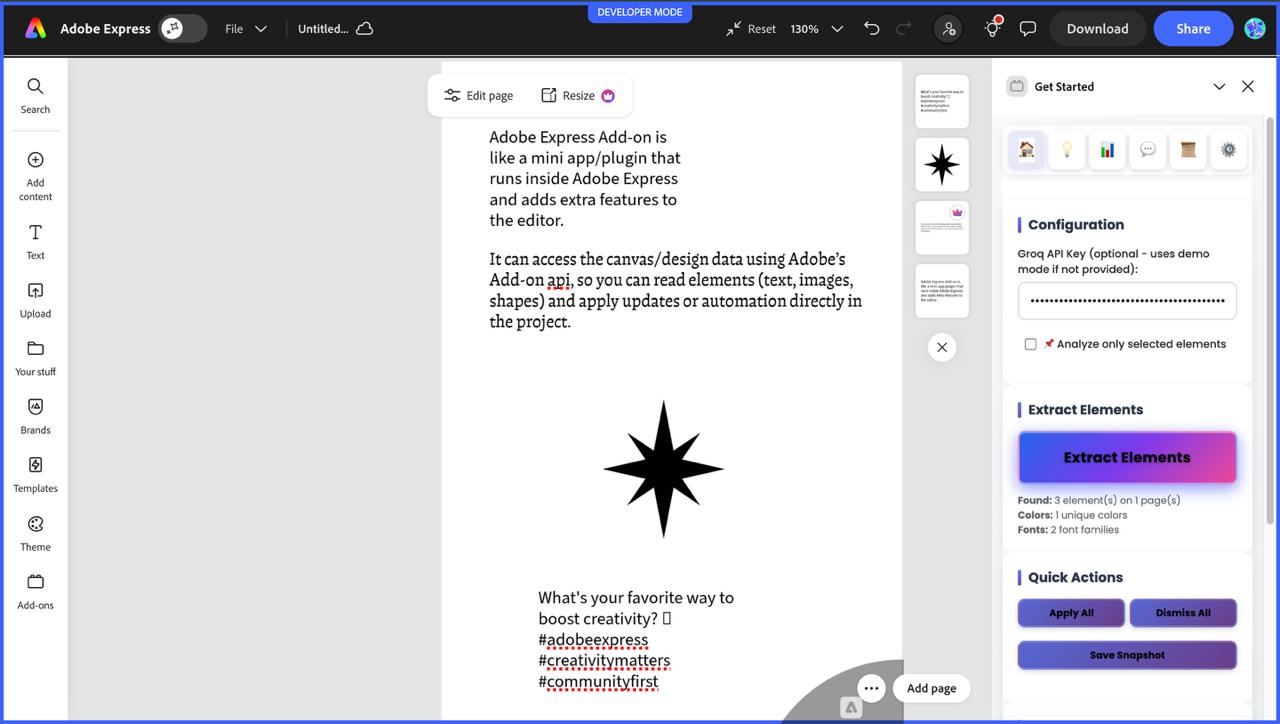
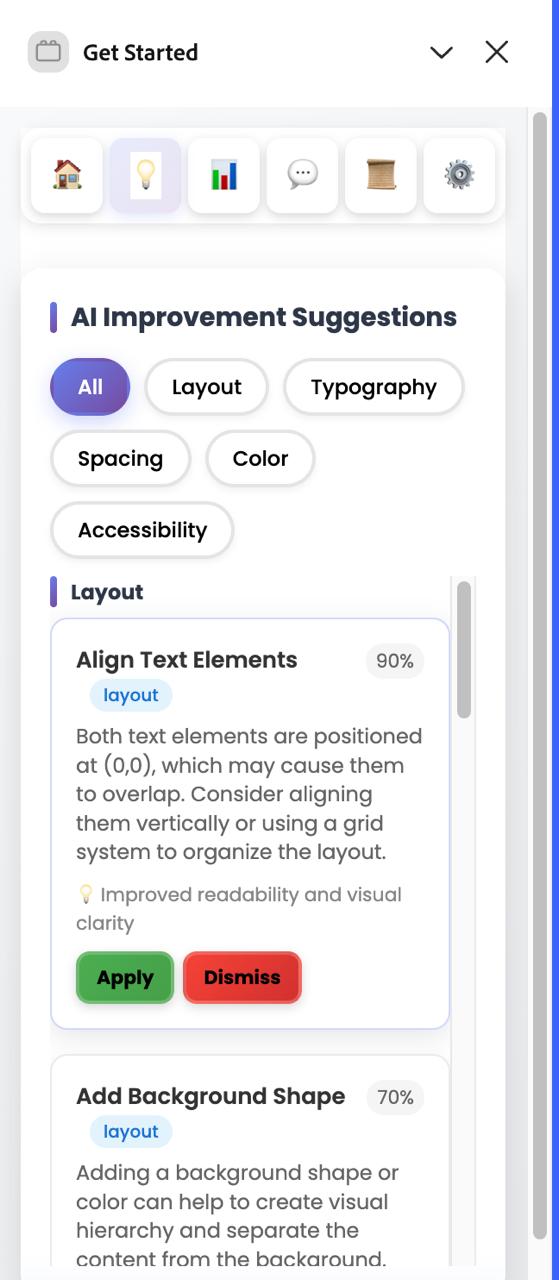
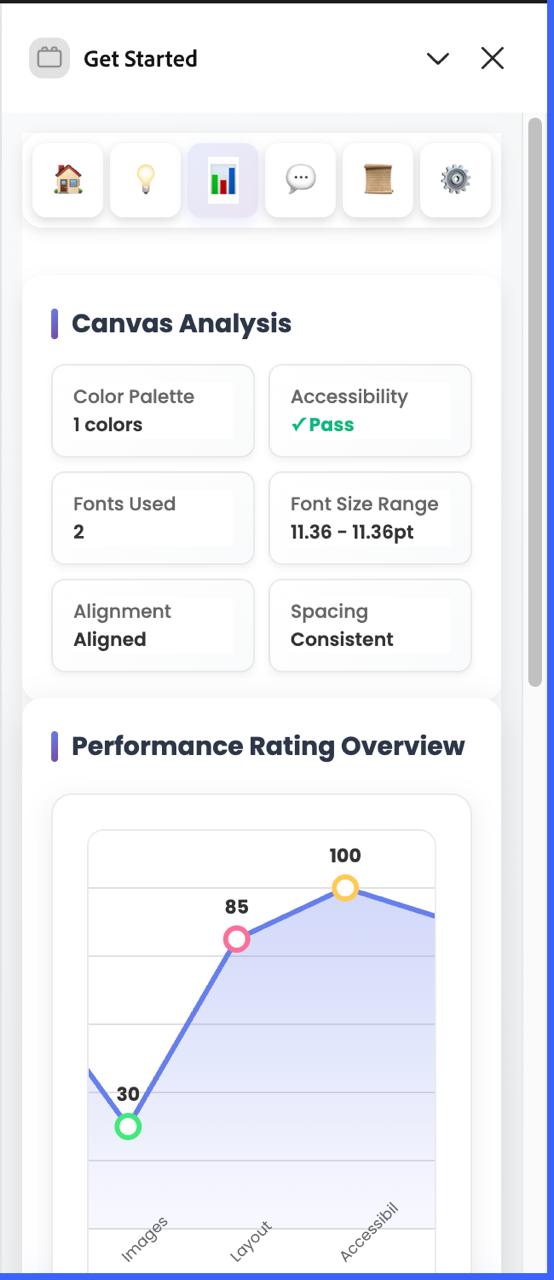
ExpressIQ is an AI-powered design intelligence add-on for Adobe Express that analyzes designs and provides smart, actionable suggestions to improve quality. It helps identify layout inconsistencies, readability issues, and overall design improvements that make content more enterprise-ready. To make interaction natural and efficient, we integrated both voice and text commands, allowing users to speak or type instructions such as improving alignment or enhancing professionalism. This reduces friction and makes the design review process faster and more intuitive.
How we built it
We built ExpressIQ during a 24-hour hackathon by focusing on a clear, high-impact problem. The system was designed with an analysis layer to understand design structure, an intelligence layer to detect quality gaps, and a recommendation engine to suggest improvements. We combined this with a voice and text-based interface to ensure seamless user interaction. Our goal was not to build everything, but to build the right things that demonstrate real value for enterprise users.
Challenges we ran into
The biggest challenge was time. Translating subjective design quality into intelligent, meaningful suggestions within 24 hours required rapid experimentation and decision-making. Integrating voice commands reliably while keeping the system responsive was another challenge. We also had to balance automation with user control, ensuring ExpressIQ assists without taking creative freedom away from the user.
Accomplishments that we're proud of
In just 24 hours, we delivered a working prototype that goes beyond design generation and focuses on design understanding. We successfully integrated voice-based interaction, built a practical AI-driven recommendation system, and aligned the solution with real enterprise design workflows. Most importantly, we transformed a simple idea into a polished add-on that feels useful, intuitive, and scalable.
What we learned
This project taught us that AI creates the most impact when it enhances human creativity rather than replacing it. We learned how design quality can be broken down into understandable signals and how voice interfaces can significantly speed up creative workflows. Working under tight constraints also reinforced the importance of prioritization, clarity, and simplicity in product design.
What's next for ExpressIQ
With more time, we plan to refine ExpressIQ by learning from real enterprise design standards and improving recommendation accuracy. We would like to expand voice support, add team-level consistency checks, and deepen integration with Adobe Express. Our long-term vision is to make ExpressIQ a reliable design reviewer that helps teams create high-quality content faster and with greater confidence.
Built With
- add-on-sdk-document-sandbox
- add-on-ui-sdk
- adobe-express
- adobe/ccweb-add-on-scripts
- browser-runtime
- communicating-via-the-adobe-express-communication-api.-the-ui-relies-on-vanilla-html5-and-css3-(google-fonts:-poppins).-the-document-sandbox-uses-the-express-document-sdk-and-add-on-sdk-document-sandbox-for-canvas-access.-for-ai-features
- communication-api
- css3
- document-sandbox
- es6
- express-document-sdk
- google-fonts
- groq
- html5
- html5-canvas-api
- http-rest-api
- https
- iframe
- javascript-(es6+)
- llama-3.1-70b-versatile
- localstorage
- poppins
- prettier
- vanilla-javascript

Log in or sign up for Devpost to join the conversation.