Inspiration
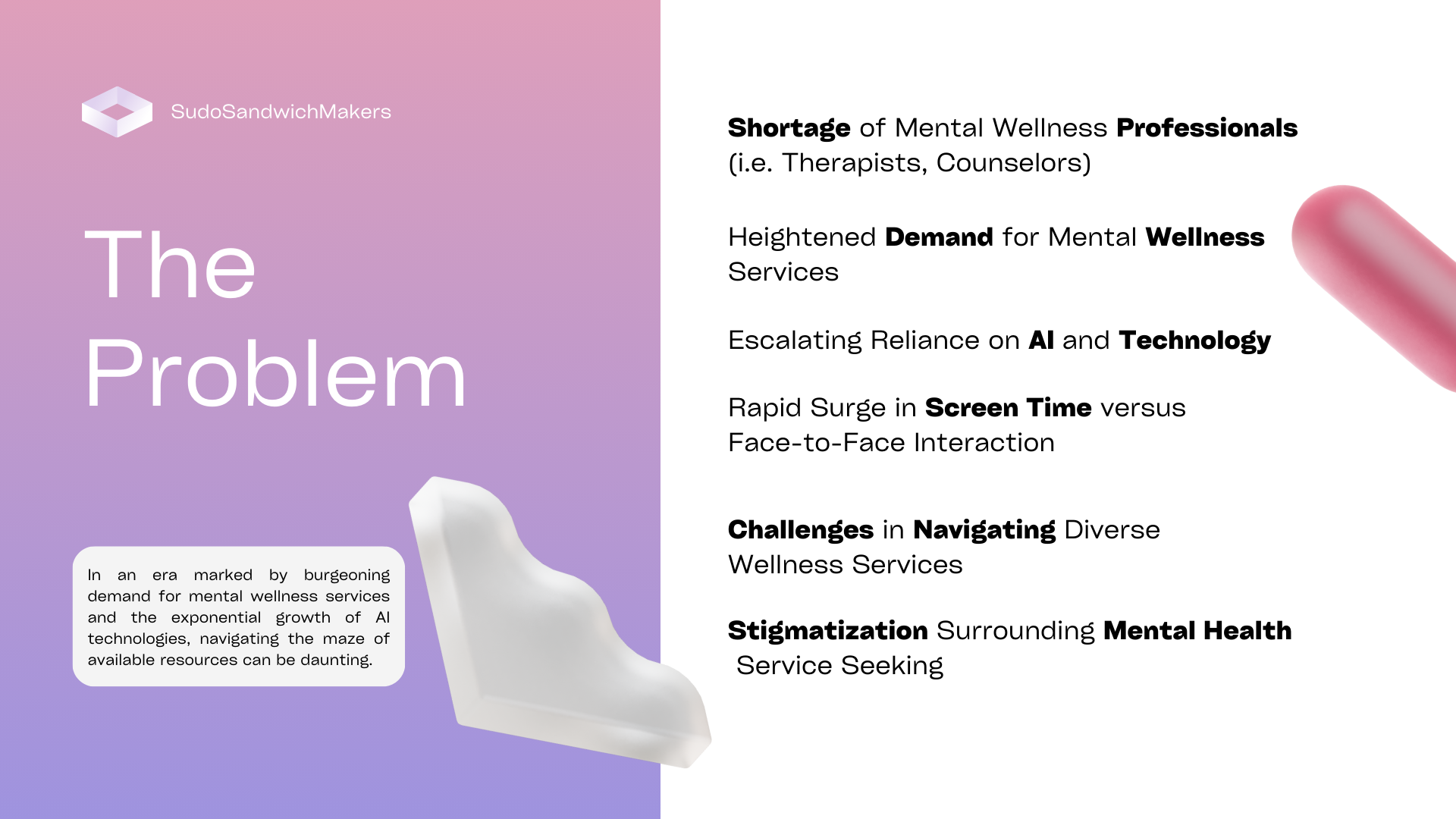
The intersection of mental health issues among university students and the growth of AI, as well as the increasing use of electronic devices especially post-pandemic, presents both challenges and opportunities for addressing mental health concerns on campus and broader communities. Considering facts that:
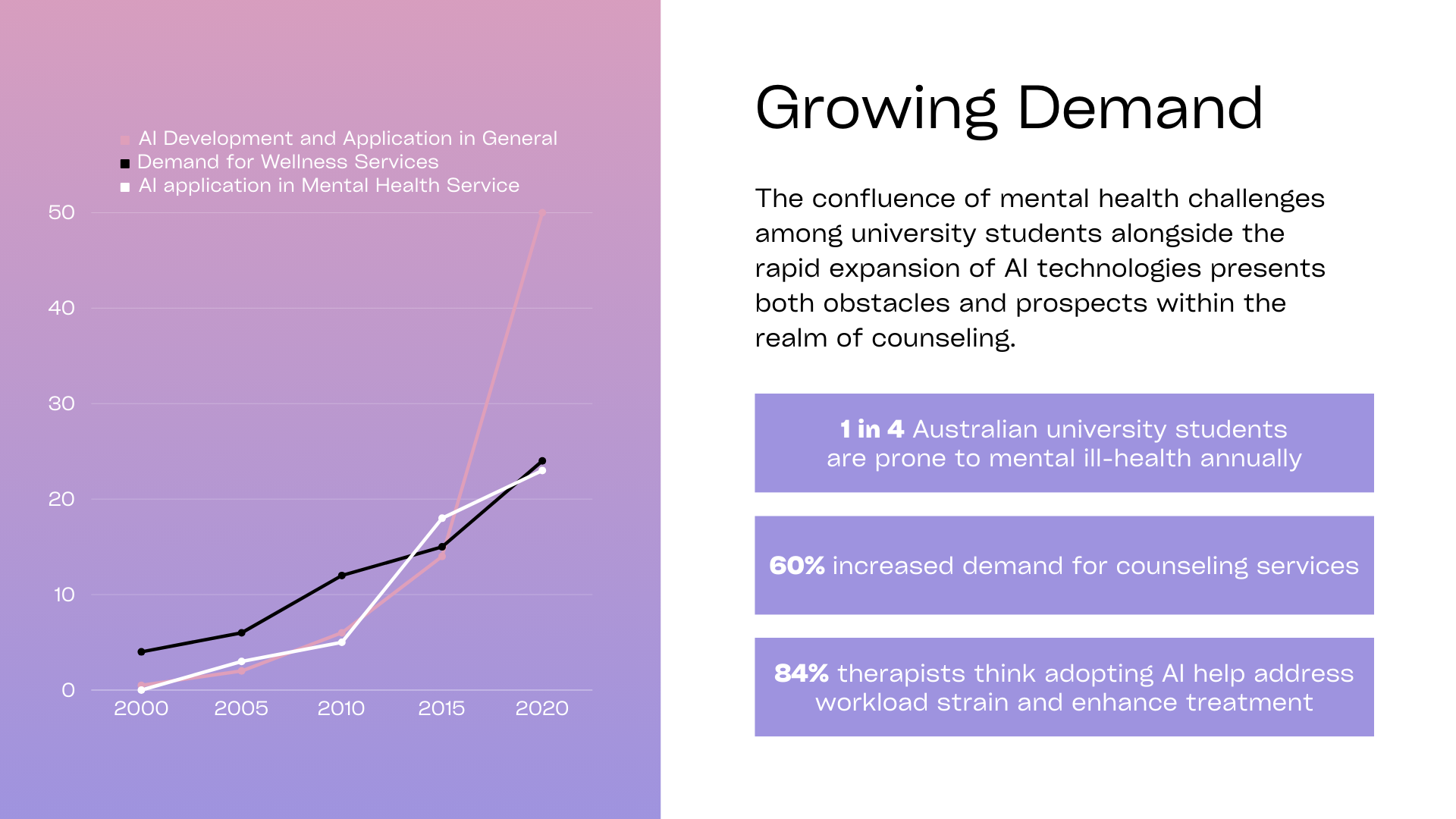
Three in five of Australia’s 1.4 million university students are aged between 15 and 24 years and we know at least one in four will experience mental ill-health in any given year according to the latest research from the National Mental Health Service.
Counseling centers have seen extraordinary increases in demand over the past decade especially after the pandemic. The shortage of mental health providers is also prohibitive, with 60% of psychologists reporting no openings for new patients, according to APA’s https://www.apa.org/pubs/reports/practitioner/2022-covid-psychologist-workload.
3. Therapists are turning to AI to help with stretched workloads, 84% of psychologists have seen a rise in demand for anxiety treatments.The technology is helping with the quality control of treatment and the training of therapists.
Integrating AI technologies with consulting services can enhance the effectiveness, accessibility, and responsiveness of mental health support for university students in an increasingly digital world. Establish comprehensive and nationally recognized guidance to support universities embeds a whole-of-institution response to student mental health and wellbeing. However, it's crucial to approach these initiatives thoughtfully and ethically to maximize their benefits while minimizing potential risks.
What it does
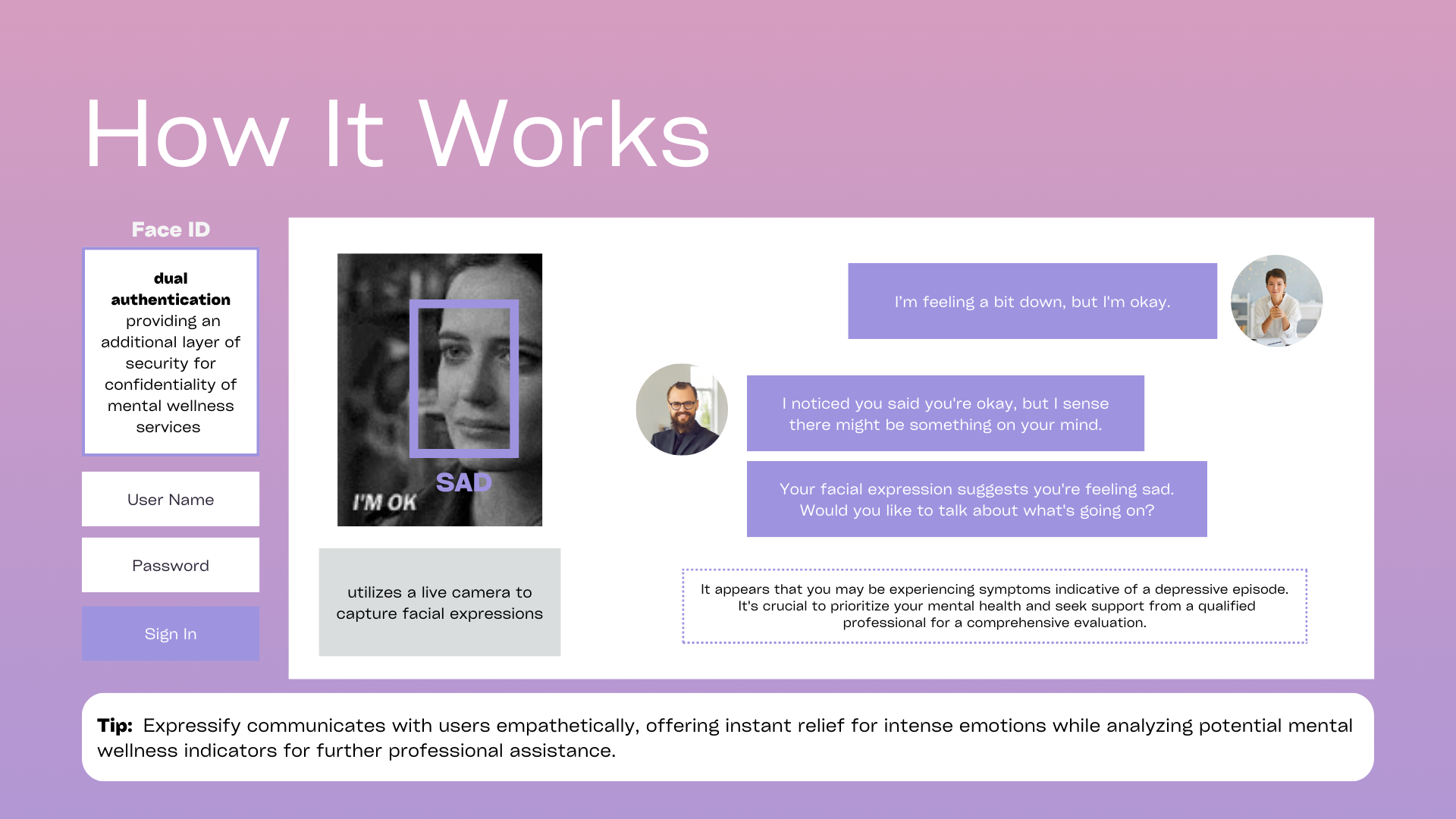
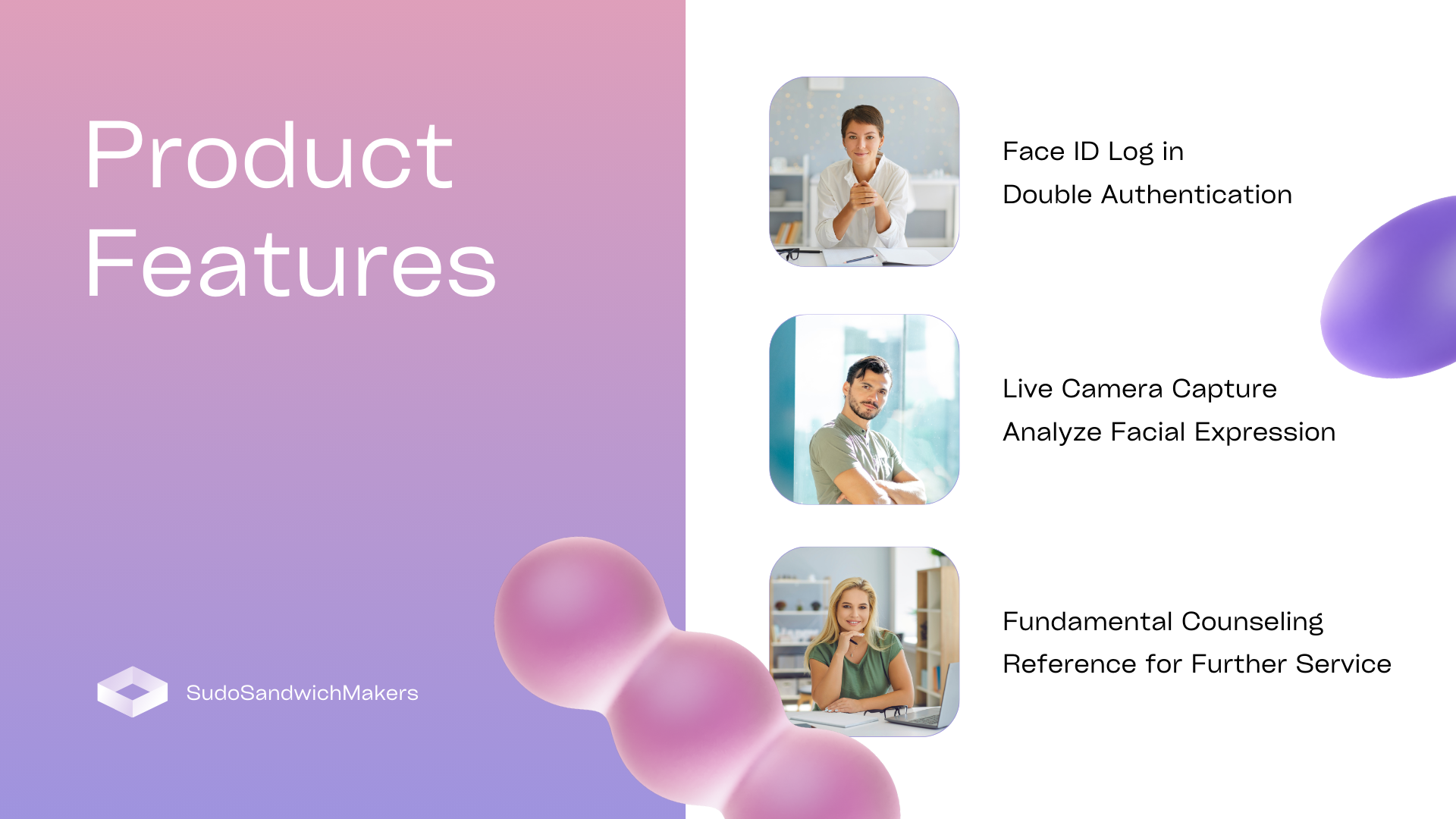
Our intention to develop a virtual consultant chatbot, leveraging advanced facial expression recognition technology, aims to revolutionize mental health support for university students. Utilizing face recognition as a secure login method ensures confidentiality, providing users with a trusted and personalized experience.
The primary objective of our tool extends beyond mere detection; it delves into multi-dimensional aspects of mental health prevalence and student experiences. By comprehensively understanding the scope of student wellbeing, our platform empowers the compassionate development, accessibility, and sustenance of tailored support services.
With the ability to identify and address potential mental health issues, our chatbot serves as a crucial indicator for further counseling services. Our commitment lies in harnessing cutting-edge technology to foster a culture of mental health awareness and proactive support within university communities. Understanding the comprehensive scope of student wellbeing empowers the compassionate development, accessibility, and sustenance of tailored frameworks and procedures aimed at fostering robust support systems for students in need.
How we built it
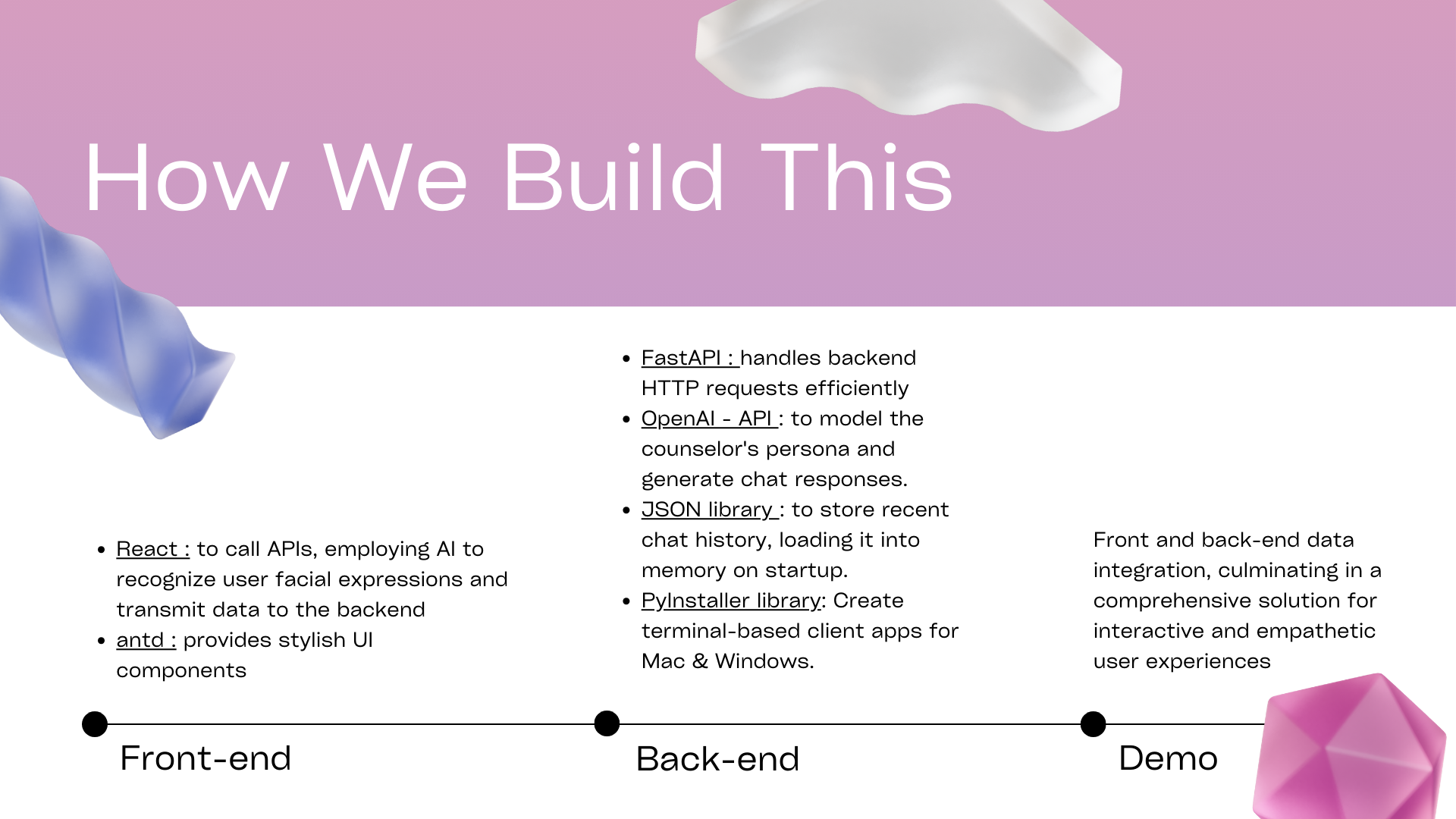
Our team embarked on a comprehensive product-building journey to develop a chatbot equipped with facial expression recognition functionality aimed at aiding users in recognizing and addressing potential mental health concerns. Beginning with a comprehensive analysis of project requirements and user needs, we meticulously planned and executed each stage of the development process. Here's an overview of our methodology:
● Git Workflow Implementation: We adopted a structured git workflow, leveraging branches to isolate feature development and facilitate seamless collaboration among team members. Regular pulls from the main development branch ensured code consistency and minimized integration issues.
● Feature Branch Creation: Engineers created dedicated feature branches with the application of ChatGPT API, such as emotion-recognition, to focus on implementing emotion recognition functionality within the chatbot. This allowed for efficient management of code changes and simplified the review process.
● Emotion Recognition Integration: Our team explored various emotion recognition algorithms and machine learning models, conducting rigorous testing to identify the most suitable approach for our chatbot. We implemented the chosen solution, refining its accuracy and performance through iterative development cycles.
● Continuous Testing and Optimization: Throughout the development process, we prioritized continuous testing and optimization to ensure the reliability and effectiveness of the emotion recognition feature. Regular feedback loops and quality assurance measures were employed to address any issues promptly.
● Collaborative Code Review: Engineers collaborated through pull requests, utilizing the GitHub UI to facilitate thorough code reviews and discussions. This collaborative approach ensured code quality and alignment with project objectives before merging changes into the main codebase.
Through iterative development cycles, we rigorously tested and optimized the chatbot's performance, striving for high accuracy and reliability in emotion recognition. Additionally, we integrated the chatbot with counseling service resources, enabling seamless escalation for users exhibiting signs of distress or requiring further assistance. Our journey culminated in the creation of a sophisticated yet user-friendly chatbot solution, poised to positively impact mental health awareness and support services provision through innovative technology integration.
Challenges we ran into
Half of our team members are first time hackers which increased our workload to research and learn things spontaneously in an efficient way comparing to experienced players.
Finding a compatible API to grasp facial expressions and analyze data proved to be challenging, as we had very specific criteria and requirements for the data we needed.
The API rate limit was a significant obstacle, as we were on the free plan and had to work around the limitations to ensure our function operated in an efficient manner as intended.
Accomplishments that we're proud of
The final product might not be perfect but our ideal is practical and plausible as when doing marketing research we have found that AWS is creating a Health Library for similar initiatives.
What we learned
To adjust according to changing circumstances and capability to learn new skills in a limited time period
What's next for Expressify
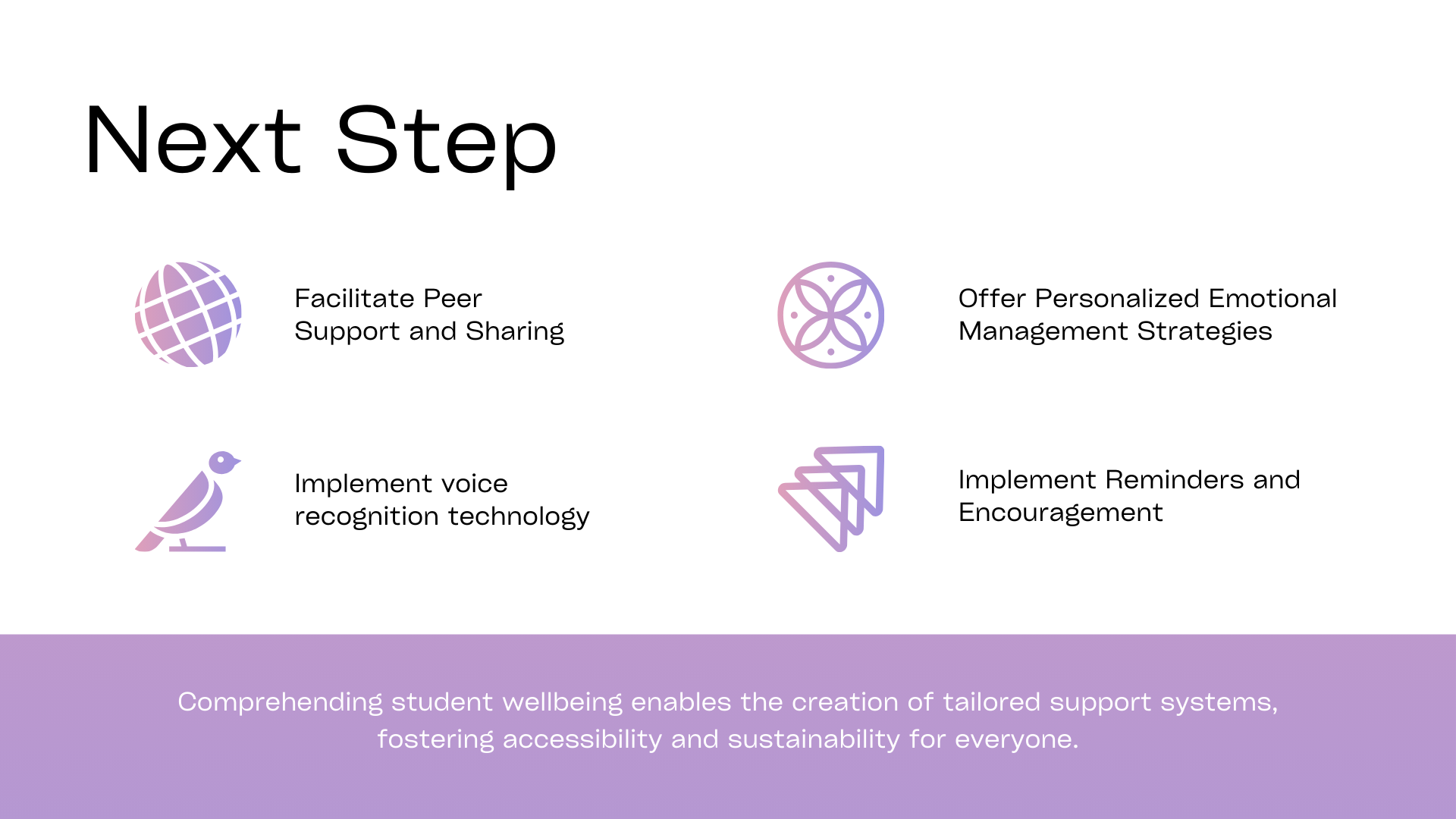
For future development, we plan to:
● Implement voice recognition technology: To analyze the tones and intonations of users' speech, enabling the chatbot to assess their emotional states. By understanding the nuances in speech patterns, the chatbot can provide insights into users' emotional wellbeing.
● Facilitate Peer Support and Sharing: Provide users with the ability to connect and share their emotional experiences with others, fostering a supportive community where individuals can empathize and offer advice to one another.
● Offer Personalized Emotional Management Strategies: Utilize facial expression recognition data to recommend personalized emotional management strategies, such as mindfulness exercises or relaxation techniques, tailored to each user's unique emotional profile.
● Implement Reminders and Encouragement: Develop features to send personalized reminders and encouragement messages based on users' emotional states, helping them stay motivated and on track with their emotional health goals.


Log in or sign up for Devpost to join the conversation.