-
-
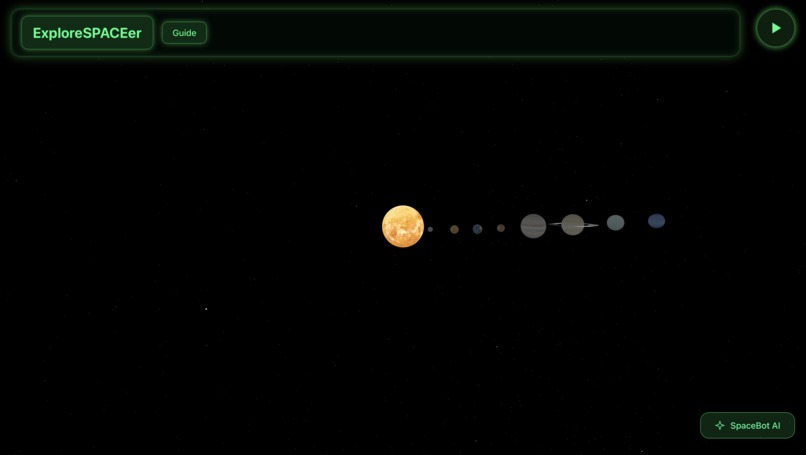
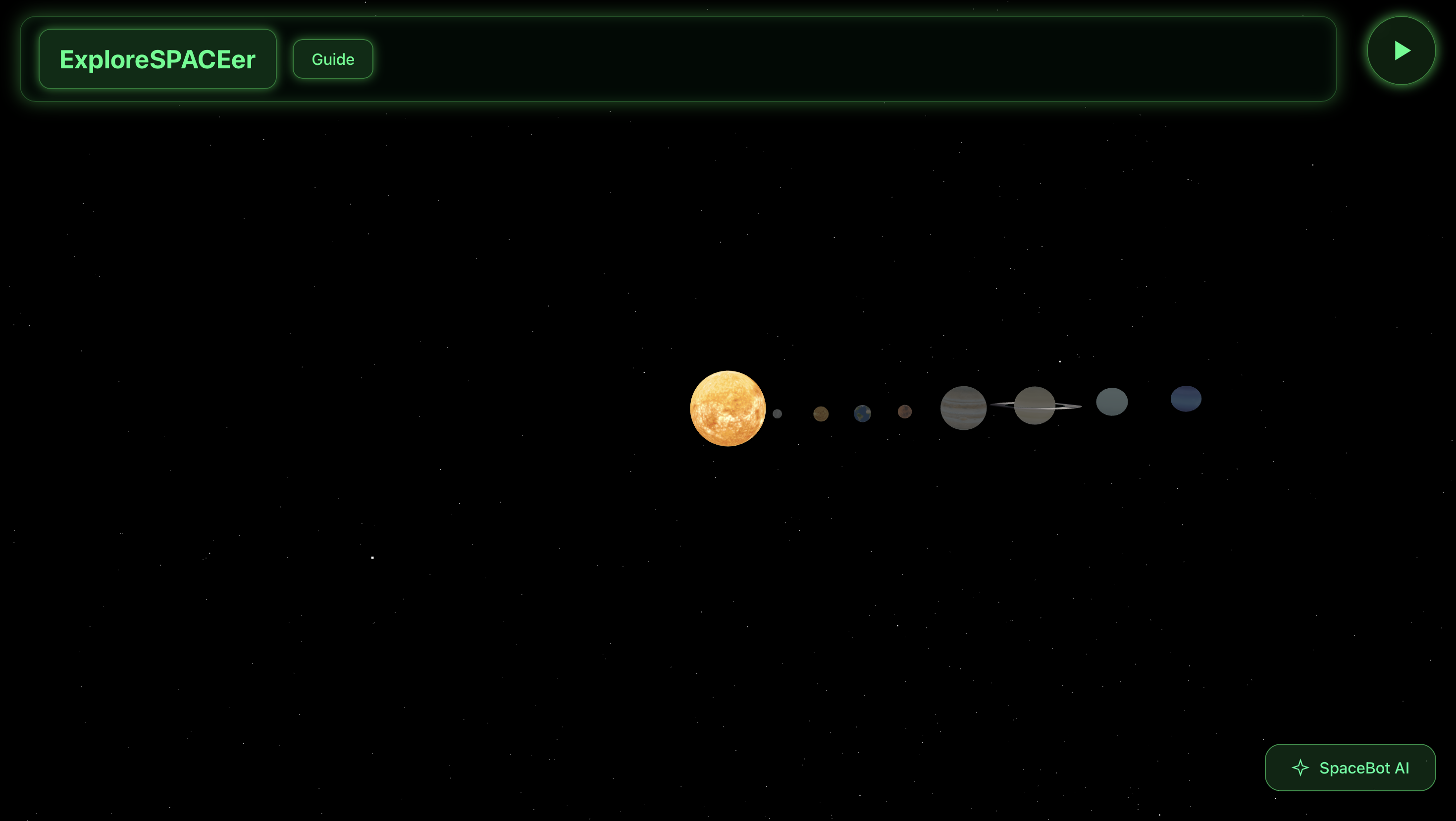
Interactive 3D solar system
-
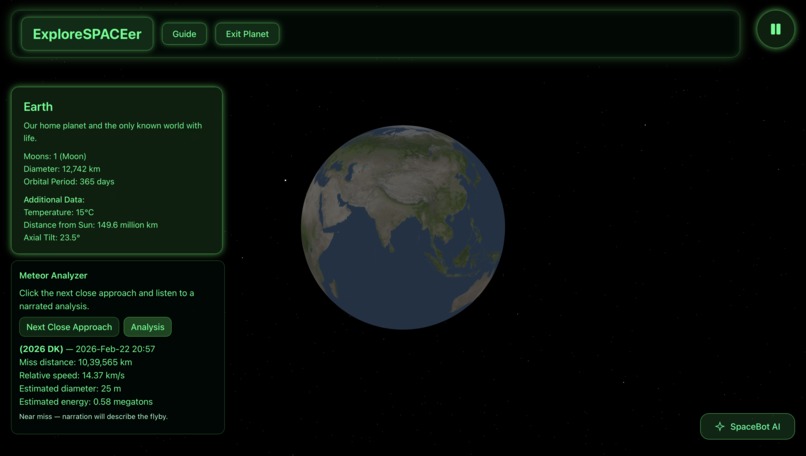
NEO analysis
-
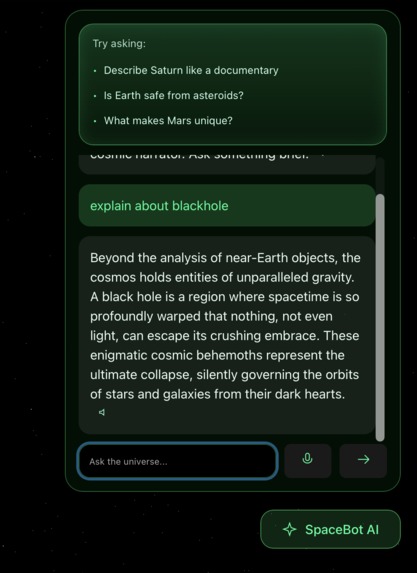
Spacebot
Inspiration
The inspiration for ExploreSPACEer came from a strong interest in astronomy and space technology. While learning about planets, orbital mechanics, and near-Earth objects, we felt that most resources were either static images or lengthy theoretical explanations. We wanted to build something interactive where users could visually explore the solar system and simultaneously ask questions, just like having a virtual space guide. The idea was to combine 3D graphics, artificial intelligence, and real-time space data into one practical learning platform.
What it does
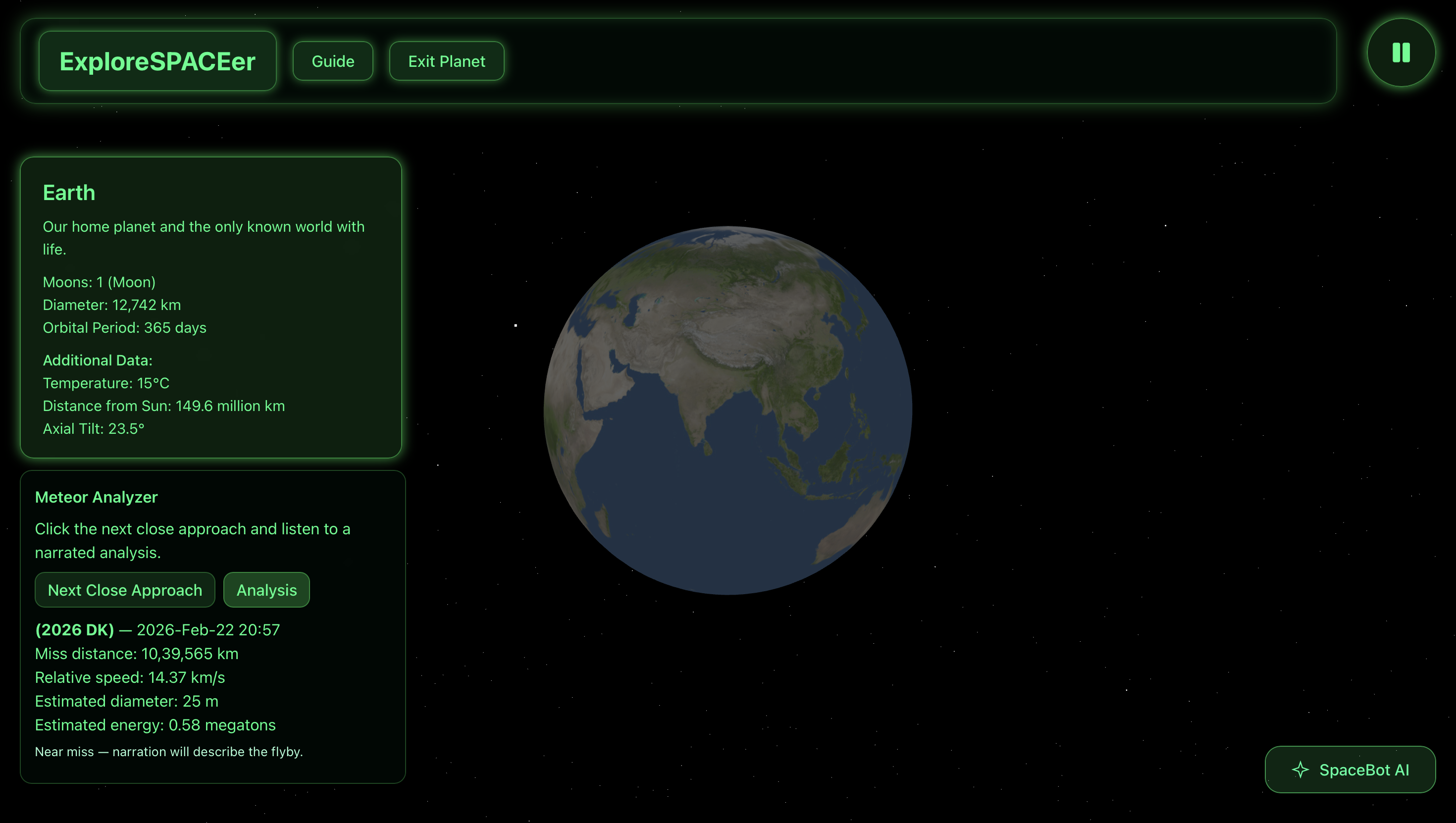
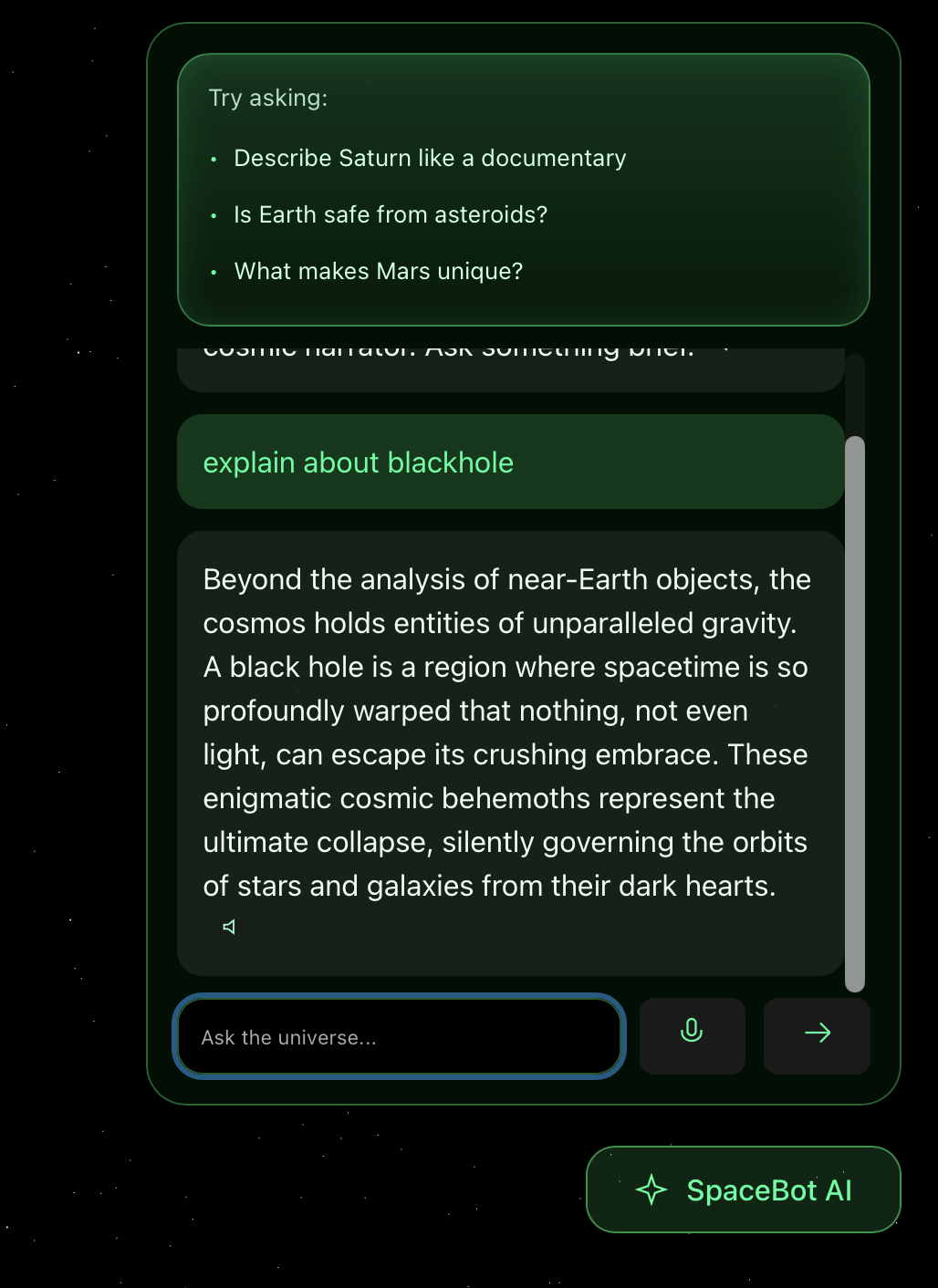
ExploreSPACEer is an interactive 3D web application that visualizes the solar system using Three.js. Users can explore planets, observe their rotations and revolutions, and understand their relative positions in space. The platform integrates a Gemini AI-powered Space-Bot that answers user queries about planets, space science, and astronomy concepts in real time. Additionally, it connects with the NASA NEO (Near Earth Object) API to fetch live data about asteroids and comets approaching Earth, enabling real-time monitoring of near-Earth objects within the application.
How we built it
The project was developed using Three.js for rendering the 3D solar system model in the browser. Planetary bodies were created using sphere geometries with realistic textures, and orbital motion was simulated using mathematical calculations for circular motion. The AI Space-Bot was integrated using the Gemini AI API to process and respond to user queries. For real-time asteroid tracking, we consumed data from NASA’s NEO API and dynamically displayed relevant information within the interface. The frontend was structured using modern JavaScript along with responsive UI design principles to ensure smooth performance across devices.
Challenges we ran into
One of the main challenges was scaling the solar system realistically, as actual planetary distances and sizes are extremely large and not practical for direct visualization. We had to apply proportional scaling while maintaining visual clarity. Another challenge was synchronizing real-time NEO data with the 3D environment. Handling API responses, managing asynchronous calls, and ensuring smooth rendering without performance drops required careful optimization. Integrating the AI chatbot in a way that felt natural and context-aware was also a technical learning curve.
Accomplishments that we're proud of
We successfully built a fully interactive 3D solar system that combines visualization, artificial intelligence, and live scientific data. The seamless integration of Gemini AI for conversational learning and NASA’s real-time asteroid tracking adds significant value beyond a simple 3D model. The project demonstrates our ability to work with graphics rendering, API integration, and AI services in a single cohesive application.
What we learned
Through this project, we gained deeper understanding of Three.js concepts such as scenes, cameras, lighting, textures, and animation loops. We also learned how to integrate external APIs efficiently and manage asynchronous JavaScript operations. Working with AI APIs improved our understanding of prompt handling and response management. Most importantly, we learned how to combine multiple technologies to build a meaningful and user-centric educational platform.
What's next for ExploreSPACEer
In the future, we plan to enhance ExploreSPACEer by adding more accurate orbital mechanics using Kepler’s laws, implementing zoom-based educational content for each planet, and introducing voice interaction with the AI Space-Bot. We also aim to include additional space datasets, such as satellite tracking and upcoming space missions, to make the platform more comprehensive and informative.
Built With
- react.js
- three.js

Log in or sign up for Devpost to join the conversation.