-
machine learning
just be a few paragraphs about what i learned machine learning.
machine learning
Posted by: Margaret Rouse WhatIs.com
Contributor(s): Ed Burns
Machine learning (ML) is a type of artificial intelligence (AI) that allows software applications to become more accurate at predicting outcomes without being explicitly programmed to do so. Machine learning algorithms use historical data as input to predict new output values.
Recommendation engines are a common use case for machine learning. Other popular uses include fraud detection, spam filtering, malware threat detection, business process automation (BPA) and predictive maintenance.
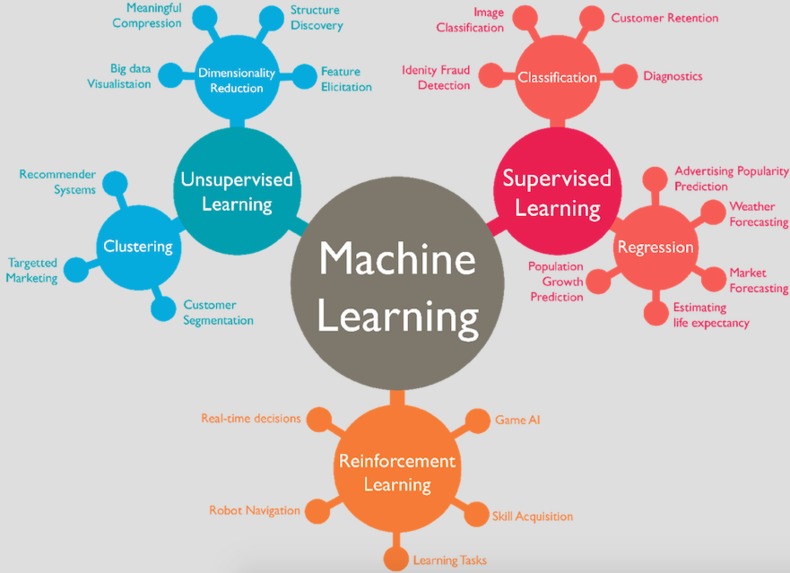
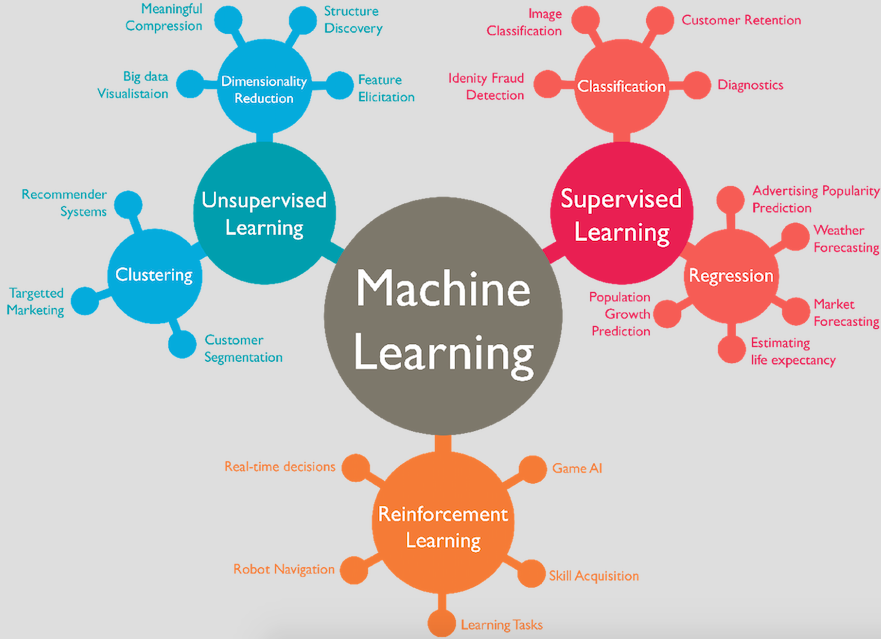
Types of machine learning Classical machine learning is often categorized by how an algorithm learns to become more accurate in its predictions. There are four basic approaches: supervised learning, unsupervised learning, semi-supervised learning and reinforcement learning. The type of algorithm a data scientist chooses to use depends on what type of data they want to predict.
Supervised learning. In this type of machine learning, data scientists supply algorithms with labeled training data and define the variables they want the algorithm to assess for correlations. Both the input and the output of the algorithm is specified. Unsupervised learning. This type of machine learning involves algorithms that train on unlabeled data. The algorithm scans through data sets looking for any meaningful connection. Both the data algorithms train on and the predictions or recommendations they output are predetermined. Semi-supervised learning. This approach to machine learning involves a mix of the two preceding types. Data scientists may feed an algorithm mostly labeled training data, but the model is free to explore the data on its own and develop its own understanding of the data set. Reinforcement learning. Reinforcement learning is typically used to teach a machine to complete a multi-step process for which there are clearly defined rules. Data scientists program an algorithm to complete a task and give it positive or negative cues as it works out how to complete a task. But for the most part, the algorithm decides on its own what steps to take along the way. How supervised machine learning works Supervised machine learning requires the data scientist to train the algorithm with both labeled inputs and desired outputs. Supervised learning algorithms are good for the following tasks:
Binary classification. Dividing data into two categories. Multi-class classification. Choosing between more than two types of answers. Regression modeling. Predicting continuous values. Ensembling. Combining the predictions of multiple machine learning models to produce an accurate prediction. How unsupervised machine learning works Unsupervised machine learning algorithms do not require data to be labeled. They sift through unlabeled data to look for patterns that can be used to group data points into subsets. Most types of deep learning, including neural networks, are unsupervised algorithms. Unsupervised learning algorithms are good for the following tasks:
Clustering. Splitting the data set into groups based on similarity. Anomaly detection. Identifying unusual data points in a data set. Association mining. Identifying sets of items in a data set that frequently occur together. Dimensionality Reduction. Reducing the number of variables in a data set.
How semi-supervised learning works Semi-supervised learning works by data scientists feeding a small amount of labeled training data to an algorithm. From this, the algorithm learns the dimensions of the data set, which it can then apply to new, unlabeled data. The performance of algorithms typically improves when they train on labeled data sets. But labeling data can be time-consuming and expensive. Semi-supervised learning strikes a middle ground between the performance of supervised learning and the efficiency of unsupervised learning. Some areas where semi-supervised learning is used include:
Machine translation. Teaching algorithms to translate language based on less than a full dictionary of words. Fraud detection. Identifying cases of fraud when you only have a few positive examples. Labeling data. Algorithms trained on small data sets can learn to apply data labels to larger sets automatically.
Built With
- text
