-
-
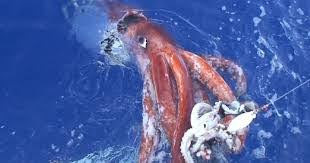
Southern
-

Pacific
-
Indian
-
Atlantic
-

Arctic Ocean


Inspiration
Every minute, the equivalent of a truckload of plastic enters the world’s oceans. Today, scientists estimate that between 75 and 199 million metric tons of plastic waste are already circulating in marine environments, threatening ecosystems, wildlife, and coastal communities around the globe. As plastic production continues to increase, this number is expected to grow rapidly unless significant behavioral and systemic changes occur.
When global ocean plastic pollution is distributed across the world’s population, the average person contributes approximately 1.4 kilograms of plastic entering the ocean each year. While this amount may seem small individually, it becomes staggering when multiplied by the global population of over 8 billion people, contributing to an estimated 11 million metric tons of plastic entering the oceans annually. This demonstrates how billions of everyday decisions (such as single-use plastic consumption) collectively create one of the largest environmental challenges facing our planet.
In this modern age, many rapidly industrializing regions continue to have poor waste management and recycling infrastructure. As a result, larger portions of plastic waste can escape into rivers, waterways, and coastal environments before they can be properly collected or processed. These infrastructure gaps can significantly amplify the amount of pollution reaching the ocean, accelerating the global plastic crisis.This can be prevented with human interference by reducing plastic consumption, reusing material, and recycling what they can.
Though there are things that everyone can do to become part of the effort of bettering the environment, many individuals don’t understand how big of a change their personal involvement can have. Therefore, many people undermine the need to participate in such a cause.
Our team created the Ocean Explorative Game with a built-in plastic pollution tracker to help people better understand this connection between individual behavior and global environmental impact. By turning complex ocean pollution data into an interactive and personal experience, users can see how their everyday choices may contribute to plastic pollution and where that waste could eventually travel through ocean currents.
Our slogan, “Enter your coordinates to find your nearest ocean,” reflects our mission to connect local actions to global ocean systems. When people can visualize how pollution from their own regional communities can impact oceans and affect marine ecosystems, the issue becomes more tangible and urgent. Through this project, we hope to inspire curiosity about ocean science while encouraging more sustainable habits that help protect marine environments for future generations. 🌊
What it does
The ocean pollution tracker is an interactive educational feature within our Ocean Explorative Game that helps users understand how everyday plastic waste contributes to ocean pollution. Users begin by entering their coordinates or selecting a coastal location, allowing the system to identify their nearest ocean. From there, the interface demonstrates information about that ocean such as current pollution accumulation, common animals, fun facts, and temperature ranges.
To personalize the experience, the program asks users to estimate how much plastic was consumed by their household in the past week. Using a simple metric that is relatable and easily understandable to diverse populations, (one plastic water bottle representing approximately 0.02 kilograms of plastic waste) the tool converts this estimate into a projected yearly amount of plastic waste in kilograms. The system, alongside the initial problems stated, then shows the users solutions (both at a larger scale and smaller scale to regard everyone) to help combat plastic pollution for their ocean. This was based on regional and demographic cultural data that took into account the common activities of populations near the ocean. For example, we took into account that street food was a commonality near the Indian ocean, and suggested users to bring reusable food containers when eating street snacks. At the end of each tracking experience, users are able to understand how their yearly plastic waste contributes to the overall amount of plastic pollution in their nearest ocean.
By linking personal consumption habits to global pollution patterns and corresponding cultural solutions, the ocean pollution tracker helps users understand how small everyday actions can scale into major environmental impacts on marine ecosystems. The goal is to transform abstract environmental statistics into a clear and engaging experience that encourages greater awareness and more sustainable choices. 🌊
How we built it
We built our project using Repl.it because of its collaborative coding features, which allowed our team to work on development simultaneously and efficiently. The platform was developed using HTML, CSS, VS and JavaScript, enabling us to create an interactive and visually engaging web experience.
Location input and coordinate mapping (API) allow users to identify their nearest ocean and begin the pollution tracking simulation. We incorporated simplified models of individual plastic waste contributions and water pathways to demonstrate how plastic waste can accumulate in oceans. Environmental statistics and plastic waste data were researched from scientific and environmental sources to ensure the information presented is both educational and realistic.
By combining web development tools, geographic data, and environmental research, we were able to create an interactive platform that blends technology with environmental science to make ocean pollution easier to understand.
Challenges we ran into
One of the biggest challenges we faced was integrating the location API with the pollution tracking system. Connecting the API so that users could enter coordinates or select a location and have the system accurately retrieve and process that data proved to be more complex than expected. We had to work through issues with formatting requests, handling returned data, and ensuring the information properly connected with our pollution model. Balancing these technical requirements while still maintaining a smooth and intuitive user experience made the integration process particularly challenging. Moreover, retrieving the API key was another hurdle to face, as many are not easily accessible nor free on the internet.
Another challenge involved converting everyday behaviors (such as the number of plastic bottles used per week) into meaningful environmental data. We had to design a simple yet accurate metric that could estimate yearly plastic waste while still being easy for users to understand and relate to based on their demographics.
These challenges pushed us to expand our technical knowledge while strengthening our teamwork and problem-solving skills.
Accomplishments that we're proud of
One of our proudest accomplishments is successfully building a system that connects individual behavior to global environmental impact in a clear and interactive way. By allowing users to input their own plastic consumption and see how it contributes to ocean pollution, the project transforms a global environmental issue into something personal and understandable, even for younger populations. We are also proud of creating a user-friendly interface that simplifies how each individual can help reduce their plastic consumption and help their nearest ocean. By having regional-culture specific solutions tailored to the individual, we allow each user to feel more immersed and connected to the greater mission of reducing ocean waste.
Furthermore, we are proud of our visualization system which helps users see how different regional cultures contribute to ocean waste. By clicking on the global map at different places, users are not limited to knowing the coordinates of different regions and can explore regional impacts alongside their corresponding solutions. We believe this takes into account different populations and also increases the widespread impact of our game (through an accessible user-friendly interface), as it allows users to communicate with one another and come together to share ideas, compare solutions, and build a collective sense of responsibility toward protecting the world’s oceans.
Overall, we are proud that our project has the potential to encourage environmental awareness and behavioral change by allowing diverse populations to be represented. By combining education with interactive exploration, the Explorative Ocean Game helps users better understand their role in protecting the oceans.
What we learned
Through this project, we learned how to integrate location-based APIs and interactive user inputs into a web application. We also gained experience researching environmental statistics and translating scientific information into formats that are clear and engaging for users.
Additionally, we improved our coding and debugging skills while developing the pollution tracking system and designing visualizations that communicate environmental concepts effectively. Working on this project also strengthened our collaboration and problem-solving abilities as we worked together to overcome technical challenges.
Overall, the experience showed us how technology can be used as a powerful tool to educate people about environmental issues and inspire more sustainable habits.
What's next for the Ocean Explorative Game
In future development sessions, we plan to expand the Ocean Explorative Game by incorporating more advanced environmental modeling and data-driven simulations. One major goal is to integrate dynamic oceanographic variables such as prevailing wind systems, seasonal current variability, and riverine plastic outflow to create more realistic projections of how plastic debris travels through global ocean circulation patterns. By modeling these additional parameters, users will be able to visualize more accurate transport pathways for plastic pollution across different marine basins.
We also hope to implement a 2D interactive ocean exploration system that allows users to virtually navigate marine ecosystems and observe how pollution affects biodiversity, food webs, and coastal habitats over time. These simulations could incorporate ecological indicators such as species population changes, habitat degradation, and trophic disruptions caused by microplastics and macroplastic accumulation.
Another development goal is to introduce gamified environmental challenges and collaborative multiplayer modes. In these scenarios, users could work together in simulated cleanup missions, develop pollution mitigation strategies, and test how policy decisions or behavioral changes influence long-term ocean health within the model.
In addition, we aim to expand the platform’s educational reach by partnering with schools, environmental organizations, and marine research institutions. By integrating the game into STEM curricula and environmental science programs, the Ocean Explorative Game could serve as an interactive learning tool that bridges oceanography, environmental policy, and computational modeling, all at a young age.
Ultimately, our vision is to evolve the Ocean Explorative Game into a comprehensive educational platform that combines environmental data visualization, interactive simulations, and collaborative learning. By leveraging technology to illustrate the complexity of ocean pollution systems, we hope to foster greater environmental literacy and empower users to take meaningful action in protecting marine ecosystems worldwide. 🌎🌊
Sources:
Built With
- css
- git
- google-maps
- html
- javascript
- replit
- vs


Log in or sign up for Devpost to join the conversation.