Inspiration
The first week in an unfamiliar codebase is slow. You read diagrams and files, and none of it tells you what actually depends on what. The fastest way I know to learn a system is to break one part and watch what stops, but you can't do that to production. I wanted a place where you can pull a system apart with your hands, cut a link on purpose, and see the real consequence, starting with the one device every Quest user already has on their face.
What it does
Explode Anything is a seated, hands-only mixed-reality lesson that opens from a link.
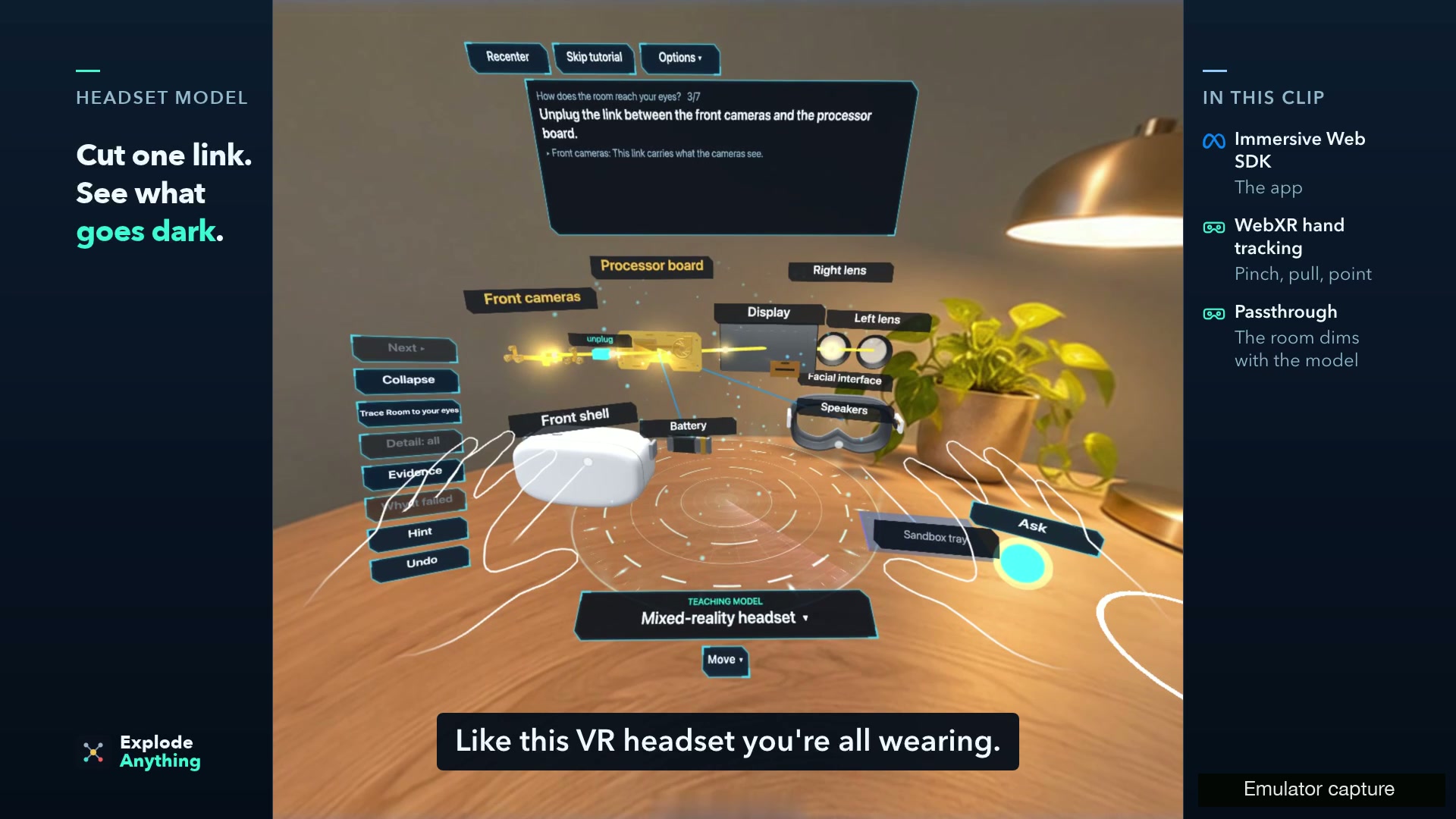
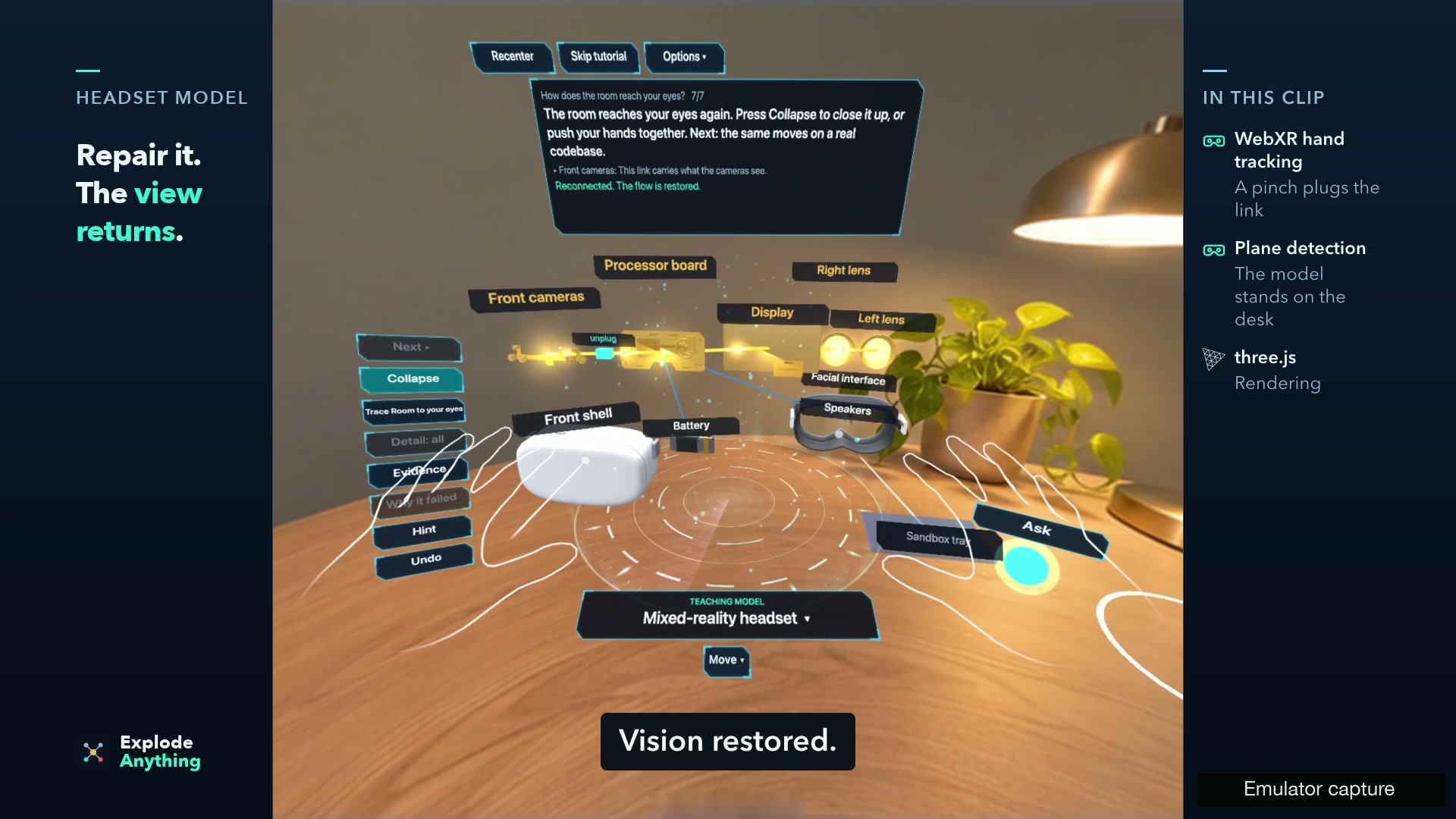
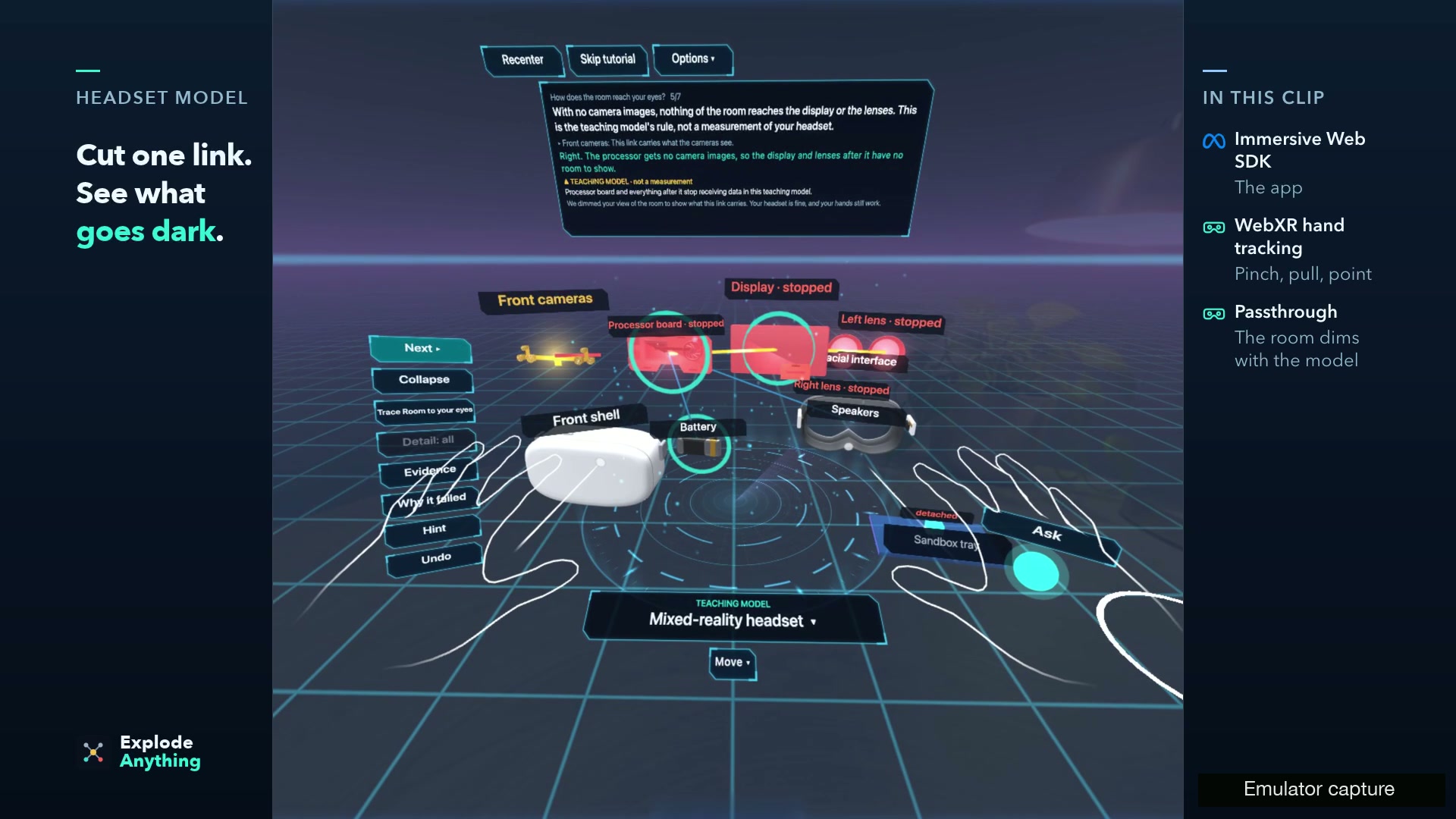
- It starts with the headset you are wearing. A model of a mixed-reality headset stands on your desk. You pull it apart with both hands, trace how the room reaches your eyes, and unplug the cameras. The model goes dark downstream and the app dims your real room to show what that link carries. Plug it back in and the room returns.
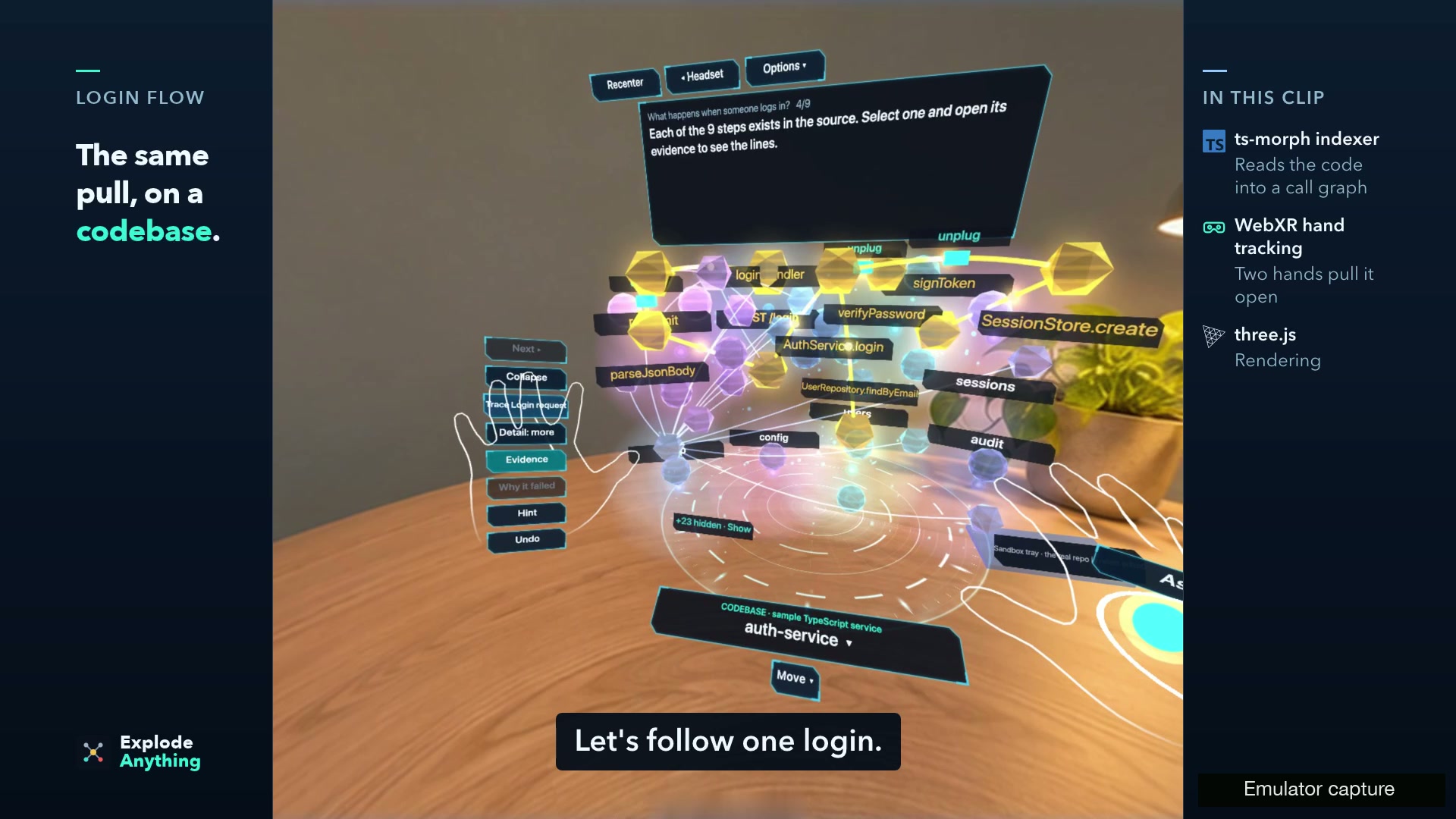
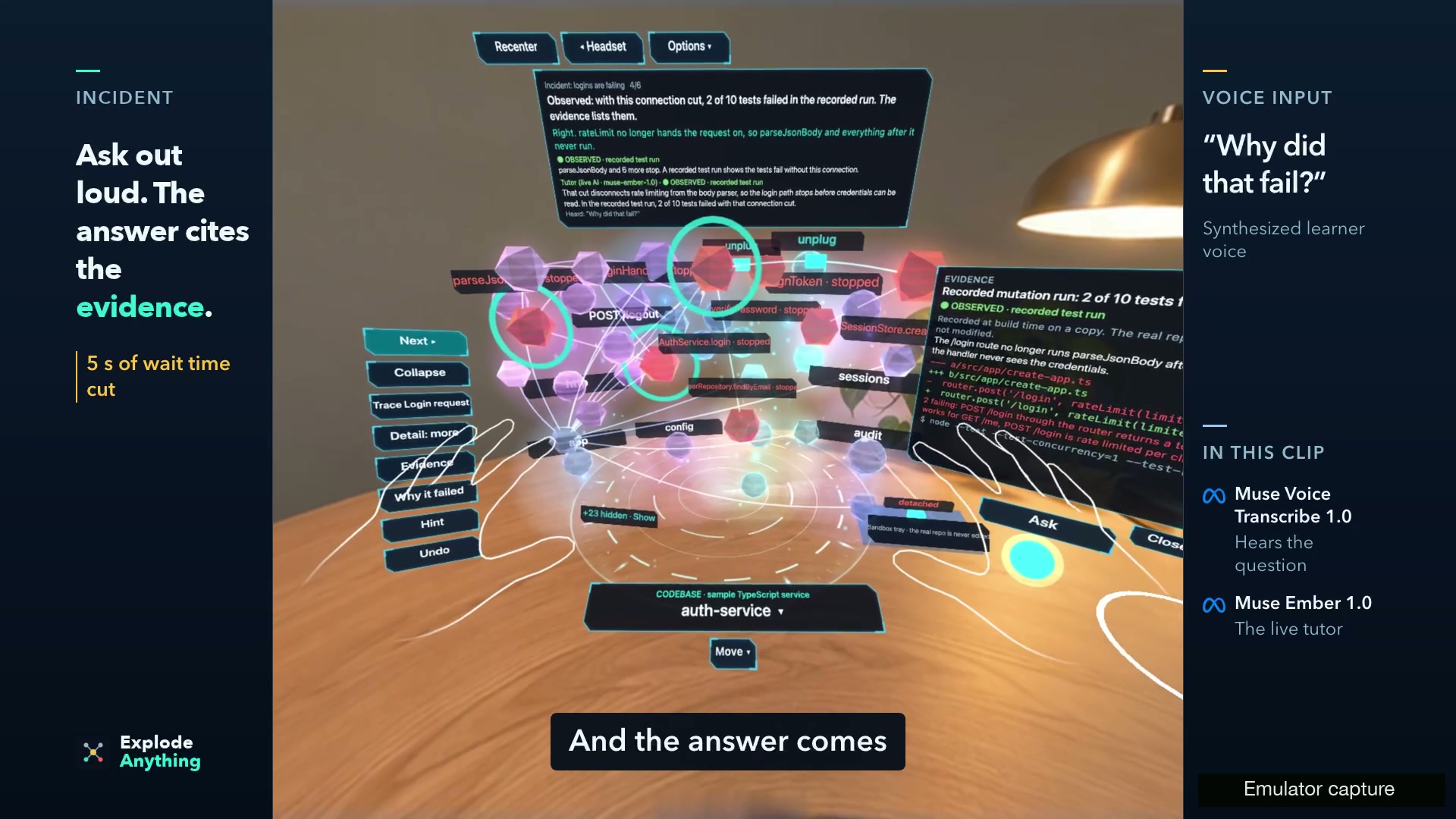
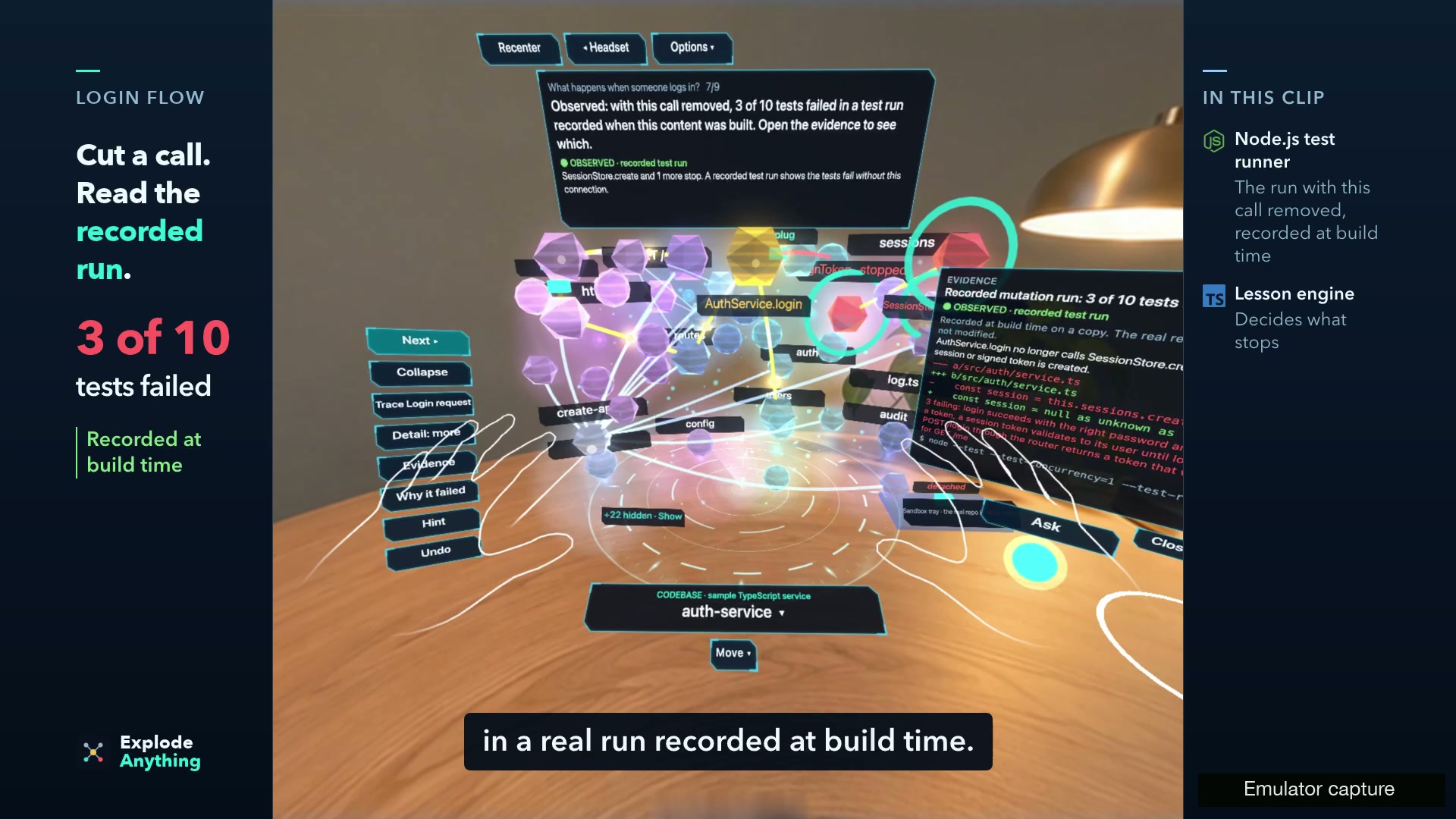
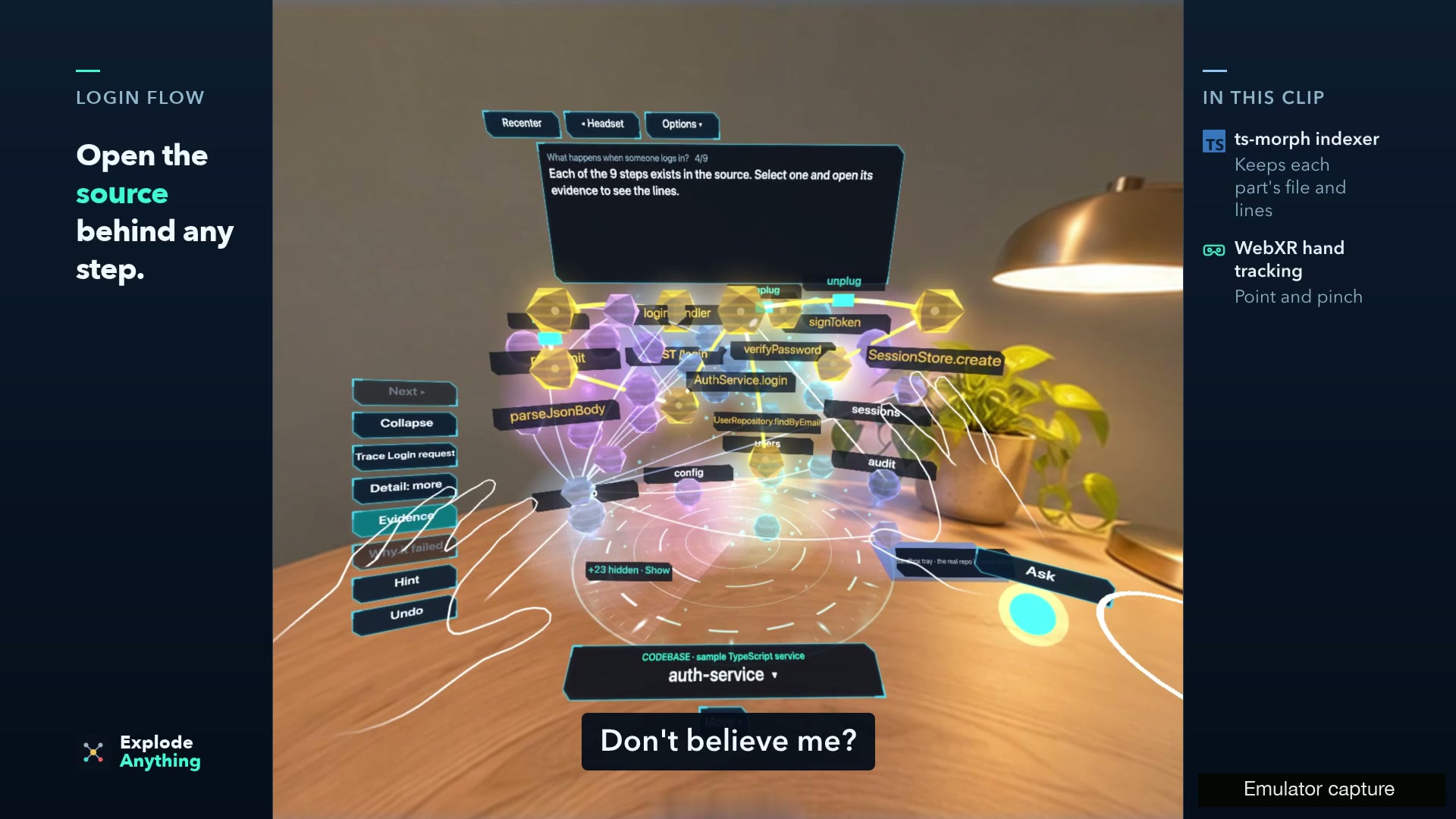
- Then the same moves on a codebase. You trace a login request through a TypeScript auth service's call graph down to its source lines, cut a dependency, predict what fails, and see the test failures that were recorded when the content was built (3 of 10 tests). Then you repair it yourself.
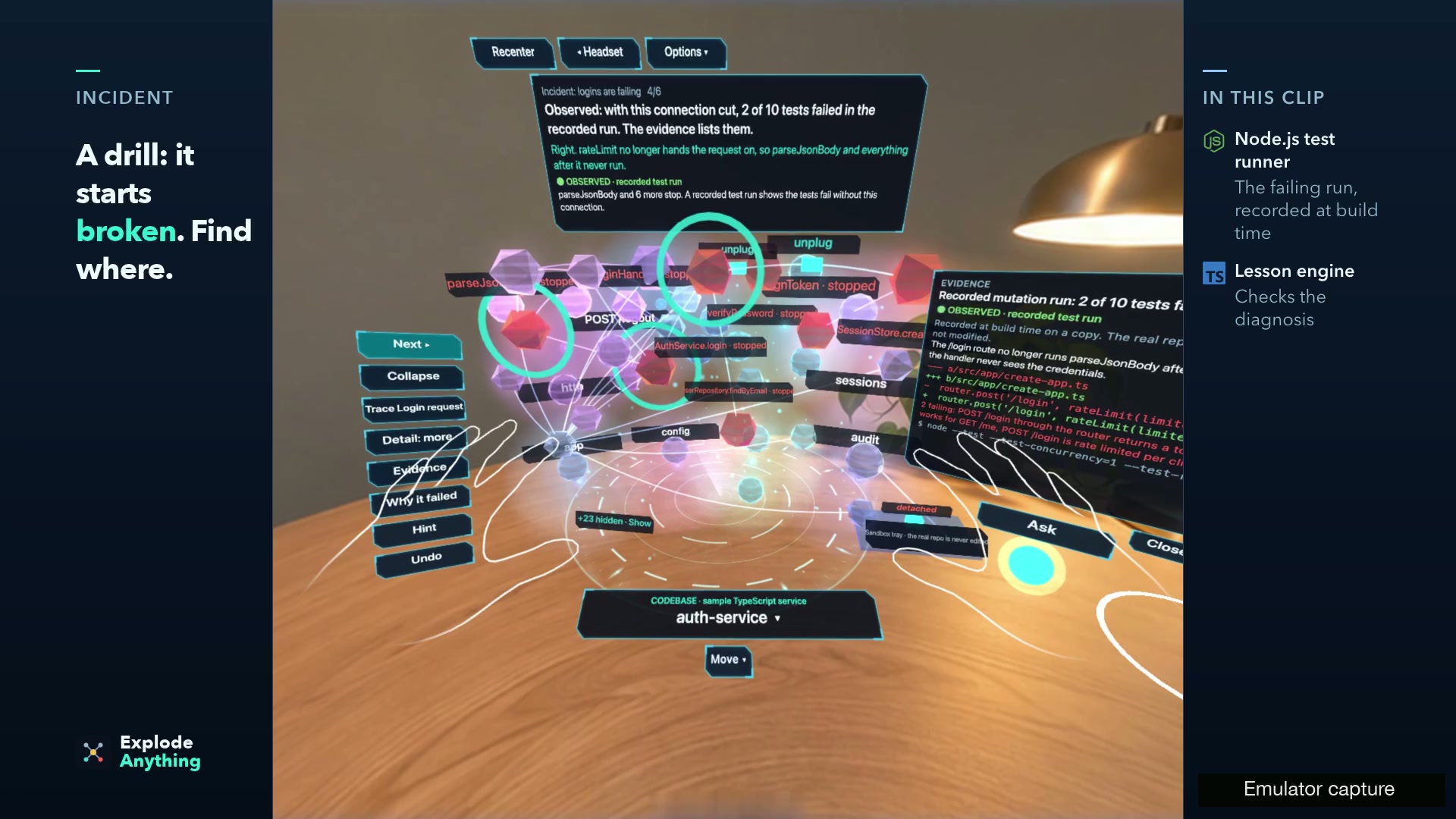
- An incident drill. The system starts broken. You get only the symptom and have to find the cut, name what it stops, and fix it.
- Every claim is labelled. Everything on screen is marked as observed in a recorded run, read from source, a teaching model, or a hypothesis. Nothing is promoted beyond its evidence.
How we built it
Solo, in TypeScript, between Nov 9 and Nov 18, 2026.
- Meta Immersive Web SDK 1.0.1 (WebXR, three.js), hosted on GitHub Pages, so there is nothing to install.
- Scene understanding and anchors: plane and mesh detection choose a desk in front of a seated viewer, and a persistent anchor remembers the spot. Every failure falls back to a floating placement.
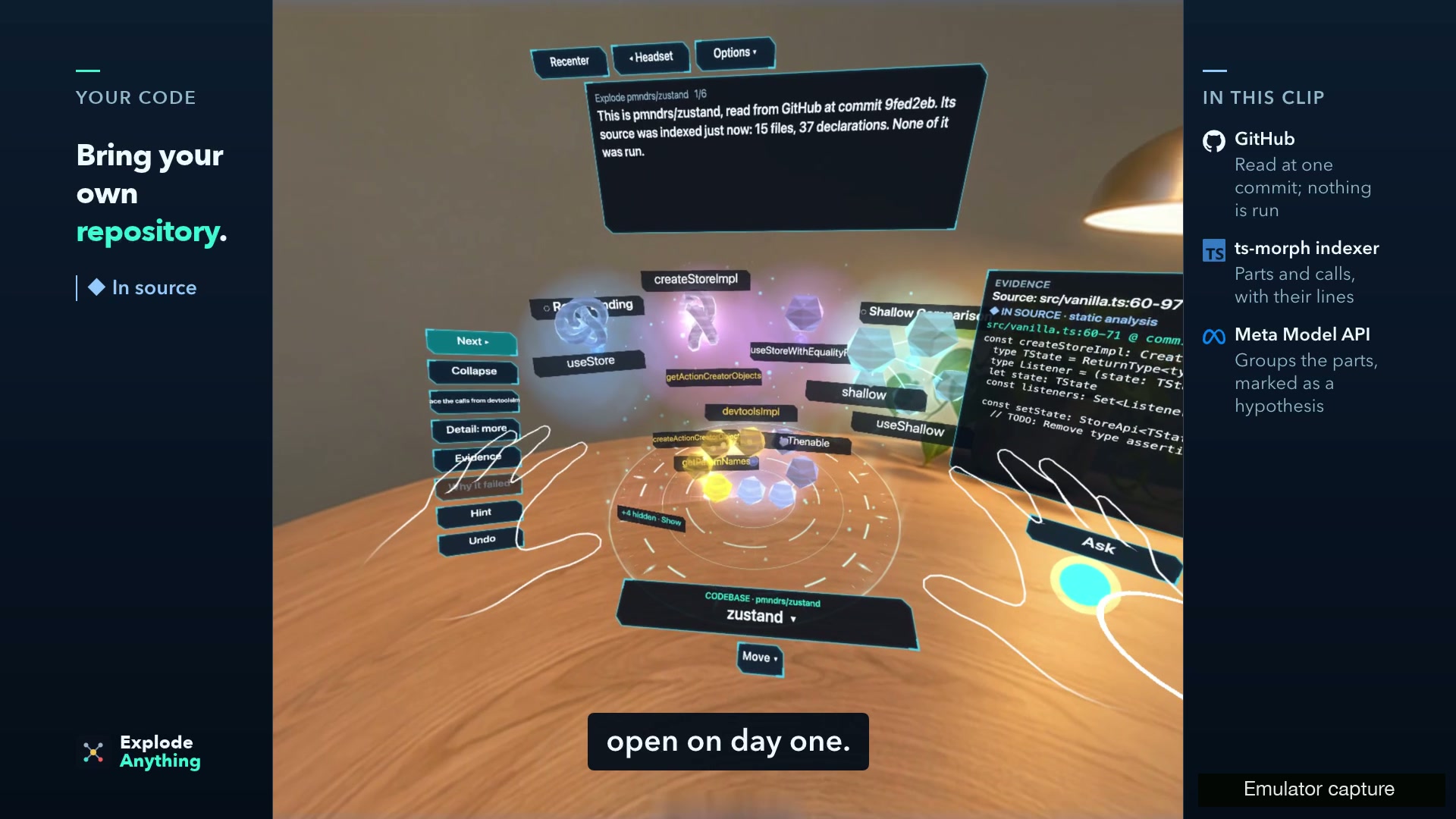
- A truthful content pipeline: a build-time indexer reads the sample service with ts-morph, and a mutation harness runs its test suite against deliberate breaks and records the results. Zod schemas are the single source of truth for every content shape.
- A pure lesson engine: an event-sourced reducer, so a killed session resumes on the same step.
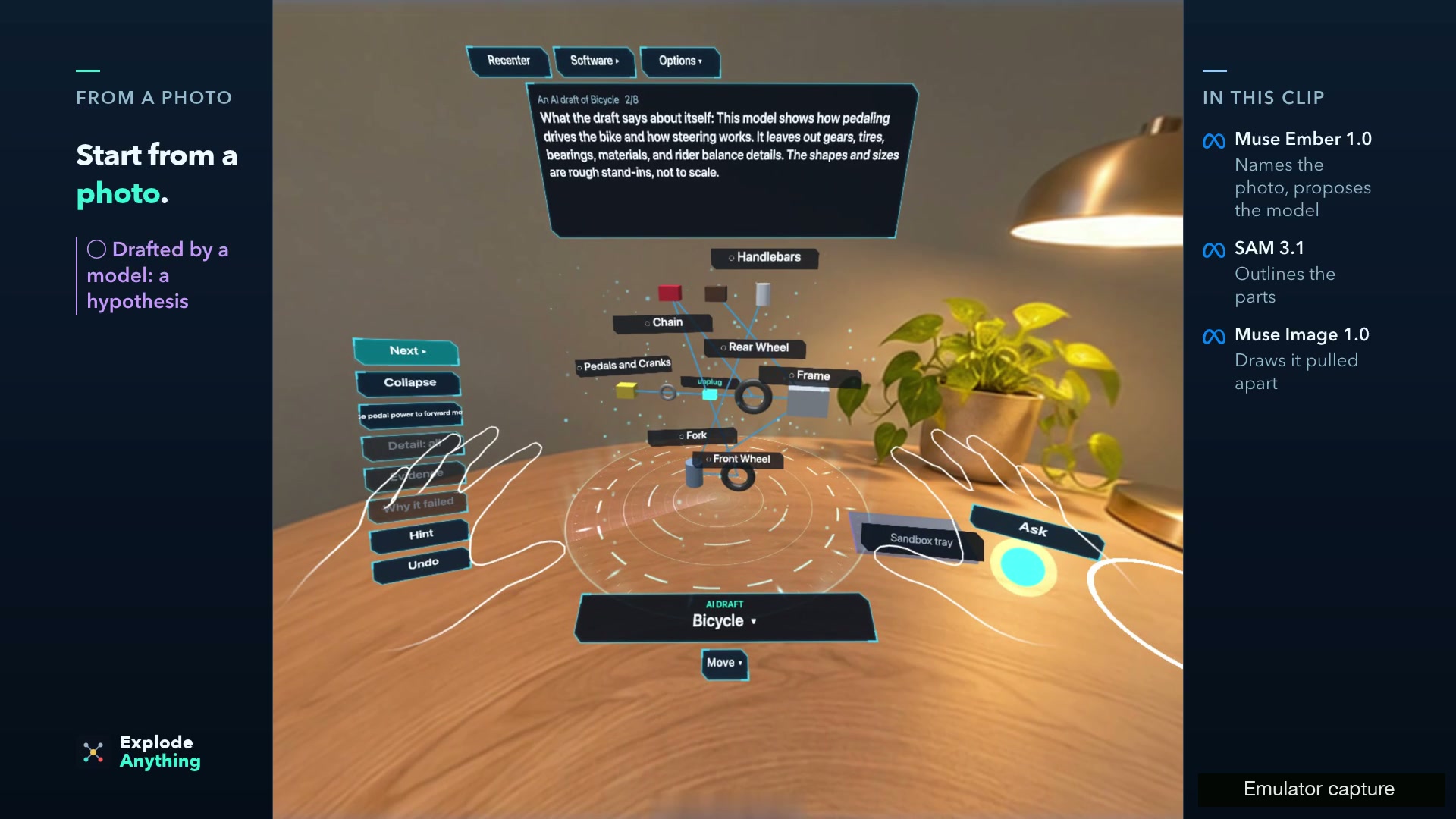
- Five models on Meta's Model API for the live features: Muse Ember (tutor), Muse Voice Transcribe (spoken questions), Muse Spark (drafts and groupings), SAM 3.1 (outlining parts of a photo) and Muse Image (illustrations). Model output is validated before use and always shown as a hypothesis.
- 446 automated tests, including a headless harness that drives the real app code through every lesson.
Challenges we ran into
- No headset until the last few days Everything was built and verified in the IWER desktop emulator. Only had a few days to test with a real Quest 3S.
- A young SDK. Hand pinch maps to WebXR select rather than grab, so the two-hand pull, twist and drag gestures are custom. The ray pointer could also stick after a pinch that ended on nothing, which needed a workaround.
- Keeping an AI tutor honest. The tutor can only show things through a fixed set of actions, its plans are validated against the graph, and it can act for you only when you asked in your own words. Only the lesson engine decides a step is passed.
Accomplishments that we're proud of
- Working with limited time and hardware access!
- The opening beat: cutting the camera link on a model of the headset dims your actual room. It only works in mixed reality.
- Evidence you can check: the failures you see come from real recorded test runs, and every step opens its actual source lines.
- One set of hand gestures that works on a device, a codebase and a planet.
- A lesson that stays honest about what is observed and what is a guess, including everything a model wrote.
What we learned
- Breaking something safely teaches faster than reading about it, and predicting the failure first makes it stick.
- Labelling the status of every claim is a design problem as much as a data problem.
- An emulator gets you a long way, but it cannot tell you how an app feels on a face. That check is still owed.
- A language model is most useful as a tutor when it is constrained to cite recorded evidence and to use the same actions a hand would.
What's next for Explode Anything
- Tune further on a physical Quest 3S.
- Run mutation tests on your own repository, so its lesson has observed failures and not only source structure.
- More incident drills, built from every recorded mutation.


