-
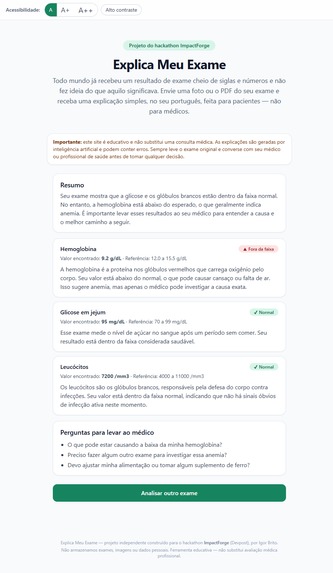
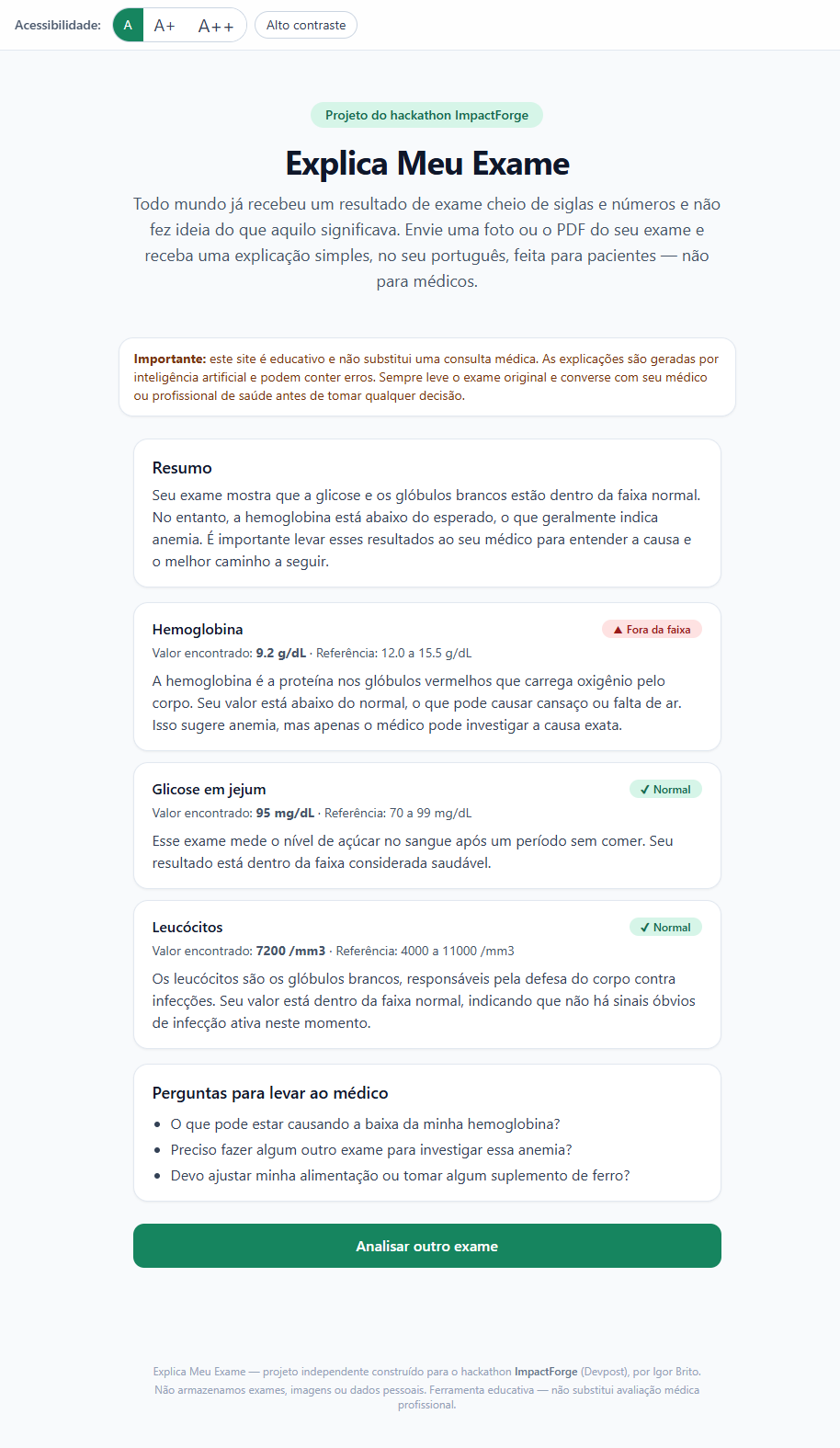
Real upload → real AI response: hemoglobin flagged, glucose and white cells normal, explanations + doctor questions generated live.
Inspiration
Almost everyone has received a lab test result full of acronyms (TSH, HDL, ALT...) and numbers with no context, with no real idea what any of it means. That gap — health literacy — causes unnecessary anxiety, or worse, causes people to ignore a result that actually deserved attention. It hits older adults and people with less formal education hardest, and it's a problem I've run into constantly: I'm an AI student who has spent months building healthcare-adjacent tools, and I kept seeing the same pattern — regular people staring at a piece of paper from a lab, with no one around at that moment to explain it to them in plain words. ImpactForge felt like the right place to finally build something aimed squarely at that gap instead of at the healthcare system itself.
What it does
You upload a photo or PDF of your lab results. A multimodal AI model reads the document, identifies every test parameter it can find, and returns:
- a warm, plain-language summary of the overall result
- each parameter with its value, the normal reference range, a clear normal/attention/out-of-range status, and an explanation of what it measures and why it matters — written for someone with no medical background
- a ready-made list of questions to bring to your doctor
- a calm, non-alarming flag if something looks like it deserves urgent medical attention — without ever attempting a diagnosis
No account, no login, no database — the file is processed in memory and discarded as soon as the response is generated.
How we built it
Next.js 14 (App Router) + TypeScript + Tailwind CSS, deployed on Vercel. AI: Groq's qwen/qwen3.6-27b multimodal model (free tier, JSON mode) for reading and explaining the exam. unpdf for extracting text from PDF lab reports. No database — the whole architecture is intentionally stateless.
Challenges we ran into
- Free-tier rate limits: the vision model's free tier caps at 8,000 tokens per minute (prompt + response combined) — far tighter than its 128K context window suggests. Had to carefully budget the system prompt, extracted PDF text length, and response size to fit reliably.
- Payload limits: Vercel Functions cap request bodies at 4.5MB, which set the real ceiling for file uploads — not the AI provider's own limits.
- Keeping the tone right: the AI had to be genuinely reassuring without ever crossing into diagnosis or medical advice — a lot of prompt iteration went into getting that balance.
Accomplishments that we're proud of
- Zero friction: no account, no login, no database — a real privacy advantage for sensitive health data, not just a marketing line.
- Accessibility built in from the start: adjustable font size (A/A+/A++), high-contrast mode, and respect for reduced-motion preferences — designed for the people who actually receive these test results, who skew older and less tech-familiar.
- Works with both photographed results and PDF exports from lab systems, entirely in Portuguese for the patients it's actually built for.
What we learned
That "free tier" AI limits are often much tighter in practice than the headline context-window numbers suggest, and that designing a genuinely calm, reassuring tone for health information takes as much iteration as the code itself.
Who this helps
Anyone who's ever gotten a lab result and felt lost — but especially older adults, people with lower health literacy or less access to formal education, and anyone whose next doctor's appointment is weeks away and just wants to understand what they're looking at today, in their own language.
Impact
Health literacy is a quiet, universal problem: people receiving medical information they can't parse, at the exact moment they most need clarity. Explica Meu Exame doesn't replace a doctor — it fills the gap before that conversation happens, so patients walk into it already understanding their own results and armed with the right questions. Built stateless and privacy-first, so the tool that explains sensitive health data never has to store any of it.
What's next for Explica Meu Exame
Supporting more exam types and lab formats, and exploring a lightweight way to let users save/export explained results, while keeping the core flow stateless and private by default.
Built With
- groq
- next.js
- react
- tailwind-css
- typescript
- unpdf
- vercel

Log in or sign up for Devpost to join the conversation.