-
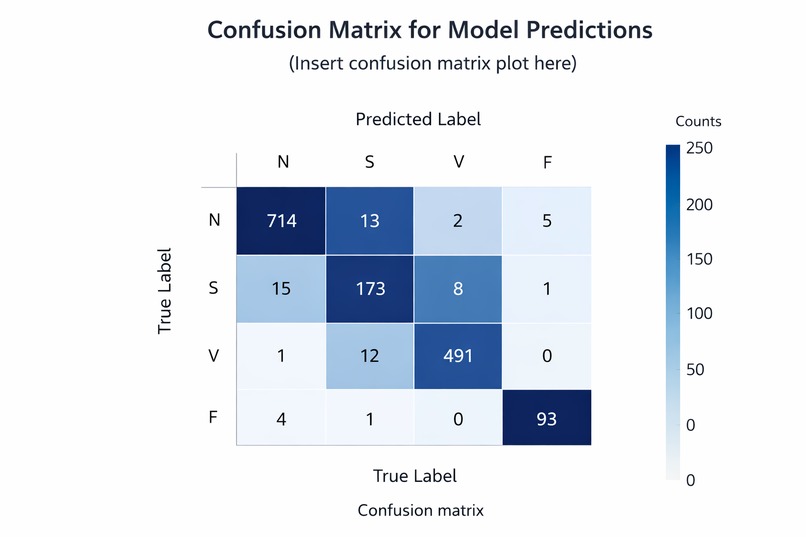
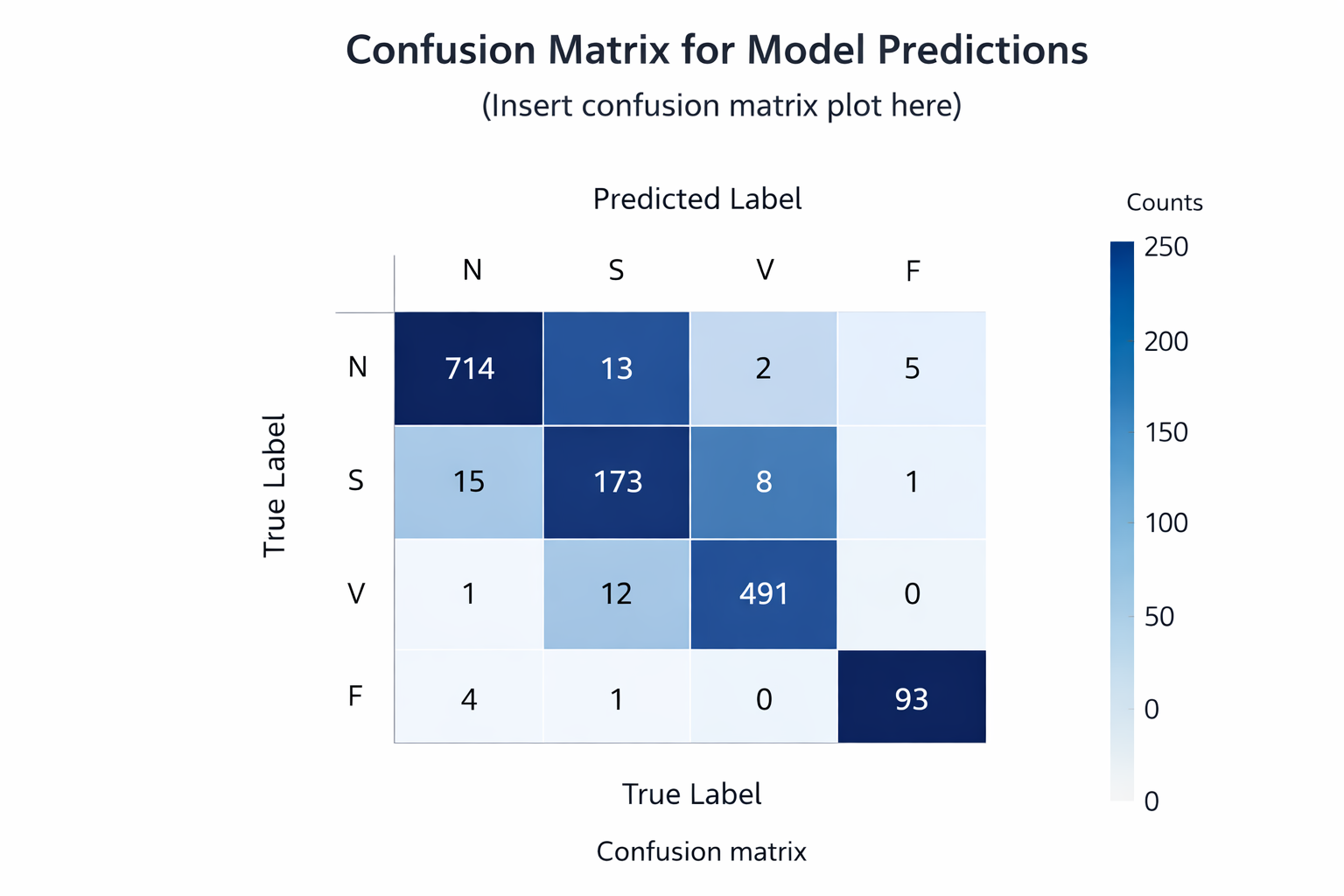
Confusion matrix with prediction results
-
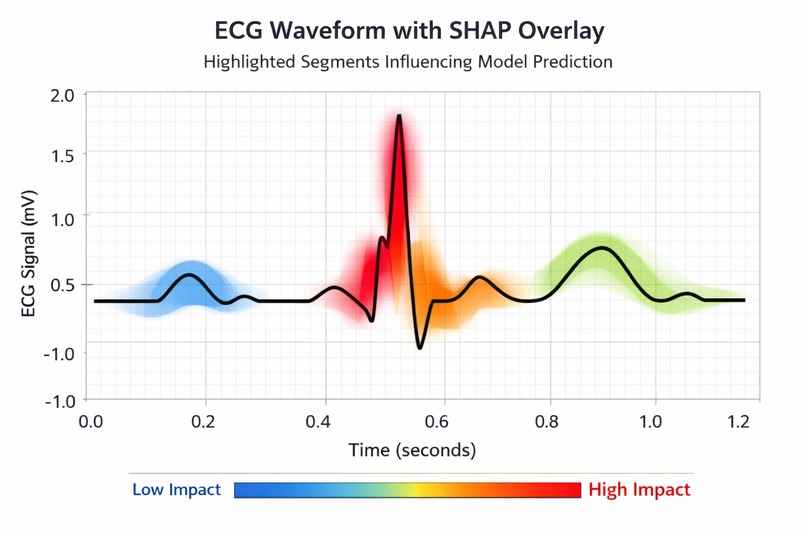
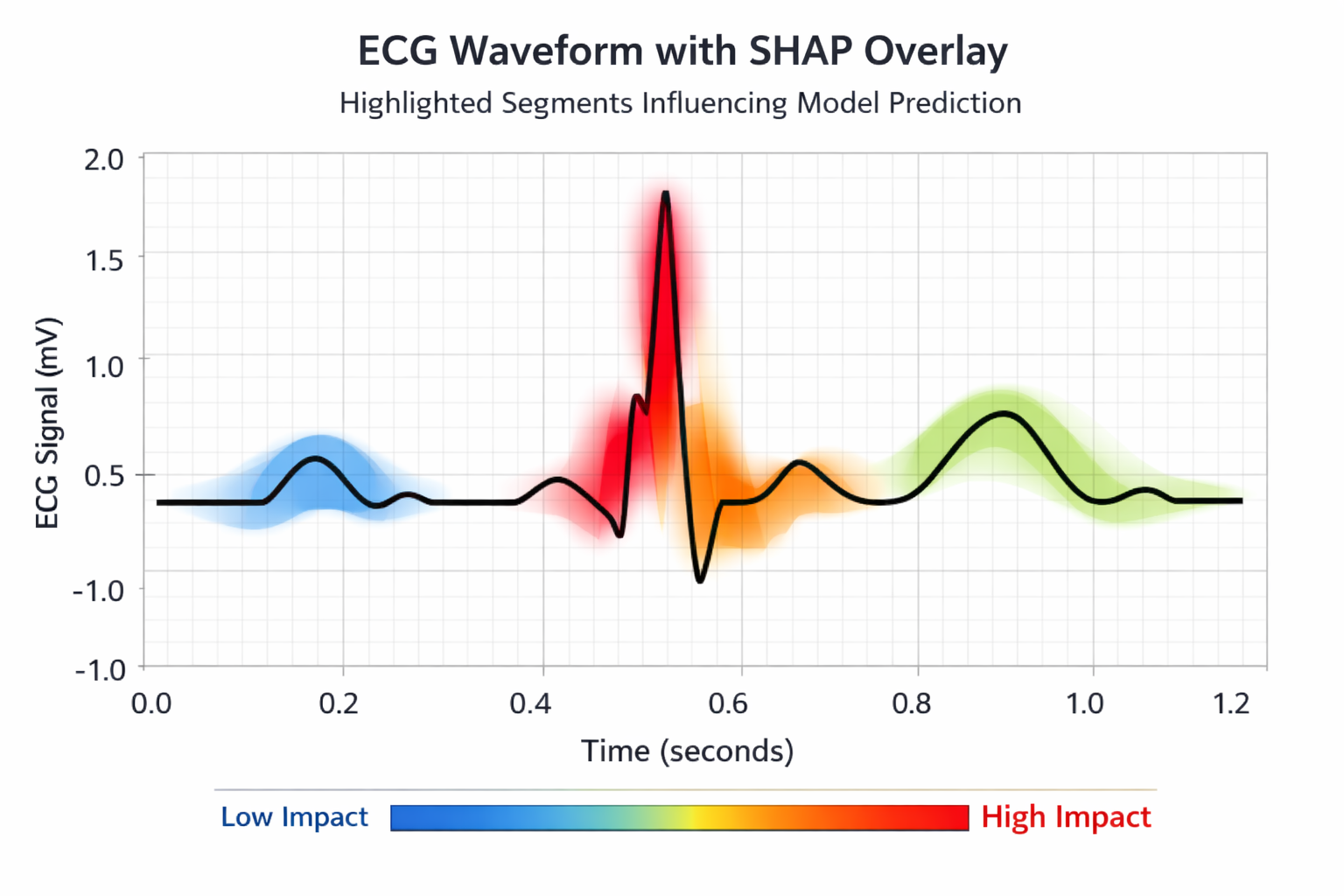
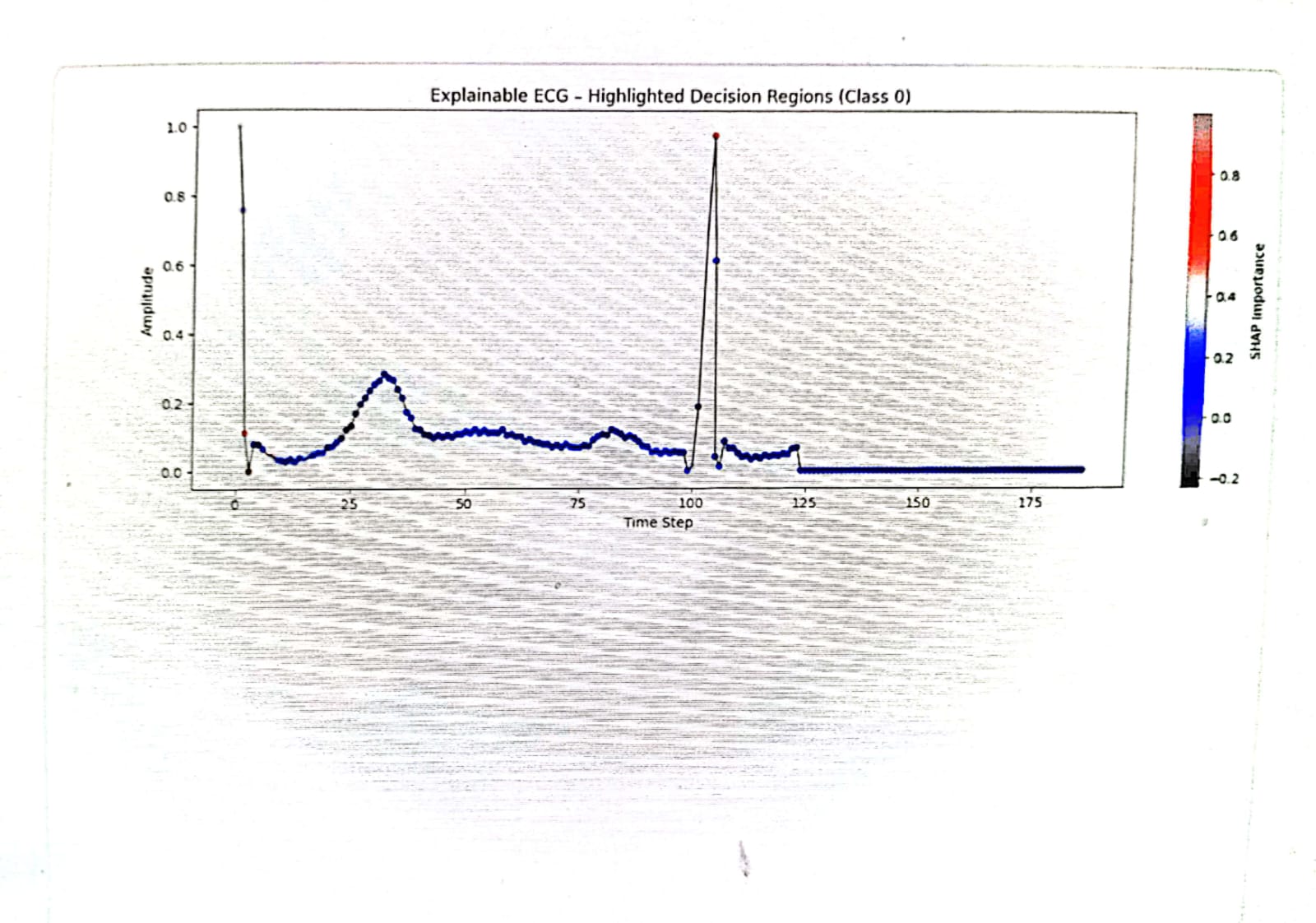
ECG Waveform with SHAP Overlay
-
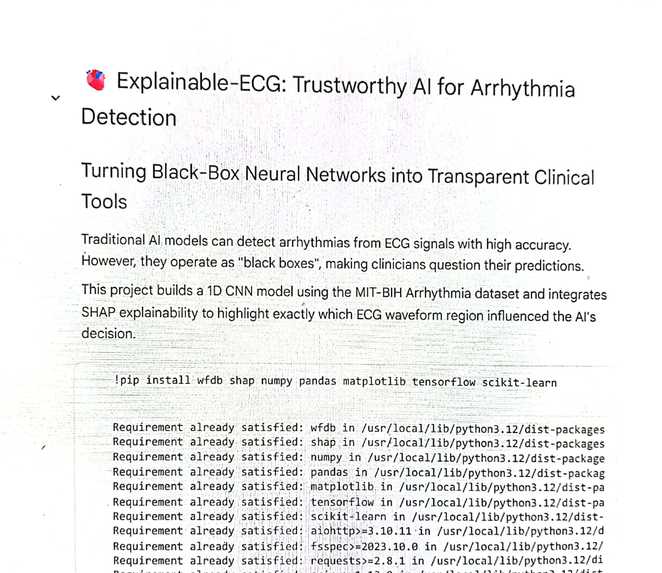
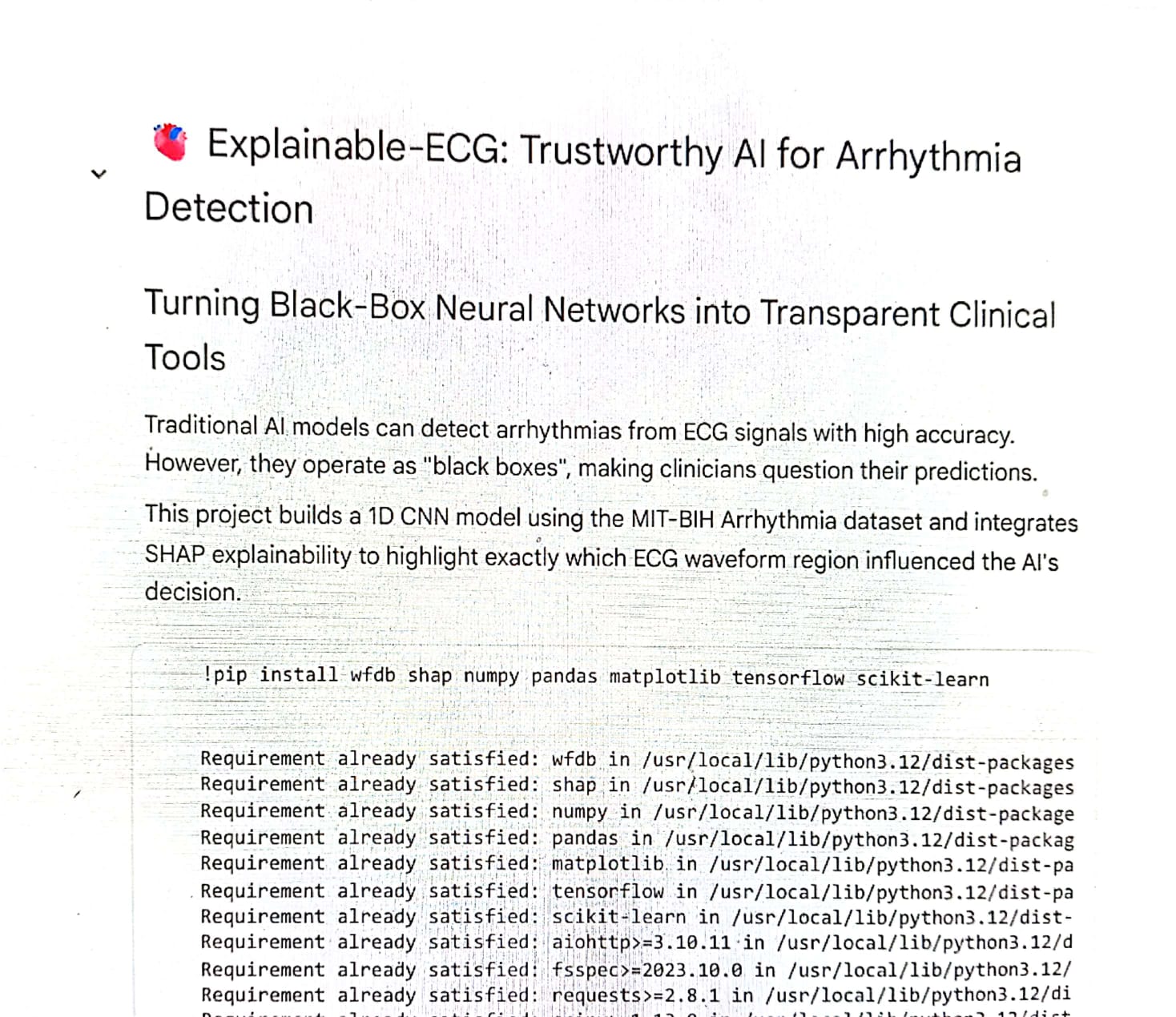
Pip Installs
-
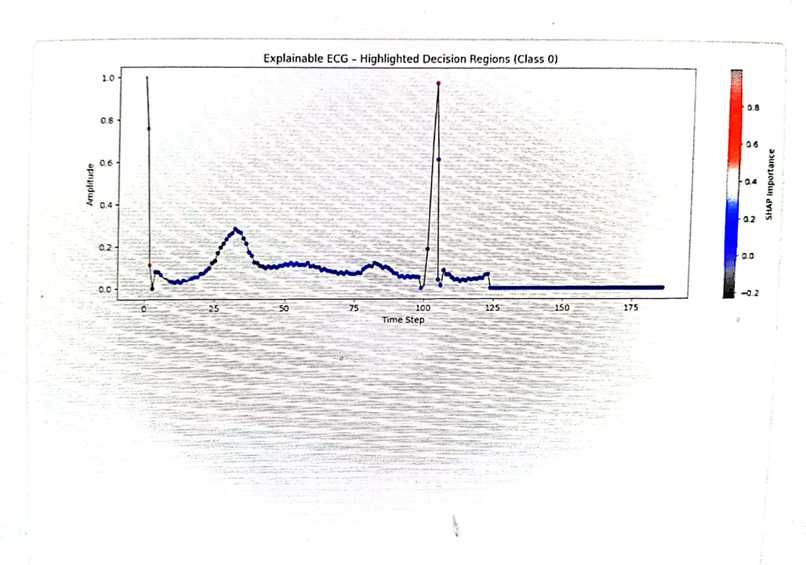
Explainable ECG: Highlighted Decision Region (Class 0)
-
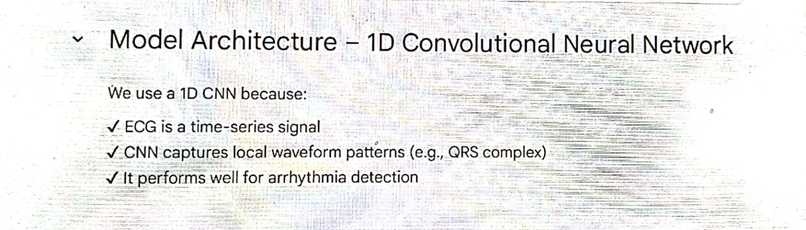
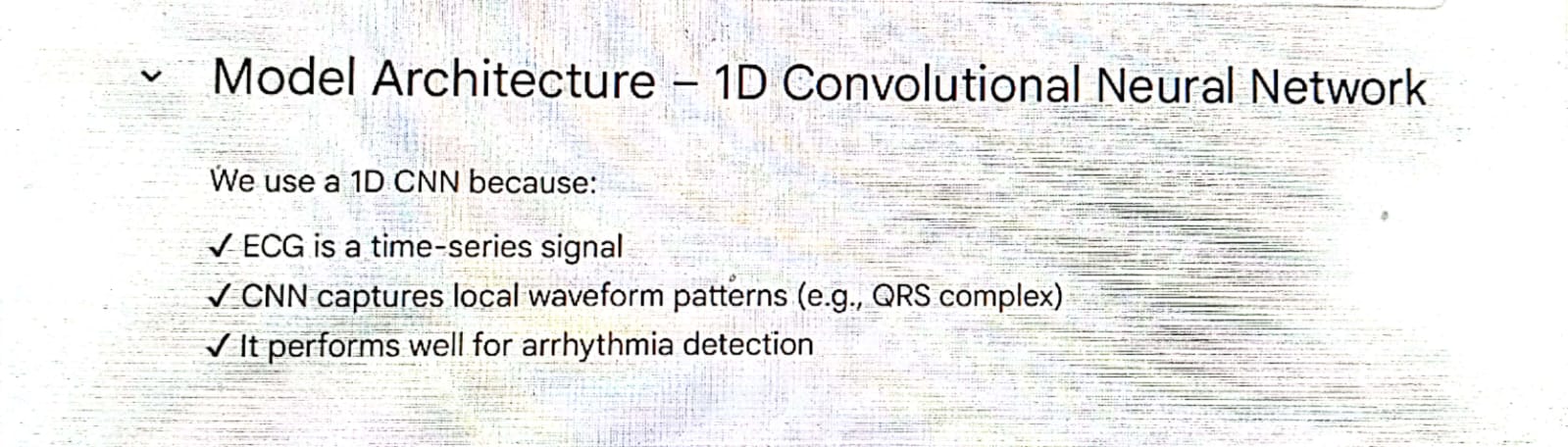
Model Architecture
Inspiration Cardiovascular diseases are one of the top reasons for deaths around the world. Although AI algorithms are able to identify arrhythmias with a high degree of success, most of them are “black boxes,” which makes physicians reluctant to rely on them. I wanted to develop an algorithm that is not only correct but also transparent.
What I Learned
How to preprocess ECG data for deep learning models.
How to create a 1D Convolutional Neural Network (CNN) for time-series signals.
How to use SHAP (Shapley Additive Explanations) to explain neural network predictions.
How to combine data science, deep learning, and explainability for a real-world healthcare problem.
How I Built It
Data Preparation:
Used MIT-BIH Arrhythmia CSV dataset.
Normalized ECG signals and split into train/test sets
Model Architecture:
> Built a 1D CNN:
X∈RN×187×1→Conv1D + MaxPooling→Dense + SoftmaxX \in \mathbb{R}^{N \times 187 \times 1} \quad \rightarrow \quad \text{Conv1D + MaxPooling} \quad \rightarrow \quad \text{Dense + Softmax}X∈RN×187×1→Conv1D + MaxPooling→Dense + Softmax
> Output: probability distribution over 5 arrhythmia classes.
Explainability:
Applied SHAP to highlight which ECG time steps influenced predictions.
Overlayed SHAP values on ECG plots for visual interpretation.
Evaluation:
Achieved 98% accuracy, high precision, and recall.
Visualized results with ECG waveforms and SHAP overlays.
Challenges I Faced
SHAP explanation for time series data: Required reshaping of inputs and flattening of arrays for KernelExplainer.
Handling large CSV files for ECG data: Required memory management in Google Colab.
Troubleshooting CNN mistakes: Modified input dimensions and architecture to suit ECG data format.
Interpreting results: Overlaying SHAP explanations on ECG graphs was a trial-and-error process to get the scaling right.
Impact & Future Vision
This project converts a black-box AI model into a clinically interpretable model, which will help doctors trust the predictions made by AI. In the future, this project can be extended to:
Real-time ECG monitoring on wearable devices.
Multi-lead ECG analysis for better diagnosis.
Use as a clinical decision support system in hospitals
Accomplishment
Being a pre-medical student, this was my first Hackathon project. Despite many hurdles and struggles related to the coding etc. as it was not my domain, I still succeeded in completing my project with accuracy. There is still much software left to understand, but I will learn it slowly and steadily. I learned a lot and will continue to participate to sharpen my skills.
Built With
- googlecollab
- pandas
- shap
- tensorflow

Log in or sign up for Devpost to join the conversation.