Inspiration
Managing shared expenses among roommates is surprisingly inefficient. People rarely remember to record purchases, split bills correctly, or keep track of who owes whom. Existing finance applications rely heavily on manual data entry, creating friction that discourages consistent usage.
We wanted to explore a different approach: What if an autonomous AI agent could act as a user's financial assistant instead of requiring users to manage everything themselves?
That idea became Expenso, a voice-native AI financial assistant powered by ASI:ONE.
What it does
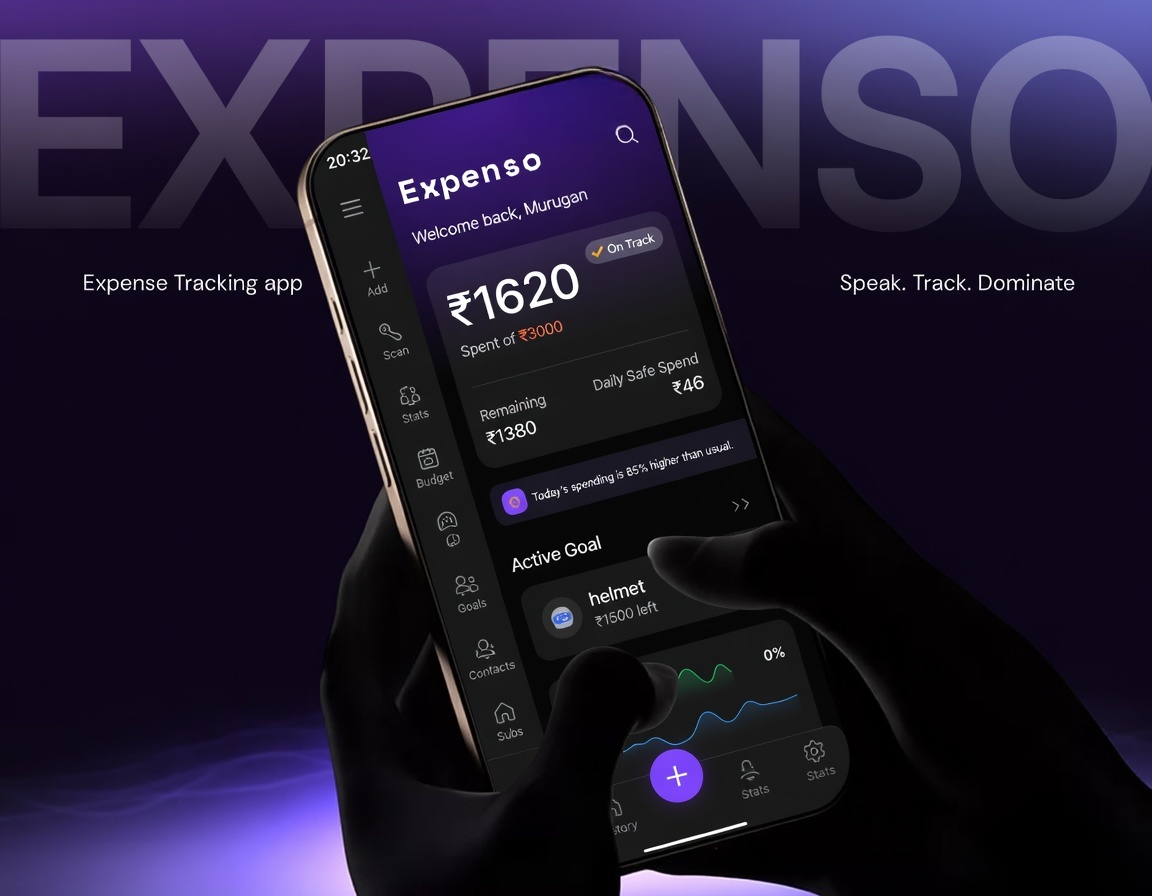
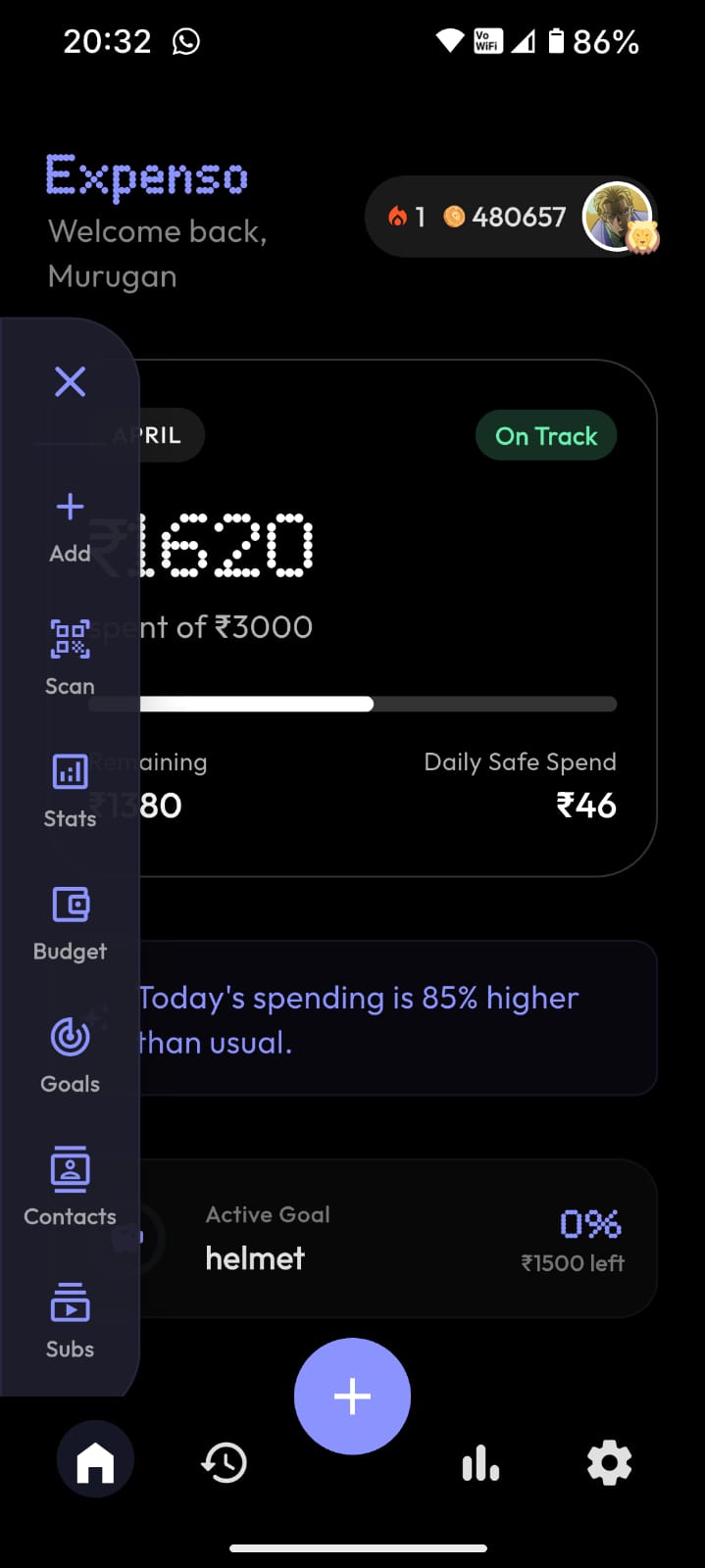
Expenso is an AI-powered personal finance assistant that enables users to manage expenses using natural conversation instead of traditional forms.
Users simply speak commands such as:
"I spent ₹800 on groceries and split it with Alex."
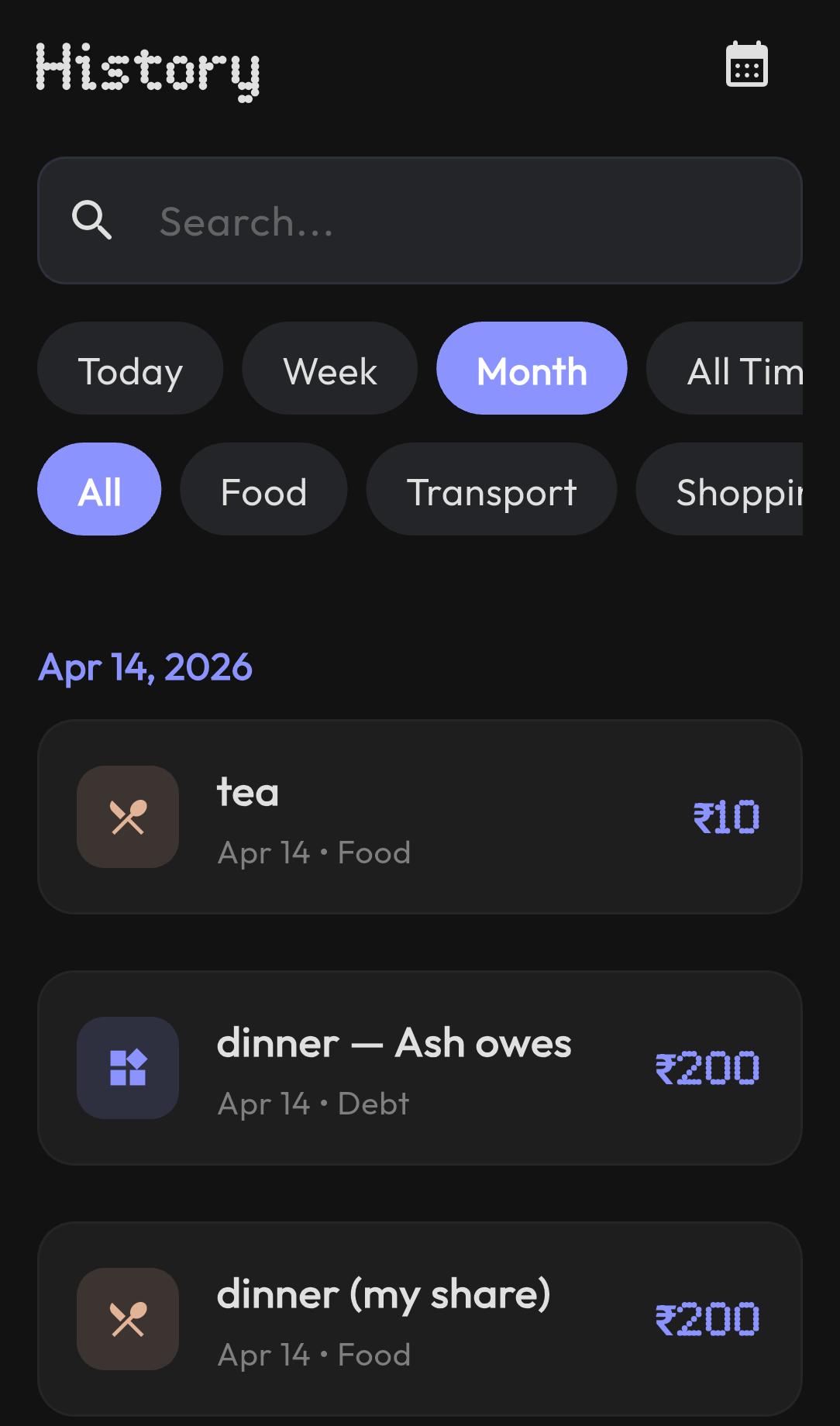
The AI agent understands the intent, categorizes the expense, calculates the split, updates balances, records debts, and refreshes financial analytics—all without manual interaction.
Beyond expense tracking, Expenso can:
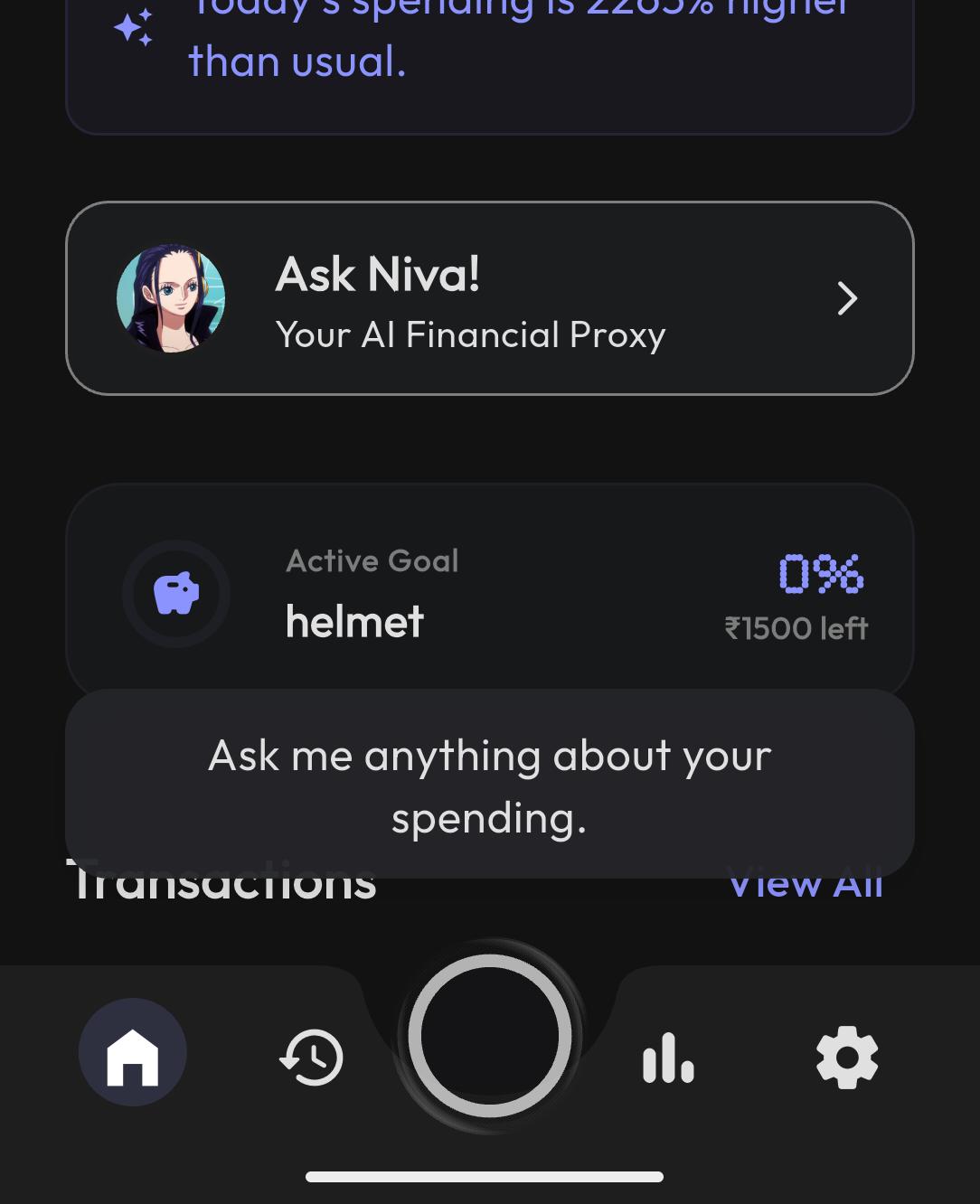
- Answer questions about spending habits using natural language
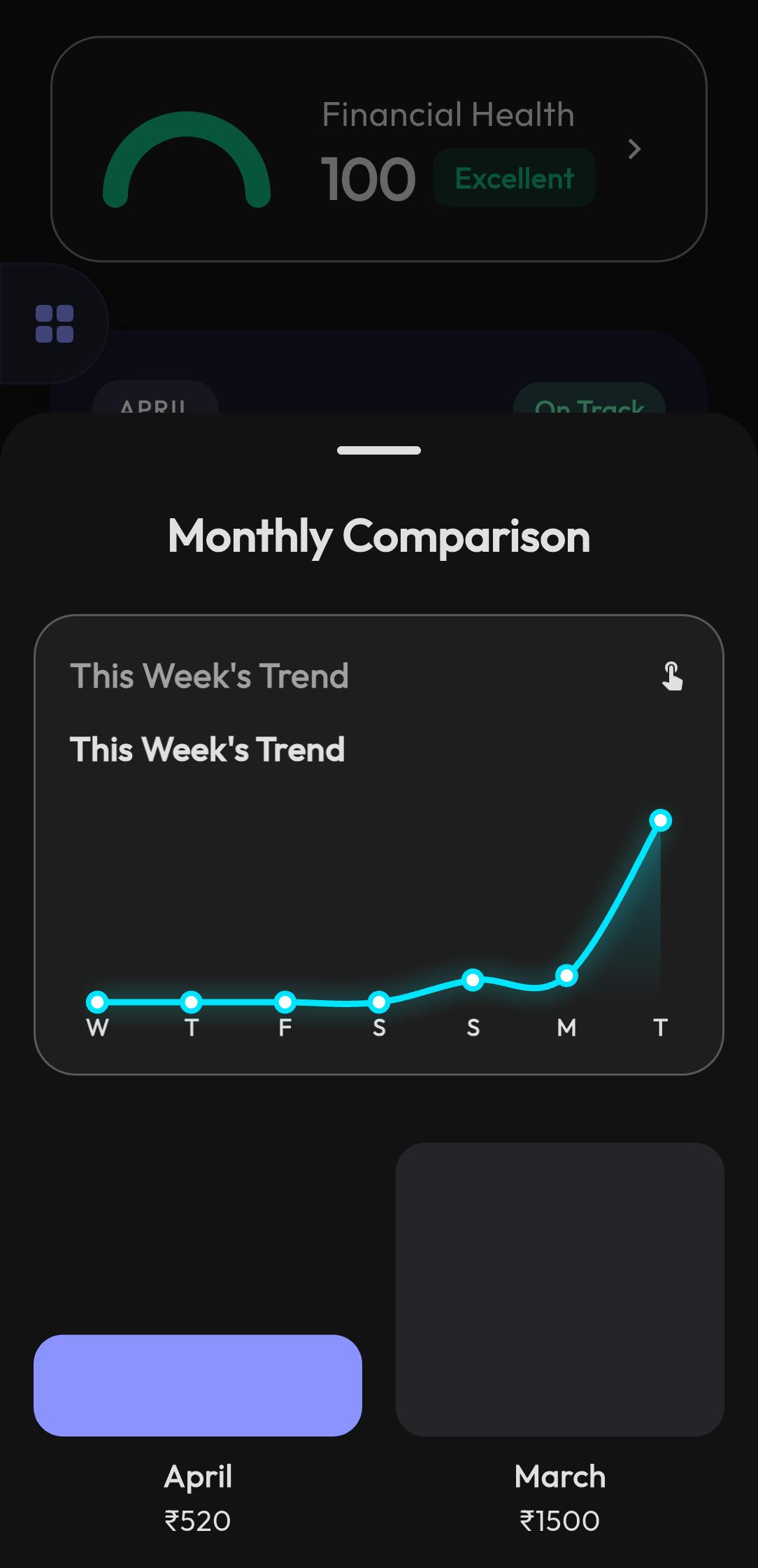
- Compare expenses across different time periods
- Automatically categorize transactions
- Calculate shared expenses and debts
- Support multi-currency transactions
- Provide real-time financial insights through a Financial Health Score
The goal is to eliminate friction between users and financial management by allowing AI to handle the operational work.
How we built it
The mobile application is built with Flutter, providing a responsive cross-platform experience with offline-first support using local storage synchronized through Supabase.
The core intelligence is powered by ASI:ONE, which serves as the reasoning engine behind the autonomous financial assistant.
Instead of generating conversational responses alone, ASI:ONE analyzes user intent and invokes structured tools that perform actions such as:
- Adding expenses
- Splitting bills
- Updating debts
- Converting currencies
- Retrieving historical financial data
- Generating personalized financial insights
This tool-driven architecture allows the AI to execute real financial operations rather than simply answering questions.
Challenges we ran into
One of the biggest challenges was ensuring reliable AI decision-making.
Financial records require precision, so we designed strict tool interfaces and structured outputs to prevent incorrect transaction logging.
Another challenge was maintaining synchronization between AI actions and the Flutter interface. Every AI-triggered operation needed to immediately update dashboards, charts, balances, and analytics without noticeable delay.
We also focused on minimizing response latency to make conversations feel natural and interactive.
Accomplishments that we're proud of
- Successfully integrated ASI:ONE as an autonomous reasoning agent rather than a traditional chatbot.
- Built a voice-first financial workflow that eliminates manual expense entry.
- Enabled multi-step execution from a single natural language command.
- Created an intelligent Financial Health Score that updates dynamically based on user behavior.
- Designed an offline-first architecture suitable for everyday usage.
What we learned
Building Expenso reinforced an important insight:
AI agents become significantly more valuable when they can perform actions, not just generate responses.
By combining natural language understanding with structured tool execution, we transformed conversational AI into a practical productivity assistant capable of managing real financial workflows.
We also learned the importance of designing reliable AI systems with deterministic tool execution when working with sensitive user data.
What's next for Expenso
Our next milestone is making the AI proactive rather than reactive.
Future versions will allow ASI:ONE to:
- Detect unusual spending patterns automatically
- Warn users before they exceed budgets
- Suggest ways to optimize recurring expenses
- Process receipts using computer vision
- Provide predictive financial planning based on spending trends
- Coordinate shared finances among groups through autonomous reminders and settlement suggestions
Our long-term vision is an AI financial agent that actively helps users make better financial decisions instead of simply recording transactions.
Built With
- flutter
- hive
- postgresql
- supabase
- vapi


Log in or sign up for Devpost to join the conversation.