Inspiration
Our inspiration for the Expense Tracker came from observing the widespread struggle many people face in managing their personal finances. Despite the abundance of financial apps, we noticed that many still lacked the simplicity and visual appeal needed to encourage regular use. We wanted to create a tool that would make expense tracking useful, engaging, and easy to understand.
What it does
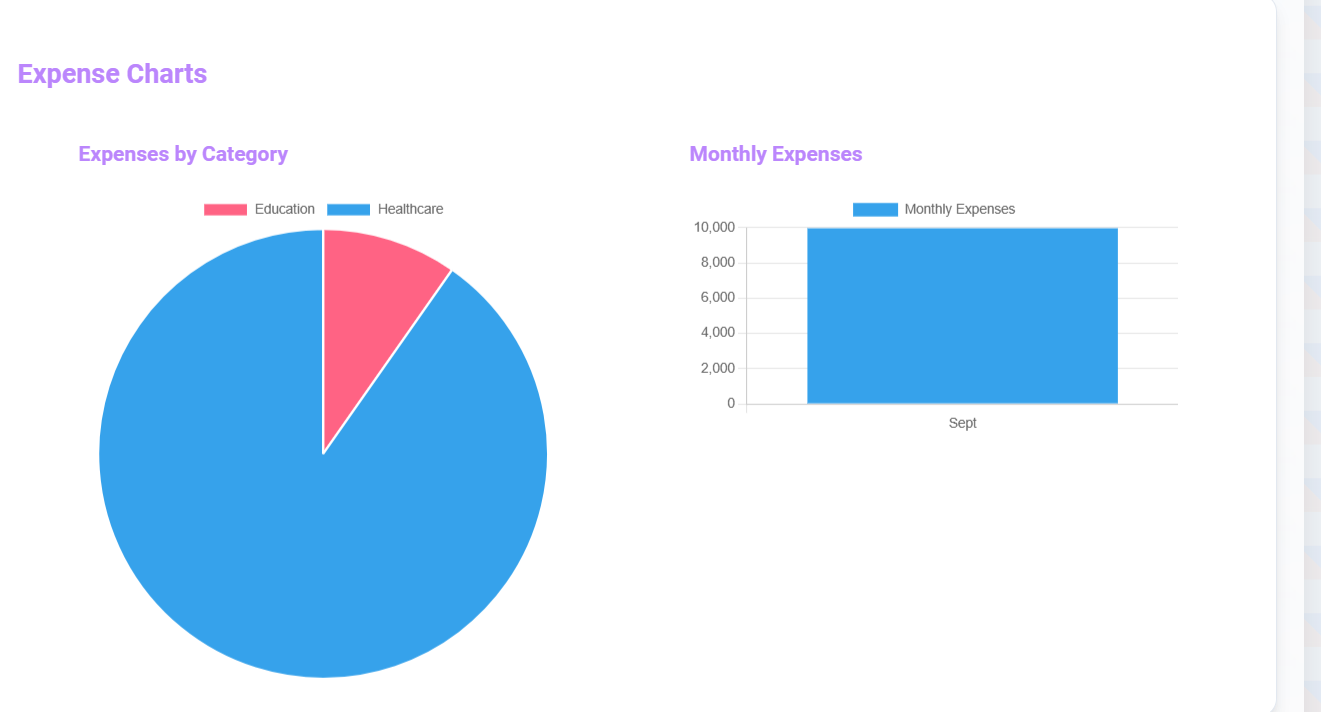
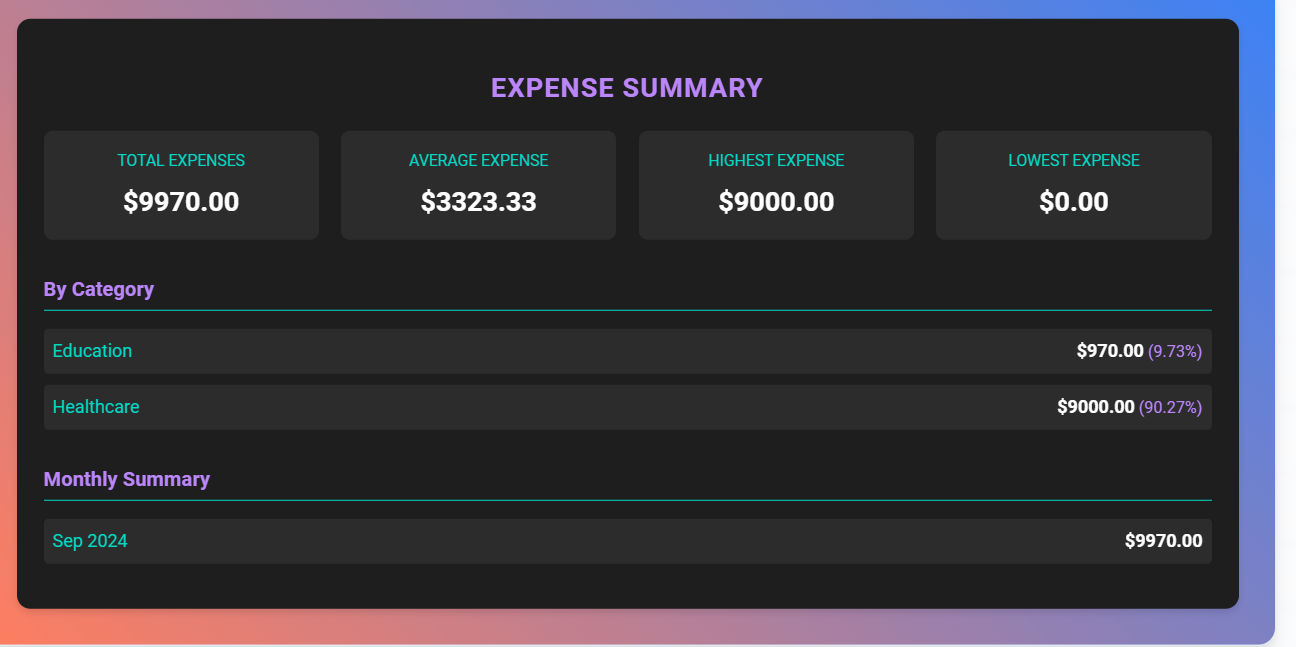
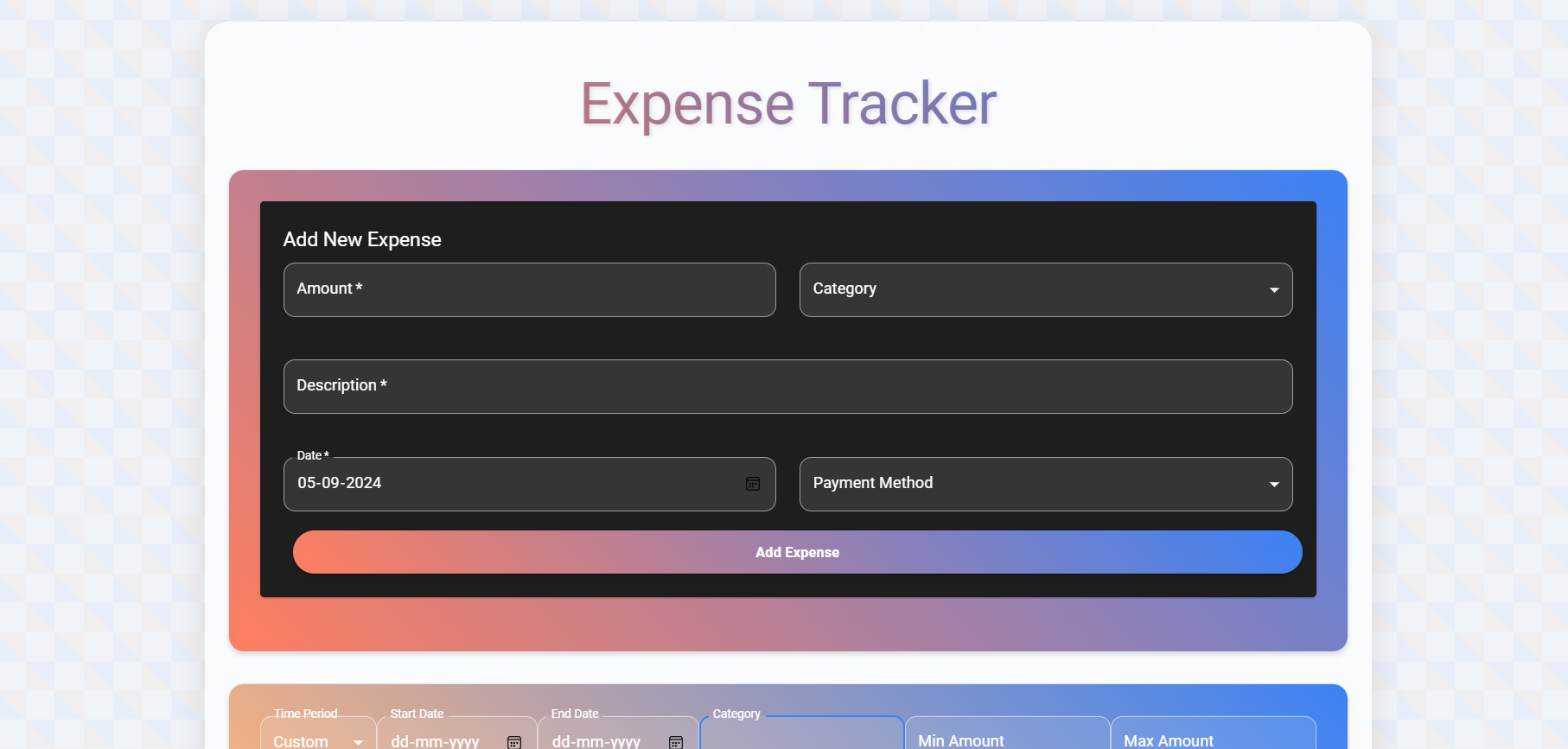
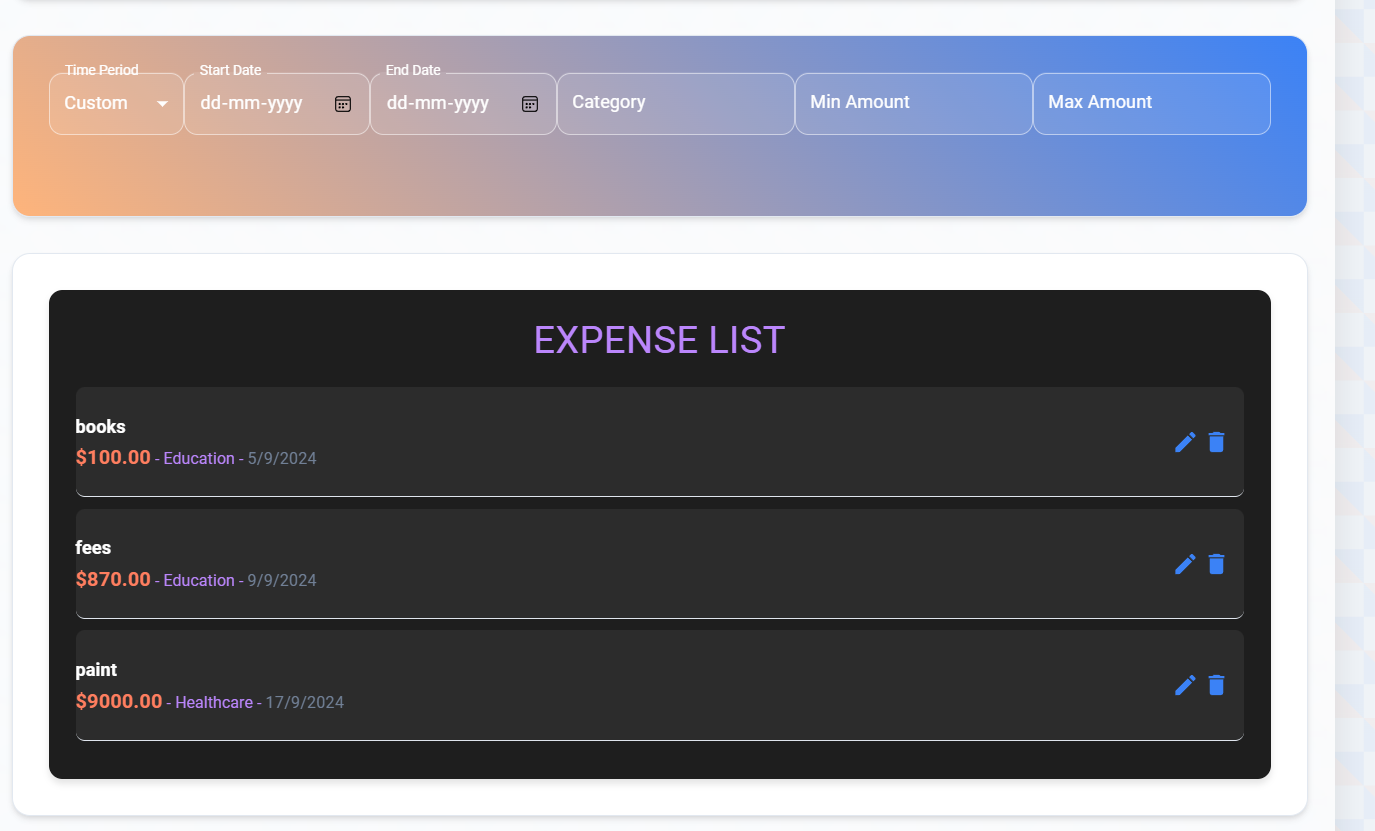
Add, edit, and delete expenses with details like amount, category, and date View a comprehensive list of all expenses Filter expenses by category See a real-time summary of total expenses and key financial statistics Visualize spending patterns through an interactive chart Access the application seamlessly on both desktop and mobile devices
How we built it
React.js for the frontend framework Material-UI for a sleek and responsive design Chart.js (or Recharts) for data visualization CSS3 for custom styling and animations Git for version control GitHub for collaborative development and hosting
Challenges we ran into
Ensuring the application remained performant even with a large number of expenses Designing an intuitive user interface that worked well on both desktop and mobile Implementing real-time updates for the expense summary and chart Managing state effectively across different components Ensuring data consistency and validation across the application
What's next for Expenser
Implement user authentication for personalized experiences Add budget setting features with alerts for overspending Integrate with bank APIs for automatic expense tracking Develop more advanced reporting and forecasting features Create a mobile app version for iOS and Android Implement data export functionality for further analysis in spreadsheet software Add multi-currency support for international users

Log in or sign up for Devpost to join the conversation.