Inspiration
Managing personal finances can be overwhelming, especially for beginners. We noticed that many existing expense trackers are either too complex or lack intuitive visuals. Our goal was to build a simple, user-friendly tool that helps people track spending without needing spreadsheet skills—inspired by our own struggles with budgeting as students!
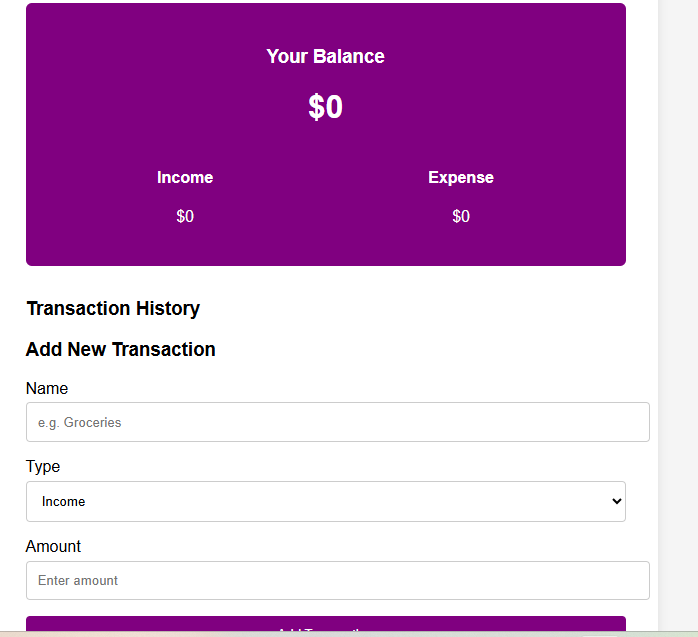
What It Does The Expense Tracker lets users:
📝 Log expenses/income in categories (food, transport, etc.).
📊 Visualize spending with charts to spot trends.
💡 Set budget goals and get alerts when nearing limits.
📤 Export data for further analysis (e.g., CSV).
Designed for beginners, it prioritizes clarity over complex features.
How We Built It Frontend: HTML/CSS, JavaScript (or Tkinter for Python) for the interface.
Backend: Python (Pandas for data) or Firebase for cloud storage.
Charts: Libraries like Chart.js or Matplotlib for visuals.
Version Control: GitHub for collaboration.
(Customize based on your tech stack!)
Challenges We Ran Into Data Persistence: Storing transactions without a database (solved with local storage/JSON).
UI/UX Design: Making it intuitive for non-tech users (iterated via feedback).
Cross-Platform Bugs: Ensuring consistency across devices.
Accomplishments We’re Proud Of ✅ Built a fully functional MVP in a short timeframe. ✅ Created clean, accessible visuals for budgeting insights. ✅ Learned to collaborate remotely using Git.
What We Learned User-centric design matters more than fancy features.
Debugging is 50% of coding (especially with edge cases!).
Teamwork makes even tough problems solvable.
]


Log in or sign up for Devpost to join the conversation.