-
-
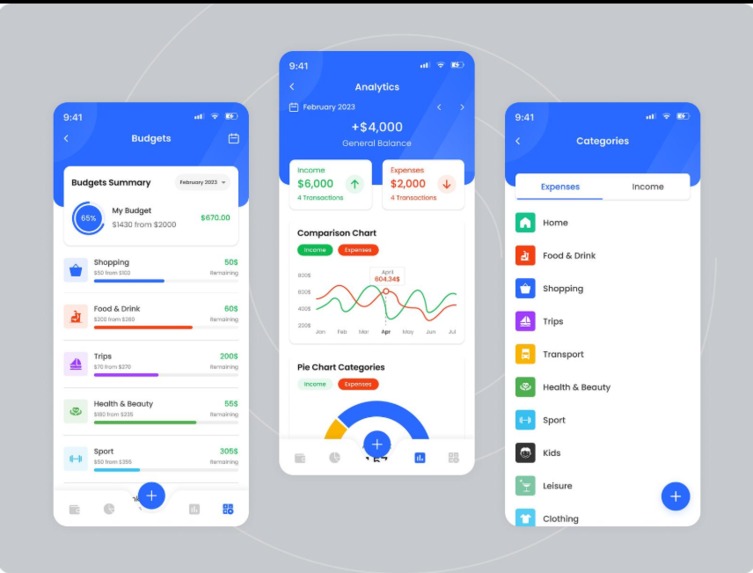
Monthly Expanse Graph
-
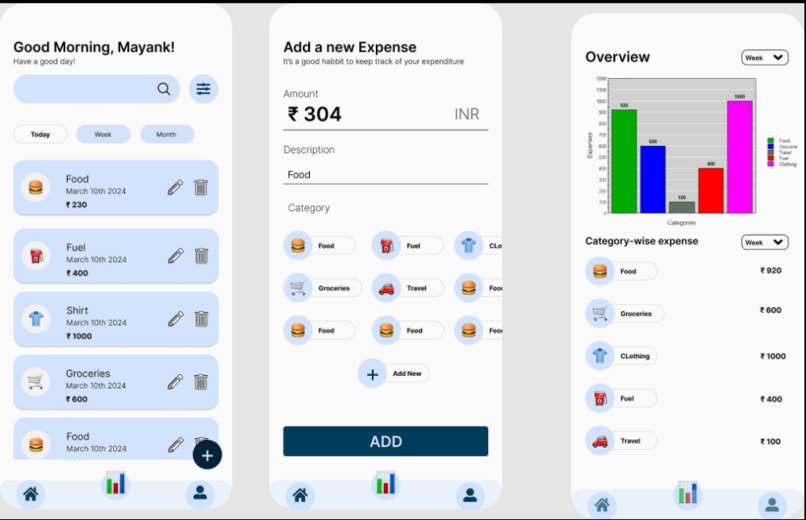
Daily Expanse
-
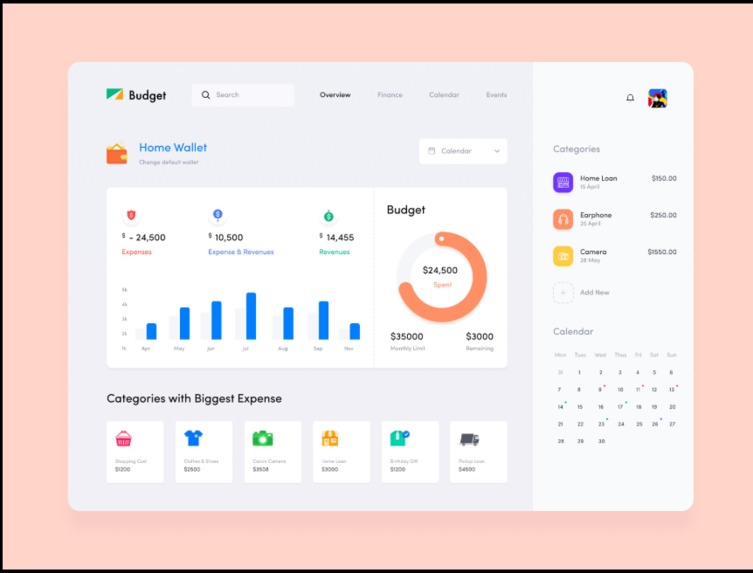
Total Budget Graph
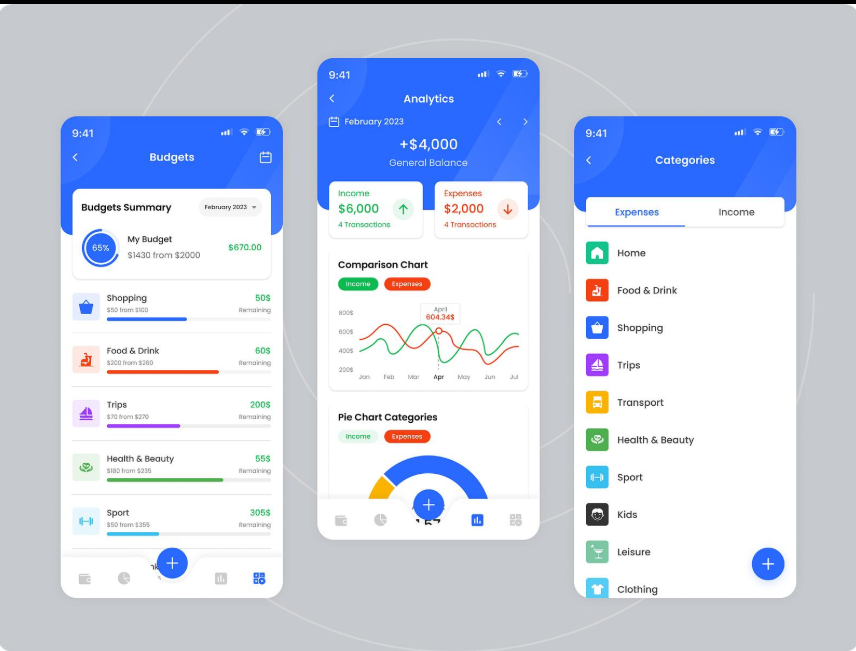
Inspiration
Managing personal finances is a challenge for many people, especially students and young professionals who often lose track of their daily expenses. We wanted to create a simple yet powerful solution that helps users understand where their money is going and make better financial decisions. The idea for Expense Tracker came from the need for an easy-to-use platform that simplifies expense management and budgeting.
What it does
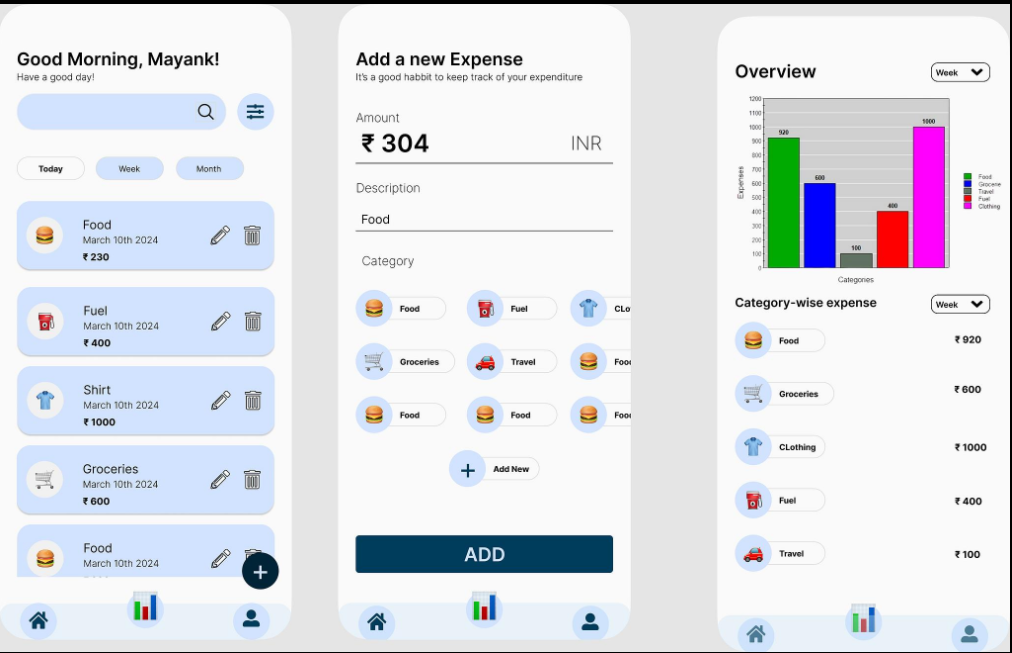
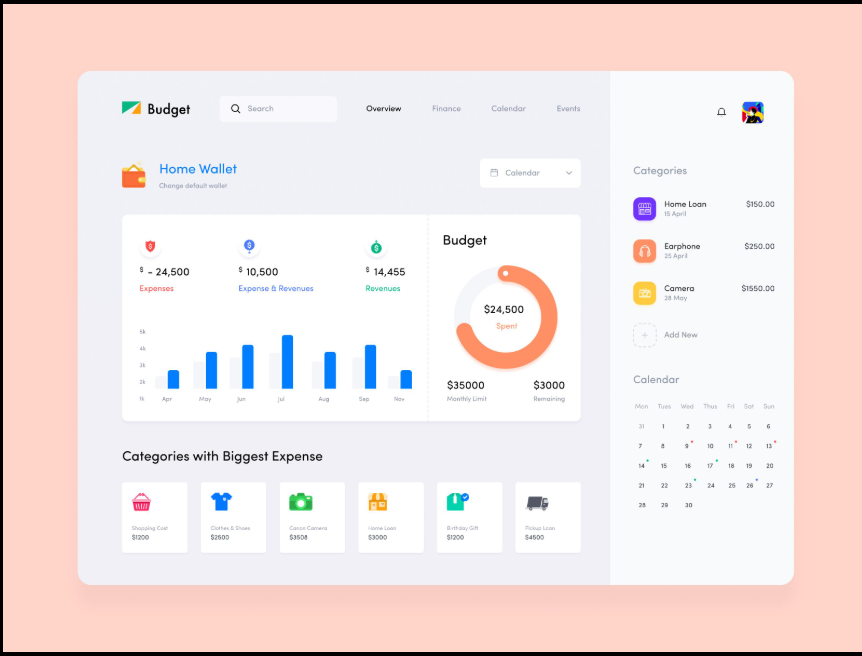
Expense Tracker is a web-based application that allows users to record, categorize, and monitor their daily expenses. Users can add, edit, and delete expense entries, view spending history, and analyze their financial habits through interactive dashboards and reports. The application helps users manage budgets effectively and gain better control over their finances.
How we built it
We developed the application using the MERN Stack:
MongoDB for storing user and expense data. Express.js for creating RESTful APIs. React.js for building a responsive and interactive user interface. Node.js for backend server development.
The project follows a client-server architecture. The frontend communicates with backend APIs to perform CRUD operations on expense records. MongoDB stores all transaction data, while authentication and validation ensure data security and reliability. We also implemented responsive design principles to provide a seamless experience across devices.
Challenges we ran into
One of the major challenges was designing a database structure that could efficiently manage expense categories, transactions, and user information. Ensuring accurate data synchronization between the frontend and backend was another challenge. We also faced difficulties in implementing secure API communication, form validation, and maintaining a smooth user experience while handling large amounts of transaction data.
Accomplishments that we're proud of
Successfully built a full-stack expense management application. Implemented complete CRUD functionality for expense records. Created a clean and responsive user interface. Designed scalable REST APIs for efficient data management. Developed insightful financial reports and spending analysis features. Improved application performance and user experience through optimized database operations.
What we learned
Through this project, we gained hands-on experience in full-stack web development using the MERN stack. We learned how to design and integrate REST APIs, manage databases efficiently, handle state management in React, and implement secure backend services. We also improved our debugging, problem-solving, and project management skills while working on a real-world application.
What's next for EXPENSE TRACKER
In the future, we plan to add advanced features such as:
Budget planning and goal tracking. AI-powered spending insights and recommendations. Expense prediction based on spending patterns. Multi-user expense sharing and group budgeting. Automated expense categorization. Mobile application support. Data export and financial report generation. Integration with banking and digital payment platforms.
Our goal is to transform Expense Tracker into a comprehensive personal finance management platform that empowers users to make smarter financial decisions.
Built With
- chart.js
- css
- html
- html2canvas
- javascript
- next.js


Log in or sign up for Devpost to join the conversation.