-
-

transaction tab
-
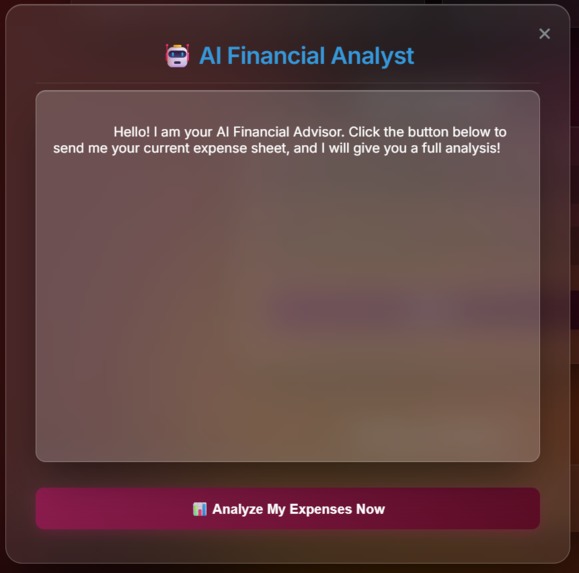
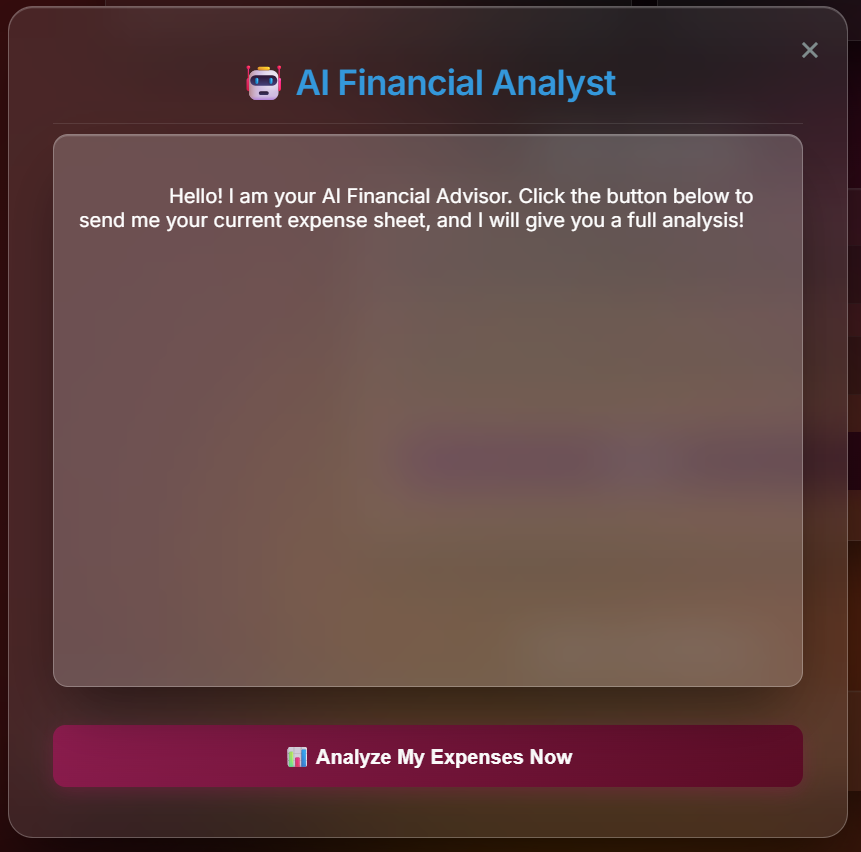
ai analyst tab
-
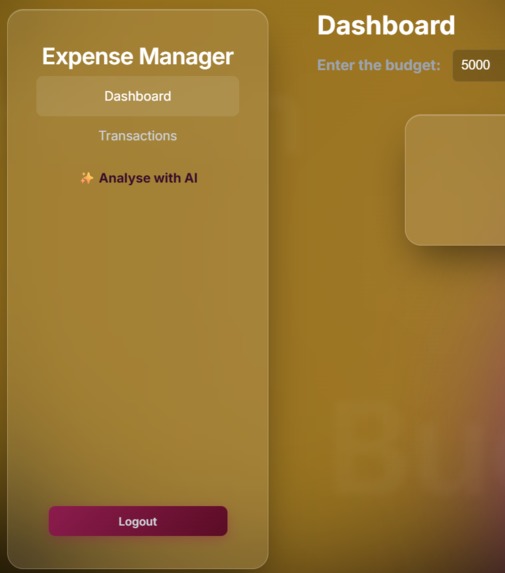
left side of the dashboard
-
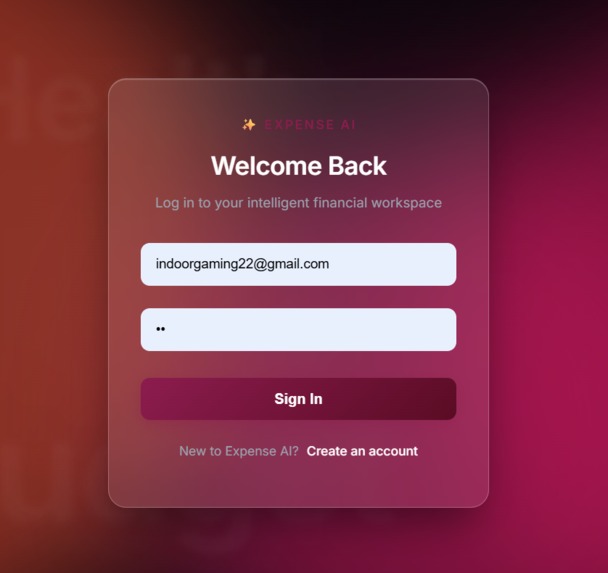
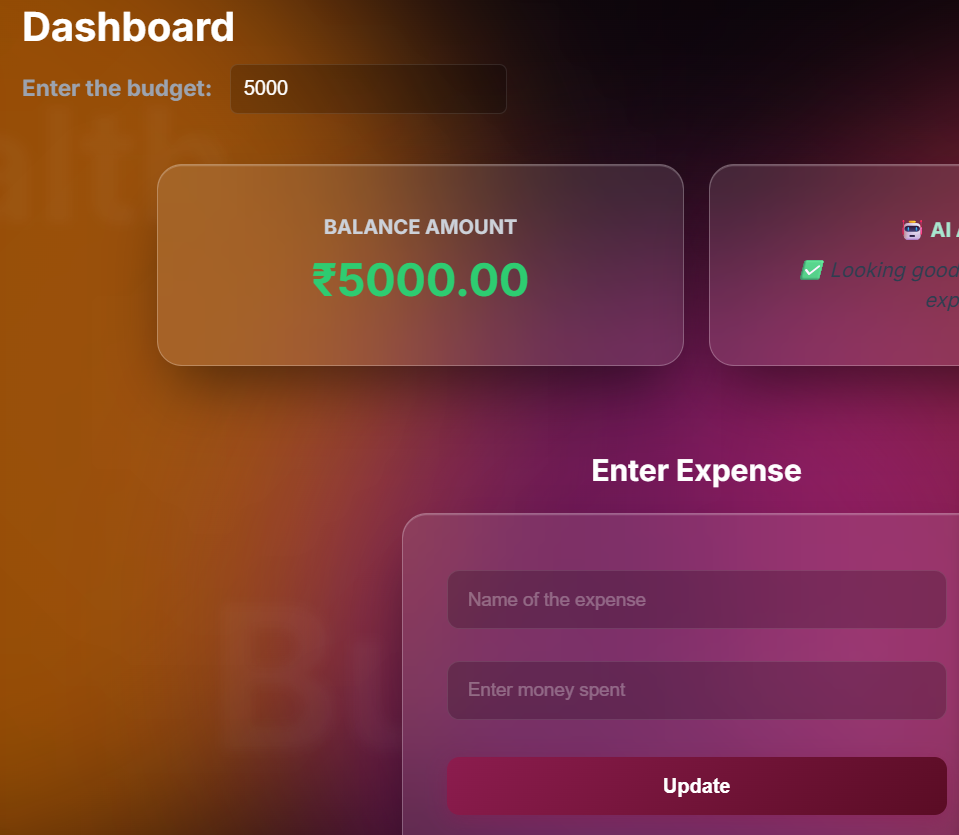
after registered login page
-
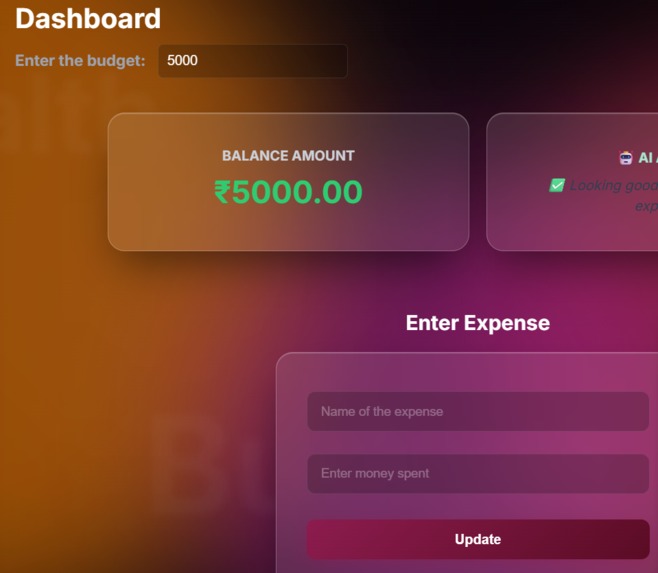
dashboard
-
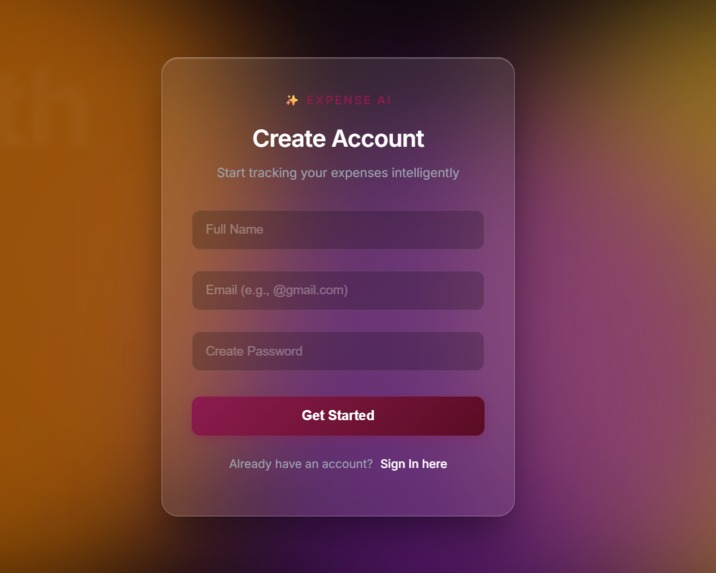
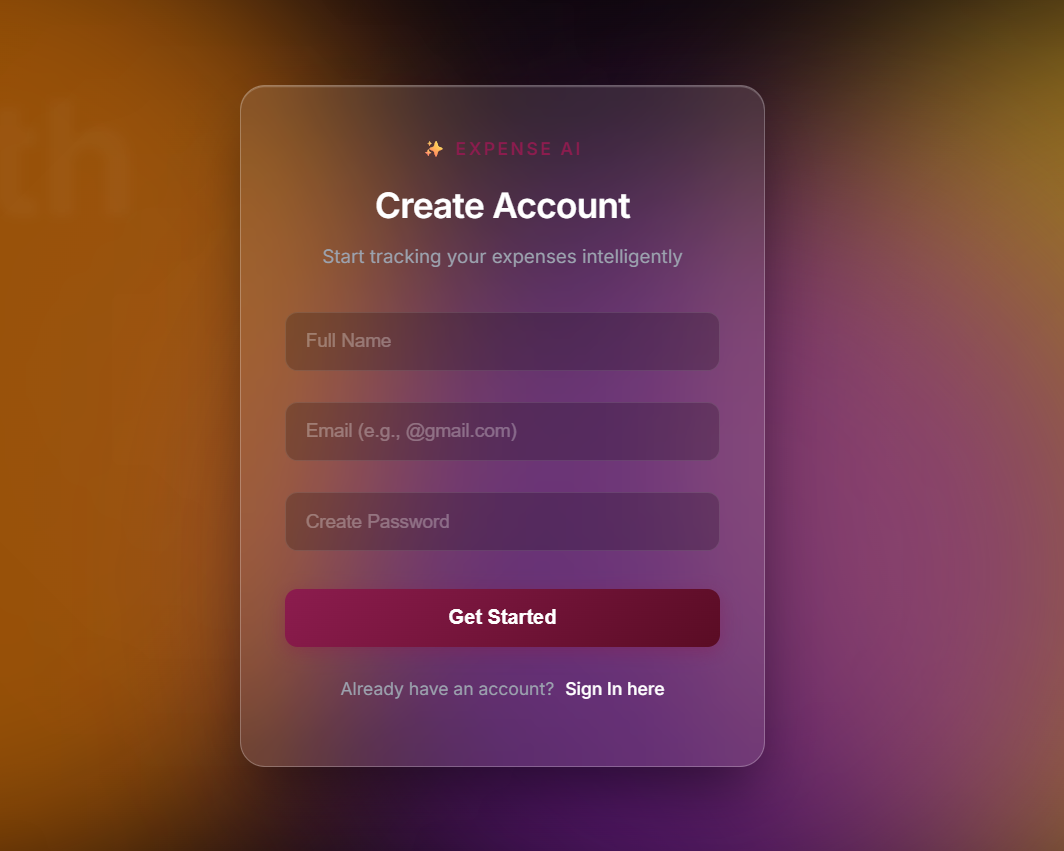
registration page
-
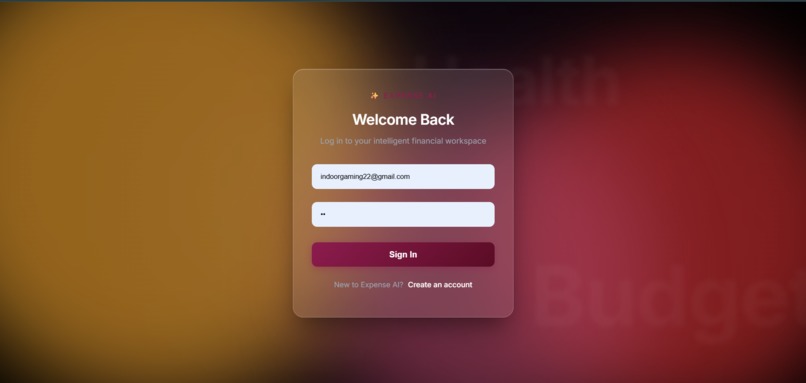
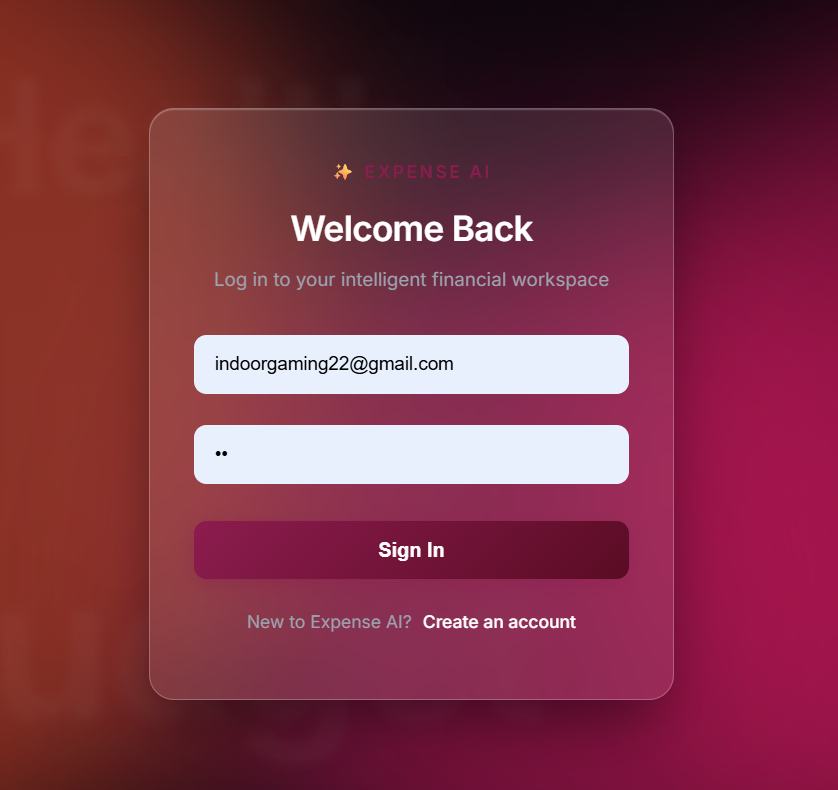
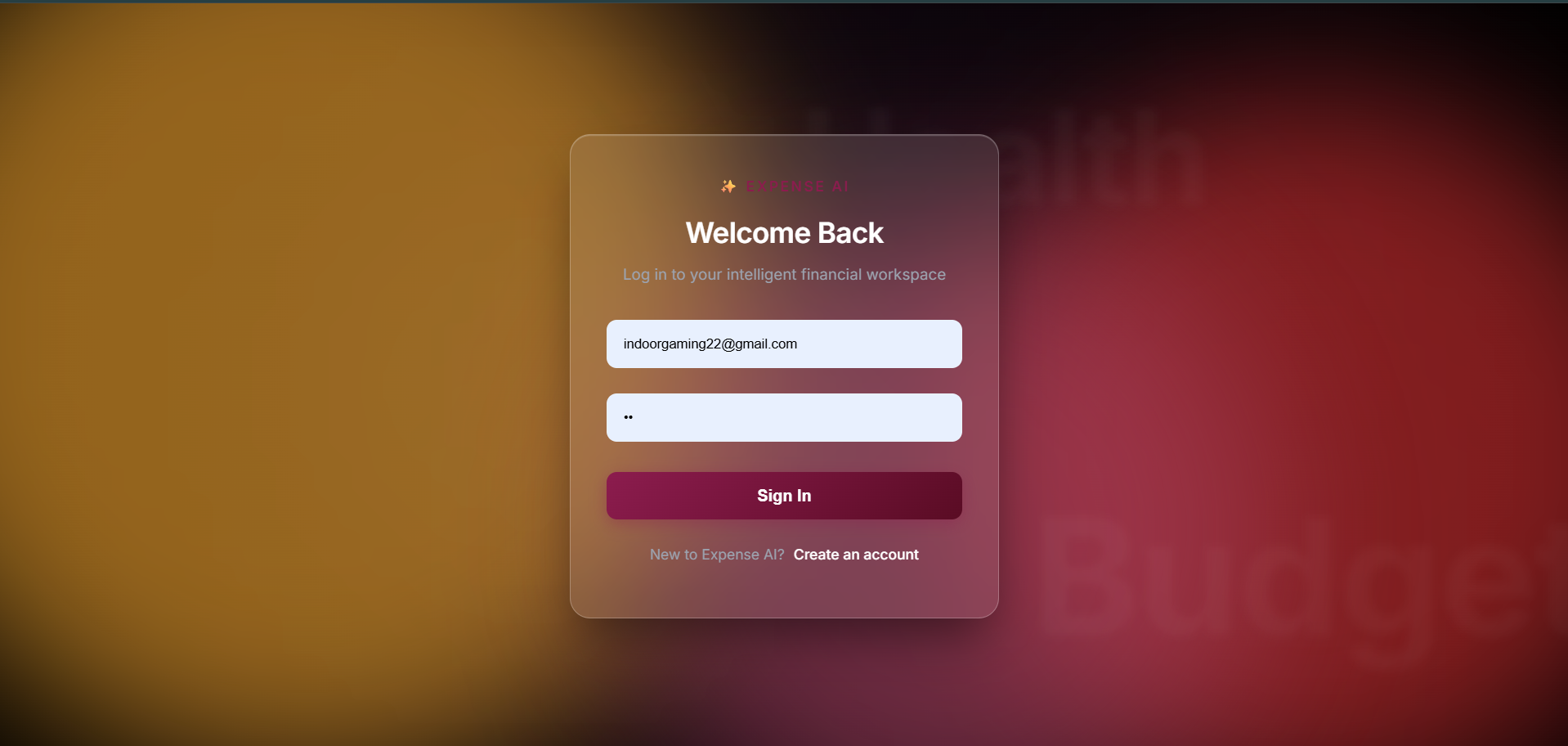
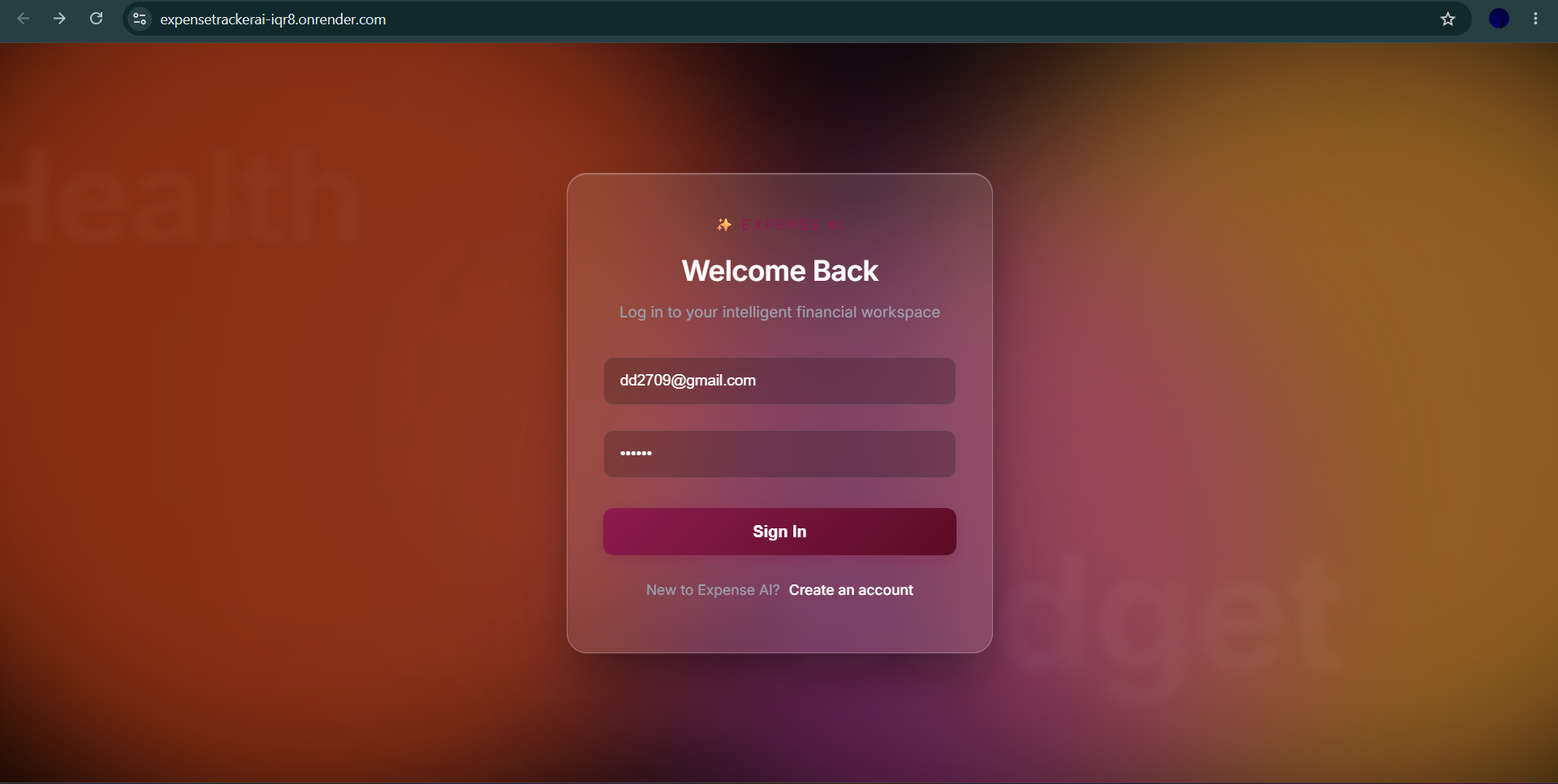
login page
-
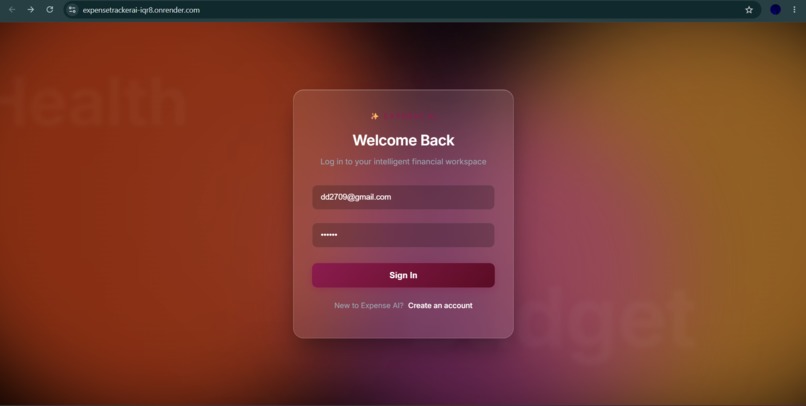
login page


Inspiration
The inspiration for Expense Tracker AI came from a real-life problem that I observed among college students, including myself. Many students receive a monthly allowance or earn money through part-time jobs, but they often struggle to keep track of their daily expenses. Small purchases like canteen food, transportation, online subscriptions, shopping, and entertainment may seem insignificant individually, but together they can quickly exhaust a student's budget.
I realized that while there are many expense tracking applications available, most of them only allow users to record transactions without helping them understand their spending habits. I wanted to build a solution that not only tracks expenses but also provides meaningful insights that users can act upon.
This motivated me to develop Expense Tracker AI, a web application that combines expense management with Artificial Intelligence. By integrating AI, the application analyzes users' spending patterns, identifies their highest expenses, and generates personalized savings suggestions. My goal was to create a smart financial assistant that helps college students become more aware of their financial habits and make better financial decisions in a simple, intuitive, and engaging way.
What it does
Expense Tracker AI is a full-stack web application designed to help users manage their personal finances in a simple and intelligent way. It allows users to create a secure account, set a monthly budget, and record their daily income and expenses. The application automatically calculates the available balance, total income, and total expenses, giving users a clear overview of their financial status.
The standout feature of the application is its AI-powered expense analysis. After users record their transactions, they can generate an AI analysis that reviews their spending history, identifies the highest spending category, summarizes their financial habits, and provides personalized savings recommendations. This helps users understand where their money is going and encourages better financial decision-making.
The application also maintains a complete transaction history, allowing users to view, manage, and delete expenses whenever necessary. With a modern, responsive interface and secure user authentication, Expense Tracker AI provides an intuitive and accessible experience across both desktop and mobile devices.
Overall, the project combines expense tracking with Artificial Intelligence to transform a traditional finance management tool into a smart personal financial assistant.
How we built it
We built Expense Tracker AI using a full-stack web development approach, combining modern frontend technologies, a Python backend, a relational database, and Artificial Intelligence.
The frontend was developed using HTML5, CSS3, and Vanilla JavaScript to create a clean, responsive, and interactive user interface. We designed the application with a modern glassmorphism theme, smooth animations, and an Apple-inspired animated background using CSS keyframes, transforms, transitions, and GPU acceleration techniques to deliver a visually engaging user experience.
The backend was developed using Python and the Flask framework. Flask handles the application's business logic, API routes, and communication between the frontend and the database. User authentication was implemented using Flask-Login, while Werkzeug was used to securely hash user passwords before storing them.
For data storage, we used SQLite as the relational database and SQLAlchemy ORM to efficiently manage database operations without writing raw SQL queries. This allows the application to securely store user accounts and financial transactions.
To make the application more intelligent, we integrated the Groq API with the LLaMA 3.1 8B Instant language model. When a user requests an analysis, the application sends their expense data to the AI model, which analyzes spending patterns, identifies the highest expenses, and generates personalized financial insights and savings recommendations.
Finally, the entire application was managed using GitHub for version control and deployed on Render, allowing the project to be accessed online while securely managing environment variables with python-dotenv.
Challenges we ran into
During the development of Expense Tracker AI, we encountered several technical challenges that helped us improve our problem-solving and debugging skills.
One of the biggest challenges was optimizing the application's performance while implementing a modern glassmorphism user interface with animated backgrounds. The combination of multiple backdrop-filter: blur() effects and continuously animated gradient orbs caused significant scrolling lag. After extensive testing and optimization, we improved performance by using GPU acceleration techniques such as will-change and translateZ(0), optimizing the animation layers, and reducing expensive visual effects. These changes resulted in much smoother scrolling and a better user experience.
Another challenge involved deploying the application. Initially, the frontend and backend were hosted on different domains, which caused Cross-Origin Resource Sharing (CORS) issues and authentication problems. We resolved this by properly configuring Flask-CORS during development and ultimately deploying both the frontend and backend together on a single Render service, eliminating cross-origin communication issues.
We also faced difficulties with database persistence during cloud deployment. Since SQLite stores data locally and free cloud hosting platforms use temporary file systems, user data could be lost whenever the server restarted. To overcome this limitation, we migrated the application to a cloud-hosted PostgreSQL database using Neon. Thanks to SQLAlchemy ORM, this transition required only minimal code changes while providing reliable and persistent data storage.
Finally, deployment itself presented several configuration challenges. We encountered issues with file encoding, environment variables, dependency management, and production server configuration. Troubleshooting deployment logs, correcting configuration files, and properly setting up Gunicorn and environment variables allowed us to successfully deploy the application and ensure it ran reliably in a production environment.
Overcoming these challenges strengthened our understanding of web performance optimization, cloud deployment, database management, and full-stack application development.
Accomplishments that we're proud of
Throughout the development of Expense Tracker AI, we achieved several milestones that we are proud of.
One of our biggest accomplishments was successfully transforming a simple idea into a complete full-stack web application that solves a real-world problem faced by many college students. We created a platform that not only tracks expenses but also uses Artificial Intelligence to analyze spending patterns and provide meaningful financial recommendations.
We are proud of building a modern and visually engaging user interface from scratch. By implementing glassmorphism design, smooth animations, responsive layouts, and performance optimizations, we were able to create an experience that is both attractive and efficient across different devices.
Another major achievement was the successful integration of Artificial Intelligence into a practical application. By connecting the Groq API with the LLaMA 3.1 8B Instant model, we created an AI financial analyst capable of understanding user expenses, identifying spending trends, and generating personalized savings suggestions.
We also successfully developed a secure authentication system, implemented reliable database management, and deployed the application to a live production environment. Handling real user data, cloud deployment, and solving performance and database challenges gave us valuable experience in building applications beyond a local development environment.
Most importantly, we are proud that this project started from a genuine problem and evolved into a useful solution. Expense Tracker AI demonstrates our ability to combine creativity, technical skills, and Artificial Intelligence to build a meaningful application that can help students develop better financial habits.
What we learned
Developing Expense Tracker AI was a valuable learning experience that strengthened both our technical knowledge and problem-solving abilities.
We learned how to build a complete full-stack web application by connecting a responsive frontend with a Python Flask backend and a relational database. This project helped us understand how different components of a web application communicate and work together to provide a seamless user experience.
We gained hands-on experience in implementing secure user authentication, managing databases using SQLAlchemy ORM, and deploying applications to a cloud platform. We also learned the importance of protecting user data through password hashing and proper environment variable management.
One of the most significant learning experiences was integrating Artificial Intelligence into a real-world application. We learned how to work with external APIs, design effective prompts, process AI-generated responses, and use them to provide meaningful financial insights for users.
The project also taught us the importance of performance optimization. While implementing advanced UI features such as glassmorphism and animated backgrounds, we learned how CSS rendering, GPU acceleration, and browser optimization techniques affect application performance and user experience.
Beyond technical skills, we improved our debugging, testing, and deployment abilities. Solving issues related to cloud hosting, database persistence, authentication, and application configuration taught us that software development is not just about writing code—it also involves continuous testing, troubleshooting, and refining solutions.
Overall, this project enhanced our confidence in full-stack development and demonstrated how modern web technologies and Artificial Intelligence can be combined to create practical solutions for real-world problems.
What's next for Expense Tracker AI
Although Expense Tracker AI currently provides users with expense tracking, financial analysis, and AI-powered recommendations, there are several exciting improvements planned for the future.
One of the next major features is the implementation of smart budgeting and financial goal tracking. Users will be able to create personalized budgets, set saving goals, and receive AI guidance to help them achieve their targets.
Another enhancement will be predictive expense analysis. By analyzing previous spending patterns, the AI will be able to forecast future expenses, identify possible overspending risks, and provide early recommendations to help users maintain better financial control.
We also plan to improve the AI financial assistant by making it more interactive, allowing users to ask questions about their finances and receive personalized answers based on their transaction history.
Additional features such as expense reminders, recurring payment tracking, advanced analytics dashboards, and visual spending reports will further improve the user experience.
In the future, we aim to expand Expense Tracker AI into a complete personal finance companion that not only records financial activity but also actively helps users build better money management habits and make smarter financial decisions.


Log in or sign up for Devpost to join the conversation.