-
-
Login
-
Admin Dashboard
-
Anomaly Detection
Inspiration
We were inspired by the lack of transparency we observed in how small NGOs and local organizations manage expenses. Many still rely on paper bills, handwritten notes, or basic spreadsheets, which often leads to mistakes, delayed audits, and mistrust among donors. Seeing how financial mismanagement—intentional or accidental—can harm genuine social work motivated us to build a system that brings trust, clarity, and accountability using AI.
What it does
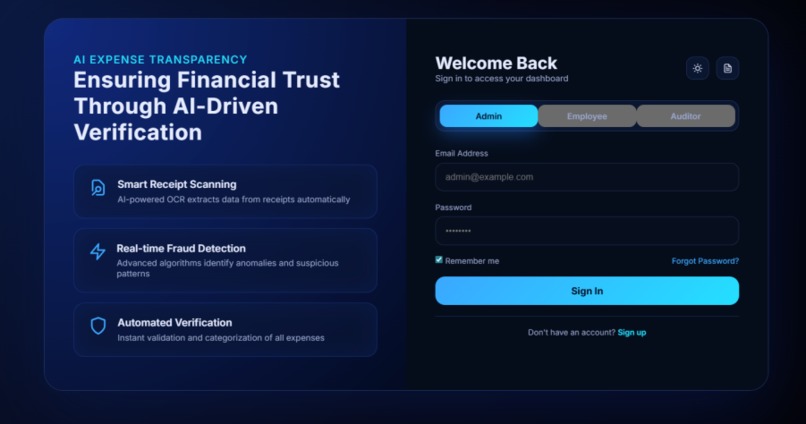
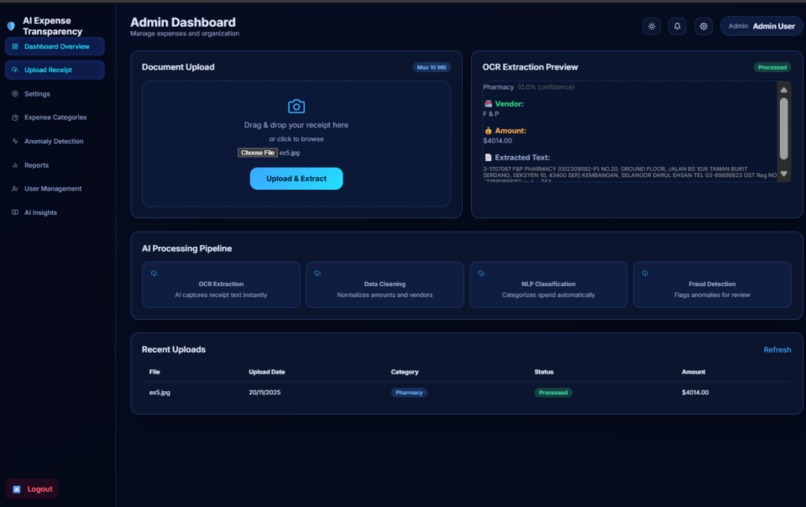
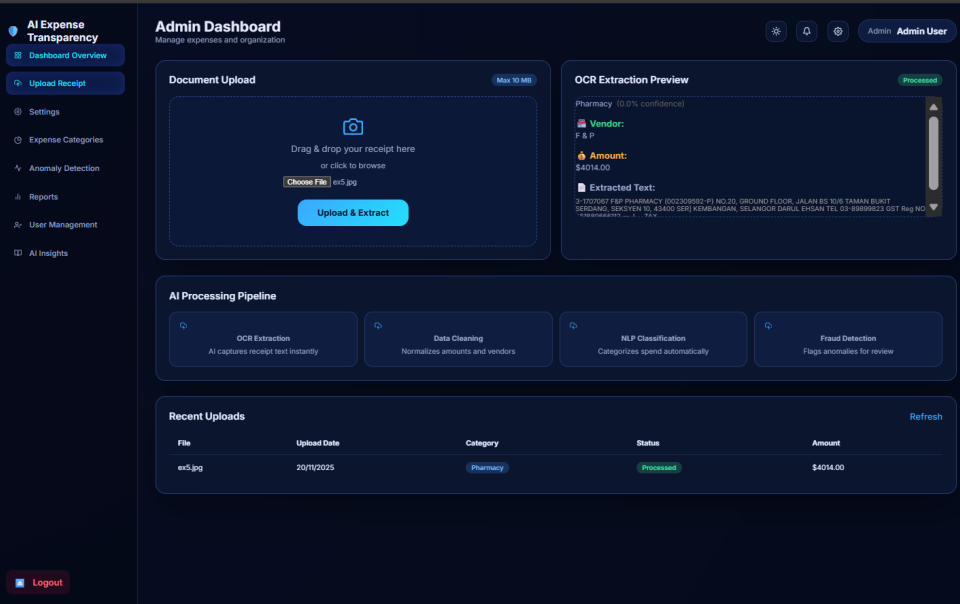
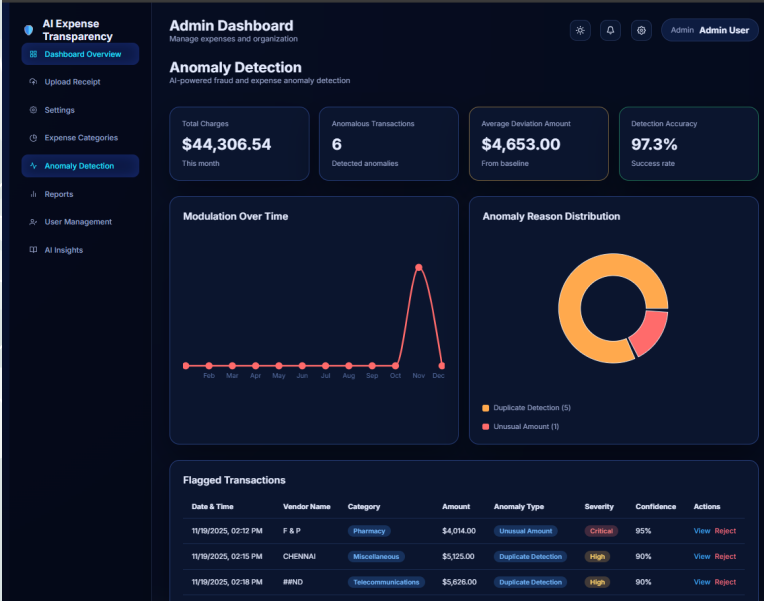
Expense AI is an AI-powered expense transparency system designed for NGOs and small businesses. It automatically extracts data from receipts and invoices using OCR, categorizes expenses using NLP, and detects suspicious or abnormal transactions using machine learning. The system presents all insights through an interactive dashboard, helping organizations monitor expenses in real time while enabling donors and stakeholders to view transparent financial records.
How we built it
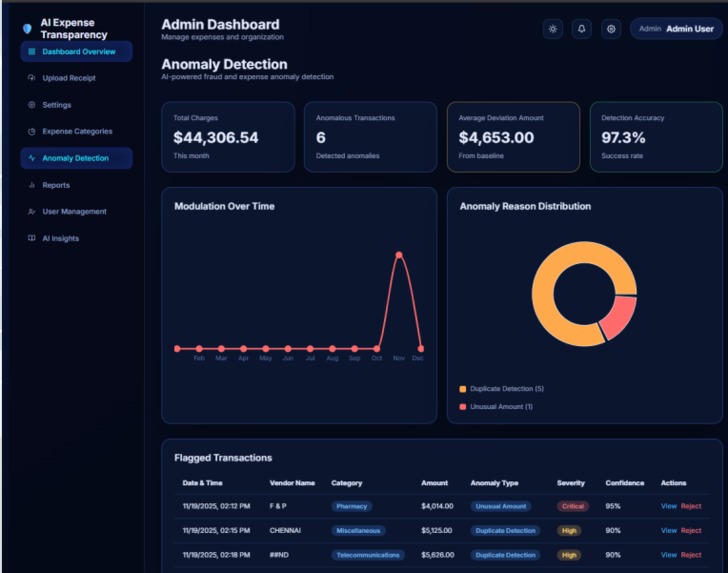
We built Expense AI using a modular AI-first approach. Receipts are uploaded and processed using OCR to extract text data. NLP techniques and machine learning models categorize expenses, while an Isolation Forest model is used to detect anomalies such as unusually high amounts or duplicate transactions. The backend is developed using Python, and all data is stored securely in a database. A clean, user-friendly dashboard visualizes expense trends and flags anomalies for easy review.
Challenges we ran into
One of the biggest challenges was handling inconsistent receipt formats and low-quality images, which affected OCR accuracy. Training the anomaly detection model without labeled fraud data was also challenging, as real-world financial fraud data is limited. Additionally, balancing technical complexity with simplicity—so that non-technical NGO users can easily use the system—required multiple iterations of design and testing.
Accomplishments that we're proud of
We are proud of building a working prototype that successfully integrates OCR, machine learning, and data visualization into a single platform. Our system is able to automatically flag suspicious expenses and present them in an understandable way. Most importantly, we created a solution that addresses a real-world problem with clear social impact, rather than just a theoretical use case.
What we learned
Through this project, we learned how to apply AI responsibly to real-world financial problems. We gained hands-on experience with OCR, NLP, and anomaly detection techniques, and understood the importance of clean data and model explainability. We also learned how crucial user-centric design is when building technology for non-technical users like NGO staff and auditors.
What's next for Expense AI
In the future, we plan to enhance Expense AI with multi-language OCR support for regional Indian receipts, making it accessible to a wider range of organizations. We also aim to integrate mobile app support for real-time receipt capture, and sync bank or UPI transaction data to improve verification accuracy. Long-term, we envision Expense AI becoming a trusted financial transparency platform for NGOs, donors, and regulators.


Log in or sign up for Devpost to join the conversation.