-
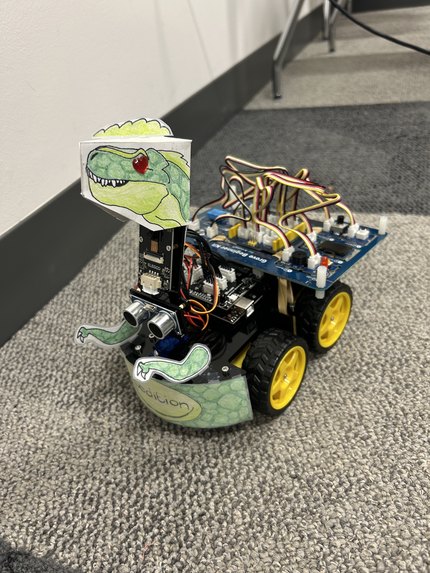
Expedition from the front!
-
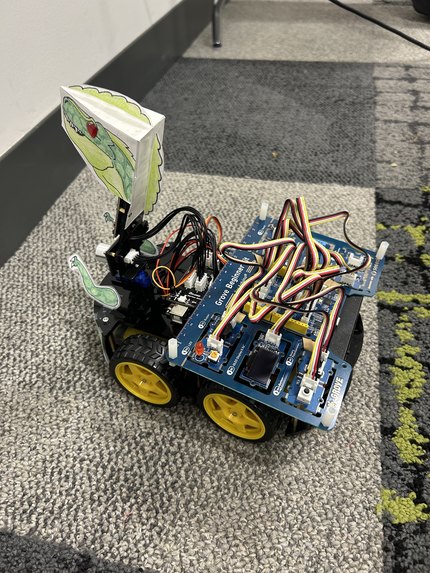
Expedition from the rear!
Inspiration
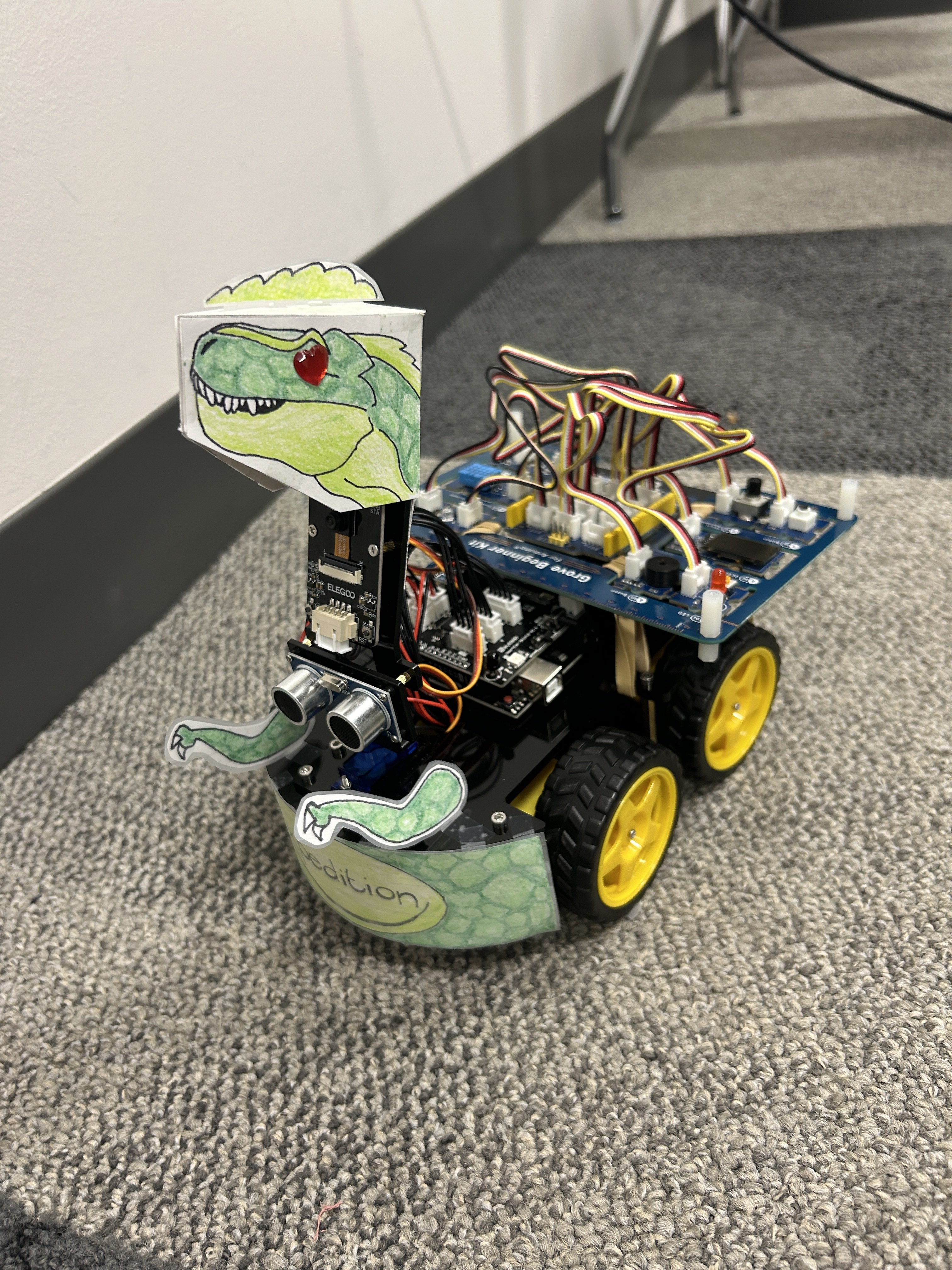
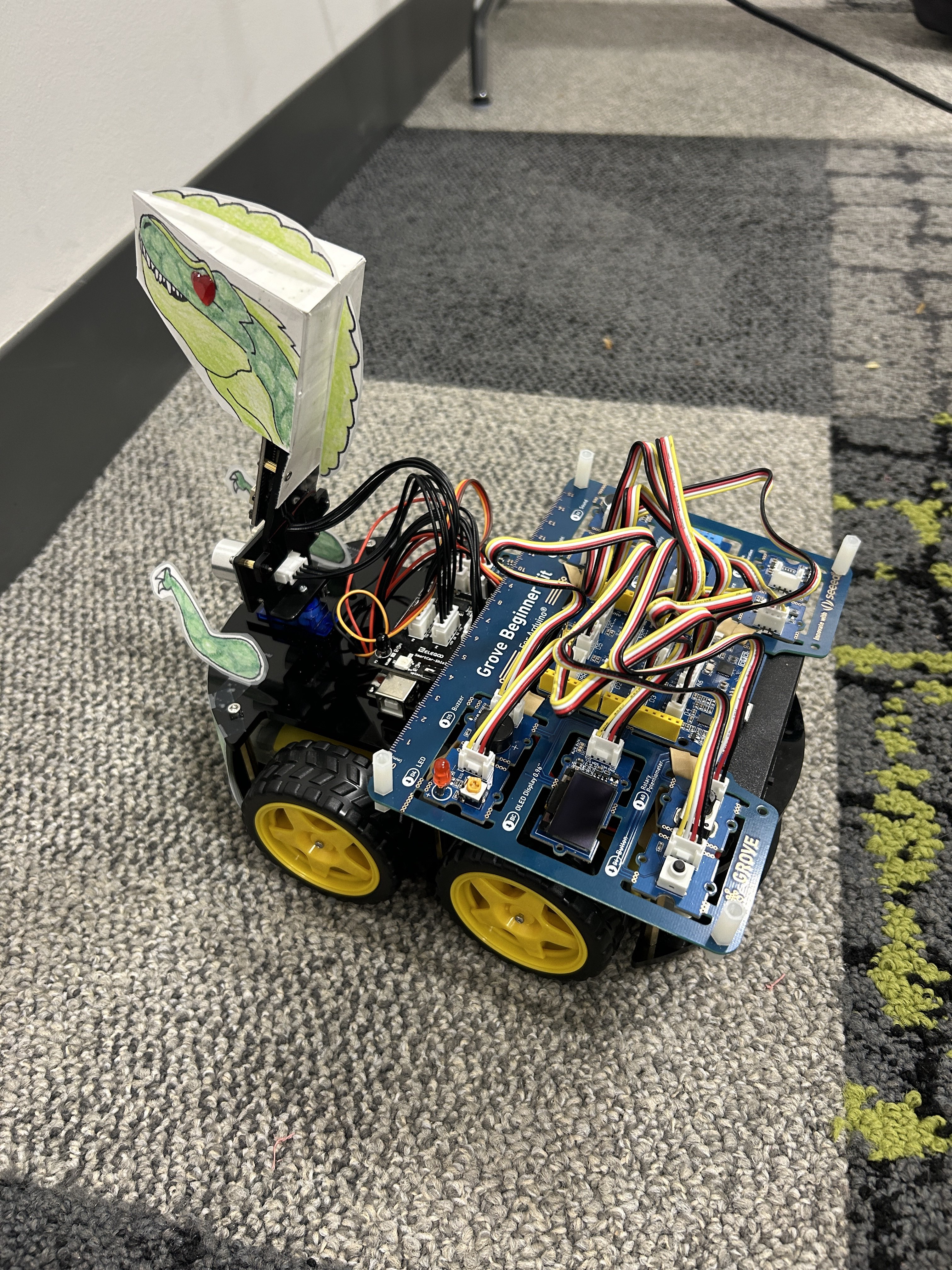
Our team attended RowdyHacks last year and submitted a project called "Expedition Module," which was the very basic form of what is now a workable machine on wheels. We had made our presentation around what we could do with it, and this year we decided to see it through as much as we could. Though the theme was somewhat unexpected - the idea to turn it into a dinosaur was entirely RH's.
What it does
Expedition can be controlled remotely or given its own agency to wander the environment, collect data from the sensors mounted on its back, and return that data to be graphed and displayed on a small screen on the rover itself.
How we built it
We had the Arduino board we had used last time, premade with the sensors we needed, and we built a small robotic car with a few sensors of its own to allow for steering and camera use and mounted the Arduino board on top. A few hours were taken to make it very pretty and dinosaur-themed somewhere amid the building and coding.
Challenges we ran into
We had intended to add three other sensors (UV, RGB, Air Quality) but were unable to get the computer to recognize them due to hardware errors. That is not a terrible setback, though; the body and core of the rover does what we wanted, so a lost battle doesn't end the war. Any code marked "Pending" is a placeholder for what could have been (and may yet be!) some very cool data gathering.
Accomplishments that we're proud of
Getting the rover set up (and getting it decorated, which was very fun), figuring out how to get the board mounted, and making the data show up on the OLED and a graph on the connected laptop.
What we learned
Not everything is going to work out the way we had planned, but we'll still end up well ahead of where we started. Also, how to plot data on a graph real-time.
What's next for Expedition
There is nothing stopping us from developing this idea even further and possibly bringing it back next year for, perhaps not so much engineering, but more streamlined display of information and control of the rover. The hardware is important, but developing software would be the best next step.


Log in or sign up for Devpost to join the conversation.